

elnavi
A NEW MILESTONE FOR MARITIME EDUCATION IN CHIOS

T.E.E.N.S. Merchant Marine Academy Inaugurates its New Engine Room & Ship Safety Laboratory
On Saturday, 12 September 2026, T.E.E.N.S. marked the opening of the 2026-2027 Academic Year with the traditional blessing ceremony and the inauguration by Her Excellency, U.S. Ambassador to Greece, of its new Engine Room & Ship Safety Laboratory at the premises of the T.E.E.N.S. Model Vocational Nautical High School and Tsakos Merchant Marine Academy in Chios.
The new Laboratory marks another milestone in the longstanding contribution of the “Maria Tsakos” Public Benefit Foundation - International Centre for Maritime Research and Tradition to the education and development of the next generation of seafarers, through an educational approach that combines knowledge, practical training and latest technology with the evolving demands of modern shipping.
Equipped with advanced 3D and Virtual Reality (VR) systems, the Laboratory brings training as close as possible to real conditions onboard. Within a state-of-the-art simulation environment, students receive hands-on training in demanding engine-room operations and ship-safety scenarios, and learn to make critical decisions, strengthening their technical competence, operational readiness and, above all, the safety culture modern shipping demands.
The event was honoured by the presence of the Founders of the “Maria Tsakos” Public Benefit Foundation and the T.E.E.N.S. educational institutions, Captain Panayiotis N. Tsakos and Dr Nikolas P. Tsakos, as well as, Mrs Celia Kritharioti-Tsakos.
Among the distinguished speakers and guests were Kimberly Guilfoyle, U.S. Ambassador to Greece; Adonis Georgiadis, Minister of Health; Panayiotis Pikrammenos, former Prime Minister of Greece; Ambassador George Koumoutsakos, Permanent Representative of Greece to UNESCO; Fotis Mangos, Secretary General for the Aegean and Island Policy at the Ministry of Maritime Affairs and Insular Policy; George Anomeritis, Vice Chairman of the “Maria Tsakos” Public Benefit Foundation; Ioannis Malafis, Mayor of Chios; John McDonald, President and Chief Executive Officer of the American Bureau of Shipping (ABS); and Francesco Gargiulo, Chief Executive Officer of the International Maritime Employers’ Council (IMEC). The ceremony was also attended by representatives of local authorities, prominent members of the Greek and international shipping community, parents and families of students, and members of the wider Chios community.
Special acknowledgement was given to ABS and IMEC for their invaluable contribution to the development and implementation of the new Laboratory, and to Ambassador Kimberly Guilfoyle for her instrumental support in bringing the collaboration with ABS to life.
In her address, the U.S. Ambassador highlighted the importance of investing in safety and in the people of shipping, noting that safer ships mean safer seafarers, safer seafarers lead to stronger trade, and stronger trade benefits Greece, the United States and the world.
Dr Nikolas P. Tsakos highlighted the vital role of shipping in the global economy and the importance of continued investment in seafarers, while also pointing to the imminent exchange of Greek and U.S. merchant marine cadets. Minister of Health Adonis Georgiadis stressed the need to strengthen the presence of Greek seafarers onboard Greek-owned vessels by developing a new generation of highly trained professionals who will carry forward Greece’s longstanding leadership in global shipping.
A special moment of the event was a video message from New York by Panayiotis N. Tsakos, grandson of Captain Panayiotis N. Tsakos. Reflecting on the rapid advances in technology and Artificial Intelligence, he emphasized that, however profoundly shipping may evolve, people will remain at the heart of progress - through their knowledge, judgement and ability to use technology wisely and effectively. Addressing the young cadets as a member of their own generation and a student himself, he encouraged them to remain curious, embrace continuous learning and always strive to become the best version of themselves.
T.E.E.N.S. Merchant Marine Academy, the first private, non-profit Merchant Marine Academy, operates in Chios under the accreditation of the Shipping Deputy Ministry of the Republic of Cyprus, further strengthening the island’s position as an internationally oriented hub for maritime education and training.
During the event, awards were presented to the top-performing students of the T.E.E.N.S. Nautical Lyceum in the June 2026 Panhellenic Examinations and to Academy cadets who distinguished themselves during the 2025-2026 Academic Year. The Technical Department of the Tsakos Group of Companies was also honoured for its contribution to the implementation of the new Laboratory.
Today, more than 280 young men and women are enrolled across the T.E.E.N.S. educational institutions in Chios - 187 cadets at the Merchant Marine Academy and 96 students at the Model Vocational Nautical High School - with education at the High School provided entirely free of charge and the Academy offering a comprehensive scholarship programme, broadening access to high-quality maritime education and professional training. At the same time, 200 young men and women have already graduated since the establishment of T.E.E.N.S., with the majority pursuing careers at sea and across the wider maritime sector - results that fill us with optimism and encourage us to continue this strategic vision with the same firm commitment.
Best wishes for a successful Academic Year!
ELNAVI Newsletter
More Information: ELNAVI,
19, Aristidou str., Piraeus 185 31,
Tel.: +30 210 45.22.100, e-mail: This email address is being protected from spambots. You need JavaScript enabled to view it.
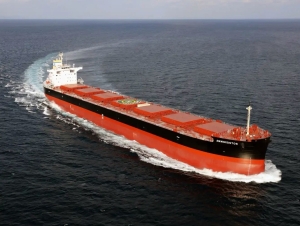
Safe Bulkers, Inc. completed the Private Placement of 12 million new shares, raising €80.4 million at €6.70 per share through an accelerated bookbuilding process - a significant milestone for the Company.
The company stated: “Our warm thanks go to the participating investors and to Piraeus Bank S.A., DNB Carnegie, a part of DNB Bank ASA, and Fearnley Securities AS, acting as Joint Global Coordinator and Joint Bookrunner, for their exceptional collaboration. We also acknowledge the dedicated support of our legal partners - Potamitis Vekris Law, Milbank LLP, and Bahr AS - and the important role of Euronext Athens and the Hellenic Capital Market Commission in facilitating this transaction.
Following our dual listing on Euronext Athens earlier this year, this successful placement underscores our commitment to and trust in the European Capital Markets as a competitive and reliable source of equity financing for internationally active shipping companies.
Thank you to everyone who helped make this achievement possible”.
ELNAVI Newsletter
More Information: ELNAVI,
19, Aristidou str., Piraeus 185 31,
Tel.: +30 210 45.22.100, e-mail: This email address is being protected from spambots. You need JavaScript enabled to view it.
Golf, maritime community and social responsibility came together at the 12th Greek Maritime Golf Event
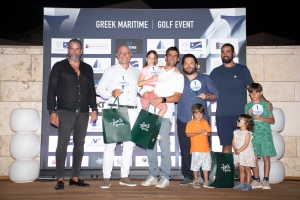
Against the backdrop of Messinia’s unique landscape and the golf courses of Costa Navarino, the Greek and international maritime community came together once again for its established annual gathering at the Greek Maritime Golf Event. From September 4 to 6, the event brought together leading executives from the maritime industry, combining golf with networking and social responsibility. With 84 golfers forming 21 teams, the event concluded with great success, reaffirming the momentum and enduring appeal of an institution that, for the past 12 years, has united the maritime community through sport and the values of fair play, collaboration and solidarity.
Tangible support for “Floga” Association
True to its charitable character, the Greek Maritime Golf Event actively supported “Floga” – Parents Association of Children with Cancer. Participating golfers contributed to the cause through the purchase of gifts, supporting the Association’s important work in providing essential medical, psychological and social care to children battling cancer.
A day dedicated to golf
On Saturday, September 5, the teams competed on the award-winning The Dunes Course in a Shotgun Scramble 4-Ball (2 better ball) tournament. The golfers delivered strong performances in a highly competitive field, battling until the final holes for the top positions on the leaderboard.
At the same time, the event’s non-golfers had the opportunity to discover this Olympic sport through a Golf Clinic led by PGA golfer, Birdie Events Founder and event organizer Thanos Karantzias, who shared valuable tips and guided them through their first steps in golf.
A premium on-course experience During registration, participants received an array of premium gifts from IRI / The Marshall Islands Registry, Marine Tours, Arrow, Erasmus Shipinvest Group, HEYDUDE, Napapijri, μ. Artisan Water, Benostan and Anatomic Line.
Participants stayed hydrated with μ. Artisan Water natural mineral and sparkling water, offered in its innovative, 100% recyclable aluminum packaging, while Benostan sunscreen products provided sun protection throughout the event.
Gastronomy also played an important role in the Greek Maritime Golf Event, with golfers enjoying premium meat selections from Aggelis Meatworks, including traditional souvlaki, at specially designed on-course stations, alongside an authentic taste of Italy from La Cucina Italiana with genuine Italian pizzas. The experience was complemented by ice-cold Budweiser beers, local Messinian Athi Rodi juices and fresh local fruit.
To round off the experience, guests at the Awards Night enjoyed the signature Grey Goose Espresso Martini.
An elegant Awards Night of celebration and recognition
The event extended beyond the competitive action, culminating on Saturday evening with the Awards Night. The ceremony took place at Costa Navarino’s distinctive Onuki Restaurant, where the atmospheric setting and sunset views provided the ideal backdrop for the evening’s awards. The event was hosted by Joe Arlauckas, European champion with Real Madrid and EuroLeague legend, whose experience hosting major sporting events and international occasions brought his own distinctive energy to the evening.
The tournament’s leading performers On the competitive side, the team of Oikonomou, Tziotis, Kontaxakis and Angelakis stood out for its accuracy and consistency, taking first place with 109 points. The team of Meimaridis, Karnezis W., Jansen and Karnezis A. finished second with 108 points, just one point behind the winners, while Vezlivtsev, Dalakouras, Noulen and Kariotis completed the top three with 103 points.
Psaromatis claimed the “Longest Drive” award, while Moraitis won “Closest to the Pin”.
The tournament’s top teams also received exclusive gifts alongside their awards. The winning team received bottles of Blanton’s from Teddy’s Speakeasy, an award-winning premium bourbon with a distinguished place in the world of American whiskey. The runners- up were presented with impressive magnum bottles of Grey Goose, the internationally renowned premium French vodka, while the third-place golfers received Napapijri Duffel Bags from the
premium lifestyle brand inspired by travel and exploration.
In addition to the top three teams at the Greek Maritime Golf Event, the winners of the “Longest Drive” and “Closest to the Pin” competitions were also awarded a golf bag each.
The event’s charitable cause was supported with unique gifts from the following Charity Partners: Costa Navarino, Messinian Nest, Karnabakos, Tsikeli Boutique Hotel Meteora, La Cucina Dormi, Dermaperfect, Napapijri, Anama Restaurant and Kookoonari Beach Bar Restaurant.
These gifts were made available at special “buy now” prices, with proceeds directly supporting the Association’s mission to provide essential medical, psychological and social care to children battling cancer.
SIXT, a member of the MOTODYNAMICS Group, ensured safe and comfortable transportation for the event team and athletes through its premium fleet.
Reflecting on this year’s event, Thanos Karantzias, founder and organizer of the Greek Maritime Golf Event, stated: “The completion of the 12th Greek Maritime Golf Event fills us with great joy and pride. Once again, members of the Greek and international maritime community came together, demonstrating the strength of an institution that has successfully connected sport with values, international outreach and the power of Greek maritime community.
The longstanding trust and participation of industry executives are the greatest endorsement of our efforts and, at the same time, the driving force behind our commitment to continuously evolving the event. A heartfelt thank you to our sponsors and partners, who consistently support our vision and play a decisive role in the success of every edition. We look forward to welcoming everyone again next year, with an even stronger commitment to delivering a distinctive experience worthy of the maritime community we represent.”
The contribution of the leading companies that actively supported the event was instrumental:
The event’s Platinum Sponsor was IRI / The Marshall Islands Registry.
The Silver Sponsor was Marine Tours.
The Bronze Sponsors were Arrow and World Carrier Corporation.
The Official Supporters were Golden Stone Maritime Ventures SA and Erasmus Shipinvest Group.
The Official Footwear Partner was HEYDUDE.
The Official Water was μ. Artisan Water.
The Official Clothing Partner was Napapijri.
The Official Partner was Grey Goose.
The Premium Mobility Partner was SIXT, a member of the MOTODYNAMICS Group.
The Official Suppliers were Budweiser, Teddy’s Speakeasy, Aggelis Meatworks, Athi Rodi, Karnabakos, La Cucina Italiana, Benostan, Mind the Ad and Anatomic Line.
The Charity Partners were Costa Navarino, Messinian Nest, Karnabakos, Tsikeli Boutique Hotel Meteora, La Cucina Dormi, Dermaperfect, Napapijri, Anama Restaurant and Kookoonari Beach Bar Restaurant.
Boo Productions was the Audio Visual Partner.
The Greek Maritime Golf Event was organized by Birdie Events and is an initiative of renowned Greek PGA golfer Thanos Karantzias.
Golf Production was undertaken by ActiveMedia Group, Sports Marketing Agency of the Year.
#GreekMaritimeGolfEvent
ELNAVI Newsletter
More Information: ELNAVI,
19, Aristidou str., Piraeus 185 31,
Tel.: +30 210 45.22.100, e-mail: This email address is being protected from spambots. You need JavaScript enabled to view it.
Major LNG shipping firms launch trial to validate continuous emissions measurement technology

Lloyd's Register, Seapeak, Kongsberg Maritime and Tunable have joined forces to advance emissions compliance through the deployment and verification of onboard emissions monitoring technology.
Lloyd’s Register (LR), Seapeak, Kongsberg Maritime (KM), and Tunable have launched a new joint development project (JDP) to facilitate compliance and independently verify the accuracy of KM’s Continuous Emissions Monitoring System (CEMS), which incorporates Tunable’s gas analysis technology, on board a new LNG carrier.
The partners will compare actual CO2 emissions recorded by the vessel’s CEMS against both engine test bed data and default emissions factors, quantifying the resulting differences and assessing the regulatory applicability of direct CO2 measurement against the relevant IMO and EU emissions reporting frameworks.
The project, announced at Gastech 2026 in Bangkok, will bring together expertise from across the maritime value chain to provide independent evidence on the accuracy and reliability of continuous emissions monitoring technologies for LNG-fuelled vessels.
The initiative will see LR acting as the independent verifier, supporting the evaluation of measured emissions data from a newly built LNG carrier scheduled for delivery in early 2027, with monitoring and data analysis continuing throughout the year.
Through the project, the partners will assess the performance of Kongsberg Maritime’s CEMS under real operating conditions and explore how independently verified measurements can help improve confidence in emissions data used by shipowners, charterers and regulators.
Panos Mitrou, SVP Shipping Strategy, Lloyd's Register, said: “The industry currently relies on default emissions factors and test bed data to estimate environmental performance. This initiative enables industry stakeholders the opportunity to compare estimated emissions performance against direct measurements from a vessel operating in real world conditions.
“The results will generate valuable insights into the role continuous emissions monitoring can play in supporting more accurate reporting as well as an improved operational understanding that can support emissions minimisation.
"This is exactly the type of collaborative innovation the industry needs as it navigates an increasingly complex and data-driven regulatory landscape.”
James Cruickshank, Director – Marine & Technical Services, Seapeak: “At Seapeak, we are committed to supporting practical, data-driven solutions that enhance both environmental performance and operational efficiency. This project brings together leading expertise from across the industry to advance the understanding of emissions measurement and reporting, using real operational data.
“By collaborating with partners, we aim to evaluate how continuous emissions monitoring can improve emissions insights and support informed decision-making, while also identifying opportunities to further reduce greenhouse gas emissions across our fleet.”
Eirik Agren, Sales Director, Kongsberg Maritime: “Most maritime CO₂ reporting today is based on fuel consumption and standard emission factors rather than continuous, direct measurement. This JDP gives us the opportunity to rigorously compare those established calculations with data from our CEMS under real operating conditions. Integrating emissions measurements with fuel, engine and operational data allows the measurements to be corroborated and placed in context, strengthening confidence in the reported emissions.
“Together with Lloyd’s Register’s independent technical and regulatory perspective, this will help establish the robust evidence needed to assess the accuracy, transparency and regulatory applicability of CEMS-based reporting.”
Roar Hernes, Business Development Manager, Tunable: “Invisible gases contain valuable information. By delivering continuous emissions measurements from a vessel in operation, this project will help generate evidence and insights that support more transparent and data-driven emissions reporting.”
Image: Left to right) Panos Mitrou, Senior Vice President – Shipping Strategy, LR; Andy McKeran, Chief Growth Officer, LR; Marcus Goh, Business Development Manager – Seapeak; Christofer Willsher, UKI Commercial Manager, LR; Eirik Agren, Sales Director – Green Initiatives, Kongsberg Maritime; Roar Hernes, Business Development Manager, Tunable; Constantinos Chaelis, Global Gas Segment Director, LR
ELNAVI Newsletter
More Information: ELNAVI,
19, Aristidou str., Piraeus 185 31,
Tel.: +30 210 45.22.100, e-mail: This email address is being protected from spambots. You need JavaScript enabled to view it.
THE WAR PREMIUM HAS MOVED INTO THE BALANCE SHEET

Hormuz, $100 oil and the question shipowners should ask before buying their next vessel
By Anastasios Maraslis*, President, Marasco Marine Ltd
The Strait of Hormuz is not closed.
That may be precisely what makes the present situation more difficult for shipowners.
A closed waterway produces a clear decision. An open waterway produces another clear decision. But a passage that remains technically open while traffic collapses, ships are attacked, insurance conditions change rapidly and the political situation can deteriorate between fixture and arrival creates something much harder to manage:
commercial ambiguity.
On 9 September, preliminary vessel-tracking data showed only seven commodity vessels transiting Hormuz. At the same time, Brent crude was trading above USD 100 per barrel following the latest escalation in the Middle East, including attacks on commercial shipping and Saudi energy infrastructure. Before the present conflict, Hormuz was one of the principal arteries of global energy trade. Today it remains operational — but no prudent owner can treat passage through it as ordinary navigation.
This distinction matters because the Middle East crisis is now moving beyond the voyage P&L.
It is beginning to influence the balance sheet.
THE COST OF WAR IS NO LONGER ONE NUMBER
For years, when geopolitical risk increased, the shipping conversation often became surprisingly narrow.
What is the Additional War Risk Premium?
Can Charterers pay it?
Can we obtain Kidnap & Ransom cover? Loss of Hire?
Can we fix the voyage?
Those questions remain important. But they are no longer sufficient.
The Extra War Risk cost attached to a voyage is only one visible price within a much larger economic exposure.
Public market reporting shows how dramatically the insurance environment has changed. War-risk pricing for Gulf transits has increased sharply, while cargo insurance costs have also become substantial. At the same time, underwriters are increasingly differentiating between vessels according to ownership, chartering relationships, cargo, trading history, nationality nexus and the precise characteristics of the proposed voyage.
This is rational.
An underwriter is not merely pricing the probability that one particular vessel will be struck.
He is pricing correlation.
A single escalation can expose multiple vessels simultaneously. Ports can become inaccessible. Vessels may enter an area and find that the conditions governing their exit have changed. Reinsurance capacity can tighten. Sanctions can alter the legality or practicality of transactions. Political events can transform what appeared to be an acceptable risk on Monday into something materially different by Friday.
This is why an EWR quotation should not be viewed as a simple commodity price.
It is the temporary price of scarce risk capital against a moving exposure.
And the cheapest quotation is not necessarily the best transfer of risk.
THEN OIL ENTERS THE EQUATION
The second transmission mechanism is energy.
Brent has again moved above USD 100 per barrel, while marine-fuel markets remain materially more expensive than before the war. In Singapore, benchmark low-sulphur bunker prices have recently been reported at more than 60% above pre-war levels, despite improvements in physical fuel availability.
That affects much more than tanker owners.
A dry-bulk owner trading far from the Gulf still buys bunkers.
A container operator still pays for diversion.
A shipyard still consumes energy.
A manufacturer still passes higher energy costs into equipment prices.
And a shipowner financing an acquisition may eventually discover that an oil shock affects not only operating expenditure but also inflation expectations and borrowing costs. US long-term yields have remained elevated as markets reassess the inflationary consequences of energy disruption.
This creates an unusual combination:
high freight opportunities, expensive fuel, elevated asset values, costly insurance and expensive capital — all at the same time.
That combination deserves considerably more attention than the freight market alone.
DISRUPTION ALSO CREATES TRADE
There is another side to the story.
Shipping has rarely experienced geopolitical disruption without simultaneously discovering new commercial opportunities.
When a traditional cargo route becomes difficult, cargo does not necessarily disappear.
It often moves differently.
Alternative Gulf export routes, ship-to-ship operations, increased use of terminals outside traditional chokepoints and substitute product flows are already changing trading patterns. Gulf producers and national oil companies have also been taking greater control of shipping capacity as transport security becomes strategically important.
Longer routes can increase tonne-mile demand.
Dislocated refining systems can create new product trades.
Regional shortages can increase freight spreads.
Vessels positioned on the correct side of a disrupted chokepoint may obtain an advantage that did not exist months earlier.
This is one of shipping's enduring paradoxes:
risk destroys efficiency — and inefficiency can create shipping demand.
But owners should be careful not to confuse earnings generated by disruption with permanent earning power.
That distinction brings us to perhaps the most difficult capital-allocation question in shipping today.
SECOND-HAND: BUYING EARNINGS NOW
The argument for acquiring second-hand tonnage is obvious.
The vessel exists.
It can trade immediately.
It can participate in today's market rather than the market of 2028.
For an owner who believes that geopolitical fragmentation, longer voyages and energy-security concerns will remain structural, immediate exposure may be attractive.
But there is a problem.
Everybody else can see the same earnings.
Tanker asset values have risen dramatically during 2026. Lloyd's List Intelligence recently reported that five-year-old VLCC values were approximately 35% higher year on year, while ten-year-old units had risen around 54%. Strong balance sheets and limited willingness among existing owners to sell have contributed to the increase.
This changes the calculation.
A second-hand vessel offers immediate cash flow, but the buyer may already be paying the seller today for several years of expected geopolitical advantage.
There is therefore a dangerous circularity:
War disruption raises freight.
Higher freight raises vessel values.
Higher vessel values encourage investment.
The investment then requires elevated freight to justify the acquisition price.
The owner must ask whether he is purchasing an asset — or capitalising today's exceptional market conditions into tomorrow's balance sheet.
NEWBUILDING: BUYING 2028 TODAY
The newbuilding argument is equally powerful.
A modern vessel provides lower consumption, greater environmental efficiency, longer remaining economic life and potentially better positioning against future regulatory requirements.
But a newbuilding ordered today for delivery eighteen to twenty-four months ahead is not simply a shipbuilding decision.
It is a forecast.
Recent tanker contracting illustrates that owners placing orders today are securing delivery positions in 2028 and beyond.
By delivery, Hormuz may have normalised.
Or it may not.
Oil may be USD 70.
Or USD 120.
Interest rates may have fallen.
Or inflation generated by energy and defence expenditure may keep capital expensive.
Today's exceptionally strong tanker earnings may remain.
Or the inefficiencies producing them may disappear surprisingly quickly.
Regulation may also have moved.
The owner ordering today is therefore committing capital against several futures simultaneously.
The most important question is not:
“Will this be a good ship?”
Modern yards can build very good ships.
The better question is:
“How many different futures must turn out correctly for this investment to produce the return we expect?”
That is a much harder question.
SO WHICH SHOULD AN OWNER BUY?
I would resist anyone who gives a universal answer.
A modern second-hand vessel may be the better decision for an owner with identified employment, low leverage and confidence that the acquisition remains profitable under normalised freight.
A newbuilding may be superior for an owner with patient capital, strong charter backing, a clear efficiency advantage and sufficient technical flexibility to survive several possible regulatory and fuel outcomes.
But neither transaction is attractive simply because today's market is strong.
Before approving either, I would want the Board to run one uncomfortable scenario:
Assume that the Middle East crisis improves materially twelve months from now.
Freight normalises.
War-risk premiums retreat.
Route inefficiencies decline.
Vessel availability improves.
But the purchase price — or the newbuilding commitment — remains.
Does the investment still work?
If the answer is yes, the owner may be buying a ship with genuine underlying economics.
If the answer is no, a significant part of the expected return is not coming from the vessel.
It is coming from an assumption that today's disruption will still be there tomorrow.
THE RISK UNDERWRITERS AND OWNERS SHARE
There is an interesting symmetry between shipowners and marine underwriters today.
Both are being paid to accept uncertainty.
The underwriter commits risk capital to a voyage whose geopolitical environment may change before the vessel arrives.
The owner commits financial capital to a ship whose commercial environment may change before the investment is recovered.
Both can make substantial returns by accepting risks others will not.
Both can also suffer when a temporary condition is mistaken for a permanent one.
The discipline required is therefore remarkably similar:
Understand the downside.
Price the uncertainty.
Preserve the ability to change course.
And never allow a favourable market to convert an assumption into a certainty.
THE MARASCO PERSPECTIVE
The Middle East crisis has demonstrated something larger than the vulnerability of one maritime chokepoint.
It has shown how quickly geopolitical risk can travel through the entire shipping system.
From Hormuz into oil.
From oil into bunkers.
From bunkers into inflation.
From inflation into interest rates.
From freight into vessel values.
And from vessel values into the investment decisions that will shape fleets for the next twenty years.
That is why today's most important shipping decisions should not be based upon a forecast of when the Middle East crisis will end.
Nobody knows.
The objective should instead be to build decisions capable of surviving both outcomes.
A prolonged crisis.
And an unexpectedly rapid return to normality.
Shipping has always rewarded calculated risk.
What it has punished, repeatedly, is paying a permanent price for a temporary advantage.
The owner considering his next vessel should therefore ask one final question:
If the war premium disappears before I recover my investment, would I still want to own this ship?
If the answer is yes, there may be an investment.
If the answer is no, there may only be a bet.
Anastasios Maraslis, President
Marasco Marine Ltd
* Marasco Marine Ltd, was founded in 1991, by Mr Anastasios Maraslis. Marasco is specialising in Managing Marine Risks and Risk Prevention Planning, serving the last 35 years, Ship Owners, Ship Managers and Ship Operators, with his experienced marine/ claims insurance team and the company’s Board of Advisors, Internationally Acknowledged. More about Marasco Marine at: www.marasco-marine.com
ELNAVI Newsletter
More Information: ELNAVI,
19, Aristidou str., Piraeus 185 31,
Tel.: +30 210 45.22.100, e-mail: This email address is being protected from spambots. You need JavaScript enabled to view it.
Globus Maritime takes delivery of Ultramax Dry Bulk Vessel “Glbs Olympia” expanding fleet to Ten Vessels

Nasdaq listed company Globus Maritime Limited has taken delivery of the M/V “Glbs Olympia,” a 2026 new built Ultramax dry bulk carrier it acquired and which the Company had previously announced on August 23, 2023.
The M/V “Glbs Olympia” was built at the Nihon Shipyard Co in Japan and has a carrying capacity of approximately 64,000 DWT.
Athanasios Feidakis President and CEO of Globus commented: “We are pleased to announce the delivery of our fourth Ultramax newbuilding from a reputable shipbuilder, marking another important milestone in the ongoing renewal and modernization of our fleet. The addition of this modern, fuel-efficient vessel further strengthens our operational capabilities and efficiency. Our fleet renewal strategy remains focused on investing in high-quality, commercially competitive tonnage that is well positioned to meet the evolving requirements of the global shipping industry.
“We remain committed to disciplined growth and the selective expansion of our fleet, while maintaining a prudent approach to capital allocation. By strengthening our competitive position and enhancing the quality and efficiency of our fleet, we aim to deliver sustainable, long-term value to our shareholders.”
Following this acquisition, the fleet of Globus comprises of ten dry bulk carriers with a total carrying capacity of approximately 744,622 DWT.
About Globus Maritime Limited
Globus is an integrated dry bulk shipping company that provides marine transportation services worldwide and presently owns, operates and manages a fleet of ten dry bulk vessels that transport iron ore, coal, grain, steel products, cement, alumina and other dry bulk cargoes internationally. Globus’ subsidiaries own and operate ten vessels with a total carrying capacity of approximately 744,622DWT and a weighted average age of about 8 years as of September 14, 2026.
ELNAVI Newsletter
More Information: ELNAVI,
19, Aristidou str., Piraeus 185 31,
Tel.: +30 210 45.22.100, e-mail: This email address is being protected from spambots. You need JavaScript enabled to view it.
Star Bulk to be listed on the Athens Stock Exchange
A safe harbor for the investors in times of uncertain geopolitical developments
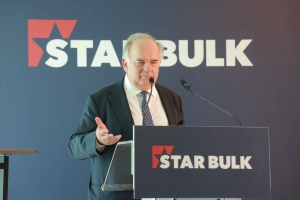
Star Bulk Carriers Corp. is executing a dual listing on the Athens Exchange (Euronext Athens), offering local investors a secure investment opportunity amidst global market volatility. Operating a fleet of 145 vessels ($4.5 billion market value), the dry bulk leader presented its strategy during a press conference at the Conrad Athens, led by CEO Petros Pappas and Chairman Spyros Kapralos.
The move serves as a strategic safeguard and currency diversification mechanism. Star Bulk offers 4.4 million shares at a 20% discount to its Net Asset Value (NAV), capped at €25.50 per share, with the Pappas family investing €6 million under identical terms. The public offering aims to raise €100 million to finance the delivery of three under-construction Kamsarmax eco-vessels.
Financially, Star Bulk generated $332 million in Adjusted EBITDA in 2025. For H1 2026, total revenues reached $485.2 million with a net income of $108.4 million. The company maintains an exceptionally low net debt-to-fleet value ratio of approximately 10% ($476 million net debt) and has returned over $2.1 billion to shareholders via dividends and buybacks since 2021.
Subscription runs from September 14–16, 2026, with trading scheduled for September 18. Additionally, Star Bulk supports Greek shipyards with €120 million in repairs and promotes maritime education.
ELNAVI Newsletter
More Information: ELNAVI,
19, Aristidou str., Piraeus 185 31,
Tel.: +30 210 45.22.100, e-mail: This email address is being protected from spambots. You need JavaScript enabled to view it.
9th Tripartite Meeting Cyprus – Greece – Malta with the participation of Italy 9th of September 2026
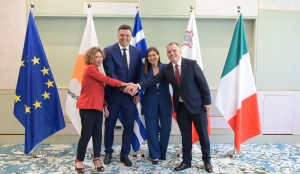
The Shipping Deputy Ministry of the Republic of Cyprus hosted in Limassol the 9th Tripartite Meeting of Cyprus, Greece and Malta, with the participation of Italy, reaffirming the strong maritime ties and excellent cooperation among the four countries.
The meeting was chaired by the Shipping Deputy Minister to the President of the Republic of Cyprus, Ms. Marina Hadjimanolis, who welcomed the Minister of Maritime Affairs and Insular Policy of Greece, Mr. Vasilis Kikilias, the Minister for Sustainable Mobility of Malta, Dr. Chris Bonett, and via teleconference the Deputy Minister of Infrastructure and Transport of Italy, Mr. Edoardo Rixi.
The Ministers held a constructive and fruitful exchange of views on key maritime issues of common interest, focusing on the current challenges facing international shipping, the competitiveness of European shipping, and ongoing developments concerning the decarbonization of shipping at both European Union and International Maritime Organization level.
Following their discussions, the Ministers adopted and singed a Joint Declaration, through which they reaffirm their commitment to further enhancing cooperation and coordination on maritime issues of common interest and to continuing their close dialogue in view of the forthcoming discussions within the European Union and the International Maritime Organization.
ELNAVI Newsletter
More Information: ELNAVI,
19, Aristidou str., Piraeus 185 31,
Tel.: +30 210 45.22.100, e-mail: This email address is being protected from spambots. You need JavaScript enabled to view it.
DNV: LNG bunker fleet may need to more than double by 2030 to keep pace with growing fuel demand
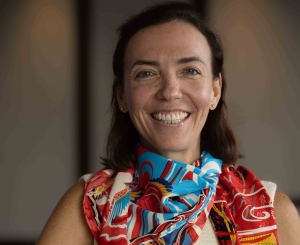
The global LNG bunker vessel fleet may need to more than double by 2030 as demand from LNG-fuelled ships grows faster than the infrastructure required to supply them, according to a new DNV white paper. The report estimates that between 165 and 208 bunker vessels could be needed globally by the end of this decade.
As LNG-powered shipping continues to grow, demand for bunkering capacity is rising rapidly. Although the LNG bunker fleet is expanding steadily, demand from LNG-fuelled vessels is expected to grow even faster, placing increasing pressure on bunker vessels and the wider bunkering ecosystem.
Without additional investment across this value chain, fuel supply could become a constraint on further LNG adoption in shipping. DNV’s white paper, Gas bunker vessels: facilitating the transition to alternative fuels, highlights how gas bunker vessels are evolving from specialist fuel delivery assets into critical infrastructure supporting shipping’s fuel transition.
Cristina Saenz de Santa Maria, CEO Maritime at DNV, said: “Shipping’s fuel transition depends on more than ships and fuel choices. It also depends on the infrastructure, supply chains, and operational capabilities needed to make alternative fuels available safely and at scale. As the fuel landscape continues to evolve, investment in flexible, reliable, and future-ready bunkering infrastructure will be essential.”
The white paper examines market developments, regulatory requirements, vessel design considerations, gas bunker vessel technical specialities, and operational best practices, while outlining the role gas bunker vessels will play in supporting both current LNG demand and the future adoption of alternative fuels. The white paper also highlights opportunities to accelerate market development through the conversion of suitable small-scale LNG carriers into bunker vessels.
In addition, it examines the growing importance of operational readiness, structured safety management, and competence development as bunkering operations become more frequent and geographically widespread.
Martin Cartwright, Global Business Director, Gas Carriers & FSRUs at DNV, said: “LNG-fuelled shipping is growing faster than the bunkering network needed to support it. Closing this gap will require coordinated investment across the bunkering ecosystem, underpinned by robust safety standards, operational readiness and competence. These elements must advance together if gas bunkering is to scale safely and reliably, while also supporting future pathways, such as biomethane.”
While the white paper focuses primarily on LNG, it also considers the emergence of ammonia as a potential marine fuel. The infrastructure, operational experience, and safety frameworks being developed for LNG bunkering today are expected to play an important role in supporting the future deployment of ammonia bunkering solutions.
ELNAVI Newsletter
More Information: ELNAVI,
19, Aristidou str., Piraeus 185 31,
Tel.: +30 210 45.22.100, e-mail: This email address is being protected from spambots. You need JavaScript enabled to view it.

By Irene Notias
As Greek shipping confronts the challenge of attracting capable, commited young talent, maritime education initiatives such as Adopt a Ship™ are proving that the most important investment is not in vessels, but in young minds. By connecting captains directly with students, the industry is building awareness, opportunity, and purpose for the next generation.
Greek shipping has long been a miracle of vision, resilience, and entrepreneurship.
For generations, Greek shipowners have carried far more than cargo. They have carried the reputation of our nation across the world's oceans, connecting markets, economies, and people. Through determination, innovation, and global leadership, they transformed a small maritime nation into the most influential shipping force in the world.
But today, I believe we are standing before an opportunity to create a second Greek shipping miracle.
Not one measured in tonnage, fleet size, or market share.
One measured in knowledge, opportunity, and human potential.
For far too many years, shipping remained invisible to young people. While our industry quietly moved more than 90 percent of world trade, students rarely learned about it in the classroom. They knew little about the men and women serving at sea, the opportunities available ashore, or the critical role maritime transportation plays in their daily lives.
Today, thousands of students across Greece are discovering the world of shipping through direct engagement with vessels and seafarers due to Adopt a ShipTM. This growing movement may become one of the maritime industry's most enduring legacies. Through Adopt a Ship™, Greek shipping is once again demonstrating how it can serve society by investing in future generations, fostering education, empathy, opportunity, and authentic human connection. As the industry navigates an era shaped by technology, sustainability, and innovation, its greatest investment remains the people who will lead it tomorrow.
As an industry, we often ask ourselves where the next generation of maritime professionals will come from.
The answer is simple.
We must meet them where they are.
In the classroom.
This belief led to the development and expansion of Adopt a Ship™, an educational initiative that creates a direct connection between school students and the maritime world through active communication with vessels and their captains.
What makes the program unique is not the technology. It is not the platform. It is not even the educational content.
It is the human connection.
For decades, what was often missing was the opportunity for students to connect directly with the people behind the ships.
Adopt a Ship™ brings the ship's bridge into the classroom.
A captain's email becomes a lesson on geography, leadership, teamwork, resilience, and global citizenship. Students follow a vessel's voyage around the world while discovering what life at sea is truly like. They learn not only about navigation and trade, but about responsibility, professionalism, sacrifice, and service.
Most importantly, they meet the humans behind the industry.
In an age increasingly dominated by social media algorithms, virtual realities, and artificial intelligence, authentic human connection has become one of our most valuable educational resources.
Students need role models.
They need mentors.
They need real-world experiences.
They need to understand that behind every product they use, every store shelf they visit, and every economy that thrives, there are people making it happen.
The men and women of shipping are among those people.
This is why the program's impact has gone far beyond maritime awareness.
It cultivates empathy.
It fosters respect for essential workers.
It encourages curiosity, adventure, and exploration.
It helps young people think globally while remaining connected to their own communities.
It builds bridges between education and industry at a time when such bridges are needed more than ever.
The results speak for themselves.
Thousands of students across Greece have participated. Awareness of shipping's role in global trade has risen dramatically among participants. Young people who had never considered maritime careers are now enrolling in Merchant Marine Academies and maritime-related university programs.
Many are discovering opportunities they never knew existed.
Demonstrated Educational Impact
The results of a Project Connect nationwide evaluation involving 5,240 students and 150 educators demonstrate the transformative power of the program:
- Students' understanding of shipping's role in global trade increased from 6% to 94.9%.
- 1%of participating students expressed interest in pursuing a maritime-related career.
- During the past three years, 380 students from vocational high schools (EPAL)have been admitted to Merchant Marine Academies or maritime-related university programs.
These results demonstrate that Adopt a Ship™ is not only educating students about shipping but also inspiring future generations to consider careers within the maritime ecosystem while developing a broader understanding of the world's interconnected economy.
But the true success of the initiative extends beyond statistics.
It lies in the letters exchanged.
The questions asked.
The dreams inspired.
The futures shaped.
Through Project Connect™, we have spent years serving as a bridge between the maritime industry, educational institutions, policymakers, educators, students, and families. We have worked closely with stakeholders across the public and private sectors, helping align industry needs with educational opportunities and fostering collaboration between the maritime community and the Ministries of Education and Maritime Affairs.
Our mission has always been simple.
Create access.
Create awareness.
Create opportunity.
Today, Adopt a Ship™ contributes to 11 of the 17 United Nations Sustainable Development Goals, supporting quality education, decent work, gender inclusion, partnerships, and sustainable development.
It demonstrates that meaningful ESG engagement does not begin with reporting frameworks.
It begins with people.
With students.
With teachers.
With seafarers.
With a single conversation that can change a young person's perspective forever.
Greek shipping has always answered the call when society needed leadership.
Today, that call is education.
The future of our industry will not be determined solely by digital transformation, decarbonization, or technological innovation.
It will also be determined by whether we inspire the next generation to become part of it.
Every vessel that joins Adopt a Ship™ becomes more than a ship.
It becomes a classroom.
Every captain becomes more than a master of a vessel.
They become a mentor.
Every participating shipping company becomes more than a corporate supporter.
They become an investor in human potential.
We often say that shipping moves the world.
Now we have an opportunity to move something even more important.
Young minds.
The first Greek shipping miracle showed the world what Greek shipowners could achieve through vision and determination.
The second demonstrates what we can achieve through education, connection, and purpose – united and collectively.
After all, what greater cargo can we deliver than knowledge?
And what greater investment can we make than in the minds and aspirations of the next generation?
Join a Growing Maritime Movement
Today, Adopt a Ship™ is supported by an expanding network of leading shipping companies, committed Masters, dedicated educators, and thousands of students across Greece.
By joining this initiative, your organization becomes part of a community that believes in investing in the future of maritime education, fostering human connection, and inspiring the next generation of maritime professionals.
We invite you to explore the companies and vessels already participating in the program and discover the collective impact being made across the maritime industry:
View our participating companies and fleet partners: https://www.project-connect.gr/companies/members/
Together, we ensure that every classroom seeking a vessel partnership has the opportunity to experience the world of shipping firsthand.
Together, we ensure that every classroom seeking a vessel partnership has the opportunity to experience the world of shipping firsthand.
The first Greek Shipping Miracle showed the world what Greek shipowners could achieve through vision and determination.
The second can demonstrate what we can achieve through education, connection, and purpose.
After all, what greater cargo can we deliver than knowledge?
And what greater investment can we make than in the minds and aspirations of the next generation?
STANDOUT 2
We would be honored to welcome one or more vessels from your fleet into the Adopt a Ship™ community for the 2026-2027 school year.
Together, let us strengthen the connection between shipping and society, inspire future generations, and demonstrate once again that the Greek maritime community leads not only through commerce, but through vision, generosity, and purpose.
For additional information or to register your vessel(s), please contact:
Telephone: (+30) 211 1195 693
Email: This email address is being protected from spambots. You need JavaScript enabled to view it.
Website: www.project-connect.gr
Direct Registration Platform: https://adoptaship.dynamarine.com/auth/login
Program Presentation Video:
https://www.youtube.com/watch?v=oMhXBZkurg0
We look forward to welcoming your company to this growing movement and to shaping the future of maritime workforce thru education in early ages, together.
About the Author
Irene Notias is Founder of Project Connect™ and Founder of Prime's BunkersPlus Services. A pioneering advocate for maritime education, she has dedicated her career to connecting young people with opportunities across the global maritime industry through education, mentoring, industry engagement initiatives and hundreds of job placements.
STANDOUT
Demonstrated Educational Impact
The results of a nationwide PROJECT CONNECTTM evaluation involving 5,240 students and 150 educators demonstrate the transformative power of the Adopt a ShipTM program:
- Students' understanding of shipping's role in global trade increased from 6% to 94.9%.
- 1%of participating students expressed interest in pursuing a maritime-related career.
- During the past three years, 380 students from vocational high schools (EPAL) have been admitted to Merchant Marine Academies or maritime-related university programs.
ELNAVI Newsletter
More Information: ELNAVI,
19, Aristidou str., Piraeus 185 31,
Tel.: +30 210 45.22.100, e-mail: This email address is being protected from spambots. You need JavaScript enabled to view it.