
Tuesday, April 07, 2026
elnavi

elnavi

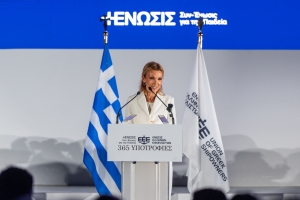
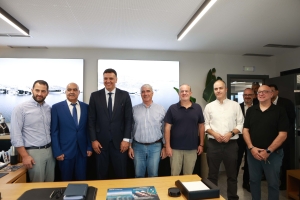
The newly released INTERCARGO Ship-to-Ship (STS) Transfer Guide, unveiled on 31 March 2026 at the Angelicoussis Group headquarters in Athens, marks a historic milestone as the one of the most dedicated industries framework addressing STS, transloading, and lightering operations specifically for the dry bulk sector. Representing a collaborative masterwork of globally recognized specialists, the guide reinforces bulk carriers' role as the backbone of maritime trade by providing a comprehensive reference for safety, efficiency, and risk management.

During the launch, INTERCARGO Chair Mr. John Xylas and Technical Committee Chair Mr. Dimitris Monioudis emphasized how these standardized best practices foster sustainable operations, while Dr. Alexandros Glykas of DYNAMARINe and Tom Fitchew of Fendercare highlighted the necessity of adapting rigorous risk management standards from the tanker sector to bulk transfers.

Safety and insurance clarity were central themes, with Jacob Damgaard of Britannia P&I discussing the complex operational challenges and Mr. Konstantinos Petrakis of Charterwell Maritime S.A. outlining how the guide creates uniformity and simplifies legal assessments. While Petrakis identified "resistance to change" as a hurdle, he advocated for training, tabletop drills, and enhanced communication with service providers through pre-transfer meetings as the definitive solutions.

Supported by industry leaders like Capt. Stamatis Dimitrakis and Mr. Panagiotis Nikiteas of Maran Dry Management Inc., the initiative is poised to drive external stakeholders toward operational excellence through commercial channels, ultimately strengthening the safety culture for the entire global maritime community.

ELNAVI Newsletter  
More Information: ELNAVI,
19, Aristidou str., Piraeus 185 31,
Tel.: +30 210 45.22.100, e-mail: This email address is being protected from spambots. You need JavaScript enabled to view it.
Greek-controlled fleet has reached an all-time high, reinforcing Greece’s position as a global maritime superpower. Despite regulatory shifts and flag competition, the fleet saw significant year-over-year growth in every primary metric.

The Total Controlled Fleet stands at 4,388 vessels (+167 YoY), Total Deadweight Tonnage (DWT) 360,564,729 (+6.4M YoY), Total Gross Tonnage (GT): 211,204,583 (+3.1M YoY) and the Future Pipeline includes 422 vessels currently on order (40.2M DWT).


Flag State Analysis


The Greek-controlled fleet is diversified across 31 international flags. While the Greek national registry remains a top-tier global player, there is a clear trend toward "Open Registries" like Liberia and the Marshall Islands, which offer greater administrative flexibility.

Liberia gained a record number of 130 vessels, Panama gained 30 ships, Marshall Islands gained 25 and Portugal (Madeira) 19. The Cyprus and Barbados registry remained unvaried in terms of number of vessels.

The number of vessels registered under the Greek flag decreased slightly this year by 17 vessels. In terms of DWT and GT there was a decrease of 3,773,090 and 2,106,014 respectively.

Overall, the Liberia and Marshall Island flags are at the forefront of the Greek-owned fleet with 1,279 and 1,061 Greek-owned ships, respectively, on their registers. In terms of DWT, Liberia accounts for 111,307,219, representing 30.1%, Marshall Islands accounts for 83,286,472, representing 23.1 % and Malta with 579 ships of 50,891,381 DWT, representing 14,1% of the total DWT of the Greek-owned fleet. The Greek flag stands with 463 ships of 44,944,717 DWT. It should be noted that the Greek flag remains in the fourth place globally in terms of DWT, as it represents 12.5% of the total DWT of the Greek-owned fleet.

In terms of DWT, Panama follows with 330 ships of 22,728,332 DWT, Cyprus with 253 ships of 19,024,790 DWT and Bahamas with 183 ships of 15,536,597 DWT. Furthermore, it should be noted that the total number of vessels registered under EU flags stands at 1,388, which accounts for 31,6% of the Greek fleet. This figure has decreased, when compared to the previous year’s figure of 1,414 vessels, which represented 33,5% of the Greek fleet.


Market Share & Sector Specialization


Greek shipping remains the backbone of global energy and bulk trade. The Greek fleet's footprint is significantly larger than its "vessel count" suggests because Greek owners tend to operate larger, high-capacity ships.

Greek Share of the Global Market

  • • World Tanker Fleet: 22% (by capacity)
  • • World Ore & Bulk Fleet: 16%
  • • World Liquefied Gas Fleet: 8%
  • • Total World Fleet (DWT): 14.2%

Current Order Book (Newbuilds)

The 422 vessels on order reflect a strategic pivot toward liquid bulk and specialized transport:

  • • Oil & Product/Chemical Tankers: 201 vessels
  • • Ore & Bulk Carriers: 77 vessels
  • • Container Ships: 74 vessels
  • • Liquefied Gas Carriers: 43 vessels

Fleet Age & Sustainability

A younger fleet is a more efficient and compliant fleet. Greek owners continue to outperform the global average in terms of vessel modernization.

The average age of the Greek-controlled fleet in terms of ships increased slightly compared to the previous year, but, nevertheless, continues to be 4.5 years below the average age of the world fleet.

The average age of the Greek controlled fleet in terms of ships now stands at 14.3 years, in comparison to 18.8 years for the world fleet. In terms of GT and DWT, it is 12.8 and 12.7 years respectively, as against 13.8 and 13.7 of the world fleet.

The average age of the existing Greek flag fleet recorded a slight increase in terms of ship numbers, now standing at 16.6 years, in comparison to 16.3 years in 2025. A slight increase has also been noted in terms of GT and DWT, with values of 11 and 10.6 years respectively, as against 10.7 and 10.3 years in 2025.

Classification Societies

Greek owners rely on top-tier classification societies to ensure safety and compliance. ClassNK and Lloyd’s Register remain the preferred partners for the majority of the fleet.

  1. ClassNK: 891 ships
  2. Lloyd’s Register: 804 ships
  3. ABS: 757 ships
  4. BV: 739 ships
  5. DNV: 607 ships
  6. RINA: 352 ships

Conclusion

The Greek maritime industry has demonstrated remarkable resilience and expansion. While the shift toward non-EU flags continues due to bureaucratic pressures, the overall growth in DWT and the modern age profile of the fleet ensure that Greek shipping remains the dominant force in the global supply chain for 2026 and beyond.

ELNAVI Newsletter  
More Information: ELNAVI,
19, Aristidou str., Piraeus 185 31,
Tel.: +30 210 45.22.100, e-mail: This email address is being protected from spambots. You need JavaScript enabled to view it.


Venergy Maritime has exercised its options for two additional MR (Medium Range) product and chemical tankers at K Shipbuilding in Korea, with delivery scheduled for 2028.

This brings the company’s total fleet plan to 11 vessels – 8 newbuildings and 3 second hand units – all Korean built, reflecting its focus on quality, efficiency and long-term value.

As the company states: “Venergy continues to see strong fundamentals in the product tanker market, driven by shifting trade flows, refinery dislocation and increasing environmental requirements.

In this environment, modern eco tonnage is not just an advantage, it is a necessity.

At V GROUP, we remain committed to disciplined growth and sustainable investment, building a fleet that is competitive today and aligned with the future of shipping”.

Venergy Maritime is part of the Vasileiadis Group (V GROUP), a Piraeus-headquartered organisation active in environmental services, energy transition and hazardous waste management, with a growing focus on alternative fuels for the marine and industrial sectors.

ELNAVI Newsletter  
More Information: ELNAVI,
19, Aristidou str., Piraeus 185 31,
Tel.: +30 210 45.22.100, e-mail: This email address is being protected from spambots. You need JavaScript enabled to view it.
Despite the ongoing Red Sea crisis and regional instability, Piraeus Port Authority S.A. (PPA) achieved a historic financial performance in 2025, with total revenue climbing 8.6% to reach €250.8 million. EBITDA rose to €132.3 million, demonstrating remarkable corporate resilience. The Board has proposed a stable dividend of €1.896 per share, maintaining its commitment to returning 55% of net profit to shareholders.

Growth was primarily driven by the cruise sector, which hit an all-time high with a 24.8% revenue surge, and Pier I, which achieved net profitability for the first time following a 17.0% revenue boost. While the ferry sector saw a 28.4% revenue drop due to a strategic reduction in port fees to support domestic ticket pricing, passenger volumes continued to rise. Although ship repair and car terminal revenues saw slight declines due to maintenance shutdowns and high 2024 benchmarks, transshipment cargo grew by 17.6%.

The CEO of PPA S.A., Mr. Su Xudong, stated: “The year 2025 confirmed the Company’s steady growth trajectory, delivering strong financial and operational performance. Despite a challenging international environment, we achieved new positive results, while continuing to invest systematically in the future of the port. This demonstrates the strength of our strategy and the dedication of PPA employees. We remain committed to consistently implementing our strategy, creating value for our shareholders and supporting the long-term growth of the port and the Greek economy”.

ELNAVI Newsletter  
More Information: ELNAVI,
19, Aristidou str., Piraeus 185 31,
Tel.: +30 210 45.22.100, e-mail: This email address is being protected from spambots. You need JavaScript enabled to view it.

Law firm Stephenson Harwood LLP has opened its new office in Athens, marking both the relocation from Piraeus and a significant milestone as the firm celebrates 30 years of continuous presence in Greece.

The recent launch event at the new Athens office brought together distinguished guests, including clients, colleagues, and friends from across the maritime, finance and energy sectors, and highlights the strong relationships Stephenson Harwood has built within the Greek and international business communities.

Dora Mace-Kokota, Managing Partner of the Athens office and Global Head of Maritime, Trade & Offshore, commented: “As we celebrate 30 years in Greece, the relocation and expansion of our Athens office is a strategic investment in the future. Our enhanced presence enables us to respond more effectively to the evolving needs of our clients, while positioning us to grow into new areas of practice. We are committed to supporting our clients with innovative solutions and deep sector expertise, and our new office is a testament to that commitment. This milestone is not just about our history - it’s about our vision, as we continue to build on our strengths and expand our capabilities in Greece and globally”.  

Eifion Morris, CEO, commented: “Accelerating the growth of our international offices is a key priority for the firm, and our Athens office is testament to that commitment. It’s wonderful to see so many familiar faces, as well as new ones, as we expand our offering with the aim of providing a full-service solution in the region. This is an exciting time for our Greek practice, and I look forward to the next chapter.”

ELNAVI Newsletter  
More Information: ELNAVI,
19, Aristidou str., Piraeus 185 31,
Tel.: +30 210 45.22.100, e-mail: This email address is being protected from spambots. You need JavaScript enabled to view it.
Bernhard Schulte Shipmanagement Hellas joined the Green Award sea-going programme as a new Certificate Holder reflecting the company’s commitment to safe, high-quality and environmentally responsible ship management.

Bernhard Schulte Shipmanagement (BSM) is an integrated maritime solutions provider, managing a fleet of approximately 670 vessels with a global workforce of 40,000 seafarers and 2,000 shore-based employees. Through its international network of ship management offices, crew service centres and maritime training facilities, the company supports shipowners in maintaining safe and efficient vessel operations.

As part of the Schulte Group, BSM benefits from more than 140 years of experience in the shipping industry, supporting its ongoing efforts to combine operational excellence with sustainability.

Sustainability is a key priority within BSM’s operations. The company is actively advancing the digitalization of processes and contributing to the decarbonization of the maritime sector, while maintaining a strong focus on ethical conduct and responsible business practices. As ship managers, BSM recognizes its role in addressing climate-related risks and opportunities, supporting clients in their sustainability journey and safeguarding the long-term performance of their assets.

BSM is committed to complying with all relevant national and international environmental regulations and to setting targets aimed at reducing the environmental impact of its activities on both the marine environment and the atmosphere. Through continuous improvement and structured environmental management, the company contributes to a more sustainable and responsible shipping industry.

By joining the Green Award sea-going programme, Bernhard Schulte Shipmanagement Hellas aligns with the shared mission of advancing safe, environmentally responsible and sustainable ship operations worldwide.

ELNAVI Newsletter  
More Information: ELNAVI,
19, Aristidou str., Piraeus 185 31,
Tel.: +30 210 45.22.100, e-mail: This email address is being protected from spambots. You need JavaScript enabled to view it.
Posidonia Survey Shows Shipping Weighs AI Acceleration Against Maritime Pragmatism 

All newly available maritime Artificial Intelligence (AI) services and products will be presented at Posidonia, as the industry is slowly incorporating its potential into everyday operations. The maritime industry, traditionally measured in its adoption of new technologies, is steadily advancing its engagement with AI, though not without caution, according to findings of a recent Posidonia survey.

Ahead of Posidonia 2026, which will take place from 1-5 June at the Athens Metropolitan Expo, organisers observe growing dialogue among exhibitors and industry stakeholders around AI-driven solutions spanning predictive maintenance, fuel optimisation, digital compliance, and operational analytics. Yet, the overall sentiment across the sector remains balanced: shipping is neither rushing into AI nor standing still.

“Artificial Intelligence is clearly transitioning from theoretical discussion to operational application,” said Posidonia Exhibitions Managing Director, Theodore Vokos. “Over 40 Posidonia 2026 exhibitors have lent their insights regarding AI adoption by their businesses, and what we are witnessing is not blind adoption, but structured experimentation. The maritime industry is assessing AI through the lens of safety, compliance and return on investment.”

“In a period of intense geopolitical turbulence, the shipping industry is already preparing for next day. Posidonia 2026 will be more topical than ever, as a wide range of issues and developments will be discussed, including, among others, the consequences of the conflict in Iran. But as has been proven in the past, shipping responds faster than other sectors to challenges, and this is also reflected in this year’s survey on the adoption of Artificial Intelligence,” continued Mr. Vokos.

Industry responses, gathered in the run-up to the exhibition, reveal three distinct approaches: active adopters embedding AI into products and services; companies selectively integrating AI for internal optimisation; and others maintaining a cautious, observational stance.

Classification societies and technology leaders appear among the most proactive. Bureau Veritas sees AI increasingly embedded in routing optimisation, fuel consumption prediction, and risk-based inspection frameworks. Through digital tools that combine drone imagery, scanning and intelligent data processing, AI enhances survey precision while preserving human oversight.

Alex Gregg-Smith, President, Marine & Offshore at Bureau Veritas, said: “AI adoption in the shipping industry is progressing steadily and is expected to accelerate as digitalization, decarbonization and data-driven decision-making become central to maritime operations. Rather than replacing existing practices, AI is increasingly embedded in practical applications such as vessel routing optimization, fuel consumption prediction, risk-based inspection, and predictive maintenance schemes. Regulatory drivers and the growing availability of real-time ship data are further supporting this shift.”

Some companies are going all-in on AI, such as Nereus Digital Bunkers, an AI-native company. According to Nikolas Gkikas, Founder and CEO: “AI is not a feature we are adding — it is a structural component of our platform. Our AI Procurement Advisor is already in active development and is being piloted with select clients. It uses large language model technology, combined with domain-specific maritime and commodity market data, to provide contextual, actionable insights directly inside the procurement workflow.” Nereus also employs machine learning models for price forecasting, enabling clients to anticipate port-level bunker price movements and make more informed stem timing decisions — reducing fuel costs meaningfully.

In the technical services segment, Dynamic Group of Companies is leveraging decades of maintenance data to transition from reactive repairs to predictive asset management. By applying analytics to hull and ballast tank records, the company aligns maintenance cycles with both financial efficiency and environmental performance targets.

“The maritime industry is adopting AI at an accelerated pace, driven by the immediate demands of CII and EU ETS compliance. At Posidonia 2026, we are showcasing how our synthesis of historical data and industrial robotics ensures your fleet remains both competitive and compliant,” said Cpt. Ioannis (John) Nikolitsis, CEO, Dynamic Group of Companies.

Similarly, Fortune Technologies has embedded AI-powered modules within its enterprise software platforms, automating processes and generating operational insights for ship operators. Electropneumatic S.A. is integrating AI within its R&D activities, while Endress+Hauser anticipates accelerated deployment in predictive diagnostics and fleet performance monitoring.

Yet beyond early adopters, a more measured tone prevails.

MAS S.A., active in advanced automation systems, expects AI adoption to expand primarily within decision-support tools and optimisation layers, while core control systems remain bound by deterministic safety and classification requirements. Navigator Shipping Consultants echoes this pragmatic outlook. While AI already supports emissions monitoring and data analytics, critical operational decisions — particularly under emergency conditions — remain firmly human-led.

Danae Bezantakou, CEO, Navigator Shipping Consultants, said: “Shipping operations require continuous human involvement, direct communication, immediate intervention and the ability to assess and manage situations on a case-by-case basis. Operational challenges, complex decision-making and, above all, emergency situations cannot be fully addressed by platforms or automated systems alone.”

The regulatory dimension also shapes industry posture. Normec Verifavia, active in emissions verification and auditing, highlights the necessity for traceable and auditable AI frameworks within a highly regulated sector. Environmental compliance is widely viewed as a catalyst. Decarbonisation pressures, CII performance monitoring and EU ETS requirements are accelerating demand for digital tools capable of managing complex datasets and improving efficiency metrics.

In logistics and support services, firms including Royal Blue Logistics and Adamar International Maritime Services report using AI-based tools to improve inventory planning and operational forecasting, while emphasising that implementation remains selective.

Taner Topkara, General Manager, Adamar, said:AI has become an essential component across most industries, including the maritime sector, and its influence continues to expand. Adamar, without eliminating the human factor, already uses advanced digital technologies and is actively integrating AI-driven solutions to address emerging industry demands, particularly in enhancing operational efficiency, logistics optimisation, and inventory planning for shipping companies.”

Perhaps the most consistent conclusion across industry responses is that AI will augment rather than replace the human element.

From shipyards to surveyors, executives stress that maritime operations involve dynamic, real-time decision-making in unpredictable environments. Automation may increase efficiency and reduce risk, but accountability, safety and operational trust remain human responsibilities.

Economic considerations further temper adoption rates. Return on investment, data ecosystem collaboration and cyber security resilience are repeatedly cited as prerequisites for broader AI integration.

As Posidonia 2026 approaches, AI solutions are expected to become a major point of interest both on the exhibition floor and at the conference discussions of the event. However, rather than signalling a sudden technological upheaval, the industry appears to be navigating a gradual transformation, consistent with its longstanding culture of measured innovation.

Vokos added: “Shipping has historically balanced tradition with technological advancement. Artificial Intelligence represents the latest chapter in that evolution. At Posidonia 2026, the debate will not centre on whether AI belongs in maritime operations, but on how, where and how fast it should be deployed. The prevailing industry view suggests that AI’s course is set. The pace, however, will remain characteristically maritime, resembling a U-turn of a tanker in high seas: steady, deliberate and guided by safety, regulation, and operational realism.”

Posidonia 2026 is organised under the auspices of the Ministry of Maritime Affairs and Insular Policy, the Hellenic Chamber of Shipping and the Union of Greek Shipowners, with the support of the Municipality of Piraeus and the Greek Shipping Co-operation Committee.

ELNAVI Newsletter  
More Information: ELNAVI,
19, Aristidou str., Piraeus 185 31,
Tel.: +30 210 45.22.100, e-mail: This email address is being protected from spambots. You need JavaScript enabled to view it.

Capital Link's 20th Annual International Shipping Forum took place with great success on Monday, March 9, 2026, at the Metropolitan Club in New York City. The Forum was held in cooperation with NYSE and Nasdaq.

The event, one of the most prominent global gatherings of maritime leaders, brought together senior executives, shipowners, financiers, policymakers, and institutional investors to discuss the evolving dynamics of the global shipping industry. The caliber of speakers and panelists highlighted the strategic importance of the event as a leading platform for dialogue on policy, capital markets, trade flows, geopolitics, innovation, and sustainability.

Key speakers at the event included the Greek Minister of Maritime Affairs and Insular Policy, Vasilis Kikilias (via webcast), the U.S. Department of Energy’s Special Envoy for Global Energy Integration, Joshua Volz, the Deputy Assistant Secretary for Transportation Affairs at the U.S. State Department, Marco Sylvester, and the Administrator of the U.S. Department of Transportation’s Maritime Administration, Steven Carmel.

Also, Capital Link hosted a delegation of postgraduate students from the MSc in Marine Science and Technology Management (MSc MSTM) — jointly offered by the University of Piraeus and the Hellenic Naval Academy — and the MSc in Sustainable Blue Economy (MSc SBE) of the University of Piraeus.

During the Forum, representatives of the University of Piraeus presented Nicolas Bornozis, President and CEO of Capital Link, and Olga Bornozi, Managing Director, with a Commemorative Plaquette in appreciation of their continued support in fostering meaningful interaction between academia and the maritime industry, and for hosting the student delegation at the Forum.

Investor Meetings

1x1 meetings with Executives of Shipping Companies were available for institutional investors. 

FROM NET ZERO TO NOW WHAT? THE ENERGY TRANSITION DEBATE

Moderator: Ms. Maxi Adamski-de Visser, Counsel – Watson Farley & Williams LLP

Panelists:

  • Mr. Richard Tao, Business Development Leader Maritime Advisory, Americas – DNV
  • Mr. Konstantinos Stampedakis, Co-Founder & Managing Director – ERMA TECH GROUP
  • Dr. Anastasios Aslidis, CFO & Treasurer – Euroseas Ltd. (NASDAQ: ESEA); EuroDry Ltd. (NASDAQ: EDRY); Chief Strategy Officer – Euroholdings Ltd. (NASDAQ: EHLD)
  • Mr. Alexander Prokopakis, Executive Director – International Bunker Industry Association (IBIA)
  • Mr. Dimitris N. Monioudis, Chairman – Technical Committee – INTERCARGO

Mr. Richard Tao, Business Development Leader Maritime Advisory, Americas – DNV, stated:

“Despite the IMO's postponement of its Net-Zero Framework (NZF) adoption—now deferred to 2026 after last year's impasse, creating short-term uncertainty and a slowdown in alternative fuel newbuild orders since late 2025—the transition is advancing steadily. Geopolitics has delayed global consensus, yet momentum persists through non-regulatory drivers: cargo owners demanding greener supply chains, financial institutions integrating ESG criteria, and ongoing technical advancements. These forces are propelling proactive owners to set ambitious decarbonization paths that outpace mandates, ensuring progress even without full IMO clarity.

Short-term (to 2030), the fuel landscape favors accessible low-GHG options. Container ships, cruises, and car carriers lead adoption, while bulkers and tankers opt for fuel-ready newbuilds (LNG-, methanol-, or ammonia-ready). Biodiesels and bio-LNG dominate due to existing production and infrastructure, with the fleet potentially consuming up to 50 Mtoe of non-oil fuels—primarily ~44 Mtoe LNG, plus smaller volumes of methanol (~6 Mtoe), LPG, ammonia, and hydrogen. New fuels continue facing hurdles of price (2–5x conventional), availability, and infrastructure gaps.

Long-term, a multi-fuel future emerges, varying by vessel type and trade routes, incorporating bio- and e-fuels. Energy efficiency remains foundational—"the best fuel is the one you don’t burn"—amplifying savings as low-GHG fuels stay expensive.

Richard highlighted underutilized yet viable efficiency tech, notably wind-assisted propulsion (WAP). With ~80 installations operational and over 100 in the order book, 2026 could mark a breakthrough year. Up to 50,000 vessels (especially bulkers and tankers) are relevant, offering 5–20% fuel reductions (enhanced by regulatory rewards like FuelEU Maritime). Payback periods of 5–10 years are achievable for suitable routes, with costs potentially dropping ~40% at scale; third-party verifications are refining business cases.

AI accelerates the transition via route optimization, fuel efficiency modeling, and emissions monitoring, drawing on mandatory reporting data—though strong cybersecurity and trustworthy frameworks are essential.

In conclusion, to overcome persistent "chicken-and-egg" dilemmas—such as fuel producers needing offtake commitments for financing and owners requiring assured supply—the industry must urgently develop collaborative mechanisms (e.g., expanded green corridors, shared risk tools, or insetting/book-and-claim systems) involving all stakeholders to scale infrastructure cost-effectively and keep long-term net-zero targets realistic. At same time, shipowners must establish clear, flexible strategies now, incorporating scenario planning for varying regulatory outcomes and fuel pathways to navigate uncertainty effectively.”

Mr. Alexander Prokopakis, Executive Director – International Bunker Industry Association (IBIA), stated: “A strong start to the week in New York participating in the panel ‘From Net Zero to Now What? The Energy Transition Debate’ at the Capital Link International Shipping Forum. It was an interesting discussion, reflecting the reality that even with geopolitical tensions and market uncertainty, the energy transition remains at the center of strategic thinking for our industry. The conversation touched on the need for pragmatic solutions, continued investment in new technologies, and the importance of collaboration across the maritime value chain. These themes are not theoretical anymore; they are shaping decisions today for shipowners, energy suppliers, regulators, and service providers.

My thanks to Nicolas, Olga, and the entire Capital Link team for the kind invitation and the excellent organization. Events like this succeed when they manage to combine deep expertise with open dialogue, and this forum delivered exactly that.

A particularly positive element was seeing young professionals attending the session. Their presence is a reminder that the future of shipping depends on attracting and empowering the next generation, who will inherit both the opportunities and the responsibilities of this evolving landscape.”     

Mr. Dimitris N. Monioudis, Chairman – Technical Committee – INTERCARGO, stated: “A great start to the week in New York with Dimitris Monioudis representing the global association of dry cargo shipowners, INTERCARGO and joining the panel “From Net Zero to Now What? The Energy Transition Debate” at the Capital Link International Shipping Forum.

The discussion touched upon geopolitical and regulatory uncertainty, whilst highlighting that energy efficiency has been in the past and will continue to be central to strategic decisions across the dry bulk sector.

Currently available pragmatic solutions, such as improved hull coatings, propeller modifications and voyage optimization have been widely adopted as they offer a reasonable return on investment. Bulk carrier operators are not fuel producers and therefore alternative fuels will only be accepted in great numbers, when such fuels are proved to be safe, widely available and financially sustainable.

The unique challenges of the bulk carrier sector, such as short term charters, trading to areas with underdeveloped infrastructure, ownership fragmentation and disproportionate cost of new technology employment compared to newbuilding prices, have yet to be addressed in the regulations re new fuels.

Collaboration across the maritime value chain is essential and all stakeholders including  shipowners, charterers, shipyards, ports, energy suppliers, financiers, insurers, regulators, and service providers need to step up and share information transparently in order to achieve optimum performance of investments into new buildings and new technologies.

Many thanks to Nicolas, Olga Bornozis and the Capital Link team for the invitation and excellent organization.”

NAVIGATING GLOBAL TRADE & COMMERCE

Moderator: Mr. Ken Hoexter, Managing Director – Bank of America

Panelists: Mr. Bill Rooney, Vice President, Sea Logistics Strategic Development – Kuehne + Nagel, Mr. Scott R. Bergeron, Managing Director, Fleet – Oldendorff Carriers, Mr. René Kofod-Olsen, Group CEO – V.Group, Mr. Joe Kramek, President & CEO – World Shipping Council

KEYNOTE ADDRESS

Mr. Stephen M. Carmel, Administrator  Maritime Administration (MARAD) U.S. Department of Transportation

Mr. Stephen M. Carmel, in his speech, stated: “It is a pleasure to be here with Capital Link, where the maritime industry meets the capital markets that make it possible. First I don’t have any PowerPoint slides. Disappointing I know. That’s not a mistake or failure of technology. As it happens, I hate PowerPoint, so it is a deliberate choice. In fact one of the first things I did on joining MARAD – day 2 specifically, is ban PowerPoint. I much prefer to talk to people. Meaning its just me talking.

So, Let me begin with a few facts that capture the scale of the challenge we face.

Today the United States produces about 0.1 % of global commercial shipbuilding. We have not built a commercial ship for the export market since 1960. In terms of the international market, we produce exactly zero.

Yet this is the market we need to build for if we want to build at scale. We have not one single shipyard capable of building the types of ships that carry our international trade – the 18k teu containerships or big ro/ro’s. They are all too small.

Nor do we have yards capable of drydocking and repairing those ships, including the majority of the msp fleet. So not only can we not build our own ships, but we also can’t repair them. Our U.S.-flag ships carry less than two percent of our international commerce—and not one molecule of international trade in energy. That trade has been completely outsourced. Recently I was asked why no American port operating companies were considered for the ports Hutchison was divesting on either side of the Panama Canal. My answer was simple.

We do not currently have international port operating companies of that scale. Now I know there are some that may quibble with some of this, but do a side by side comparison of international port operators such as PSA, APM, or DP World, or shipbuilders such as Hyundai Heavy or Samsung Heavy with the biggest the US has to offer and then we’ll have a conversation.

Those statistics matter. But they are not just shipyard problems, or port operating problems, or ship management problems. They are symptoms of something deeper.

They are symptoms of structural disengagement from the global maritime system. One of the consequences of that, directly related to the aforementioned statistics, is we do not understand what scale is or what big means in an international context. Here, in the US, were big is almost our middle name, we lost the bubble there. Rebuilding our maritime enterprise means in part, recalibrating what big means and what a system is. Building ships at scale means building for the international market, not domestic. It’s too small. And that means building yards that can do it before we think we can build ships. That means financing at scale, something Title Xi is not designed for.

Shipbuilding follows cargo. Cargo follows logistics networks. Logistics networks follow infrastructure. And capital underwrites all of it. If we want to rebuild American maritime capacity, we must rebuild the entire maritime ecosystem. Together, as a system. Not a little here, a little there. Not this piece now and that piece later. The entire system. Together, as a system, and at scale. Interactions, not individual pieces are what matters. It is instructive to review The System Lesson from Maritime History Historically, the United States understood all this.

In the nineteenth century, American ports, shipping companies, shipyards, and cargo networks grew together as a single system.

For me, the seminal moment in American maritime history is not the sailing of the Savannah in 1819, what is celebrated on maritime day. It is January 5th, 1818 – a year earlier. That is when the Black Ball Line launched the first regularly scheduled packet service between New York and Liverpool. – this is the birth of liner service. The driving force behind that innovation was Jeremiah Thompson, one of the founders of the line. Jeremiah Thompson did as much to shape the evolution of the merchant marine as Malcolm McLean would do a century and a half later. Yet almost no one remembers his name, but what Thompson did was transformative. Jeremiah Thompson did not invent any new technology. The ships already existed. The navigation techniques already existed. The trade routes already existed.

What Thompson invented was a system. He introduced the revolutionary idea that ships would depart on fixed dates whether they were full or not. That simple idea reorganized the entire maritime economy. Cargo networks expanded because shippers could rely on predictable service. Ports expanded to support those flows. Shipbuilding expanded to meet the demand. Capital flowed into the industry. And the United States became one of the dominant maritime trading nations of the nineteenth century. The biggest shipbuilder and biggest merchant  marine in the world.

The innovation was not a machine. The innovation was a system of organization. We saw the same pattern again a century and a half later with Malcolm McLean. McLean did not invent any revolutionary technology either.

Cranes already existed. Steel boxes already existed. Ships already existed. In fact even a container ship existed. The World's First was The Clifford J. Rogers – she was the first ship specifically designed and built from the hull up to carry containers. She sailed for the White Pass and Yukon Route (WP&YR) and was launched in 1955, the year before the McLeans Ideal X, which was a converted tanker. McLean is usually the one in the history books because he standardized the system. The White Pass system was a "closed loop" designed for a specific northern route. McLean’s genius was in creating a system that could work at every port in the world, eventually leading to the 20-foot and 40-foot "intermodal" standards we use today.

At its core, containerization is simply a steel box with a door on it. There is nothing technologically earth-shattering about that. What McLean did was far more important.

He created a system that integrated ships, ports, trucks, railroads, and cargo handling into a single logistics architecture and did so globally, eventually integrating the world into one big logistics system. In doing so, he took Jeremiah Thompson’s 150-year-old innovation of liner service and transformed it. The result was containerization—and the global trading system that powers the modern world economy. History remembers the technology.

But the people who change industries, and the trajectory of history, are the ones who redesign the system. Sometimes we get too focused on the gadgets and gizmos.

The individual technologies. In the US that is, I think, one of our challenges. We are ruled by the cult of the exquisite. But the most transformative innovations in maritime history have not been technological inventions.

They have been system innovations. New ways of organizing the entire maritime ecosystem. Which makes me wonder about our maritime policy – we support and incentivize at the individual asset level – ship, port, or yard. Yet what matters is the system architecture, which is ignored in our policy. I have not gotten my head around that yet, but I’m working on it. Today we are standing at the edge of another such transformation.

The maritime industry is entering a period of rapid technological change. We in the US get one chance to get it right. Autonomous vessel technologies. Digital cargo visibility. Artificial intelligence applied to logistics networks.

Robotic terminal operations. Advanced fuels and propulsion systems. Potentially even next-generation nuclear propulsion technologies. These developments matter. But none of them, by themselves, will transform the maritime industry. Just as the steel box did not transform global trade by itself. The transformation happens when these technologies are integrated into a new operating system for maritime logistics. A new architecture connecting ships, ports, energy systems, digital infrastructure, cargo flows, labor and capital. Labor is often left out of this conversation but we loose overall if we don’t win here. We need to transition to treating the maritime workforce as a force structure, not just a labor market, a strength to be leveraged, not a cost to be minimized.

That is where real innovation happens. And that is the opportunity before us today. That is also exactly what the U.S. Maritime Action Plan is designed to do. The MAP is built around four pillars: Rebuilding American shipbuilding and ship repair capacity

Reforming and expanding the maritime workforce, Protecting the maritime industrial base, Strengthening national security and maritime resilience, These pillars are not isolated programs.

They are designed to reinforce one another. Asking which pillar matters most is like asking which of your children is your favorite. They all matter. Because together they rebuild the maritime system that supports American economic power and national security.

The United States has five coastlines. We sit on three oceans that are at the nexus of trade routes. We border a substantial gulf. We possess the largest freshwater lake system in the world. And we operate the most economically integrated inland waterway system on the planet.

Geography alone should make us one of the world’s natural maritime. But geography does not create maritime power. Systems do. And we forgot that. Next, Innovation Must Become Structural. One of the central insights behind the Maritime Action Plan is that innovation must become structural in the U.S. maritime sector. We do not just need to innovate. We need to change the nature of how we innovate. We need to build a system where innovation happens continuously and spontaneously. Ports, shipyards, logistics networks, shipping companies, and energy systems must function together as an innovation ecosystem. Ports are natural laboratories for this. They are where logistics networks converge. They are where digital systems meet physical cargo flows.

They are where operational innovation becomes reality. 

It will not be long, for example, before the global maritime industry must begin developing operational standards for nuclear-powered commercial vessels, including small modular reactors. SMR’s offer great promise for the US maritime industry, but only if we approach it from the perspective of the broad trading system. What happens when you decouple the speed of the system from energy cost and the velocity of the network can increase without cost. The network cost reductions possible are staggering. So if the proper unit of analysis is used, the network, it’s a great opportunity. If we focus on the asset, the technology, we’ll get our clock cleaned and we’ll be playing by rules we had no role in shaping as that market develops.

If we fail to lean forward into that future, others will.  But innovation alone is not enough. The strategic currency of the maritime system in the twenty-first century will be resilience. For decades maritime economics optimized primarily for efficiency.

Lowest cost. Just-in-time supply chains. Maximum throughput. That model worked in a stable world. But the world we operate in today is different. Geopolitical competition is intensifying. Energy markets are destabilizing. Sea lanes are becoming contested. Supply chains are  Fragmenting. Potential adversaries increasingly pursue strategies designed to attack systems rather than platforms. It even has a name – Systems Destruction warfare. Disrupt the logistics networks. Disrupt the supply chains.

Disrupt the infrastructure that allows economies and militaries to function. This is what is happening at a small scale and localized level with Iran and we can see the affects. Imagine then a peer competitor doing that at scale, globally. In that environment resilience becomes strategic infrastructure. Resilience means diversified trade routes. Flexible logistics networks. Domestic repair capacity. Surge shipping capability. Ports and logistics systems capable of absorbing shocks without systemic failure. Efficiency will always matter.

But today resilience must matter just as much. And resilience requires capacity. Capacity requires investment. And that is the Opportunity Before Us, The Maritime Action Plan provides the strategy. But strategy only matters if it is executed.

Execution requires participation from the entire maritime ecosystem. Shipowners. Labor Ports. Shipyards. Technology developers. And the capital markets represented in this room. Federal policy can help create the architecture. 

But the maritime industry—and the investment community that supports it—must build the system itself. In closing – The United States did not become a maritime power because we built a few great ships. Or a few great ports – we are of course in what used to be the greatest now. 

From roughly 1825 through the early 20th century New York was the greatest commercial port on earth. it was both the port and control center of global shipping networks. But now ranks anywhere between 15th and 25th worldwide depending on when and how you measure it. The story of our maritime heritage in one port.

We became a maritime power because we built a maritime system that worked. That system once made the United States one of the dominant maritime nations in the world. Over time we allowed that system dominance to slip away.

The Maritime Action Plan is our opportunity to reverse that trajectory. Maritime power, not naval power, was central to the founding of the nation and part and parcel of its rise to greatness. Then we let it slip away from us, and now face the unpleasant prospect of being held hostage to hose we have outsourced the elements of our maritime power to The Maritime Action Plan is about rebuilding that system for the twenty first. In order to do so we must recognize what the Maritime action plan is. It is certainly an architecture or framework for action. But it will be a tragic lost opportunity if that’s all it is. It is far more. It is a evangelical call to renew, reinvigorate, indeed reinvent our nations very relationship with our maritime heritage. Maritime power built us, but we took it for granted. Now we must seize this moment that history affords us and get it back.

Thank you.” 

SHAPING THE FUTURE OF MARITIME THROUGH STRATEGIC INNOVATION

Presented by: Mr. David Walker, Vice President, Global Government – ABS

DRY BULK SHIPPING SECTOR PANEL

Moderator: Mr. Chris Robertson, Vice President – Deutsche Bank

Panelists: Mr. Ioannis Zafirakis, Director & President – Diana Shipping Inc. (NYSE: DSX), Mr. Martin Fruergaard, Chief Executive Officer – Pacific Basin Shipping (OTCPK: PCFBY) (HK: 2343), Mr. Mads Boye Petersen, CEO – Pangaea Logistics Solutions Ltd. (NASDAQ: PANL), Mr. Hamish Norton, President – Star Bulk Carriers Corp. (NASDAQ: SBLK)

GLOBAL SHIP FINANCE: CAPITAL, LEASING & MARKET SHIFTS

Presented by: Mr. John Imhof, Shareholder – Vedder

FOLLOW THE MONEY AT SEA – SHIP FINANCE AND CAPITAL STRATEGIES

Moderator: Mr. Mike Timpone, Partner – Holland & Knight LLP

Panelists: Mr. Evan Cohen, Managing Director & Group Head of Maritime Finance – First Citizens Bank, Mr. Martin Hugger, Managing Director – Meerbaum Capital Solutions Inc.M, Mr. Harris Antoniou, Founder & Managing Director – Neptune Maritime Leasing Ltd., Mr. Christopher Avella, CFO – Scorpio Tankers Inc. (NYSE: STNG)

KEYNOTE SESSION

CHARTING THE FUTURE OF NET-ZERO: U.S. LEADERSHIP AND GLOBAL ALIGNMENT

DAS Marco Sylvester, Deputy Assistant Secretary for Transportation Affairs U.S. Department of State

With Mr. Craig Koehne, Regional President, Americas – DNV

LUNCHEON & KEYNOTE REMARKS                                                         

Mr. Joshua Volz, Special Envoy for Global Energy Integration - U.S. Department of Energy: “Without Greek shipping the world would have no trade”.

In his speech, Mr. Volz referred to a rapidly changing geopolitical and economic environment, noting that global realities evolve so quickly that “you can write something on Friday and by Monday it may no longer be relevant.”

He began by highlighting immediate security challenges in the Persian Gulf, where “more than 300 Greek ships and countless Greek seafarers” are currently “at risk.”

A central point of his intervention was the vulnerability of global shipping. As he emphasized, “global shipping is not secure,” while the fact that “more than 75%” of ships are built in China creates “risks and instability in the global architecture of shipping.”

He also stressed the strategic importance of maritime transport, reminding the audience that “80 to 90 percent of global trade is conducted by sea,” while “20 to 21 percent is carried by Greek ships.” Without this capability, he underlined, entire regions of the planet would face serious trade difficulties, since “without Greek shipping, Latin America, the European Union, all of Central Asia, and the entire continent of Australia would have no trade.”

He noted that the shipping sector operates in an environment of multiple risks, facing “financial risk, security risk, weather risk, market risk, and capital flow risk,” which must be managed daily in order to safeguard the stability of the global economy.

In this context, he called for stronger cooperation between the United States and Greece, emphasizing that Greek shipping is not merely a commercial activity but “a bridge for creating security, reducing risk, and providing alternative options.”

“What we are trying to do in the United States is strengthen our cooperation with the Greek shipping industry in order to increase the security of supply chains, enhance the safety of global trade, and become less dependent on sources and individual actors that do not share the same values as we do,” he said.

He also proposed the creation of closer energy and trade ties, arguing that there should be “a dedicated maritime bridge between the United States and Greece” for transporting American energy resources to Europe.

In closing, he described Greek shipping as a cornerstone of the Greece–U.S. relationship, calling it “the most important and globally influential industry in Greece,” and argued that leveraging this cooperation could “transform the relationship for the decades ahead.”

The Capital Link forum served as an important platform for dialogue on the developments shaping international shipping, energy connectivity, and maritime security.

Minister Vasilis Kikilias, Minister of Maritime Affairs and Insular Policy - Hellenic Republic (via webcast)

Addressing participants through a recorded message, Minister of Maritime Affairs, Mr. Vasilis Kikilias said he was “very pleased to address Capital Link” and thanked the organizers Nicolas and Olga Bornozis for the invitation. He explained that “urgent matters” had kept him in Piraeus and Athens, preventing him from attending in person.

He also stressed that “it is more than obvious that we have very close relations with the United States of America on issues of shipping, shipyards, energy, and international matters such as the IMO.”

Mr. Kikilias also sent greetings to the participants in New York, saying he wished “to greet my friends Marco Sylvester and Joshua Volz,” and wished “every success to everyone” in the proceedings of the forum.

ANALYST PANEL

Moderator: Ms. Han Deng, Partner – Reed Smith LLP

Panelists:  Mr. Liam Burke, Managing Director – B. Riley Securities, Mr. Chris Robertson, Vice President – Deutsche Bank, Mr. Jorgen Lian, Senior Equity Research Analyst – DNB Carnegie.

Ms. Han Deng, Partner – Reed Smith LLP stated: “The Analyst Panel at this year's Capital Link International Shipping Forum convened at a moment of extraordinary market tension and delivered a discussion that matched it. With the Hormuz Strait crisis entering its tenth day alongside the 841-day-old Red Sea disruption, the panel addressed what may be the most complex geopolitical overlay the shipping markets have faced in a generation. Panelists Liam Burke of B. Riley Securities, Chris Robertson of Deutsche Bank, and J?rgen Lian of DNB Carnegie brought complementary perspectives across sectors. The conversation moved quickly from the immediate - record VLCC rates, suspended war risk coverage, stranded container capacity - to the structural: whether geopolitical disruption has permanently altered how shipping routes, insurance, and ultimately equities should be priced. On tankers, the panel wrestled with the paradox of record earnings alongside genuine vessel risk - a dynamic that traditional valuation models were not built to capture. On gas shipping, the Qatar LNG exposure through Hormuz raised pointed questions about whether this crisis accelerates a structural rethink of global gas infrastructure. On containers, the panel briefly noted the Hapag-Lloyd acquisition of ZIM as a signal of ongoing consolidation at the top of the market, before turning attention to the feeder and regional trades segment. The panel also discussed about the global supply chain, dark fleet and energy security. Across all sectors, the valuation question was central. The panel discussed about NAV as a reliable floor rather than a ceiling, with cash flow, charter coverage, and scenario-based frameworks increasingly complementing it as investors seek a fuller picture of value in a structurally disrupted market.”

THE INVESTMENT CASE FOR BENCHMARKING FREIGHT COSTS IN CHEMICAL, AGRICULTURAL, AND BASIC MATERIALS MARKETS

Presented by: Mr. Paul Mazzarulli, Americas Representative – The Baltic Exchange 

GAS SECTOR PANEL

Moderator: Mr. Jorgen Lian, Senior Equity Research Analyst – DNB Carnegie

Panelists: Mr. Ted Young, CFO – Dorian LPG Ltd. (NYSE: LPG), Mr. Gordon Shearer, Senior Advisor – Poten & Partners,

SHIPPING THROUGH THE INVESTOR LENS: STRATEGY ACROSS CYCLES

Moderator: Mr. Keith Billotti, Partner – Seward & Kissel LLP

Panelists: Mr. Richard Diamond, Principal – Castlewood Capital Partners, LLC, Mr. James Cirenza, Managing Director – DNB Carnegie, Ms. Sofia Kalomenides, Partner – Europe Central Capital Markets Leader – EY, Mr. Wiley Griffiths, Global Head of Transportation Investment Banking, Managing Director – Morgan Stanley, Mr. Ole B. Hjertaker, CEO – SFL Corp. Ltd. (NYSE: SFL),

TANKER SHIPPING SECTOR PANEL

Moderator: Mr. Chris Robertson, Vice President – Deutsche Bank

Panelists: Mr. Gernot Ruppelt, CEO – Ardmore Shipping Corp. (NYSE: ASC), Mr. Søren Steenberg Jensen, EVP S&P – Hafnia Ltd (NYSE: HAFN) (OSLO: HAFNI), Ms. Lois Zabrocky, CEO – International Seaways, Inc. (NYSE: INSW), Dr. Nikolas P. Tsakos, Founder & CEO – TEN Ltd. (NYSE: TEN); Chairman – INTERTANKO (2014-2018), Mr. James Doyle, Head of Corporate Development & IR – Scorpio Tankers Inc. (NYSE: STNG), Mr. Jacob Meldgaard, CEO & Executive Director – TORM plc (NASDAQ: TRMD) (Copenhagen: TRMDA).


ELNAVI Newsletter  
More Information: ELNAVI,
19, Aristidou str., Piraeus 185 31,

Tel.: +30 210 45.22.100, e-mail: This email address is being protected from spambots. You need JavaScript enabled to view it.

Against a backdrop of heightening geopolitical friction and a “Recalibrating” global economy, the 9th Slide2Open Shipping Finance Conference concluded in Athens, delivering a definitive strategic roadmap for the maritime industry in 2026. Co-chaired by Mr Yuri Bender (Editor-in-Chief, PWM at Financial Times) and Mr. Angelos Roupas Pantaleon (Founder, Second Wind & Partners), the summit brought together government ministers, institutional leaders, and the “Greek Index” of shipowners to address a new era of “unpolar” geoeconomics, where trade lanes have become the new frontline.

Navigating the “Unpolar” Friction: Conference organizer and advisory board chair, Mrs Despina Travlou and Mr Leonidas Dimitriadis-Eugenides opened the summit by identifying a critical paradox: while Greek shipping remains the world’s most resilient fleet, it is currently operating in the most complex landscape in modern history.

“Ambition without operational ability is not leadership; it is aspiration,” noted Mr Eugenides, setting the tone for a day defined by technical realism.

This sentiment was echoed by Minister of Maritime Affairs and Insular Policy, Hon. Vasilis Kikilias, who warned that regulatory idealism—specifically proposed IMO carbon taxes—must be grounded in the reality of current biofuel availability (currently just 0.5% of global needs) to avoid a “cost-pass-through” that fuels global inflation.

Infrastructure as a Strategic Defence: A major highlight of the conference was the shift from East-West to South-North connectivity. Minister of Environment and Energy, Hon. Stavros Papastavrou, and Deputy Minister for Foreign Affairs, Hon. Harry Theoharis, detailed Greece’s evolution into a regional energy gateway.

- The Vertical Corridor: A strategic rail and pipeline network bypassing the Black Sea and Suez “chokepoints” to supply Europe with American LNG.

- Port Electrification: Mr Anastasios Manos (CEO, HEDNO) outlined a massive €600MW grid expansion to support “Cold Ironing” by 2030, transforming ports from transit points into critical electricity grid nodes.

The Owner’s Dilemma: Navigating the “Cost of Chaos”: A cornerstone of the conference was the high-stakes panel, “The Owner’s Dilemma: Capital, Compliance, and the Cost of Chaos”, where leading Greek shipowners provided a raw assessment of the industry’s current volatility. Mr Antonis Faraclas (Managing Director, Kollakis Group) offered a seasoned perspective, noting that “chaos is historically good for shipping”, as global abnormalities often drive freight rate spikes. However, Mr Fedon Tomazos (Managing Director, Cass Technava Maritime S.A.) warned of the “fragility” of this success, stating that the industry is often “Fooled by Randomness”, where small disturbances create massive ripple effects.

Regarding the green transition, Mr Antonios Kanellakis (Executive Director, Pantheon Tankers / Alpha Bulkers / Alpha Gas) emphasized that while decarbonization is a priority, “commercial reality”, remains the primary driver because “the market needs ships” — often leading owners to choose conventional technology when green fuels lack scale. Mr Michael Kourtesis (Managing Director, SeaHawk Group) highlighted the “Dual-Fuel Mirage” arguing that without price guarantees, “investors will always go for the cheaper fuel”, while Mr John Theodorakis (Principal, SwissChemGas) pointed out a shift in global priorities, stating that currently, “Security is the first priority, the Economy is the second, and the Environment is the last”.

The panellists concluded with a “quick-fire” round of advice for surviving the current geopolitical and economic storm:

- Antonis Faraclas: “Act according to your pocket. Do what your gut feeling tells you”

- Antonios Kanellakis: “Capital discipline. Freight rates won’t last forever. Watch your counterparties”.

- Michael Kourtesis: “Control your greed and your fear. Don’t panic when things go bad; take it day by day”.

- John Theodorakis: “Stay put for operational issues. Provide flexibility to the global energy supply chain”.

- Fedon Tomazos: “Enjoy it while it lasts, but alertness on the ‘reversal to the mean’ is high”.

The “Symphony” Model of Governance: The conference highlighted a structural shift in Greek maritime leadership. The traditional “decision of the one” is evolving into a collaborative model, bolstered by a 30% rise in women in key leadership roles. Mrs Frantzeska Moyssoglou (Alma Shipmanagement) and Mrs Korinna Tapaktsoglou (Pioneer Marine) shared case studies on “operational grit”, from fleet-wide flag migrations to high-stakes management buyouts, defining 2026 leadership as the “shield and armour” of the modern enterprise.

The Sovereignty Clash: Global Regulation vs. Technical Realism: The debate over how to govern the seas intensified during the “Sovereignty Clash” panel. Mr Leonidas Dimitriadis-Eugenides (IMO Ambassador in Greece, President of Eugenides Foundation) warned against “regulatory balkanization”, arguing that regional solutions are “poor solutions” that create systemic risk. This was echoed by Mr Haralambos J. Fafalios (Chairman of the Greek Shipping Cooperation Committee), who delivered a staunch defence of tramp shipping, criticizing environmental mandates as being “all stick and no carrot” and calling for a global level playing field. Professor Tristan Smith (UCL Energy Institute) lamented the “lost momentum” in international negotiations, while Mr Vassilios Th. Terzis (Managing Director, Queensway Navigation Co. Ltd) urged for a “step- by-step” approach, acknowledging that while shipping is overregulated, the necessary technology is not yet fully mature. Providing a stabilizing view, Prof. Dr Ing. Konstantinos Karachalios argued that the technical community must exhibit “leadership, not opportunism” by creating “bottom-up” standards that provide stability regardless of political noise.

Geofinancial Pivots, Weaponized Trade and the “Revenge of Resources”.

The conference translated macro frictions into financial imperatives through the insights of global strategists. Dr Arnab Das introduced the concept of an “Unpolar World”, where power is no longer concentrated in one or even two poles. In contrast to Dr Das, Prof. Platias argued that we are in a “Second Cold War” that is structurally bipolar (US vs. China). He emphasized that the frontline has shifted from the land (Central Europe) to the sea around Eurasia. Mr Edmund Shing (Global CIO, BNP Paribas Wealth Management) captivated the audience with his thesis on the “Revenge of the Resource Sector” predicting a commodity super-cycle where strategic resources like copper and uranium assume newfound geopolitical importance. Dr Louise Tumchewics (University of Southern Denmark) provided a sobering briefing on asymmetric warfare, noting the “nightmare scenario” of low-cost drone strikes turning critical straits into permanent “ulcers” for global trade. Complementing this, Mr GianLuigi Mandruzzato (Senior Economist, EFG Bank) discussed the diminishing hegemony of the dollar, suggesting that in an “unipolar” world, we should expect a more balanced distribution of currencies in global reserves and trade.

The Financial Frontier Resilience Over Greed: The conference translated macro frictions into financial imperatives. High-level speakers from BNP Paribas, EFG Bank, ABN AMRO, and Credia Bank noted that while shipping is “back in fashion” with lenders due to strong profitability, the “Triple Pressures” of Capital, Geopolitics, and Energy Transition have redefined risk.

The Dual-Fuel Hedge: Themis Vagiakos (ABS) reported that 45% of the current order book is dual-fuel, framing the shift as a strategic hedge against asset obsolescence.

The “Human Supply Chain” and Leadership Evolution: In a standout session, Konstantinos Oikonomou (CEO, Marine Tours) redefined seafarer welfare, highlighting that approaching travel mobility as an investment is a core component of it, underlining that high-quality travel management is directly linked to higher crew retention rates, especially during periods of regional crises and geopolitical disruptions.

The summit also addressed the “90,000-Officer Gap” with Mr John Platsidakis (Costamare) arguing that the real crisis is one of competence over quantity.

The solution, proposed by the Prof. Ioannis Golias (Governor of the Eugenides Foundation) and Mr Alasdair Wishart IMarEST, involves a holistic overhaul of maritime education, prioritizing “digital literacy” and “soft skills” to manage AI-driven “smart ships”.

Cyber-Shields and Strategic Succession: As the industry digitizes, the definition of “vessel safety” is expanding. Mr Nikos Kogios (ICT Security Services Senior Manager, OTE Group) warned that shipping is no longer targeted by random hackers but by state-sponsored APT groups, necessitating a shift toward “Digital Resilience” through 24/7 Security Operations Centres (SOC).

Parallel to digital security, the conference addressed the continuity of the firms themselves. Mrs Rebecca Pitsika (Managing Partner, N2Growth Greece) defined Succession Planning as a strategic imperative, arguing that in a volatile world, an organization’s ability to thrive beyond its founder is the ultimate metric of its resilience.

Strategic Conclusion: The 9th Slide2Open Shipping Finance Conference sent a clear message: Shipping in 2026 will be defined by agility. Whether it is rerouting cargo through the Vertical Corridor, navigating the financial liabilities of the green transition, or rebuilding the “personal bond” with a new generation of seafarers, the industry’s success depends on its ability to synchronize traditional Greek “gut feeling” with the relentless precision of modern data and governance.

ELNAVI Newsletter  
More Information: ELNAVI,
19, Aristidou str., Piraeus 185 31,
Tel.: +30 210 45.22.100, e-mail: This email address is being protected from spambots. You need JavaScript enabled to view it.

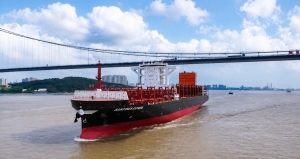
Following a strategy of a cautious expansion Dorian LPG Ltd., a leading owner and operator of very large gas carriers (“VLGCs”), took the delivery of the 93,000 cubic meter (cbm) dual-fuel newbuilding named “Areion” an LPG and ammonia very large gas carrier (VLGC/AC) from Hanwha Ocean Heavy Industries Co., Ltd. at the Okpo Shipyard in South Korea. The “Areion” will commence employment on charter under the Helios LPG Pool, an entity jointly controlled by Dorian LPG Ltd and MOL Energia Pte Ltd., with offices in Copenhagen and Singapore. “Areion”, in Greek Mythology, is the name given to a black-maned horse known for its extraordinary speed, spoken wisdom, and significant powers.

This is the second wholly owned LPG dual-fuel ship being added to Dorian’s fleet along with the four chartered-in LPG dual-fuel ships raising the percentage of low emissions alternative fuel ships to over 20% of its fleet.

The “Areion” is a dual-fuel ship that can run on LPG and fuel oil. It is equipped with a hybrid scrubber, which can operate in closed loop in ports or ECAs where emissions and effluent must either be very low or prohibited. This scrubber is designed to emit lower levels of sulphur oxides, particulate matter and black carbon than the very low sulphur fuels oils (VLSFO) widely used currently in the marine fuel markets. The ship’s main engine also operates on LPG as fuel which reduces CO2 emissions by approximately 20%, sulphur oxides, particulate matter (PM), and other pollutants.

John C. Hadjipateras, President and Chief Executive Officer of the Company, commented, “The addition of “Areion” to our fleet underscores Dorian’s commitment to the study and adoption of advanced marine technologies. The new ship will enhance Dorian’s superior emissions profile which has been achieved by the use of hybrid scrubbers, dual-fuel LPG engined ships, energy saving devices and performance optimization systems deployed collaboratively by our on board and shore side teams. Scrubbers and LPG dual fuel engines offer the potential to enhance earnings by optimizing the fuel choice, as does “Areion”’s ability to transport full cargoes of LPG and ammonia.”

Areion” is fitted with Alternative Marine Power (AMP) equipment and can carry out all port operations exclusively with shore power in any port where cold ironing is available. This feature aspires to promote emission free port operations. The ship is Battery Energy Storage System (BESS) ready-fitted for hybrid battery power management system operation. BESS enables optimization of onboard power generation systems eradicating blackouts while providing continuous peak shaving of energy requirements onboard.

Concurrently with the delivery, Dorian LPG borrowed $62.9 million from Citibank NA, (Hong Kong branch) (“Citi”), supported by export insurance provided by the Korea Trade Insurance Corporation (“K-sure”), and Nordea Abp (New York branch) (“Nordea”) to finance the final delivery payment and other fees and expenses associated with the delivery. The facility has a $20.7 million commercial tranche, solely underwritten by Nordea with a 7-year tenor and margin of 1.80% over SOFR, while Citi has provided a $42.2 million facility, guaranteed by K-Sure as to payment of principal and interest, with a 12-year tenor and a margin of 1.00% over SOFR. The facility contains customary covenants and granting of security interests.

About Dorian LPG Ltd.

Dorian LPG is a leading owner and operator of modern VLGCs that transport liquefied petroleum gas globally. Dorian LPG's fleet of twenty-eight modern VLGCs currently includes six dual-fuel ECO VLGCs, twenty ECO VLGCs, and two modern VLGCs. Dorian LPG has offices in Stamford, Connecticut, USA; Copenhagen, Denmark; and Athens, Greece.

ELNAVI Newsletter  
More Information: ELNAVI,
19, Aristidou str., Piraeus 185 31,
Tel.: +30 210 45.22.100, e-mail: This email address is being protected from spambots. You need JavaScript enabled to view it.

Page 1 of 119