

elnavi
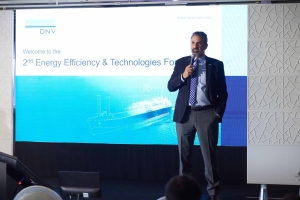
DNV’s 2nd Energy Efficiency & Technologies Forum
Navigating the Decarbonization Horizon
The global maritime industry stands at a critical crossroads, where tightening environmental regulations converge with complex technological choices. Providing a timely platform for these pressing discussions, DNV recently convened its 2nd Energy Efficiency & Technologies Forum in Athens.
Opening the event, Mr. George Teriakidis, Area Manager for East Mediterranean and Black Sea at DNV, welcomed prominent members of the Greek shipping community, emphasizing the vital role of local expertise in steering the sector through an increasingly demanding regulatory and operational landscape.
The Macro Outlook and Immediate Efficiency Imperatives
Setting the strategic tone, Jason Stefanatos, Global Decarbonization Director at DNV Maritime, presented key findings from the Maritime Forecast to 2050. He underscored why energy efficiency matters more than ever. In this transitional phase, maximizing immediate operational efficiency is non-negotiable.
This practical reality was echoed from a shipowner's perspective by Katerina Prifti, HSQE Director/DPA/Vetting at Laskaridis Shipping Co. Ltd. Outlining the company’s drive toward environmental excellence, Mrs. Prifti revealed that an impressive 91.6% of their fleet is equipped with Energy Saving Devices (ESDs), ranging from MEWIS ducts and Hub Vortex Absorbed Fins to Wake Improving Ducts, alongside next-generation silicon anti-fouling paints. Highlighted among their forward-looking initiatives is a project launched in the summer of 2025 in collaboration with consultant FINOCEAN (K. Fakiolas), evaluating Wind-Assisted Propulsion Systems (WASP)—such as rotors and suction sails—aboard the 2020-built Kamsarmax MV POLYDEFKIS.
Following the preliminary study Laskaridis Shipping signed a JDP (Join Design Project) with Bound4Blue via OCEANKING and Class Society of the vessel (Bureau Veritas).
The unit is adjusted continuously by VFD operating automatically by measuring the power and the direction of the wind (apparent wind).
It creates an aerofoil, the trail edge of the aerofoil reveals the holes on the vertical which absorb the flow around.
Complementing these real-world insights, Uwe Hollenbach, Senior Principal Engineer at DNV Maritime, detailed a comprehensive suite of hardware interventions. He reviewed eco-retrofit bows, propeller optimization, trim optimization boast factors, and advanced pre-swirl devices like PSS, PSD, and BTF, alongside high-efficiency rudders, air lubrication systems, and WASP concepts targeting up to 40% in emissions savings.
Alternative Fuels, Compliance, and Shore Power
The debate surrounding alternative pathways took center stage during sessions covering liquefied natural gas (LNG) and shore power. George Kriezis, Technical Director of the Neptune Group of Companies, addressed the controversies surrounding alternative fuels over recent years. Advocating for LNG as a pragmatic bridge to cleaner futures, Mr. Kriezis noted that methane's short-term warming effect must be weighed against long-term CO2 trajectories. He explained that Neptune’s decision to construct six LNG dual-fuel medium-sized PCTCs—rather than opting for methanol-ready designs—was backed by successful case studies demonstrating cost-effective bio-LNG bunkering. To secure true decarbonization, he stressed the need for market flexibility, prolonged FuelEU Maritime regulations, stable lifecycle rules, and absolute regulatory certainty.
The transition is equally dependent on shoreside infrastructure, a topic thoroughly addressed by Lefteris Koukoulopoulos, Regional Decarbonization Specialist at DNV Maritime, who mapped out the evolving business case and operational readiness required for widespread shore power adoption.
Digitalization, Data, and Emerging Tech
Part II of the forum shifted focus to operational execution and emerging technologies. Konstantinos Kordas, Performance Engineer at Navarone S.A., shared a bulk carrier fleet perspective, outlining the company’s aggressive digitalization strategy. By upgrading onboard sensors and launching intelligent noon-reporting software utilizing platforms like Verasity, Navarone monitors CII compliance, EUAs, voyage and trim optimization, autopilot upgrades, and low-friction controls, while actively testing various biofuel blends.
Data-driven decision-making was further illustrated by Vasileios Petousis, Energy & Sustainability Manager at Seanergy Maritime Holdings Corp., alongside Lars Nyflot, Global Sales Manager for Emissions Connect at DNV Maritime, who showcased concrete examples of emissions tracking across commercial voyages.
Innovation is also pushing boundaries in carbon management. Dimitris Koutsaftis, Senior Scientific Consultant at ERMA FIRST, joined Chara Georgopoulou, Head of Maritime R&D and Advisory Greece and Principal Engineer at DNV, to examine Onboard Carbon Capture (OCCS). Mr. Koutsaftis introduced the Carbon Fit OCCS solution, highlighting the rotating packed bed technology engineered to maximize capture performance within compact vessel footprints.
In a thought-provoking finale, Prof. George Dimopoulos, Associate Professor at the National Technical University of Athens, tackled the ultimate frontier: nuclear energy for shipping. Exploring whether marine nuclear propulsion is mere science fiction or an imminent future reality, he left the audience considering the radical long-term horizons of maritime engineering.
Ultimately, the Athens forum reinforced that while the roadmap to net-zero is filled with technical and regulatory hurdles, the combination of Greek shipping acumen, data-led operational enhancements, and cutting-edge engineering is steadily turning transitional goals into tangible maritime reality.
ELNAVI Newsletter
More Information: ELNAVI,
19, Aristidou str., Piraeus 185 31,
Tel.: +30 210 45.22.100, e-mail: This email address is being protected from spambots. You need JavaScript enabled to view it.
ELPI PETRAKI (WISTA INTERNATIONAL): “People are the powerbase of the shipping business”

Decarbonisation, digitalisation, shifting patterns of global trade and an increasing level of influence from Asia are continuing to reshape the shipping, logistics and trading sectors. With this year’s WISTA International AGM and Conference taking place in Kuala Lumpur, the association’s president, Elpi Petraki, explains why there are important lessons to learn from the region as the challenges facing the industry demand more than new technologies and innovation.
Asia’s changing maritime landscape
As the world’s largest maritime market, Asia offers an extraordinary degree of maritime capabilities and specialities. It is home to the world’s leading shipbuilding nations, some of its largest ports, many major Shipowners and a multitude of maritime service providers. Its financial centres are globally significant, while regional governments are powerhouse investors in decarbonisation, digitalisation and emerging technologies.
According to Clarkson’s Research and United Nations Trade and Development (UNCTAD), China, the Republic of Korea and Japan accounted for 91% of ships completed globally in 2025. 1 Meanwhile, Singapore retained its position as the world’s leading maritime centre for the 13th year running in the 2026 Xinhua-Baltic International Shipping Centre Development Index (ISCDI). 2 And the Philippines remains the world’s largest supplier of STCW-certified seafarers, with approximately 460,147 active Filipino seafarers according to the 2026 BIMCO and International Chamber of Shipping (ICS) Seafarer Workforce Report. 3
As such, Asia’s influence on international shipping is growing. Across the region, new technologies and operating models are being developed, tested and deployed, with innovation seen in digital twins, AI and autonomous vessels, and in alternative fuels and smart-port infrastructure.
China, Japan, South Korea, and hubs such as Singapore, are also providing real- world environments for developers to move from concept to reality. While Hong Kong, Malaysia and other maritime centres contribute critical expertise across finance, professional services, ports and logistics.
But the scale of maritime operations and willingness to invest in new technology offer only part of the explanation for Asia’s success. Across the region, governments, industry and educational institutions are also coming together to form highly integrated clusters that invest not only in technology and infrastructure, but also in people.
This year’s Maritime Singapore Master Plan, for example, identifies the development of a future-ready maritime workforce as one of four key strategies through which it will continue its long-running success story. Several other government programmes are running to support new career pathways, upskilling and leadership development whose content includes modules specifically designed to encourage people to consider and nurture a career in the industry.
Regionally, the maritime focus is far from unique. In India, targeted initiatives such as the government’s Saga Mein Samman programme aims to create a gender equitable workforce, improve women’s welfare and significantly increase their participation in the sector, as it looks to achieve a 12% increase in the number of women employed in technical maritime roles by 2030. Similarly, the IMO-Republic of Korea SMART-C Women’s Project, provides specialised training and leadership skills development for women in fields related to digitalisation and decarbonisation.
In a region encouraged by sustained growth across the maritime space, these investments and collaborations are opportunities to attract new and more diverse talents to industry. They demonstrate a clear understanding that a maturing industry cannot prepare for the future without investing in the renewal and revitalisation of its workforce.
People are at the heart of the industry’s transformation, and success will be reliant on recognising this and securing access to the widest possible talent pool. Because maritime’s greatest asset has always been its people, and research consistently shows that diverse teams are more effective.
From advocacy to action
However, as I have said many times during my tenure as WISTA International President, inclusion is not about replacing men with women. Rather, it is about working together to empower everyone and acknowledging that women have the skills and experience to lead effectively, make decisions and address the challenges facing the industry.
Over recent years, the conversation around diversity and inclusion in maritime has changed. There is greater awareness of the challenges women face, better data on representation and growing recognition of the link between inclusive leadership, a future ready workforce and a strong, resilient industry.
WISTA International has played a key role in changing the narrative surrounding gender equity and equality in maritime and has worked closely with its partners to enhance research, professional development, leadership and collaboration across the sector. The 2024 IMO-WISTA Women in Maritime Survey has provided important benchmarks for monitoring progress, and the IMO-WISTA-WMU Gender Inclusive Leadership and Empowerment Training Course, for example, addresses the need for a stronger, more sustainable leadership pipeline. There have also been encouraging signs that the industry is moving from simply understanding the importance of inclusion to embedding it within policy and professional standards.
The 2024 Women in Maritime survey indicated a modest increase in the number of women in C-suite positions in multiple sectors and found that companies with women in leadership positions were also more likely to have policies in place that enhance diversity and inclusion.
Elsewhere, few can be unaware of the 2017 and 2021 surveys conducted by WISTA International, Anglo Eastern, the International Seafarers Welfare and Assistance Network and the International Chamber of Shipping, and the shocking levels of bullying, harassment and sexual assault women working on ships experience.
Accordingly, STCW Code amendments which - from 1 January 2026 - made training to prevent and respond to violence and harassment mandatory for all seafarers are wholly welcome.
This represents an important shift. Now, creating a safe and respectful workplace is no longer simply a matter of individual commitment or corporate policy; it is recognised as part of the professional standards required for those working at sea. But awareness alone is not enough. The challenge that remains is how to turn recognition into lasting change and create the conditions in which women and other under- represented groups can join and succeed in a maritime career. That means continuing to challenge assumptions, investing in skills and leadership development, and making inclusion integral in how organisations operate rather than something to be discussed separately.
Greater visibility and representation are important, but we must be careful not to confuse visibility with equality, or progress with completion.
The next chapter
The upcoming WISTA International AGM and Conference in Kuala Lumpur comes at an key moment for the shipping, logistics and trading sectors. Co-hosted by WISTA Hong Kong SAR China, WISTA Malaysia and WISTA Singapore, the conference reflects WISTA’s long-standing commitment to collaboration and will bring together perspectives from across the region to advance conversations around sustainability, technology and inclusive leadership.
The maritime industry is changing. We have more data, greater awareness and a better understanding of the important role diversity and inclusion play in shaping the future of the industry.
The global maritime industry can also learn a lot from Asia, where long-term investment, structured approaches and coherent responses to opportunities have played a profound role in shifting the centre of global economics.
But for WISTA, it has never been about just one president, one conference, or even one initiative. It has always been about working together to enhance diversity and inclusion, and to create an industry that empowers and respects everyone. As my presidency comes to an end, I encourage the industry to continue to listen, to learn, to collaborate and remember that people are our greatest asset. For when our
goals are clear and the frameworks supporting equity, equality and diversity are robust, we can create the conditions for meaningful and lasting change.
1 https://unctadstat.unctad.org/insights/theme/108
2 https://www.balticexchange.com/en/news-and-events/news/press-releases-/2026/Shanghai-climbs-
to-second-place-in-latest-Xinhua-Baltic-International-Shipping-Centre-Index-as-Singapore-retains-top-spot.html
3 https://www.bimco.org/news-insights/press-media/press-releases/2026/0625-workforce-report/
ELNAVI Newsletter
More Information: ELNAVI,
19, Aristidou str., Piraeus 185 31,
Tel.: +30 210 45.22.100, e-mail: This email address is being protected from spambots. You need JavaScript enabled to view it.

Cybersecurity, Artificial Intelligence, data, energy efficiency and the new AMMITEC AI Working Group at the centre of this year’s conference The 12th ShipIT Conference was successfully held on Tuesday, 29 September 2026, at the Eugenides Foundation, jointly organised by AMMITEC and BOUSSIAS Events.
Bringing together senior maritime executives, institutional representatives, CIOs, CTOs, academics and technology specialists, the conference delivered a clear message: digitalisation in shipping is no longer simply a technology choice, but a core driver of operational resilience and competitiveness.
Discussions focused on Artificial Intelligence, cybersecurity and cyber resilience, data utilisation, connectivity, energy efficiency and decarbonisation, with growing emphasis not only on adopting new technologies, but on turning them into measurable operational value.
In his opening remarks, Dr. Matthew Maheras, President of AMMITEC, highlighted the need for technology adoption to remain closely linked to business value, security and governance.
“The objective is not to adopt more technology. It is to adopt the right technology, with security, proper governance and clear operational value.”
He also pointed to the rapid shift of Artificial Intelligence from experimentation into day-to-day maritime operations.
“AI is already moving from experimentation into real operations. The next challenge is to make that transition with structure, governance and human oversight.”
Against this background, AMMITEC announced the launch of its new AI Working Group, which will focus on practical AI adoption in shipping, use cases, governance and shadow AI, as well as the development of benchmarks, training and practical guidance for the maritime community.
Speakers included Spyridon Papageorgiou, Secretary General for the Protection of Critical Entities; Vassilios Demetriades, former Shipping Deputy Minister of the Republic of Cyprus; Professor Christos Xenakis; Professor Stefanos Kollias, Chairman of GRNET; George Xiradakis, President of the Association of Banking and Financial Executives of Hellenic Shipping; and senior representatives from leading shipping and technology organisations.
Across keynotes, panels and lightning rounds, the conference highlighted a common direction for the industry: the next phase of maritime digitalisation will be defined not by who has the most technology, but by who can use it securely, intelligently and with tangible operational impact.
AMMITEC – Association of Maritime Managers in Information Technology and Communications
ELNAVI Newsletter
More Information: ELNAVI,
19, Aristidou str., Piraeus 185 31,
Tel.: +30 210 45.22.100, e-mail: This email address is being protected from spambots. You need JavaScript enabled to view it.
Wärtsilä service agreement to support operational reliability of two newbuild TMS Cardiff Gas vessels
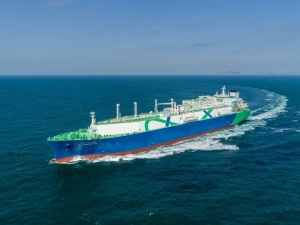
Technology group Wärtsilä has signed a five-year service agreement with Greece-based operator TMS Cardiff Gas to support the operation of two newbuild liquefied natural gas carrier (LNGC) vessels. The agreement is designed to maximise vessel availability and operational reliability through optimised maintenance planning, expert support and predictive maintenance services. The order was booked by Wärtsilä in Q3 2026.
As LNG trade continues to grow, vessel operators face increasing pressure to maintain high levels of reliability, efficiency and schedule adherence. Effective lifecycle support plays an important role in helping ship operators minimise unplanned downtime, optimise maintenance activities and secure the long-term performance of critical onboard assets. The latest agreement builds on a successful relationship between Wärtsilä and TMS Cardiff Gas, following the renewal in 2025 of an existing agreement covering seven vessels in the company’s fleet.
“There is increasing global demand for LNG, and carrier operators place a high value on reliability. This is why this agreement with Wärtsilä is important to us. The existing agreement covering other vessels in our fleet has delivered a successful combination of technology, high-quality spare parts support and expert services, helping us maintain reliable and efficient operations. Extending this collaboration to these two newbuild vessels supports our goal of maximising availability and operational performance across the fleet,” says Alexandros Politis-Kalenteris, Deputy COO - TMS Cardiff Gas.
The agreement covers the recently delivered 174,000 cbm LNGCs Al Thurayya and Al Majhoulah. Through Wärtsilä’s Dynamic Maintenance Planning service, the vessels will benefit from flexible maintenance scheduling, extended maintenance intervals and reduced spare parts consumption. The agreement also includes 24/7 remote operational support, contract management services and Expert Insight, Wärtsilä’s predictive maintenance solution that uses real-time operational data to identify potential issues before problems arise. Each vessel is equipped with two WinGD 5X72DF two-stroke main engines, four Wärtsilä 34DF auxiliary engines, and Wärtsilä gas valve units.
“As vessel operations become increasingly complex, operators are looking for greater predictability, efficiency and support throughout the asset lifecycle,” says Henrik Wilhelms, Director, Agreement Sales, Wärtsilä Marine. “By combining advanced digital capabilities, predictive maintenance and expert lifecycle services, we help our customers maximise asset performance, reduce operational risk and maintain competitiveness in a rapidly evolving operating environment.”
The two vessels have recently entered service as part of a broader fleet expansion programme underway at TMS Cardiff Gas. The company is part of TMS, which manages more than 140 vessels across the LNG, LPG, oil tanker, dry bulk and container shipping segments. In addition to the service agreement and equipment onboard, TMS Cardiff Gas also utilises Wärtsilä Fleet Optimisation Solution (FOS) across its wider fleet. FOS integrates voyage planning, performance analytics, compliance management and real-time operational insight within a single digital platform, helping to support the safe and efficient operation of the company's vessels.
All Wärtsilä releases are available at www.wartsila.com/media/news-releases and at news.cision.com/wartsila-corporation where also the images can be downloaded. Use of the image(s) is allowed only in connection with the contents of this press release. Wärtsilä images are available at www.wartsila.com/media/image-bank.
Wärtsilä Marine in brief
Wärtsilä Marine is a global pioneer in power, propulsion and lifecycle solutions for the marine market. We develop industry-leading technologies, advancing maritime's transition to new fuels. We support building an end-to-end digital ecosystem where all vessels and ports are connected. Ultimately, Wärtsilä Marine is driving the shipping industry forward on its journey towards a decarbonised and sustainable future through our broad portfolio of engines, propulsion systems, hybrid technology, exhaust treatment, shaft line solutions and digital technologies, as well as integrated powertrain systems. Our offering, which is underpinned by our performance-based agreements, upgrades, lifecycle solutions, decarbonisation services, as well as an unrivalled global network of maritime expertise, delivers the efficiency, reliability, safety, and environmental performance needed to support a safe and sustainable future for our customers, our communities and our planet.
Wärtsilä in brief
Wärtsilä is a global leader in innovative technologies and lifecycle solutions for the marine and energy markets. We emphasise innovation in sustainable technology and services to help our customers continuously improve environmental and economic performance. Our dedicated and passionate team of 17,900 professionals in 199 locations in 78 countries shape the decarbonisation transformation of our industries across the globe. In 2025, Wärtsilä’s net sales totalled EUR 6.2 billion. Wärtsilä is listed on Nasdaq Helsinki.
Image caption: Wärtsilä has signed a five-year service agreement with Greece-based operator TMS Cardiff Gas to support the operation of two newbuild liquefied natural gas carrier (LNGC) vessels. © TMS Cardiff Gas
ELNAVI Newsletter
More Information: ELNAVI,
19, Aristidou str., Piraeus 185 31,
Tel.: +30 210 45.22.100, e-mail: This email address is being protected from spambots. You need JavaScript enabled to view it.
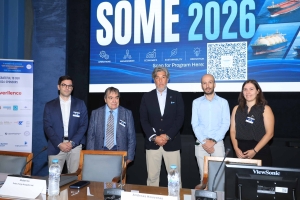
The 9th International Symposium on Ship Operations, Management and Economics (SOME 2026), organized by the Greek Section of the Society of Naval Architects and Marine Engineers (SNAME), was successfully held on 15–16 September 2026 at the Eugenides Foundation Conference Center in Athens.
Bringing together more than 200 registered participants, SOME 2026 provided a dynamic international forum for the exchange of scientific knowledge, engineering experience and forward-looking ideas addressing some of the most pressing challenges facing shipping today.
At the heart of the Symposium was an extensive technical program comprising 41 peer-reviewed papers, co-authored by 145 experts from 14 countries: Greece, Denmark, the Netherlands, China, the United Kingdom, the United States, Ukraine, Norway, Finland, Malaysia, Sweden, Malta, Ghana and Singapore.
The breadth and international character of the program reflected one of the fundamental objectives of SNAME and the SOME Symposium: to bring together academia, industry, classification societies, shipowners and operators, technology providers and young researchers in an environment where established thinking can be challenged, emerging technologies critically examined and practical solutions explored through rigorous scientific and engineering dialogue.
Thanks to the generous support of the Symposium's sponsors, participation in SOME 2026 was offered free of charge to registered delegates, together with access to the proceedings of the papers presented at the Symposium.
A Broad Technical Program Focused on Shipping's Transformation
The technical program was structured around seven major thematic areas:
Decarbonization & Alternative Fuels; Decarbonization Measures and Wind-Assisted Propulsion Systems; Decarbonization Measures and Regulatory Impact; Autonomous Shipping; AI Maritime Applications; Fuel Consumption Optimization; and Ship Design and Operations – Holistic Approaches to the Shipbuilding Industry.
Complementing the 41 technical presentations were two high-level panel discussions addressing Carbon Capture Technologies and Nuclear Energy in Shipping, together with two keynote presentations examining the Prospects of the IMO Net-Zero Framework and the Electrification of Shipping. The discussions demonstrated both the scale of the maritime industry's technological transformation and the considerable uncertainty that still surrounds the pathway toward deep decarbonization.
Decarbonization: A Pathway Still Taking Shape
The future of the IMO Net-Zero Framework featured prominently in the Symposium discussions. Participants examined the challenges surrounding international regulatory convergence, including the relationship between global IMO measures and regional approaches, particularly those being developed and implemented within the European Union. The discussions highlighted that achieving shipping's decarbonization objectives will require not only ambitious targets, but also technically feasible measures, realistic implementation pathways and greater regulatory and international alignment. Particular attention was given to the continuing growth of the world fleet and the resulting challenge of achieving substantial absolute reductions in greenhouse-gas emissions even as individual ships become progressively more energy efficient.
Beyond a Single-Fuel Solution
A recurring conclusion throughout SOME 2026 was that the maritime energy transition is unlikely to depend upon a single fuel or technology. The availability, scalability, cost and full life-cycle environmental performance of alternative fuels remain major considerations. Discussions therefore extended beyond green fuels to a wider portfolio of solutions, including carbon capture, wind-assisted propulsion, electrification and nuclear energy. The environmental performance of transitional fuels such as LNG was also examined from a life-cycle perspective, including the importance of methane emissions and the distinction between tank-to-wake and well-to-wake performance. The message emerging from the Symposium was clear: shipping's transition must be evaluated on the basis of complete energy and emissions pathways rather than fuel labels alone.
Nuclear Energy Returns to the Maritime Debate
One of the Symposium's most forward-looking discussions concerned the renewed interest in nuclear propulsion for merchant shipping. Modern Small Modular Reactor (SMR) technologies and their potential application to large, energy-intensive vessels—including containerships, tankers and bulk carriers—were examined as a possible long-term pathway toward very substantial reductions in operational greenhouse-gas emissions. The discussion extended well beyond reactor technology itself. Regulatory approval, classification, flag-state oversight, port acceptance, insurance, financing, liability, nuclear-material management and public acceptance were identified as essential elements of any future commercial implementation. Particular emphasis was placed on the need for an appropriate international regulatory framework under IMO, supported by established risk-based methodologies such as Formal Safety Assessment and goal-based standards. The Symposium discussions also underlined the importance of continued scientific research and transparent communication with society if nuclear-powered commercial shipping is to move from technological possibility toward practical application.
Electrification as Part of a Wider Energy System
Electrification was addressed not simply as a shipboard technology, but as part of a much broader energy ecosystem. Sustainable maritime electrification will increasingly depend upon the development of shore-side electrical grids supported by renewable energy, port-based energy storage, shore power infrastructure and continuing advances in batteries and fuel cells. While full electrification remains particularly suited to coastal and short-sea applications, the Symposium highlighted the importance of viewing ships, ports and land-based energy infrastructure as interconnected elements of the future maritime energy system.
Artificial Intelligence and Autonomous Shipping
The rapid digital transformation of shipping formed another major pillar of SOME 2026. Technical papers explored artificial intelligence, autonomous vessels, digital twins, machine learning, maritime analytics and advanced decision-support systems, demonstrating how digital technologies are increasingly moving from research environments toward practical maritime applications. Topics included AI-based fuel-consumption prediction and optimization, autonomous port operations, automated waterborne freight systems for short-sea shipping, responsible-AI digital twins, remote drone inspection technologies and AI-assisted emergency ship maneuvering. At the same time, discussions emphasized that technological capability must develop alongside validation, transparency, human oversight, cybersecurity and appropriate regulatory frameworks.
Extending Decarbonization to Shipbuilding
SOME 2026 also broadened the sustainability discussion beyond ship operation to the environmental footprint of ship construction itself. A Horizon Europe-funded initiative presented a structured framework for applying greenhouse-gas reduction principles to shipbuilding activities. The methodology establishes organizational and operational boundaries and maps emissions and resource consumption across major construction processes, including steel preparation, cutting and forming, welding and assembly, surface preparation and coating, outfitting, testing and commissioning.
The proposed Shipyard Environmental Performance Index (SEPI) seeks to consolidate process-level resource consumption and emissions into standardized indicators and ultimately into a composite measure of shipyard environmental performance. Such methodologies could eventually support environmental certification schemes and the development of Green Passports for ships constructed at certified shipyards, extending life-cycle environmental thinking from vessel operation back to the very beginning of the ship's life.
An International Forum for Maritime Innovation
Across two intensive days of presentations, panel discussions and professional exchange, SOME 2026 demonstrated the value of bringing scientific research and operational maritime experience into the same forum. The Symposium reflected an industry undergoing profound transformation. Decarbonization, alternative fuels, nuclear energy, electrification, artificial intelligence, autonomous systems and environmentally responsible shipbuilding are no longer isolated research subjects; they are increasingly interconnected elements of the future maritime system.
While many questions remain unresolved, the discussions in Athens reinforced an equally important conclusion: the maritime industry's transition must be founded on sound science, rigorous engineering, open professional dialogue and solutions that are both environmentally responsible and operationally realistic. SOME 2026 was made possible through the generous support of its sponsors and partners:
Gold Sponsor: Everllence
Silver Sponsors: Capital Maritime Group, DNV, Lloyd's Register and VesselFront
Bronze Sponsors: ABS, Alpha Marine Ltd, The American Club, ALBA Graduate Business School - Deree – The American College of Greece, Atlantic Bulk Carriers Management Ltd, Cape Shipping S.A., Navios Maritime Partners L.P. and Thenamaris
In-Kind Support: Eugenides Foundation
Media & Supporting Organizations: ELNAVI, Naftika Chronika, Naftemporiki, NAFS, EfoplistesNews, Maritimes, Liberty Press, Piraeus365 and the Propeller Club.
ELNAVI Newsletter
More Information: ELNAVI,
19, Aristidou str., Piraeus 185 31,
Tel.: +30 210 45.22.100, e-mail: This email address is being protected from spambots. You need JavaScript enabled to view it.

The company, controlled by Evangelos Marinakis, is launching the first exclusive listing of a shipping company on Euronext Athens. Capital Maritime Finance Corp. (CMF) is initiating the first shipping IPO in Greece, with an exclusive listing of all its shares on Euronext Athens.
At the same time, this marks a significant step toward establishing Athens as a major global shipping hub.
According to reports, the company—controlled by Evangelos Marinakis—aims to raise up to €200 million through the IPO, with the proceeds earmarked to fund its shipbuilding program and meet working capital requirements.
CMF’s proposal offers a balanced mix of long-term growth and investment value, driven by a business plan focused on the acquisition of container ships and other vessel types secured by long-term charters. By securing long-term charters with reliable, top-tier charterers, the company achieves strong revenue visibility and predictability, regardless of market cyclicality, thereby maintaining a unique ability to consistently reward its shareholders.
Key fleet and operating model characteristics
- High Revenue Visibility: 100% of the fleet's available capacity is fully chartered, ensuring 100% day coverage through 2034. The total contracted revenue backlog stands at $3.9 billion, with the average remaining charter duration reaching 9.5 years*.
*data as of June 30, 2026
- Leading Blue-Chip Charterers: Charters are based on long-term "take-or-pay" contracts with global liner shipping leaders, such as CMA CGM (the world's third-largest liner company – contracts with CMF totaling nearly $3 billion) and Unifeeder
(a DP World subsidiary – contracts with CMF totaling nearly $1 billion)*.
*data as of June 30, 2026
- **Young, High-Tech Fleet:** The company operates a state-of-the-art fleet that, upon full delivery, will comprise 36 container ships. The fleet includes 13 operational vessels and 23 under construction. The weighted average age of the fleet will stand at just 2 years upon full delivery, making it one of the youngest and most efficient fleets globally.
- **Top-Tier Personnel – Three Generations at Sea:** The company is staffed by highly experienced and specialized personnel—individuals who, for three generations, have been characterized by exceptional professionalism, consistency, and reliability.
- **Cutting-Edge Technology & Dual-Fuel LNG Capabilities:** The fleet consists of 26 feeder-type vessels (1.8–2.9k TEU capacity) and 10 Neo-Panamax vessels (8.8k TEU capacity) featuring dual-fuel (LNG) capabilities. The ability to use LNG, bio-LNG, and e-LNG drastically reduces pollutant emissions. The cutting-edge technologies incorporated into the fleet ensure the company’s full compliance with the strictest environmental regulations (IMO CII, EU ETS, FuelEU Maritime, etc.). At the same time, the fleet features technologies that enable CMF to achieve significant operational cost savings. The majority of CMF’s vessels are rated in the highest category, "A," under the CII index.
Strong financial profile & attractive dividend policy
- Fully Funded Investment Program: Of the remaining $1.9 billion capital expenditure program through 2028, $1.6 billion is covered by bank financing*. The balance is planned to be funded organically through the company’s operating cash flows, combined with the estimated net proceeds from the Public Offering.
*data as of June 30, 2026
- Attractive Dividend Yield: Management has established a dividend policy aimed at continuously and consistently rewarding shareholders, targeting quarterly distributions based on Adjusted Net Income. This policy is supported by secured cash flows, and the aim is for it to commence in the first quarter of 2027.
Highly favorable fundamentals in the operating sector
- Global Fleet Aging: In the vessel category with a capacity of less than 3,000 TEU, 50% of the existing global fleet will be over 20 years old by 2029. Meanwhile, this figure stands at 32% for the 8,000–12,000 TEU category. This structural shortage of modern vessels in the relevant category creates strong demand for CMF’s new, modern fleet.
- Growth of Alternative Regional Routes: The diversification of supply chains away from China is driving growth on selected regional routes at rates estimated to reach up to 5.5% annually by 2027. This trend significantly boosts the need for vessels with operational flexibility (feeder and mid-sized types)—the very vessels that make up CMF’s fleet.
ELNAVI Newsletter
More Information: ELNAVI,
19, Aristidou str., Piraeus 185 31,
Tel.: +30 210 45.22.100, e-mail: This email address is being protected from spambots. You need JavaScript enabled to view it.
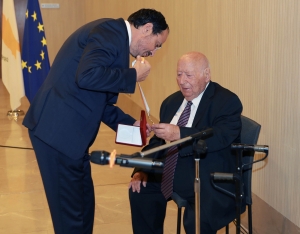
The Medal for Outstanding Contribution of the Republic of Cyprus was awarded to Mr Damianos Constantinou, Founder of Moore Greece, by the President of the Republic of Cyprus, Mr Nikos Christodoulides, at a special ceremony held on 11 September 2026 at the Presidential Palace in Nicosia.
The distinction recognises Mr Damianos Constantinou’s longstanding contribution to the economy, shipping and auditing, as well as his broader contribution to education, culture and Hellenism.
The ceremony was attended by representatives of Cyprus’s political, diplomatic and shipping communities, as well as prominent figures from Greece and the wider Greek community. Among the guests was Prince Pavlos, together with representatives of the Cypriot Government and the diplomatic and shipping communities, as well as friends and associates of Mr Damianos Constantinou from Cyprus and Greece.
During the ceremony, the President of the Republic referred to Mr Damianos Constantinou’s long professional career and his contribution to the development of the auditing profession and maritime finance in Greece, as well as to his broader contribution.
Mr Constantinou’s journey started in his birthplace, Mitsero, Cyprus, and continued through the United Kingdom and Greece. In 1963, following his selection by Moore Stephens London, he established in Piraeus the first office of an international network of Chartered Accountants.
Since then, more than six decades of professional activity have been closely connected with the development of Moore Greece, which today is an independent member of Moore Global, with more than 130 professionals and a broad range of services, with particular expertise in the shipping sector.
His professional career has been accompanied by a longstanding commitment and contribution to culture, education and the Orthodox Church. A significant part of his journey has been the establishment of the Centre for Hellenism, dedicated to promoting and preserving Greek history, culture and heritage.
“Contributing to Greece and Cyprus is a duty”
Upon receiving the Medal for Outstanding Contribution, Mr Damianos Constantinou thanked the President of the Republic of Cyprus for the distinction and referred to the importance of the shared history and longstanding ties between Greece and Cyprus.
“The presentation of the Medal for Outstanding Contribution today is, for me, a moment of deep emotion and the highest honour of my life,” he said.
Referring to his relationship with the two countries, he noted:
“Contributing to Greece and Cyprus is a duty, but it is also an inner need that I feel as an obligation to our shared history, our shared culture and the enduring bonds that unite Hellenism throughout the world.”
He also made particular reference to his roots in Mitsero, to the people who contributed to his professional journey and to his longstanding connection with shipping. He thanked the Deputy Minister of Shipping and representatives of the Cypriot shipping community, while making special mention of Captain Andreas Constantinou, with whom he worked in the 1980s, together with the Union of Greek Shipowners, on amendments to Cyprus’s shipping legislation.
His reference to the cooperation between Greece and Cyprus also reflected a broader dimension of his contribution, with emphasis on the ties between the two countries and the enduring importance of shipping.
For Moore Greece, the distinction holds particular significance. Mr Damianos Constantinou is the founding figure in the company’s history in Greece, which began in 1963 and continues its journey today through a new generation of professionals, with professional integrity, knowledge, consistency and relationships built on trust remaining its enduring foundations.
The awarding of the Medal for Outstanding Contribution marks an important milestone in a journey spanning more than six decades, connected with the development of the auditing and shipping sectors, as well as with the enduring relationship between Greece and Cyprus.
Moore Greece extends its warm appreciation to the Republic of Cyprus for this honour and congratulates its Founder on this significant recognition of his longstanding contribution.
ELNAVI Newsletter
More Information: ELNAVI,
19, Aristidou str., Piraeus 185 31,
Tel.: +30 210 45.22.100, e-mail: This email address is being protected from spambots. You need JavaScript enabled to view it.

In July 2026, the Handysize dry bulk vessel MAAS CONFIDENCE, managed by Hellas Confidence Shipmanagement S.A., underwent dry-docking at ONEX Syros Shipyards, where Jotun’s SeaQuest Endura II antifouling coating was applied.
The Jotun Coating Advisors team supported the project throughout, and their close attention and technical expertise ensured careful monitoring of the coating application process. Their involvement reflects Jotun’s commitment to providing not only advanced coating solutions, but also dedicated technical support throughout each project.
SeaQuest Endura II is a high-performing foul release (FRC), tin-free biocidal antifouling coating, developed as part of Jotun’s Tailored to TradeTM approach and integral to HPS 2.0. Designed to provide operational flexibility for vessels facing unpredictable trading patterns, the system is based on FlexcureTM technology, delivering excellent adhesion and leveling properties, optimized curing speed, humidity tolerance, and extended repairability.
"The finish achieved with SeaQuest Endura II has exceeded our expectations. The coating delivers an outstanding high-gloss appearance, giving the vessel a premium, like-new look that truly stands out. From the moment the application was completed, the aesthetic result reflected the high quality of the product and the care invested in the project."
Raoul de Troije, Director - Hellas Confidence Shipmanagement S.A.
"The dry-docking of MAAS CONFIDENCE reflects the growing confidence international owners and managers place in ONEX Shipyards. Our teams in Syros delivered the vessel on schedule and to the standard our partners expect, providing the right environment for Jotun's application team to achieve this result. Projects like this confirm the role of Greek shipbuilding in serving global commercial shipping."
Giannis Vamvakousis, General Manager of ONEX Syros Shipyards
The successful dry-docking of MAAS CONFIDENCE at ONEX Syros Shipyard demonstrates how SeaQuest Endura II combines performance, flexibility, and appearance in a coating solution tailored to the evolving demands of commercial shipping.
About Jotun S.A.: Jotun is one of the world's leading manufacturers of decorative paints and marine, protective and powder coatings. The Group has 68 companies and 40 production facilities globally, and around 11 000 employees. Jotun’s products are available in more than 100 countries through own subsidiaries, joint ventures, branch offices, dealers and distributors. Total sales in 2025 were NOK 34.3 billion for the Jotun Group, which is organised into four business segments and five geographical regions. The head office is in Sandefjord, Norway.
About Hellas Confidence Shipmanagement S.A.: Hellas Confidence Shipmanagement S.A. is an established Greek maritime organization specializing in the comprehensive technical, operational, and commercial management of bulk carrier vessels. Founded in 2015, the company provides sophisticated ship management solutions on behalf of prominent international principals, including the Van Weelde Shipping Group. Hellas Confidence Shipmanagement S.A. operates in strict accordance with global maritime regulations, maintaining a steadfast commitment to operational excellence, rigorous safety standards, and environmental sustainability.
ELNAVI Newsletter
More Information: ELNAVI,
19, Aristidou str., Piraeus 185 31,
Tel.: +30 210 45.22.100, e-mail: This email address is being protected from spambots. You need JavaScript enabled to view it.
Port of Piraeus Reports Resilient 1H 2026 Financial Results and Acceleration of the Investment Program
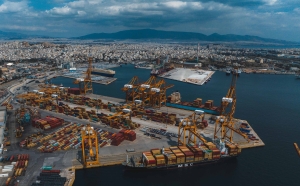
In its financial results for the first half of 2026, PPA SA demonstrates revenue resilience and decreasing the negative year-on-year change in earnings compared to the first-quarter results.
Despite the volatile geopolitical environment, the total revenues of PPA S.A. amounted to €111.9 mn., decreased by 8.9% compared to €122.8 mn. in the corresponding period of 2025. Net profits after taxes amounted to €35.4 mn. versus €46.7 mn. in the first half of 2025, recording a decrease of 24.4%. During this period, PPA S.A. implemented investments amounting to €106.7 mn. in infrastructure projects and equipment, thereby significantly accelerating its investment program. Total assets reached €750.3 mn., showing an increase of 8.8% compared to the end of 2025.
The decrease in revenues and, consequently, profits compared to the corresponding period of 2025 is attributed to the reduced performance of Pier I. This is primarily due to the comparison with the elevated domestic cargo throughput recorded during the first half of 2025, driven by fears at the time of potential tariffs being imposed on global trade.
Furthermore, the Mandatory Investment 5.5 and 5.7 projects are currently being implemented at Pier I. These projects have led to a temporary reduction in storage capacity within the stacking areas, thereby affecting throughput capacity. It is important to emphasize that these investments are of strategic importance and are expected to bring substantial improvements in capacity, productivity, efficiency, and the overall operational capacity of Pier I in the coming years, ensuring it is ready to handle the increased cargo volumes expected following the full reopening of the Suez Canal.
Additionally, revenues from Piers II and III have also increased, and in fact, this positive sign is driven by better throughput performance in recent months, significantly contributing to the Organization’s revenues and profitability. This positive shift is even stronger from July onwards and will be reflected in the third quarter of Financial Year 2026.
The CEO of PPA S.A., Mr. Su Xudong, stated: “The performance of the first half of 2026 confirms the resilience of the Port of Piraeus and its readiness to lead in a demanding global market. Guided steadily by digital and ecological transformation, we are implementing an extensive investment program that not only enhances our operational capabilities but also safeguards our sustainability and minimizes our environmental footprint.
In particular, we are accelerating our pace towards the realization of the Logistics Centre, which will generate new revenue streams and increased added value for the local community. We believe that despite the challenging economic environment and numerous uncertainties, we have solid reasons to be optimistic about the prospects of the Piraeus Port Authority”.
About PPA S.A.
Piraeus Port Authority SA, a Euronext Athens listed company, is engaged in the management and operation of Piraeus Port, Greece’s largest port and one of the largest integrated harbors in Europe, providing a complete range of services. Some of the company’s activities involve cruise, coastal (ferry/passenger), container and car terminal services, as well as general cargo, ship repair, logistic and free zone services. The main shareholder of Piraeus Port Authority S.A., with a stake of 67 percent, is COSCO SHIPPING, one of the largest maritime companies in the world. Over the last decade the company has experienced a remarkable growth in all port activities, which is still underway, largely contributing to the country’s economy, while driven by green development and increased digitalization, alongside a people-first approach and a spirit of giving back to society. PPA holds the “ECO PORT” PERS status, is included in the Euronext Athens ESG index and is one of the “Most Sustainable Companies in Greece 2026”.
ELNAVI Newsletter
More Information: ELNAVI,
19, Aristidou str., Piraeus 185 31,
Tel.: +30 210 45.22.100, e-mail: This email address is being protected from spambots. You need JavaScript enabled to view it.
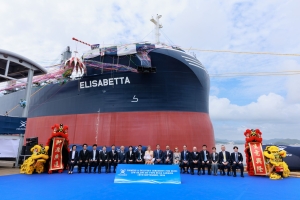
Meadway Bulkers recently took delivery of its latest newbuilding MV ELISABETTA from Tsuneishi Zhoushan.
MV ELISABETTA is another TESS66 AEROLINE Ultramax joining its fleet, a design the company considers to be one of the leading Ultramax designs in the market today, combining excellent cargo capacity, fuel efficiency, operational flexibility and proven performance.
This delivery is particularly special for Meadway Bulkers, as MV ELISABETTA marks the 37th newbuilding delivered in the company’s history and its third TESS66 AEROLINE.
The company states: “We are also very proud that Meadway has built one of the strongest fleets of the TESS66 AEROLINE design worldwide.
The company expressed its sincere gratitude to the entire team at Tsuneishi Zhoushan, colleagues at Meadway, and everyone involved in the construction and successful delivery of MV ELISABETTA.
Welcomed the vessel to the Meadway family, MV ELISABETTA Wishing her, her Master and crew fair winds, following seas and many successful voyages ahead!”
ELNAVI Newsletter
More Information: ELNAVI,
19, Aristidou str., Piraeus 185 31,
Tel.: +30 210 45.22.100, e-mail: This email address is being protected from spambots. You need JavaScript enabled to view it.