




elnavi
General Assembly and Elections 2023 International Propeller Club of the United States, Port of Piraeus

On Tuesday, September 12, 2023, the General Assembly and the election of a new Board of Governors of the Propeller Club, Port of Piraeus took place.
The 2023 General Assembly and Elections of the International Propeller Club, Port of Piraeus, were held at the impressive Faros Hall of the Stavros Niarchos Foundation Cultural Centre on 12 September 2023.
This was a resounding success with 586 participating members, representing 65% of the membership body. 311 attended in person with the rest participating remotely.
Members of the Election Committee were Yannis Varvitsiotis and Theodora Leka, with Eleftherios Archontis as Chairman.
43 candidates contested 16 seats on the Board of Governors.
3 candidates stood for the 3 positions on the Audit Committee.
10 members of the previous Board were re-elected.
The election results are as follows:
GOVERNORS
- Costis Frangoulis 431 votes
- Danae Bezantakou 233 votes
- Christos Timagenis 188 votes
- Maria Hajioannou 163 votes
- George Margaronis 155 votes
- Dorothea Ioannou 155 votes
- John Cotzias 146 votes
- Sifis Vardinoyannis 146 votes
- Theofilos Xenakoudis 139 votes
- Katerina Stathopoulou 135 votes
- Valentios Valentis 134 votes
- John Belousis 132 votes
- Michalis Dalacouras 114 votes
- Chrysanthi Stefanou 109 votes
- George Kallianis 104 votes
- Panagiotis Zafet 102 votes
DEPUTY GOVERNORS
- Kosmas Makrygeorgos 97 votes
- Irene Notias 87 votes
- Akis Tsirigakis 83 votes
AUDIT COMMITTEE
- Nadia Inglezi 299 votes
- Anacreon Matarangas 246 votes
- Dimitrios Sousoudis 207 votes
The General Assembly was presided over by the President of the Board of Governors, Costis Frangoulis. Christos Timagenis was appointed Secretary of the Assembly. Dimitri Vassilacos, Treasurer, presented the financial results and some projections moving forward.
The financial report for the past two years, the budget for the following term, and partial amendment of articles of the club's statutes were all unanimously approved during the General Assembly and the President's reading of the activity report.
Costis Frangoulis presented Dimitri Vassilacos with a special award recognizing his long service to the Club, having served for five consecutive terms. Mr. Frangoulis thanked Mr. Vassilacos for his important contribution, noting that he has left high expectations for his successor.|
The proceedings included a full account of the impressive achievements of the past two years.
One of the most significant achievements has been the financial strengthening of the Club, coupled with an unprecedented growth in membership.
During his address, Mr. Frangoulis also spoke about the increased social work of the Club, the acquisition of the Club’s new offices in Piraeus, the establishment of the Student Port and the launch of the Hellenic-American Shipping Gala as a second major annual event, along with the AMVER Awards.
During the elections, and while waiting for the results, members enjoyed a light cocktail.
It was a great opportunity for everyone to come together and exchange thoughts and experiences, setting the tone for a new, creative and challenging year.
The first Board Meeting of the new term was held on Thursday 14 September, at the club's offices in Piraeus, where the new Executive Committee was unanimously elected, with Costis Frangoulis serving as President for a third consecutive term.
The new Executive Committee is as follows:
President: Costis Frangoulis
1st Vice-President: Danae Bezantakou
2nd Vice-President: George Margaronis
General Secretary: Christos Timagenis
Treasurer: Maria Hajioannou
The remaining 11 Governors of the new Board of Governors are in alphabetical order: John Belousis, John Cotzias, Michalis Dalacouras, Dorothea Ioannou, George Kallianis, Κaterina Stathopoulou, Chrysanthi Stefanou, Valentios Valentis, Sifis Vardinoyannis, Theofilos Xenakoudis, Panagiotis Zafet.
"It is a great honor to continue for a third term as President of the Propeller Club, Port of Piraeus," Costis Frangoulis stated.
"I’m touched by the members’ vote of confidence in me, expressed in such a high percentage of votes, and I am determined that this new, exceptional Board of Governors will advance the Club even further in order to continue its work with enthusiasm and vision."
ELNAVI Newsletter
More Information: ELNAVI,
19, Aristidou str., Piraeus 185 31,
Tel.: +30 210 45.22.100, e-mail: This email address is being protected from spambots. You need JavaScript enabled to view it.

Global ocean hull premiums rose in 2022 by 5.7% to reach USD8.4 billion. This was largely due to a combination of growing activity, increased vessel values and reduced market capacity. Claims for the same period remained moderate although early 2023 has witnessed a modest increase. Taken together, this has had a positive impact on overall loss ratios that have enjoyed a downward trend for the past three years with 2022 ratios starting out at the lowest point since 2015.
Despite this relatively good news, inflation is likely to have a significant affect going forward. Ilias Tsakiris, Chair of IUMI’s Ocean Hull Committee explains: “During the post-Covid period, there was a scarcity of materials such as steel coupled with an increase in their demand following the re-activation of global shipping. This was exacerbated by rising inflationary pressure, which has driven up the costs of materials, shipyards, and labour. From an underwriting perspective, inflation has not only been applicable to vessel repairs and claims but also to general office overheads. In the main, the underwriting community has not applied inflationary increases to the premium base and this may lead to a reduction in overall profitability over the coming year or two.”
Aside from inflation, three other key issues are currently demanding attention from hull insurers:
Alternative fuels
Looming 2050 targets for greenhouse gas (GHG) emissions; newbuilding projects focusing on dual-fuel systems; evolving IMO guidelines; and international sustainability initiatives, are the key drivers for the industry’s search for viable alternative fuel technology solutions. In the interim, hybrid technologies such as hydrogen/fossil fuel or ammonia/fossil fuel are likely to be employed until a fully clean and workable solution is developed.
Ilias Tsakiris explains the implications for hull underwriters: “Emission reduction technologies are inevitably more sophisticated than the current methods of ship propulsion. This will increase the value of the global fleet and, consequently, the level of risk to be covered. The rapid implementation of these technologies aligned with decarbonization and GHG emissions, particularly where new fuel blends may be used with current engines, will give rise to new risks. Adequate regulations will need to be in place to ensure the safety of those who operate the new ships as well as the vessels themselves. Of course, this also means that we need to train the global seafaring work force accordingly.”
He continued: “We must also remember that shipping doesn’t exist in isolation. Vessels call at ports across the globe and adequate infrastructure must be in place to support these new technologies – and that is much easier said than done. The world is not equal and some regions will struggle.”
“Getting to net-zero will require a joined-up effort, not just from the shipping community but also from the many related land-based sectors, including refineries and oil companies. The world must work together if a workable solution is to be achieved.”
Lithium-ion (Li-ion) batteries / electric vehicles (EVs)
Fires on containerships and car carriers are becoming more common and many of these vessels are now carrying li-ion batteries or transporting EVs.
“A notable recent incident in July 2023 was a fire on a Panamanian-registered car carrier the Fremantle Highway off the Dutch coast. Although the cause of the blaze remains unknown, it took days to finally control the fire. Out of the more than 3,700 cars on that ship, nearly 500 of them were electric vehicles”, said Ilias Tsakiris.
A major concern relating to Li-ion batteries is the potential for 'thermal runaway’, a chemical reaction which causes rapid heating, fire and sometimes an explosion. However, fires from EVs are no more common than those from conventional internal combustion engine vehicles. Traditional fuels such as petrol and diesel also carry substantial potential dangers but the maritime industry has acquired sufficient experience to manage those risks effectively and it must do the same for this new technology.
Ilias Tsakiris continued: “Earlier this month, IUMI released a position paper on “Best practice & recommendations for the safe carriage of electric vehicles (EVs)” emphasizing the importance of early fire detection; the installation of drencher and CO2 extinguishing systems; and the establishment of well-defined cargo acceptance protocols. An issue requiring particular consideration is the charging of EVs on ropax vessels, contingent on comprehensive risk assessments and the implementation of appropriate safety measures."
The “dark fleet”
The so-called “dark fleet” is a growing threat for insurers, especially since the invasion of Ukraine and the sanctions regime. The global maritime industry faces significant challenges due to the proliferation of aging vessels, identity-shifting ships owned by dubious entities, and questionable classification societies. These trends also raise concerns about potential criminal activities and money laundering. Issues of accountability and traceability in accidents involving the dark fleet and responsibility for wreck removal, pollution response, ship-to-ship transfers of oil, and compensation for victims all remain unclear. Many report that Russia is managing to bypass insurance regulations, with approximately 20% of the global tanker fleet avoiding sanctions. It is worth mentioning that the sanctions and the invasion of Ukraine have driven certification providers, engine-makers, and insurers away from sanctioned oil carriers, at the cost of further reducing oversight.
“There were eight incidents involving sanctioned oil tankers reported in 2022, including the destructive explosion of the aframax tanker Pablo which caught fire in Malaysian waters in May and left three crew members missing”, said Ilias Tsakiris. “Because this ship was part of the 600-strong “dark fleet”, salvors were not able to board. Fortunately, there was no other vessel involved but had this been a collision, or a ship-to-ship transfer, it would have been a completely different story. As it stands, the burnt-out wreck remains at anchor and the owners are impossible to contact, leaving the authorities with a significant headache.”
At the IMO, the Legal Committee noted that a global fleet of between 300 and 600 tankers, primarily comprised of older ships, including some not inspected recently, operating with AIS transponders turned off, having substandard maintenance, unclear ownership and a severe lack of insurance, is currently operating as a “dark fleet” or “shadow fleet” to circumvent sanctions, increasing the risk of oil spills and collisions.
ELNAVI Newsletter
More Information: ELNAVI,
19, Aristidou str., Piraeus 185 31,
Tel.: +30 210 45.22.100, e-mail: This email address is being protected from spambots. You need JavaScript enabled to view it.

LNG dual fuel powered very large crude carrier (VLCC) Antonis I. Angelicoussis is now certified by the Green Award Foundation. The Greek-flagged ship is the first LNG dual fuel VLCC to join the Green Award programme. The certification includes the Green Award greenhouse gas labels CO2 (level 1) and CH4. The 330-meter-long and 60-meter-wide tanker, with a DWT of 320,916 tons, sets a course in its sector towards energy transition.
The Antonis I. Angelicoussis is managed by Maran Tankers Management, the oil shipping arm of Greece’s Angelicoussis Group (over 140 ships). The Angelicoussis Group has been participating in the Green Award programme for over 27 years. In recent years three Maran Tankers managed oil tankers were certified by Green Award, as well as four LNG tankers operated by sister company Maran Gas Maritime.
Earlier this year the Antonis I. Angelicoussis was delivered to Maran Tankers Management, followed by sisterships Maria A. Angelicoussis, Maran Danae and Maran Dione in recent months. All four LNG dual fuel ships, built by Samsung Heavy Industries in South Korea, are part of Maran Tanker’s fleet expansion programme, which also includes eight new build LNG dual fuel Suezmax tankers on order. It is worth noting that these four VLCCs are the lowest emission most environmentally friendly in the world today.
The Green Award Foundation recognised the potential of LNG to bring immediate emissions reduction versus conventional fuel oil, with the option to evolve towards net zero emission through the use of bio- or synthetic LNG. For that we’ve introduced in 2022 special greenhouse gas labels to strengthen Green Award’s approach towards decarbonisation and emissions reduction within our mission to recognise ships that take roles as front-runners.
Green Award certified ships can benefit from financial and non-financial incentives awarded by ports, service providers and suppliers. For oil tankers 37 ports give discounts on port dues, ranging from 3 to 15 percent. In total the Green Award seagoing programme is supported by over 180 incentive providers worldwide.
ELNAVI Newsletter
More Information: ELNAVI,
19, Aristidou str., Piraeus 185 31,
Tel.: +30 210 45.22.100, e-mail: This email address is being protected from spambots. You need JavaScript enabled to view it.
Lloyd’s Register: Shipping must improve forecasting and not allow ‘uncertainty to delay action’

Large scale changes identified in report include key ports becoming unusable due to climate change, a surge in the percentage of women in the workforce, and African nations becoming the world’s main suppliers of seafarers.
The maritime industry must improve its forecasting to prepare for a range of possible futures, according to its leading classification society.
Lloyd’s Register and Lloyd’s Register Foundation have called on shipowners and other supply chain stakeholders to increase their ability to deal with significant changes and possible future scenarios - developed in a new report presented at London International Shipping Week today.
The report, “Global Maritime Trends 2050”, authored by Economist Impact, is part of a new joint multi-year Global Maritime Trends programme between Lloyd’s Register and Lloyd’s Register Foundation.
Significant changes the report identified include:
Some of the world’s largest ports becoming unusable due to sea level rises.
- The IPCC estimates that sea levels are expected to rise by 0.29m to 0.51m by 2100 in a business-as- usual scenario.
- The report shows that a 40cm rise by 2050 could possibly render the ports of Houston (US) Shanghai (China) and Lázaro Cárdenas (Mexico) unusable.
African nations becoming dominant sources of labour supply to the industry.
- The IMF has forecasted that Africa will have the world’s youngest median age by 2050, at just 25.
- As other regions face increasingly ageing populations, Africa will buck the trend. For industries like shipping, this means that new recruits may increasingly come from African countries, potentially supplanting traditional strongholds in Asia.
Women making up 25% of seafaring workforce by 2050 due to technological advancements
- In 2021, women accounted for less than 2% of the global seafaring workforce, according to the latest BIMCO/ICS Seafarer Workforce Report.
- But a technology-driven energy transition could see this rapidly increase by mid-century.
- By 2050, the need for more tech-savvy ship managers could enable more women to take on managing positions on land and at sea, as increasingly autonomous ships and systems call for oversight and monitoring rather than intensive manual labour.
The report analysed likely future scenarios for shipping in 2050, based on the speed of technology adoption and the level of global collaboration, to help the industry forecast risks, opportunities, and required investment.
It was presented at an event at The Gherkin during London International Shipping Week.
Nick Brown, CEO of Lloyd’s Register, said that the report and the wider programme which will help benchmark some of the findings, represented an excellent opportunity to prepare for change and take action. He commented:
“Other industries are much better at forecasting. The financial sector, for example, has a deep understanding of potential future scenarios and how to prepare for them, but shipping lags behind.
“From tackling the energy transition to sourcing the next generation of seafarers, we’ve allowed uncertainty to delay action for too long. Now we’ve created a way for the industry to get a much better idea of the future. It’s time for them to get on board.”
Ruth Boumphrey, CEO, Lloyd's Register Foundation, added: “Shipping is deeply intertwined with geopolitical and macroeconomic challenges. Ships deliver 80% of the world’s trade and disruptions are felt acutely across the globe.
“Amid global supply chain uncertainties, the urgent need to decarbonise, the integration of new technologies, concerns about human rights and safety at sea, and the future of labour supplies, it’s crucial that those in the shipping industry do everything in their power to anticipate, mitigate, and overcome these challenges without causing harm elsewhere.”
The Global Maritime Trends 2050 research programme will include a series of ‘deep dive’ reports in which Lloyd’s Register and Lloyd’s Register Foundation will commission expert organisations to examine what is needed to create a safe and sustainable maritime sector, in the face of geopolitical, macroeconomic, technological, and other societal shifts.
ELNAVI Newsletter
More Information: ELNAVI,
19, Aristidou str., Piraeus 185 31,
Tel.: +30 210 45.22.100, e-mail: This email address is being protected from spambots. You need JavaScript enabled to view it.

Leading international catering management provider MCTC has revealed a brand-new look for the company as it embarks on its second decade in business with the vision to continue raising the standards of the catering maritime industry.
MCTC is revealing its new-look logo and website, alongside its plans for continuity and strategic growth following a period of significant growth and expansion, as the industry continues to prioritise the health and wellbeing of seafarers.
International company MCTC provides the full spectrum of catering management services to vessels, from recipe planning, ordering provisions, and budgeting, along with a range of catering and nutrition training courses for galley staff. It also promotes a healthy lifestyle with fitness and mental health initiatives.
Although the company is embarking on the next stage of its journey with a brand-new look, its values of innovation, health and nutrition and excellence, remain unchanged. MCTC is continuing with its vision to improve catering standards onboard and offering a holistic approach to its customers through catering management, training, and wellbeing initiatives.
The new logo incorporates colours that represent strength and elegance, with the bold lettering representing stability and unwavering commitment to its customers. Having already been in business for more than 10 years, MCTC has demonstrated its strength in overcoming challenges with determination. The logo also includes a nod to its Greek heritage with use of Greek font for the small M and C lettering.
Building upon its rich experience and expertise, MCTC will continue to expand its service offerings, cater to emerging market needs, and embrace technological advancements. It will ensure it remains a valuable resource for clients, providing them with the latest insights and innovative solutions for their onboard catering needs.
Looking ahead to the future, MCTC Group CEO Christian Ioannou said: “MCTC is delighted to be revealing our new look and exciting plans for the future. Investing in our crews has never been more important in attracting our new generation of seafarers to the industry.
“Over the next five years, industry attitudes towards health and nutrition are expected to undergo significant shifts. With increased awareness about the importance of overall wellbeing, there will be a greater emphasis on preventive healthcare, personalised nutrition plans, and holistic approaches to health. The industry will witness a growing demand for more natural products and sustainable practices. MCTC is well-positioned to capitalise on these trends and cater to the evolving needs of its clients, driving positive change in the maritime industry.”
Sustainability has long been part of MCTC’s vision. With current campaigns including reducing the use of single-use plastics and encouraging crews to introduce invasive species onto their menus, MCTC plans to continue with its green agenda and encourage companies and crews alike to adopt sustainable practices.
As the health sector in the maritime industry continues to flourish and evolve, MCTC anticipates further growth for the company from various sources, including plans to continue strengthening client relationships and deliver exceptional results. It is also looking to tap into new markets by leveraging its expertise and expanding its service portfolio. Additionally, strategic partnerships and collaborations will further contribute to MCTC's future growth, enabling it to reach new heights.
Click here to see MCTC’s new look website.
ELNAVI Newsletter
More Information: ELNAVI,
19, Aristidou str., Piraeus 185 31,
Tel.: +30 210 45.22.100, e-mail: This email address is being protected from spambots. You need JavaScript enabled to view it.
Capital Gas Ship Management Corp. orders the world’s first two eco-friendly next-generation 88,000cbm carriers

Capital Gas Ship Management Corp. orders the world's first two 88,000 CBM (㎥) very-large ammonia carriers (VLAC) with KSOE. The innovative vessels will be constructed at HD Hyundai Heavy Industries in Ulsan and are scheduled to be delivered by the second half of 2027.
These state-of the-art vessels distinguish themselves from conventional very-large gas carriers as they are designed with significantly increased ammonia loading capacity in the cargo tanks, allowing them to carry ammonia up to 98% of cargo tank capacity.
At the same time, this new investment marks another landmark for the Capital Group and its strategic commitment to build a trailblazing fleet that will play a leading role in the global decarbonization effort.
Laying the foundations for the "energy transition", Capital is currently implementing one of the largest and most diversified shipbuilding programs of 59 newbuildings with delivery dates extending from 2020 to 2027 including the order of the world's first two innovative liquefied CO2 (LCO2) 22,000cbm carriers expected to be delivered in 2025-2026.
The signing ceremony took place during the 'Gastech 2023' event held in Singapore, whereby KSOE signed contracts for the world's first four 88,000 CBM (㎥) VLACs with Capital Gas and Singapore's Eastern Pacific Pte Ltd (EPS). Furthermore, Capital Gas and EPS have agreed with Hyundai to explore the possibility for this series of vessels to be equipped with an ammonia dual-fuel propulsion system, which could reduce the vessels’ carbon footprint to zero.
Capital Gas Ship Management Corp
Capital Gas Ship Management Corp. ("Capital Gas") is a ship management service provider, currently operating a fleet of 21 modern LNG Carriers, 2 pioneering LCO2 carriers and 2 dual fuel VLACs (Very Large Ammonia Carriers) with a total carrying capacity of approximately 3.18 million cbm. The fleet under management includes vessels of Nasdaq-listed Capital Product Partners L.P.
Image: From left to right: Mr. Jerry Kalogiratos, CEO, Capital Product Partners L.P., Mr. S.Y. Park, Senior Executive Vice President/Chief Operating Officer of Group Ship/Offshore Marketing Division, HD Hyundai Heavy Industries and Mr. Cyril Ducau, CEO, Eastern Pacific Shipping Pte Ltd.
ELNAVI Newsletter
More Information: ELNAVI,
19, Aristidou str., Piraeus 185 31,
Tel.: +30 210 45.22.100, e-mail: This email address is being protected from spambots. You need JavaScript enabled to view it.
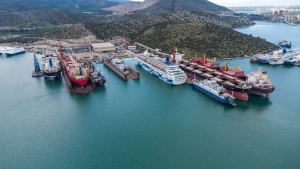
Chalkis Shipyards S.A., will participate in the stand of Eskomarine at Expomaritt Istanbul which will be taking place 11-14 October 2023
The qualified team will be there to welcome all visitors.
Mr. Ashraf Bayoumi, who has held managerial positions during the last 23 years in the company and has successfully led Chalkis Shipyards to a continuous upward development from the moment he took over as new CEO, will also be present to meet and discuss cooperation opportunities.Chalkis Shipyards is among the top shipyards in the Mediterranean. Its services cover a wide range of dry-docking jobs, whether scheduled or ad hoc to address specific repair needs. For the past fifty years they have been seamlessly serving their customers and delivering vessels on schedule and on budget. Chalkis Shipyards stand out for their reliability, flexibility and experience and the fact that have the ability to immediately offer solutions to any problem that arises.Some of the most important projects of recent years are as follows:
Reconstruction of deck barge into a DP2 Cable Laying Vessel
· Renewal of bow in a Panamax vessel and cargo transfer from this Panamax vsl to another one - work which was carried out for the first time and in a short period of time
· Replacement of burnt generators, washing and repainting of engine room in an Aframax ship
· Repair of damage on the bow area of a Supramax
· Installation of BWTS on a major number of vessels
Their goal is to continue offering high quality of services and at the same time satisfy the expectations of customers.
The vision of the company as well as the philosophy of CEO of Chalkis Shipyards, Mr. Ashraf Bayoumi, is to respond to challenges and stay ahead of developments. “We are expanding into new markets by increasing the circle of our partner-agents in other countries and exploring areas in which we could develop new activities”.
ELNAVI Newsletter
More Information: ELNAVI,
19, Aristidou str., Piraeus 185 31,
Tel.: +30 210 45.22.100, e-mail: This email address is being protected from spambots. You need JavaScript enabled to view it.
The maritime industry is no stranger to risks and uncertainties. From marine accidents due to human error and natural disasters, to geopolitical conflicts, the challenges faced by shipowners, operators, and cargo owners are diverse and complex. One crucial aspect of risk management in this arena is the War Risks insurance policies. As conflicts and tensions continue to arise around the world and the excluded from the standard marine Hull insurance cover war risks zones increase, the role of Marine War Insurance becomes increasingly vital. So, let’s delve into the significance of a Marine War insurance policy and its role in safeguarding the interests of stakeholders in the maritime sector: The Complex Landscape of Maritime Conflicts: In an interconnected world, the ripple effects of conflicts and wars, extend far beyond their origins. Geopolitical tensions, territorial disputes, and acts of aggression can disrupt maritime trade routes, endanger vessels, and threaten cargo and seaborne trade. A recent paradigm of this, is the Russian-Ukrainian War. Marine war insurance steps in to mitigate the financial impact of these unforeseen events, in exchange of an insurance premium. Whether it's a result of terrorism, piracy, or conventional warfare, these policies provide a safety net for stakeholders navigating through troubled waters providing reimbursement to the assured against financial losses and damages caused by war related events, such as acts of war, civil unrest, terrorism, piracy, and military actions.
War Risks Cover and Scope: Marine war insurance covers a wide range of risks, tailored to the unique challenges of the maritime industry. These policies typically encompass damages or losses resulting from acts of war, civil unrest, confiscation, detainment, naval blockade, Piracy & hijacking and even sabotage. Importantly, they extend beyond the traditional marine insurance coverage, providing a comprehensive shield against risks that arise due to human conflict.
In a world where maritime trade drives economies and fuels growth, the safety and security of vessels and cargo are paramount. Marine war insurance ensures that shipowners and cargo owners are financially protected in the event of unexpected war related incidents. From physical, either particular average damage to total losses, these policies offer a lifeline for shipping businesses facing war risk related, financially damaging effects.
Global Impact and Geopolitical Dynamics: The interconnectedness of global trade means that conflicts in one region can have far-reaching consequences. Maritime routes are arteries of commerce, and disruptions can lead to supply chain bottlenecks and economic turmoil. Marine war insurance not only shields individual stakeholders but also contributes to the stability of the global economy by allowing trade to continue despite the challenges.
The Role of Risk Mitigation: While marine war insurance provides crucial financial protection, it also encourages proactive risk management. Shipowners and operators must assess routes, review security protocols, and stay informed about potential conflict-war zones, HRA (geographical High Risk Areas) as they are regularly up dated by the JWC (Joint War Committee, which is comprised by representatives from both the Lloyd’s and the IUA marine insurance markets). By adopting a proactive stance, they can reduce the likelihood of invoking their marine war insurance policies or, by paying an extra war risk premium to take the risk by entering a HRA for loading or discharging a cargo.
Collaboration and Expertise: Navigating the complexities of marine war insurance requires collaboration between shipowners, specialised marine insurance brokers who have deeper understanding of the intricacies of war risks insurance within the maritime industry, and of course expert war risk underwriters. Industry expertise is crucial in understanding the nuances of coverage, ensuring policies are tailored to specific needs, and assisting in the claims process should the need arise.
In an era of uncertainty, the maritime industry relies on robust risk management and risk prevention strategies to safeguard operations and investments. Marine war insurance stands as a bulwark against the unforeseen, offering peace of mind to those who traverse the seas. As the world evolves, the importance of this specialised insurance grows, emphasising the need for stakeholders to be well informed, prepared, and well-protected in the face of a dynamic and complex global landscape.
* Marasco Marine Ltd, was founded in 1991, by Mr Anastasios Maraslis. Marasco is specialising in Managing Marine Risks and Risk Prevention Planning, serving the last 32 years, Ship Owners, Ship Managers and Ship Operators, with his experienced marine/ claims insurance team and the company’s Board of Advisors, Internationally Acknowledged. More about Marasco Marine at: www.marasco-marine.com
ELNAVI Newsletter
More Information: ELNAVI,
19, Aristidou str., Piraeus 185 31,
Tel.: +30 210 45.22.100, e-mail: This email address is being protected from spambots. You need JavaScript enabled to view it.
Faced with tough competition for greener fuels from other sectors, new 2030 maritime emission targets hang in the balance. According to the latest edition of DNV‘s Maritime Forecast to 2050 the shipping industry will find it challenging to secure enough supply of carbon-neutral fuels. The report emphasizes the need to consider all alternative approaches to reducing emissions and to take action now to secure future success.
Increasing regulatory pressure to decarbonize, including stricter targets set by the International Maritime Organization (IMO) this July, means the shipping industry now needs to achieve a 20% reduction in emissions by 2030 and net-zero emissions by or around 2050. To meet the anticipated demand of 17 million tonnes of oil equivalent (Mtoe) annually by 2030, the maritime sector needs to access a staggering 30-40% of the projected worldwide carbon-neutral fuel supply. Shipowners must therefore focus beyond fuels, in particular on what can be done now to achieve energy efficiencies and carbon emission reductions.
Knut Ørbeck-Nilssen, CEO DNV Maritime, said: “The 2020s marks the decisive decade for shipping. Securing greener fuel supply is critical. However, focusing on fuels alone can distract us from making an impact this decade and ambitious future declarations are not good enough. What we need is tangible actions that will reduce emissions. Energy efficiency measures can deliver decarbonization results now and towards 2030.”
The Maritime Forecast to 2050 presents an updated look on a range of regulations and drivers for the decarbonization of shipping, the most important being new IMO regulations, the inclusion of shipping in the European Union’s (EU) Emissions Trading Scheme and incoming well-to-wake requirements. These regulations will increase the operational cost of using carbon fuels, incentivising shipowners to put plans in place today to reduce their carbon output.
“Our latest report outlines several energy efficiency measures that can deliver decarbonization results now. It emphasises the need for the maritime sector to adopt a holistic approach to ensure a strong evolution of regulations and technologies, as well as long-term security of fuel supply,” said Eirik Ovrum, Principal Consultant in DNV Maritime, and Lead Author of the Maritime Forecast.
To overcome decarbonization challenges, the sector can adopt operational energy efficiency measures such as air lubrication systems and wind assisted propulsion. The latter has already been installed on 28 large vessels, delivering fuel savings of between 5-9% to date. The potential when retrofitted on existing ships can reach 25%.
In addition, technologies such as onboard carbon capture and storage and nuclear propulsion can address the competition for sustainable biomass and renewable electricity. The report presents an economic analysis of both options through detailed case studies that can help stakeholders make informed decision around these technologies.
Other findings include that a fuel technology transition is already underway, with half the ordered tonnage capable of using liquefied natural gas (LNG), liquefied petroleum gas (LPG), or methanol in dual-fuel engines, compared to one third of the tonnage on order last year. For ships in operation, 6.5% of tonnage can now operate on alternative fuels, compared to 5.5% last year. The uptake of methanol and LPG is also starting to show in the statistics together with the first hydrogen-fuelled newbuilds. There are currently several ongoing demonstration projects for ammonia-fuelled ships, and a growing pipeline of ammonia-fuelled ships soon to hit the order book.
About DNV Maritime: DNV is the world’s leading classification society and a recognized advisor for the maritime industry. We enhance safety, quality, energy efficiency and environmental performance of the global shipping industry – across all vessel types and offshore structures.
We invest heavily in research and development to find solutions, together with the industry, that address strategic, operational or regulatory challenges.
For more information visit: www.dnv.com/maritime
About DNV: DNV is the independent expert in risk management and assurance, operating in more than 100 countries. Through its broad experience and deep expertise DNV advances safety and sustainable performance, sets industry benchmarks, and inspires and invents solutions.
Whether assessing a new ship design, optimizing the performance of a wind farm, analyzing sensor data from a gas pipeline or certifying a food company’s supply chain, DNV enables its customers and their stakeholders to make critical decisions with confidence.
Driven by its purpose, to safeguard life, property, and the environment, DNV helps tackle the challenges and global transformations facing its customers and the world today and is a trusted voice for many of the world’s most successful and forward-thinking companies.
For more information visit: www.dnv.com
ELNAVI Newsletter
More Information: ELNAVI,
19, Aristidou str., Piraeus 185 31,
Tel.: +30 210 45.22.100, e-mail: This email address is being protected from spambots. You need JavaScript enabled to view it.
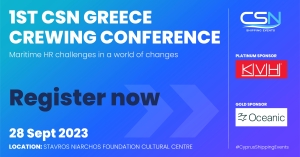
Recruitment and Crew wellbeing will be at the heart of the 1st CSN Greece Crewing Conference this year – outlining the impacts of recent global events within the industry and how the lives of crew members and their families have been affected by COVID-19. The conference will also welcome topics surrounding various developments within Maritime HR such as changes in regulations and policies, advancements in technology, and the strategies required for promoting and retaining a multicultural crew.
- ·We are not alone: A perspective from other industries. Other industries are also in hard competition about the talent
- ·Factors influencing Crew Welfare
- ·The Future – Technology
The above and more, will be discussed at the 1st CSN Greece Crewing Conference “Maritime HR challenges in 2023”. The conferences is takingplace on 28th September in Athens at the Stavros Niarchos Foundation Cultural Centre. The Athens event is under the auspices of the Propeller Club and supported by HELMEPA, WISTA Hellas and AMMITEC.
Save the date in your calendar for this promising conference “Maritime HR challenges in 2023” where together with key industry experts from industry bodies, shipowners, ship managers, airlines, traveling agencies, HR Recruitment agencies and Crewing companies etc. we will look at the operational aspects impacting the shipping sector. The conference brings together various key industry stake-holders including but not limited to: ship owners, ship managers and associated solution providers such as maritime technology providers, consultants and cross-cultural experts.
This is going to be the first event of CSN for Crewing in Athens and we would like to invite you to support the conference. There are still available sponsorships and some panellists slots and those interested please contact us at This email address is being protected from spambots. You need JavaScript enabled to view it..
The Charity Sponsor is Mastermind Shipmanagement and the charity foundation ELEPAP. The attendance of the conference is free for all employees of shipping and shipping related organisations in Greece, but we welcome anyone who wants to contribute to the charity foundation by indicating it at the registration.
The programme of the Conference is uploaded and will updated in the following website:
1st CSN Greece Crewing Conference Athens 28 September
Looking forward to a very successful event in Athens.
Confirmed Speakers, Chair Person, Moderators, Panellists include:
- AdonisViolaris, Managing Director - CSN
- Henrik Jensen, CEO - Danica Crewing Specialist
- Eurico Ortiga, Senior Policy Advisor, Social & Legal Affairs – ECSA
- Maria Skiathiti, Regional Director, Commercial Partner Lead, EMEA (Europe Middle East & Africa) - Microsoft
- Cleo Papadopoulou, Partner/Chief Learning Officer – PwC
- Eugen Adami, CEO – Mastermind Shipmanagement
- Dr. Iliana Christodoulou Varotsi, Senior Legal Consultant and Lead Industry Trainer
- Stella Kazamias, Group HR Manager – Interorient Shipmanagement
- David Tropp Hag, Vice President, EMEA Sales – KVH
- Popi De Pinto Moyseos, Director of Merchant Fleet – Oceanic
- Konstantinos Galanakis, CEO – Elvictor Group
- Kyriakos Hadjikyriakou, Managing Director – Oceanic
- Dimitrios Fokas, Training Manager - Angelicoussis Shipping Group
- Captain Theodore Lalas, Fleet Operations Manager - IRI/The Marshall Islands Registry
- Andromachi Demetriou, 2nd Officer – Stena Line
- Antonios Chasapis, General Manager - Minerva Ship Management
- Konstantina Aravantinou, Sales Manager / Marine Power Sales – Wärtsilä Greece S.A.
- Vasilios Lamaris, Manager, Decarbonization Modelling & Services, Sales Support & Development – Wärtsilä Greece S.A.
- Nick Clarke, CEO – Greywing
- Andreas Chrysostomou, CSO – Tototheo Maritime
- Amalia Marcou, Crew Director /HR Manager – Enesel Dry S.A
- Stella Violari, Editor - CSN
Click here for more information
Register for free under the following link: https://cyprusshippingevents.com/1st-csn-greece-crewing-conference/
ELNAVI Newsletter
More Information: ELNAVI,
19, Aristidou str., Piraeus 185 31,
Tel.: +30 210 45.22.100, e-mail: This email address is being protected from spambots. You need JavaScript enabled to view it.