



elnavi
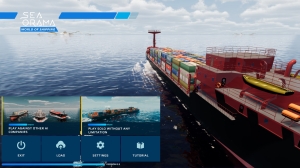
Encounter the unique experience of shipping through the game Seaorama: World of Shipping and live an innovative and immersive learning adventure based on real data.
Shipping impacts every aspect of our lives, from the coffee we enjoy to the smartphones we use, the clothes we wear, and even the chocolate we savor. However, many people struggle to grasp the significance of shipping and its vital role in our society. This is particularly true for younger generations who will shape the future of the industry.
Recognizing the urgent need to educate and prepare individuals in this rapidly evolving field, Seaorama, a Greek video game made by a start-up named Seaorama P.C, emerged. Driven by a vision and armed with extensive experience in the maritime domain, Seaorama: World of Shipping aims to capture and present the shipping industry in an engaging and educational manner.
Imagine a video game that bridges the gap in maritime knowledge, enlightens players about shipping's societal impact and global sustainability, and provides insights into potential career paths within the sector. In "Seaorama: World of Shipping," players assume the role of a young entrepreneur striving to build the world's largest and most successful shipping company from scratch.
This captivating game immerses players in the world of shipping companies, enabling them to develop their own managerial style through risk and opportunity management.
Within the competitive international landscape of the shipping industry, players face numerous challenges and demands, requiring strategic thinking and effective business tactics to thrive. As the game reflects real-world developments, players are encouraged to implement sustainable practices that meet the evolving operational demands of today's business reality.
Choose between container ships, bulk carriers, and tankers to create your fleet, but be aware that various factors in the game may influence the expansion or investment in different types of vessels.
By incorporating real shipping data, the game creates its own economy, generating diverse scenarios for players to navigate. From port congestion and piracy to extreme weather events, mechanical failures, and crew accidents, the game encompasses the challenges faced in the shipping industry.
Seaorama: World of Shipping stands out globally as no other video game currently offers a similarly immersive experience in the shipping industry. Prepare to embark on a unique journey that will expand your horizons, knowledge, and experiences of shipping, inspire sustainable practices and unveil to you the exciting career opportunities within this dynamic sector.
Seaorama: World of Shipping is expected to be released by the end of 2023. Companies from both the shipping industry and others in the maritime cluster are invited to explore the promotional opportunities offered through the video game (email: This email address is being protected from spambots. You need JavaScript enabled to view it.)
You can find and add Seaorama: World of Shipping to your Steam Wishlist https://store.steampowered.com/app/2002570/SeaOrama_World_of_Shipping/
ELNAVI Newsletter
More Information: ELNAVI,
19, Aristidou str., Piraeus 185 31,
Tel.: +30 210 45.22.100, e-mail: This email address is being protected from spambots. You need JavaScript enabled to view it.
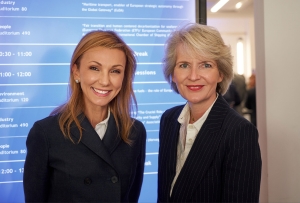
During the European Shipping Summit 2023, the Union of Greek Shipowners (UGS) in collaboration with the German Shipowners’ Association (VDR) successfully hosted a joint event in Brussels, on Tuesday the 19th of September, with the presence of their Presidents, Ms. Melina Travlos and Ms. Gaby Bornheim, respectively.
Ms. Melina Travlos, President of the Union of Greek Shipowners, stated, in the context of the event: “Greek and German Shipowners' Associations have joined forces to highlight the strategic role of shipping for the stability, prosperity and energy security of Europe and its people.
Holding a joint event with the German Shipowners Association (VDR) as part of the European Shipping Summit 2023 in Brussels is an initiative that results from our common view of the challenges facing our sector and a like-minded approach to addressing them.
Our cooperation aims to draw attention to the strategic role that shipping plays as a key enabler of the European economy and as a major contributor to securing Europeans’ quality of life.
As the UGS our mission is to safeguard the future not only of Greek shipping but also of European shipping. It is of the utmost importance that the vital role played by European shipping is recognised by key European institutions as well as by the wider public. It is a fact that shipping contributes in countless ways to the smooth functioning of European society as well as supporting communities across the world, even at times of crisis such as those experienced in recent years.”
The event stressed the strategic importance of shipping for the EU. Key officials from the European Commission and industry experts had the opportunity to exchange their views on how Europe can preserve and enhance its EU shipping status. The event highlighted the indispensable role of shipping to the EU’s food security and energy autonomy, as the vast majority of basic food and energy imports are transported by vessels.
Mr Ioannis Vrailas, the Ambassador/Permanent Representative of Greece to the European Union, in his keynote speech, stated: “the EU is called to not only safeguard but guarantee the global competitiveness and long-term sustainability of this strategic sector. This is a challenge which we must all address successfully for the benefit of Europe and European citizens”.
Ms Fotini Ioannidou, Acting Director of Waterborne Transport and Head of the Maritime Safety Unit of DG MOVE, pointed out that: “Shipping is an essential pillar of the European economy. Nobody can doubt its strategic importance for the security of our supply of energy and other essential materials and goods. We need a European shipping industry and maritime clusters that are green, competitive and resilient so that they can successfully navigate the challenges ahead”.
“Shipping is a resilient pillar of support for the EU during challenging times such as the current energy crisis, ensuring Europe's stability. The sector contributes to the decarbonisation of Europe through the transportation of low or no-carbon fuels. It is important for the sector to safeguard regulatory certainty and predictability in the EU legislation”, said Mr Hans Van Steen, Principal Adviser of DG ENER.
On behalf of UGS, Mr Dimitrios J. Fafalios, Secretary of the UGS Board of Directors and President/Director of Fafalios Shipping S.A., stated that “Shipping has proven to be a resilient pillar of support during challenging times, ensuring Europe's sustainability in various crises, while also being the most environmentally friendly transport mode. The EU should recognise shipping as a strategic partner in its policies, aiming at preserving and enhancing its global competitiveness”.
Last, on behalf of VDR, Mr Lucius Bunk, Founder and Managing Partner at Auerbach Shipping, Member of the VDR Board of Directors, pointed out that “Shipping urgently needs regulatory certainty due to its heterogeneity. Otherwise, the risk of mis investment is simply too high and weakens the competitiveness of small and medium-sized enterprises in particular”.
The proceedings of the event concluded that shipping is a strategic asset and, as such, a cornerstone for the security and prosperity of Europe. A clear message was hopefully sent to the EU institutions about the importance of preserving EU shipping global competitiveness and the absolute need to enhance it with concrete and fit for purpose policies.
ELNAVI Newsletter
More Information: ELNAVI,
19, Aristidou str., Piraeus 185 31,
Tel.: +30 210 45.22.100, e-mail: This email address is being protected from spambots. You need JavaScript enabled to view it.
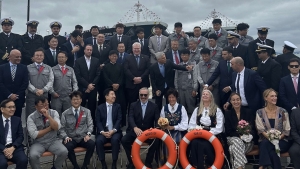
Four state-of-the-art tankers which they use as fuel liquefied natural gas-LNG was delivered at Hyundai shipyards in Korea by the NYSE listed Tsakos Energy Navigation led by Dr. Nikos Tsakos. All four vessels raised the Greek flag and are the first of this technology to be included in the Greek registry.
The Aframax type tankers has a capacity of 116,000 dwt each and are already time chartered for 10 years, with the possibility of extending the duration of the contract, to the Norwegian energy company Equinor with which TEN has had a stable and constructive cooperation for 15 years.
Dr. Nikos Tsakos from Korea with his son Panagiotis Tsakos commented: “All four newly built aframax tankers fly the Greek flag and are ready to use liquefied natural gas-LNG.
We continue the effort to create a 100% “green fleet” until 2030 with ships of new state-of-the-art technology.
It is the first time we take delivery of ships after the death of my co-founder and beloved mother, Dr. Irene Tsakou, who loved Korea.
“I want to thank everyone for the great job you did. This is the second time in a year that we are here to deliver high-tech ships. We are big supporters of the Korean shipbuilding industry and Korea”.
ELNAVI Newsletter
More Information: ELNAVI,
19, Aristidou str., Piraeus 185 31,
Tel.: +30 210 45.22.100, e-mail: This email address is being protected from spambots. You need JavaScript enabled to view it.
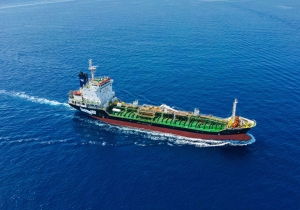
Following a policy of continuous fleet growth, Seaven Tanker & Dry Management has added to its fleet the 5.695dwt chemical tanker built in 2005.
The ship raised the Greek flag and is equipped with the latest safety and navigational systems.
Seaven is the new company name of Evia Petrol Group, which was established in 2003. Seaven features the company’s scope and speaks to its vessels’ potential of traveling across the Seven Seas, all over the globe. The fleet of Seaven is comprised of medium sized Greek flag modern oil/ chemical tankers, double-hulled and equipped with upmost technologically advanced equipment. The fleet of Seaven is trading between Mediterranean, Black Sea and North Europe ports and is chartered by demanding and well respected companies in the market, with oil majors and known oil traders being among them. Seaven has under its management self-discharging cement carrier vessels, which are mainly trading within Mediterranean ports and chartered by first class cement major companies and cement traders. Seaven maintains a Safety, Security, Quality and Environmental Management system under the standards and certification of ISM and ISPS Codes, by the Classification Societies of Bureau Veritas for Hellenic Flag vessels and RINA for Panama Flag Vessels, and under the standards and certification of ISO 9001, ISO 14001, ISO 26000, ISO/ IEC 27001 and ISO 45001. Seaven is certified by ISO 9001, ISO 14001, ISO 26000, ISO 27000 and ISO 45001. Seaven is a Member of Intertanko, Bimco, Helmepa and EENMA (Hellenic Shortsea Shipowners Association) In November 2018, Seaven became the first company in the world, with vessels under 10,000 DWT, to be certified by Green Award Foundation. Seaven aims to continue its expansion and growth in the years to come, offering the best quality service possible to operate safely and efficiently in a demanding trade.
ELNAVI Newsletter
More Information: ELNAVI,
19, Aristidou str., Piraeus 185 31,
Tel.: +30 210 45.22.100, e-mail: This email address is being protected from spambots. You need JavaScript enabled to view it.
Jotun Hellas pioneers vessel maintenance and safety with novel Aerial Drone Inspection Service

Jotun Hellas introduced its groundbreaking Aerial Drone Inspection Service. This cutting-edge service involves certified and experienced Jotun Coating Advisors utilizing state-of-the-art aerial drones to conduct comprehensive outdoor and indoor inspections of vessels. With the capability to access even the most challenging areas, including decks, accommodation, funnels, lifeboats, cranes, cargo holds, hatch covers, and the external hull above the waterline, this service ensures the most thorough assessment possible.
The Aerial Drone Inspection Service empowers ship operators with accurate and detailed information about the state of their vessels. The service analyses the vessel's paints and coatings condition, documented with high-resolution photos and videos, enabling data-driven decisions for maintenance and repair works. The inspection material, including a complete Drone Inspection Paint Condition Report, is prepared by Jotun Coating Advisors having assessed each inspected area, ensuring that every aspect is considered, and every detail reported.
The advantages are numerous. Ship operators may now benefit from enhanced accuracy in budgeting and efficient scheduling of maintenance and repair works, resulting in cost efficiency and timely maintenance. By identifying and addressing corrosion at an early stage, drone inspections support the prevention of deterioration and enable data-driven decision-making for safety on board. With access to reliable inspection information, ship operators can proceed with confidence in their improvement initiatives.
Jotun Hellas remains committed to delivering innovative solutions that optimize vessel performance and safety. The Aerial Drone Inspection Service represents a significant step forward in the maritime industry, offering ship operators unparalleled insight and control over their vessels' maintenance and safety.
About Jotun Hellas
Jotun Hellas - a branch of Jotun Group in Greece - has been a leading marine coatings solutions provider in the Greek maritime industry for 50 years. With its solid commitment to innovation, sustainability, and customer satisfaction, Jotun Hellas continues to redefine industry standards and support its partners' success worldwide.
ELNAVI Newsletter
More Information: ELNAVI,
19, Aristidou str., Piraeus 185 31,
Tel.: +30 210 45.22.100, e-mail: This email address is being protected from spambots. You need JavaScript enabled to view it.
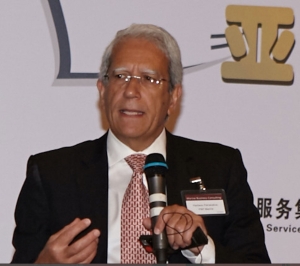
By Mr Harilaos Petrakakos, Director - Senior Surveyor of P&P Marine Consultants Inc., Member of Marasco Marine Ltd, Advisors’ Board
Ships play a crucial role in global trade, transportation, and exploration. However, their operations are inherently exposed to various risks, ranging from maritime accidents to piracy, war and environmental hazards. Implementing effective risk prevention strategies is essential to ensure the safety of hull & machinery, crew, cargo, and the marine environment. This essay will discuss key risk prevention strategies that can be employed on ships to minimize potential hazards and ensure safe and smooth sailing.
- Competency and Crew Training.
The foundation of any risk prevention strategy begins with a well-trained and competent crew. Proper training ensures that seafarers possess the necessary knowledge and skills to handle emergencies effectively. Regular drills, exercises, and simulations help them respond promptly to potential risks, such as fires, collisions, machinery and cargo handling equipment damages, or man-overboard situations. Continuous education and certification updates also keep the crew up-to-date with the latest safety regulations and best practices.
- International Regulations and Compliance:
Adherence to international maritime regulations, such as the International Maritime Organization's (IMO) conventions and guidelines, is vital for risk prevention. Compliance ensures that ships are equipped with necessary safety equipment, maintain proper operational standards, and follow safety protocols. Compliance also extends to environmental regulations to minimize the impact of ship operations on marine ecosystems.
- Risk Assessment and Management:
Conducting thorough risk assessments is essential to identify potential hazards and vulnerabilities on ships. This involves analyzing the ship's design, her hull & machinery condition, operational procedures, cargo handling, and navigational routes. With this information, ship operators can develop comprehensive risk management plans that include preventive measures, contingency plans, and response protocols for various scenarios.
- Use of Advanced Navigational Aids:
Equipping ships with modern navigational aids enhances their ability to navigate safely through challenging waters. Global Positioning Systems (GPS), radar systems, Electronic Chart Display and Information Systems (ECDIS), and Automatic Identification System (AIS) improve situational awareness, thereby reducing the risk of collisions and groundings.
- Safety Equipment and Maintenance:
Regular maintenance and inspection of safety equipment, including lifeboats, fire-fighting systems, and communication devices, are imperative for their optimal functionality during emergencies. Ensuring that safety equipment is properly maintained can make a significant difference in handling critical situations effectively.
- How about Cybersecurity:
With the increasing digitization and automation on ships, cybersecurity becomes a crucial aspect of risk prevention. Protecting onboard systems from cyber threats is essential to prevent unauthorized access or interference that could lead to accidents or operational disruptions.
- Security Measures against Piracy and Terrorism:
Ships traveling through high-risk areas must implement security measures to deter piracy and protect vessel, crew and cargo. Hiring onboard security personnel, adopting Best Management Practices (BMP), and adhering to the International Ship and Port Facility Security (ISPS) Code are essential components of a comprehensive security strategy.
In conclusion, risk prevention strategies on ships are paramount to ensure safe and efficient maritime operations. A well-trained crew, compliance with international regulations, risk assessments, advanced navigational aids, proper maintenance of Hull & Machinery and safety equipment, cybersecurity, and security measures against piracy are all integral components of an effective risk prevention plan which is always well appreciated and evaluated by Marine insurance Underwriters, prior to undertaking a new Marine risk and premium calculation. By implementing these strategies, ship operators can mitigate potential hazards, protect hull & machinery, crew and cargo, and preserve the marine environment for sustainable shipping practices in the future.
ELNAVI Newsletter
More Information: ELNAVI,
19, Aristidou str., Piraeus 185 31,
Tel.: +30 210 45.22.100, e-mail: This email address is being protected from spambots. You need JavaScript enabled to view it.

As the global shipping industry celebrates World Maritime Day with its central theme of “MARPOL at 50”, the International Association of Dry Cargo Shipowners (INTERCARGO) has stressed its commitment to the full implementation of MARPOL regulations onboard dry bulk carriers.
Introduced in 1973, The International Convention for the Prevention of Pollution from Ships (MARPOL) is the main international convention covering prevention of pollution of the marine environment by ships from operational or accidental causes.
INTERCARGO is committed to international efforts to protect our marine environments. The dry bulk sector is arguably the most efficient cargo carriage mode on earth. INTERCARGO members are expected to fully comply with global environmental and anti-pollution regulations and go beyond them by adopting best practices and demonstrating operational excellence in setting the standards for industry-wide environmental protection.
Actively participating at the International Maritime Organization, where it has held NGO status since the early 1990s, INTERCARGO is at the heart of global efforts to create a safe, efficient, high quality and environmentally friendly shipping industry.
For an overview of INTERCARGO’s work in relation to the UN Sustainable Development Goals (UN SDGs), please watch our Association’s videos on “Dry Bulk Shipping: Sustainably serving the world’s essential needs’ Click here to view.
ELNAVI Newsletter
More Information: ELNAVI,
19, Aristidou str., Piraeus 185 31,
Tel.: +30 210 45.22.100, e-mail: This email address is being protected from spambots. You need JavaScript enabled to view it.

The Swedish Club celebrated its move into new, larger premises in Athens, offering the Greek shipping community a warm welcome at its Inauguration and Open House. Owners, brokers and the Club’s business partners toasted the new offices and enjoyed the Club’s hospitality.
Conveniently located in Paleo Faliro, the Club’s new Greek offices are larger than its previous home. Ludvig Nyhlén, Area Manager for Team Greece explained: “This has been a very positive step for Team Greece and we are delighted to see that the move has been so warmly received. Our team in Greece is expanding and we had grown out of our old offices. The majority of our members are based across Athens, and this new location gives us the best of both worlds, enabling us to be closer to our members in the greater area, and yet at the same time remain near our friends in Piraeus.”
Around 400 guests attended the celebration, taking advantage of its balconies and communal areas to enjoy the fine weather. “The numbers attending exceeded our expectations, proving just how accessible our new offices are,” remarked Nyhlén.
Earlier in the day, Thomas Nordberg, Managing Director of The Swedish Club, visited the new offices and congratulated the team on a successful and seamless transition. “I have always been clear as to the importance we place on the Club’s regional offices, and the important work that they do” he said. “Establishing an office in Greece in 1980 was one of the Club’s early steps towards true internationalisation, and the success of that move has helped make the Club what it is today. This new step in that journey looks to be very successful and I am delighted that the feedback I have heard from our members has been so positive.”
In keeping with Greek tradition, the new offices were blessed by a priest. Father Dimitrios Balkanas gave the blessing – or ‘agiasmos’ – which not only covered the premises but also all who work or live there including the Club’s friends and associates.
The Swedish Club’s new offices are located at 3rd Floor, Building 4, Complex II, 4 Moraitini & Eth. Makariou Street, Paleo Faliro 175 61, Athens, Greece, and all contact numbers remain the same.
ELNAVI Newsletter
More Information: ELNAVI,
19, Aristidou str., Piraeus 185 31,
Tel.: +30 210 45.22.100, e-mail: This email address is being protected from spambots. You need JavaScript enabled to view it.
UGS meets the Minister of Greek economy aiming at the active participation to the Thessaly crisis

Τhe President, Melina Travlos and the Vice President, Andonis Lemos, met today with the Minister of Economy and Finance, Mr. Kostis Hatzidakis. The meeting was also attended by the Deputy Minister of National Economy and Finance, responsible for Tax Policy, Mr. Harry Theoharis, the General Secretariat of Tax Policy, Ms. Maria Psylla and the General Secretariat of Economic Policy & Strategy, Mr. George - Theodoros Christopoulos. The historical contribution of Greek shipping to the Greek economy and society were discussed as well as the active participation of the Greek Shipping community to the Thessaly crisis.
ELNAVI Newsletter
More Information: ELNAVI,
19, Aristidou str., Piraeus 185 31,
Tel.: +30 210 45.22.100, e-mail: This email address is being protected from spambots. You need JavaScript enabled to view it.
The challenges of Cyprus shipping industry discussed at the General Assembly of Cyprus Union of Shipowners

On the occasion of the General Assembly of the Cyprus Shipowners’ Union Mr. Andreas Hadjiyiannis President of the Union announced the financial aid amounting to €50 million for the victims of floods and fires in Greece.
The Shipowners’ union president has recently met the President of Greece, Katerina Sakellaropoulou at a dinner where they discussed among others, the advancements required in the maritime industry as well as the challenges the industry in Cyprus is facing.
President, Nikos Christodoulides also attended the event.
There is an alarming trend of adverse deviations in the genetic makeup of modern shipping, Hadjiyiannis noted at the dinner hosted by the Cyprus Shipowners’ Union on Friday in Kifisia, Athens.
He highlighted the European shipping model, with Greek shipping at its core is facing significant challenges.
“The European fleet is shrinking. Out of the 10 ships sold, only 3 are bought by Europeans. Major Western banks, already sensing the decline in European shipping’s competitiveness, are withdrawing their funding. Start-up shipping companies in Europe are on the brink of extinction. The national shipping industry, with its 1000 companies, has already dwindled to less than 600 and has lost its top position, held since the 1950s,” Hadjiyiannis remarked.
He pointed out unfriendly approaches and EU policies regarding the unfavourable taxation of shipping, primarily based on negligible emissions trading related to greenhouse gases.
According to EU and UN studies, he said, “the environmental impact of shipping could be fully compensated if every individual replaced animal-based protein with plant-based protein just once every three months.”
He added that the EU imposes an elimination method, with an estimated cost to the shipping industry ranging from 2.5 to, as he reiterated, 3.5 trillion dollars over approximately twenty-five years.
During the General Assembly, the challenges facing Cypriot shipping were discussed, with the participation of Greek shipowners and Deputy Minister of Shipping Marina Hadjimanolis.
Andreas Hadjiyiannis and Vice President Polys Hajioannou discussed the practical difficulties arising from European decisions and environmental regulations imposed by the ETS, as well as the tax burden on ship ownership due to the decision to horizontally tax emissions in shipping.
For her part, Marina Hadjimanolis elaborated on the strategic actions planned to strengthen the Cypriot registry, which had been weakened due to the Russia-Ukraine war and sanctions. She assured strong commitment from the Christodoulides government to further sustainable development of Cypriot Shipping.
Finally, Andreas Hadjiyiannis expressed the deep sorrow of the maritime community for the human losses and damage caused by the devastating floods, in a written statement by the Cyprus Shipowners’ Union.
He added that the financial assistance is aimed at alleviating the suffering of the affected individuals.
ELNAVI Newsletter
More Information: ELNAVI,
19, Aristidou str., Piraeus 185 31,
Tel.: +30 210 45.22.100, e-mail: This email address is being protected from spambots. You need JavaScript enabled to view it.