




elnavi
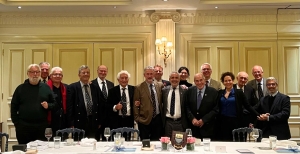
On Saturday, November 9, 2024, graduates of two well-known sisterschools, Gordonstoun in Scotland and the Anavryta Classical Lyceum in Athens celebrated together at the Grande Bretagne hotel, the 90 years since the foundation of Gordonstoun. The celebration was held by Gordonstoun thanks to the generous support and assistance of Capt. Stephanos E. Angelakos, Mr. Spyros Niarchos and Miss Amelia Rocos. Mr. Evangelos Angelakos had graduated from Anavryta Classical Lyceum in 1957, while his sons, Elias and Stephanos had attended Gordonstoun in the Class of 1984 and 1986 respectively.His granddaughter Katingo who is 13 years of age has joined thisyear. Mr. Niarchos is also an alumnus of Gordonstoun, from the Class of 1971, while Miss Rocos is a more recent graduate of the school, having left in 2017.The evening prior to this, Capt. Stephanos held ‘the KURT HAHNprivate dinner’ at The King George Hotel with current members of staff and alumni from Gordonstoun as well as members of the Anavryta alumni body, to commemorate and revive Hahn’s global impact on the educational world, with Greece being at its core. A corresponding celebration was held in Cyprus, on Thursday, November 7, 2024 thanks to Mr. Antonis and Mrs. Ria Mikellides of Olympia Ocean Carriers Ltd for generously hosting the gathering at Four Seasons Hotel in Agios Tychon.
History
The former Anavryta Classical Lyceum was an elite Greek lyceum (originally a boys-only boarding school) that was established in1940, shortly before Greece’s entry into World War II, in order to provide education to members of the Greek royal family and notable Athenian families. It was reestablished after the war in 1949 by King Paul of Greece, his wife Queen Frederica, and Jocelin WinthropYoung who became the school’s first headmaster and personal tutor to the royal couple’s son Crown Prince Constantine who was amongst the school’s first pupils.In 1971, the school was named a Lykeion Aristouhon which only admitted students who had distinguished themselves in otherschools. After several educational reforms in Greece, the school lostits elitist character in 1976, but continued to have higher admissions standards until the end of the 1980s. The Anavryta Classical Lyceum was originally based on the educational principles of Kurt Hahn,and modelled on Hahn’s own creations: the Schule Schloss Salem and Gordonstoun. The effort to create an elite high school in Athens inspired by Hahn’s principles had originated from King George II ofGreece following the tradition of the Greek royal family attendingHahn schools. The effort was supported by the Greek academicsociety mainly because of the strong relationship of Hahn’s theorieswith ancient Greek philosophy. The main goal of the lyceum was to focus on the pursuit of the Hahnian ideals and the study of Greek classics. The fate of the lyceum was closely tied with the Greek royal family, but the only King of Greece who actually graduated from the lyceum was Constantine II, in the class of 1958. The abolition of the monarchy in 1974, following a seven-year military junta, removed that association. Under circumstances that followed in the next years Anavryta lost its exclusive character, but remained a school with a solid reputation for academic excellence. Eventually at the end of 1991-1992 the school was prohibited from setting any kind of admission standards and requirements. Thus the lyceum lost its original characteristics.The impressive alumni of the Classical lyceum shows many distinguished members, since generations of spiritual leaders, academics, spokesmen, businessmen, and other prominent members of the Greek society had graduated from the Classical lyceum in the decades following 1940. The Anavryta experiment did not end, however, because the merit-based approach was restored in 2013, when the Greek Government made it mandatory for students to pass written examinations. The students who performed best in this exam were selected to attend the school. The first examination in 2013 had nearly 250 students competing for a place.
Kurt Hahn
Early in his life, Kurt Hahn had a vision of the kind of school he wanted to create. It would be a school designed to help children discover their interests and passions, rather than just prepare them for tests. And it would be a school devoted to character development. In 1920, in Prince Max von Baden’s family castle, they opened the Schule Schloss Salem, or Salem Castle School (“salem”means place of peace). It’s a co-ed private boarding school that still exists today.Hahn developed a set of principles to guide education at the school. He called his principles the “Seven Laws of Salem.”1. Give the children opportunities for self-discovery.2. Make the children meet with triumph and defeat.3. Give the children the opportunity of self-effacement in the common cause. 4. Provide periods of silence. 5. Train the imagination. 6. Make games important but not predominant. 7. Free the sons of the wealthy and powerful from the enervating sense of privilege. In 1932 he was opposed to Hitler’s ideas and was imprisoned by the Nazis. Fortunately, he had powerful friends in England who helped him to escape. In 1933, Hahn fled to Britain.
GordonstounIn
In April of 1934, he founded Gordonstoun, on a 17th century estate near the rocky coast of the Moray Firth. At Gordonstoun, Hahn was able to further develop what quickly became a distinctive and highly coveted approach to education. Prince Philip was one of the first pupils to attend the school, and all three of his sons, including King Charles III, went there. The school is now considered one of Britain’s most distinguished private boarding schools, and is now fully co-educational having initially been all-boys.Hahn is considered one of the modern fathers of “experiential education.” The idea that children should do things in school, rather than just sit and receive information, was what first propelled him to start thinking so deeply about education. He also felt that, for education to really have meaning, it should test students to their limit and beyond in a variety of ways. For Hahn, the rescue services were a way of doing that. There is a coastal rescue service, a mountain rescue service, and a fire rescue service. Students are required to join one of the services, and learn how to provide emergency assistance, being actually involved in fighting fires,tracking down missing hikers, and rescuing sailors whose shipshad wrecked along the rocky coast nearby. Students are on duty whenever catastrophe calls. In 1954 Gordonstoun was a part of a group of schools that aided a rebuilding project in Kefallonia after an earthquake.Think about that for a minute. High school children, pulled out of class or awoken in the middle of the night so to help in a fire or an earthquake. Hahn believed this was the most important element of education at Gordonstoun. More important than preparation for exams. More important than projects.
Why?
Because “I regard it as the foremost task of education to insure the survival of these qualities: an enterprising curiosity, an undefeatable spirit, tenacity in pursuit, readiness for sensible self denial, and above all, compassion.” Kurt Hahn. During this wonderful celebration, the current Head of Gordonstoun, Simon Cane-Hardy, spoke about the unique educational system Hahn had produced and the historic links with Greece, focusing on the virtues of the system followed by the school and its Platonic roots in Greek classical education.Capt. Stephanos E. Angelakos, an alumnus of Gordonstoun and cohost for the event, welcomed everyone to the birthplace of Hahn’s two pillars: 1. the motherland of Greek ideals to develop one’s self intellectually, morally, aesthetically and physically and 2. the cradle of Greek seamanship; in Greek Ναυτοσύνη (Naftosyni) where art, science and ethos are embodied. He concluded that Gordonstoun is a school that insists on building a young person’s character, and underlined Hahn’s declaration that, “The experience of helping a fellow man in danger, or even of training in a realistic manner to be ready to give this help, tends to change the balance of power in a youth’s inner life with the result that compassion can become the master motive.
In terms of the photos captions:
'the KURT HAHN private dinner': From L to R: Mr. S. Kasimatis, Mr. A. Kaminaris, Mr. Ch. Kasimatis, Mr. Th. Papatheou, Mr. G. Ventouris, Mr. E. Angelakos, Mr. S. Brown, Mr. A. Lyall, Capt. S. E. Angelakos, Ms. A. Rocos, Prof. P. Soukakos, Mr. R. Devey, Mrs. K. Angelakou-Skiniti, Mr. A. Papapanagiotou, Mr. D. Lekas, Mr. A. Skinitis.
Gordonstoun celebration: Mr. Simon Cane-Hardy, Head of Gordonstoun
L to R: Capt. Stephanos E. Angelakos, Mrs. Kitsa Angelakou-Skiniti, Mr. Simon Cane-Hardy
L to R: Mr. Andrew Lyall, Mr. Antonis Psiris, Mrs. Anna Maria Angelakou-Psiri, Mr. Evangelos Angelakos, Capt. Stephanos E. Angelakos, Mrs. Kitsa Angelakou-Skiniti, , Mr. Elias Angelakos, Ms. Amelia Rocos.
L to R: Ms. Amelia Rocos, Ms. Aya Burweila, Mrs. Ria Mikellides, Mr. Antonis Mikellides
Capt. Stephanos E. Angelakos – Co-sponsor of the event and alumnus of Gordonstoun
ELNAVI Newsletter
More Information: ELNAVI,
19, Aristidou str., Piraeus 185 31,
Tel.: +30 210 45.22.100, e-mail: This email address is being protected from spambots. You need JavaScript enabled to view it.
DNV’s new report reveals the Maritime appetite for cyber risk notably higher than other key industries
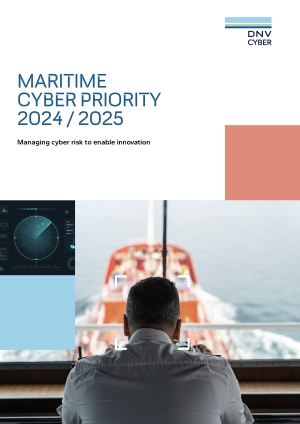
A new report published by DNV reveals that the majority (61%) of maritime professionals believe the industry should accept increased cyber risk from digitalization if it enables innovation and new technologies. The sector’s appetite to take on emerging risks arising from digital transformation is notably higher than other critical infrastructure industries including energy, manufacturing and healthcare.
The industry’s increasing appetite for cyber risk comes at a time when it must manage a growing volume of vulnerabilities. Seven in 10 (71%) of the almost 500 maritime professionals surveyed by DNV believe their organizations’ industrial assets are more vulnerable to cyber-attacks than ever before, while the same proportion (71%) say the leaders of their organizations consider cyber security to be the greatest risk their business faces.
“In the maritime industry, we must match our ambitions for digital transformation and decarbonization with a steadfast commitment to securing our people, the vessels and the systems we rely on,” says Knut Ørbeck-Nilssen, CEO Maritime at DNV. “Cyber-attacks represent a growing threat to the safety of the maritime industry today. We can innovate, progress, and take a lead in ensuring the resilience of our businesses and societies, but only if we truly manage cyber risk.”
Ship owners, ports, and the entire maritime value chain are increasingly reliant on ever more connected digital technologies as the industry transforms to become greener, safer, and more efficient. Maritime professionals point to advanced data analytics, the internet of things, AI & machine learning, high-bandwidth satellite communications, and autonomous operations as presenting the greatest opportunities for their businesses in the coming years.
While interconnectivity and new technologies bring opportunities, they also make the industry more vulnerable to cyber-attacks. Maritime professionals are confident the industry is managing the risk. More than eight in 10 (83%) say their organization has a good cyber security posture, and seven in 10 (71%) are confident their organization would quickly get back to business as normal following a cyber-attack.
Contributing to this confidence, almost three quarters of maritime professionals (73%) report that their organization is increasing cybersecurity spending compared to last year. A majority say their organization has prepared against potential outcomes such as asset downtime and disruption to operations, theft of sensitive data, physical injury or loss of life, and a grounded vessel.
While industry awareness of cyber risk and cybersecurity investment have grown rapidly, there are signs of a false sense of security within the maritime industry. Only half (53%) of those surveyed are confident their organization can demonstrate full visibility of supply chain vulnerabilities, a concern given the recent rise in cyber-attacks targeting supply chains.
Additionally, 68% believe their organization’s IT security is stronger than its operational technology (OT) security – which is linked to physical assets like sensors, programmable logic controllers (PLC), and enables automation, safety and navigation systems. Some 76% say that the cyber security training that their organization provides is not advanced enough to protect against sophisticated threats.
“Organizations may feel they are prepared as more resources are being deployed to manage cyber risk, but the reality is more complex than that,” says Svante Einarsson, Head of Maritime Cybersecurity at DNV Cyber. “Businesses have a sophisticated adversary to contend with, which complicates the picture significantly. We need to protect both IT and OT, and be ready to respond should an attack be successful.”
Concerns are heightened among maritime professionals due to geopolitical tensions but also because of growing criminal activity. One notable trend is the increase in concern related to criminal gangs that have identified the huge profit potential from ransomware attacks: 79% of maritime professionals are concerned about this risk vector, up from 56% in 2023.
DNV’s new report Maritime Cyber Priority 2024/25: Managing Cyber Risk to Enable Innovation, identifies four key challenges for the sector:
- Ensure access to experienced resources that know how to build and implement cyber security resilience in the design of new systems and vessels
- Enhance detection and response capabilities to minimize the consequences of marine operational technology (OT) systems
- Assign clear roles, responsibilities and resources to handle OT cyber security in a continuous manner onboard and onshore
- Secure the many interdependencies and components in complex supply chains
The vast majority of maritime professionals (95%) call for more collaboration on cybersecurity among organizations within critical infrastructure industries.
“The maritime industry and other critical infrastructure sectors need to take big steps forward in openly sharing cyber security experiences – the good, the bad and the ugly – to collectively create security best practice guidance,” says Einarsson.
Download a free copy of the report here.
Cyber Priority
DNV Cyber’s Cyber Priority research explores the changing attitudes and approaches to cyber security in key industrial sectors. The latest edition of the research for 2024/25 draws on a cross-sector survey of more than 1,150 professionals, conducted in September and October 2024.
The report Maritime Cyber Priority 2024/25: Managing Cyber Risk to Enable Innovation explores the views of almost 500 maritime professionals who responded to the survey, complemented by in-depth interviews and analysis from industry leaders and DNV Cyber experts.
About DNV
DNV is an independent assurance and risk management provider, operating in more than 100 countries. Through its broad experience and deep expertise DNV advances safety and sustainable performance, sets industry standards, and inspires and invents solutions.
DNV combines specialist sector knowledge of with engineering expertise and information system best practice to secure critical infrastructure projects and operations from cyber threats. The company provides many of the world’s most successful and forward-thinking companies with clear and practical advice to uncover their cyber risks, build a powerful force of defence against threats, recover from attacks, and unite stakeholders behind cyber security programmes that everyone can believe in. Learn more at: dnv.com/cybersecurity
DNV in the maritime industry
DNV is the world’s leading classification society and a recognized advisor for the maritime industry. We enhance safety, quality, energy efficiency and environmental performance of the global shipping industry – across all vessel types and offshore structures. We invest heavily in research and development to find solutions, together with the industry, that address strategic, operational or regulatory challenges. For more information visit: www.dnv.com/maritime
ELNAVI Newsletter
More Information: ELNAVI,
19, Aristidou str., Piraeus 185 31,
Tel.: +30 210 45.22.100, e-mail: This email address is being protected from spambots. You need JavaScript enabled to view it.
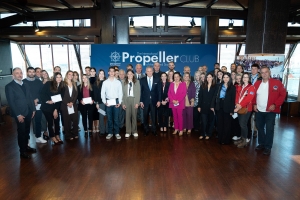
With the aim to support education and promoting the shipping industry, The Propeller Club Port of Piraeus offers scholarships for maritime studies and in recent years has begun to support athletes, further developing the social program.
On Thursday, November 7th, the Propeller Club, Port of Piraeus welcomed the young people and organizations who supported with scholarships and donations during the year.
In a warm and welcoming gathering at the Piraeus Marine Club, the members of Propeller Club had the opportunity to meet and celebrate the Propeller Club’s ongoing commitment to empowering youth, supporting education, sports and contributing to the society.
“We are proud to have succeeded in doubling our social impact this year,” stated President Costis Frangoulis.
ELNAVI Newsletter
More Information: ELNAVI,
19, Aristidou str., Piraeus 185 31,
Tel.: +30 210 45.22.100, e-mail: This email address is being protected from spambots. You need JavaScript enabled to view it.
Bahamas Maritime Authority honored by the Propeller Club Port of Piraeus for its longstanding support and commitment
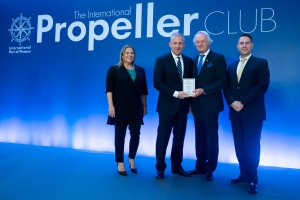
At the annual Propeller Club Greece Dinner, held in the elegant Caryatids Hall at the Grand Hyatt in Athens, BMA Regional Director Dimitri Tsiftsis joined over 250 guests celebrating their commitment to the Club. Honouring each sponsor's vital support, Club President Costis Frangoulis presented commemorative plaques to representatives, recognizing their contributions to the Club's mission of building a stronger future for the shipping industry. The Bahamas Maritime Authority, a longstanding sponsor, is proud to support this dedicated organization.
ELNAVI Newsletter
More Information: ELNAVI,
19, Aristidou str., Piraeus 185 31,
Tel.: +30 210 45.22.100, e-mail: This email address is being protected from spambots. You need JavaScript enabled to view it.
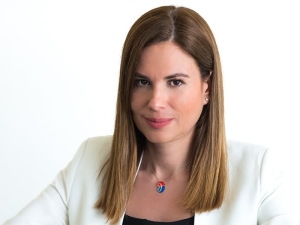
HEMEXPO – Hellenic Marine Equipment Manufacturers and Exporters – is celebrating its 10th anniversary, in a milestone for an organisation which has become one of Europe’s leading supplier associations for international shipping.
Established in 2014 with the objective of creating a platform to unify the previously-fragmented marine equipment manufacturing sector in Greece, the association initially served 15 member companies with a combined annual turnover of €178 million. Today, HEMEXPO comprises over 30 members, while turnover has increased by close to 400% to €676 million – highlighting the association’s remarkable growth over the past decade.
HEMEXPO’s strategy to drive best industry practices and support research and development has been clear from its proactive approach to forming alliances within and outside the maritime industry. As a member of SEA Europe – The Shipyards’ & Maritime Equipment Association of Europe – HEMEXPO also fully supports efforts to recognise the role of shipbuilding as a crucial component in the continent’s sustainability and security.
“HEMEXPO has come a long way since 2014, but it continues to represent the best in Greek maritime technology and remains committed to its mission of promoting Greek innovation,” said Eleni Polychronopoulou, HEMEXPO President. “Through far-reaching collaboration, both locally and globally, we have formed an extensive network of agents and pioneering partnerships to ensure Greek manufacturers have a strong presence on the European and international stage.”
Today, technology from HEMEXPO member companies features on a broad range of commercial, naval and leisure vessel types all over the world, across both newbuild and refit projects. The association’s collective portfolio includes the latest energy-saving devices to facilitate shipping’s green transition. It also offers a gateway to digitalisation, with several HEMEXPO members specialising in innovative digital solutions that enable smarter vessel operations to enhance safety, efficiency, and profitability while minimising the burden on crew.
“As the challenges facing the maritime industry continue to evolve, a greater variety of competencies and knowledge will be needed to overcome them,” added Polychronopoulou. “HEMEXPO is committed to investing in the human factor, which lies at the core of Greece’s marine equipment manufacturers. To this end, we are working to establish a talent-acquisition programme that will use training and educational partnerships to equip new entrants into shipping, as well as the current workforce, with the skills to thrive in the green and digital economy.”
HEMEXPO’s 10th-anniversary celebration event takes place on 3rd December 2024 at Skaramangas Shipyards, Greece.
Image: Eleni Polychronopoulou, HEMEXPO President
ELNAVI Newsletter
More Information: ELNAVI,
19, Aristidou str., Piraeus 185 31,
Tel.: +30 210 45.22.100, e-mail: This email address is being protected from spambots. You need JavaScript enabled to view it.
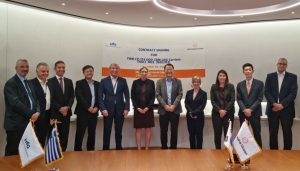
Hanwha Ocean Co., Ltd has signed a contract for two 174,000 cbm LNG carriers with Athens-based Angelicoussis Group affiliate Maran Gas Maritime Inc on November 8.
The Greek Angelicoussis Group is a privately owned shipping group, currently with 144 vessels on the water and 23 vessels, including three shuttle tankers, on order.
Through Athens-based companies, Maran Tankers Management, Maran Gas Maritime and Maran Dry Management, the Group operates a diversified fleet serving the oil, gas and dry cargo markets.
The affiliate of Greece’s Angelicoussis Group will have the 174,000 cbm vessels delivered in 2027.
Additionally, this deal comes with an option for two ships, so more orders are expected in the future.
Hanwha Ocean said that it has maintained a relationship with Angelicoussis Group that goes beyond business based on deep trust over the past 30 years.
A Hanwha Ocean official noted, “Our 30-year partnership is based on our trust in the shipyard’s technological capabilities,” and added, “We will repay them by building ships of the highest quality.”
As reported, the shipowner is Hanwha Ocean’s large customer, having ordered a total of 123 ships since its first order in 1994.
This contract contributes to Hanwha Ocean’s impressive 2024 order volume. Hanwha has won many orders this year for LNG carriers, very large crude carriers, containerships and others.
Recently, Angelicoussis Group affiliate Maistros Shiptrade Limited made a major deal to take over Altera Shuttle Tankers for an undisclosed sum in a major move into the sector.
Specifically, Altera Infrastructure Holdings L.L.C., a wholly owned subsidiary of Altera Infrastructure L.P., has entered into an agreement to sell all its membership interests in Altera Shuttle Tankers L.L.C. (AST) to Maistros Shiptrade Limited, a company affiliated with the Angelicoussis Group.
Altera Shuttle Tankers, a shuttle tanker provider, owns and operates 18 shuttle tankers in Brazil, Canada and the North Sea.
The completion of the transaction is conditional upon receipt of relevant regulatory approvals.
Subject to receipt of such approvals, the deal is expected to close in the first half of 2025.
Photo credit: Hanwha Ocean Co., Ltd
ELNAVI Newsletter
More Information: ELNAVI,
19, Aristidou str., Piraeus 185 31,
Tel.: +30 210 45.22.100, e-mail: This email address is being protected from spambots. You need JavaScript enabled to view it.
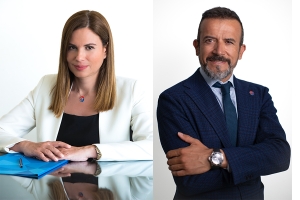
ERMA FIRST GROUP has completed another one considerable deal with the acquisition of Ecochlor, in a move that reinforces its position as a trusted provider of ballast water treatment and advanced decarbonisation solutions.
Broadening the range of ultra-efficient ballast water treatment systems (BWTS), future-proof decarbonisation solutions and related services under the ERMA FIRST GROUP umbrella, the acquisition consolidates the company’s status as one of the world’s largest BWTS providers.
“ERMA FIRST GROUP is dedicated to protecting and preserving the marine ecosystem by continuously developing and expanding its portfolio of innovative and future-proof environmental protection solutions,” said Eleni Polychronopoulou, President, ERMA FIRST GROUP.
“Over the last 15 years, ERMA FIRST GROUP has secured its reputation as a trusted BWTS partner, working closely with customers around the world to ensure access to the highest-quality services and solutions. A crucial part of our success has been our continuous investment in providing the best BWTS solutions, both through organic growth and acquisitions such as this, while simultaneously supporting customers before, during and after installation.”
Ecochlor’s BWTS portfolio comprises a filtration- and ClO2-based system and two versions of the EcoOne™ solution. The first is a filterless system that uses ClO2 alone and consumes just 10–20 kilowatts of power even at very-high flow rates. The second hybrid system deploys either a two-step filtration and ClO2 process or filterless ClO2-based operations only, depending on shipowner requirements.
The Ecochlor BWTS secured its market position by using a low dose of its proprietary chlorine dioxide (ClO2) solution, the EcoBlue, to treat ballast water in a highly efficient one- or two-step process. EcoBlue is the only chemical globally to be approved for use in Ecochlor systems under IMO and USCG Type Approval Certificates, which means that compliance is guaranteed for every operation, as well as compliance with IMO and USCG discharge standards. Apart from ensuring compliance, EcoBlue secures safe operation of the BWTS in accordance with the maker's operational manual and the BWTS warranty remains valid. ERMA FIRST GROUP’s global reach will further strengthen the system’s established chemical resupply and service network, which supports optimal Ecochlor BWTS performance wherever vessels sail.
In addition to that, the use of ERMA FIRST GROUP genuine spare parts safeguards the flawless, efficient and effective operation of every BWTS, prolonging its lifecycle without compromises, while reassures the warranty validity and full compliance with IMO and USCG Type Approvals.
Konstantinos Stampedakis, Co-Founder and Managing Director, ERMA FIRST GROUP emphasised that all installed Ecochlor systems were eligible for continuation of certified service post-acquisition, subject to verification that clients’ prior maintenance used original spare parts and EcoBlue. Failure to use approved components can render certifications null and void.
“We are delighted to announce the acquisition of Ecochlor in a move that consolidates our position as a world-leading provider of BWTS and our continuing growth as a one-stop shop for green ship operations,” said Konstantinos Stampedakis.
“By combining the portfolios and service capabilities of ERMA FIRST GROUP and Ecochlor, the acquisition extends our reach as a future-proof partner equipped to help shipping meet its environmental obligations”, Mr. Stampedakis added. Ecochlor’s ClO2-based technology offers a simple yet highly effective means of treating ballast water while at the same time helping to further reduce fuel consumption and emissions due to the system’s low power requirements.
image: Eleni Polychronopoulou, President, ERMA FIRST GROUP & Konstantinos Stampedakis, Co-Founder & Managing Director, ERMA FIRST GROUP
ELNAVI Newsletter
More Information: ELNAVI,
19, Aristidou str., Piraeus 185 31,
Tel.: +30 210 45.22.100, e-mail: This email address is being protected from spambots. You need JavaScript enabled to view it.
Seafarer training in need of comprehensive overhaul to ensure safe decarbonisation of shipping
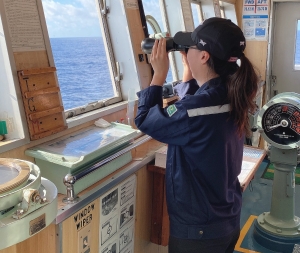
Over 500 considerations from cross-sector consultations that took place during a series of risk assessment workshops, led by Lloyd’s Register’s Maritime Decarbonisation Hub, suggest a comprehensive overhaul of seafarer training is required as the industry transitions to zero and near zero GHG emission fuels.
These are the outcomes of a summary report, which was produced by the Maritime Just Transition Task Force (MJTTF), in collaboration with Lloyd’s Register’s (LR) Maritime Decarbonisation Hub and the United Nations Global Compact (UNGC) Ocean Stewardship Coalition.
Made possible with the support of the International Maritime Organisation (IMO) and founding funder Lloyd’s Register Foundation, the report marks the completion of the first milestone of the MJTTF training project for the development of a baseline training framework to equip seafarers with the skills required to safely use ammonia, methanol and hydrogen as marine fuels. It is the high-level summary of the consultations made by over 100 stakeholders during 12 hybrid risk assessment workshops, which took place earlier this year.
The report is launched today (12 November) at Seatrade Maritime CrewConnect Global in Manila.
Zero and near zero GHG emission fuels such as ammonia, methanol and hydrogen present unique challenges and hazards to the crew’s health and safety; requiring specialised knowledge and safety measures to be adequately and effectively implemented. However, the current Standards of the Training, Certification, and Watchkeeping for Seafarers (STCW) Convention do not yet include guidelines or competency levels when specifically dealing with these green molecules.
The workshops focused on the use of ammonia, methanol and hydrogen as marine fuels to gather the industry perceptions on the necessary changes for seafarers transitioning from conventional fuel oil operations to zero and near zero energy sources for ships’ propulsion. The workshops identified the most significant safety risks associated with each fuel in scope and the new or modified training and competencies required for such a transition to be safe and effective, putting the seafarer at its core.
Considerations on ammonia highlighted its toxicity as a major challenge and alluded to comprehensive training on emergency response procedures, alongside new PPE standards and process safety measures.
Similarly for methanol, key concerns included the fuel’s high flammability, requiring new fire detection methods and updated personal protective equipment (PPE) protocols. Detailed training on methanol’s toxic properties and corrosivity will also be necessary in the next phase of the transition.
For hydrogen, considerations focused on issues such as flame detection and enhanced fire safety systems that would be vital for the crew, while repeating the need for new PPE protocols to be introduced to fully address hydrogen’s hazard profile.
From these stakeholder engagements, the MJTTF training project will develop detailed competency standards and a training framework to help maritime training academies and institutions further draft and implement training materials for upskilling and reskilling seafarers who will come in contact with hydrogen, ammonia and methanol as marine fuels. A roll-out of the Instructor Handbook to accompany the training framework is scheduled to take place in MTCC Asia in May 2025. The roll-out will be led by the World Maritime University (WMU), who lead this upcoming milestone as project partners.
Natassa Kouvertari, Senior Lead – Human Competency for Lloyd’s Register Maritime Decarbonisation Hub, said: “This report crystallises the industry’s views on what level of human competencies and training frameworks are needed for the safe deployment of ammonia, methanol and hydrogen onboard ships. It also aims to capture the scale of change required for each fuel in scope, establishing the foundations for informed decisions to be taken by the regulators and the industry for a meaningful just transition for seafarers.’.
Kjersti Aass, Head of the Maritime Just Transition Task Force on behalf of UN Global Compact, said: “The UN Global Compact, through the Maritime Just Transition Task Force, is proud to lead the Training for Decarbonisation project in collaboration with the IMO Secretariat to facilitate the uptake of alternative fuels and ensure a safe, just and equitable transition as shipping is decarbonising.”
Ismael Cobos Delgado, Deputy Director, Subdivision for Operational Safety and Human Element, IMO, said: “IMO is committed to ensuring that the maritime workforce is prepared for the new fuels, with differing hazards and operational challenges, that will be part of the picture to meet the IMO 2023 GHG Strategy goals. IMO is pleased to be working with partners to ‘fast-track’ the development of training provisions for ships using new technologies and alternative fuels, alongside and in parallel to the comprehensive review of the STCW training Convention and Code.”
Arvind Natrajan, Senior Manager, Crewing & Training, Marine Department, ICS, said: “It is critical that seafarers who work on ships propelled by future fuels, do so in a safe manner. The recommendations from this report will go a long way towards developing a baseline training framework and to support maritime education and training institutes who will have to deliver this training. I believe that this report has come at an opportune time when our industry is debating strategic measures to achieve decarbonisation”
Kulsoom Jafri, Lead Campaigner for Seafarers and Inland Navigation, ITF, said: “As the maritime industry undergoes a monumental shift toward alternative fuels and sustainable technologies, the importance of seafarers has never been clearer. This new report underscores a critical need for seafarer upskilling and training.
“As we transition to a greener, more technologically advanced maritime sector, it’s essential that our workforce is equipped with the skills and knowledge to navigate these changes safely and effectively. Seafarers are the backbone of global trade and energy transport, and investing in their training is not just an industry necessity—it's an investment in safety, efficiency, and the future of the maritime sector itself.”
The project is co-funded by the IMO through its technical cooperation funding, including the IMO GHG TC Trust Fund, and Lloyd's Register Foundation, an independent global charity that supports research, innovation, and education with a mission to make the world a safer place.
Tim Slingsby, Director of Skills and Education and Lloyd’s Register Foundation, said: “Moving towards a decarbonised future will create new jobs. This urgently requires workforces to reskill and upskill. Shipping is no different, and so Lloyd’s Register Foundation champions numerous skills initiatives that support a safe, equitable and just transition to zero and near-zero GHG emission fuels, particularly in emerging maritime economies. We’re proud of the work of our long-term partners the Maritime Just Transition Taskforce and the Lloyd’s Register Maritime Decarbonisation Hub for helping realise our vision in this space, and showing leadership at a time when it is so desperately needed.”
The full report can be downloaded at Considerations of Training Aspects for Seafarers | LR
ABOUT LLOYD’S REGISTER MARITIME DECARBONISATION HUB
The Lloyd’s Register Maritime Decarbonisation Hub is an independent, not-for-profit social purpose organisation, working towards our vision of a safe, sustainable, and human-centric decarbonised shipping industry for the benefit of society.
Formed in 2020 with a grant from Lloyd’s Register Foundation, and in partnership with Lloyd’s Register Group, we are an evidence-led research and action unit. Our team of specialists in economics, fuels, risk & safety engineering, human factors, and analytics deliver research, insights, and implementation pathways to future fuels across the maritime supply chain.
For more information, go to www.maritimedecarbonisationhub.org.
ABOUT LLOYD’S REGISTER
Trusted maritime advisors, partnering with clients to drive performance across the ocean economy.
Lloyd’s Register (LR) is a global professional services group specialising in marine engineering and technology. Created more than 260 years ago as the world’s first marine classification society, to improve and set standards for the safety of ships.
Today we are a leading provider of classification and compliance services to the marine and offshore industries, helping our clients design, construct and operate their assets to accepted levels of safety and environmental compliance.
We also provide advice, support and solutions on fleet performance and optimisation, voyage optimisation, enhancing our clients’ digital capability. Our digital solutions are relied upon by more than 20,000 vessels.
In the race to zero emissions, our research, technical expertise and industry-firsts are supporting a safe, sustainable maritime energy transition.
Lloyd’s Register Group is wholly owned by the Lloyd’s Register Foundation, a politically and financially independent global charity that promotes safety and education.
For more information, go to www.lr.org
ABOUT LLOYD’S REGISTER FUEL FOR THOUGHT SERIES
Lloyd’s Register is leading the safe and sustainable use of alternative and low carbon fuels in the maritime sector. Through its innovative "Fuel for Thought" alternative fuel report series, LR has established its expertise through a comprehensive series, which includes reports, webinars, and events, that explore the latest trends and developments in alternative fuels for shipping.
The aim is to provide valuable insights into the challenges, benefits, and practicalities of using alternative and low carbon fuels, driven by environmental concerns and stringent regulations for cleaner and greener ship
Photo credit: International Maritime Organisation
ELNAVI Newsletter
More Information: ELNAVI,
19, Aristidou str., Piraeus 185 31,
Tel.: +30 210 45.22.100, e-mail: This email address is being protected from spambots. You need JavaScript enabled to view it.
MSC Cruises opens its first winter season with MSC Sinfonia departing from Piraeus every week starting November 18th
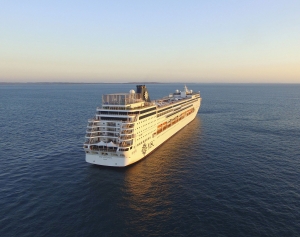
MSC Cruises is embarking on its first Winter season from Greece, with weekly departures from Piraeus (Athens) to beautiful Mediterranean destinations. MSC Sinfonia will sail on Mondays for the entire winter season, allowing Greek travellers to unwind and explore on a winter vacation to destinations including Greece, Turkey, and Italy without the need to fly.
This cruise brings guests to some of the Mediterranean’s most captivating locations, from the cultural crossroads of Istanbul to the charming Puglia region, all while sailing from the convenience of ports close to home and aboard the elegant ship.
Aboard MSC Sinfonia, guests will enjoy a wide choice of entertainment and activities: the sports and leisure options span all tastes and ages, from main pool on the open deck to the fully-equipped gym and MSC Aurea Spa with its modern beauty treatments and massages. 7-night cruises this winter start at €399, for reservation contact your travel agent.
The selection of handpicked destinations include:
Izmir/Ephesus, Turkey - guests can make the most of winter temperatures in their mid-twenties while wandering through cobbled streets, bustling bazaars and taking in Izmir’s centuries-old and UNESCO listed wonders, such as the stunning archaeological sites of Ephesus or the Yesilova Hoyuk centre.
Istanbul, Turkey – the meeting point of East and West, Istanbul boasts rich, diverse history with stunning landmarks like the Hagia Sophia and the Blue Mosque, offering diverse and unique exploration opportunities. From roaming the Grand Bazaar in search of colourful spices or souvenirs, taking an iconic dinner cruise on the Bosphorus, visiting grandiose palaces or attending a mystic dervishi show & dinner.
Corfu, Greece – back on Greek lands, guests can unwind with a well-deserved break in Corfu, a cherished gem in the Ionian Sea. Known for its blend of Venetian architecture, lush natural landscapes, and stunning beaches with its crystal-clear seas, it offers the perfect mix of serenity and adventure. Culture aficionados will relish in the numerous city tours to discover Corfu’s panoramic views, ancient monuments, monasteries and churches, while leisure-seeking travellers can simply relax on Barbati Beach to soak up some sun.
Bari, Italy - visit the charming port city of Bari, capital of southern Italy’s wonderful Puglia region, with its rich culture, delicious cuisine, and historic old town awaiting to be explored. From strolling through the medieval streets of Bari Vecchia and visiting the impressive Basilica of St. Nicholas to discovering the unique, UNESCO-listed trulli houses of Alberobello. For nature lovers, the stunning Castellana Caves and the coastal town of Polignano a Mare offer breathtaking scenery and unforgettable experiences.
Experience more in each destination with an MSC Cruises Shore Excursion – shore excursions not only support local economies by using local suppliers, but also encourage guests to immerse themselves in the local cultures of each destination featured on itineraries.
MSC Cruises supports the development of responsible and sustainable tourism growth across Greece’s island and mainland destinations by lengthening the traditional cruise season and reducing pressure on traditionally popu lar destinations, such as Santorini and Mykonos, by increasing calls to other ports, including Cephalonia, Katakolon and Zakynthos.
About MSC Cruises: Headquartered in Geneva, Switzerland, MSC Cruises is the world’s third largest cruise line and
the market leader in Europe, South America, the Middle East and Southern Africa, with a strong and growing presence in North America and the Far East.
The MSC Cruises fleet consists of 22 modern ships with three new vessels due to be launched in 2025, 2026, and 2027. The Company operates in more than 100 countries around the world, offering cruises across five continents, calling at more than 300 destinations and welcoming more than 180 different nationalities on board.
MSC Cruises is firmly committed to achieving net zero greenhouse gas emissions for its marine operations by 2050.
ELNAVI Newsletter
More Information: ELNAVI,
19, Aristidou str., Piraeus 185 31,
Tel.: +30 210 45.22.100, e-mail: This email address is being protected from spambots. You need JavaScript enabled to view it.
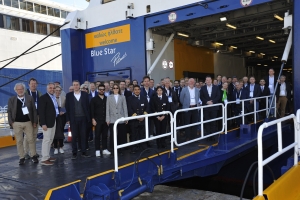
The Port of Piraeus has once again been recognized for excellence in passenger transport, receiving the prestigious “Ferry Shipping Port of the Year 2024” award at a special ceremony during the European Ferry Shipping Summit.
This award highlights Piraeus’ commitment to strategic development, ongoing investments, and comprehensive modernization, resulting in consistently positive upward trajectory across all sectors of port operations. In particular in recent years, passenger transport is noteworthy, meaning ferry shipping and cruise sector. The port of Piraeus, now serving approximately 20 million passengers annually, is the largest port in Europe and one of the largest in the world. By providing high level services, Piraeus port is acting as a critical transportation hub, connecting mainland Greece with the Aegean islands and Crete, while also functioning as a primary gateway from Europe to its southeastern borders.
The CEO of PPA S.A. Mr. Su Xudong shared his pride in this accomplishment, stating: “At PPA S.A., we are delighted and deeply proud of the continuous recognition the port receives. The dedicated and systematic efforts of our team combined with their extensive experience and expertise are key to Piraeus’ success as a model port, exemplifying efficiency and responsible operations.”
Held in Greece for the first time, this year’s European Ferry Shipping Summit took place in early November, bringing together industry leaders across Europe, with the participation of approximately 200 delegates from almost all European countries. During the conference, a tour was held at the Piraeus Port facilities and were presented the port services at the passenger and cargo piers.
ELNAVI Newsletter
More Information: ELNAVI,
19, Aristidou str., Piraeus 185 31,
Tel.: +30 210 45.22.100, e-mail: This email address is being protected from spambots. You need JavaScript enabled to view it.