


.jpg)
On Saturday, November 9, 2024, graduates of two well-known sisterschools, Gordonstoun in Scotland and the Anavryta Classical Lyceum in Athens celebrated together at the Grande Bretagne hotel, the 90 years since the foundation of Gordonstoun. The celebration was held by Gordonstoun thanks to the generous support and assistance of Capt. Stephanos E. Angelakos, Mr. Spyros Niarchos and Miss Amelia Rocos. Mr. Evangelos Angelakos had graduated from Anavryta Classical Lyceum in 1957, while his sons, Elias and Stephanos had attended Gordonstoun in the Class of 1984 and 1986 respectively.His granddaughter Katingo who is 13 years of age has joined thisyear. Mr. Niarchos is also an alumnus of Gordonstoun, from the Class of 1971, while Miss Rocos is a more recent graduate of the school, having left in 2017.The evening prior to this, Capt. Stephanos held ‘the KURT HAHNprivate dinner’ at The King George Hotel with current members of staff and alumni from Gordonstoun as well as members of the Anavryta alumni body, to commemorate and revive Hahn’s global impact on the educational world, with Greece being at its core. A corresponding celebration was held in Cyprus, on Thursday, November 7, 2024 thanks to Mr. Antonis and Mrs. Ria Mikellides of Olympia Ocean Carriers Ltd for generously hosting the gathering at Four Seasons Hotel in Agios Tychon.
History
The former Anavryta Classical Lyceum was an elite Greek lyceum (originally a boys-only boarding school) that was established in1940, shortly before Greece’s entry into World War II, in order to provide education to members of the Greek royal family and notable Athenian families. It was reestablished after the war in 1949 by King Paul of Greece, his wife Queen Frederica, and Jocelin WinthropYoung who became the school’s first headmaster and personal tutor to the royal couple’s son Crown Prince Constantine who was amongst the school’s first pupils.In 1971, the school was named a Lykeion Aristouhon which only admitted students who had distinguished themselves in otherschools. After several educational reforms in Greece, the school lostits elitist character in 1976, but continued to have higher admissions standards until the end of the 1980s. The Anavryta Classical Lyceum was originally based on the educational principles of Kurt Hahn,and modelled on Hahn’s own creations: the Schule Schloss Salem and Gordonstoun. The effort to create an elite high school in Athens inspired by Hahn’s principles had originated from King George II ofGreece following the tradition of the Greek royal family attendingHahn schools. The effort was supported by the Greek academicsociety mainly because of the strong relationship of Hahn’s theorieswith ancient Greek philosophy. The main goal of the lyceum was to focus on the pursuit of the Hahnian ideals and the study of Greek classics. The fate of the lyceum was closely tied with the Greek royal family, but the only King of Greece who actually graduated from the lyceum was Constantine II, in the class of 1958. The abolition of the monarchy in 1974, following a seven-year military junta, removed that association. Under circumstances that followed in the next years Anavryta lost its exclusive character, but remained a school with a solid reputation for academic excellence. Eventually at the end of 1991-1992 the school was prohibited from setting any kind of admission standards and requirements. Thus the lyceum lost its original characteristics.The impressive alumni of the Classical lyceum shows many distinguished members, since generations of spiritual leaders, academics, spokesmen, businessmen, and other prominent members of the Greek society had graduated from the Classical lyceum in the decades following 1940. The Anavryta experiment did not end, however, because the merit-based approach was restored in 2013, when the Greek Government made it mandatory for students to pass written examinations. The students who performed best in this exam were selected to attend the school. The first examination in 2013 had nearly 250 students competing for a place.
Kurt Hahn
Early in his life, Kurt Hahn had a vision of the kind of school he wanted to create. It would be a school designed to help children discover their interests and passions, rather than just prepare them for tests. And it would be a school devoted to character development. In 1920, in Prince Max von Baden’s family castle, they opened the Schule Schloss Salem, or Salem Castle School (“salem”means place of peace). It’s a co-ed private boarding school that still exists today.Hahn developed a set of principles to guide education at the school. He called his principles the “Seven Laws of Salem.”1. Give the children opportunities for self-discovery.2. Make the children meet with triumph and defeat.3. Give the children the opportunity of self-effacement in the common cause. 4. Provide periods of silence. 5. Train the imagination. 6. Make games important but not predominant. 7. Free the sons of the wealthy and powerful from the enervating sense of privilege. In 1932 he was opposed to Hitler’s ideas and was imprisoned by the Nazis. Fortunately, he had powerful friends in England who helped him to escape. In 1933, Hahn fled to Britain.
GordonstounIn
In April of 1934, he founded Gordonstoun, on a 17th century estate near the rocky coast of the Moray Firth. At Gordonstoun, Hahn was able to further develop what quickly became a distinctive and highly coveted approach to education. Prince Philip was one of the first pupils to attend the school, and all three of his sons, including King Charles III, went there. The school is now considered one of Britain’s most distinguished private boarding schools, and is now fully co-educational having initially been all-boys.Hahn is considered one of the modern fathers of “experiential education.” The idea that children should do things in school, rather than just sit and receive information, was what first propelled him to start thinking so deeply about education. He also felt that, for education to really have meaning, it should test students to their limit and beyond in a variety of ways. For Hahn, the rescue services were a way of doing that. There is a coastal rescue service, a mountain rescue service, and a fire rescue service. Students are required to join one of the services, and learn how to provide emergency assistance, being actually involved in fighting fires,tracking down missing hikers, and rescuing sailors whose shipshad wrecked along the rocky coast nearby. Students are on duty whenever catastrophe calls. In 1954 Gordonstoun was a part of a group of schools that aided a rebuilding project in Kefallonia after an earthquake.Think about that for a minute. High school children, pulled out of class or awoken in the middle of the night so to help in a fire or an earthquake. Hahn believed this was the most important element of education at Gordonstoun. More important than preparation for exams. More important than projects.
Why?
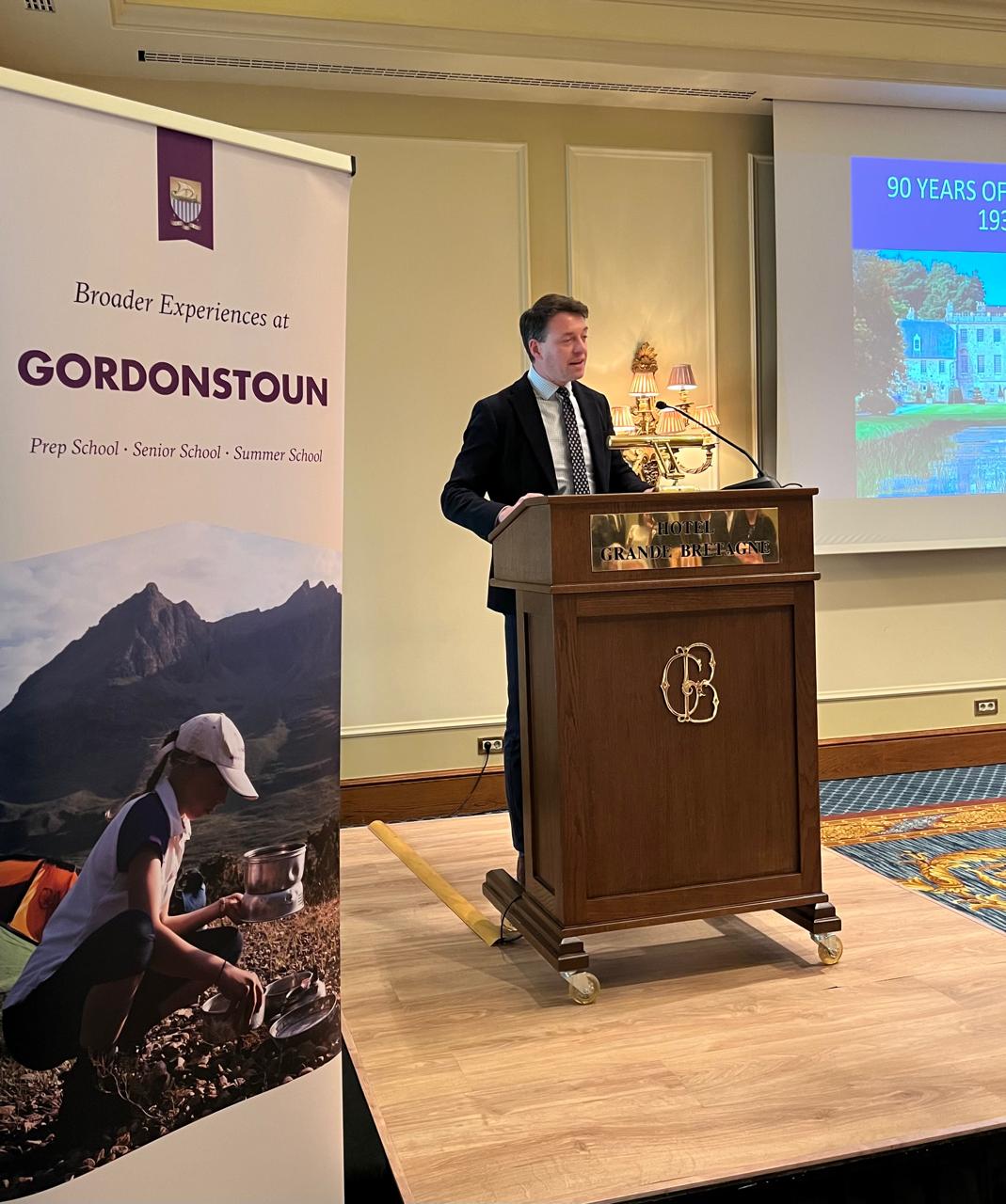
Because “I regard it as the foremost task of education to insure the survival of these qualities: an enterprising curiosity, an undefeatable spirit, tenacity in pursuit, readiness for sensible self denial, and above all, compassion.” Kurt Hahn. During this wonderful celebration, the current Head of Gordonstoun, Simon Cane-Hardy, spoke about the unique educational system Hahn had produced and the historic links with Greece, focusing on the virtues of the system followed by the school and its Platonic roots in Greek classical education.Capt. Stephanos E. Angelakos, an alumnus of Gordonstoun and cohost for the event, welcomed everyone to the birthplace of Hahn’s two pillars: 1. the motherland of Greek ideals to develop one’s self intellectually, morally, aesthetically and physically and 2. the cradle of Greek seamanship; in Greek Ναυτοσύνη (Naftosyni) where art, science and ethos are embodied. He concluded that Gordonstoun is a school that insists on building a young person’s character, and underlined Hahn’s declaration that, “The experience of helping a fellow man in danger, or even of training in a realistic manner to be ready to give this help, tends to change the balance of power in a youth’s inner life with the result that compassion can become the master motive.
In terms of the photos captions:
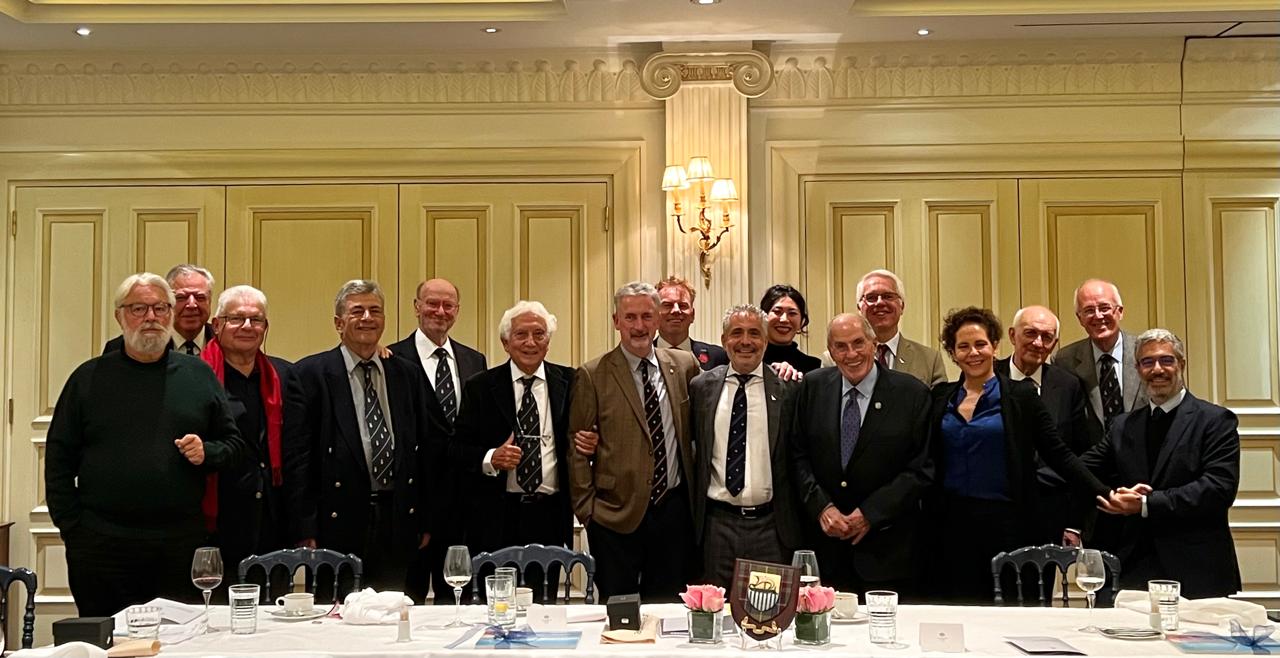
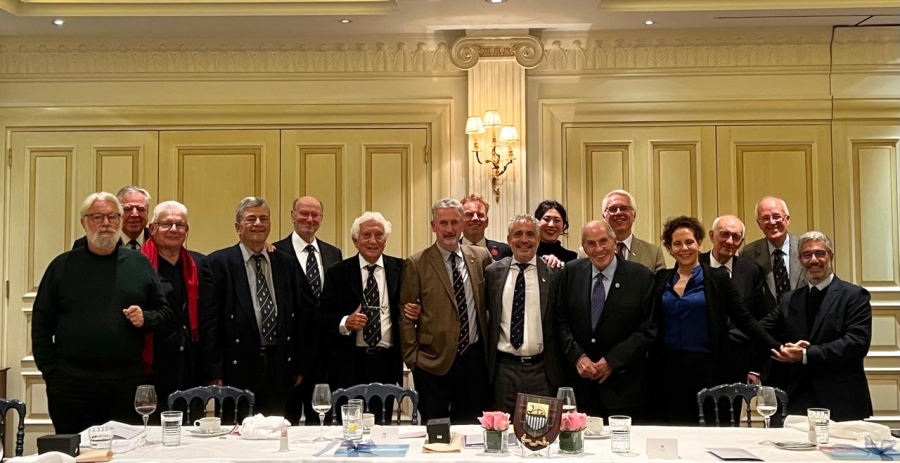
'the KURT HAHN private dinner': From L to R: Mr. S. Kasimatis, Mr. A. Kaminaris, Mr. Ch. Kasimatis, Mr. Th. Papatheou, Mr. G. Ventouris, Mr. E. Angelakos, Mr. S. Brown, Mr. A. Lyall, Capt. S. E. Angelakos, Ms. A. Rocos, Prof. P. Soukakos, Mr. R. Devey, Mrs. K. Angelakou-Skiniti, Mr. A. Papapanagiotou, Mr. D. Lekas, Mr. A. Skinitis.
Gordonstoun celebration: Mr. Simon Cane-Hardy, Head of Gordonstoun
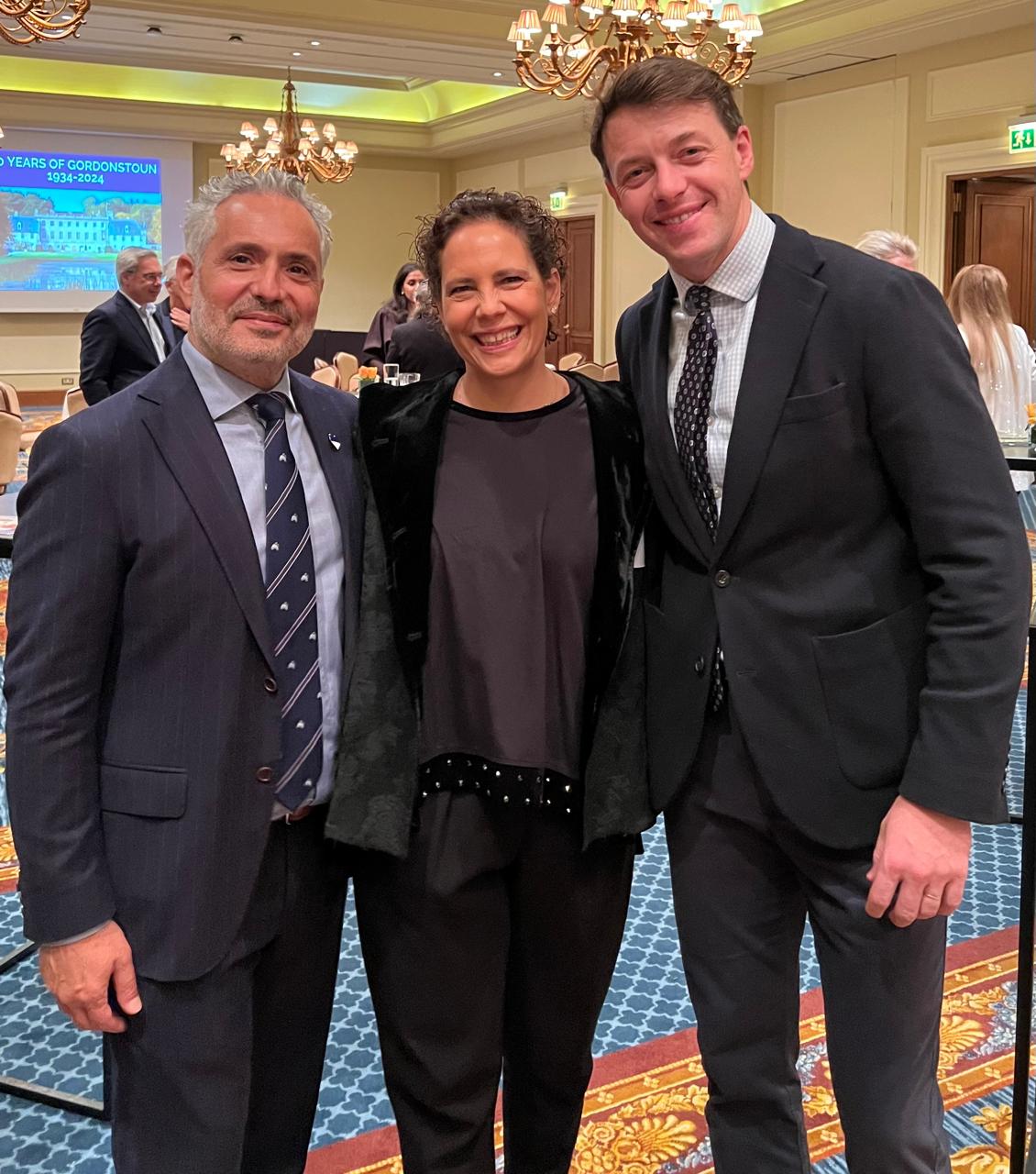
L to R: Capt. Stephanos E. Angelakos, Mrs. Kitsa Angelakou-Skiniti, Mr. Simon Cane-Hardy
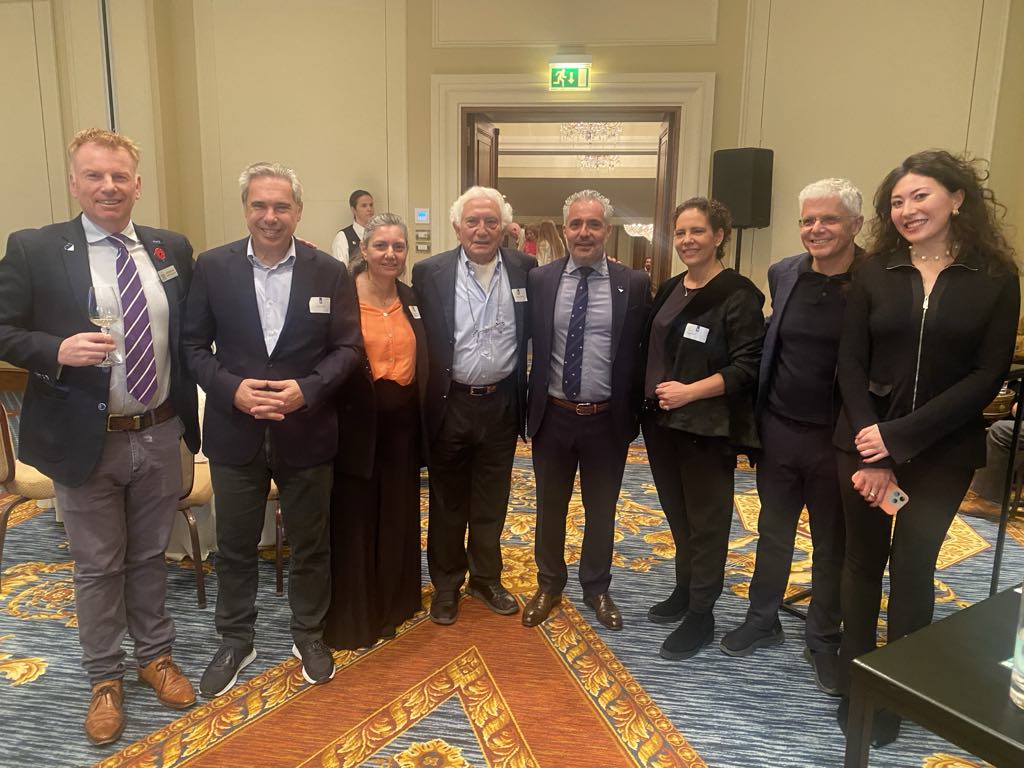
L to R: Mr. Andrew Lyall, Mr. Antonis Psiris, Mrs. Anna Maria Angelakou-Psiri, Mr. Evangelos Angelakos, Capt. Stephanos E. Angelakos, Mrs. Kitsa Angelakou-Skiniti, , Mr. Elias Angelakos, Ms. Amelia Rocos.
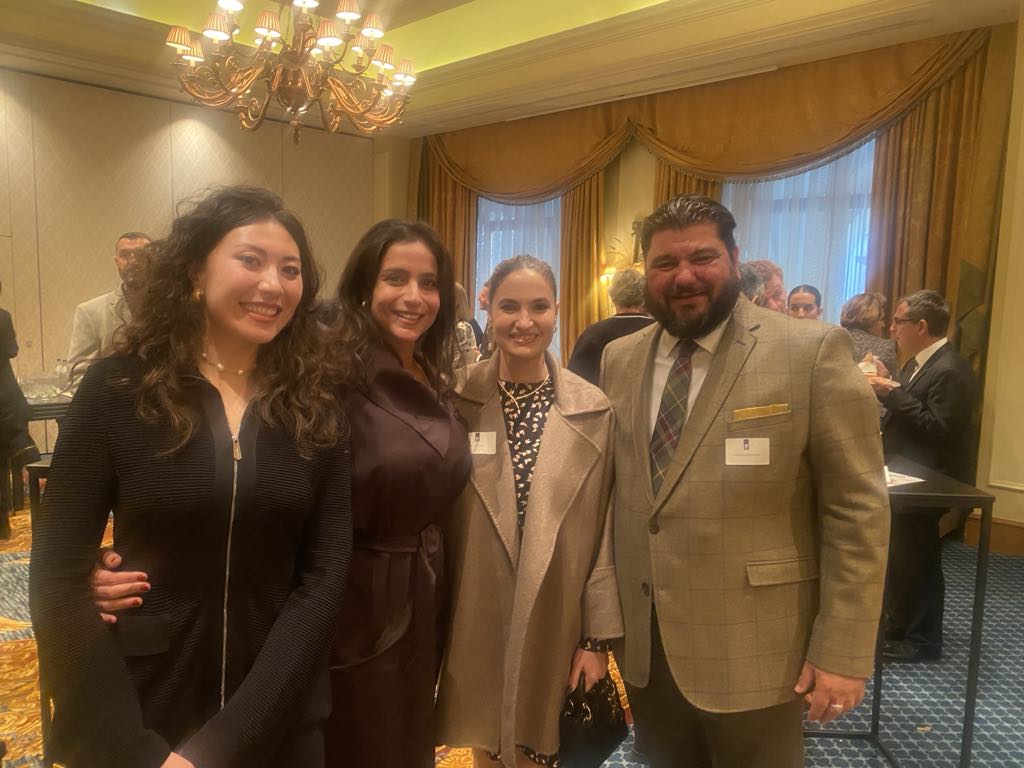
L to R: Ms. Amelia Rocos, Ms. Aya Burweila, Mrs. Ria Mikellides, Mr. Antonis Mikellides
Capt. Stephanos E. Angelakos – Co-sponsor of the event and alumnus of Gordonstoun
ELNAVI Newsletter
More Information: ELNAVI,
19, Aristidou str., Piraeus 185 31,
Tel.: +30 210 45.22.100, e-mail: This email address is being protected from spambots. You need JavaScript enabled to view it.