



-
Home

-
Ports - Shipping
- elnavi

elnavi
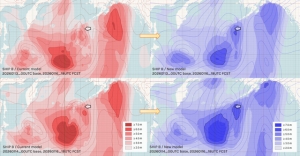
Weathernews Inc., a global provider of weather intelligence and voyage optimisation services, has launched an enhanced wave and wind forecasting capability alongside an expanded marine and voyage data offering, integrated into its SeaNavigator platform and now made available externally via API.
The development combines a high-resolution forecasting model with a global dataset of meteorological, oceanographic and voyage data, including vessel routing, speed and fuel consumption, as well as performance insights, enabling shipping companies to integrate environmental and operational insights directly into their systems.
The updated model reduces wave height prediction error by approximately 23% compared to conventional methods, based on analysis of forecast performance up to seven days ahead. This enables earlier identification of developing weather systems and more reliable voyage planning, while improving detection of rapidly intensifying events including severe low-pressure systems and tropical cyclones. Weathernews has also confirmed that its wave height predictions outperform those of major global forecasting centres, including ECMWF and NCEP.
The launch comes as operators face a more complex and less predictable operating environment shaped by fuel cost pressure, environmental regulation, geopolitical disruption and increasingly variable weather patterns. The challenge is no longer only forecasting individual events, but understanding how conditions vary, how severe they are relative to historical benchmarks, and what that means for vessel performance, safety, routing and commercial outcomes.
To address this, Weathernews has expanded access to its dataset, including global wave and wind forecasts, ocean currents, sea surface temperature, sea ice information and voyage data. Covering oceans worldwide and approximately 2,300 ports, it enables data-driven operational management, improved reporting transparency and more detailed performance analysis.
Recent conditions in the North Atlantic, particularly across the Channel and Bay of Biscay, illustrate the scale of this challenge. Weathernews analysis indicates that the most recent winter period was comparable to the severe conditions of 2013-2014, with persistent low-pressure systems creating a sustained bottleneck for vessel movements across key routes. This highlights the need not only for more accurate forecasting, but for better ways to measure and contextualise severity over time.
The forecasting system combines global numerical weather prediction models with satellite observations, ocean and vessel-derived data, applying ensemble techniques that analyse more than 80 scenarios to identify the most reliable outcome. Operating at a spatial resolution of 0.125 degrees (approximately 10-15 km depending on location) and updated 6-hourly or daily depending on the dataset, it provides detailed insight into ocean conditions across global shipping routes, with forecast coverage extending up to 15 days ahead.
Delivered via cloud-based APIs and integrated within SeaNavigator, the data supports voyage management, performance analysis and reporting, including route optimisation, fuel and cost modelling, emissions monitoring and weather-related risk assessment.
Craig West, CEO Europe at Weathernews, said: “Shipping is entering a period where volatility is no longer an exception to be managed around, but a structural part of operations. The issue is not only whether we can forecast weather more accurately, but whether operators have the tools to understand how severe conditions are becoming and what impact this has on voyage performance. Our approach combines improved forecasting, high-quality data and expert interpretation to help shipping companies make better decisions earlier.”
Weathernews is also developing the Accumulated Wave Energy Index (AWE Index), building on its forecasting and data capabilities to quantify the intensity and persistence of wave conditions over time and enable direct comparison between events, periods and regions. Used alongside enhanced forecasting, this provides both earlier warning of disruption and stronger historical context for assessing severity.
As maritime digitalisation accelerates, operators are increasingly integrating weather, voyage and performance data into unified systems, AI-driven processes and autonomous navigation technologies. Weathernews’ enhanced forecasting and data capabilities support this shift, helping operators move from reactive disruption management toward a more proactive approach that anticipates risk and protects performance, with decisions informed by a more complete view of both environmental and vessel conditions.
ELNAVI Newsletter
More Information: ELNAVI,
19, Aristidou str., Piraeus 185 31,
Tel.: +30 210 45.22.100, e-mail: This email address is being protected from spambots. You need JavaScript enabled to view it.
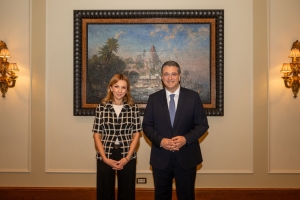
The President Melina Travlos and the Members of the BoD of the Union of Greek Shipowners (UGS) held the monthly Board of Directors meeting of the UGS, the European Union Commissioner for Sustainable Transport and Tourism, Apostolos Tzitzikostas.
Critical maritime issues were discussed related to the competitiveness of European shipping and the security of navigation. The Commissioner presented the recently announced EU Industrial Maritime Strategy and EU Ports Strategy, while particular emphasis was placed on the problems and risks faced by shipping amidst the military operations in the Middle East.
Greek shipping, representing 61% of the total capacity of the EU fleet, constitutes a cornerstone of Europe’s autonomy and of its food and energy security.
ELNAVI Newsletter
More Information: ELNAVI,
19, Aristidou str., Piraeus 185 31,
Tel.: +30 210 45.22.100, e-mail: This email address is being protected from spambots. You need JavaScript enabled to view it.
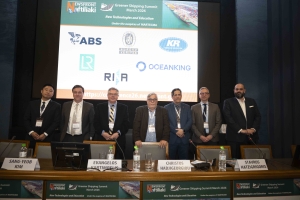
Organized by Newsfront/Naftiliaki under the auspices of Martecma
Once again, the voice of the wider Greek Shipping industry was loud and clear at this year’s Greener Shipping Summit: New Technologies and Education, which was organized by Newsfront/Naftiliaki under the auspices of the Marine Technical Managers Association (Martecma) at the Eugenides Foundation, on March 31. The conference, chaired by Christos Hadjigeorgiou, managing director of Almi Marine Management, was completely successful with hundends of delegates engaging in fruitful discussions.
According to the presentation by keynote speaker Evangelos Kartimpelis, managing director of Anglo-Eastern Ship Management (Hellas) SA, geopolitical instability and route diversions increase voyage times by 30-50%, directly impacting fuel burn and emissions. At the same time, the IMO Net-Zero Framework (NZF) aims for global implementation around 2027, introducing a goal-based fuel standard and a greenhouse gas pricing mechanism, while compliance with EU ETS and FuelEU Maritime requires strict timelines for reducing GHG intensity. The investment strategy prioritizes immediate “no-regrets” efficiency solutions, such as wind-assist and voyage optimization, paving the way for the future use of green fuels (bio-methanol, e-ammonia). Finally, companies must integrate geopolitical risks into their emissions forecasting and model the cost of compliance with the NZF against potential levy and carbon pricing scenarios.
In the first panel, participants discussed leveraging AI to access historical and technological shipping data, AI-driven performance optimisation, and predictive maintenance, along with the risks of using AI tools without critical thinking or filtering.
The moderator of the first panel, Fotis Belexis, technical director of Star Bulk Carriers, in his introduction, said that “AI is as good as the data it is built upon and of course the algorithm.
Without a robust data strategy, having quality data AI cannot deliver a reliable or scalable outcome.” He added that shipping faces a challenge where data is fragmented, inconsistent, or difficult to access immediately.
To what extent can AI realistically transform historical shipping data into forward-looking decision intelligence and what would it take, in practical terms, to get there, was a question answered by John Kokarakis, technical director, SEEBA Zone, Bureau Veritas, who said the main purpose of AI is the utilization of data in order to make decisions. Adding that it is offering support to the decision and by no means replacing the human element. That is the reason we must ensure that data must be accurate, high quality, and transparent.
Konstantinos Agas, Training and Development manager, Pantheon Tankers/Alpha Gas/Alpha Bulkers, discussed the role of AI-powered knowledge agents in supporting marine troubleshooting and procedural guidance, and the key challenges in ensuring their reliability and practical adoption onboard and ashore. He said the great advantage of AI tools is that they are excellent in questions that have to do with generic issues, as they combine data from many various sources, but we start to have problems when we look to very specific issues when we may have reliability and data brake issues.
Nikolaos Ventikos, professor, Laboratory for Maritime Transport, School of Naval Architecture and Marine Engineering, National Technical University of Athens (NTUA) referring to how training and education evolve to prepare professionals to work effectively with AI, said that educational institutions need to structurally reinform skepticism as we need to challenge AI all the time as we need the human judgement to remain sharp and cognitively prioritized.
Nicolas Timpelis, IT Projects Support manager, IONIC, responding on how to design systems that encourage validation rather than blind reliance on AI outputs and how to control the use of open/public AI tools versus internal systems, said that “we are trying to build an internal system that is better as it is customized on specific needs and day to day operations and at the end of the day the end-user will have a better result than using a public tool.”
The second panel, devoted to new technologies and retrofits, carbon capture technologies, alternative fuels for shipping, and shore power, was moderated by Stavros Hatzigrigoris, Advanced Engineering Services at Zodiac Maritime, who pointed out the challenges face shipping.
Evangelos Kartimpelis commented on Carbon Capture and Storage (CSS) technology by stating that although the technology exists, a lack of investments in land infrastructure and transportation delay this technology’s commercial availability. Regarding shore power, Kartimpelis explained the commercial risks associated with the ports’ huge needs in energy to supply all docked vessels.
Sang-Yeob Kim, senior researcher, ship and offshore technology team at Korean Register focused on a presentation that proposes a holistic, data-driven approach to decarbonisation, replacing intuition-based planning with standardized, precision simulations. Through the KR-POWER ecosystem, high-frequency data is analyzed to distinguish technical degradation (engine, hull) from operational variables like weather and trim. This method aims to optimize fuel consumption and ensure measurable compliance with international maritime regulations such as CII and GFI.
Theo Kourmpelis, global tanker segment director of Lloyd’s Register, praised the Greek shipbuilding industry and ship operators’ work in reducing the vessels’ carbon footprint. Moreover, Kourmpelis commented on shore power’s challenging development by highlighting the challenges associated with vessels and cable studies, as well as the problem with the management of boil-off gas engines in dual-fuel containerships.
Nikolaos Michas, key account manager, tanker segment at RINA, explained that green fuels are unavailable because of the huge amounts of renewable energy they require. Michas said that geopolitical events affect energy prices and urged the industry to develop alternative ways to reduce its emissions.
George-Paul Perantzakis, technical manager at Dynacom Tankers Management Ltd, highlighted the unpredictability related to cost for alternative fuels, as they keep rising. Apart from LNG, which is mature technology, Perantzakis argued that biofuels will be considered a more attractive and reliable alternative to conventional fuels for immediate results in the short-run. On the contrary, he stressed that other carbon-free fuels are significantly more expensive and face challenges.
The conference’s third panel, moderated by Helmepa’s head of maritime affairs and stakeholder development, Constantinos Triantafillou, focused on education and the procedural direction is should take to adapt to new requirements and challenges and the new ways of training for maritime professionals. In this challenging landscape, Triantafillou emphasized Helmepa’s study about crew fatigue that stems from new regulations and duties.
George Dimopoulos, associate professor, School of Naval Architecture, Division of Marine Engineering at NTUA, emphasized the need the curriculum to focus more on core theory and methodology to help students decompose and address complex problems. Regarding the wide range of new technologies, he said that the need is to train new engineers to understand methodologies than a specific set of technologies.
Dimitris Fokas, training manager at Angelicoussis Shipping Group, stressed that the Group was one of the first having dual-fuel engines and, thus, developed its training program to adapt to these. Regarding the role of AI, he explained that it is difficult to say how it will transform training. However, he expressed his optimism and trust in Greek shipping’s adaptability to difficult environments.
Thodoris Galanis, group IT manager at Latsco Marine Management Inc, emphasized that digital literacy and competence is extremely important for maritime operations and part of safety and efficiency. Regarding AI, Galanis stressed that it will “democratize” expertise. Lastly, he argued that cyber-security is essential to shipping, as it is linked to operational efficiency.
Charalambos Yakinthos, director, School of Engineers at Merchant Marine Academy of Macedonia, stressed that Merchant Marine Academies (AEN) should be evolved into innovation hubs in where research is conducted. He further explained that Academies should implement innovation modules and use Virtual Reality (VR) to lead hands-on experience. Lastly, regarding environmental requirements, Yakinthos said that Greek Academies are training environmental leaders and not just engineers.
In the fourth panel, participants discussed in depth Policy, Regulation, and Market Developments, EU ETS and FuelEU – lessons learned and market implications, as well as what to expect from the IMO regarding NZF.
The moderator Haris Giantzikis, Technical Manager, Arcadia Shipmanagement, opened the discussion saying he is not optimistic about a clear outcome concerning NZF at IMO later in October this year, especially with a war continuing in the Middle East.
Lefteris Koukoulopoulos, Regional Decarbonisation Specialist, DNV, speaking on the same hot issue presented the positive position that shipping (owners and organizations) wants a working framework on the issue so every company decides with a clear strategy for the future, because “ a no decision is worse than any global framework” and he presented the various proposals presented for a new NZF.
Dimitris Mytilinis, Senior Performance Engineer, Latsco Marine Management, said that “from the operator's perspective we need clarity and stability over time” as companies need to know and understand the long-term direction presented by the regulators. He also discussed the need for various fuel availability on all ports with applied infrastructure at the terminals. He also referred to the uncertainty of smaller companies about fleet renewal as they are not sure of the specific type of alternative fuel they should invest in.
George Nikolaidis, Engineer II, Regulatory Affairs, ABS, reported on the mid-term measures currently stalled at the IMO and made an extended reference about what this means for the future of the CII framework. He also spoke about concerns on the safety aspect and the cost premium of new alternative fuels and that in this situation onboard Carbon Capture and Storage is viewed as a complementary pathway to decarbonise shipping.
Alexander Prokopakis, executive director, IBIA, called the current proposal in the IMO ‘dead’ and called it not a failure of IMO but “a failure of governments”. He added that for the fuel supply chain to make alternative fuels available at scale while keeping costs realistic, needs clarity, timing and incentives.
The busy day was concluded with a lunch that gave wide opportunities to delegates for networking. The conference was met by success, as over 400 delegates, representing 262 companies from 11 countries took part, something that reflects the relevance and success of the program. The engaging discussions, often leading to lively and insightful exchanges between speakers and delegates both during and beyond the sessions, significantly enhanced the overall experience.
ELNAVI Newsletter
More Information: ELNAVI,
19, Aristidou str., Piraeus 185 31,
Tel.: +30 210 45.22.100, e-mail: This email address is being protected from spambots. You need JavaScript enabled to view it.
MED TUGS solidifies Greek Market Leadership with €21 Million Strategic Newbuilding Order at Sanmar Shipyards
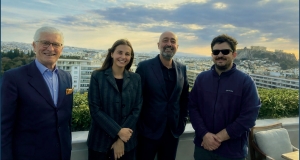
MED TUGS (Vernicos Scafi, Spanopoulos, Lyboussakis), the premier Greek towage and salvage consortium, proceeded to a significant €21 million investment for the construction of two state-of-the-art tugboats at the world-renowned Sanmar Shipyards.
This strategic move reinforces the market position of the MED TUGS (Vernicos Scafi, Spanopoulos, Lyboussakis) consortium. With this latest order, the combined fleet reaches a formidable 43 high-specification salvage and terminal tugs, of which 7 are modern newbuildings.
Unrivaled Infrastructure & Strategic Vision 2029
MED TUGS (Vernicos Scafi, Spanopoulos, Lybousakis) currently provides essential ship-handling and safety services across almost all ports in Greece and serves all domestic refineries. This expansion is a key step toward the consortium’s long-term goal: to have 10 high-spec newbuildings on the water by 2029, featuring similar or even superior specifications to the current order.
Vessel Specifications & Delivery Timeline
The contract with Sanmar Shipyards, a global leader in high-quality specialized vessel construction, includes two advanced designs from the naval architects at Robert Allan Ltd.:
- • RAstar 2900SX (Bigaçay Series): Featuring an 83-tonne bollard pull, this high-performance ASD tug is designed for prompt delivery in September 2026.
- • Kocaçay 3200SX Series: Boasting a powerful 90-tonne bollard pull, this vessel is engineered for the most demanding terminal and escort operations, with deliver scheduled for September 2027.
"This €21 million investment reflects our commitment to the safety and efficiency of Greek maritime infrastructure," stated the MED TUGS (Vernicos Scafi, Spanopoulos, Lyboussakis) Board. "By serving every refinery and nearly every port in the country, we have a responsibility to lead. Our path to 10 newbuildings by 2029 ensures that we remain the most reliable and technologically advanced partner for the world’s largest vessels and energy terminals."
ELNAVI Newsletter
More Information: ELNAVI,
19, Aristidou str., Piraeus 185 31,
Tel.: +30 210 45.22.100, e-mail: This email address is being protected from spambots. You need JavaScript enabled to view it.

UW Group proceeded to a new partnership with FARAD, a European manufacturer specializing in advanced heat exchange solutions. As part of this collaboration, UW Group has been appointed as FARAD’s official exclusive representative for the territory of Cyprus.
With nearly 50 years of engineering expertise and tens of thousands of successful installations FARAD is internationally recognized for its high-quality engineering, innovation, and reliability in the design and manufacturing of heat exchangers, coolers, condensers, heaters, freshwater generators and specialized thermal systems, that meet demanding performance and efficiency requirements.
Through this partnership, UW Group strengthens its portfolio of technical solutions and reinforces its commitment to offering best-in-class products to the market. Clients will benefit from local representation, technical support, and closer collaboration, ensuring that FARAD’s solutions are delivered efficiently and tailored to project-specific needs.
FARAD S.A. solutions are trusted across international markets for their efficiency, durability, and precision engineering.
ELNAVI Newsletter
More Information: ELNAVI,
19, Aristidou str., Piraeus 185 31,
Tel.: +30 210 45.22.100, e-mail: This email address is being protected from spambots. You need JavaScript enabled to view it.
Alpha Omega Marine secures Newbuilding order for four Green Dolphin-40 handysize dry bulk vessels
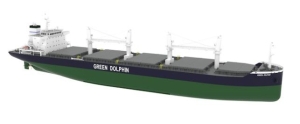
Alpha Omega Marine has secured newbuilding positions for four Green Dolphin-40 handysize dry bulk vessels at Huatai Shipbuilding in China.
The vessels are approximately 40,000dwt, built to modern specifications designed to meet evolving efficiency and environmental standards. Deliveries are scheduled across 2027 and 2028.
These slots did not come by chance. In a market where quality shipyard capacity is increasingly committed well into the latter part of this decade, access to the right build positions — at the right time — is as much a function of relationships as it is of capital. Our strategic alliance with Yangzijiang Maritime Development, and the broader network it anchors, placed us in a position to act decisively and ahead of the market with conviction and speed.
We are also pleased to be supporting a yard with strong growth potential, and look forward to building a long-term partnership with Huatai as they develop their capabilities.
ELNAVI Newsletter
More Information: ELNAVI,
19, Aristidou str., Piraeus 185 31,
Tel.: +30 210 45.22.100, e-mail: This email address is being protected from spambots. You need JavaScript enabled to view it.
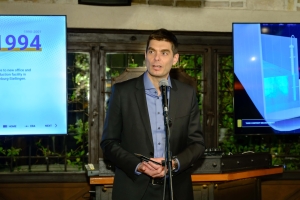
In a move that reinforces the enduring bond between German engineering and Greek maritime expertise, Hoppe Marine recently celebrated the official launch of its new subsidiary, Hoppe Hellas, during an exclusive event in Athens.
Representing ELNAVI magazine, I had the pleasure of joining the Hoppe team to discuss their strategic vision for the region.
The presentation, led by General Manager Lothar Beinke and Regional Manager Spiros Kalimeris, highlighted a core philosophy: while Greece stands as the world’s premier maritime nation and Germany as a powerhouse of innovative technology, it is the sea that unites them.
The leadership emphasized that strong partnerships are not built overnight; they are forged through trust, confidence, and time.
By establishing a physical presence in Piraeus, Hoppe Hellas aims to move beyond simple transactions and instead focus on building deep-rooted, long-term relationships.
This local office is designed to offer rapid, high-quality service and technical support, providing a competitive edge through proximity and a strong “people-first” strategy.
Hoppe Marine is a world-leading German family-owned group with over seven decades of experience in maritime engineering.
Headquartered in Hamburg, the company specializes in integrated fluid management, motion control (anti-heeling and stabilization systems), and ship performance monitoring.
ELNAVI Newsletter
More Information: ELNAVI,
19, Aristidou str., Piraeus 185 31,
Tel.: +30 210 45.22.100, e-mail: This email address is being protected from spambots. You need JavaScript enabled to view it.
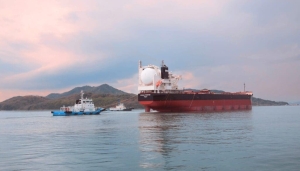
Japan’s Tsuneishi Shipbuilding has delivered Oceana Frontier, described as the world’s first LNG dual‑fuel Kamsarmax bulk carrier.
The vessel is owned by Kambara Kisen, part of the Tsuneishi Group, and has been chartered by Global Chartering Limited (GCL).
GCL has taken the vessel on a five‑year time charter, supporting its long‑term chartering strategy and commitment to modern, fuel‑efficient tonnage.
Oceana Frontier is equipped with a dual‑fuel main engine capable of operating on LNG as its primary fuel. A key design feature is the aft‑deck‑mounted LNG fuel tank, utilizing an independent Type C pressure tank configuration, manufactured in‑house by Tsuneishi.
The delivery reflects ongoing progress in low‑emission vessel design and aligns with GCL’s focus on operational efficiency and sustainability.
ELNAVI Newsletter
More Information: ELNAVI,
19, Aristidou str., Piraeus 185 31,
Tel.: +30 210 45.22.100, e-mail: This email address is being protected from spambots. You need JavaScript enabled to view it.
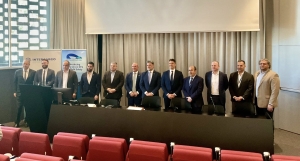
The newly released INTERCARGO Ship-to-Ship (STS) Transfer Guide, unveiled on 31 March 2026 at the Angelicoussis Group headquarters in Athens, marks a historic milestone as the one of the most dedicated industries framework addressing STS, transloading, and lightering operations specifically for the dry bulk sector. Representing a collaborative masterwork of globally recognized specialists, the guide reinforces bulk carriers' role as the backbone of maritime trade by providing a comprehensive reference for safety, efficiency, and risk management.
During the launch, INTERCARGO Chair Mr. John Xylas and Technical Committee Chair Mr. Dimitris Monioudis emphasized how these standardized best practices foster sustainable operations, while Dr. Alexandros Glykas of DYNAMARINe and Tom Fitchew of Fendercare highlighted the necessity of adapting rigorous risk management standards from the tanker sector to bulk transfers.
Safety and insurance clarity were central themes, with Jacob Damgaard of Britannia P&I discussing the complex operational challenges and Mr. Konstantinos Petrakis of Charterwell Maritime S.A. outlining how the guide creates uniformity and simplifies legal assessments. While Petrakis identified "resistance to change" as a hurdle, he advocated for training, tabletop drills, and enhanced communication with service providers through pre-transfer meetings as the definitive solutions.
Supported by industry leaders like Capt. Stamatis Dimitrakis and Mr. Panagiotis Nikiteas of Maran Dry Management Inc., the initiative is poised to drive external stakeholders toward operational excellence through commercial channels, ultimately strengthening the safety culture for the entire global maritime community.
ELNAVI Newsletter
More Information: ELNAVI,
19, Aristidou str., Piraeus 185 31,
Tel.: +30 210 45.22.100, e-mail: This email address is being protected from spambots. You need JavaScript enabled to view it.
Greek-Controlled Fleet Hits All-Time High in 2026 GSCC Annual Survey on Greek Shipping Fleet Statistics
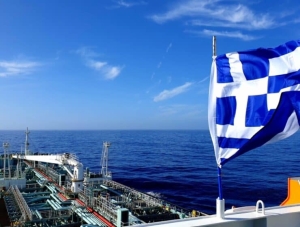
Greek-controlled fleet has reached an all-time high, reinforcing Greece’s position as a global maritime superpower. Despite regulatory shifts and flag competition, the fleet saw significant year-over-year growth in every primary metric.
The Total Controlled Fleet stands at 4,388 vessels (+167 YoY), Total Deadweight Tonnage (DWT) 360,564,729 (+6.4M YoY), Total Gross Tonnage (GT): 211,204,583 (+3.1M YoY) and the Future Pipeline includes 422 vessels currently on order (40.2M DWT).
Flag State Analysis
The Greek-controlled fleet is diversified across 31 international flags. While the Greek national registry remains a top-tier global player, there is a clear trend toward "Open Registries" like Liberia and the Marshall Islands, which offer greater administrative flexibility.
Liberia gained a record number of 130 vessels, Panama gained 30 ships, Marshall Islands gained 25 and Portugal (Madeira) 19. The Cyprus and Barbados registry remained unvaried in terms of number of vessels.
The number of vessels registered under the Greek flag decreased slightly this year by 17 vessels. In terms of DWT and GT there was a decrease of 3,773,090 and 2,106,014 respectively.
Overall, the Liberia and Marshall Island flags are at the forefront of the Greek-owned fleet with 1,279 and 1,061 Greek-owned ships, respectively, on their registers. In terms of DWT, Liberia accounts for 111,307,219, representing 30.1%, Marshall Islands accounts for 83,286,472, representing 23.1 % and Malta with 579 ships of 50,891,381 DWT, representing 14,1% of the total DWT of the Greek-owned fleet. The Greek flag stands with 463 ships of 44,944,717 DWT. It should be noted that the Greek flag remains in the fourth place globally in terms of DWT, as it represents 12.5% of the total DWT of the Greek-owned fleet.
In terms of DWT, Panama follows with 330 ships of 22,728,332 DWT, Cyprus with 253 ships of 19,024,790 DWT and Bahamas with 183 ships of 15,536,597 DWT. Furthermore, it should be noted that the total number of vessels registered under EU flags stands at 1,388, which accounts for 31,6% of the Greek fleet. This figure has decreased, when compared to the previous year’s figure of 1,414 vessels, which represented 33,5% of the Greek fleet.
Market Share & Sector Specialization
Greek shipping remains the backbone of global energy and bulk trade. The Greek fleet's footprint is significantly larger than its "vessel count" suggests because Greek owners tend to operate larger, high-capacity ships.
Greek Share of the Global Market
- • World Tanker Fleet: 22% (by capacity)
- • World Ore & Bulk Fleet: 16%
- • World Liquefied Gas Fleet: 8%
- • Total World Fleet (DWT): 14.2%
Current Order Book (Newbuilds)
The 422 vessels on order reflect a strategic pivot toward liquid bulk and specialized transport:
- • Oil & Product/Chemical Tankers: 201 vessels
- • Ore & Bulk Carriers: 77 vessels
- • Container Ships: 74 vessels
- • Liquefied Gas Carriers: 43 vessels
Fleet Age & Sustainability
A younger fleet is a more efficient and compliant fleet. Greek owners continue to outperform the global average in terms of vessel modernization.
The average age of the Greek-controlled fleet in terms of ships increased slightly compared to the previous year, but, nevertheless, continues to be 4.5 years below the average age of the world fleet.
The average age of the Greek controlled fleet in terms of ships now stands at 14.3 years, in comparison to 18.8 years for the world fleet. In terms of GT and DWT, it is 12.8 and 12.7 years respectively, as against 13.8 and 13.7 of the world fleet.
The average age of the existing Greek flag fleet recorded a slight increase in terms of ship numbers, now standing at 16.6 years, in comparison to 16.3 years in 2025. A slight increase has also been noted in terms of GT and DWT, with values of 11 and 10.6 years respectively, as against 10.7 and 10.3 years in 2025.
Classification Societies
Greek owners rely on top-tier classification societies to ensure safety and compliance. ClassNK and Lloyd’s Register remain the preferred partners for the majority of the fleet.
- ClassNK: 891 ships
- Lloyd’s Register: 804 ships
- ABS: 757 ships
- BV: 739 ships
- DNV: 607 ships
- RINA: 352 ships
Conclusion
The Greek maritime industry has demonstrated remarkable resilience and expansion. While the shift toward non-EU flags continues due to bureaucratic pressures, the overall growth in DWT and the modern age profile of the fleet ensure that Greek shipping remains the dominant force in the global supply chain for 2026 and beyond.
ELNAVI Newsletter
More Information: ELNAVI,
19, Aristidou str., Piraeus 185 31,
Tel.: +30 210 45.22.100, e-mail: This email address is being protected from spambots. You need JavaScript enabled to view it.