



-
Home

-
Maritime Training
- elnavi

elnavi
Alpha Omega Marine secures Newbuilding order for four Green Dolphin-40 handysize dry bulk vessels
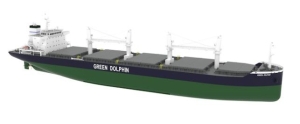
Alpha Omega Marine has secured newbuilding positions for four Green Dolphin-40 handysize dry bulk vessels at Huatai Shipbuilding in China.
The vessels are approximately 40,000dwt, built to modern specifications designed to meet evolving efficiency and environmental standards. Deliveries are scheduled across 2027 and 2028.
These slots did not come by chance. In a market where quality shipyard capacity is increasingly committed well into the latter part of this decade, access to the right build positions — at the right time — is as much a function of relationships as it is of capital. Our strategic alliance with Yangzijiang Maritime Development, and the broader network it anchors, placed us in a position to act decisively and ahead of the market with conviction and speed.
We are also pleased to be supporting a yard with strong growth potential, and look forward to building a long-term partnership with Huatai as they develop their capabilities.
ELNAVI Newsletter
More Information: ELNAVI,
19, Aristidou str., Piraeus 185 31,
Tel.: +30 210 45.22.100, e-mail: This email address is being protected from spambots. You need JavaScript enabled to view it.
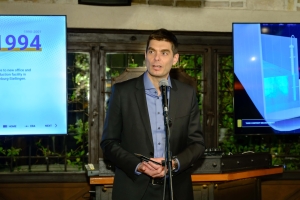
In a move that reinforces the enduring bond between German engineering and Greek maritime expertise, Hoppe Marine recently celebrated the official launch of its new subsidiary, Hoppe Hellas, during an exclusive event in Athens.
Representing ELNAVI magazine, I had the pleasure of joining the Hoppe team to discuss their strategic vision for the region.
The presentation, led by General Manager Lothar Beinke and Regional Manager Spiros Kalimeris, highlighted a core philosophy: while Greece stands as the world’s premier maritime nation and Germany as a powerhouse of innovative technology, it is the sea that unites them.
The leadership emphasized that strong partnerships are not built overnight; they are forged through trust, confidence, and time.
By establishing a physical presence in Piraeus, Hoppe Hellas aims to move beyond simple transactions and instead focus on building deep-rooted, long-term relationships.
This local office is designed to offer rapid, high-quality service and technical support, providing a competitive edge through proximity and a strong “people-first” strategy.
Hoppe Marine is a world-leading German family-owned group with over seven decades of experience in maritime engineering.
Headquartered in Hamburg, the company specializes in integrated fluid management, motion control (anti-heeling and stabilization systems), and ship performance monitoring.
ELNAVI Newsletter
More Information: ELNAVI,
19, Aristidou str., Piraeus 185 31,
Tel.: +30 210 45.22.100, e-mail: This email address is being protected from spambots. You need JavaScript enabled to view it.
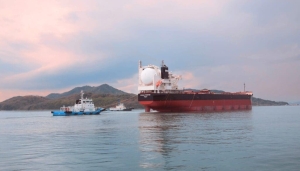
Japan’s Tsuneishi Shipbuilding has delivered Oceana Frontier, described as the world’s first LNG dual‑fuel Kamsarmax bulk carrier.
The vessel is owned by Kambara Kisen, part of the Tsuneishi Group, and has been chartered by Global Chartering Limited (GCL).
GCL has taken the vessel on a five‑year time charter, supporting its long‑term chartering strategy and commitment to modern, fuel‑efficient tonnage.
Oceana Frontier is equipped with a dual‑fuel main engine capable of operating on LNG as its primary fuel. A key design feature is the aft‑deck‑mounted LNG fuel tank, utilizing an independent Type C pressure tank configuration, manufactured in‑house by Tsuneishi.
The delivery reflects ongoing progress in low‑emission vessel design and aligns with GCL’s focus on operational efficiency and sustainability.
ELNAVI Newsletter
More Information: ELNAVI,
19, Aristidou str., Piraeus 185 31,
Tel.: +30 210 45.22.100, e-mail: This email address is being protected from spambots. You need JavaScript enabled to view it.
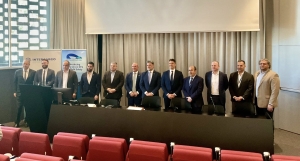
The newly released INTERCARGO Ship-to-Ship (STS) Transfer Guide, unveiled on 31 March 2026 at the Angelicoussis Group headquarters in Athens, marks a historic milestone as the one of the most dedicated industries framework addressing STS, transloading, and lightering operations specifically for the dry bulk sector. Representing a collaborative masterwork of globally recognized specialists, the guide reinforces bulk carriers' role as the backbone of maritime trade by providing a comprehensive reference for safety, efficiency, and risk management.
During the launch, INTERCARGO Chair Mr. John Xylas and Technical Committee Chair Mr. Dimitris Monioudis emphasized how these standardized best practices foster sustainable operations, while Dr. Alexandros Glykas of DYNAMARINe and Tom Fitchew of Fendercare highlighted the necessity of adapting rigorous risk management standards from the tanker sector to bulk transfers.
Safety and insurance clarity were central themes, with Jacob Damgaard of Britannia P&I discussing the complex operational challenges and Mr. Konstantinos Petrakis of Charterwell Maritime S.A. outlining how the guide creates uniformity and simplifies legal assessments. While Petrakis identified "resistance to change" as a hurdle, he advocated for training, tabletop drills, and enhanced communication with service providers through pre-transfer meetings as the definitive solutions.
Supported by industry leaders like Capt. Stamatis Dimitrakis and Mr. Panagiotis Nikiteas of Maran Dry Management Inc., the initiative is poised to drive external stakeholders toward operational excellence through commercial channels, ultimately strengthening the safety culture for the entire global maritime community.
ELNAVI Newsletter
More Information: ELNAVI,
19, Aristidou str., Piraeus 185 31,
Tel.: +30 210 45.22.100, e-mail: This email address is being protected from spambots. You need JavaScript enabled to view it.
Greek-Controlled Fleet Hits All-Time High in 2026 GSCC Annual Survey on Greek Shipping Fleet Statistics
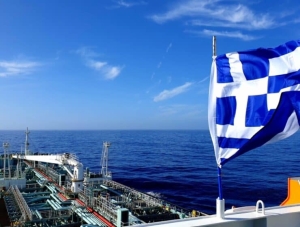
Greek-controlled fleet has reached an all-time high, reinforcing Greece’s position as a global maritime superpower. Despite regulatory shifts and flag competition, the fleet saw significant year-over-year growth in every primary metric.
The Total Controlled Fleet stands at 4,388 vessels (+167 YoY), Total Deadweight Tonnage (DWT) 360,564,729 (+6.4M YoY), Total Gross Tonnage (GT): 211,204,583 (+3.1M YoY) and the Future Pipeline includes 422 vessels currently on order (40.2M DWT).
Flag State Analysis
The Greek-controlled fleet is diversified across 31 international flags. While the Greek national registry remains a top-tier global player, there is a clear trend toward "Open Registries" like Liberia and the Marshall Islands, which offer greater administrative flexibility.
Liberia gained a record number of 130 vessels, Panama gained 30 ships, Marshall Islands gained 25 and Portugal (Madeira) 19. The Cyprus and Barbados registry remained unvaried in terms of number of vessels.
The number of vessels registered under the Greek flag decreased slightly this year by 17 vessels. In terms of DWT and GT there was a decrease of 3,773,090 and 2,106,014 respectively.
Overall, the Liberia and Marshall Island flags are at the forefront of the Greek-owned fleet with 1,279 and 1,061 Greek-owned ships, respectively, on their registers. In terms of DWT, Liberia accounts for 111,307,219, representing 30.1%, Marshall Islands accounts for 83,286,472, representing 23.1 % and Malta with 579 ships of 50,891,381 DWT, representing 14,1% of the total DWT of the Greek-owned fleet. The Greek flag stands with 463 ships of 44,944,717 DWT. It should be noted that the Greek flag remains in the fourth place globally in terms of DWT, as it represents 12.5% of the total DWT of the Greek-owned fleet.
In terms of DWT, Panama follows with 330 ships of 22,728,332 DWT, Cyprus with 253 ships of 19,024,790 DWT and Bahamas with 183 ships of 15,536,597 DWT. Furthermore, it should be noted that the total number of vessels registered under EU flags stands at 1,388, which accounts for 31,6% of the Greek fleet. This figure has decreased, when compared to the previous year’s figure of 1,414 vessels, which represented 33,5% of the Greek fleet.
Market Share & Sector Specialization
Greek shipping remains the backbone of global energy and bulk trade. The Greek fleet's footprint is significantly larger than its "vessel count" suggests because Greek owners tend to operate larger, high-capacity ships.
Greek Share of the Global Market
- • World Tanker Fleet: 22% (by capacity)
- • World Ore & Bulk Fleet: 16%
- • World Liquefied Gas Fleet: 8%
- • Total World Fleet (DWT): 14.2%
Current Order Book (Newbuilds)
The 422 vessels on order reflect a strategic pivot toward liquid bulk and specialized transport:
- • Oil & Product/Chemical Tankers: 201 vessels
- • Ore & Bulk Carriers: 77 vessels
- • Container Ships: 74 vessels
- • Liquefied Gas Carriers: 43 vessels
Fleet Age & Sustainability
A younger fleet is a more efficient and compliant fleet. Greek owners continue to outperform the global average in terms of vessel modernization.
The average age of the Greek-controlled fleet in terms of ships increased slightly compared to the previous year, but, nevertheless, continues to be 4.5 years below the average age of the world fleet.
The average age of the Greek controlled fleet in terms of ships now stands at 14.3 years, in comparison to 18.8 years for the world fleet. In terms of GT and DWT, it is 12.8 and 12.7 years respectively, as against 13.8 and 13.7 of the world fleet.
The average age of the existing Greek flag fleet recorded a slight increase in terms of ship numbers, now standing at 16.6 years, in comparison to 16.3 years in 2025. A slight increase has also been noted in terms of GT and DWT, with values of 11 and 10.6 years respectively, as against 10.7 and 10.3 years in 2025.
Classification Societies
Greek owners rely on top-tier classification societies to ensure safety and compliance. ClassNK and Lloyd’s Register remain the preferred partners for the majority of the fleet.
- ClassNK: 891 ships
- Lloyd’s Register: 804 ships
- ABS: 757 ships
- BV: 739 ships
- DNV: 607 ships
- RINA: 352 ships
Conclusion
The Greek maritime industry has demonstrated remarkable resilience and expansion. While the shift toward non-EU flags continues due to bureaucratic pressures, the overall growth in DWT and the modern age profile of the fleet ensure that Greek shipping remains the dominant force in the global supply chain for 2026 and beyond.
ELNAVI Newsletter
More Information: ELNAVI,
19, Aristidou str., Piraeus 185 31,
Tel.: +30 210 45.22.100, e-mail: This email address is being protected from spambots. You need JavaScript enabled to view it.
Venergy Maritime exercises option for two MRs
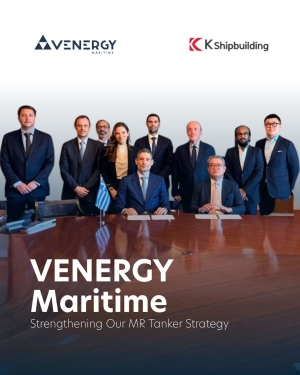
Venergy Maritime has exercised its options for two additional MR (Medium Range) product and chemical tankers at K Shipbuilding in Korea, with delivery scheduled for 2028.
This brings the company’s total fleet plan to 11 vessels – 8 newbuildings and 3 second hand units – all Korean built, reflecting its focus on quality, efficiency and long-term value.
As the company states: “Venergy continues to see strong fundamentals in the product tanker market, driven by shifting trade flows, refinery dislocation and increasing environmental requirements.
In this environment, modern eco tonnage is not just an advantage, it is a necessity.
At V GROUP, we remain committed to disciplined growth and sustainable investment, building a fleet that is competitive today and aligned with the future of shipping”.
Venergy Maritime is part of the Vasileiadis Group (V GROUP), a Piraeus-headquartered organisation active in environmental services, energy transition and hazardous waste management, with a growing focus on alternative fuels for the marine and industrial sectors.
ELNAVI Newsletter
More Information: ELNAVI,
19, Aristidou str., Piraeus 185 31,
Tel.: +30 210 45.22.100, e-mail: This email address is being protected from spambots. You need JavaScript enabled to view it.
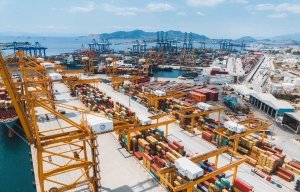
Despite the ongoing Red Sea crisis and regional instability, Piraeus Port Authority S.A. (PPA) achieved a historic financial performance in 2025, with total revenue climbing 8.6% to reach €250.8 million. EBITDA rose to €132.3 million, demonstrating remarkable corporate resilience. The Board has proposed a stable dividend of €1.896 per share, maintaining its commitment to returning 55% of net profit to shareholders.
Growth was primarily driven by the cruise sector, which hit an all-time high with a 24.8% revenue surge, and Pier I, which achieved net profitability for the first time following a 17.0% revenue boost. While the ferry sector saw a 28.4% revenue drop due to a strategic reduction in port fees to support domestic ticket pricing, passenger volumes continued to rise. Although ship repair and car terminal revenues saw slight declines due to maintenance shutdowns and high 2024 benchmarks, transshipment cargo grew by 17.6%.
The CEO of PPA S.A., Mr. Su Xudong, stated: “The year 2025 confirmed the Company’s steady growth trajectory, delivering strong financial and operational performance. Despite a challenging international environment, we achieved new positive results, while continuing to invest systematically in the future of the port. This demonstrates the strength of our strategy and the dedication of PPA employees. We remain committed to consistently implementing our strategy, creating value for our shareholders and supporting the long-term growth of the port and the Greek economy”.
ELNAVI Newsletter
More Information: ELNAVI,
19, Aristidou str., Piraeus 185 31,
Tel.: +30 210 45.22.100, e-mail: This email address is being protected from spambots. You need JavaScript enabled to view it.
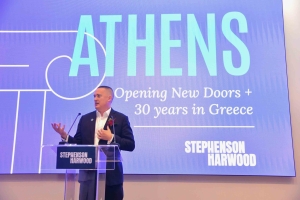
Law firm Stephenson Harwood LLP has opened its new office in Athens, marking both the relocation from Piraeus and a significant milestone as the firm celebrates 30 years of continuous presence in Greece.
The recent launch event at the new Athens office brought together distinguished guests, including clients, colleagues, and friends from across the maritime, finance and energy sectors, and highlights the strong relationships Stephenson Harwood has built within the Greek and international business communities.
Dora Mace-Kokota, Managing Partner of the Athens office and Global Head of Maritime, Trade & Offshore, commented: “As we celebrate 30 years in Greece, the relocation and expansion of our Athens office is a strategic investment in the future. Our enhanced presence enables us to respond more effectively to the evolving needs of our clients, while positioning us to grow into new areas of practice. We are committed to supporting our clients with innovative solutions and deep sector expertise, and our new office is a testament to that commitment. This milestone is not just about our history - it’s about our vision, as we continue to build on our strengths and expand our capabilities in Greece and globally”.
Eifion Morris, CEO, commented: “Accelerating the growth of our international offices is a key priority for the firm, and our Athens office is testament to that commitment. It’s wonderful to see so many familiar faces, as well as new ones, as we expand our offering with the aim of providing a full-service solution in the region. This is an exciting time for our Greek practice, and I look forward to the next chapter.”
ELNAVI Newsletter
More Information: ELNAVI,
19, Aristidou str., Piraeus 185 31,
Tel.: +30 210 45.22.100, e-mail: This email address is being protected from spambots. You need JavaScript enabled to view it.
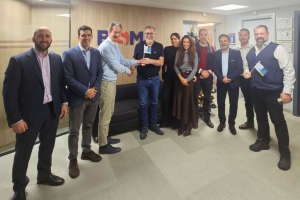
Bernhard Schulte Shipmanagement Hellas joined the Green Award sea-going programme as a new Certificate Holder reflecting the company’s commitment to safe, high-quality and environmentally responsible ship management.
Bernhard Schulte Shipmanagement (BSM) is an integrated maritime solutions provider, managing a fleet of approximately 670 vessels with a global workforce of 40,000 seafarers and 2,000 shore-based employees. Through its international network of ship management offices, crew service centres and maritime training facilities, the company supports shipowners in maintaining safe and efficient vessel operations.
As part of the Schulte Group, BSM benefits from more than 140 years of experience in the shipping industry, supporting its ongoing efforts to combine operational excellence with sustainability.
Sustainability is a key priority within BSM’s operations. The company is actively advancing the digitalization of processes and contributing to the decarbonization of the maritime sector, while maintaining a strong focus on ethical conduct and responsible business practices. As ship managers, BSM recognizes its role in addressing climate-related risks and opportunities, supporting clients in their sustainability journey and safeguarding the long-term performance of their assets.
BSM is committed to complying with all relevant national and international environmental regulations and to setting targets aimed at reducing the environmental impact of its activities on both the marine environment and the atmosphere. Through continuous improvement and structured environmental management, the company contributes to a more sustainable and responsible shipping industry.
By joining the Green Award sea-going programme, Bernhard Schulte Shipmanagement Hellas aligns with the shared mission of advancing safe, environmentally responsible and sustainable ship operations worldwide.
ELNAVI Newsletter
More Information: ELNAVI,
19, Aristidou str., Piraeus 185 31,
Tel.: +30 210 45.22.100, e-mail: This email address is being protected from spambots. You need JavaScript enabled to view it.

Posidonia Survey Shows Shipping Weighs AI Acceleration Against Maritime Pragmatism
All newly available maritime Artificial Intelligence (AI) services and products will be presented at Posidonia, as the industry is slowly incorporating its potential into everyday operations. The maritime industry, traditionally measured in its adoption of new technologies, is steadily advancing its engagement with AI, though not without caution, according to findings of a recent Posidonia survey.
Ahead of Posidonia 2026, which will take place from 1-5 June at the Athens Metropolitan Expo, organisers observe growing dialogue among exhibitors and industry stakeholders around AI-driven solutions spanning predictive maintenance, fuel optimisation, digital compliance, and operational analytics. Yet, the overall sentiment across the sector remains balanced: shipping is neither rushing into AI nor standing still.
“Artificial Intelligence is clearly transitioning from theoretical discussion to operational application,” said Posidonia Exhibitions Managing Director, Theodore Vokos. “Over 40 Posidonia 2026 exhibitors have lent their insights regarding AI adoption by their businesses, and what we are witnessing is not blind adoption, but structured experimentation. The maritime industry is assessing AI through the lens of safety, compliance and return on investment.”
“In a period of intense geopolitical turbulence, the shipping industry is already preparing for next day. Posidonia 2026 will be more topical than ever, as a wide range of issues and developments will be discussed, including, among others, the consequences of the conflict in Iran. But as has been proven in the past, shipping responds faster than other sectors to challenges, and this is also reflected in this year’s survey on the adoption of Artificial Intelligence,” continued Mr. Vokos.
Industry responses, gathered in the run-up to the exhibition, reveal three distinct approaches: active adopters embedding AI into products and services; companies selectively integrating AI for internal optimisation; and others maintaining a cautious, observational stance.
Classification societies and technology leaders appear among the most proactive. Bureau Veritas sees AI increasingly embedded in routing optimisation, fuel consumption prediction, and risk-based inspection frameworks. Through digital tools that combine drone imagery, scanning and intelligent data processing, AI enhances survey precision while preserving human oversight.
Alex Gregg-Smith, President, Marine & Offshore at Bureau Veritas, said: “AI adoption in the shipping industry is progressing steadily and is expected to accelerate as digitalization, decarbonization and data-driven decision-making become central to maritime operations. Rather than replacing existing practices, AI is increasingly embedded in practical applications such as vessel routing optimization, fuel consumption prediction, risk-based inspection, and predictive maintenance schemes. Regulatory drivers and the growing availability of real-time ship data are further supporting this shift.”
Some companies are going all-in on AI, such as Nereus Digital Bunkers, an AI-native company. According to Nikolas Gkikas, Founder and CEO: “AI is not a feature we are adding — it is a structural component of our platform. Our AI Procurement Advisor is already in active development and is being piloted with select clients. It uses large language model technology, combined with domain-specific maritime and commodity market data, to provide contextual, actionable insights directly inside the procurement workflow.” Nereus also employs machine learning models for price forecasting, enabling clients to anticipate port-level bunker price movements and make more informed stem timing decisions — reducing fuel costs meaningfully.
In the technical services segment, Dynamic Group of Companies is leveraging decades of maintenance data to transition from reactive repairs to predictive asset management. By applying analytics to hull and ballast tank records, the company aligns maintenance cycles with both financial efficiency and environmental performance targets.
“The maritime industry is adopting AI at an accelerated pace, driven by the immediate demands of CII and EU ETS compliance. At Posidonia 2026, we are showcasing how our synthesis of historical data and industrial robotics ensures your fleet remains both competitive and compliant,” said Cpt. Ioannis (John) Nikolitsis, CEO, Dynamic Group of Companies.
Similarly, Fortune Technologies has embedded AI-powered modules within its enterprise software platforms, automating processes and generating operational insights for ship operators. Electropneumatic S.A. is integrating AI within its R&D activities, while Endress+Hauser anticipates accelerated deployment in predictive diagnostics and fleet performance monitoring.
Yet beyond early adopters, a more measured tone prevails.
MAS S.A., active in advanced automation systems, expects AI adoption to expand primarily within decision-support tools and optimisation layers, while core control systems remain bound by deterministic safety and classification requirements. Navigator Shipping Consultants echoes this pragmatic outlook. While AI already supports emissions monitoring and data analytics, critical operational decisions — particularly under emergency conditions — remain firmly human-led.
Danae Bezantakou, CEO, Navigator Shipping Consultants, said: “Shipping operations require continuous human involvement, direct communication, immediate intervention and the ability to assess and manage situations on a case-by-case basis. Operational challenges, complex decision-making and, above all, emergency situations cannot be fully addressed by platforms or automated systems alone.”
The regulatory dimension also shapes industry posture. Normec Verifavia, active in emissions verification and auditing, highlights the necessity for traceable and auditable AI frameworks within a highly regulated sector. Environmental compliance is widely viewed as a catalyst. Decarbonisation pressures, CII performance monitoring and EU ETS requirements are accelerating demand for digital tools capable of managing complex datasets and improving efficiency metrics.
In logistics and support services, firms including Royal Blue Logistics and Adamar International Maritime Services report using AI-based tools to improve inventory planning and operational forecasting, while emphasising that implementation remains selective.
Taner Topkara, General Manager, Adamar, said: “AI has become an essential component across most industries, including the maritime sector, and its influence continues to expand. Adamar, without eliminating the human factor, already uses advanced digital technologies and is actively integrating AI-driven solutions to address emerging industry demands, particularly in enhancing operational efficiency, logistics optimisation, and inventory planning for shipping companies.”
Perhaps the most consistent conclusion across industry responses is that AI will augment rather than replace the human element.
From shipyards to surveyors, executives stress that maritime operations involve dynamic, real-time decision-making in unpredictable environments. Automation may increase efficiency and reduce risk, but accountability, safety and operational trust remain human responsibilities.
Economic considerations further temper adoption rates. Return on investment, data ecosystem collaboration and cyber security resilience are repeatedly cited as prerequisites for broader AI integration.
As Posidonia 2026 approaches, AI solutions are expected to become a major point of interest both on the exhibition floor and at the conference discussions of the event. However, rather than signalling a sudden technological upheaval, the industry appears to be navigating a gradual transformation, consistent with its longstanding culture of measured innovation.
Vokos added: “Shipping has historically balanced tradition with technological advancement. Artificial Intelligence represents the latest chapter in that evolution. At Posidonia 2026, the debate will not centre on whether AI belongs in maritime operations, but on how, where and how fast it should be deployed. The prevailing industry view suggests that AI’s course is set. The pace, however, will remain characteristically maritime, resembling a U-turn of a tanker in high seas: steady, deliberate and guided by safety, regulation, and operational realism.”
Posidonia 2026 is organised under the auspices of the Ministry of Maritime Affairs and Insular Policy, the Hellenic Chamber of Shipping and the Union of Greek Shipowners, with the support of the Municipality of Piraeus and the Greek Shipping Co-operation Committee.
ELNAVI Newsletter
More Information: ELNAVI,
19, Aristidou str., Piraeus 185 31,
Tel.: +30 210 45.22.100, e-mail: This email address is being protected from spambots. You need JavaScript enabled to view it.