


-
Home

-
Maritime Training
- elnavi

elnavi
Capital Clean Energy Carriers Corp. has marked another period of robust performance for Third Quarter 2025
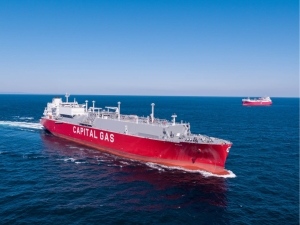
Highlighting on a new long term time charter agreement for one LNG/C under construction, the conclusion of the sale of a 13,312 TEU container vessel and a secured financing for all six DF MGC and two LCO2 carriers under construction, Capital Clean Energy Carriers Corp. released its financial results for the third quarter ended September 30, 2025.
The company also completed the 5-year special surveys of LNG/Cs Aristos I and Aristidis I and announced dividend of $0.15 per share for the third quarter of 2025.
The Company announced in November 2023 its decision to shift its strategic focus towards the transportation of various forms of gas to industrial customers, including LNG and emerging new commodities in connection with the energy transition. As a result, the Company agreed to acquire 11 newbuild LNG/Cs (the “Newbuild LNG/C Vessels”) and in June 2024, the Company further expanded its gas-focused portfolio with the acquisition of 10 gas carriers, including four LCO2/multi-gas and six DF MGCs. Since December 2023, the Company has also completed the sale of 13 container vessels.
In view of this strategic shift, we present our financial results on a continuing operations basis, except for where reference is made to discontinued operations. Financial results from continuing operations include revenues, expenses and cash flows arising from our 14 vessels currently in-the-water, including 12 latest generation LNG/Cs and two 13,000 twenty equivalent unit (“TEU”) Neo-Panamax container vessels.
Financial results from discontinued operations include revenues, expenses and cash flows arising from the 13 container vessels we have sold following the announcement of our strategic shift in November 2023. Please refer to Appendix A Discontinued Operations.
Mr. Jerry Kalogiratos, Chief Executive Officer of CCEC, commented: “The third quarter has marked another period of robust performance for the Company, with significant achievements across all strategic fronts and operational priorities. The business continues to build momentum, further strengthening its position within the LNG and gas transportation sector.
The Company has successfully secured long-term employment for another LNG carrier currently under construction, well ahead of its scheduled delivery. This move not only demonstrates proactive planning but also contributes to further diversification of our customer base. The Company’s total contract backlog duration now stands at 6.9 years, with $3.0 billion in contracted revenues. These figures highlight increased cash flow visibility and a de-risked balance sheet, which we believe will support the Company's financial stability.
Financing has been secured for all six DF MGCs and all four LCO2/multi-gas carriers, which underscores the Company's financial agility and commitment to its strategic objectives. In parallel, the sale of another container vessel has enabled further recycling of the capital base with the proceeds being reinvested into the Company’s under-construction fleet of gas shipping assets.
Corporate governance continues to evolve, with changes in our Board of Directors. The Company expresses gratitude to Abel Rasterhoff for his service since our U.S. listing in 2007 and wishes him well in retirement. Martin Houston is welcomed to our Board, bringing unparalleled experience and stature in the LNG market.
It has been just two years since the Company began its journey focused on gas transportation, following a rights issue in November 2023. Out of an eventual fleet of 18 LNG/Cs, CCEC now only has three latest generation LNG/Cs under construction that remain available for charter. Discussions regarding their future employment are underway with multiple counterparties, while the Company remains insulated from prevailing spot LNG market conditions for the next 12 months.
By consistently executing on its strategy, CCEC is well on its way to becoming the largest US-listed company dedicated to LNG and gas transportation.”
ELNAVI Newsletter
More Information: ELNAVI,
19, Aristidou str., Piraeus 185 31,
Tel.: +30 210 45.22.100, e-mail: This email address is being protected from spambots. You need JavaScript enabled to view it.
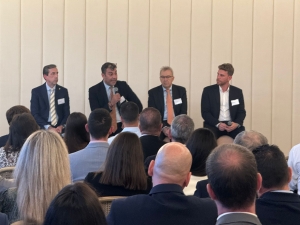
Members of the Greek shipping community gathered at the One&Only Aesthesis resort in Glyfada last week for an event hosted by maritime technology pioneer Orca A titled Navigating the Future with AI – Digital Innovation for Real Gains and Smarter Fleets. The event explored how AI is already reshaping navigational safety, regulation and operational culture across the global fleet – with Greek operators now playing a leading role in its adoption.
Moderator Edwin Lampert set the tone early, emphasising that the evening was not about distant possibilities but about “tangible results being realised today – safer navigation, sharper decision-making and measurable fleet performance".
KEY EVENT HIGHLIGHT:
SEA TRADERS LOGS DRAMATIC NAVIGATIONAL SAFETY GAINS USING ORCA AI'S OPERATIONAL PLATFORM
Ioannou Procopiou-led dry-bulk operator Sea Traders and ship-management company Prominence Maritime together control 16 bulkers and employ around 350 seafarers. Their partnership between Orca AI kicked off in late 2024, with five vessels now equipped Orca AI's AI-powered operational platform. Significant safety improvements became clearly evident within only a few months.
IMPRESSIVE FIGURES
Capt Nestoras Grigoropoulos, HSSQE Department Manager and DPA) at Sea Traders, explained that by September 2025, the company recorded not only the 64% reduction in close-encounter events in open waters across the Orca-equipped vessels, but also a 15% increase in average minimum distance.
In specific regions such as the environmentally sensitive but busy Coral Sea corridor in Australia, the company saw a 60% reduction in close encounters and a 35% increase in minimum distance.
As Capt Grigoropoulos pointed out, significantly fewer near-misses equates to a much-reduced risk of collisions.
The results were even more striking for the Galio, where close-encounter events in congested waters has fallen by 83% and the vessel’s average minimum distance increased by 45%.
Capt Grigoropoulos said these figures show clearly how the Orca AI system helps their crews make earlier, better decisions – and when officers know that a well-trained tool is watching alongside them, they become more confident. Confidence builds competence, and competence builds safety, he added.
FEEDBACK FROM THE BRIDGE
The strongest endorsement, he said, comes from professionals on board, with crews actively requesting that more vessels be equipped with the system.
Sea Traders integrates Orca AI’s data directly into its safety management processes. Each month, the company analyses the AI reports and circulates tailored performance summaries to every ship – highlighting strengths as well as opportunities for improvement.
The company also uses these insights to create a spirit of friendly competition among its captains. If another master achieves a higher safety score one month, the others want to outperform him next month – which is a great way to drive positive engagement.
BUILDING TRUST IN NEW TECHNOLOGY
Panos Kourkountis, Sea Traders’ Technical Director, said that adopting AI is as much about mindset as metrics. He explained that when testing new technologies, it is necessary to convince three audiences — the crew, the office and finally management. He noted that with a solution that saves fuel, the benefit is easy to quantify, but with something that reduces risk, it is harder; the people using it need to believe it genuinely makes their work safer and easier. He added that such belief comes only through experience.
In terms of cost considerations, Kourkountis stressed that safety investments must be viewed through the lens of avoided losses. Every dollar spent on prevention is money saved on recovery, he added.
PARTNERSHIP BUILT ON DATA AND DIALOGUE
Sea Traders and Orca AI continue to deepen their collaboration through regular quarterly business reviews and data-driven benchmarking across the fleet. The next phase will focus on voyage-planning optimisation and tighter integration between operational data and navigational analytics.
Capt Grigoropoulos concluded by saying that for Sea Traders, enhancing navigational safety means fewer incidents, more efficient operations and, in the long term, a strong return on investment.
FURTHER EVENT HIGHLIGHTS:
BUREAU VERITAS – CREATING THE FRAMEWORK FOR “SMART SHIPPING”
The programme opened with a presentation by Vassilios Dimoulas, Technology and Innovation Director for East Europe at Bureau Veritas (BV), who outlined the class society’s structured approach to digital transformation. He described how BV’s “smart shipping” framework builds step by step – from computer-based and connected ships, to augmented and ultimately autonomous vessels.
Dimoulas explained that the drive toward digitalisation is underpinned by three key forces: the need for proactive safety management, growing regulatory demands for performance and emissions data, and the rapid evolution of technology itself. Yet, he noted, the transition is far from simple. “Shipping is a traditional industry,” he said, “and the management of change is one of our greatest challenges.”
To guide that change, BV has developed its own class notations and guidelines for machine learning and data quality, ensuring that early adopters can move ahead safely even while international regulation lags behind. The biggest challenge, he added, remains defining the precise boundary “between human and machine responsibility” – a central theme in the IMO’s forthcoming MASS Code on autonomous ships, which BV is helping to shape.
ORCA AI: EMPOWERING CREW, NOT REPLACING THEM
Closing the speaker line-up, Yarden Gross, CEO and co-founder of Orca AI, tied the evening’s insights together with a clear message: AI is already transforming the maritime world, and it is here to support seafarers, not displace them.
Gross highlighted how connectivity between ships and the cloud has enabled real-time data exchange, allowing AI to enhance situational awareness, reduce workload and assist decision-making. He also pointed to ongoing projects such as Orca’s collaboration with NYK in Japan, where the Japanese line's newbuilt car carriers will soon operate with autonomous navigation capabilities under human supervision.
“The crew remains central,” he said. “AI acts as a co-pilot – empowering them to perform at their best while reducing fatigue and risk.”
Gross also addressed the regulatory gap that continues to widen between technological capability and formal governance. “Technology will always move faster than regulation,” he said, urging industry stakeholders to define practical standards rather than wait for official mandates.
CAPITAL SHIP MANAGEMENT: CULTURE BEFORE CODE
Panelist Panagiotis Drossos, Managing Director of Capital Ship Management, brought a complementary perspective on the human side of AI adoption. He described how his company introduced similar navigational systems and initially faced scepticism from crews, who feared being monitored. “Once they understood the system wasn’t there to police them but to support them, everything changed,” he said.
The company’s first results even showed an increase in reported near-misses, which Drossos saw as positive. “It revealed what was already happening but not being captured. The key was to create a culture of learning rather than blame.”
For Drossos, the long-term value of AI lies in improved awareness and shared understanding between ship and shore. “Systems that improve judgement are here to stay,” he said. “Those that distract will go.”
FROM PILOT PROJECTS TO PRACTICAL TRANSFORMATION
The event concluded with a consensus that AI in shipping has moved beyond experimental trials and into operational reality. Greek owners and managers are now among those proving its value through disciplined adoption and real-world feedback.
Rather than waiting for a perfect regulatory framework, the participants demonstrated a pragmatic approach – building capability, trust and data-driven understanding that will help shape future standards.
The message from Athens was clear: maritime AI is no longer an abstract promise. It is a working part of bridge practice today – and companies willing to engage with it are already seeing the rewards.
ELNAVI Newsletter
More Information: ELNAVI,
19, Aristidou str., Piraeus 185 31,
Tel.: +30 210 45.22.100, e-mail: This email address is being protected from spambots. You need JavaScript enabled to view it.
IBIA partners with INTERCARGO to strengthen collaboration on decarbonisation, safety, and marine fuels
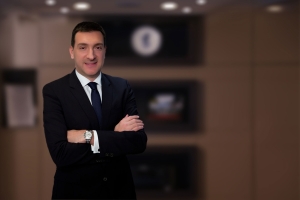
IBIA – The International Bunker Industry Association and the International Association of Dry Cargo Shipowners (INTERCARGO) have entered into a reciprocal membership agreement to reinforce collaboration between the dry bulk shipping and marine fuels communities.
This new partnership formalises the close working relationship between the two associations and reflects their shared commitment to advancing safe, efficient, and sustainable maritime operations, particularly in the areas of fuel quality, safety, and decarbonisation.
Through reciprocal membership, IBIA and INTERCARGO will gain greater access to each other’s expertise, activities, and working groups. The agreement will encourage the exchange of knowledge and best practices, strengthen coordination in international forums such as the International Maritime Organization (IMO), and enhance engagement on issues of mutual interest.
The collaboration will support dialogue between shipowners and the fuel supply chain, promote the development of safe and reliable bunkering practices, and contribute to the industry’s transition towards low and zero-carbon fuels.
Alexander Prokopakis, Executive Director of IBIA said: “We are delighted to welcome INTERCARGO as an IBIA member. Collaboration is vital as the industry moves towards new fuels and technologies, and this collaboration ensures our associations work hand in hand to promote safe, sustainable, and practical solutions for the future.”
Dimitris Monioudis, Chairman of INTERCARGO’s Technical Committee added: “INTERCARGO strives to engage and collaborate with all industry stakeholders for the sake of a genuinely sustainable dry bulk sector. IBIA’s joining the INTERCARGO wider membership will provide us with expert knowledge and experience in relation to fuels available both today as well as in the future, always focusing on safe and pragmatic roadmaps available to our members.”
Both organisations reaffirm their commitment to continuous dialogue and cooperation in support of the wider maritime community.
About IBIA
IBIA – The International Bunker Industry Association is the voice of the global marine energy supply chain, representing a diverse membership of shipowners, fuel suppliers, traders, brokers, surveyors, port authorities, and maritime professionals across more than 70 countries. Established in 1993, IBIA promotes transparency, quality, and high standards in marine fuel operations and supports the industry’s transition to low and zero-carbon fuels. Through advocacy at the International Maritime Organization (IMO), and its global network of training, events, and working groups, IBIA connects the industry to drive safe, sustainable, and practical solutions for the future of marine energy.
About INTERCARGO
The International Association of Dry Cargo Shipowners (INTERCARGO) unites and promotes quality dry bulk shipping, bringing together more than 350 forward thinking companies from 37 countries. The dry bulk sector is the largest shipping sector in terms of number of ships and deadweight. Dry bulk carriers account for 43% of the world fleet (in tonnage) and carry an estimated 55% of the global transport work. INTERCARGO convened for the first time in 1980 in London and has been participating with consultative status at the International Maritime Organization (IMO) since 1993. INTERCARGO provides the forum where dry bulk shipowners, managers and operators are informed about, discuss, and share concerns on key topics and regulatory challenges, especially in relation to safety, security, the environment, and operational excellence. The Association promotes its members’ positions at the IMO, EU as well as other shipping and international industry fora, always maintaining free and fair competition as a focal principle.
ELNAVI Newsletter
More Information: ELNAVI,
19, Aristidou str., Piraeus 185 31,
Tel.: +30 210 45.22.100, e-mail: This email address is being protected from spambots. You need JavaScript enabled to view it.
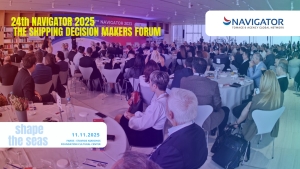
The 24th NAVIGATOR – The Shipping Decision Makers Forum 2025 returns more dynamic than ever on Tuesday, November 11, 2025, from 09:00 to 16:30 at the Stavros Niarchos Foundation Cultural Center Lighthouse, under the theme “SHAPE THE SEAS” – a call to the maritime community to actively shape the future of the sea.
For nearly three decades, the NAVIGATOR Forum has been a think tank of ideas, strategy, and dialogue, where the shipping industry’s decision makers meet to exchange experiences, forecast trends, and co-design the course of a sector that serves as a cornerstone of both the Greek and global economy.
This year’s event focuses on how the maritime community is responding to rapid geopolitical developments, the green transition, the digital revolution, and most importantly, the human factor – the invaluable asset that remains the beating heart of shipping.
The 24th NAVIGATOR 2025 will host leading speakers from across the maritime spectrum, who will share their insights and proposals through a carefully curated program of discussions and presentations.
Opening remarks will be delivered by Mr. Stefanos Gikas, Deputy Minister of Maritime Affairs & Insular Policy, Mr. George Alexandratos, President of the Hellenic Chamber of Shipping, and H.E. Fang Qiu, Ambassador of the People’s Republic of China, while H.E. Matthew Lodge, British Ambassador to Greece, will also take part in a panel discussion. Moreover, Dr. Kyriacos Sabatakakis, Country Managing Director – ACCENTURE will present research regarding Artificial intelligence.
A highlight of this year’s Forum will be the presentation of the NAVIGATOR Assembly 2025 (that took place in March of 2025) outcomes, where 300 top executives from leading shipping companies representing the whole spectrum of maritime cluster participated in closed thematic discussions, identifying trends and challenges that will directly shape the future of global shipping.
⚓ 2025 THEMATIC SESSIONS
This year’s Forum includes five interactive panels, spotlighting the key forces of change driving the industry:
Decarbonisation: From Oil to Green – The Transition Dilemma
Disruption on Deck: Who Controls the Future of Smart Shipping
ESG Perspectives: Private vs. Listed Companies in Dialogue
The Human Element Onboard & Ashore: Challenges to Tackle, Solutions to Unlock
Sea Power & Global Politics: Who Rules the Shipping Routes?
More information and full agenda:
www.navigatorltd.gr/forums/24th-navigator-forum-2025
Registration:
https://www.eventora.com/en/Events/24th-navigator-2025?c=p
About NAVIGATOR SHIPPING CONSULTANTS
Founded in 1991, NAVIGATOR SHIPPING CONSULTANTS has established a global network of agents and partners across more than 1,400 ports with more than 1,000 tugboats. For over 24 years, the NAVIGATOR – The Shipping Decision Makers Forum has been a reference point for international maritime thought, promoting collaboration, innovation, and knowledge exchange among leading professionals of the shipping industry.
ELNAVI Newsletter
More Information: ELNAVI,
19, Aristidou str., Piraeus 185 31,
Tel.: +30 210 45.22.100, e-mail: This email address is being protected from spambots. You need JavaScript enabled to view it.
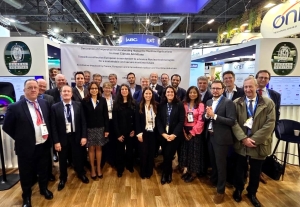
Bureau Veritas (BV), a world leader in testing, inspection, and certification, along with more than 30 European companies from the French and international nuclear and maritime sectors, has formally signed the Declaration of Cooperation for Accelerating Nuclear for Maritime Applications to meet Climate Ambitions during the World Nuclear Exhibition in Paris. The signing represents a landmark initiative uniting international stakeholders across the nuclear, maritime, research, financial and regulatory communities in a shared commitment to promote a European initiative to advance the safe and sustainable use of nuclear technologies for maritime decarbonization.
The declaration recognizes the critical role of the maritime sector in achieving global climate goals and the need to transition to low-carbon energy systems. It highlights the potential of Small Modular Reactors (SMRs) to become a safe, reliable, and sustainable solution for maritime and port energy systems. Together, the signatories reaffirmed their commitment to advancing innovation in line with the France 2030 Investment Plan, which allocates €1 billion to the development of innovative nuclear technologies, including SMRs.
The signatories have committed to an ongoing collaborative effort – across industries – to address technological, regulatory, and societal challenges, and to identify pilot projects to test and validate nuclear-powered solutions. The declaration also emphasizes transparent communication on nuclear safety to build public understanding and trust.
In addition, the participants encourage Administrations to develop a robust European ecosystem that will facilitate the development of nuclear technologies in maritime operations; to strengthen international collaboration with the International Atomic Energy Agency (IAEA) and the International Maritime Organization (IMO); and to call on governments and institutions to provide regulatory clarity, equitable access to climate finance, and harmonized safety standards. Progress will be reviewed annually to ensure transparency and alignment with global climate and energy transition targets.
Matthieu de Tugny, Executive Vice President, Industrials and Commodities at Bureau Veritas, said: “This declaration marks an important milestone in aligning nuclear and maritime expertise to accelerate decarbonization and support the long-term sustainability of global shipping. The integration of nuclear technology into maritime operations represents a transformative opportunity, but it must be built on the foundations of safety, transparency, and international cooperation. With recognized competences in both the maritime and nuclear sectors, Bureau Veritas is uniquely positioned to help ensure that innovation advances responsibly and sustainably.”
Christine Cabau Woehrel, Executive Vice President Assets & Operations at CMA CGM, and Chair of the Steering Committee of the New Energies Coalition, declared: “The role of nuclear energy in the decarbonization of maritime and port environments is emerging with both promise and responsibility. By joining forces with Bureau Veritas, Onet, Bessé and our international partners, we are taking an initial yet determined step toward exploring how advanced nuclear technologies — such as SMRs — can contribute safely and sustainably to the energy transition of the maritime sector in the long run. Collaboration, transparency, and scientific rigor will guide our path forward for port electrification and maritime decarbonization."
Émilie de Lombarès, Chairwoman of the Executive Board at Onet Group, declared: “This declaration of cooperation emphasizes the need for coordinated international efforts to address the technological, regulatory, societal, and financial challenges associated with integrating civil nuclear power into the maritime sector. Given Onet Group has supported the French nuclear sector for around 50 years, our long-standing presence has given us a unique, hands-on understanding of the industry’s evolution. We are actively supporting several innovative projects for decarbonization, involving SMRs because we think the SMR approach is a new opportunity to re-evaluate the potential of nuclear energy for maritime industry. That is why we joined forces with Bureau Veritas, CMA CGM, Bessé as well as other international partners to invite all stakeholders in the nuclear and maritime sectors to join this collective movement as to build a sustainable, secure, and resilient maritime future, showcasing French and European leadership.”
ELNAVI Newsletter
More Information: ELNAVI,
19, Aristidou str., Piraeus 185 31,
Tel.: +30 210 45.22.100, e-mail: This email address is being protected from spambots. You need JavaScript enabled to view it.
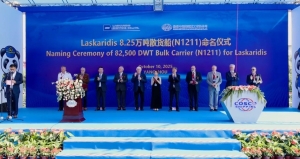
Laskaridis Shipping Co Ltd., led by Panos Laskaridis, has taken delivery of the new-built ship “Pafsanias”.
More specifically, a relevant post on the company’s social media states: “We are proud to announce the successful delivery of our latest new-built bulk carrier.
Built at COSCO SHIPPING HEAVY INDUSTRY (YANGZHOU) Co. Ltd, MV PAFSANIAS is designed for performance, efficiency and a lower environmental footprint – a reflection of our commitment to sustainable growth in the maritime industry.
MV PAFSANIAS is the first vessel of our latest newbuilding programme to be delivered, that represents not only fleet renewal but more importantly our commitment to a greener, smarter and more efficient future for global shipping.
This latest newbuilding programme of Lavinia Group includes:
COSCO SHIPPING HEAVY INDUSTRY (YANGZHOU) Co. Ltd.: Three (3) KAMSARMAXES (82.000 DWT)
C.M.I. Qingdao Shipyard: Four (4) KAMSARMAXES
Jiangsu New Hantong Ship Heavy Industry: One (1) KAMSARMAX
Zhoushan Changhong International Shipyard: Three (3) MR-2 Chemical/Product Tankers (50.000 DWT)”.
ELNAVI Newsletter
More Information: ELNAVI,
19, Aristidou str., Piraeus 185 31,
Tel.: +30 210 45.22.100, e-mail: This email address is being protected from spambots. You need JavaScript enabled to view it.
Navios Maritime Partners L.P. has placed USD 300 million of new senior unsecured bonds in the Nordic bond market. The new bonds are due to mature in November 2030 and will pay a fixed coupon of 7.75% per annum, payable semi-annually in arrears. An application will be made for the bonds to be listed on the Oslo Stock Exchange.
The net proceeds from the bond issue are intended to be used for the repayment of certain of the Company’s outstanding secured debt facilities and for general corporate purposes of the group.
Arctic Securities AS acted as Sole Global Coordinator and Bookrunner, Fearnley Securities AS and Skandinaviska Enskilda Banken AB (publ) Oslofilialen acted as Joint Bookrunners, Credit Agricole Corporate and Investment Bank acted as passive Joint Lead Manager and S. Goldman Advisors LLC acted as Co-Manager in the bond issue.
The senior unsecured bonds are being sold in the United States or its territories only to persons reasonably believed to be qualified institutional buyers as defined under Rule 144A under the Securities Act of 1933, as amended (the “U.S. Securities Act”). The bonds have not been registered under the U.S. Securities Act or any state securities laws and may not be offered or sold in the United States absent registration or an applicable exemption from registration requirements. This press release shall not constitute an offer to sell or the solicitation of an offer to buy any securities of Navios Maritime Partners L.P., nor shall it constitute an offer, solicitation or sale in any jurisdiction in which such offer, solicitation or sale is unlawful.
ELNAVI Newsletter
More Information: ELNAVI,
19, Aristidou str., Piraeus 185 31,
Tel.: +30 210 45.22.100, e-mail: This email address is being protected from spambots. You need JavaScript enabled to view it.
Debt-free Vafias expands wager on dry bulk
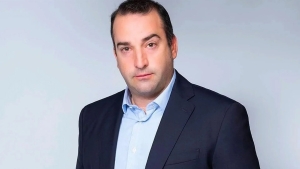
An article written by Nigel Lowry and published in Lloyd’s List
VAFIAS Group has achieved a decades-old ‘dream’ in achieving debt-free status, it has confirmed, even as it continues a fleet expansion with further dry bulk carrier buys.
The milestone is all the more notable for encompassing about 100 unencumbered vessels of various types across five different companies, two of them privately held and three publicly listed.
Nasdaq-listed liquefied petroleum gas carrier owner StealthGas paid off the loan on a last bank-financed vessel in July this year, while the zero-debt status of spin-offs Imperial Petroleum and C3is Inc. have also been a matter of public record.
But shipowner Harry Vafias has confirmed to Lloyd’s List that the privately owned bulker and tanker fleet under family companies Brave Maritime and Stealth Maritime has also freed itself of bank debt.
Just two years ago, the total debt of the group and public affiliates came to $1.1bn.
Although many Greece-based shipowners in the last few years have opted to use excess market earnings to prepay loans during a period of relatively high interest rates, few will have completely wiped out debt on such a large fleet, especially while managing to expand at a rapid clip.
Brave has just clinched the acquisition of a nine-year-old, Japanese-controlled handysize bulker, Seacon Manila (IMO: 9766231), for $17.2m, according to sources familiar with the deal.
The 33,412 dwt vessel was built by Shin Kochi Heavy Industries.
Vafias declined to confirm the latest transaction, but verified reports that the company has acquired a trio of similar handies of about 34,400 dwt, from MUR Shipping.
African Goshawk (IMO: 9728485), African Heron (IMO: 9750000) and African Merlin (IMO: 9701267), all constructed by Namura Shipbuilding in 2016, are being purchased for a price of $17.4m each.
The four latest purchases, which are all scheduled to be delivered before the end of this year, bring the Brave Maritime-managed fleet to about 40 bulkers, up from a group tally of just 11 bulkers three years ago.
Handysize bulkers were “a no-brainer” at the moment, Vafias said.
Last year, the company purchased five kamsarmaxes and five supramaxes, but secondhand prices in these segments had risen, while handysizes had remained lower, as well as having a smaller orderbook.
“They are more versatile ships and at the moment they are earning close to $19,000 per day on the spot market. They are earning more than kamsarmaxes,” he said.
“We try to identify small niches that represent good value and to move quickly.”
Over the summer the owner was also buying product tankers, applying similar principles.
The group is reckoned to have been the most active secondhand buyer over the last two years from the Greek shipowning community, which has dominated secondhand buying along with Chinese interests.
Despite the regularity of its deal-making, it has almost entirely eschewed Chinese-built vessels and has focused strongly on Japanese-built tonnage.
Vafias said about 70% of the fleet was constructed in Japan with the balance in South Korea, with the exception of a solitary Chinese built vessel.
Currently, the group’s fleet, including both privately owned and publicly listed fleets, has an estimated value of about $2.8bn.
He said that being debt-free gave the group, above all, “freedom — and a lot of flexibility”.
It meant that “we have a lower break-even rate than the competition and we can raise debt at any time if we want to”, he added.
According to Vafias, the inspiration for eradicating debt was planted back in the mid-1990s by compatriot shipowner Thanassis Martinos of Eastern Mediterranean Maritime.
“He told us [Harry together with father Nicholas Vafias, who is still active in the business] that he had a debt-free fleet.
“That was 30 years ago and we were so far away from something like that, it seemed like a dream,” he said.
ELNAVI Newsletter
More Information: ELNAVI,
19, Aristidou str., Piraeus 185 31,
Tel.: +30 210 45.22.100, e-mail: This email address is being protected from spambots. You need JavaScript enabled to view it.
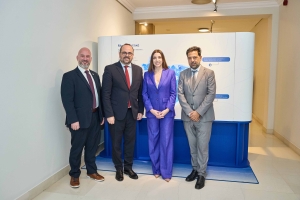
Cruise Lines International Association (CLIA), the leading voice of the global cruise industry, is showcasing the benefits of a thriving cruise sector for communities in Greece with the launch of an exhibition on sustainable cruise tourism in partnership with the Eugenides Foundation. The opening event of the Exhibition, held yesterday at the premises of Eugenides Foundation, follows CLIA’s campaign which, through a series of videos, aims to amplify the voice of the cruise community in Greece and showcase how the sector is a driving force for growth and prosperity.
Mrs. Maria Deligianni, Regional Director, Eastern Mediterranean, CLIA, said: “Greece is at the heart of Mediterranean cruising, and as we highlight through our exhibition and campaign today, partnerships are key to preserving the country’s attractiveness as a great place to visit and to live. With data showing that over 55% of cruise traffic is concentrated in only three ports, we support the Government’s efforts to enhance the visitor experience and develop new destinations. We believe that investing the cruise fee to support this ambition can help spread the benefits of cruise tourism more widely, enabling balanced and sustainable growth and strengthening Greece’s role as a premier hub for cruising. Building on this ambition, we propose the creation of a National Cruise Development Plan, which will be accompanied by a clear timeline for initiating investments and supporting new destinations in Greece. We suggest that this plan be developed by the Greek Government in collaboration with the cruise industry as part of our ongoing dialogue. The implementation of the plan will be funded by revenues from the cruise fee, considering the needs for port infrastructure, development, and the promotional activities required at each destination.”
Mr. Leonidas Dimitriadis-Eugenides, President of the Eugenides Foundation and Goodwill Maritime Ambassador of the International Maritime Organization (IMO), stated: “Cruise tourism is a dynamic sector with a significant contribution to both the European and the Greek economy. Its development must be grounded in balance, strategic planning, and respect for the environment and local communities. Because progress has real meaning only when it combines economic prosperity with knowledge, education, and sustainability. In this context, at the Eugenides Foundation, we believe it is especially important for Greeks — and particularly young people — to acquire the skills that will enable them to take full advantage of the opportunities this growth presents.”
Cruise sector innovations driving sustainability
Reinforcing the sector’s commitment to sustainability, CLIA shared the results of its annual Environmental Technologies and Practices report. The 2025 report shows continuous and measurable progress by member cruise lines as they advance an ambitious environmental agenda — from testing and piloting biofuels, investing in fuel-flexible engines, to the increasing use of lower emissions fuels, and maximizing energy-efficiency measures. Cruise lines are early adopters and innovators of maritime technology — examples include advanced wastewater systems, onshore power supply, air lubrication systems, and the newest generation of dual-fuel engines — from which other sectors of maritime also benefit. Cruise lines are investing tens of billions of euros to build the fleet of the future, including more than 80 new ships on order worldwide that feature these and other innovations.
Generating economic and social benefits for Mykonos economy
CLIA also unveiled the results of a study by the international research firm Oxford Economics showing that cruise tourism generated €201 million to Mykonos economy in 2024. The study also found that cruise tourism in Mykonos supports nearly 3,000 jobs in the economy of the area, highlighting the sector’s significant contribution to local livelihoods. With a focus on Mykonos, the study revealed that cruise passengers spend an average of €107 per person on the island during average stays onshore of a little under six hours. The study shows how cruise tourism serves to introduce Greece to new visitors — eight out of ten (transit) cruise guests in 2024 were visiting the island for the first time, and over half visiting Greece for the first time.
CLIA also announced that it has commissioned a similar study from the University of Piraeus on the economic impact of cruising in Santorini with initial findings expected in early 2026 and the final report to be released in July 2026.
ELNAVI Newsletter
More Information: ELNAVI,
19, Aristidou str., Piraeus 185 31,
Tel.: +30 210 45.22.100, e-mail: This email address is being protected from spambots. You need JavaScript enabled to view it.
The Swedish Club marks 45 years in Greece with a deep commitment to local service and long-term partnerships
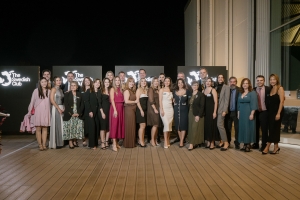
The Swedish Club celebrated the 45th anniversary of its Greek office, marking nearly half a century of continuous service to the world’s most influential shipowning community.
Established in Piraeus in 1980, the office has grown alongside Greek shipping, supporting members through market cycles, regulatory change, and evolving risk. What remains constant is a model built for Greece: Hull & Machinery, P&I, claims handling and underwriting expertise delivered locally, in close partnership with members, brokers and stakeholders.
“Forty-five years on, our purpose in Greece is unchanged: be present, be practical and be fast,” said Ludvig Nyhlén, Area Manager, Greece, The Swedish Club. “What sets this office apart is that we make decisions here. Members have direct access to H&M, P&I, claims and underwriting under one roof, in their time zone and in their market. That local capability, combined with the strength of the global Club has earned trust over decades.”
Greek shipping has transformed from a traditional, family-run sector into a diversified global industry operating across every vessel segment. Throughout this evolution, the Club has adapted its support: reinforcing local claims and underwriting capacity; expanding loss prevention services; and bringing data-led tools to members while maintaining the personal relationships and responsiveness that define the Athens office.
“The Greek market moves quickly and values relationships,” said Thomas Nordberg, Managing Director, The Swedish Club. “Our Athens team reflects that culture. They pair deep local insight with the Club’s international standards and resources, so members get the best of both worlds, local agility and global strength.”
The anniversary also highlights the office’s role in promoting safer operations through practical loss prevention training, monthly safety scenarios, emergency response exercises, and guidance on emerging risks such as alternative fuels, sanctions compliance and cyber security. The Club’s recent wellbeing initiatives, including Check Your Pulse and family support resources, underline an approach to risk that starts with people and culture on board.
Looking ahead, the Athens office will continue to invest in capabilities that matter most to Greek owners and managers: rapid claims decision-making; technical and legal expertise close at hand; and data-driven insight that turns experience into prevention. The focus is on helping members navigate a more complex world, whether driven by regulation, geopolitics or technology, and without losing the speed and clarity that Greek clients expect.
“We’re proud of what’s been built here by our team, our members, our brokers and partners,” added Ludvig. “This anniversary belongs to the community that has supported us for 45 years. Our ambition for the next decade is simple: stay close to our members, keep strengthening our local service, and keep earning trust, case by case, day by day.”
The Swedish Club will mark the anniversary in Athens, bringing together members, brokers, partners and colleagues to celebrate shared achievements and look to the future.
ELNAVI Newsletter
More Information: ELNAVI,
19, Aristidou str., Piraeus 185 31,
Tel.: +30 210 45.22.100, e-mail: This email address is being protected from spambots. You need JavaScript enabled to view it.