



-
Home

-
Maritime Training
- elnavi

elnavi
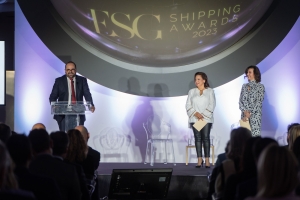
The Launching Event of the ESG Shipping Awards 2023 under the auspices of the Ministry of Maritime Affairs and Insular Policy as well as the Hellenic Chamber of Shipping, was held on 17 January 2023 with a full house turnout, at the Goulandris Natural History Museum.
Government officials and senior representatives from the entire Greek Maritime Community were present at the Launch of the first ESG Shipping Awards globally.
The event opened with the hostesses Mrs. Helena Athoussaki and Mrs. Katerina Stathopoulou sharing the mission and vision of the initiative, followed by the inauguration speech of Mr. Ioannis Plakiotakis, Minister of Maritime Affairs and Insular Policy, where he remarked that “Greek shipping leads the way in ESG & sustainable development” and continued “rewarding shipping companies with ESG criteria encourages the creation of best practices.”
Among the notable speakers, Dr George Pateras, President of the Hellenic Chamber of Shipping said “the ESG shipping awards is a good vehicle to demonstrate the tremendous work which has been done for the environment and the people associated with the maritime transportation.”
In view of the increasing emphasis on ESG practices, Mr. Manolis Koutoulakis, General Secretary of Maritime Affairs and Insular Policy, emphasized the connection of ESG and public policy and how ESG criteria are integrated into investment decisions.
The nomination methodology was explained by Mrs. Helena Athoussaki, followed by Mr. Vassilis Ikonomidis, Managing Partner at VDI Law Firm where he presented the Governance rules of the ESG Shipping Awards.
Mr. Jan Fransen, Executive Director of the Green Award Foundation and a member of the judging committee commented: “I am very proud to be part of the judging committee, it is not an easy task but together with the other members we will succeed in selecting the ESG winners.”
The event ended with the speech of Mr. Dimitris Koutsopoulos, CEO of Deloitte Greece, the sole Anchor Award Partner, “we were engaged from the start with the ESG Shipping Awards because we share the same vision and we trust that it can help companies towards ESG improvement.”
The event was sponsored by Delloitte Greece, Eurobank and Marshall Islands Registry and supported by HELMEPA, Hellenic Shortsea Shipowners Association, WISTA Hellas, ATHEX Group, Propeller Club Port of Piraeus and the Association of Banking and Financial Executives of Hellenic Shipping.
The award winners’ ceremony of the ESG Shipping Awards will take place at the Megaron Concert Hall on Tuesday, 30 May 2023.
Responsible for the event management was Stelina Markoulaki, Digital Shadows.
About the ESG Shipping Awards
The ESG Shipping Awards, is a new institution whose vision is to promote and recognize initiatives on ESG and Sustainability within the Maritime industry.
The ESG Shipping Awards recognizes the most significant and impactful actions of the shipping industry on the economy, environment, and people. It is a purpose-based initiative aiming to encourage the shipping industry to embrace sustainability as part of their culture and strategy.
ELNAVI Newsletter
More information: ELNAVI,
19, Aristidou str., Piraeus 185 31,
Tel.: +30 210 45.22.100, e-mail: This email address is being protected from spambots. You need JavaScript enabled to view it.
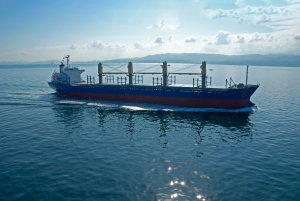
The Panama Ship Registry continues its leadership position worldwide, ranking first among the 10 most important merchant fleets by flag registry and gross tonnage, according to the latest World Fleet Monitor from the Clarksons Research database.
According to the Clarksons platform, Panama had 16% of the world’s maritime fleet at the end of December 2022 with 8,650 registered vessels, which represented 245 million GRT.
The international market and the maritime industry continue to choose the Panama Ship Registry, because it has the support of an entire nation, being a Government Registry, administered by the Panama Maritime Authority (AMP), which provides and guarantees to ship owners and their fleets.
In addition, it offers recognized assistance 24/ 7 services to its clients, adding to that the legal security, diplomatic and judicial advocacy differentiates the Panama registry from all others.
It has been serving the world for more than 100 years, with experience and tradition promoting world maritime trade and favoring development, where its experience serves as a key tool in providing quality service to its clients.
The Panama Registry has understood the role it is called upon to play, always seeking to improve in terms of its competitiveness, adaptability, and international compliance. In fact, Panama has improved its retention, increasing it to 31% achieving a percentage growth of 3.4% in the year 2022, impacted by a world crisis, less construction of ships in primarily Panamanian markets and not mention a war, which are social and economic factors directly affecting this particular market.
During the current Administration, international compliance has been prioritized, digitization together with platform improvements, customer services oriented business model, reengineering, modernization of processes, and incentives, aimed at the use of new technologies, environmentally friendly fuels, and ships with good conduct. All these actions have had a positive impact on the quality of our fleet, which from 2019 to date reflects a growth of 27.9 million GRT and the entry of 567 more ships, according to IHS Market data, this is in the middle of the clear-out process, however, the Panama Registry continues its path and continues to introduce its required mechanisms in order to continue to be a service provider to the world.
As part of the Technological Innovation, a significant investment has been made since the beginning of this Administration, in the improvements to the existing registration platforms for the registration of ships and the E-Segumar platform for the issuance of technical certifications of ships, achieving a friendlier and easier experience for the user, as well as the new Maritime Processing System platform and Electronic Ship Registration (REN), a project plan that should continue during 2023.
Panama demonstrates its commitment to the environment, by promoting the construction of ‘Eco Friendly’ ships, with its special incentives for Eco Ship and New Construction, in the same way we seek to encourage the support and investment of companies, so that the economic impact that represents the improvement of ships in environmental issues is less and shared among parties of the present industry.
The expectations of the Registry are positive for 2023, one of our pillars is the modification of Law 57 of August 6, 2008 “General of Merchant Marine”, which advances steadily through a work group made up of various actors of the maritime sector and whose goal is to collaborate together in the comprehensive review of the regulations related to the Panama Ship Registry, to increase its competitiveness.
This review elevated to Country Strategy, seeking onto a clear, transparent legislation foundation, with competitive rates and diligence in the processes, in this way we will achieve sustainable growth activity.
By 2023, the Panama Maritime Authority continues to implement new technologies in all the operational directorates within the Registry, in order to continue providing quality in our service as well as international compliance.
ELNAVI Newsletter
More information: ELNAVI,
19, Aristidou str., Piraeus 185 31,
Tel.: +30 210 45.22.100, e-mail: This email address is being protected from spambots. You need JavaScript enabled to view it.
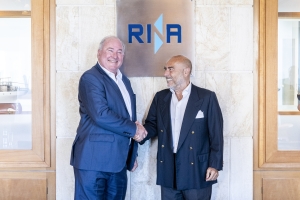
RINA, the Inspection, Certification and Engineering consultancy multinational, acquired the entire share capital of Patrick Engineering Ltd., the Chicago-based engineering consultancy company active in Infrastructure, Transport and Renewable Energy. With a turnover of approximately 82 million dollars and 340 employees in 19 offices mainly located in the North-East of the US, Patrick Engineering will be fully integrated into RINA Consulting, the subsidiary of the RINA Group operating in the engineering sector.
The acquisition is aligned with RINA’s strategy to grow both organically and via acquisitions and further strengthens the Group’s geographic footprint which already has a presence in the largest markets worldwide. As well as adding competencies across the Group, the continued international expansion represents a further step in the implementation of RINA’s plan and also positions the Group to better support international and local clients in large overseas projects.
Ugo Salerno, Chairman and CEO at RINA, says: “The acquisition of Patrick Engineering and the combined expertise of the new organization represents a unique opportunity for expansion and growth in the thriving North American Infrastructure market. It establishes an excellent platform not only in this sector, but also to grow all RINA’s businesses to make the US one of RINA’s main hubs. RINA will gain leverage to export its highly specialized competencies in materials, lab testing and innovative technology.”
Daniel Patrick Dietzler, Founder of Patrick Engineering, commented: “Our companies complement one another, and our clients and staff will benefit from this acquisition. We will accelerate our growth in new sectors and broaden our expertise. We have a strong client portfolio split between the government and the private sector including transit agencies in major cities and investor-owned utilities and heavy industries across North America. Through RINA’s international network we will gain expertise, particularly in offshore wind, high speed rail and other emerging areas of experience our clients are asking for.”
Founded in 1979, Patrick Engineering, which will remain as a brand part of the RINA Group, has a strong local presence, high-quality service portfolio, and respected technical capabilities. It offers a full spectrum of services and competes successfully on its ability to perform work in a timely and efficient manner in the sectors it serves, which include Renewables, Infrastructures and Transport. With the acquisition, the service portfolio as a whole will be stronger and position the company as a significant player in the engineering sector in North America.
Among Patrick Engineering’s notable references:
- Program and Construction Manager on the MBTA’s (Massachusetts Bay Transportation Authority) Red/Orange Line Transformation Program. The total value of the project is $1.2 Billion.
- Technical consulting and program management services for AEP (American Electric Power) Ohio. The total value of the project is $650 Million.
- Project management, project controls and risk management for the Advanced Photon Source Upgrade (APSU) of Energy’s Argonne National Laboratory project which aims to develop the most powerful multi-bending achromat in the U.S. Department of Energy (DOE) complex. The total value of the project is $700 Million.
“Patrick Engineering’s prominent position in the US energy, infrastructure and transportation sectors, combined with RINA’s strong multi-sectorial expertise, particularly in sustainability and energy transition, presents an ideal opportunity to make a significant contribution to projects facilitated by the current bipartisan US Infrastructure Investment and Jobs Act” concludes Salerno.
Global Strategy assisted RINA during all phases of the acquisition as M&A advisor, in collaboration with AMA International of New York. RINA was also supported by PwC Italia, which assisted RINA in the commercial, technological, financial and tax due diligence as well as in the finalization of the deal. Mayer Brown acted as legal counsel to RINA in connection with the transaction.
In the picture: Ugo Salerno, Chairman and CEO of RINA, and Daniel Dietzler, Founder of Patrick Engineering.
ELNAVI Newsletter
More information: ELNAVI,
19, Aristidou str., Piraeus 185 31,
Tel.: +30 210 45.22.100, e-mail: This email address is being protected from spambots. You need JavaScript enabled to view it.

Oriani Hellas and Scrufy Partnership Brings an Innovative Solution to the Issue of Biofouling in the Shipping Industry
Biofouling – The Sticky Problem of the Shipping Industry
Biofouling, the accumulation of microorganisms, algae and plants on the hull of a vessel, is an ongoing issue for shipping companies. The phenomenon causes multiple structural and operational deficiencies, including increased drag, increased fuel consumption, and increased GHG emissions. Additionally, there is a risk of spreading invasive species that can affect the marine ecosystem, which can result in shipping companies getting fined due to non-compliance with international regulations.
According to the United States Office of Naval Research, due to the additional drag caused by biofouling, a ship’s fuel consumption can be increased by as much as 40%.
Traditional solutions for grooming the hull, such as dry-docking or hiring specialized divers to remove hard fouling of the hull, are not only expensive and often dangerous to human life, but also bear environmental risk as the waste requires capture.
BlueBOT – Underwater Hull Grooming & Inspection Robot
Oriani Hellas has partnered with Scrufy – a highly-innovative Greek tech company that provides custom-built automation solutions to multiple industries and software solutions for the public and private sector. Scrufy has created the first Greek autonomous hull- grooming robot – BlueBOT.
BlueBOT is designed to aid the decarbonization of the shipping industry through preventing the accumulation of biofouling on hull surface. The autonomous robot attaches to the hull of a vessel magnetically and grooms the surface before it becomes a full-blown operational setback for the ship. In addition to its grooming capabilities, BlueBOT also collects data and generates reports on the state of the hull and the effectiveness of the grooming process. This allows shipping companies to stay on top of any potential biofouling issues and make informed decisions to maintain the performance and efficiency of their vessels.
This innovative solution will not only increase the efficiency and safety of the hull grooming process but also contribute to the shipping industry's goal of reducing its environmental impact by reducing drag and saving enormous amounts of fuel.
Oriani Hellas and Scrufy are excited to bring this revolutionary solution to the market and look forward to working with shipping companies to improve their operations and reduce their environmental impact.
“Oriani prides itself on identifying the most innovative digital solutions to represent within the maritime industry, ones that truly deliver value to shipping companies on their voyage of digital transformation. BlueBOT and the state-of-the-art technology that it contains represents not only the huge potential within robotics, but how that potential can be harnessed and delivered in the real-world to achieve actual change.” added Mr. John Vandoros, Business Development Director of Oriani Hellas.
“Our partnership with Oriani marks the beginning of a new commercial chapter for Scrufy and our revolutionary product, BlueBOT. Given the significant opportunity for OPEX reduction provided by our solution, we believe that BlueBOT will soon be the preferred choice of the shipping industry for biofouling management and reporting”, commented Mr. Nick Arapkoules, Managing Director of Scrufy PC.
Oriani Hellas is the trusted partner in the digital transformation of the Greek Shipping Industry. The company is dedicated to providing the most advanced and innovative maritime digital solutions to help the industry increase its operational efficiency through the use of technology. Oriani's digital portfolio is comprehensive and diverse, offering solutions that address a wide range of challenges faced by shipping companies. With Oriani Hellas, Greek Shipping companies can rest assured that they have a trusted and experienced partner to help them navigate the ever-changing digital landscape and thrive in this highly competitive industry.
ELNAVI Newsletter
More information: ELNAVI,
19, Aristidou str., Piraeus 185 31,
Tel.: +30 210 45.22.100, e-mail: This email address is being protected from spambots. You need JavaScript enabled to view it.

Biofuels are a current and accessible fuel option that can help marine customers decarbonize. Yet while biofuels reduce CO2 footprint, they also pose new operational challenges. Alfa Laval is first in the market to address them with biofuel-optimized separators and separator upgrades.
Assured compatibility with prominent biofuels
Biofuels like HVO (hydrotreated vegetable oil) and FAME (fatty acid methyl ester) can be used by diesel engines without major engine modifications. They can be a carbon-neutral alternative if produced from the right biomass, but they must still be cleaned effectively to prevent performance issues and expensive engine wear. In a marine industry first, Alfa Laval high-speed separators are now compatible with HVO (EN15940) and with FAME (EN14214 or ASTM D6751) blends comprising residual fuel and/or distillate.
“We are proud to support our customers’ decarbonization journey, no matter which fuel path they take,” says Markus Hoffmann, Global Sales Manager, Marine Separation & Heat Transfer Equipment, Alfa Laval. “Biofuels will be the choice for many marine vessels, but customers must be certain that their equipment is prepared for them. With biofuel-ready separators and cost-efficient biofuel upgrades, Alfa Laval can provide that certainty.”
Prepared for biofuel complexity
Biofuels are already in widespread use, and ISO is looking to incorporate them into the 2024 revision of ISO 8217. Nevertheless, they can be prepared in various ways and differ widely in their characteristics – both from conventional fuels and from each other. Because of differences in density, moisture absorption and more, they demand additional care when it comes to fuel storage and treatment.
To ensure optimal biofuel separation, Alfa Laval has modified both internal bowl components and the separator software. This makes setting up for HVO, FAME blends or conventional fuels a simple parameter change. Incorporated into new Alfa Laval separators for purchase, the developments are also available as upgrades for existing separators.
“Optimizing for biofuels is nothing that occurs overnight,” says Hoffmann. “Our biofuel-ready separators build on deep fuel insights, extensive research at the Alfa Laval Test & Training Centre and long cooperation with ISO and CIMAC. As biofuels continue to evolve, customers can count on Alfa Laval for efficient engine protection, just as they have with conventional marine fuels.”
To learn more about biofuel-ready separators and Alfa Laval’s approach to biofuels, please visit: www.alfalaval.com/marinebiofuel
This is Alfa Laval
Alfa Laval is a world leader in heat transfer, centrifugal separation and fluid handling, and is active in the areas of Energy, Marine, and Food & Water, offering its expertise, products, and service to a wide range of industries in some 100 countries. The company is committed to optimizing processes, creating responsible growth, and driving progress to support customers in achieving their business goals and sustainability targets.
Alfa Laval’s innovative technologies are dedicated to purifying, refining, and reusing materials, promoting more responsible use of natural resources. They contribute to improved energy efficiency and heat recovery, better water treatment, and reduced emissions. Thereby, Alfa Laval is not only accelerating success for its customers, but also for people and the planet. Making the world better, every day.
Alfa Laval has 17,900 employees. Annual sales in 2021 were SEK 40.9 billion (approx. EUR 4 billion). The company is listed on Nasdaq Stockholm.
Image1 : Markus Hoffmann, Global Sales Manager, Marine Separation & Heat Transfer Equipment, Alfa Laval
Image2: The maritime industry’s first biofuel-ready separators from Alfa Laval
ELNAVI Newsletter
More information: ELNAVI,
19, Aristidou str., Piraeus 185 31,
Tel.: +30 210 45.22.100, e-mail: This email address is being protected from spambots. You need JavaScript enabled to view it.
Investors in middle aged dry bulk tonnage may be cheered by the impact of sustained higher recycled steel values, according to research commissioned by the Baltic Exchange.
Analysis of the dry bulk carrier values undertaken by consultancy Zuoz Industrial looks at the potential impact of longer-term higher ship recycling values on five year old tonnage. With recycled steel an increasingly popular choice, thanks to its lower carbon footprint when compared with virgin steel, the paper discusses whether higher steel recycle values are a longer-term trend. Although down 20% since its April 2022 high, the price of lightweight steel is ~$520/ldt and more than double the historic average since 2009.
“Should the current multi-year higher cycle value turn out to be a fundamental risk trend supported by some of the evolving demand factors, the fundamental risk of investing middle aged dry bulk tonnage, particularly in softer freight markets, will have decreased,” says report author Urs Dür.
The Baltic Exchange publishes a set of investor indices for the major dry bulk sectors which includes the Baltic Residual Risk Index, a ratio of the residual value of the vessel against its recycling value, and the Baltic Residual Value Index, which calculates the value by taking the written down cost of a five year old vessel by fixing the earnings on the basis of a five year timecharter and adding back the operating costs.
The Baltic Exchange Investor Indices (BII) are an easy to use online analytical dashboard displaying data relevant to vessel investment decisions, residual value, health of earnings, spot and five-year timecharter earnings, purchase & recycling values, and running costs.
They offer a high level of clarity and transparency for investors in capesize, panamax, supramax and handysize vessel types.
Tanker and gas carrier assets will also be added to the service at a later date.
Subscribers to the Baltic Exchange Investor Indices are offered a health of earnings index which compares spot income with daily running costs; a residual value index which provides an implied write-down value of the vessel over five years; and an implied residual risk assessment which gives the recycling steel value of the vessel as a ratio of its residual value.
Click here to download a full copy of the report.
About Baltic Exchange:
The Baltic Exchange is the world’s only independent source of maritime market information for the trading and settlement of physical and derivative contracts. Its international community of over 600 members encompasses the majority of world shipping interests and commits to a code of business conduct overseen by the Baltic.
Baltic Exchange members are responsible for a large proportion of all dry cargo and tanker fixtures as well as the sale and purchase of merchant vessels.
In November 2016, the Baltic Exchange was acquired by Singapore Exchange (“SGX”), bringing together complementary strengths of Singapore and London, two of the world’s most important maritime centres.
ELNAVI Newsletter
More information: ELNAVI,
19, Aristidou str., Piraeus 185 31,
Tel.: +30 210 45.22.100, e-mail: This email address is being protected from spambots. You need JavaScript enabled to view it.
The first Dual Fuel VLCC “Antonis I. Angelicoussis” added to Maran Tankers Management fleet
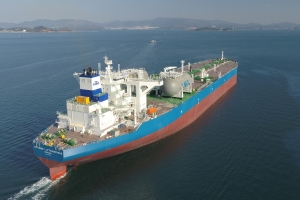
Maran Tankers Management recently welcomed its first Dual Fuel VLCC, Antonis I. Angelicoussis, to its fleet.
The vessel was delivered on 3 January 2023 by Samsung Heavy Industries (SHI) and was named in honour of the founder of our Group, Antonis I. Angelicoussis (1918-1989).
She has a cargo capacity of 320,500 DWT and was designed to be both highly efficient and environmentally friendly - in fact she will be the most environmentally friendly low-emission VLCC on the water today!
We wish her fair winds and following seas and thank the entire MTM team onboard and ashore for the successful design, construction and delivery of this vessel!
ELNAVI Newsletter
More information: ELNAVI,
19, Aristidou str., Piraeus 185 31,
Tel.: +30 210 45.22.100, e-mail: This email address is being protected from spambots. You need JavaScript enabled to view it.
MARTECMA focuses on CII and EEXI compliance

The latest regulatory, environmental and technical developments were discussed recently at the meeting of MARTECMA. The meeting was held in the Yacht Club of Greece and it was followed by the New Year’s pitta cutting and annual dinner.
The president of MARTECMA Mr. Panos Kourkountis opened the agenda of the meeting and referred to the changes of the association’s articles. The upgrade of MARTECMA website was presented by Takis Koutris of Ronaxa Shipping and ex-president of MARTECMA.
Mr. Fotis Belexis from Starbulk Shipmanagement referred to EEXI compliance and Stavros Hatzigrigoris from Zodiac presented the communication between MARTECMA and IACS.
A panel of prominent shipping senior executives, George Saroglou from Tsakos Columbia Shipmanagement, Bill Stamatopoulos from Verifuel and Angeliki Kalini from Richards Hogg Lindley discussed the issue of poor quality bunkers and engines damage.
Regarding the various bunker claims it was mentioned the importance of sampling and testing. It was also pointed out that the shipowners must act proactively including the appropriate clauses in the charter party and Hull & Machinery contract as well as the proper notifications and communication with the charterers.
In the final session Mr. Kostis Antonopoulos from Rightship presented the new Rightship GHG (Greenhouse Gas) rating. He informed the members of the changes in light of EEXI and CII requirements comparing similar ships and providing an industry benchmark.
Finally, during the dinner the Board of MARTECMA honored Mr. Dean Tseretopoulos who was one of the founders of MARTECMA.
ELNAVI Newsletter
More information: ELNAVI,
19, Aristidou str., Piraeus 185 31,
Tel.: +30 210 45.22.100, e-mail: This email address is being protected from spambots. You need JavaScript enabled to view it.

Leading global communication service provider, Tototheo Maritime ™, has added Starlink’s new low latency high speed connectivity to its portfolio of services.
The agreement between Tototheo and Starlink was finalized in December 2022 and the well-known maritime technology solutions integrator, will commence deployment of the Starlink Kits within January 2023.
The addition of the Starlink LEO service to its portfolio, makes Tototheo one of the few maritime technology providers, offering a full range of competitive and reliable connectivity options as well as multiple integrated solutions to maritime, offshore and enterprise (land) clients.
Tototheo customers will have the maximum flexibility of selecting the configuration that best suits their needs by integrating the Starlink Service (LEO) with Inmarsat GX (Ka-Band & L-Band), TM Flex (Ku-Band), Iridium (L-Band), LTE (3G/4G) and terrestrial connectivity solutions.
SpaceX, has launched a huge constellation of low earth orbit (LEO) satellites to provide high-speed, low-latency connectivity with speeds of up to 350Mbps.
“This marks a new era for maritime connectivity”, said Tototheo co-CEO, Despina Panayiotou Theodosiou. “With a fast-expanding coverage area, the speeds Starlink offers will enable a leap forward in the integration of more effective and sustainable technologies in maritime”, she added.
“We have always looked ahead and believed that the future of maritime technology lies in synergies and integrated solutions. We look to the addition of Starlink to our range of services as a further step towards enhancing the reliability and flexibility of choice when it comes to onboard connectivity”, said Ms. Panayiotou Theodosiou.
Socrates Theodosiou, co-CEO of Tototheo Maritime added that “Tototheo, is uniquely positioned to help its customers meet their efficiency, regulatory and operational needs. Tototheo allows the integration and optimization of a hybrid solution and data handling offered by utilizing the SD-WAN and SD-LAN solutions, combined with TM SOC (Security Operation Center) keeping customers’ infrastructure and operations secure 24/7.”
This is a game changer and a complete solution for all customers who value reliability, speed, low latency, and security of their data links onboard their vessels or shore infrastructures.
ELNAVI Newsletter
More information: ELNAVI,
19, Aristidou str., Piraeus 185 31,
Tel.: +30 210 45.22.100, e-mail: This email address is being protected from spambots. You need JavaScript enabled to view it.

Reporting relevant ESG data to stakeholders is a time-consuming and challenging task for many shipping companies these days.
DNV expert Carl Erik Høy-Petersen provides insights on how an ESG process looks for a maritime company, talks about typical ESG risks and opportunities and how to make sure that you report the relevant KPIs to stakeholders. He also touches on how to avoid overburdening crew and shore personnel when collecting and reporting all the necessary data.
Carl Erik Høy-Petersen is a business development leader and responsible for the ESG and sustainability service line in DNV Maritime. Since he joined DNV in 2006, he has worked with advanced decision support, project management and quantitative and qualitative risk management for clients in the maritime, finance, energy, oil and gas, and public sectors. He has worked across the value chain perspective combining technology, operation, business and finance. He is applying this perspective in his responsibilities for ESG and sustainable finance services in DNV Maritime.
Why should ship operators bring ESG to life in their companies?
ESG is not only about compliance. It is very much about creating trust in your stakeholders. As shipping companies, we are an important part of the value chain for our stakeholders. Particularly for cargo owners and charters. They need our help to reach their ESG targets, and they need us to control and report on our ESG performance. In addition, regulators, banks, insurers and investors are focusing more and more on managing ESG risks, forcing the maritime industry to show that we have control of our ESG risk exposure.
What are the biggest ESG risks and are there also opportunities?
Understanding how your company will be impacted by stakeholder expectations and future regulation is essential to manage ESG risks. The increasingly stricter environmental regulations constitute a major risk for shipping stakeholders. Building a robust and trustworthy energy efficiency and decarbonization pathway is essential to reduce risk related to CO2 tax and rising fuel costs. Other environmental aspects like underwater noise may lead to regional operational restrictions in the future. Increasing technical complexity, new regulation and new fuels all increase operational risk. Operational resilience is closely linked to crew competence and well-being. Increases in crew training, and health and safety are essential in managing this risk. The important role of the crew is also highlighted in the DNV report on behalf of the UN Global Compact – ‘Insights into seafarer training and skills needed to support a decarbonized shipping industry’. Stakeholders are increasing their scrutiny on the shipping value chain, e.g. with respect to ethical business practice. This exposes the company to new risks. Supplier and value-chain due diligence is key to managing this risk. All ESG risks can be turned into opportunities. In some regions, there is a surge in climate litigation, targeting companies accused of greenwashing or not mitigating their climate impact. Having a robust ESG strategy and executing it is essential.
What would a typical ESG process look like for a maritime company?
The key is to take ownership of the ESG process and understand your company’s ESG risk exposure. There is currently no global standard for ESG reporting. However, some standards are established as the basis for ESG reporting in shipping. SASB (Sustainability Accounting Standards Board), for example, highlights material topics specifically for shipping. However, we have seen that SASB does not fully meet the expectations from shipping stakeholders. Dialogues with stakeholders and an ESG materiality assessment help to fully develop that understanding. The focus questions to be elaborated are: What is important for your company and why? Once you know this, you can identify what is already managed in your existing processes and corporate culture and what adjustments or additional measures you need to establish. Then existing processes need to be mapped into the ESG context and determine what KPIs are relevant to show to the important ESG stakeholders.
When starting with ESG, does it need to be from scratch or do standards already exist that vessels need to comply with and can refer to?
Shipping is a heavily regulated industry. We have DCS and MRV reporting, we have SEEMP III plans, we have BWMC, MLC, safety management procedures and many more. This is an advantage when it comes to managing ESG risks. We are already working on or have implemented processes and KPIs within several ESG-related aspects. The challenge is to link existing processes, performance and KPIs into an ESG context that shows how the processes help to manage identified ESG risk exposures. In many cases, this may require some adjustments to existing processes and procedures, but you do not need to start from scratch. DNV can support to make the adjustments as efficient as possible. IMO compliance regulations like BWMC, DCS/MRV, SEEMP III and CII contribute to the E, but also think of what actions already contribute to the social aspect (S) and how to best monitor them (G).
Where do I get my data from and who can support? Do I need to have all the data in place for the first ESG reporting?
Through our dialogue with shipowners, we learned that data collection stands out as a common pain point. The necessary data is typically collected through one or many manual steps, creating an additional burden for crew and shore personnel. This also increases the risk of data errors. DNV supports customers to find efficient solutions and already delivered ESG dashboard solutions for large fleets of vessels, automating the process of gathering and visualizing ESG performance indicators. If you identify an area where no data is available, you can map out how you plan to improve and gradually implement this. I believe that standardization of data is an essential ingredient in ESG reporting. Standardization increases efficiency and accuracy within the entire data value chain, e.g. through ISO 19847/48 and operational vessel data.
What role does data trust play in ESG reporting and how can I prove trusted data?
ESG performance data is becoming part of the financial and commercial processes in shipping. This puts additional requirements on the accuracy and trust in the data. Going forward, errors in the reported data can have negative financial and commercial implications. Data trust is important and verification of the most important ESG KPIs is becoming increasingly important. We see that more cargo owners and charterers require third-party verification, e.g. of voyage emissions for their cargo as this goes into their greenhouse gas reporting on Scope 3 emissions.
Can I also use the data for other reporting?
To avoid overburdening crew and shore personnel, data should be collected once and used multiple times for various stakeholders. The most obvious example is greenhouse gas emissions from vessels. Collecting and verifying vessel emission data on a daily basis creates the foundation for multiple stakeholder reporting including: Cargo owners: Sea Cargo Charter; contract performance (ref new BIMCO ETS and CII clause) - IMO DCS/CII performance - EU ETS and MRV plus other MRV reporting schemes (e.g. UK MRV) - Poseidon for insurance and bank stakeholders. However, in the coming years, sustainability reporting regulations like the EU’s Corporate Sustainability Reporting Directive (CSRD) will require more structured sustainability reporting. The upcoming SEEMP III requirements also show how you are managing decarbonization risks. By putting a little extra effort into elaborating the energy efficiency management plan, preferably also looking beyond the required three years ahead, you will build trust in stakeholders such as cargo owners, shareholders, investors and banks. They want to understand how the company is prepared for the future. This can be a competitive advantage going forward.
How can a continuous and smooth ESG process be implemented within a company?
Through the materiality assessment, you will identify what is most important for you as a company. Your pathway then starts by addressing the most important findings first and gradually improving your reporting. If you don’t take ownership of your ESG reporting, you may find yourself forced to spend a lot of time and money on collecting and correcting data that turns out to be irrelevant for shipping. Working with experienced partners to gradually implement, improve and streamline the data collection process saves time and, ultimately, also money. In this process, digitalization will be an essential source of support. ESG is about people, operational processes and technology. You can have very good assets, but if they are not operated properly, they may still perform badly. In shipping, DNV has worked with safety and safety culture for many years, which forms a key part for the social element but also includes the environment and governance perspective. We are working closely with many shipping stakeholders, vessel owners, operators, cargo owners, banks and insurers on ESG-related topics to help shipping companies and their stakeholders bring ESG to life.
ELNAVI Newsletter
More information: ELNAVI,
19, Aristidou str., Piraeus 185 31,
Tel.: +30 210 45.22.100, e-mail: This email address is being protected from spambots. You need JavaScript enabled to view it.