


-
Home

-
Environment & Culture
- elnavi

elnavi
Olympic Shipping and Management SA is GCMD's first Greek ship owner / manager centre-level partner
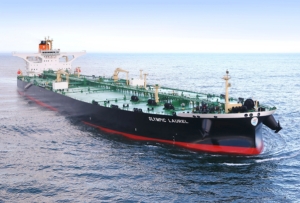
The Global Centre for Maritime Decarbonisation (GCMD) and Olympic Shipping and Management SA (OSM) have signed an Impact Partnership Agreement, committing to a five-year collaboration to accelerate shipping’s decarbonisation across geographies.
Onassis Foundation-controlled Greek owner OSM is the first Greek ship owner and manager to come onboard GCMD as a centre-level partner. OSM’s current fleet comprises 18 crude oil tankers. As an Impact Partner, OSM will provide a cash contribution towards pooled resources for GCMD’s projects, as well as in-kind contributions in terms of technical expertise and data and access to hard assets, in support of GCMD’s existing trials on drop-in green fuels and shipboard carbon capture and new pilots in the pipeline.
George Karageorgiou, President and CEO of Olympic Shipping and Management S.A., said: “Actions are necessary to accelerate the pace of the global energy transition and the decarbonisation of our industry. Actions are better accommodated and achieved through synergies and collaborations. We feel therefore honoured to join forces with GCMD, the global centre that supports its members to meet or exceed the IMO goals. Excited to join the group and work with such a diverse range of knowledge and expertise for viable and sustainable solutions.”
Greece is one of the world’s top shipowning nation in tonnage. With a total of 384 million DWT and 4,870 vessels, Greece alone accounts for about 17.6% of global shipping[1]. Within the EU, Greek shipowners owns about 59% of the EU-controlled fleet[2]. Greece ranks highest in the tanker market with a fleet value of US$56.2 billion, owns the second most valuable LNG fleet worth US$29.1 billion[3], and is dominant in bulker, tanker, LNG and LPG segments. It is therefore critical for the Greek shipping community to be part of the decarbonisation conversations.
Onassis Foundation President, Antonis Papadimitriou, said: “We are very happy that Olympic Shipping and Management will join the Global Centre for Maritime Decarbonisation. The Onassis Foundation actively supports the aim of Olympic to reach zero carbon on its fleet by 2050 as well as sustainable and responsible shipping”.
Welcoming Olympic Shipping as an Impact Partner, Professor Lynn Loo, CEO of the Global Centre for Maritime Decarbonisation, said: “The Onassis-Olympic Shipping Group brings a recognised Greek brand to the forefront of the global decarbonisation agenda. GCMD’s goal to benefit the maritime sector is aligned with that of the Onassis Foundation to benefit the public. We are proud to have OSM join us as an Impact Partner and are hopeful that this marks the beginning of greater collaboration with the Greek shipping community.”
Image1: George Karageorgiou, President and CEO of Olympic Shipping and Management S.A.
Image 2: Olympic Shipping and Management S.A. (OSM) is the first Greek ship owner and manager to partner with the Global Centre for Maritime Decarbonisation, committing to a five-year collaboration to accelerate shipping’s decarbonisation across geographies.
ELNAVI Newsletter
More information: ELNAVI,
19, Aristidou str., Piraeus 185 31,
Tel.: +30 210 45.22.100, e-mail: This email address is being protected from spambots. You need JavaScript enabled to view it.
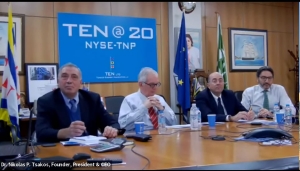
Capital Link hosted a presentation by the senior management of TEN Ltd. on Thursday, January 12, 2023. During the 45-minute session, Dr. Nikolas P. Tsakos, Founder, President & CEO, Paul Durham, CFO, George Saroglou, Chief Operating Officer and Harrys Kosmatos, Corporate Development Officer, described the strong tanker market, the current state of the company’s fleet, and its dividend policy as part of Capital Link’s Company Presentation Series.
Dr. Nikolas P. Tsakos, CEO, stressed that TEN is focused on capitalizing not only on periods when the market is strong, but also when it lags. He stated that the company’s current strategy includes chartering its vessels in the spot market, for short term periods, when the market is very strong.
The company has “taken advantage of the difficult times” to order its first four green, dual-fuel ships, Dr. Tsakos said, with the order backed by long time charters from one of the company’s main clients.
In terms of chartering, 40 of TEN’s 66 vessels on the water, or 61%, have market exposure, or a combination of spot and time charter, along with profit sharing.
A total of 44 of 66 vessels on the water, or 67%, are in secure revenue contracts, or fixed time charters and time charters with profit sharing. “This means that TEN is capturing the positive tanker market fundamentals that prevail today, George Saroglou, COO, stated.
“We have a simple operating model—we try to have our time charter vessels generate revenue to cover the company’s cash needs, the vessel operating expenses, finance expenses, overheads, chartering costs and commissions,” explained George Saroglou.
“We let the revenue from spot rating vessels opportunistically contribute to the profitability of the company,” he continued.
George Saroglou stressed the company’s commitment to keeping operating costs low and utilization rates high. Currently, TEN’s fleet utilization sits at nearly 94%. This figure is quite high, considering that a number of dry dockings for ship surveys that have taken place.
The company is also expecting a total of six newbuilds to be delivered from 3Q23 until 2Q25. Of these new vessels, four will be dual-fuel LNG, and “represent the company’s entrance into green shipping,” Saroglou said.
TEN has traditionally been active in the S&P market focusing on fleet renewal. “We’re looking to sell 7 or 8 of our older generation ships,” Dr. Tsakos stated. “That would give us a very big capital gain and boost for the year 2023.”
“Based on the positive quarterly results through the past year, it’s clear that the annual numbers will be strong,” Paul Durham, CFO stated of 2022.
The current market is “very favorable” for tanker owners on both the supply and demand side, Harrys Kosmatos, Corporate Development Officer, said expressing his confidence, particularly in terms of demand. “Global oil demand has recovered” in the wake of the pandemic, and has even exceeded pre-pandemic levels, Harrys Kosmatos pointed out. China’s reopening will likely propel this demand even further, he noted, as the country could become, once again, a “major oil importer”.
Kosmatos argued that Russia’s invasion of the Ukraine has created “a new and possibly lasting trend” in oil markets, namely the creation of new trading patterns and the elongation of shipping routes as a result of Europe’s ban on Russian oil imports. Due to these regulations, Europe now has to import oil from further distances, particularly the US, West Africa, and the Arabian Gulf. “The short-term voyages from Russia have been replaced by longer haul trades and the emerging ‘new’ Russian trades, particularly to India and China as it reopens, are performed by older vessels, acquired by “non-western” entities, that up until recently competed in the international commercial arena with everybody else,” Kosmatos noted.
Additionally, the sector is facing one of the lowest orderbooks in recent memory, under 4%, while nearly 10% of the current global fleet is over 20 years old, and 24% over 15 years old. “As a result, we could be faced with a situation where some segments in the tanker market could experience negative growth. Negative growth against an increasing global oil demand should translate to a sustainable strong market environment.” Kosmatos asserted.
TEN Ltd. is one of the largest and most well-established independent energy transporters in the world. With a diverse fleet of 73 modern vessels, including both crude oil and oil-product as well as LNG transportation. This includes 7 newbuilds. TEN Ltd maintains a customer base consisting of major global energy companies.
ELNAVI Newsletter
More information: ELNAVI,
19, Aristidou str., Piraeus 185 31,
Tel.: +30 210 45.22.100, e-mail: This email address is being protected from spambots. You need JavaScript enabled to view it.
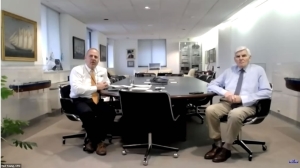
Capital Link hosted a presentation by the senior management of Dorian LPG on Thursday, January 12, 2023. During the 45-minute session, John Lycouris, Dorian LPG USA CEO, and Ted Young, Dorian LPG CFO, provided an image of the growing LPG market and VLGC sector as part of Capital Link’s Company Presentation Series.
LPG has risen in prominence as an alternative to gasoline, coal, and oil due to its low cost, abundant supply, and portability. While it is a fossil fuel, LPG is also cleaner than many other energy sources, as it produces less air pollution and carbon emissions.
The war in Ukraine has greatly impacted the price of LNG, particularly in the Far East, where it has increased significantly. As Russia did not export a significant amount of LPG before the war, and what it did export was transported largely by rail and mid-size vessels (MGCs), the war and resulting sanctions did not impact the VLGC sector much directly. It did, however, create additional LPG exports from other oil and gas producing countries, thereby bolstering the VLGC sector ton-miles.
“Global demand for LPG is about 330 million metric tons, about one third of that is traded over the water” on VLGCs, Ted Young, CFO, stated. North America and the Middle East are the largest production centers for LPG, while the major end-user markets are mainly located in the Far East. The USA has become the biggest seaborne exporter of LPG, with the Middle East following close behind. In 2022, 45% of global LPG exports came from the US, and 36% from the Middle East.
The EIA forecasts that production of LPG will increase by 5 to 6% in the US in the next two years, while LPG exports are expected to increase by 16% in 2023, and by 8% percent in 2024.
Scrubbers, Green Technology Integral to Future of Sector
Ted Young noted that the company has “made a significant investment in scrubbers,” as 13 of its vessels are scrubber-fitted, a move which “has paid big dividends.” Without scrubbers, the ships would have to operate on highly expensive low-sulphur fuel oil in order to follow the 2020 IMO regulations on sulphur emissions pollution. However, ships fitted with scrubbers can operate on lower-cost, standard fuel oil, since the scrubbers remove the offending pollutant.
John Lycouris, noted that Dorian LPG were “leaders” in terms of installing scrubbers on their vessels since delivery, back in 2015, “way before it was mandated or regulated to have low sulfur emissions.” The company saw back in 2015 that scrubbers would become attractive in providing cleaner emissions and thought it was “a great opportunity to build its vessels retrofit ready for this technological advance and by installing scrubbers in two of its vessels to pilot the technology”.
This early experience with scrubbers convinced the company to retrofit more of its vessels with scrubbers and has even pushed the company to seek out solutions towards the next generation of green technology. “We believe Carbon capture will be the next thing to look at,” John Lycouris said.
Unlike many other shipping sectors, the VLGC orderbook is quite large, with 70 ships on order from now until 2025, 45 of which are expected to be delivered this year alone. While such a large orderbook could be a cause for concern, there are a number of factors at play that may mitigate some of the market risk. He also noted that 60 vessels on the water—18% of the global VLGC fleet—are due for drydocking and special surveys in 2023, meaning that they will be “out of commission” for four to six weeks.
Additionally, a significant portion of VLGCs on the water are ageing out, with 17% of the global fleet aged over 20 years, meaning that a significant number of vessels will have to be significantly renovated or scrapped in order to remain economically viable, particularly in terms of IMO regulations.
Since its initial public offering in 2014, Dorian has returned almost $500 million to shareholders.
The company has refinanced its remaining debt facility into a seven-year facility, as compared to the standard five-year facility in shipping.
Dorian has bought back a large amount of its stock—the company had around 56 million shares outstanding when it went public, and currently has around 40 million shares outstanding.
Dorian LPG is a leading owner and operator of very large gas carriers (VLGCs). The liquified petroleum gas (LPG) company’s modern fleet consists of 19 ECO VLGCs, one modern VLGC, and two chartered-in VLGCs. With an average age of 8.5 years, Dorian’s fleet is younger than the global VLGC fleet, which has an average age of 11.3 years.
ELNAVI Newsletter
More information: ELNAVI,
19, Aristidou str., Piraeus 185 31,
Tel.: +30 210 45.22.100, e-mail: This email address is being protected from spambots. You need JavaScript enabled to view it.
«Let’s Win the Year» luncheon by PROJECT CONNECT
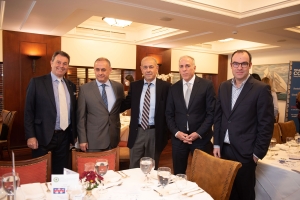
PROJECT CONNECT held its New Year’s Members luncheon themed “Let’s Win the Year” on January 31st at the Piraeus Maritime Club to celebrate receiving the “Achievement in Education or Training Award” from Lloyd’s List Greek Shipping Awards 2022, and to acknowledge appreciation for the valuable contributions and sustained support provided by its 65 members, founders, and educators.
PROJECT CONNECT founder, Ms. Irene Notias, stressed that “hard work pays off”. Her mindset was also echoed by Mr. Nikos Efthimiadis of Lotus Shipping, founding member and luncheon sponsor. The other sponsors were Grace Trading, Phoenix Shipping & Trading, and Steel Ships.
Tribute for their consistent & valuable contribution, was given to first members Mr. Yannis Xylas, Mr. George Gourdomichalis, Mr. Alexandros Glykas, PROJECT CONNECT Chairman Mr. Nikolaos Tsalamanios, Capt. Dimitrios Mattheou, in addition to, Honorary Chairman Mr. George Tsavliris for introducing the idea of Adopt a Ship. All were presented with unique commemorative sculptures of vessels made by the late artist, EVA DIVARI.
PROJECT CONNECT, established in 2015, is a NPO that supports young professionals in-the making to jump-start their careers in the shipping industry. With more than 70 successful work-placements, PROJECT CONNECT is a net contributor to helping Greece’s next generation workforce; all thanks to the support of its members – reputable shipping and maritime companies.
The goal is to increase the number of available internships, and entry-level opportunities to selected and screened candidates, using Greece’s first Shipping HR Hub for young people, a well-organized ONLINE CV PLATFORM by PROJECT CONNECT.
Dr. Adamantia Spanaka, Philologist and Professor, Advisor at the Hellenic Open University and Official Educator’s Advisor of PROJECT CONNECT, presented the progress of the ADOPT-a- SHIP. The Cypriot educational program was brought to Greece by PROJECT CONNECT in January 2019 and has already succeeded in bringing maritime knowledge into Greek elementary, Jr High & Vocational schools, nationwide. More than 10,000 pupils have already benefited from this program. Classrooms communicate via e-mail with Captains across the globe on their adopted ship; they learn about geography, trade & commerce, cargo, operations, weather, Greek Shipping history and its impact, English language writing skills, teamwork, empathy, and gain personal insights from life at sea. They also get to consider a future profession in the maritime industry.
The numbers speak for themselves:
A videotaped congratulatory message was delivered by Ms. Niki Kerameos, Minister of Education and Religious Affairs. She described the program as “a hub that connects more and more students with our long-standing maritime tradition through experiential learning.” It was during her tenure as Minister that ADOPT-a-SHIP has flourished and grown throughout Greece.
She will soon be presented with a commemorative steel sculpture - by Eva Divari - the bow of a ship symbolizing she is at the forefront of maritime education in the Greek school system.
The luncheon’s honorary guest was Mrs. Eugenia Manolidou, Head of Greek Education Studies at the School of Ancient Greek, History and Philosophy. Among many supportive comments, she stressed the importance of seafaring in the consciousness of the Greeks since ancient times and how this can – and should – be promoted to future generations of Greek students.
The 3D VIRTUAL SHIPPING COMPANY TOUR followed. This video, scripted and executed by PROJECT CONNECT, offers a unique insight into a Greek shipping company, including departmental narrations, explanations of respective positions and overviews of roles with their day-to-day activities. Mr. Nikos Tsalamanios, Co-CEO of Seaven Group and Chairman of PROJECT CONNECT, sponsored the project: https://www.youtube.com/watch?v=Ix4ulO9d9d4
The ONLINE CV PLATFORM already contains 95 prospective students and graduates of maritime studies and marine academies seeking placement. They have taken a gamified psychometric (soft skills) test (by Owiwi) and companies are invited to inspect available candidates and offer them placements.
These accomplishments benefit the youth of today and strengthen the shipping industry of tomorrow. Ms. Notias presented 2023’s targets & plans for future: (1) Double the membership, (2) Increase internships & entry level job placements, (3) Continue ADOPT-A-SHIP growth to 200 vessels, and (4) to successfully kick-start a series of sponsored internships “IN MEMORY OF” passed shipping personalities and their inspiring role.
PROJECT CONNECT is an initiative of hope which actively promotes change and competitiveness for a better future for Greek youth, Greek shipping, and Greece.
Members, institutions that attended: Antonios & Ioannis Angelicoussis Foundation. Alassia Newships Management. Ariston Navigation Corp. Bernhard Schulte Shipmanagement (Hellas). Capital Executive Ship Management. Chandris (Hellas). Chronos Shipping. Costamare Shipping. Cyprus Sea Lines. D. Koronakis. Danaos Shipping. Diana Shipping Services. Dynamarine. Elnavi Shipping Magazine. Empire Chemical Tankers. Empire Navigation. Eurobulk. GAC Shipping. GANMAR Shipping. Jeanne D’ Arc. Load Line Marine. Lotus Shipping. Marchand Navigation. Marine Tours. maritimes.gr. Metropolitan College. MyPhilo. Oceanbulk Maritime. Phoenix Shipping Trading. Polforce Shipping. Queensway Navigation. Seanergy Maritime Holdings. Seaven Group. Sevenseas Investment Funds. Shipowners Claims Bureau. Sing Fuels. Starbulk. SteelShips. Technomar Shipping. The American P&I Club. The Swedish Club of Piraeus.
Amongst honored guests: Mrs. Katerina Potamianou, PROJECT CONNECT Ambassador. Mr. Evangelos Angelakos (Angelakos). Mr. George Xiradakis (XRTC). Mr. George Alexandratos (Hellenic Chamber of Shipping). And last but not least, Mr. Nigel Lowry (Lloyd’s List, Director/Host of Lloyd’s List Greek Shipping Awards, Founder/Director of Greek Shipping Hall of Fame).
ELNAVI Newsletter
More information: ELNAVI,
19, Aristidou str., Piraeus 185 31,
Tel.: +30 210 45.22.100, e-mail: This email address is being protected from spambots. You need JavaScript enabled to view it.
Columbia Group unveils ambitious plans for ground-breaking new digital platform to boost vessel performance
The operational performance of a vessel is set to be boosted with an innovative new digital solution designed to provide a holistic ship management system that brings together the fragmented capabilities of data collection and analysis under one platform.
The project, which is a collaboration between Columbia Shipmanagement (CSM), Blue Dynamics (BD) and the Cyprus Marine and Maritime Institute (CMMI), has been two years in the making and is due to be launched in July 2023. The project is co-funded by the European Union, and the Republic of Cyprus via the Research and Innovation Foundation.
Columbia’s PANGIA consortium focuses on what Pankaj Sharma, Columbia Group Director Digital Performance Optimisation, refers to as “the user of the future” and banks on their growing up immersed in technologies that will play a critical role in the industry’s evolution. The PANGIA vision creates something for that future that includes holo-lenses and virtual reality synaptic technology offers a “hands-on” experience, not only for training but also extending to onboard maintenance, connecting shoreside expertise with personnel at sea.
Through advanced data analytics and expert human input, the platform plans to boost vessel performance, reduce fuel consumption, and, through machine learning, offer proactive maintenance planning and the early detection of health hazards to protect the health and safety of crews and passengers onboard the ships.
The PANGIA tool offers a range of services to ship managers, operators, owners and banks, among others. The services include data management, standardisation, and advanced data analytics and machine learning application to identify trends and help with maintenance planning. Through PANGIA, Columbia’s clients benefit from improved digitalization driven by AI. The POCR can collate and interpret an array of industry intelligence that allows its clients to optimize their decision-making processes regardless of where any vessel in their fleet is located.
Mark O’Neil, Columbia Group CEO, said: “The PANGIA project has been the result of a productive collaboration between CSM, BD and CMMI, looking to produce a revolutionary new platform for ship managers and operators that integrates the currently fragmented capabilities of data collection and analysis.
“Columbia is proud to be working with our partners on this pioneering development of our Performance Optimization Control Room (POCR) and to be leading the way in ground-breaking projects to promote sustainability, while utilising the very best of technological advancements to protect the environment and deliver cost efficiencies to ship managers and operators.”
PANGIA is the evolution of the POCR services that Columbia has developed over the past three years, and Columbia now seeks to pave the way for leading technological advancements to enhance sustainability and deliver cost-cutting solutions. One of the objectives of Columbia’s POCR is to set the company apart from its competition with a more proactive approach to ship management, effectively initiating oversight of a vessel’s transit voyage before it even starts. A relatively new aspect of this approach is the monitoring of sanction areas and other areas of increased risk.
Image: Pankaj Sharma, Columbia Group Director Digital Performance Optimisation
ELNAVI Newsletter
More information: ELNAVI,
19, Aristidou str., Piraeus 185 31,
Tel.: +30 210 45.22.100, e-mail: This email address is being protected from spambots. You need JavaScript enabled to view it.
“Windea Leibniz” is ready to boost offshore wind power expansion in the Baltic and North Sea
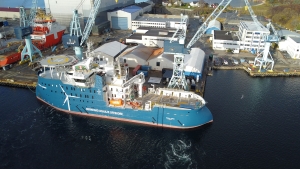
On 4 February 2023, BSM managed Service Operation Vessel (SOV) “Windea Leibniz” finished an extensive upgrade at Ulstein Shipyard in Norway. With an increase of cabins from 60 to over 80, the vessel has transitioned from an SOV to a Commissioning Service Operation Vessel (CSOV). Additionally, the ship received one extra pedestal on the stern for Baltic Sea operations to complement the existing pedestal for North Sea use. The upgrade expands the operational range of “Windea Leibniz” and makes her even more attractive for the offshore market.
The upgrade of “Windea Leibniz” was timed perfectly as European governments want to expand renewable energy capacities in the Baltic and North Sea. Last year the EU had a capacity of approximately 15 gigawatts (GW) in offshore wind power production. Germany alone is aiming to double their capacities by 2030. According to the German government, this equals an expansion of offshore wind energy to at least 30 GW by 2030, with at least 40 GW of installed capacity by 2035 and at least 70 GW by 2045.
Supporting the expansion of renewable energy sources
“Offshore wind is an essential part for the success and the transformation of the energy sector towards sustainable and green solutions. The upgrade makes ‘Windea Leibniz’ even more attractive for the market,” says Matthias Mueller, Managing Director of shipowner Bernhard Schulte Offshore.
“Windea Leibniz" is now ready to support the planned offshore wind power expansion in Northern Europe. The ultra-modern SOV was built in 2017 at Ulstein Shipyard for Bernhard Schulte Offshore to efficiently service offshore wind farms in the North Sea. The vessel functions as a reliable and environmentally sound platform for wind farm operations and maintenance support, technician accommodation and transport, and the provision of safe and reliable access to offshore installations.
50% increase of accommodation capacities
The upgrade included a 50% increase of accommodation capacities on board. Therefore, extensive reconstruction measures including shifting of the changing/drying rooms, conference rooms and day rooms were executed. In total the cabin capacity was increased from 63 to 81 cabins. Now “Windea Leibniz” can accommodate up to 85 technical staff for wind farms, service personnel and crew.
The second major milestone was the installation of a new height-adjustable pedestal for the motion compensating gangway, making the vessel more flexible in offshore wind farms. Now the gangway can operate in a range between 17.5 metres and 23 metres height above waterline when fully extended.
More flexibility for deployment in different wind farm markets
The third milestone focussed on the installation of a second pedestal for the gangway at stern. It enables “Windea Leibniz” to also sail in offshore wind parks in the Baltic Sea where service platforms are generally lower located than in the North Sea.
Rainer Mueller, Captain on the “Windea Leibniz” says, "With the two new pedestals, we are more flexible when approaching the service platforms for the wind turbines. There is no uniform standard for the height of the platforms in North Sea wind farms. After the yard stay, we can now vary with the height of our gangway. With the Baltic pedestal at stern, we can easily switch our gangway from the North Sea height to the lower Baltic Sea height, which makes us even more flexible when working in different wind farm regions. The new cabins allow us to accommodate more technicians on board. All this really makes ‘Windea Leibniz’ the new it-girl on the CSOV market."
Technical Specification "Windea Leibniz"
Length: 88 m
Beam: 18 m
Dead weight: 3150 tonnes
Draught (max): 6.4 m
Speed (max): 13.5 kn
Accommodation: 85 POB
Deck area: 380 sqm
About Bernhard Schulte Shipmanagement
Bernhard Schulte Shipmanagement (BSM) is an integrated maritime solutions provider. Managing a fleet of over 650 vessels, more than 20,000 seafarers and 2,000 shore-based employees enable the delivery of safe, reliable and efficient ship management services through a network of 11 ship management centres, 25 crew service centres and four wholly owned maritime training centres across the world. Alongside comprehensive ship management services, BSM offers a suite of complementary maritime solutions that are customised to meet individual customer requirements. As a member of the Schulte Group, BSM benefits from its 140+ years of experience in the shipping industry.
www.bs-shipmanagement.com
About Bernhard Schulte Offshore
Bernhard Schulte Offshore (BS Offshore) is the offshore unit of the renowned international shipping organisation Schulte Group. The company is an asset provider to the offshore wind industry providing bespoke vessels to fulfil the requirements of its clients, based on long-term charters. In addition, part of the existing fleet of Tier-1 Service Operation Vessels (SOV) is available for short-term needs. BS Offshore is a pioneer in offshore wind and built the first SOV without steps in 2015, enabling technicians to take spare parts with them from below deck to the wind turbine via a motion compensated gangway by use of an electrical trolley.
www.bs-offshore.com
Image1: “Windea Leibniz” at Ulstein Shipyard in Norway. ©BSM/Matthias Giebichenstein
image2: Installation of the new height-adjustable pedestal with 32 tonnes of weight. ©BSM
ELNAVI Newsletter
More information: ELNAVI,
19, Aristidou str., Piraeus 185 31,
Tel.: +30 210 45.22.100, e-mail: This email address is being protected from spambots. You need JavaScript enabled to view it.
A Look Into the Greek Maritime Fleet
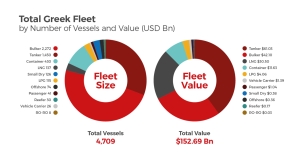
Rebecca Galanopoulos Jones, Senior Content Analyst, highlights the Greek fleet breakdown by vessel type, top owning nations, S&P transactions, top Greek owners, CII distribution and the most valuable Greek vessels.
To mark the start of Capital Link Annual Greek Shipping Forum this week, we take a look at the Greek Maritime fleet using VesselsValue data. The infographic highlights the Greek fleet breakdown by vessel type, top owning nations, S&P transactions, top Greek owners, CII distribution and the most valuable Greek vessels.
Greek Fleet Breakdown
Bulkers are the most popular vessels within the Greek fleet, with a total of 2,272 vessels, followed by Tankers with 1,450 vessels and Containers with 430 ships. Tankers are the most valuable sector for Greece, worth USD 61.03 bil. This sector has recently seen extraordinary increases in values, which have hit 13 year highs over the last year. The price of a 15 year old Aframax of 110,000 DWT has surged by c.144% year on year from USD 16.17 mil to USD 39.43 mil. This is due to improved demand fundamentals and increased opportunities that have resulted from the ongoing conflict between the Ukraine and Russia. Despite a relatively small fleet of 127 vessels, soaring global demand for LNG has sent the value of this fleet sky high, with the fleet value for LNG carriers at USD 30.50 bil.
Greece Among Top Owning Nations
Of the top owning nations, the Greek fleet ranks third globally. This is both in number of vessels and total value, comprising of 4,709 vessels live and on order and a total value USD 152.69 bil. Overall, Japan tops the total value list with a fleet worth USD 193.64 bil, and China ranks first in terms vessel numbers with a fleet of 7,114 ships.
Greek S&P
In terms of S&P, Greece was the second top seller of secondhand vessels in 2022, with 428 vessels sold and a total value of USD 11.7 bil. Greece came behind China who sold 532 ships, receiving USD 12.93 bil. Greece was also the second biggest spender last year, splashing out USD 9.77 bil on a total of 376 vessels. Once again, Greece trailed behind China who spent an impressive USD 14.92 bil on 542 vessels. The UAE ranked third with USD 5.14 bil spent on 271 vessels.
Greek Beneficial Owners
Maran Gas Maritime, the LNG arm of the Angelicoussis Group, is ranked first in a list of the top five Greek owners with a fleet value of USD 8.01 bil. Additionally, their fleet consists of 22 live vessels and a further 12 on order. Thenamaris have the largest fleet with 95 vessels both live and on order and a total value of USD 5.24 bil. Tankers make up the majority of their trading fleet, accounting for 60% while the remainder consists of Bulkers, Containers, LNG and LNG carriers. Maran Tankers, also part of the Angelicoussis Group, came in third with a value of USD 4.62 bil and 56 vessels, followed by Minerva Maritime with a total value of USD 4.52 bil and 78 vessels. New York listed Tsakos Energy Navigation is ranked fifth with a value of USD 4.1 bil and consists of 68 vessels.
Estimated CII Distribution of Greek Fleet
Decarbonisation is an increasingly high priority to the Greek Shipping community; a large proportion of the Greek owned fleet ranks highly in the new mandatory energy efficiency ratings from the International Maritime Organisation (IMO). Over a quarter of the fleet have achieved an estimated CII rating of ‘A’, and 64% of the fleet have received an estimated rating between A-C.
Most Valuable Greek Vessels
The most valuable Greek owned cargo vessel is the recently delivered Clean Copano (199,830 CBM, Jul 2022, Hyundai Heavy Ind). Owned by Dynagas, this Large LNG carrier is valued at USD 286.11 mil. In the Ferry sector, the most valuable vessel is the Blue Star Patmos, owned Ropax Blue Star Ferries (18,498 GT, June 2012, Daewoo) and valued at USD 63.28 mil.
ELNAVI Newsletter
More information: ELNAVI,
19, Aristidou str., Piraeus 185 31,
Tel.: +30 210 45.22.100, e-mail: This email address is being protected from spambots. You need JavaScript enabled to view it.
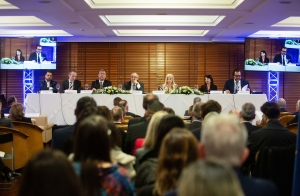
With the participation of almost all IG P&I Clubs and after 2 years of pandemic the Piraeus Marine Club (PMC) organised the 22nd International P&I Conference which was chaired by Mr. Lou Kollakis, Honorary Chairman of Chartworld Shipping.
Opening addresses were delivered by Mr. Mr. George Alexandratos - General Manager of Apollonia Lines S.A - Chairman of the BoD of the PMC and Ms. Maria Prevezanou - Director of Evmar Marine Services Ltd. - Treasurer of the BoD of the PMC / Organiser of the Conference.
The following topics were discussed:
- Are further club mergers inevitable? Whose interests do they really serve?
- Is it time for clubs to reassess their portfolios, particularly as to asset class selection, given the volatility in the capital market?
- Expanding sanctions regimes implemented by carious countries and supranational entities over recent years have created both complexity and confusion for the shipping industry and Club’s perspective on this issue.
- Pool claims peaked from 2018 into 2021 whilst 2022 appears to be benign. Can the current pooling systems and especially Hydra and the Group’s excess of loss reinsurance address the larger pool claims?
Speakers of the first panel were: Ms. Dorothea Ioannou, CEO The American Club,
Mr. Jeremy Grose Chief Executive The Standard Club and Mr. Sean Geraghty Regional Director of Greece Thomas Miller P&I Ltd (UK Club).
The co-ordinator of the panel Mr. George Gourdomichalis asked the speakers to comment on the latest P&I developments.
Mr. Jeremy Grose from The Standard Club referred to the recent merger of North of England P&I and Standard Club and commented on the reasons that dictated the successful completion of the deal such as financial compatibility and business philosophy.
Mr. Sean Geraghty from Thomas Miller P&I Club told that is not interested in merging with another Club of minor or bigger scale. He does not see that there is a strong momentum for mergers and acquisitions and specific interest under the current market conditions.
The speakers also referred to the elements of the P&I Clubs administration costs such as claims & operational management to support members and provide the service that are looking for.
Mrs. Dorothea Ioannou CEO of The American Club pointed out that there are very particular circumstances in order to proceed to a merger and joint venture which depend on the similarities between two clubs including common retention program and risk profile.
At the end of the day the clubs compete on the service that they offer to the members and the expertise of their personnel.
Mr. Gourdomichalis concluded that mergers are possible to happen in this turbulent environment and aim at further investments and better service.
The second panel included the following speakers: Mr. Stephen Martin Executive Chairman of Steamship Insurance Management Services, Mr. Ludvig Nyhlen Area Manager Team Piraeus The Swedish Club and Mr. Kjell-Ake Augustsson Senior Vice President, Head of Skuld Piraeus.
Mr. Ludvig Nyhlen from The Swedish Club told that one of the cornerstones of our investment policy is to protect the club’s capital and attract higher yield in the long term as well as constantly access the assets.
The speakers agreed that you have limited parameters for investments according to the solvency rules and the benefits/profits returns always to the members.
In the US marine insurance market according to Joe Hughes from The American Club the P&I Club has to comply with Risk Based Capital (RBC) authorities reporting quarterly and maintaining capital at a certain level based on the tonnage and the risk profile.
The following speakers Mr Mike Salthouse Global Director (Claims) North of England P&I Association Limited, Mr. Konstantinos Samaritis Divisional Director Britannia Steam Ship Insurance Association Limited, Mr. George Karas Managing Director Gard Greece, Mr. Ian Clarke Head of Claims & Regional Director (Hellas) West of England Insurance Services SA discussed the controversial issue of sanctions regimes.
Mr. Ian Clarke from West of England underlined that sanctions lead to a very confused environment. West of England is working closely with the US and EU authorities to ensure that no restrictions are imposed to members’.
Konstantinos Samaritis from Britannia noted that we encourage our members to exercise due diligence to identify sanctions’ red flag.
It is of paramount importance to identify quality of the cargo and that the destination to be absolute legitimate.
P&I Clubs should maintain assessment departments and carry out continuous training programs to comply the sanctions regimes.
George Karkas from Gard outlined that you always have to think what will happen during the adventure from the port of loading until the port of discharge.
George Gourdomichalis commented that there is no safe way to comply with sanctions.
Mike Salthouse from NoE P&I Club mentioned that the issue of sanctions is notably complex.
In conclusion sanctions are a difficult financially and politically issue which it forces to carry out marginally your business and all shipping operators must maintain a sanctions screening system in place.
The last panel examined the issue of pool claims and included the following speakers Mr Ian Barr Director The London P&I Club and Mr. Dimitris Batalis General Manager Greece The Shipowners Club (SOP).
ELNAVI Newsletter
More information: ELNAVI,
19, Aristidou str., Piraeus 185 31,
Tel.: +30 210 45.22.100, e-mail: This email address is being protected from spambots. You need JavaScript enabled to view it.
M/T 'Alkiviadis': The 1st tanker Wind-Assisted tanker added to the fleet of Capital Ship Management
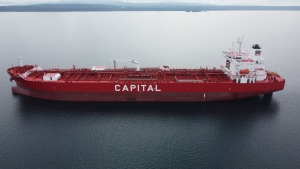
Taking advantage of all technological advances in order to reduce CO2 footprint Capital Ship Management added to its fleet the M/T “Alkiviadis” the first Wind-Assisted Ready and HVSC-Ready ABS notations and the first of six LNG fuel ready sister ships with eco-friendly design delivered to Capital in 2023.
Capital Ship Management Corp. ('Capital') took successful delivery of the newbuilding vessel M/T ‘Alkiviadis’, a 50,000 dwt, eco-type Chemical/Product MR tanker, built by Hyundai Vietnam Shipyard Co Ltd.
The HVSC-Ready notation is for vessels equipped with High Voltage Shore Connection systems to be installed in the future, and the Wind-Assist Ready notation is for vessels equipped with wind-assist equipment to be installed on board.
M/T ‘Alkiviadis’ has future proof design compliant with EEDI Phase 3 and is annotated with ABS SUSTAIN-1 (2020) that demonstrates adherence to the United Nations' (UN) Sustainable Development Goals (SDG).
Being Tier III compliant for reduced NOx emissions, assigned ABS ENVIRO notation, as well as ABS Wind-Assisted Ready, HVSC-Ready and LNG Fuel Ready notations, and equipped with IHM notation for safe recycling, the vessel becomes one of the most environmentally friendly, technologically advanced and efficient vessels in the global MR fleet.
Capital Ship Management Corp. operates a fleet of 34 tankers (12 VLCCs, 13 Aframaxes, 8 MR/Handy product tankers and 1 small tanker) with a total dwt of 5.59 million tons approx. Capital has extensive experience in managing various vessel types and sizes including all tanker segments (VLCC, Suezmax, Aframax/LR2, Panamax/LR1, MR/Handy and small tankers), dry bulk segments (Cape, Panamax, Handymax and Handy), as well as OBOs and containers.
ELNAVI Newsletter
More information: ELNAVI,
19, Aristidou str., Piraeus 185 31,
Tel.: +30 210 45.22.100, e-mail: This email address is being protected from spambots. You need JavaScript enabled to view it.
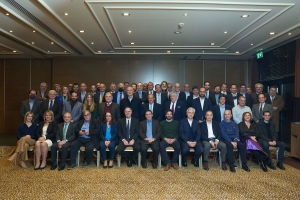
DNV welcomed the key stakeholders of the Greek shipping community to share insights on the latest industry trends and debate how the global socioeconomic transformations affect the shipping market.
Fifty-five guests attended DNV’s Greek Technical Committee (GTC) last December in Athens. The event, the second GTC for 2022, chaired by Mr Stavros Hatzigrigoris, came in the form of a debate. Meaningful discussions took place during the meetings of the three workgroups, and the participants raised to-the-point comments for consideration. The coordinators of each group presented in the plenum the key takeaways concerning the current requirements and challenges that the maritime industry is facing at an international level.
Decarbonization and new technologies concerns
Working Group (WG) 1 discussed Decarbonization, including the revised GHG strategy, CII and practicalities, MBM, the impact of EU’s different regulatory requirements, bio-fuels, etc.
This session was coordinated by Mr Stavros Hatzigrigoris, Chairman of the GTC and Mr Jason Stefanatos, Regional Decarbonization Director, DNV Maritime.
“For me, it was clear that apart from the EEDI/EEXI part of the forthcoming regulations, there is a lot of work to be done regarding the technology related to new fuels, decarbonization and carbon capture,” said Mr Hatzigrigoris. “The only available and tested to various degrees technologies for new fuels are LNG (leaving the methane slip aside), LPG and methanol. Availability and infrastructure continue to appear to be far behind the wishful thinking schedule. The discussion on new ship designs (possibly larger and slower ships) seems to be a kind of taboo for the industry. The reasons for this have to be further discussed and explained,” he concluded.
Need for an ESG culture that aligns with regulatory and societal demands
The topic of WG2 was Sustainability and ESG. Among the points discussed were the stakeholders and their requirements (charterers, cargo owners, financers, insurers, media, employees) and how to address them, industry standards, economic/ environmental/ social/ governance challenges, etc.
This session was led by Mr Sokratis Dimakopoulos, Chief Operating Officer, Minerva Marine Inc. and Vice Chairman of the GTC, and Mrs Chara Georgopoulou, Head of R&D and Advisory, DNV Maritime.
“We had a very interesting discussion, and an active engagement on the issue of Sustainability/Environmental, Social and Governance (ESG) and on how shipping is affected, and also on the risks/main challenges that shipping companies are facing related to ESG,” Mr Sokratis Dimakopoulos commented. “As it was widely acknowledged, due to the set decarbonization goals, the shipping industry is currently experiencing increased attention towards ESG from multiple stakeholders like Charterers, Cargo owners, Financers, Insurers, Media, etc., who require a transparent and fact-based/structured disclosure by the shipping companies of their sustainability policies/targets/ performance. Risks related to societal and environmental aspects and the need for an ESG culture were identified as highly important for ESG reporting. It was noted that several of the members of the Technical Committee have already started issuing their ESG annual reports which are prepared in accordance with applicable standards such as Global Reporting Initiative (GRI) and Sustainability Accounting Standards Board (SASB). However, the WG members noted that there could be a risk of duplication, increased administrative burden, use of additional resources and as such further work is needed in this area to ensure harmonization of applicable reporting requirements and KPIs.”
A holistic approach to the environmental footprint should be adopted
WG3 reflected on the current Energy crisis & Shipping. Mr Vassilis Lampropoulos, Chief Operating Officer, Thenamaris (Ships Management) Inc. and Vice Chairman of the GTC, and Prof. George Dimopoulos, Consultant, DNV Maritime, led the discussions concerning the impact of the energy crisis affecting the market and driving the regional developments. The group reflected on its consequences on various shipping segments, how technologies and fuels evolve, the opportunities and challenges ahead, and safety concerns.
“During our group’s discussions, it was very clear that the Energy landscape is changing and is changing fast,” commented Mr. Lampropoulos. “These changes are driven by several factors – the ambition to aggressively reduce the GHG footprint and eventually become net 0, the geopolitical and technological developments, the increasing dependency on energy, the need to find viable energy sources and carriers, as well the increased energy costs and the emerging energy trades.
Shipping, either as an energy consumer or an energy carrier, must adapt in a very tight timeframe with significant uncertainties. The path to a Clean, Affordable, Safe, Practical and Available energy solution, remains very hazy.”
Mr Lampropoulos summarized the key takeaways of the discussion: For a successful outcome, vessels and shipping should be approached in an integrated manner, not in isolation. The integration and interaction with shore and terminals should be assessed and planned together.
- A holistic approach to the environmental footprint should be adopted as early as possible to ensure a viable path without overturns on implementation. Late discussions on “fuel well to wake footprint” and delayed recognition of the distorted rating the CII offers on the efficient use of vessels are typical examples which should be avoided.
- Given the very tight timeframe a natural selection process \ approach might not be suitable this time. A more prescriptive approach, targeting specific solutions might help avoid delays, create a solid plan and secure a better outcome.
- The increasing complexity on board the vessels through the introduction of more and complex systems brings the requirement of specialized knowledge and significant time from the crew on board to operate. This can potentially distract the crew on board shift the focus and potentially lead to unsafe conditions.
- Finally, the energy costs will continue to increase and thus efficient use of energy on board the vessels will keep being high on our agenda and adopting energy-efficient designs and devices should expand.
About DNV
We are the independent expert in risk management and quality assurance. Driven by our purpose, to safeguard life, property and the environment, we empower our customers and their stakeholders with facts and reliable insights so that critical decisions can be made with confidence. As a trusted voice for many of the world’s most successful organizations, we use our knowledge to advance safety and performance, set industry benchmarks, and inspire and invent solutions to tackle global transformations.
DNV in the maritime industry
DNV is the world’s leading classification society and a recognized advisor for the maritime industry. We enhance safety, quality, energy efficiency and environmental performance of the global shipping industry – across all vessel types and offshore structures. We invest heavily in research and development to find solutions, together with the industry, that address strategic, operational or regulatory challenges. For more information visit: www.dnv.com/maritime
ELNAVI Newsletter
More information: ELNAVI,
19, Aristidou str., Piraeus 185 31,
Tel.: +30 210 45.22.100, e-mail: This email address is being protected from spambots. You need JavaScript enabled to view it.