



-
Home

-
Environment & Culture
- elnavi

elnavi
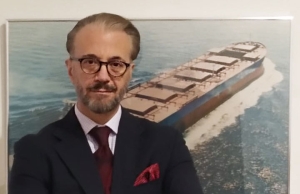
the term ‘Green Finance’, came to my attention about two years ago, that caught me by surprise. At the time, I couldn’t realise, what it was all about exactly, what was behind of it, what was aiming at. Today, after some research on the jargon, I can understand that ‘Green Finance’ is interlinked with the Poseidon Principles (PP) adopted by the banks, and the insurance companies, to reflect the environmental impact which will be measurable as of this year through the CII requirements (Carbon Intensity Indicator) and will apply to all shipping companies. Managing risks is part of MARASCO’s every day role in Marine Insurance business. Shipping community is again called to confront new challenges. Shipping is a capital intensive business and ‘Green Finance’ could critically affect borrowers banking eligibility and their insurability.
In short, capital markets, leasing companies and banks will seriously consider the ‘green rate’ an applicant shipping company has been given, according to its ‘green footprint’ and to its CII rating, as per Poseidon Principles for Banks. PP reporting as a tool, to evaluate corporations and determine future financial performance is a possible scenario, from what we can deduce. Borrowing companies with poor decarbonization rate might encounter difficulties in the near future to access debt finance, or funding from financial institutions and consequently, might have troubles to expand, renew their fleet and eventually, as banking and insurance go hand in hand, might face some unpleasant reactions in terms and premium rates from Hull and P&I underwriters, who have adopted the Poseidon principles for Marine Insurance.
Charterers, are also getting aligned to the same direction and adopt the Sea Cargo Charter for reporting environmental pollutants. A new mindset in shipping industry is gaining slowly but surely momentum. Both, Greek and Cypriot shipping communities, have to acknowledge the coming changes, new regulations, new technologies and new challenges, if one wanted to be still competitive, not left behind, or still, to survive. PP, part of Corporate Sustainability, is not just a new trend but a necessity to comply with for any company to remain antagonistic. It could be a key element to get access to better finance, to get charterers and insurers preference – expressed in better hire and better premium - or possibly, their approval. Shipowners/Ship managers with poor green footprint rate might be viewed as substandard companies by Charterers, Banks, Insurance companies and P&I Clubs. PP mainly is used by a company for measuring the sustainability and ethical impact of an investment on a business, according to Market Business News (MBN).
The market accelerates in favor of those companies who adopt Sustainability and ESG, grapple with decarbonization of shipping early, however on the other hand, all those who cannot adopt themselves to the new, will eventually get set aside and will be extinct, as we have witnessed several times in the past. Big players and companies listed in NYSE already are in alignment with the new tendencies of the market, they follow through, but the small, medium size owner / ship manager, will possibly encounter difficulties in their efforts to adjust in many areas, including human resourcing. Sustainability, ESG (Environmental Risk, Social Risk and Governance Risk) and PP as everything else have their effects and side effects to shipowners and ship managers. The clock is ticking and we should be proactive, be open to new co operations and face challenges and threats through strategic alliances which would add value to our companies and ourselves. Marasco Marine is in contact with almost all major institutions for offering its timely assistance to its esteemed clientele, providing them proactively the right information, as decisions have to be made and better decisions are made when the right information is provided, at the right time.
-----------------------------------------------------------------------------------------------
Marasco Marine Ltd is specializing the last 31 years in Marine Insurance/Risk Management and Marine Insurance Claims for ocean going, commercial vessels over 5,000 DWT. More at: www.marasco-marine.com
ELNAVI Newsletter
More information: ELNAVI,
19, Aristidou str., Piraeus 185 31,
Tel.: +30 210 45.22.100, e-mail: This email address is being protected from spambots. You need JavaScript enabled to view it.
The 7th Posidonia Sea Tourism Forum (PSTF) to examine region’s growth opportunities from lucrative tourism segment
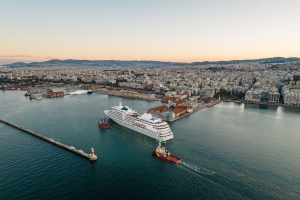
The appeal of Greece and the East Mediterranean as an ideal region for luxury cruising will be one of the main highlights of the 7th Posidonia Sea Tourism Forum (PSTF), scheduled to take place in Thessaloniki on the 25th and 26th of April, 2023.
Luxury and niche cruise brands that have already confirmed participation for the two-day event to be held at Thessaloniki’s landmark five-star hotel Makedonia Palace include Azamara Cruises, Compagnie du Ponant, Scenic Cruises, Seabourn Cruise Line, Variety Cruises and recently re-launched Crystal Cruises.
Delegates and exhibitors from around the world will have the chance to attend a panel discussion titled: ‘The Appeal of Venturing to Non-Mainstream Destinations: Luxury & Expedition Cruising leading the Way’ that will examine the increasing importance of lesser-known destinations for this specific market segment, in conjunction with infrastructure challenges and the role of sustainability and authenticity as desirability factors.
“Our decision to move the Posidonia Sea Tourism Forum away from Athens for the first time in the event’s 12-year-long history was in sync with emerging trends in an industry that wishes to constructively address growing criticism for its contribution to over-tourism in many cruise hotspots around the world,” said Theodore Vokos, Managing Director of Posidonia Exhibitions S.A.
“Thessaloniki was chosen as the host of this year’s event to signify the need for more port alternatives and new destinations to dilute impact and optimise cruise traffic management in the East Mediterranean region. Also, Thessaloniki is a natural gateway for emerging Balkan markets, which is another important topic to be addressed during the Forum.”
With more than 400 inhabited islands and coastal cities across Italy, Croatia, Greece, Albania and Turkey, the East Mediterranean and Adriatic seas collectively offer one of the highest densities of destination alternatives in the world. There are countless potential new ports-of-call, as well as main and regional homeporting options beyond the well-established marquee destinations.
Diverting some traffic from over-frequented destinations will enrich the itinerary design menu, as well as act as a tool that can protect the natural, cultural and tourism values needed for a sustainable future.
Mark Robinson, Senior Vice President Operations, Scenic Luxury Cruises & Tours, said: “The luxury cruise segment represents 3.7% of the industry’s total market share worldwide, with the Mediterranean Sea owning over a third of that with 37.01%. One of the main drivers for the region’s appeal is the East Med archipelago which offers unique, famous worldwide destinations and hidden gems which offer ultimate customisation destination services. With our Scenic and Emerald Cruise luxury yachts we have many calls in the region, and we are happy to announce that in 2023 our new ultra-luxury expedition yacht Scenic Eclipse II, due to be launched in April, and our new Emerald Sakara yacht will debut in the East Med Region in July. Scenic Cruises is always looking for new destinations for our luxury cruises, and the East Med has many hidden gems for us to tap into with its rich heritage, friendly locals and not to mention the excellent cuisine and turquoise blue seas.”
Some 85 luxury vessels totalling 36,184 berths will be operating cruises this year. This represents an annual capacity of 1,050,000 passengers and the prediction for 2027 is up to 94 ships totalling 44,764 berths and 1,378,000 passengers.
“According to the Allied Market Research Report, Greece’s luxury tourism offering is expected to yield an annual revenue of USD 2,7 billion by 2030, registering a CAGR (Compound Annual Growth Rate) of 11.5% from 2021 to 2030. A significant part of this revenue will come from luxury cruise activity and on-shore spending from this segment’s high-income passengers,” added Vokos.
Luxury cruise passengers seek a wide range of unusual, often specialized and certainly more immersive destination experiences and are prepared to pay a premium to satisfy their expectations. Greece and the East Mediterranean are gifted with a level of destination diversity that can satisfy even the most highly demanding expectations of today’s discerning travellers.
Other interesting topics to be discussed during PSTF 2023 will include the long-term prospects for the cruise industry as an important sector of the leisure travel market and the necessity for regions and cruise lines to cooperate on the enhancement of destination offerings, on the upgrading of infrastructures, on the popularization of alternative ports of call and finally, on improvements of cruise traffic management aimed at defusing over-tourism.
The 2023 PSTF is sponsored by Diamond Sponsor Thessaloniki Port Authority S.A., Silver Sponsor Piraeus Port Authority SA, Bronze Sponsors Celestyal Cruises, Global Ports Holding and Kyvernitis Travel. It is organised under the auspices of the Ministry of Maritime Affairs & Insular Policy and the Ministry of Tourism and supported by the Hellenic Chamber of Shipping, the Cruise Lines International Association (CLIA), the Association of Mediterranean Cruise Ports (MedCruise) and the Union of Cruise Ship Owners & Associated Members.
ELNAVI Newsletter
More information: ELNAVI,
19, Aristidou str., Piraeus 185 31,
Tel.: +30 210 45.22.100, e-mail: This email address is being protected from spambots. You need JavaScript enabled to view it.
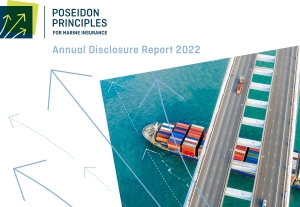
Hellenic Hull, as a founding member of the Poseidon Principles for Marine Insurance is among the world’s leading marine insurers that have published client data to track their hull and machinery insurance portfolio’s climate impact. The goal is to support the industry’s green transition.
The first Annual Disclosure Report for Poseidon Principles for Marine Insurance is a landmark step forward towards transparency in the maritime and insurance sectors. The data will act as a stepping-stone for the Signatories to engage their clients in a discussion about climate change, technology, and new risks.
“This level of transparency is a major milestone on our journey to decarbonise the maritime industry,” says Patrizia Kern, Chair of the Poseidon Principles for Marine Insurance initiative and Marine Strategy Advisor – CEO Office at Swiss Re Corporate Solutions. On average, the Signatories’ portfolios are 12.7% above being aligned with reaching the UN maritime-goal of at least 50% reductions of the annual greenhouse gas emissions from international shipping by 2050, compared with their level in 2008. The second trajectory the Signatories track takes is more ambitious and has a goal of zero CO2 emissions in the middle of this century. The simple average score of the 100% CO2 emission reduction track is 20.8% above alignment. “It is evident that there is work to do, but hard data and transparency is a necessary first step,” Kern says.
“Transparency is our utmost priority in every aspect of our business activities. Our first climate alignment score indicates that we should work together with our clients to assist them in this transition. The knowledge acquired in the reporting process enabled us to analyze these results with the aim of fine-tuning our sustainability strategy. As mentioned in the report, our portfolio needs improvement with regard to IMO & 100% CO2 reduction trajectories. Following an open data policy, we are committed to share the data with our clients and launch an open dialogue on how to eliminate the climate related risks of our portfolio, providing a roadmap to our clients to meet climate efficiency of their fleet,” underlines Ilias Tsakiris, CEO of Hellenic Hull and Chairman of the Ocean Hull Committee of the International Union of Marine Insurance.
Gathering data on the portfolios is a complex task. First of all, readers should take note that the data covers 2021 – not 2022. Further, the numbers do not cover the Signatories’ entire hull and machinery portfolios, as not all clients reported their data back to the insurance providers. In addition, it is industry practice that each ship is insured by a primary insurer and several secondary insurers, because of the extraordinary value of modern ships, which adds another level of complexity to the data collection.
Many takeaways
Read the report for a full breakdown of methodology and individual responses here 2023 ambition
The Poseidon Principles were established in 2019 by the Global Maritime Forum and a number of financial institutions to create a global framework to quantitatively assess and disclose whether financial institutions’ lending portfolios are in line with climate goals. In addition to the annual report on Marine Insurance, the Poseidon Principles for Financial Institutions published their third annual disclosure report with 28 of them reporting in December 2022. For 2023, the ambition of the Poseidon Principles for Marine Insurance is to get more members to join the principles, increase the contribution volume from the insurance clients and improve access to data.
Industry foundation is shifting
The very foundation of the maritime insurance sector is changing, according to the Signatories, because the maritime industry has begun its transition away from the monolithic oil-based combustion technology towards a future with a wide array of propulsion technologies and energy sources. Therefore, each company within the marine insurance sector must understand what they will insure in the future and how new ship technology will work.
“The insurance companies are only one component in a complex ecosystem, but while engaging with our clients we can become levers of change,” Kern says.
Climate change is a ‘here and now challenge’ for the global insurance industry, and the marine insurers see their engagement with their clients as a way of contributing to the wider sector, given that international shipping emits 2-3 percent of global greenhouse gas emissions, transporting close to 80 percent of global trade by volume.
Reporting Signatories:
Fidelis MGU, Gard, Hellenic Hull Management, Navium, Norwegian Hull Club, SCOR, Swiss Re Corporate Solutions and Victor Insurance.
Affiliate members: Cambiaso Risso Group, Cefor, Cosco Shipping Captive, CTX Special Risks, EF Marine, Gallagher, Lochain Patrick Insurance Brokers, Lockton Marine, WTW.
About the Poseidon Principles for Marine Insurance
The Poseidon Principles for Marine Insurance are a framework for measuring and reporting the alignment of insurers’ shipping portfolios with climate goals. Recognising insurers’ role in promoting responsible environmental stewardship throughout the maritime value chain, the Poseidon Principles for Marine Insurance provide them with tools to foster collaboration with clients, gain insight to enhance strategic decision-making, and address the impacts of climate change. The Annual Disclosure Report 2022 was produced by the Global Maritime Forum, which performs secretariat services for the Poseidon Principles for Marine Insurance, with expert support provided by UMAS and Swiss Re Institute. The Poseidon Principles for Marine Insurance are built on four principles – Assessment of climate alignment, Accountability, Enforcement, and Transparency – which they share with the Poseidon Principles for Financial Institutions and the Sea Cargo Charter. Established under the auspices of the Global Maritime Forum, the three initiatives aim to increase the transparency of environmental impacts within global seaborne trade, promote industry-wide change, and support a better future for the industry and society.
For more information, please visit www.poseidonprinciples.org/insurance
ELNAVI Newsletter
More information: ELNAVI,
19, Aristidou str., Piraeus 185 31,
Tel.: +30 210 45.22.100, e-mail: This email address is being protected from spambots. You need JavaScript enabled to view it.
The third meeting of the Hellenic Decarbonization Committee (HDC) was held at the end of the year. The committee was set up to give a vital discussion forum to shipowners and other stakeholders on the way forward to meet decarbonization targets. From the start of 2023 each ship will require an approved Ship Energy Efficiency Management Plan (SEEMP) on board and the Carbon Intensity Indicator (CII) regulation will come into force. The impact of both were key focusses for the attendees.
Shipping will remain the core means of transport for decades to come and, as pointed out by RINA Deputy Marine Operations Executive Vice President, Massimo Volta: “Decarbonization is not a theoretical exercise. We need feasible solutions in line with the feedback from shipowners, in respect to both the environment and the people involved.”
The HDC is formed of key stakeholders in the Greek shipping industry and is chaired by Ioanna Procopiou, CEO of Sea Traders and founder of Prominence Maritime. During the opening session of the HDC, she said: “Alternative fuels will not be the dominant solution during the transition period. We will need to look to other solutions, including carbon capture.”
Ms. Procopiou’s comments reflect the fact that decarbonization will be a long process. We do not have all the answers today and need to move forward with practical, ‘doable’ solutions that will reduce shipping’s carbon footprint, while we strive for net zero in the future. This makes the HDC a vital forum to progress with decarbonization at the pace needed to meet IMO targets in the future.
The shipping industry is already embracing increasing regulations that are aimed at reducing environmental impact. In 2023, ships will be subject to both Energy Efficiency Existing Ship Index (EEXI) and CII regulations. While EEXI is specific to a particular vessel, the CII rating will mainly depend on the ship’s operations. Factors that will affect a ship’s CII performance will include operational aspects such as sailing speed, engine running hours, and the prevailing ambient conditions at sea.
Giosuè Vezzuto, Executive Vice President Marine at RINA concluded: “We do not know what fuels or technologies will become winning options for the future, but we need to develop now if we are going to meet targets in the future. The industry cannot stand still and, indeed, as a class society, neither can (we at) RINA. We are working proactively to support the transition and facilitate approaches to safety and risk assessments as we wait for prescriptive rules to follow developments”.
The HDC discussed several solutions that will assist existing vessels with CII compliance, something which many will have difficulties with to begin with. However, through a combination of technical modifications, it was proposed that vessels could improve their fuel consumption by up to 20%. A roadmap, detailing discrete actions for both retrofitting existing vessels and new builds was also presented at the meeting, looking from the situation today to 2050 and beyond.
The HDC had previously established four working groups covering: EU ETS and FuelEU Maritime, IMO EEXI, IMO CII & Operational Profiles, and Alternative Fuels. These groups look to provide practical answers to the challenges faced by shipowners, today and into the future. They will work to provide calculation costs when the final drafts of both the ETS directive and Fuel EU Maritime Regulation become available and examine EEXI implementation issues and any adaptation of CII calculations that may be needed as we learn about the impact of this regulation. While the Alternative Fuels working group has already successfully carried out a study for the application of LNG Reforming with Carbon Capture, its next focus will be more specifically on carbon capture technologies.
The HDC will meet again in a few months’ time to discuss further progress of the working groups and to continue its efforts to find practical solutions that will take the shipping industry on a sustainable and viable path towards net zero.
Members of the Hellenic Decarbonisation Committee:
Ioanna Procopiou, Owner Prominence; George Procopiou, Owner Dynacom; George Youroukos, Owner Technomar; Andreas Hadjigiannis, Owner Cyprus Sea Lines; Andreas Martinos, Owner Minerva; John Mytilinaios, Owner M Maritime; Nikolas Martinos, Owner Thenamaris; Harry Vafias, Owner Stealth; Stathis Topouzoglou, co – CEO Prime; Michael Halkias, co – CEO Prime; Konstantinos Krontiras, Owner Roxana Shipping; Nicole Mylona, Owner Transmed; Suzanna Laskaridis, Owner Laskaridis Shipping; Stamatis Tsantanis CEO Seanergy; George Mangos, Principal Interunity; Christos Mangos Principal Interunity; Loukas Sigalas, Managing Director Minoan Lines; Spyros Paschalis CEO Attica Group; Mathios Rigas, CEO Energean; Panos Kourkountis, Technical Manager SeaTraders; Theodore Baltatzis, General Manager Technomar; Tom Lister, CCO Global Ship Lease; Sokratis Dimakopoulos, COO Minerva; George Christopoulos, COO Laskaridis Shipping; Takis Koutris, General Manager Roxana Shipping; Nikolas Tamichiakis, Technical Manger Minoan Lines; George Daskalakis, Deputy CCO M Maritime; Petros Tripolitis, Technical Manager M Maritime and George Anagnostou, COO Attica Group.
image1: Mrs. Ioanna Procopiou, CEO of Sea Traders and founder of Prominence Maritime
image 2: Mr. Massimo Volta, RINA Deputy Marine Operations Executive Vice President
image 3: Giosuè Vezzuto, Executive Vice President Marine at RINA
ELNAVI Newsletter
Περισσότερες πληροφορίες : ELNAVI,
Αριστείδου 19, Πειραιάς 18531,
Tel.: +30 210 45.22.100, e-mail: This email address is being protected from spambots. You need JavaScript enabled to view it.
Charalambos Fafalios: “Greek shipping in renewal and expansion mode despite the turbulent global environment”
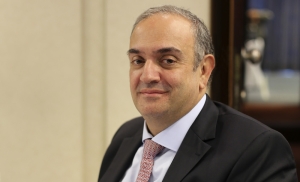
On the occasion of GSCC vassilopitta (New Year’s pitta) the chairman Mr. Charalambos Fafalios, referred to the latest shipping and geopolitical developments described the current conditions in each shipping sector and expressed his expectations for the New Year.
Last year Ukraine has become a war zone and the effects of this conflict have been more far reaching than we would have ever imagined.
All of a sudden, commodity prices rose briskly, supply routes changed and trade patterns have altered to a degree that we would not have envisaged.
The result has been positive for some sectors of shipping and negative for others. If we look at dry commodities Ukraine was mostly a very short haul exporter therefore replacing their grain and coal exports has had a very beneficial effect on tonne miles. The resulting sanctions on Russian exports such as oil and gas have also been very positive for the tanker and gas carrier markets.
However, we should never forget the sad consequences for the citizens of Ukraine who are living through this unnecessary conflict with great loss of life.
World shipping has to navigate in this global environment whilst at the same time trying to reduce its carbon footprint appreciably.
It must never be forgotten that shipping has always made a virtue of creating ever more energy efficient ships and reducing its fuel footprint per tonne of cargo carried.
The issue of what future propulsion method will be adopted or what fuel is chosen, is still anything but settled as an issue.We are still awaiting engine and ship builders to come up with real green solutions.
It is very important to stress that we support the IMO exclusively and not the many regional markets because we need global solutions and not regional efforts.
In the short term, we must be patient and realise the real benefits of EEXI. The operational index, CII, another short-term measure in the IMO roadmap seems to have no respect from either charterers or shipowners. World shipping is too complex to try and use rather simplistic measures for vessels fuel efficiency.
Looking back over the last 12 months, the fates of various shipping sectors have almost been a rollercoaster ride. The container market, which saw the highest freight rates ever last year, is now languishing at levels which are 80-90 percent below their peaks and with a disturbingly large order book. The tanker market rose from the doldrums and even now various sectors are performing very well. The LNG / LPG markets also have seen some historically high freight rates and the order book has risen to very high levels. The car carrier sector has also risen from its pandemic level lows and is rewarding its owners well at the moment. The dry bulk market, which started 2022 strongly is now at rather disappointing levels and it is uncertain as to what may bring about a turnaround. Its fleet is the largest on record and the orderbook although historically low is certainly not negligible.
Against this background, the Greek controlled merchant fleet, amongst the largest in the world, is getting younger by the year due to judicious second-hand sales and a substantial orderbook of low carbon high technology newbuildings in all sectors.
We still urge the Greek government to improve the maritime education system and allow more private education establishments. If bureaucracy is greatly reduced, the Greek flag itself will benefit.
Through conflicts, pandemics, bad weather and difficult circumstances, the men and women who are part the shipping industry including our seafarers are the unsung heroes that make world trade possible and so positively impact our way of life. Governments should enshrine this status with deeds and not only with words!
ELNAVI Newsletter
More information: ELNAVI,
19, Aristidou str., Piraeus 185 31,
Tel.: +30 210 45.22.100, e-mail: This email address is being protected from spambots. You need JavaScript enabled to view it.
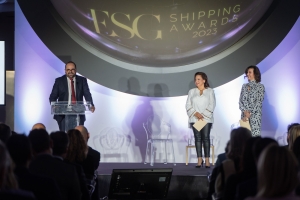
The Launching Event of the ESG Shipping Awards 2023 under the auspices of the Ministry of Maritime Affairs and Insular Policy as well as the Hellenic Chamber of Shipping, was held on 17 January 2023 with a full house turnout, at the Goulandris Natural History Museum.
Government officials and senior representatives from the entire Greek Maritime Community were present at the Launch of the first ESG Shipping Awards globally.
The event opened with the hostesses Mrs. Helena Athoussaki and Mrs. Katerina Stathopoulou sharing the mission and vision of the initiative, followed by the inauguration speech of Mr. Ioannis Plakiotakis, Minister of Maritime Affairs and Insular Policy, where he remarked that “Greek shipping leads the way in ESG & sustainable development” and continued “rewarding shipping companies with ESG criteria encourages the creation of best practices.”
Among the notable speakers, Dr George Pateras, President of the Hellenic Chamber of Shipping said “the ESG shipping awards is a good vehicle to demonstrate the tremendous work which has been done for the environment and the people associated with the maritime transportation.”
In view of the increasing emphasis on ESG practices, Mr. Manolis Koutoulakis, General Secretary of Maritime Affairs and Insular Policy, emphasized the connection of ESG and public policy and how ESG criteria are integrated into investment decisions.
The nomination methodology was explained by Mrs. Helena Athoussaki, followed by Mr. Vassilis Ikonomidis, Managing Partner at VDI Law Firm where he presented the Governance rules of the ESG Shipping Awards.
Mr. Jan Fransen, Executive Director of the Green Award Foundation and a member of the judging committee commented: “I am very proud to be part of the judging committee, it is not an easy task but together with the other members we will succeed in selecting the ESG winners.”
The event ended with the speech of Mr. Dimitris Koutsopoulos, CEO of Deloitte Greece, the sole Anchor Award Partner, “we were engaged from the start with the ESG Shipping Awards because we share the same vision and we trust that it can help companies towards ESG improvement.”
The event was sponsored by Delloitte Greece, Eurobank and Marshall Islands Registry and supported by HELMEPA, Hellenic Shortsea Shipowners Association, WISTA Hellas, ATHEX Group, Propeller Club Port of Piraeus and the Association of Banking and Financial Executives of Hellenic Shipping.
The award winners’ ceremony of the ESG Shipping Awards will take place at the Megaron Concert Hall on Tuesday, 30 May 2023.
Responsible for the event management was Stelina Markoulaki, Digital Shadows.
About the ESG Shipping Awards
The ESG Shipping Awards, is a new institution whose vision is to promote and recognize initiatives on ESG and Sustainability within the Maritime industry.
The ESG Shipping Awards recognizes the most significant and impactful actions of the shipping industry on the economy, environment, and people. It is a purpose-based initiative aiming to encourage the shipping industry to embrace sustainability as part of their culture and strategy.
ELNAVI Newsletter
More information: ELNAVI,
19, Aristidou str., Piraeus 185 31,
Tel.: +30 210 45.22.100, e-mail: This email address is being protected from spambots. You need JavaScript enabled to view it.
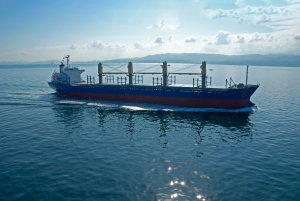
The Panama Ship Registry continues its leadership position worldwide, ranking first among the 10 most important merchant fleets by flag registry and gross tonnage, according to the latest World Fleet Monitor from the Clarksons Research database.
According to the Clarksons platform, Panama had 16% of the world’s maritime fleet at the end of December 2022 with 8,650 registered vessels, which represented 245 million GRT.
The international market and the maritime industry continue to choose the Panama Ship Registry, because it has the support of an entire nation, being a Government Registry, administered by the Panama Maritime Authority (AMP), which provides and guarantees to ship owners and their fleets.
In addition, it offers recognized assistance 24/ 7 services to its clients, adding to that the legal security, diplomatic and judicial advocacy differentiates the Panama registry from all others.
It has been serving the world for more than 100 years, with experience and tradition promoting world maritime trade and favoring development, where its experience serves as a key tool in providing quality service to its clients.
The Panama Registry has understood the role it is called upon to play, always seeking to improve in terms of its competitiveness, adaptability, and international compliance. In fact, Panama has improved its retention, increasing it to 31% achieving a percentage growth of 3.4% in the year 2022, impacted by a world crisis, less construction of ships in primarily Panamanian markets and not mention a war, which are social and economic factors directly affecting this particular market.
During the current Administration, international compliance has been prioritized, digitization together with platform improvements, customer services oriented business model, reengineering, modernization of processes, and incentives, aimed at the use of new technologies, environmentally friendly fuels, and ships with good conduct. All these actions have had a positive impact on the quality of our fleet, which from 2019 to date reflects a growth of 27.9 million GRT and the entry of 567 more ships, according to IHS Market data, this is in the middle of the clear-out process, however, the Panama Registry continues its path and continues to introduce its required mechanisms in order to continue to be a service provider to the world.
As part of the Technological Innovation, a significant investment has been made since the beginning of this Administration, in the improvements to the existing registration platforms for the registration of ships and the E-Segumar platform for the issuance of technical certifications of ships, achieving a friendlier and easier experience for the user, as well as the new Maritime Processing System platform and Electronic Ship Registration (REN), a project plan that should continue during 2023.
Panama demonstrates its commitment to the environment, by promoting the construction of ‘Eco Friendly’ ships, with its special incentives for Eco Ship and New Construction, in the same way we seek to encourage the support and investment of companies, so that the economic impact that represents the improvement of ships in environmental issues is less and shared among parties of the present industry.
The expectations of the Registry are positive for 2023, one of our pillars is the modification of Law 57 of August 6, 2008 “General of Merchant Marine”, which advances steadily through a work group made up of various actors of the maritime sector and whose goal is to collaborate together in the comprehensive review of the regulations related to the Panama Ship Registry, to increase its competitiveness.
This review elevated to Country Strategy, seeking onto a clear, transparent legislation foundation, with competitive rates and diligence in the processes, in this way we will achieve sustainable growth activity.
By 2023, the Panama Maritime Authority continues to implement new technologies in all the operational directorates within the Registry, in order to continue providing quality in our service as well as international compliance.
ELNAVI Newsletter
More information: ELNAVI,
19, Aristidou str., Piraeus 185 31,
Tel.: +30 210 45.22.100, e-mail: This email address is being protected from spambots. You need JavaScript enabled to view it.
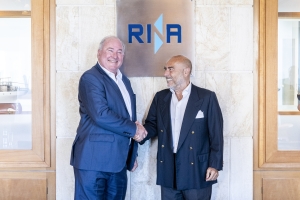
RINA, the Inspection, Certification and Engineering consultancy multinational, acquired the entire share capital of Patrick Engineering Ltd., the Chicago-based engineering consultancy company active in Infrastructure, Transport and Renewable Energy. With a turnover of approximately 82 million dollars and 340 employees in 19 offices mainly located in the North-East of the US, Patrick Engineering will be fully integrated into RINA Consulting, the subsidiary of the RINA Group operating in the engineering sector.
The acquisition is aligned with RINA’s strategy to grow both organically and via acquisitions and further strengthens the Group’s geographic footprint which already has a presence in the largest markets worldwide. As well as adding competencies across the Group, the continued international expansion represents a further step in the implementation of RINA’s plan and also positions the Group to better support international and local clients in large overseas projects.
Ugo Salerno, Chairman and CEO at RINA, says: “The acquisition of Patrick Engineering and the combined expertise of the new organization represents a unique opportunity for expansion and growth in the thriving North American Infrastructure market. It establishes an excellent platform not only in this sector, but also to grow all RINA’s businesses to make the US one of RINA’s main hubs. RINA will gain leverage to export its highly specialized competencies in materials, lab testing and innovative technology.”
Daniel Patrick Dietzler, Founder of Patrick Engineering, commented: “Our companies complement one another, and our clients and staff will benefit from this acquisition. We will accelerate our growth in new sectors and broaden our expertise. We have a strong client portfolio split between the government and the private sector including transit agencies in major cities and investor-owned utilities and heavy industries across North America. Through RINA’s international network we will gain expertise, particularly in offshore wind, high speed rail and other emerging areas of experience our clients are asking for.”
Founded in 1979, Patrick Engineering, which will remain as a brand part of the RINA Group, has a strong local presence, high-quality service portfolio, and respected technical capabilities. It offers a full spectrum of services and competes successfully on its ability to perform work in a timely and efficient manner in the sectors it serves, which include Renewables, Infrastructures and Transport. With the acquisition, the service portfolio as a whole will be stronger and position the company as a significant player in the engineering sector in North America.
Among Patrick Engineering’s notable references:
- Program and Construction Manager on the MBTA’s (Massachusetts Bay Transportation Authority) Red/Orange Line Transformation Program. The total value of the project is $1.2 Billion.
- Technical consulting and program management services for AEP (American Electric Power) Ohio. The total value of the project is $650 Million.
- Project management, project controls and risk management for the Advanced Photon Source Upgrade (APSU) of Energy’s Argonne National Laboratory project which aims to develop the most powerful multi-bending achromat in the U.S. Department of Energy (DOE) complex. The total value of the project is $700 Million.
“Patrick Engineering’s prominent position in the US energy, infrastructure and transportation sectors, combined with RINA’s strong multi-sectorial expertise, particularly in sustainability and energy transition, presents an ideal opportunity to make a significant contribution to projects facilitated by the current bipartisan US Infrastructure Investment and Jobs Act” concludes Salerno.
Global Strategy assisted RINA during all phases of the acquisition as M&A advisor, in collaboration with AMA International of New York. RINA was also supported by PwC Italia, which assisted RINA in the commercial, technological, financial and tax due diligence as well as in the finalization of the deal. Mayer Brown acted as legal counsel to RINA in connection with the transaction.
In the picture: Ugo Salerno, Chairman and CEO of RINA, and Daniel Dietzler, Founder of Patrick Engineering.
ELNAVI Newsletter
More information: ELNAVI,
19, Aristidou str., Piraeus 185 31,
Tel.: +30 210 45.22.100, e-mail: This email address is being protected from spambots. You need JavaScript enabled to view it.
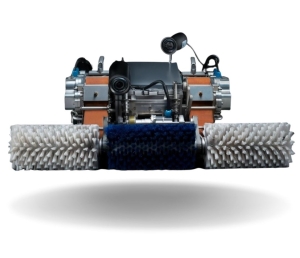
Oriani Hellas and Scrufy Partnership Brings an Innovative Solution to the Issue of Biofouling in the Shipping Industry
Biofouling – The Sticky Problem of the Shipping Industry
Biofouling, the accumulation of microorganisms, algae and plants on the hull of a vessel, is an ongoing issue for shipping companies. The phenomenon causes multiple structural and operational deficiencies, including increased drag, increased fuel consumption, and increased GHG emissions. Additionally, there is a risk of spreading invasive species that can affect the marine ecosystem, which can result in shipping companies getting fined due to non-compliance with international regulations.
According to the United States Office of Naval Research, due to the additional drag caused by biofouling, a ship’s fuel consumption can be increased by as much as 40%.
Traditional solutions for grooming the hull, such as dry-docking or hiring specialized divers to remove hard fouling of the hull, are not only expensive and often dangerous to human life, but also bear environmental risk as the waste requires capture.
BlueBOT – Underwater Hull Grooming & Inspection Robot
Oriani Hellas has partnered with Scrufy – a highly-innovative Greek tech company that provides custom-built automation solutions to multiple industries and software solutions for the public and private sector. Scrufy has created the first Greek autonomous hull- grooming robot – BlueBOT.
BlueBOT is designed to aid the decarbonization of the shipping industry through preventing the accumulation of biofouling on hull surface. The autonomous robot attaches to the hull of a vessel magnetically and grooms the surface before it becomes a full-blown operational setback for the ship. In addition to its grooming capabilities, BlueBOT also collects data and generates reports on the state of the hull and the effectiveness of the grooming process. This allows shipping companies to stay on top of any potential biofouling issues and make informed decisions to maintain the performance and efficiency of their vessels.
This innovative solution will not only increase the efficiency and safety of the hull grooming process but also contribute to the shipping industry's goal of reducing its environmental impact by reducing drag and saving enormous amounts of fuel.
Oriani Hellas and Scrufy are excited to bring this revolutionary solution to the market and look forward to working with shipping companies to improve their operations and reduce their environmental impact.
“Oriani prides itself on identifying the most innovative digital solutions to represent within the maritime industry, ones that truly deliver value to shipping companies on their voyage of digital transformation. BlueBOT and the state-of-the-art technology that it contains represents not only the huge potential within robotics, but how that potential can be harnessed and delivered in the real-world to achieve actual change.” added Mr. John Vandoros, Business Development Director of Oriani Hellas.
“Our partnership with Oriani marks the beginning of a new commercial chapter for Scrufy and our revolutionary product, BlueBOT. Given the significant opportunity for OPEX reduction provided by our solution, we believe that BlueBOT will soon be the preferred choice of the shipping industry for biofouling management and reporting”, commented Mr. Nick Arapkoules, Managing Director of Scrufy PC.
Oriani Hellas is the trusted partner in the digital transformation of the Greek Shipping Industry. The company is dedicated to providing the most advanced and innovative maritime digital solutions to help the industry increase its operational efficiency through the use of technology. Oriani's digital portfolio is comprehensive and diverse, offering solutions that address a wide range of challenges faced by shipping companies. With Oriani Hellas, Greek Shipping companies can rest assured that they have a trusted and experienced partner to help them navigate the ever-changing digital landscape and thrive in this highly competitive industry.
ELNAVI Newsletter
More information: ELNAVI,
19, Aristidou str., Piraeus 185 31,
Tel.: +30 210 45.22.100, e-mail: This email address is being protected from spambots. You need JavaScript enabled to view it.

Biofuels are a current and accessible fuel option that can help marine customers decarbonize. Yet while biofuels reduce CO2 footprint, they also pose new operational challenges. Alfa Laval is first in the market to address them with biofuel-optimized separators and separator upgrades.
Assured compatibility with prominent biofuels
Biofuels like HVO (hydrotreated vegetable oil) and FAME (fatty acid methyl ester) can be used by diesel engines without major engine modifications. They can be a carbon-neutral alternative if produced from the right biomass, but they must still be cleaned effectively to prevent performance issues and expensive engine wear. In a marine industry first, Alfa Laval high-speed separators are now compatible with HVO (EN15940) and with FAME (EN14214 or ASTM D6751) blends comprising residual fuel and/or distillate.
“We are proud to support our customers’ decarbonization journey, no matter which fuel path they take,” says Markus Hoffmann, Global Sales Manager, Marine Separation & Heat Transfer Equipment, Alfa Laval. “Biofuels will be the choice for many marine vessels, but customers must be certain that their equipment is prepared for them. With biofuel-ready separators and cost-efficient biofuel upgrades, Alfa Laval can provide that certainty.”
Prepared for biofuel complexity
Biofuels are already in widespread use, and ISO is looking to incorporate them into the 2024 revision of ISO 8217. Nevertheless, they can be prepared in various ways and differ widely in their characteristics – both from conventional fuels and from each other. Because of differences in density, moisture absorption and more, they demand additional care when it comes to fuel storage and treatment.
To ensure optimal biofuel separation, Alfa Laval has modified both internal bowl components and the separator software. This makes setting up for HVO, FAME blends or conventional fuels a simple parameter change. Incorporated into new Alfa Laval separators for purchase, the developments are also available as upgrades for existing separators.
“Optimizing for biofuels is nothing that occurs overnight,” says Hoffmann. “Our biofuel-ready separators build on deep fuel insights, extensive research at the Alfa Laval Test & Training Centre and long cooperation with ISO and CIMAC. As biofuels continue to evolve, customers can count on Alfa Laval for efficient engine protection, just as they have with conventional marine fuels.”
To learn more about biofuel-ready separators and Alfa Laval’s approach to biofuels, please visit: www.alfalaval.com/marinebiofuel
This is Alfa Laval
Alfa Laval is a world leader in heat transfer, centrifugal separation and fluid handling, and is active in the areas of Energy, Marine, and Food & Water, offering its expertise, products, and service to a wide range of industries in some 100 countries. The company is committed to optimizing processes, creating responsible growth, and driving progress to support customers in achieving their business goals and sustainability targets.
Alfa Laval’s innovative technologies are dedicated to purifying, refining, and reusing materials, promoting more responsible use of natural resources. They contribute to improved energy efficiency and heat recovery, better water treatment, and reduced emissions. Thereby, Alfa Laval is not only accelerating success for its customers, but also for people and the planet. Making the world better, every day.
Alfa Laval has 17,900 employees. Annual sales in 2021 were SEK 40.9 billion (approx. EUR 4 billion). The company is listed on Nasdaq Stockholm.
Image1 : Markus Hoffmann, Global Sales Manager, Marine Separation & Heat Transfer Equipment, Alfa Laval
Image2: The maritime industry’s first biofuel-ready separators from Alfa Laval
ELNAVI Newsletter
More information: ELNAVI,
19, Aristidou str., Piraeus 185 31,
Tel.: +30 210 45.22.100, e-mail: This email address is being protected from spambots. You need JavaScript enabled to view it.