


-
Home

-
About Elnavi
- elnavi

elnavi
CCS & XRTC pitta cutting at Piraeus Marine Club
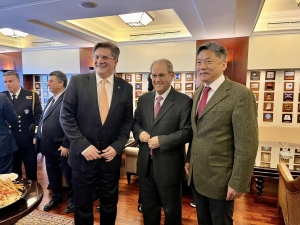
CCS set up an office in Piraeus the same year in 1999 when XRTC Business Consultants was established.
The managing director of CCS in Piraeus Wang Baochun said that CCS is the number 5 greatest classification society in the world with 200 m gross tonnage in its class.
In Greece has a strong market share providing quality classification and certification services to Greek Shipping companies.
The event honored with its presence Ambassador of People’s Republic of China Mr Fang Qiu and Mr George Alexandratos new president of the Hellenic Shipping Chamber.
In his address Mr George Xiradakis managing director of XRTC told that China is the number 1 trading nation as the 2/3 of the world’s container trade is transported by Chinese ports.
Chinese leads also in financing, shipbuilding and crew sectors.
In view of the above developments XRTC has established strong partnerships with Chinese financial institutions for almost two decades providing a platform of supporting the Greek shipping with reliable funding and first class financial services.
The ambassador in his speech expressed his appreciation to the Greek shipping community for its achievements and aspirations.
China and Greece share similar philosophy and mindset. He also congratulated Greece the economic recovery of the last years and reaffirmed the China will continue to support the mutual strategic cooperation with Greece.
This cooperation has flourished in all business sectors including shipping and financial services.
China also promotes the growth of green energy and works for the stability of global trade. It must be also noticed that the year of snake in China symbolizes the values of Wisdom resilience and luck.
ELNAVI Newsletter
More Information: ELNAVI,
19, Aristidou str., Piraeus 185 31,
Tel.: +30 210 45.22.100, e-mail: This email address is being protected from spambots. You need JavaScript enabled to view it.
George Alexandatos, the new president of Hellenic Chamber of shipping in a challenging era for shipping
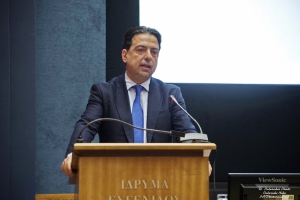
Following his father Spyros tradition, George Alexandratos was elected as the new president of the Hellenic Chamber of Shipping (HCC), during the meeting of the HCC board of directors and following the resignation, for personal reasons, of Dr. George Pateras.
George Gabriel was elected as vice president, while Antonia Loudarou became a new member of the board of directors.
George Zafeiroudis is a new member of the board of directors in the first category of ships.
George Sp. Alexandratos was born in Athens in 1973. He had studied at Moraitis School and graduated with a Bsc in shipping business from Plymouth University and Msc in Maritime Policy from Cardiff University. He is the director of Apollonia Lines SA which was founded in 1974 from his father Spyros who unfortunately passed away in September 2004 and that time his father apart being the founder of Apollonia Lines was also the president of the Hellenic Chamber of Shipping. In 2013 he established together with co-partners the shipping fund called Blue water Maritime Capital targeting to invest in dry bulk shipping.
George Alexandratos is General Secretariat of Hellenic ShortSea Shipowners Association since February 2012 whilst during the period from Feb 2009-2012 he was the second vice president. Also he is in the bod at Korea registry and president of the Piraeus Marine Club. Since February 2014 he is the President of the Hellenic Hull Mutual
ELNAVI Newsletter
More Information: ELNAVI,
19, Aristidou str., Piraeus 185 31,
Tel.: +30 210 45.22.100, e-mail: This email address is being protected from spambots. You need JavaScript enabled to view it.
.
Capital Group and FORCE Technology Collaborate to Launch Europe’s First Extended Reality Bridge Simulator
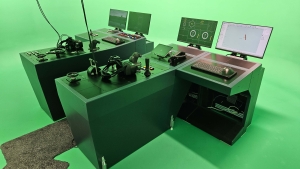
Capital Group and FORCE Technology proceeded to a partnership to create Europe’s first Extended Reality (XR) Full Mission Bridge simulator. This groundbreaking initiative represents a major advancement in maritime training, combining cutting-edge technology with decades of expertise. The simulator will be housed at Capital Group’s state-of-the-art training facility at the port of Chios Island, Greece, which is slated to open in 2025. Designed to enhance seafarers’ skills, this modern center of excellence reinforces Capital Group’s dedication to innovation, sustainability, and maritime leadership.
“This project underscores our steadfast dedication to driving innovation and excellence in maritime training, with a strong focus on safe and sustainable operations,” said Panagiotis Drosos, Chief Operations Officer of Capital Ship Management Corp. “By embracing cutting- edge XR technology, we are empowering our seafarers to meet the dynamic challenges of the maritime industry, while reinforcing Greece’s position as a leader on the global maritime stage.”
Leveraging over 50 years of FORCE Technology’s expertise in simulation systems, the training equipment incorporates advanced XR headsets with features like eye tracking to deliver focused, efficient, and highly realistic training.
“Our new SimFlex simulator sets a new benchmark for operational training,” said Stelios Koukouvios, Global Business Development Manager at FORCE Technology. “By embedding real vessel equipment into a virtual bridge environment, we provide an unmatched experience of precision and immersion. This technology also enables global teams to train together in shared scenarios, unlocking exciting possibilities for collaboration.”
The system’s design features a fully green-screened environment, integrating real bridge equipment supplied by FURUNO Hellas S.A —such as the latest models of ECDIS (FMD- 3005), Autopilot (FAP-3000) and Chart Radar systems (FAR-3xx5) —with a high-fidelity virtual landscape. This seamless integration creates a realistic and immersive training experience.
In addition to its technical innovations, the XR simulator minimizes environmental impact by reducing energy consumption and the need for travel. It offers flexible remote training options, thus reshaping maritime training and aligning technological innovation with sustainability and global connectivity.
About Capital Ship Management Corp.
Capital Ship Management Corp. is currently operating a fleet of 36 tankers (13 VLCCs, 10 Aframaxes, 7 MR/Handy product tankers) with a total dwt of 6.44 million tons approx. Capital has extensive experience in managing various vessel types and sizes including all tanker segments (VLCC, Suezmax, Aframax/LR2, Panamax/LR1, MR/Handy, and small tankers), dry bulk segments (Cape, Panamax, Handymax and Handy), as well as OBOs and containers. It is affiliated with Capital Group which currently controls 142 vessels, including 20 LNG Carriers, 2 VLACs/VLGCs, 8 MGCs, 4 LCO2 Carriers, 37 Tankers, 20 PSVs, 12 Bulk Carriers, and 39 Containers with a total dwt of 13.2 million tons. The Capital Group fleet under management includes vessels of Nasdaq- listed Capital Clean Energy Carriers Corp.
About FORCE Technology
FORCE Technology helps companies become technological and sustainable frontrunners for the benefit of society. FORCE Technology is a technology consultancy and service company that strives to create positive technological change and make the world more sustainable and safer. As a Research and Technology organization, 100% of FORCE Technology profits are reinvested in the company for the benefit of society. Each year, thousands of customers entrust us with their products, materials, structures, largest potentials, or worst challenges since we create security and value based on impartiality, confidentiality, and knowledge.
About FURUNO ELECTRIC Co.
With its HQ based in Japan, established in 1948, Furuno became synonymous with top quality products for professional marine electronics, used by thousands of seafarers, ensuring safe, secure, and comfortable navigation at sea. Thanks to its Global Service Network which includes 38x own subsidiaries, Furuno provides unmatched pre & after sales support, focusing on a pure customer centric approach, resulting in 257xNMEA Awards and being included in the “100Global Niche Top Companies selection”. Furuno is always at the forefront to deliver scalable, best-in-class training solutions, by meeting current and forecoming challenges through its own resources and synergies with 3rd parties to deliver Value to the end customers.
ELNAVI Newsletter
More Information: ELNAVI,
19, Aristidou str., Piraeus 185 31,
Tel.: +30 210 45.22.100, e-mail: This email address is being protected from spambots. You need JavaScript enabled to view it.
POSIDONIA SEA TOURISM FORUM
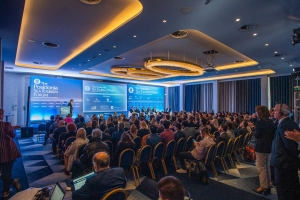
Destination sustainability, New Marquee Ports and Over-Tourism top cruise agenda
The 8th Posidonia Sea Tourism Forum (PSTF) will be held on May 6-7, 2025, in Heraklion, Crete, one of Greece's most renowned tourism and cruise destinations.
This year’s theme, ‘The Med: A Compelling Need for New Marquee Ports and Destinations,’ highlights the urgent need for innovation and sustainability in cruise tourism. As Mediterranean cruise tourism continues its resurgence, industry leaders will gather to discuss opportunities and challenges facing the sector, with a particular focus on managing overcrowding and promoting emerging destinations.
In 2023, cruising returned to pre-pandemic year-round operations and generated a total global economic impact of $168.6 billion, an increase of 9% from 2019. A total of 31.7 million passengers cruised in 2023, marking a 7% increase from 2019’s 29.7 million passengers. The number of cruise passengers is estimated to have reached 32 million in 2024 and rise steadily in subsequent years, with an estimated 39.4 million passengers by 2027.
But cruising has recently come under intense scrutiny as an over-crowding factor in some of the Mediterranean’s most popular ports. Although many of these destinations, like Barcelona, Palma de Mallorca, Amsterdam and Santorini are already overwhelmed by conventional tourism, cruising is taking much of the blame.
“Overtourism in a number of cities and destinations throughout the Mediterranean is a reality that the industry needs to address,” said Theodore Vokos, Managing Director of Posidonia Exhibitions S.A. “This year’s focus on new marquee ports and sustainability is more relevant than ever, as the Mediterranean continues to be one of the most dynamic and desirable cruise regions globally.”
He added: “The cruise industry must reconsider its strategies for deployment, itinerary planning, and destination selection to help achieve a more sustainable balance. As the tourism sector with the highest scheduling flexibility, cruising has a unique opportunity to leverage the growing number of emerging port options within accessible distances, particularly in the Eastern Mediterranean.”
The President of MedCruise, Theodora Riga, who will be present in Crete, commented: “The industry is growing and as a result it is facing new challenges, which need to be addressed at an early stage. Mediterranean ports are an essential part of the industry and we strive to assure that increased cruise traffic is benefitting both the destination and the cruise industry, in a sustainable way. MedCruise intends to continue working with fellow associations representing cruise lines, ports, and destinations, as well as policy-makers, to lead initiatives in the sustainable growth of cruise activities in the Mediterranean and adjoining seas. The Posidonia Sea Tourism Forum will offer all stakeholders the opportunity to get together and explore solutions to these new challenges.”
The Forum that will be held at the Mikis Theodorakis Convention Center and feature insights from industry experts, including executives from CLIA, MedCruise, and leading cruise lines.
Other topics that will be discussed during the event include:
- Adoption of green practices and solutions to address environmental challenges.
- Tourism innovation in the areas of marketing, guest satisfaction, and immersive experiences.
- Infrastructure through the showcasing of new port investments and effective berth allocation systems.
“With its rich cultural heritage, excellent hospitality infrastructure, unique tourism offerings, and a thriving port, Heraklion is the ideal location to host this pivotal industry event.
Highlighting the capabilities of Heraklion Port and the significance of Crete as a cruise destination, Minas Papadakis, CEO of Heraklion Port Authority, stated: “Heraklion Port is undergoing substantial investments in infrastructure and services to meet the growing demands of the cruise industry. With state-of-the-art facilities, expanded berth capacity, and a strong commitment to sustainability, we are well-positioned to accommodate increased cruise activity.”
“It is important to emphasize that many destinations, including Crete, possess the capacity to support additional cruise operations and homeporting. The opening of the new International Airport in 2027 is expected to further enhance this potential by facilitating homeporting opportunities in Heraklion. While overtourism is a valid concern for certain destinations, it should not overshadow the conversation, as there are numerous locations capable of serving as viable alternatives. Sustainability has always been a core objective of Crete’s tourism strategy, and we look forward to engaging with industry stakeholders in May to explore solutions to the challenges currently facing the cruise sector”, he continued.
The total economic benefit of cruise tourism in Heraklion and the surrounding area during the period from May 2023 to May 2024 amounted to €60.2 million and supported 521 jobs.
The Forum will also feature a bustling exhibition floor, offering destinations and stakeholders the opportunity to connect with itinerary planners, showcase infrastructure projects, and strengthen industry partnerships. It will underscore the importance of collaboration among cruise executives, destination managers, and service providers to ensure a sustainable and prosperous future for Mediterranean cruise tourism.
Sponsors for the 2025 PSTF include: Diamond sponsor Heraklion Port Authority, Gold sponsor ODAP (Hellenic Organisation of Cultural Resources Development), Silver Sponsor Piraeus Port Authority, Bronze sponsors Celestyal, Heraklion International Airport and Kyvernitis Travel Group, Sponsor Thessaloniki Port Authority, Official Airline SKYexpress, and is organized under the auspices of the Ministry of Maritime Affairs & Insular Policy and the Ministry of Tourism, and is supported by the Hellenic Chamber of Shipping, the Cruise Lines International Association (CLIA), the Association of Mediterranean Cruise Ports (MedCruise) and the Union of Cruise Ship Owners & Associated Members of Greece.
ELNAVI Newsletter
More Information: ELNAVI,
19, Aristidou str., Piraeus 185 31,
Tel.: +30 210 45.22.100, e-mail: This email address is being protected from spambots. You need JavaScript enabled to view it.
Danica strengthens its representation in Athens
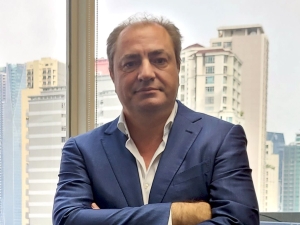
Danica Crewing Specialists established an in-person presence in Athens, strengthening its representation in Greece.
Seasoned crewing expert Dimitris Liolios has taken office as Danica’s representative in Athens to provide direct contact for Greek ship owners.
Dimitris is the Director and Partner of Danica’s manning office in the Philippines. He has extensive experience of the recruitment and management of seafarers. Dimitris began his shipping career in the commercial sector before moving into marine HR. He has more than 30 years’ shipping experience and has built his expertise in ship and crew management companies.
Raised in Melbourne, Dmitris has lived and worked in several culturally diverse cities including Singapore and Manila, as well as Athens. He is a well-qualified professional with an MBA from Henley Business School.
Greece is an important shipping centre with a large requirement for competent seafarers, and Danica places a great importance on the Greek marketplace and its clients there.
Danica Crewing Specialists CEO Henrik Jensen said: “I am excited to welcome Dimitris Liolios to our team. His appointment in Athens underscores Danica’s commitment to Greek ship owners, linking them to our unique combination of local presences and owned offices in the seafaring hubs of The Philippines, India, Ukraine and Georgia.”
Danica is expanding in all the key seafarer hubs as well as streamlining its recruitment processes using the latest technology. Mr Jensen pointed out: “Our innovative digital solutions are assisting our owners to overcome competition for the best seafarer talent. Danica is at the forefront of global crewing. Using new digital tools, including AI, enables us to make our recruitment process more friendly and faster for the seafarers.”
Danica’s latest advancement is to offer vacancies directly into the WhatsApp accounts of the more than 65K seafarers in its list. Mr Jensen explained: “This instantly gives us potential candidates, enabling us to cover our clients’ vacancies fast while also offering a wider choice of candidates.”
image 1 : Dimitris Liolios has taken office as Danica’s representative in Athens
image 2: Danica Crewing Specialists CEO Henrik Jensen
ELNAVI Newsletter
More Information: ELNAVI,
19, Aristidou str., Piraeus 185 31,
Tel.: +30 210 45.22.100, e-mail: This email address is being protected from spambots. You need JavaScript enabled to view it.
The new MERC publication highlights the importance of fleet efficiency in achieving IMO Mid-Term GHG reduction targets.
Efficiency measures must be applied to the existing fleet to meet IMO Mid-Term GHG reduction measures, says a new publication from the Maritime Emissions Reduction Centre (MERC). By enhancing efficiency, the maritime industry can reduce the amount of alternative low-GHG fuels required, thereby lowering the overall cost of the energy transition, outlines the report.
The “IMO Mid-Term GHG Reduction Measures as a Driver for Efficiency” publication delves into the challenges and opportunities presented by the IMO's mid-term measures. These measures, expected to be approved in April 2025 and enter into force in 2027, include an economic element such as a GHG pricing mechanism and a goal-based fuel standard regulating the phased reduction of marine fuel's GHG intensity.
However, most new low-carbon fuels are not suitable for existing vessels and the maritime industry will compete with other sectors for suitable drop-in fuels. Therefore, improving efficiency in the existing fleet is critical to reducing GHG emissions while continuing to support global trade.
The introduction of economic elements, such as GHG pricing, will incentivise investments in technologies that reduce both energy use and emissions, driving improvements in shipping efficiency.
Stelios Korkodilos, Director of the MERC, said: “While alternative fuels will play a vital role in shipping's decarbonisation journey, efficiency improvements will be critical for the existing fleet. Most new low-carbon fuels aren't suitable for existing vessels, and the maritime sector will compete with aviation and road transport for limited supplies of drop-in alternatives.
“MERC will work with all industry stakeholders to overcome the technical, financial, and commercial barriers that hinder the uptake of solutions for the existing fleet and support shipping's transition to a low-GHG future.”
This is the first publication from the Athens-based MERC, a non-profit organisation created by Lloyd Register’s Maritime Decarbonisation Hub in collaboration with five leading Greek shipowners - Capital Group, Navios Maritime Partners, Neda Maritime Agency, Star Bulk and Thenamaris.
It was founded to fill a gap in the maritime industry’s approach to decarbonisation. While there are numerous initiatives focused on the future of maritime energy, particularly in the development of alternative fuels, there is a need for a dedicated effort to address the immediate challenges faced by the existing fleet, using conventional fuels, and support it to reduce GHG emissions. MERC will use its applied research and innovation to remove uncertainties and barriers, enabling the uptake of technologies and solutions today.
The report is now available for download at: https://www.m-erc.org/our-publications
About Lloyd’s Register
Trusted maritime advisers, partnering with clients to drive performance across the ocean economy.
Lloyd’s Register (LR) is a global professional services group specialising in marine engineering and technology. With a heritage going back more than 260 years to the establishment of the world’s first marine classification society, LR is dedicated to setting and improving standards for the safety of ships.
Today we are a leading provider of classification and compliance services to the marine and offshore industries, helping our clients design, construct and operate their assets to accepted levels of safety and environmental compliance.
We also provide advice, support and solutions on fleet performance, fleet optimisation and voyage optimisation, enhancing our clients’ digital capabilities. Our digital solutions are relied upon by more than 20,000 vessels.
In the race to zero emissions, our research, technical expertise and industry-firsts are supporting a safe, sustainable maritime energy transition.
Lloyd’s Register Group is wholly owned by the Lloyd’s Register Foundation, a politically and financially independent global charity that promotes safety and education.
ELNAVI Newsletter
More Information: ELNAVI,
19, Aristidou str., Piraeus 185 31,
Tel.: +30 210 45.22.100, e-mail: This email address is being protected from spambots. You need JavaScript enabled to view it.
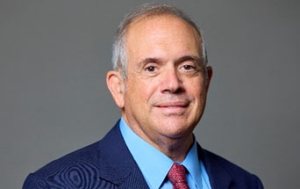
Leading figures across the dry bulk shipping sector have joined in paying tribute to Dimitri Fafalios, who concluded his chairmanship of the International Association of Dry Cargo Shipowners (INTERCARGO) on 31 December 2024 after six years of distinguished leadership.
Industry leaders have praised Mr. Fafalios's pivotal role in strengthening international shipping standards during a period of unprecedented change, noting his success in expanding INTERCARGO's influence whilst advancing crucial safety and sustainability initiatives. Under his stewardship, INTERCARGO's membership reached historic levels, with approximately 260 companies across 30 countries now representing more than one-third of the global dry bulk fleet by deadweight.
His tenure saw the successful launch of several landmark initiatives, including the Dry Bulk Centre of Excellence and INTERCARGO's first-ever ESG Review. These achievements built upon his previous decade of service as Technical Committee Chairman, during which he established a strong foundation for the Association's technical leadership.
Melina Travlos, President of the Union of Greek Shipowners and a Member of the Board of Directors of the Hellenic Chamber of Shipping, said; “We at the Union of Greek Shipowners are extremely proud of Dimitri Fafalios' great achievements as Chairman of INTERCARGO. His all-rounded shipping knowledge and in-depth technical expertise has been an asset for INTERCARGO. His Chairmanship was marked by a strong enhancement of the dry bulk sector's representation, by instrumental collaborations and inspired leadership.”
John Lyras, former President of the European Community Shipowners Associations, added; “I would like to warmly congratulate Dimitri J Fafalios for his successful term as President of INTERCARGO following on from a decade of chairing the Organisation's Technical Committee. This achievement is one of several for Dimitri Fafalios whose services to Shipping both nationally and internationally have been longstanding and outstanding and are continuing. The title of Honorary Chairman of INTERCARGO constitutes due recognition and is entirely deserved.”
John Xylas, incoming Chairman of INTERCARGO, said; “During his six year tenure, Dimitri led our Association through unprecedented challenges whilst achieving remarkable growth and innovation. His vision was instrumental in establishing the Dry Bulk Centre of Excellence, launching our first ESG Review, and expanding our membership to historic levels. Dimitri’s unwavering commitment to safety, environmental responsibility and operational excellence has set a strong foundation for INTERCARGO's future.” He added; “We are fortunate that Dimitri will continue to contribute his wisdom as Honorary Chairman.”
Emanuele Grimaldi, Chairman of the International Chamber of Shipping, said; "On behalf of the International Chamber of Shipping I would like to extend our sincere thanks to Dimitri Fafalios for his outstanding leadership over the past six years. During his tenure as Chairman, Dimitri has played an important role in improving safety standards and operational efficiency in dry bulk shipping, and across the wider industry. Under his guidance, INTERCARGO has achieved significant milestones that will have a lasting impact. Dimitris' efforts have strengthened the foundation of his organisation, ensuring it is well-positioned to address the challenges of the future. It has been a pleasure working with Dimitri and I wish him, and his successor, Mr John A. Xylas every success in the future."
Mr Fafalios continues to contribute his expertise to INTERCARGO as Honorary Chairman, supporting the leadership team headed by John Xylas.
Caption: Dimitri Fafalios outgoing Chairman of INTERCARGO
Credit: INTERCARGO
ELNAVI Newsletter
More Information: ELNAVI,
19, Aristidou str., Piraeus 185 31,
Tel.: +30 210 45.22.100, e-mail: This email address is being protected from spambots. You need JavaScript enabled to view it.
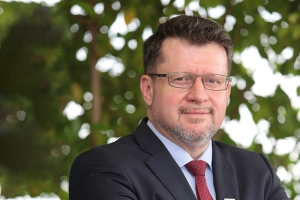
As of January 1st, Ioannis Chiotopoulos, Regional Manager for Southeast Europe, Middle East & Africa, has taken on a new challenge as Head of Quality Task Force in DNV’s Ship Classification organization, based in Høvik, Oslo
George Teriakidis has stepped into the role of Regional Manager for Region Southeast Europe, based in Piraeus.
George Teriakidis is a naval architect and currently holds the position of Regional Manager for Southeast Europe for DNV Maritime.
He has completed studies of B.Eng. in Naval architecture at the University of Newcastle Upon Tyne as well as of a M.Sc. in Ship Production Technology at Strathclyde University of Glasgow. Upon completion of his studies, he joined Det Norske Veritas office of Dubai, UAE as surveyor. During his 8 year stay in Dubai he took various roles and responsibilities.
In August 2008 he joined Det Norske Veritas Piraeus and since 2013 he was responsible for the business development for Det Norske Veritas’s region of South East Europe and Middle East. In 2019, he became the Area Manager for East Mediterranean and Black Sea. Since January 2025, he is the Regional Manager for Southeast Europe.
In December 2019 he was awarded the “New Generation Award” from CAREER4SEA. He is the president and general manager of the board of directors for DNV Hellas.
During his free time, he still enjoys photography, reading books and listening to music.
ELNAVI Newsletter
More Information: ELNAVI,
19, Aristidou str., Piraeus 185 31,
Tel.: +30 210 45.22.100, e-mail: This email address is being protected from spambots. You need JavaScript enabled to view it.
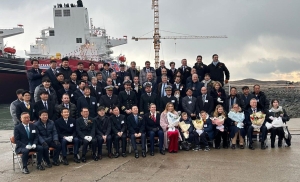
Atlas Maritime Ltd., in collaboration with Daehan Shipbuilding, announced the naming of 4 new state-of-the-art LR2 115,000 DWT tankers, dual fuel LNG ready, with the most fuel efficient (super eco) engine and the least environmental impact. Stavanger Star, Oslo Star, Copenhagen Star and Athenian Star. These vessels, delivered under a strategic partnership with European Maritime Finance (EMF), mark a significant milestone for Atlas Maritime’s fleet expansion.
Mrs. Marietta Chrousala Patitsa, wife of Mr. Patitsas was the sponsor and godmother of Stavanger Star and Miss. Margo Patitsa, his daughter, of the Athenian Star. Also Mrs. Kathy Gasparis was the godmother of Oslo Star and Mrs. Charlie Almdal the godmother of Copenhagen Star. The event was a major success attended by the company partners, investors, insurers, bankers, brokers and associates.
A naming ceremony of a vessel is a time-honored tradition that signifies the formal introduction of a ship to the world and blesses it for safe and successful voyages. It is both a celebration of maritime tradition and a moment of new beginnings for the ship’s life at sea.
ELNAVI Newsletter
More Information: ELNAVI,
19, Aristidou str., Piraeus 185 31,
Tel.: +30 210 45.22.100, e-mail: This email address is being protected from spambots. You need JavaScript enabled to view it.
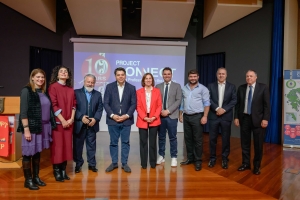
Project Connect, the non-profit organization dedicated to youth empowerment and maritime education, successfully held its annual “KICK START THE NEW YEAR” event on Wednesday, January 15, 2025.
Emphasizing this year’s theme, “FOCUS & ACTION,” the event took place in a dynamic “phygital” (physical and digital) format, hosted by Athens College – Bodosakeio in Kantza, Pallini, one of the first seven schools to enroll in Project Connect’s Adopt a Ship program, in presence of U.S. Ambassador to Greece, George J. Tsunis. Present at the event were, also, among others President of Athens College, Dr Pollalis and Mr Kalogeras, Athens College Elementary School Principal.
Mr. Chrysostomos Lefteratos, a dedicated Athens College teacher and one of the first educators to adopt the Adopt a Ship program, warmly welcomed students and guests. Athens College has been a consistent participant since the program’s introduction to Greek classrooms in January 2019. Mr. Lefteratos showcased a video highlighting students’ shipping-related projects, and he also presented a heartwarming reading of an e-mail exchange between a student and a ship captain, emphasizing the unique interaction at the program’s core. Two students, wearing captain’s hats provided by Project Connect, read aloud a letter exchanged between a Maran Tankers vessel and an elementary class in Davlia, Central Greece.
Mr. John Xylas, Union of Greek Shipowners’ representative/Treasurer, Founding Member of Project Connect, shipowner, and recently elected Chairman of INTERCARGO, praised the program for bridging Greek Shipping with the classroom: “We are grateful to the teachers for their dedication. Through ‘Adopt a Ship,’ students truly grasp the value of the seafarer’s profession, and they learn practical skills along the way.”
Dr. Adamantia Spanaka, Project Connect’s Educators Consultant, guided the attendees through the key elements of the Adopt a Ship initiative. She explained how the program fosters interdisciplinary learning by using captains’ responses as the basis for lessons in geography, English writing, literature, history, and more, illustrating the program’s practical learning opportunities.
Project Connect’s Founder & Director, Ms. Irene Notias, welcomed and expressed her gratitude for the Ambassador’s attendance: “We feel so fortunate that the Ambassador chose to address our young minds today, in one of his last public interaction to his post. His passion and commitment set a wonderful example—focus, action, effort, and love for one’s country can take anyone a long way forward. This is truly an inspiring way to start the New Year.”
U.S. Ambassador to Greece, George J. Tsunis, during his keynote speech shared his personal journey—rooted in Greek heritage—on becoming an Ambassador and underscored the importance of shipping to the global economy and to Greece. His address reached 2,185 pupils and 108 teachers from 51 elementary, 19 secondary schools, and 8 Nautical Vocational High Schools (EPAL) across Greece, as well as participating schools in Florida, USA.
In total, more than 4,200 pupils in 222 classes are enrolled in the Adopt a Ship program this school year. The pupils that missed this event will have a chance to view the recorded version.
“They are lucky to have the ‘Adopt a Ship’ program in their schools,” remarked Ambassador Tsunis. “My hope is that each of you will be inspired to pursue your dreams.”
Project Connect presented the Ambassador with handcrafted nautical gifts made by pupils of the 45th Elementary School of Thessaloniki, commemorating his involvement. The day concluded with uplifting and motivational sessions anchored by the theme “Focus & Action”. Life coach Michalis Fragkiadakis (FOS Breakthrough) led an engaging talk, “Opinion & Knowledge: Breaking Illusions,” encouraging students to challenge assumptions and explore personal growth. Dr. John Kalogerakis closed the event with “Kick Start the New Year with FOCUS & ACTION,” energizing everyone to pursue their New Year’s resolutions with confidence and determination.
This year, is the NPO’s 10th year anniversary and there will be many special events coming up.
-------- ------- ------ ------ ------- -------- --------- --------- --------- ------- --------
About Adopt a Ship
Adopt a Ship is an innovative educational program by Project Connect that introduces students to the fascinating world of shipping. Through direct communication with a vessel’s Captain, participants broaden their horizons, gain practical insights, and explore career paths they might not have considered before. Schools report a 90% increase in student interest in shipping and related sciences, citing improvements in critical thinking, teamwork, and communication. Additionally, shipping companies benefit from positive community engagement, while their crews form meaningful connections with future industry professionals—helping to secure the long-term growth of the maritime sector. In total, more than 4,200 pupils in 222 classes are enrolled in the Adopt a Ship program this school year.
About Project Connect
PROJECT CONNECT is a non-profit organization founded in May 2015 with the support of Greek shipowners and distinguished professionals in Shipping and Human Resources. The vision of PROJECT CONNECT is “sustaining one of Greece’s top resources, the Shipping Industry through supporting the “can do” mind set and the aim for excellence that has built it, and to instill this mind set into the next generation workforce who will ultimately strengthen Greek Shipping’s competitiveness in the International arena.”
ELNAVI Newsletter
More Information: ELNAVI,
19, Aristidou str., Piraeus 185 31,
Tel.: +30 210 45.22.100, e-mail: This email address is being protected from spambots. You need JavaScript enabled to view it.