


-
Home

-
About Elnavi
- elnavi

elnavi
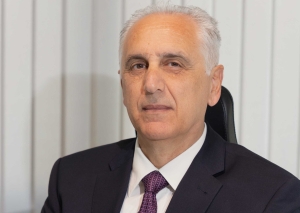
The Cyprus Shipping Chamber’s Board of Directors has unanimously decided to appoint its current Deputy Director General / Marine Manager, Mr. Alexandros Josephides, as the next Director General. Mr. Josephides will succeed Mr. Thomas A. Kazakos, who is taking over as Secretary General of the International Chamber of Shipping in London, effective 1st April 2025.
Completing this year, a very productive 30 years-service with the Chamber, Mr. Josephides holds Bachelor’s and Master’s degrees in Mechanical Engineering. He started his career as a Mechanical Engineer in 1986 and worked in the US, Cyprus and Libya for different companies. In 1992 he joined the Cyprus Bureau of Shipping where he received training and worked as a Marine Surveyor. In 2015, following a proposal by the Cyprus Maritime Administration, he was appointed by IMO as “IMO Goodwill Maritime Ambassador” for Cyprus specifically tasked to promote maritime and seafaring professions to the young generation, a position he still holds today.
Mr. Josephides stated that: “I am deeply honoured by the trust placed in me by the Board of Directors to serve as the next Director General of the Cyprus Shipping Chamber. As I approach 30 years of service with the Chamber, I am more committed to build upon the solid foundation already in place and advance the interests of Cyprus Shipping while upholding our industry’s vital role on the global stage. I look forward to working closely with our Board of Directors, Members and Associates to build on our successes and embrace the opportunities ahead”.
ELNAVI Newsletter
More Information: ELNAVI,
19, Aristidou str., Piraeus 185 31,
Tel.: +30 210 45.22.100, e-mail: This email address is being protected from spambots. You need JavaScript enabled to view it.
Castor Marine becomes part of the Navarino Group
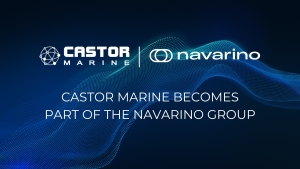
Navarino has acquired 100% of the shares of Castor Marine B.V., a prominent provider of maritime connectivity and IT services based in the Netherlands.
This milestone marks an exciting new chapter for both organisations as they come together to better serve their customers with comprehensive, innovative solutions and a shared commitment to excellence.
Both Navarino and Castor Marine are thriving businesses with strong growth trajectories. Each serves a complementary set of customers, with whom they have co-created tailor-made technology and connectivity solutions over many years of success.
Key benefits of the deal include an expanded service portfolio, enhanced global presence and accelerated innovation, driving forward the digital transformation of the maritime industry.
Castor Marine will continue to operate independently within the Navarino Group, leveraging additional resources to expand its capabilities. Customers can expect uninterrupted service as well as access to an expanded portfolio of solutions. “Welcoming Castor Marine into the Navarino Group allows us to deliver even greater value to our customers,” said Dimitris Tsikopoulos, CEO of Navarino. “Together, we can offer enhanced services and exceed the high standards our customers have come to expect of us.”
Ivo Veldkamp, CEO of Castor Marine, echoed this sentiment, stating, “I’m excited to see what Castor Marine will achieve as part of the Navarino Group. This milestone unlocks new possibilities for our people and amplifies our offering.”
About Navarino
With the vision of being the benchmark technology company of the maritime world, Navarino partners with over 600 shipping companies, supporting more than 12,000 merchant vessels globally. Its long-term relationships in the maritime industry are built
on a foundation of five-star customer experience. Today, Navarino offers the most complete suite of technology and connectivity solutions on the market. Dedicated to its more than 250 people, Navarino has been certified as a Great Place to Work for three
consecutive years, and proudly promotes its values of integrity, excellence, and innovation from within.
About Castor Marine
Castor Marine delivers secure internet connectivity and IT solutions to the maritime industry, offering services such as Starlink, VSAT, and 4G/5G LTE. With a global VSAT network and 24/7 support, Castor Marine ensures seamless, reliable connectivity for
fleets worldwide. Trusted by the offshore, superyacht and merchant sectors, Castor Marine combines expertise, innovation, and future-proof solutions to keep their vessels connected wherever they sail.
ELNAVI Newsletter
More Information: ELNAVI,
19, Aristidou str., Piraeus 185 31,
Tel.: +30 210 45.22.100, e-mail: This email address is being protected from spambots. You need JavaScript enabled to view it.
The world’s second largest third-party ship management company opens an office in Greece and announces a key leadership appointment in Japan to strengthen its client servicing in crucial markets
Fleet Management Limited, a part of The Caravel Group Limited opens a new office in Athens, Greece, as well as a strategic leadership appointment to strengthen client engagement in Japan.
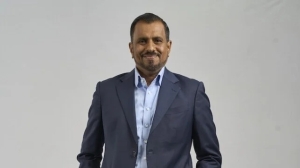
Captain Rajalingam Subramaniam formally assumed the role of Chief Executive Officer on January 1, 2025. He said: “This announcement demonstrates our intent to sustain and grow our presence in key regions and segments. Coupled with our ambitions to uphold excellent client partnership, in their location, their language. Our team aspires to be a truly global business.”
Dr. Harry S. Banga, Chairman and CEO of The Caravel Group, iterated his support for the latest additions to Fleet’s global network: “Our business is a people business where long-term relationships matter deeply. The clients and partners of Fleet Management deserve the best service, and we will continue to make strategic investments and commit resources to deliver on this pledge.”
The new Athens office in Glyfada will serve as a hub for ship management operations, including technical management, crew management, safety and quality assurance. It responds to increasing demand for comprehensive and reliable ship management services in the region. Greece’s strategic location and rich maritime tradition positions it as a strong base for reaching clients across Europe. Yannis Maroulis, General Manager for Business Development, joined in December 2024 to open the office and support European customers.
In Japan, Fleet Management announces the senior appointment of Kazutomi Uchida to spearhead client relationship management and business development for Ship Management and Newbuilding in Tokyo, Japan. He brings over 35 years of experience in the shipping industry to the role, and he will draw on the strengths of Fleet’s global network to support key Japanese clients.
Mr. Angad Banga, COO of The Caravel Group, highlighted the importance of the latest addition to Fleet’s leadership bench: “Japan is a vital market that already accounts for nearly a third of Fleet Management’s business. Uchida-san is a longstanding and trusted partner to Fleet and well-known across the industry. We are confident that his appointment will deepen our partnerships in Japan as we continue to grow there.”
The company’s first announcement of 2025 signals Fleet Management’s firm commitment to strengthen its partnerships and invest in performance and client service. Its global network is crucial to delivering 24/7 support to clients and the 650 ships under management around the world.
In 2024, Fleet Management Limited celebrated its 30th anniversary, announced a significant leadership transition, and outlined its vision for future growth.
About Fleet Management Limited: Fleet Management Limited, part of The Caravel Group, is the world’s second largest ship management company, managing more than 650 vessels. This rank bears testament to the resilience and commitment of 27,000+ seafarers and 1,200+ onshore maritime professionals, serving more than 130 world-class shipowners. Fleet manages a range of vessels, including bulk carriers, containers, car carriers, oil tankers, gas carriers and chemical tankers from 600 to 320,000 DWT in size – with many being young and energy-efficient with an age profile below the industry average. The company also has a dynamic newbuilding supervision department.
About The Caravel Group Limited: The Caravel Group is a diversified conglomerate headquartered in Hong Kong SAR with three verticals: Maritime, Commodities and Investment Management.
Within the Maritime vertical, the Group is focused on third-party ship management, and as well ship ownership – managing operating and/or owning more than 700 sea-going vessels across the dry bulk, chemical and gas tanker and container segments. Within Commodities, the Group is engaged in the trading and logistics of industrial dry bulk raw materials, namely iron ore and thermal coal. Within Investment Management, the Group is primarily focused on direct investments in global liquid markets including public equity and credit, across all industries. In addition, the Group invests in alternative investments – mainly private equity and hedge funds – to diversify risks and sustain long-term returns.
ELNAVI Newsletter
More Information: ELNAVI,
19, Aristidou str., Piraeus 185 31,
Tel.: +30 210 45.22.100, e-mail: This email address is being protected from spambots. You need JavaScript enabled to view it.
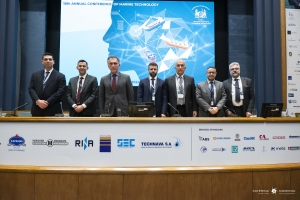
The Hellenic Institute of Marine Technology (H.I.M.T.) successfully organised the 18th Annual Conference of Marine Technology at the Eugenides Foundation on the 10th and 11th of December 2024. The event was a resounding success, attracting over 500 delegates.
The President of H.I.M.T., Dr. N. Liapis, opened the conference by emphasising its dual objectives: to present the latest developments and achievements in marine technology and to foster dialogue and collaboration among industry, academia, and research institutions. Among the key conclusions was the need for closer cooperation between the maritime industry and educational and research institutions to position Greece as a global hub for maritime technology. Dr. Liapis further highlighted that shipping is not
merely an observer of geopolitical developments but a pivotal player, capable of influencing and being influenced by such developments. He stressed that adaptability, innovation, and investment are the foundational pillars for the future of shipping.
The conference began with introductory remarks by the Deputy Minister of Maritime Affairs and Insular Policy, Mr. Stefanos Gkikas; the General Secretary for Research and Innovation, Dr. Tasos Gaitanis; the President of the Piraeus Chamber of Commerce and Industry, Mr. Vassilis Korkidis; the Rector of the National Technical University of Athens, Prof. Ioannis Chatzigeorgiou; and the Maritime Affairs Advisor of the Hellenic Shortsea Shipowners Association, Rear Admiral (Ret.) Alexandros Lagouros, who shared the perspectives of their respective organisations during the opening ceremony.
Throughout the two-day event, 10 scientific and research papers were presented, focusing on critical topics such as decarbonisation, alternative fuels, autonomous ships, advancements in ship engines and propulsion systems, and the evolving landscape of regulations, technologies, and market demands.
Delegates also had the opportunity to learn about emerging product trends and developments from both Greek and European researchers and internationally renowned companies.
The maritime industry’s participating companies showcased advanced technologies and smart applications, demonstrating their potential to shape and support both current and emerging trends.
During a panel discussion on the legal aspects of autonomous ships, Mr. Nikos Gerasimou underscored the importance of addressing the legal challenges associated with these vessels. He stated that autonomous ships represent a groundbreaking innovation poised to transform international maritime transport. He concluded that new international agreements will be essential to establish the legal framework necessary for the safe operation of autonomous ships.
A detailed roundtable discussion examined the risks posed to the shipping industry by geopolitical instability. Four main challenges were highlighted: threats to the freedom of the seas, sanctions, the rebalancing of energy and trade, and environmental issues. The significance of logistics and supply chains
was also emphasised, with participants agreeing that geopolitical developments remain unpredictable and become apparent only through long-term analysis.
On the second day of the conference, Dr. N. Liapis announced new scholarships offered by H.I.M.T. to promote education, one of the institute’s primary objectives. The announcement included the recipients of two scholarships for the academic year 2024–2025: one for the Master’s Programme (MSc) in Marine Engineering Management at BCA College and another for the Master’s Programme in Shipping Operations and Management at the University of Limassol (UoL).
The conference concluded with a Gala Dinner at the Piraeus Marine Club, dedicated to the sponsors and supporters of the event. Speeches were delivered by Dr. Nikolaos Liapis, President of H.I.M.T.; Mr. Manolis Koutoulakis, General Secretary of the Ministry of Maritime Affairs and Insular Policy; Dr. Tasos Gaitanis, General Secretary for Research and Innovation; and Dr. Dionysia–Theodora Avgerinopoulou, Chair of the Parliamentary Committee on Environmental Protection and Member of the Hellenic Parliament. The three gold sponsors of the conference – ASSO.SUBSEA, ECONOWIND, and INMARTEK – also delivered closing remarks.
Sponsors: ASSO.SUBSEA, ECONOWIND, INMARTEK, ARISTON NAVIGATION CORP., BCA COLLEGE, CMA D. ARGOUDELIS & CO S.A., KATRADIS GROUP OF COMPANIES, MARICHEM MARIGASES, RINA, SEAMARK, SEC, TECHNAVA SA, ABS, ALPHA MARINE ENGINEERING SA, BUREAU VERITAS, CLASS NK, C&A STAVROS KASSIDIARIS SA, CROSS TECHNICAL SERVICES LTD, DANAOS MANAGEMENT CONSULTANTS S.A., DEEPSEA, DNV, EASTERN MEDITERRANEAN MARITIME, ERMAFIRST, FURUNO, GMCG, INTERNATIONAL REFRIGERATION SUPPORT, LIBERIAN REGISTRY, LLOYD’S REGISTER, MARITA HELLAS SA, MEDITERRANEAN MARITIME ACADEMY, METIS, MINOAN LINES, OCEANKING, OKEANONE, PHOENIX, SEMAC GROUP, ST VETTING – MARINE SOLUTIONS, MARSHALL ISLANDS REGISTRY.
Supporters: FEAC ENGINEERING, FORTUNE TECHNOLOGIES, WIMA.
ELNAVI Newsletter
More Information: ELNAVI,
19, Aristidou str., Piraeus 185 31,
Tel.: +30 210 45.22.100, e-mail: This email address is being protected from spambots. You need JavaScript enabled to view it.
Vassilios Demetriades joins UW Group family
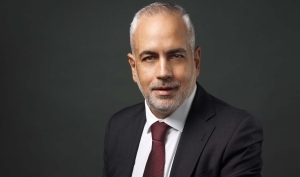
UW Group managed to appoint Mr. Vassilios Demetriades as its Chief Strategy Officer. Mr. Demetriades will lead the formulation and implementation of UW Group’s vision and its strategic development. The mission of the Group is to contribute to the sustainable development of the shipping sector, whilst meeting effectively the new challenges that the industry faces. The Group aims to further enhance the provision of quality services to the global shipping community, as well as to expand its activities through the adoption of new technologies and innovative approaches in line with its core values: Respect, Professionalism, Excellence, Resilience and Integrity!
Profile of Mr. Vassilios Demetriades
Mr. Vassilios Demetriades holds a BSc degree in Business Economics from Surrey University and an MSc degree in Management Science from the same University.
He served as Shipping Deputy Minister to the President of the Republic of Cyprus from July 2020 to February 2023. During his tenure, the strategic vision for Cyprus Shipping “SEA change 2030” was formulated, promoting an extroverted approach and a new philosophy and working structure within the Shipping Deputy Ministry (SDM). He initiated and delivered several sustainable actions such as the maritime passenger link between Cyprus and Greece reinstated after a 21-year hiatus, the formulation of Cyprus’ Maritime Spatial Plan, the setting up of the framework conditions for the digital transformation of the SDM. Mr. Vassilios Demetriades demonstrated leadership at global and EU level in effectively responding to crises (COVID-19 and Ukraine war) taking charge of key actions to enable safe crew changes, formulating and implementing a national vaccination plan to cover 40000 seafarers, facilitating a fast-track process for seafarers affected by the war in Ukraine to open bank accounts and access their salaries.
Prior to his appointment he served as a Policy Officer in the Directorate General of Mobility and Transport of the European Commission coordinating the EU maritime transport strategy and EU’s external maritime transport relations for 5 years, promoting the interests of the EU shipping industry at bilateral and multilateral level with major trading partners of the EU (US, China, India, Japan, Brazil, Iran). He was previously involved in the formulation and coordination of the European Sustainable Shipping Forum.
He has formerly served the Cyprus Public Administration as the Head of EU Affairs Unit at the Cypriot Ministry of Transport, Communications and Works formulating Cyprus’ national position to the EU on transport, telecommunications, shipping and integrated maritime policies and he was in charge of the overall coordination of the Cyprus Presidency to the EU pertaining to these areas.
Mr. Vassilios Demetriades served as the first Maritime Counsellor of Cyprus to the EU, from Cyprus accession to the EU in 2004 until the end of 2008, representing Cyprus to the EU in the fields of maritime transport, intermodal transport and networks, EU Integrated Maritime Policy, EU Space Policy, Global Navigation Satellite Systems. Previously he served the Maritime Administration of Cyprus from various posts putting forward visionary ideas and initiatives such as the Limassol Declaration on the EU Integrated Maritime Policy – one of the main priorities of the 2012 Cyprus Presidency to the Council of the EU.
Mr. Demetriades shares his richness of maritime knowledge and expertise, through lectures and articles, especially in the areas of maritime policy and strategic planning on a European and national level.
Mr. Thrasos Tsangarides, CEO of UW Group, expressed his satisfaction for having Mr. Demetriades as a member of the management team of the Group, while noting that he will add value to the development and execution of the vision and strategic planning.
UW Group, established in 2000, is one of the world’s leading shipping representatives. With an expanding list of principals, the Group and its subsidiary companies UMAR Shipping Services & WSR Services, represent some of the largest organizations in the maritime transport industry, and serves customers, from all around the world, from five strategically locations (Cyprus, Greece, Singapore, United Arab Emirates, China).
UMAR Shipping Services offers its clientele solutions for services and products and repairs worldwide. Reliable services cover all aspects of shipping and the respective needs for Engine Room Machinery, Deck Machinery, Hull Machinery, Cargo Handling Gear, Bridge Equipment, Safety Equipment, Accommodation Equipment, Spare Parts and Services.
WSR Services offers its clientele strategically located ship repair yards, underwater services, riding squads, repair stations, marine coatings and liner wear measurement worldwide. Reliable services cover all aspects of shipping and their respective needs, including new buildings, dry dock repairs, modifications and conversions.
ELNAVI Newsletter
More Information: ELNAVI,
19, Aristidou str., Piraeus 185 31,
Tel.: +30 210 45.22.100, e-mail: This email address is being protected from spambots. You need JavaScript enabled to view it.
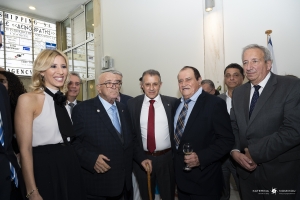
The Chios Marine Club’s Christmas and New Premises inauguration event took place on 18 December 2024 in Piraeus at its new address, 35-39 Akti Miaouli at Lemos Maritime Building. The celebration of the new premises was accompanied by the Christmas gathering for members and guests of the Club.
The Inauguration ceremony began with the traditional blessing of new premises by Father Andreas, archpriest of Saint Nicholas Church Piraeus. The President of Chios Marine Club Capt. Antonis Pitsilos welcomed the sponsors who contributed to the renovation of the premises, and all participants. He pointed out that the Club has been active for 25 years. The acquisition of new offices was a "Vision that became a Reality". He declared: “Our goal was to create an elegant and attractive place for our members to visit more often and this will help us to increase the number of new members.”
Capt. Pitsilos warmly thanked the Donor of the property, our Benefactor and Honorary President of the Club, Capt. Christos Kakoulas, and the generous sponsors for their financial support in the renovation of the new offices.
Further, the following honored the event with their presence: Yiannis Moralis - Mayor of Piraeus, Notis Mitarakis - elected member of Hellenic Parliament for Nea Demokratia Party in the Prefecture of Chios, Stavros Michailidis - elected member of Hellenic Parliament for PASOK-KINAL in the Prefecture of Chios, Yiannis Malafis - Mayor of Chios Island, Georgios Daniil - Mayor of Oinousses Island, Radm (HCG) Leonidas Manolakos - Deputy Governor of Attika for civil protection, Lt. General (Rt) Nikolaos Manolakos - ex Member of Greek Parliament for the Piraeus Constituency, Georgios Pateras - President of Hellenic Chamber of Shipping, Georgios Alexandratos - Vice President of the Hellenic Chamber of Shipping, Capt. Georgios Arvanitis - Deputy Governor for Merchant Marine for the North Aegean Islands, Dimitris Vlachakos - Deputy Mayor of Piraeus, Capt, Panagiotis Tsakos of Tsakos Group of Companies, Orestis Varonis of Union Marine Enterprises, Eleftherios Veniamis from Golden Union Shipping Co., Capt. Panagiotis Gigis - president of the Panhellenic Captains’ Union of Merchant Navy, Drosos Reizis - First Deputy Commandant of the Hellenic Coast Guard, Commander (HCG) Foteini Preka from KESEN Michanionas Thessaloniki, Radm Rt (HCG) Nikolaos Kavallieros - Director of the Fast and Cruise Ship Owners Association, Vivi Koliopoulou - President of Wista Hellas, Radm Rt (HCG) Dimitrios Tsiadis represented the President of OCHSA Mrs. Mariella Varoni, Danae Bezantakou - Vice President of Propeller Club, Maria Bri Papamakariou - President of Pirgi Association in Attica, Konstantinos Achladitis - Vice President of Piraeus Chamber of Commerce & Industry, Georgios Xyradakis - President of Association of Banking & Financial Executives of Hellenic Shipping who presented a honorary plaque to the President of the Club, Theodosis Stamatelos of Lloyd’s Register, George Andreadis of Bureau Veritas and many others. The event was also honored by former Presidents of the Association, Antonis Faraklas and Markos Tripolitis as well as by many of the founding members
Sponsored by: MASTIHA SHOP & COSMOS TRAINING CENTER
ELNAVI Newsletter
More Information: ELNAVI,
19, Aristidou str., Piraeus 185 31,
Tel.: +30 210 45.22.100, e-mail: This email address is being protected from spambots. You need JavaScript enabled to view it.
PROJECT CONNECT End Year Results
Submitted by Irene Notias, Founder & Director
This year, the CONNECT CV-HR PLATFORM recorded significant growth, reaching a total of 71 new registrations. Among them, 4 young professionals successfully secured positions in reputable companies within the maritime industry, such as Pleiades Shipping, Marine Plus, Mylaki Shipping Agency, and Bernhard Schulte. This achievement underscores the role of our platform as a vital link between young talent and the maritime sector.
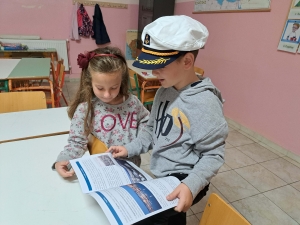
The “Adopt a Ship” maritime educational program in Greek schools enjoyed another expanding year! One hundred ninety-seven Greek teachers are currently and consistently teaching over 4200 pupils about geography, Greek history of Shipping and its significance to the Greek and global economy, English Language, commerce and trade, life at sea, and empathy, thru this program by NPO, PROJECT CONNECT.
Specifically, two hundred and twenty-two classes of one hundred-thirty participating schools have been exchanging over 300 e-mail communications with 150 vessels of 45 Greek and non-Greek shipowning companies in the Adopt a Ship program.
Twenty-three of the schools are Nautical Vocational High Schools whose pupils state they are more assured than ever now that they are on right path to become captains and engineers because of their participation and the Captains and engineers engagement with them in the program.
The NPO first introduced it to Greece in 2018 with seven schools and seven vessels of Ms Notias bunker client owners. Then in 2020 with the suggestion of the then Minister of Education, Mrs Kerameos, she and her team took it nationwide. Managing it with tremendous success, it is now in Florida’s Hellenic Charter Schools, in U.S.A., Plato Academy.
SCHOOLS participating this school year 2024-25 in areas of:
CHALKIDA – ELEFSINA – THESSALONIKI (ORAIOKASTRO, PILEA, STAVROUPOLIS) – FLORINA – PEIRAIA – KOZANI – NIKAIA – VIOTIA – KOS – PEFKI – PATISIA -SERRES – VOLOS – KIFISIA – KASTORIA – KORYDALLOS – ANDROS – FTHIOTIDA – EVOIA – KRITI (CHANIA, IRAKLEIO, LASITHI, AG. NIKOLAOS) – PRESPES –
OINOUSSES – PATMOS – TYROS, ARKADIAS – SPETSES – ELAFONISOS – PATRA – KEFALONIA – NAFPAKTOS – PALLINI – KANTZA – PERAMA – VOULIAGMENIS - ELLINIKO – KALAMATA – ANOIXI – CHALANDRI – KOROPI – AIFIDNES – PERISTERI – MAROUSI – SAMOS – RODOS – CHIOS – ALEXANDROUPOLIS – KEA – LARISA ATHINA – KALLITHEA – ILION – VRONTADOU – KARDAMYLA – LAKONIA – LAMIA – KERATSINI – AMALIADA – GALAXIDI – KALYMNOS – MYKONOS – LOUTRAKI – FLORIDA, USA.
Shipping Companies participating in the program this year: ΑEGEAN BULK CO. INC., ALASSIA NEWSHIPS MANAGEMENT INC., ALPHA BULKERS SHIPMANAGEMENT INC., ANDRIAKI SHIPPING CO. LTD., ARCADIA SHIPMANAGEMENT CO. LTD., ARISTON NAVIGATION CORP., ASTRA SHIPMANAGEMENT INC., ATLANTIC BULK CARRIERS MANAGEMENT LTD., BERNHARD SCHULTE SHIPMANAGEMENT (HELLAS) SPLLC., CAPITAL EXECUTIVE SHIP MANAGEMENT CORP., CAPITAL GAS SHIP MANAGEMENT CORP., CAPITAL SHIP MANAGEMENT CORP., CARRAS (HELLAS) S.A., CHANDRIS (HELLAS) INC., CHRONOS SHIPPING CO. LTD., COMMON PROGRESS CO. NA. S.A., COSTAMARE SHIPPING CO. S.A., DANAOS SHIPPING CO. LTD., DIANA SHIPPING SERVICES S.A. (NAMU SHIPPING), EASTERN MEDITERRANEAN MARITIME LTD., EMPIRE CHEMICAL TANKERS HOLDINGS INC. (NICOMEDIA NAVIGATION LTD.), EUROBULK LTD., FAFALIOS SHIPPING S.A., GASLOG LNG SERVICES LTD. (NEW), HALKIDON SHIPPING CORPORATION, INTERUNITY MANAGEMENT CORPORATION S.A., KASSIAN MARITIME LTD., KONKAR SHIPPING AGENCIES S.A., LATSCO MARINE MANAGEMENT INC., LOAD LINE MARINE S.A., MARAN DRY MANAGEMENT INC. (ANGELICOUSSIS GROUP), MARAN GAS MARITIME INC. (ANGELICOUSSIS GROUP), MARAN TANKERS MANAGEMENT INC. (ANGELICOUSSIS GROUP), MEDITERRANEAN CAR-CARRIERS LINES S.A. (MCCL), NAVITAS COMPANIA MARITIMA S.A., NEPTUNE LINES SHIPPING & MANAGING ENTERPRISES S.A., PEGASUS OCEAN SERVICES (Halkidon Shipping Corporation), PLEIADES SHIPPING AGENTS S.A., POLFORCE SHIPPING CO. S.A., QUEENSWAY NAVIGATION CO. LTD., ROSWELL NAVIGATION CORP., SEA TRADERS S.A. - PALOMINO TRADING S.A., SEA TRADERS S.A. - PROMINENCE MARITIME S.A., SEANERGY MANAGEMENT CORP., SEAVEN DRY MANAGEMENT INC., SHELTON NAVIGATION S.A., SPRINGFIELD SHIPPING CO., PANAMA S.A. OLYMPIC SHIPPING & MANAGEMENT S.A., STARBULK S.A., TECHNOMAR SHIPPING INC.
ELNAVI Newsletter
More Information: ELNAVI,
19, Aristidou str., Piraeus 185 31,
Tel.: +30 210 45.22.100, e-mail: This email address is being protected from spambots. You need JavaScript enabled to view it.
Charting Ethical Waters: How Objectivism Empowers Shipping Companies to Achieve Growth and Influence
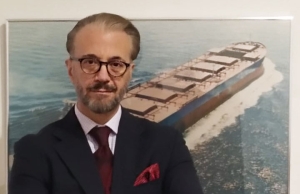
By Mr Anastasios Maraslis*, Founder/President of Marasco Marine Ltd.
In an increasingly complex and often unethical business environment, shipping companies face immense challenges. Economic turbulence, regulatory pressures, and shifting market dynamics demand not just survival, but principled and sustainable growth. The philosophy of Objectivism, developed by Ayn Rand, offers a powerful framework to achieve this. By embracing rational self-interest, integrity, and a commitment to productive achievement, shipping companies can navigate these challenges, gain social approval, and drive financial growth.
For over 33 years, Marasco Marine Ltd has exemplified these principles, ensuring steady success for both the company and its clients, through strategic risk management and ethical business practices.
- Rational Self-Interest: The Compass for Strategic Decisions
At the core of Objectivism is the concept of rational self-interest — making decisions that advance long-term goals without sacrificing values or exploiting others. In the shipping industry, this translates to strategies that prioritize sustainable success over short-term gains.
- Practical Application:
Marasco Marine Ltd employs a rational approach to risk management by conducting thorough assessments of market conditions, geopolitical factors, and operational risks. This ensures that business decisions are grounded in objective analysis and serve the long-term interests of clients and stakeholders.
- Client Benefit:
By applying rational self-interest, Marasco Marine Ltd helps clients make informed decisions that balance opportunity and risk, protecting their investments and fostering growth even during turbulent times.
- Integrity: The Anchor of Reputation and Trust
Integrity is the unwavering adherence to one’s principles, even in the face of adversity. For a shipping company, integrity means maintaining ethical standards in business dealings, transparent communication, and delivering on promises.
- Practical Application:
Over the past 33 years, Marasco Marine Ltd has built a reputation for integrity by honoring commitments, fostering transparent relationships, and avoiding unethical practices. This approach extends to all business contacts, contracts, and client relationships.
- Client Benefit:
Clients know they can rely on Marasco Marine Ltd’s ethical standards and principled approach to risk management. This trust is crucial in an industry where uncertainty is common, ensuring lasting partnerships and confidence in the company’s guidance.
- Productive Achievement: The Engine of Growth
In Objectivism, productive achievement is a core virtue. Success is earned through innovation, competence, and relentless effort. Shipping companies that focus on creating value, improving efficiency, and adopting technological advancements set themselves apart in a competitive market.
- Practical Application:
Marasco Marine Ltd continually enhances its services through innovative risk management strategies and efficient operational practices. By staying ahead of industry trends and adopting cutting-edge technologies, the company ensures clients receive the highest standard of Marine Insurance & Marine Claims services.
- Impact on Growth:
This commitment to productive achievement has enabled Marasco Marine Ltd to maintain a successful course, providing resilient and forward-thinking solutions to clients, even during challenging market conditions.
- Respect for Individual Rights: The Foundation of Ethical Operations
Objectivism emphasizes respect for individual rights, including the rights of employees, clients, and stakeholders. Ethical treatment of individuals and fair business practices are not acts of sacrifice but essential elements of a rational and just business model.
- Practical Application:
Marasco Marine Ltd upholds fair labor practices, prioritizes client’s interests, and promotes a culture where employees, associates and clients are treated with dignity and respect. This principle extends to transparent contracts and equitable business relationships.
- Client Benefit:
Clients benefit from working with a company that respects their autonomy and prioritizes ethical dealings. This approach fosters long-term collaboration and mutual success.
- Strategic Risk Management: Thriving in Good and Bad Weather
Risk management is a critical component of success in the shipping industry. By applying Objectivist principles, Marasco Marine Ltd approaches risk not as a threat to be avoided but as a factor to be understood, analyzed, and strategically managed.
- Practical Application:
Through meticulous planning, scenario analysis, and proactive strategies, Marasco Marine Ltd helps clients mitigate risks associated with market fluctuations, regulatory changes, and operational challenges. This rational, principle-based approach ensures that clients are well-prepared to weather uncertainties.
- Impact on Success:
Over its 33-year history, Marasco Marine Ltd’s ability to navigate risks with integrity and rational self-interest has contributed significantly to its resilience and growth. By aligning business practices with these principles, the company continues to deliver value and success for its clients, regardless of market conditions.
Ethical Success Through Objectivism
In a turbulent and sometimes unethical world, Objectivism offers shipping companies a clear path to ethical success and financial growth. By embracing rational self-interest, integrity, productive achievement, and respect for individual rights, businesses can chart ethical waters, gaining social approval and increasing their capacity for growth and influence.
Marasco Marine Ltd stands as a testament to these principles, having guided its clients and business through good and bad weather for over three decades. By applying strategic risk management and unwavering integrity, the company not only thrives but also elevates the standards of the industry it serves.
*Mr. Anastasios Maraslis
Founder & President | Marasco Marine Ltd (1991–Present)
Founder & CEO | Shipowners Trust International Corporation (S.T.I.C) (1998–Present)
Mr. Maraslis is an accomplished shipping and Marine Insurance industry leader with over three decades of experience. As the Founder and President of Marasco Marine Ltd, established in 1991, and the Founder and CEO of Shipowners Trust International Corporation (S.T.I.C) since 1998, he has played a pivotal role in supporting small- and medium-sized shipowners through innovative custom made Marine Insurance Policies, Marine Claims consultancy services and Risk Management strategies, with his team and Marasco’s unique Advisors’ Board.
Author: A prolific author, Mr. Maraslis has written several books in Greek, including a best seller:
- "Wolf or Sheep?"
- "The Silence of Men"
- "The Circle of Passion"
His insightful works explore themes of human nature, personal integrity, and societal dynamics, often reflecting his deep engagement with Aristotelian logic, Platonic philosophy, and Ayn Rand's Objectivism. These philosophical frameworks underpin his approach to leadership, decision-making, and ethical business conduct.
- Aristotelian Logic provides the foundation for his strategic thinking, emphasizing clarity, reason, and the pursuit of objective truths in a complex industry.
- Platonic Philosophy inspires his commitment to ideals such as justice, integrity, and the pursuit of higher knowledge.
- As an ambassador of Ayn Rand's Objectivism, Mr. Maraslis upholds the principles of rational self-interest, individualism, and productive achievement, ensuring that his businesses are built on a framework of honesty, independence, and value creation.
He has authored a thoroughly researched study on Objectivism, and a paper exploring how Rand's philosophy applies to modern business ethics and personal integrity.
In addition to his books, he has contributed numerous articles to respected Greek shipping newspapers and magazines, solidifying his voice as an authority in both maritime and philosophical discourse.
Mr. Maraslis has been invited to speak on his works and philosophies by prominent Greek TV channels, including NET National TV, Ant1, Mega, Star, Alpha, and Extra, where he has shared his thoughts on self improvement, self awareness, ethics, and human nature.
Professional Affiliations
- Distinguished Member, Panhellenic Writers Association
- Member, The International Propeller Club
- Member, Piraeus Marine Club
- Member, Piraeus Chamber of Commerce
- Member, Cyprus Chamber of Commerce and Industry (CCCI)
Mr. Maraslis is dedicated to advancing the maritime sector and passionately supports small- to medium-sized shipping companies, which form the backbone of the Greek shipping community, contributing significantly to their growth and development.
More about Marasco Marine Ltd can be found at: www.marasco-marine.com
ELNAVI Newsletter
More Information: ELNAVI,
19, Aristidou str., Piraeus 185 31,
Tel.: +30 210 45.22.100, e-mail: This email address is being protected from spambots. You need JavaScript enabled to view it.
Two new prestigious awards “True Leader” and “ESG Leading Company of the Year” for Piraeus Port Authority S.A.
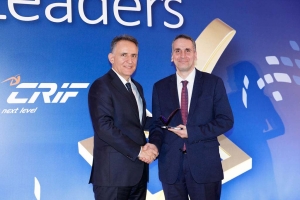
Piraeus Port Authority S.A. has received two new prestigious awards, being named both True Leader and ESG Leading Company of the Year. The “True Leaders” award, presented by ICAP CRIP, a leading group specializing in credit risk solutions and creditworthiness assessments, recognizes companies that stand out in the Greek market based on objective criteria derived from publicly available data. PPA S.A. has earned the “True Leaders” title once again this year, ranking among the top 500 companies in Greece with the highest profitability (EBITDA) in 2023, as well as a large employee base, placing it as a leader in the port industry.
The ESG Leading Company of the Year award, presented by Naftemporiki, highlights the importance of responsible business practices and sustainability. The award recognizes companies that integrate ESG, Environmental, Social, and Governance, criteria into their strategies and operations.
Mr. Su Xudong, CEO of PPA S.A., expressed the company’s satisfaction with these two significant awards, noting that they reflect the results of ongoing and systematic efforts at the port. The company’s strategy focuses on the development and modernization of Piraeus across all areas of port operations, while maintaining a consistent focus on sustainability and ESG principles. This approach has enabled PPA S.A. to maintain its position for another year as a top-performing company.
About PPA S.A.: Piraeus Port Authority SA is an Athens Stock Exchange listed company engaged in the management and operation of Piraeus port, Greece’s largest port and one of the largest integrated harbours in Europe, providing a complete range of services. Some of the company’s activities involve cruise, coastal (ferry/passenger), container and car terminal services, as well as general cargo, ship repair, logistic and free zone services. The main shareholder of Piraeus Port Authority S.A., with a stake of 67 percent, is COSCO SHIPPING, one of the largest maritime companies in the world.
Over the last decade the company has experienced a remarkable growth in all port activities, which is still underway, largely contributing to the country’s economy, while driven by green development and increased digitalization, alongside a people-first approach and a spirit of giving back to the society.
PPA is a member of “ECO PORTS”, holds ISO 9001:2015, ISO 14001:2015, ISO 50001:2018 Certifications, is included in the Athens Stock Exchange ESG index and is one of the “Most Sustainable Companies in Greece 2024”.
ELNAVI Newsletter
More Information: ELNAVI,
19, Aristidou str., Piraeus 185 31,
Tel.: +30 210 45.22.100, e-mail: This email address is being protected from spambots. You need JavaScript enabled to view it.
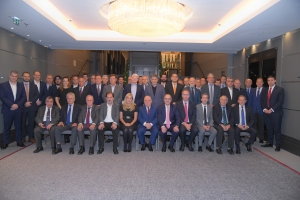
Bureau Veritas Marine & Offshore (BV) recently hosted the 37th Hellenic Marine Technical Committee meeting at the Grand Hyatt Hotel in Athens, bringing together maritime leaders and technical experts to discuss critical issues shaping the industry. The meeting began with a welcome address from George Sarris, Chairman of the Committee and President of Enterprises Shipping & Trading S.A., who emphasized the importance of collaboration in addressing the sector's challenges.
George Andreadis, Marine Chief Executive for Greece at BV, echoed this sentiment, reaffirming Bureau Veritas’ commitment to supporting the Greek maritime community. The event featured a series of key presentations.
Dr. John Kokarakis, Technical Director for the SEEBA Zone at BV, provided an overview of the latest regulatory updates, while Maria Lambardaki, Project Developer for the SEEBA Zone at BV, shared insights on the FUEL EU framework and a biofuels assessment study, highlighting developments that will shape future compliance strategies.
Bill Stamatopoulos, Global Business Development Director at BV Verifuel, introduced new charter party clauses for fuels and biofuels, aligned with ISO 8217-2024, sparking an engaging Q&A session. In the afternoon session, safety considerations for alternative fuels were discussed by Vassilios Dimoulas, Technology & Innovation Director for the SEEBA Zone at BV. The agenda also featured the launch of MOVE, an innovative collaborative platform by Bureau Veritas, introduced by George Stefanis, Commercial Manager for the SEEBA Zone.
The event concluded with an in-depth discussion of IACS Rec 34 (Rev.2), led by Quentin Derbanne, Scientific Director at BV. George Andreadis, Marine Chief Executive for Greece at Bureau Veritas Marine & Offshore, said: “This year’s discussions reflected the evolving challenges and opportunities in the maritime industry, particularly around decarbonization, regulatory compliance, and technological innovation.
At Bureau Veritas, we remain committed to being a trusted partner for the Greek maritime community, providing tailored solutions to help the stakeholders navigate the complexities of a rapidly changing landscape. The Technical Committee meeting continues to be a vital platform for collaboration, allowing us to stay aligned with industry needs and drive forward the shared goal of a sustainable and innovative maritime sector.”
ELNAVI Newsletter
More Information: ELNAVI,
19, Aristidou str., Piraeus 185 31,
Tel.: +30 210 45.22.100, e-mail: This email address is being protected from spambots. You need JavaScript enabled to view it.