



-
Home

-
About Elnavi
- elnavi

elnavi
15th Annual Capital Link Greek Shipping Forum 2025
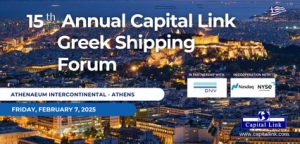
The 15th Annual Capital Link Greek Shipping Forum will be held in Athens on Friday February 7, 2025. The event is organized in cooperation with New York Stock Exchange and Nasdaq, and DNV.
The institutional leadership of global shipping, specifically IMO Representative, the heads of four global industry associations: BIMCO, INTERCARGO, INTERTANKO & The International Chamber of Shipping, high level representatives from the European Union, the Greek Minister of Shipping and Insular Policy, the Heads of Classification Societies, Global Heads of Shipping, Major Global Investors, will all attend the forum.
The agenda will focus on three main areas:
- the industry’s main trends and challenges
- the opportunities that lie ahead and strategies to complete in an increasingly complex and demanding world. This event will focus on three main areas: The current trends and outlook of the global economy and the main commodity, energy and shipping markets
- The critical challenges the industry faces today related to geopolitical and regulatory developments, such as compliance with decarbonization, trade sanctions & tensions, and the transformational impact of technology
- As usual, Maritime Finance will be the core subject with focus on bank finance, capital markets, alternative funding mechanisms and private equity.
With 1000+ participants every year, attendees can expect an informative networking forum connecting them to the shipping industry’s key players, including influential members in the financial community, such as commercial and investment banks. This one-day conference, known for its large attendance by shipowners, its rich informational content and the extensive marketing, networking and business development opportunities.
To attend the event please register at this link : https://forums.capitallink.com/shipping/2025greece/
KEYNOTE SPEAKERS
- H.E. Christos Stylianides, Minister of Maritime Affairs & Insular Policy - Hellenic Republic
- Mr. Apostolos Tzitzikostas, Commissioner- European Commission for Sustainable Transport & Tourism (via webcast)
- Dr. Dorota Lost-Sieminska, Director - Legal Affairs and External Relations Division – International Maritime Organization (IMO)
- Ms. Fotini Ioannidou, Director - EUROPEAN COMMISSION, DG for Mobility & Transport
- Ms. Elissavet Vozemberg – Vrionidi, Chair, Committee on Transport and Tourism - European Parliament
FEATURED SPEAKERS
Heads of Industry Associations
- Mr. Nikolaus Schües, President & Chairperson of the Board – BIMCO ; CEO - Reederei F. Laeisz
- Mr. John Xylas, Chairman - INTERCARGO ; President & CEO - Ariston Navigation Corp.
- Mr. Emanuele Grimaldi, Chairman - INTERNATIONAL CHAMBER OF SHIPPING ; President & MD; Managing Director - Grimaldi Euromed SpA; Grimaldi Group
- Dr. Nikolas P. Tsakos, Founder & CEO - TEN Ltd. (NYSE: TEN) ; Chairman - INTERTANKO (2014-2018)
Global Heads of Shipping
- Mr. Philipp Wünschmann, Head of Shipping – Berenberg
- Mr. Chris Conway, Managing Director, Global Head of Transportation – Export Agency Finance - Citi
- Mr. Christos Tsakonas, Global Head of Shipping - DNB
- Mr. Evan Cohen, Managing Director & Group Head of Maritime Finance - First Citizens Bank
AGENDA
Mr. George Teriakidis, Regional Manager for Southeast Europe – DNV Maritime
Mr. Nicolas Bornozis, President – Capital Link, Inc.
SHIPPING & TRADE IN A SHIFTING WORLD- CHALLENGES & OPPORTUNITIES
Moderator: Mr. Michalis Pantazopoulos, Senior Vice-President – Liberian Registry (LISCR Hellas)
Panelists:
- • Mr. Elias Triantafyllidis, Regional Bulk Carrier Segment Director, South East Europe Region – DNV Maritime
- • Dr. Gaby Bornheim, President – German Shipowners' Association (VDR)
- • Mr. Tim Wilkins, Managing Director – INTERTANKO
- • Mr. Gordon Robertson, Head of Greece – NorthStandard
- • Mr. Joe Kramek, President & CEO – World Shipping Council
FUEL & FLEET STRATEGIES: DRIVING THE SHIPPING ENERGY TRANSITION
Moderator: Mr. Ezekiel Davis, Vice President, Regional Business Development, Europe – ABS
Panelists:
- • Mr. Mark O'Neil, President & CEO – Columbia Group; President – InterManager
- • Mr. Mikki Koskinen, Managing Director – ESL Shipping Ltd.; Vice President – European Community Shipowners’ Associations (ECSA)
- • Mr. Polys Hajioannou, CEO – Safe Bulkers (NYSE: SB); Vice President – Cyprus Union of Shipowners
- • Mr. Hing Chao, Executive Chairman – Wah Kwong Maritime Transport Holdings; Co-Founder & Chairman – Hong Kong Chamber of Shipping
BANK FINANCE PANEL
Moderator: Mr. Jasel Chauhan, Partner, Head of International Finance – Hill Dickinson LLP
Panelists:
- • Mr. Philipp Wünschmann, Head of Shipping – Berenberg
- • Mr. Chris Conway, Managing Director, Global Head of Transportation – Export Agency Finance – Citi
- • Mr. Christos Tsakonas, Global Head of Shipping – DNB
- • Mr. Evan Cohen, Managing Director & Group Head of Maritime Finance – First Citizens Bank
MARKET UPDATE: FUELEU
Moderator: Mr. Alexander Prokopakis, Executive Director – International Bunker Industry Association (IBIA)
Panelists:
- • Mr. Theo Kourmpelis, Strategic Business Partner – Lloyd’s Register
- • Mr. Ralf Garrn, Managing Director – OceanScore
ALTERNATIVE FINANCE PANEL
Moderator: Mr. Chris Vartzis, Partner, Head of Maritime Finance, Greece – Stephenson Harwood
Panelists:
- • Mr. Nicholas M. Petrakakos, Partner & Managing Director, Maritime & Offshore Investment Banking – Alantra
- • Mr. George Fikaris, Managing Director – EnTrust Global
- • Mr. Kevin Kou, Director of Europe and America Department (Shipping) – ICBC Financial Leasing Co., Ltd.
- • Mr. Iraklis Tsirigotis, Director of Origination – Neptune Maritime Leasing Ltd.
NAVIGATING OPPORTUNITIES – INVESTMENT PERSPECTIVES IN THE MARITIME SECTOR
Moderator: Ms. Alexia Hatzimichalis, Partner – Watson Farley & Williams
Panelists:
- • Mr. Christian Rychly, Head of Shipping – MPC Capital; COO – MPC Container Ships
- • Mr. Tobias Backer, Executive Director – Pelagic Capital
- • Mr. Nicolas Tirogalas, Chief Investment Officer – Tufton Investment Management
KEYNOTE REMARKS:
H.E. Christos Stylianides, Minister of Maritime Affairs & Insular Policy - Hellenic Republic
FORUM LUNCHEON & OFFICIAL AWARD CEREMONY
KEYNOTE SPEAKER:
Mr. Apostolos Tzitzikostas, Commissioner - European Commission for Sustainable Transport & Tourism (via webcast)
INTRODUCTORY REMARKS:
Ms. Elissavet Vozemberg – Vrionidi, Chair, Committee on Transport and Tourism - European Parliament
OFFICIAL AWARD CEREMONY
2025 CAPITAL LINK GREEK SHIPPING LEADERSHIP AWARD
During the luncheon in the context of the forum, an official award ceremony will take place, and the "2025 Capital Link Greek Shipping Leadership Award" will be presented to Mr. Thanasis Martinos, Managing Director - Eastern Mediterranean Maritime Limited, for his outstanding contribution to Greek & global shipping.
Introductory Remarks: Mr. George Prokopiou, Founder - Dynacom Tankers Management; Dynagas Ltd. (DLNG) / Sea Traders, and Mr. George M. Foustanos, Maritime Historian & Founder - Greek Shipping Miracle.
The “Capital Link Greek Shipping Leadership Award” is presented annually to a leading maritime figure of the Greek Shipping Community who has gained the respect and the appreciation of the international shipping industry and who is also recognized for their outstanding contribution to elevating Greek Shipping to its leadership position globally.
Previous honorees were: 2013 - Captain Panagiotis N.Tsakos, Founder & President - Tsakos Group, 2014 - Mr. Pericles Panagopoulos, 2015 - Mr. Lambros Varnavides, Vice Chairman of the Baltic Exchange, Trustee of the Lloyds Register Foundation and Managing Director and Global Head of Shipping RBS 1998, 2016 - Mr. Nicolas, George and Andreas Tsavliris of the Tsavliris Salvage Group, 2017 - Professor Costas Th. Grammenos CBE DSc, Chairman C. Grammenos Centre of Shipping Trade & Finance, Bayes Business School, City, University of London, 2018 - Mr. Panos Laskaridis, President of European Community Shipowners Associations; CEO, Lavinia Corporation/Laskaridis Shipping Company Ltd. and Mr. Athanasios Laskaridis, Chairman and CEO of Lavinia Corporation, Lavinia Enterprises Limited and Laskaridis Shipping Company Ltd., 2019 - Captain Paris Dragnis, Chairman & Founder - Goldenport Group, 2020 - Mr. George Procopiou, Founder, Dynacom Tankers Management, Sea Traders – Dynagas, 2022 - Mr. Simeon Palios, Founder and Chairman, Diana Shipping, 2023 - Mr. Themistocles Vokos, Founder Member, Honorary Chairman of Posidonia; Founder of Seatrade, and 2024 - TEN LTD. -TSAKOS ENERGY NAVIGATION LTD., & Dr. Nikolas P. Tsakos, Founder & CEO - TEN Ltd. (NYSE: TNP); Chairman - INTERTANKO (2014-2018).
Official Luncheon Sponsor: The Marshall Islands Registry.
KEYNOTE REGULATORY ROUNDTABLE
Moderator: Mr. George Teriakidis, Regional Manager for Southeast Europe – DNV Maritime
Participants:
- Dr. Dorota Lost-Sieminska, Director, Legal Affairs & External Relations Division - International Maritime Organization (IMO)
- Ms. Fotini Ioannidou, Director, DG for Mobility & Transport - European Commission
KEYNOTE INDUSTRY LEADERSHIP ROUNDTABLE
STEERING THE COURSE - DRIVING THE INDUSTRY FORWARD
Moderator: Mr. Nicholas Brown, Corporate Affairs Director, Marine & Offshore – Bureau Veritas
Panelists:
- • Mr. Nikolaus Schües, President & Chairperson of the Board – BIMCO; CEO – Reederei F. Laeisz
- • Mr. John Xylas, Chairman – INTERCARGO; President & CEO – Ariston Navigation Corp.
- • Mr. Emanuele Grimaldi, Chairman – INTERNATIONAL CHAMBER OF SHIPPING; President & MD; Managing Director – Grimaldi Euromed SpA; Grimaldi Group
- • Dr. Nikolas P. Tsakos, Chairman – INTERTANKO (2014-2018); Founder & CEO – TEN Ltd.
EU FUNDING OPPORTUNITIES FOR THE MARITIME SECTOR
Presentation:
Mr. Vasileios Tsiamis, Partner – EY
DARK FLEET – SANCTIONS & TARIFFS
Presentation:
- Ms. Leigh Hansson, Partner – Reed Smith
- Mr. Alexander Brandt, Partner – Reed Smith
ELNAVI Newsletter
More Information: ELNAVI,
19, Aristidou str., Piraeus 185 31,
Tel.: +30 210 45.22.100, e-mail: This email address is being protected from spambots. You need JavaScript enabled to view it.
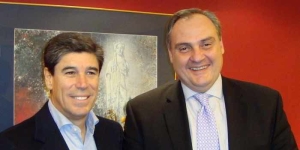
Stellar V Capital Corp. a newly organized special purpose acquisition company formed as a Cayman Islands exempted company and led by its co-CEOs Prokopios (Akis) Tsirigakis and George Syllantavos, announced the pricing of its initial public offering of 15,000,000 units at an offering price of $10.00 per unit. Each unit consists of one Class A ordinary share and one-half of one redeemable warrant. Each whole warrant will entitle the holder thereof to purchase one Class A ordinary share at $11.50 per share. The units are expected to trade on the Nasdaq Global Market (“NASDAQ”) under the ticker symbol “SVCCU” beginning January 30, 2025. No fractional warrants will be issued upon separation of the units and only whole warrants will trade. The Company expects the Class A ordinary shares and warrants comprising the units to begin separate trading on the 52nd day from this date. Once the securities comprising the units begin separate trading, the Class A ordinary shares and the warrants are expected to be traded on NASDAQ under the symbols “SVCC” and “SVCCW,” respectively.
BTIG, LLC is acting as sole book-running manager for the offering.
The Company has granted the underwriter a 45-day option to purchase up to an additional 2,250,000 units at the initial public offering price to cover over-allotments, if any. The offering is expected to close on January 31, 2025, subject to customary closing conditions.
A registration statement relating to the securities sold in the initial public offering was declared effective by the U.S. Securities and Exchange Commission (the “SEC”) on January 29, 2025. The offering is being made only by means of a prospectus. When available, copies of the prospectus may be obtained from: BTIG, LLC, 65 East 55th Street, New York, New York 10022, or by email at This email address is being protected from spambots. You need JavaScript enabled to view it. or by accessing the SEC’s website, www.sec.gov.
About Stellar
Stellar V Capital Corp. is a blank check company, also commonly referred to as a special purpose acquisition company, or SPAC, formed for the purpose of effecting a merger, share exchange, asset acquisition, share purchase, reorganization or similar business combination with one or more businesses.
ELNAVI Newsletter
More Information: ELNAVI,
19, Aristidou str., Piraeus 185 31,
Tel.: +30 210 45.22.100, e-mail: This email address is being protected from spambots. You need JavaScript enabled to view it.
Haralambos Fafalios: GSCC completes 90 years of a fruitful and creative course in shipping
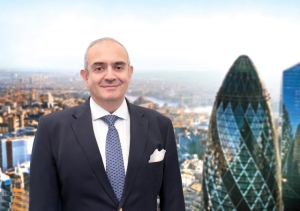
On the occasion of GSCC New Year’s vasilopita reception Mr. Haralambos J. Fafalios, president of the Greek Shipping Co-operation Committee referred to the latest shipping and geopolitical developments and underlined that 2025 marks the 90 years of the GSCC founding.
Mr. Fafalios said: “Fortunately, the two major conflicts that greatly concerned us since 2022 and 2023, i.e. Gaza and Ukraine, may be finally scaling down and thereby be of lesser danger to both seafarers and ships. However, it is too early to call them over.
We are very happy to hear that the crew of “Galaxy Leader” was released yesterday, after more than a year in captivity.
But there will still be risks in trading in the Red Sea and the Black Sea. The accompanying inefficiency has gone a long way in aiding the containership and tanker utilization rates.
The most important issue of the day was the recent inauguration of a new American President and how his administration’s strategy will affect world trade, and thus world shipping. It is too early to see if and when the threatened tariffs will be imposed and on whom. However, it seems most likely that any effects of such policies will primarily affect container and energy shipping and to a lesser extent the dry bulk trades.
We also have a significant number of elections in Europe and elsewhere, which in turn will determine trade and industrial policy. And of course, China itself is still the main receiver of global bulk commodities. Whilst many worry about China's actual growth rates, the fact remains that the imports that China needs are still colossal. Added to the above is the large fleet of underinsured, undermaintained vessels performing their job in the various sanctioned trades. Their presence is both unwelcome and dangerous to their crews and the environment.
Regardless of all these factors, the various shipping sectors have performed in different ways. The containership market has been very buoyant over the last 12 months, considering the huge orderbook that exists. The car carrier and RoRo sector has also provided very attractive returns. The tanker market was very positive but at the end of the year seemed to fall off significantly. Unfortunately, the dry bulk market had a lacklustre second half of year, apart from the capesize sector, and has ended the year at record low levels.
Gas carriers, especially the LNG carriers, have had a difficult year leading to some scrapping of turbine powered vessels. The LPG sector, whilst not at record highs, is still providing attractive returns.
It is against all this uncertainty that the world shipping fleet is growing significantly with very large numbers of container ships, car carriers, tankers, bulk carriers and gas carriers on order. Chinese, Korean and Japanese shipyards are all enjoying full orderbooks out to 2028 and beyond.
And a very significant number of these new ships are dual fuel, designed even though no one yet knows which is going to be the low carbon, high safety fuel of the future. I say high safety because all those who are ordering ammonia powered vessels have not yet quantified the huge safety risk to the crews and to third parties! The methanol solution may be safe but there is nowhere near enough supply to handle the world fleet needs. And finally, no one has decided whether LNG is or isn’t a green fuel, most people consider it to be a fossil fuel. So it is against this background that world shipping must take decisions which will affect them for the next 20-30 years.
It should be understood that simply selecting dual fuel bunkering arrangements will not in itself bring about a carbon free world because most of these alternative fuels still have many safety and availability risks and, most of all, are not that carbon free. This is especially the case for bulk/tramp vessels which make up the majority of the world fleet. The breakthroughs we really need are still not here and may not be so for many years.
Also, EU ETS, Fuel EU Maritime, CII and various taxes and levies, will not in themselves bring about a carbon free world. Any and all extra taxes will only hurt the consumers of commodities more than they will decarbonize shipping and not incentivize shipbuilders and engine builders to help shipping reach a carbon free world that we all wish for.
Another area which has become a bit overdone to say the least, is the area of vessel vetting.
Between adhering to class requirements, IMO regulations and Port State Controls, vessels themselves and their management have enough to deal with, and the result is generally a very safe fleet by all measures.
One must always remind oneself that the global shipping industry transports over 90 per cent of the world’s cargoes and with the lowest carbon footprint.
I am proud to say that for all these problems, Greek shipping organizations have ordered the largest number of newbuildings in all sectors, embracing efficient technologies and not just using the latest green fuel.
The Greek fleet, which represents the world’s largest fleet is also the biggest participant in the tramp trades. And thus, has to meet the requirements of all the world’s ports and cargoes.
On another level, I would like to remind everyone that this year London will host LISW 2025.
Whilst London has many of the world’s most prominent organizations, such as the IMO, ICS, INTERCARGO, INTERTANKO, IG of P&I Clubs, Baltic Exchange, with law firms and shipbroking companies having offices here, no shipping centre will prosper in the long term if shipping's actual decision makers live and work elsewhere.
Successive administrations have done very little to encourage London to retain its place as the home of entrepreneurs and shipping leaders. This omission will ultimately have long-term consequences for London.
The G.S.C.C. itself, has been based in London since 1935, starting off as the G.S.S.C. (Greek Shipping Stabilization Committee) but over the decades, has been the conduit between the Greek shipping community and London and the U.K.
Our closeness to all the London based shipping and maritime organizations has proved invaluable for both them and ourselves as we have been able to express the views and experiences of the world's most prominent shipping nation.
We still urge the Greek government to do more for maritime education and provide more spaces for students, better facilities and more lecturers.
Although we recognise the progress achieved, the Greek flag itself has to become less bureaucratic in order to tempt back owners into using it. We have been saying this for many years.
And as Europe's leading maritime force, we need more permanent representation at the I.M.O and the E.U.
The Hellenic Coast Guard, as always, should remain a very important element of the Greek maritime safety and marine pollution preventing system and should also be strengthened.
Most importantly, of all our gratitude goes to all our seafarers, who endure so many challenges every day and are rarely appreciated for their hard work. World trade would not function without their selfless efforts every day of the year keeping ships trading from one port to the other whilst encountering rough seas and challenging port environments.
Those working in shipping offices ashore must also not be forgotten for all their hard work in keeping this vital industry functioning smoothly.
Finally, I would like to thank my G.S.C.C. colleagues for their dedication and hard work, and in particular Kostas Amarantidis and his team for running this organization so smoothly. Thank you”.
ELNAVI Newsletter
More Information: ELNAVI,
19, Aristidou str., Piraeus 185 31,
Tel.: +30 210 45.22.100, e-mail: This email address is being protected from spambots. You need JavaScript enabled to view it.
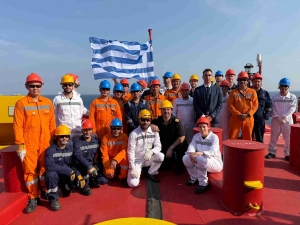
Capital Ship Management Corp. has completed the registration process of the Tanker 'Akrisios' ('ΑΚΡΙΣΙΟΣ') to the Greek registry. M/T 'Akrisios' is now sailing around the world flying the Greek flag.
The M/T 'Akrisios' is a 50,113 dwt, eco-type Chemical/Product MR tanker, built in 2023 by Hyundai Vietnam Shipyard Co Ltd. in Vietnam. Being Tier III compliant for reduced NOx emissions, assigned ABS ENVIRO notation, as well as ABS Wind-Assisted Ready, HVSC-Ready and LNG Fuel Ready notations, and equipped with IHM notation for safe recycling, M/T ‘Akrisios’ is one of the most environmentally friendly, technologically advanced and efficient vessels in the global MR fleet.
The change of flag on the 'Akrisios' took place at the port of Khor Fakkan in the United Arab Emirates (UAE), in the presence of the Maritime Attaché of Shanghai, the Lieutenant Commander of the Hellenic Coast Guard, Mr. S. Kakarouchas.
ELNAVI Newsletter
More Information: ELNAVI,
19, Aristidou str., Piraeus 185 31,
Tel.: +30 210 45.22.100, e-mail: This email address is being protected from spambots. You need JavaScript enabled to view it.
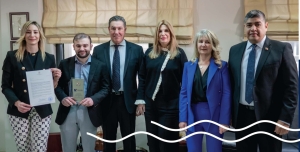
In the ever-challenging and unpredictable world of maritime operations, moments arise that define not just the skill of a crew but their character and humanity. Such a moment occurred in the early hours of December 28, 2024, when the MV Rukbat Star demonstrated remarkable courage and operational excellence by rescuing 53 individuals from perilous conditions in the Atlantic Ocean. This rescue exemplifies the unwavering commitment of maritime professionals to the sanctity of human life and the profound responsibilities they bear.
The Rescue Operation
Executing a maritime rescue in the open sea is a complex and hazardous task. The crew of the Rukbat Star approached the situation with professionalism and precision. After notifying MRCC Las Palmas of the boat’s discovery, the crew began the rescue operation at 02:35 LT. Maneuvering carefully to avoid capsizing the rubber boat, they ensured a safe transfer of all individuals aboard the larger vessel.
The Call That Changed a Voyage
At 01:57 local time (00:57 GMT), while on a routine voyage from Agadir to Laâyoune, Morocco, the MV Rukbat Star received an urgent distress signal relayed by the Maritime Rescue Coordination Center (MRCC) in Las Palmas. A rubber boat carrying approximately 53 individuals was reported to be in danger at position LAT 28°48.7’N, LONG 011°55.6’W. The call triggered an immediate and coordinated response from the vessel’s crew, led by Captain Raffat. Within minutes, the Rukbat Star, a Shal low Draft General Cargo vessel, altered its course to the coordinates provided. This decision marked the beginning of a high-stakes search and rescue operation in the open sea. By 02:20 LT, the vessel had located the distressed rubber boat approximately 1 nautical mile from its initial reported position. The situation was dire: the small craft was overcrowded, with 53 individuals clinging to hope in the cold night air. Capt Rafat’s and crew’s efforts were guided not only by operational expertise but also by a profound sense of duty. As each individual was brought aboard, they were given immediate assistance, including blankets, water, and medical attention where needed. Despite the challenges of conducting such a rescue in the early hours of the morning, the operation proceeded smoothly and efficiently. By 05:35 LT, the Moroccan Royal Navy vessel 203 had arrived on the scene to facilitate the next stage of the operation. Over the next two hours, the rescued individuals were carefully transferred to the navy ship in small groups, ensuring their safety and comfort. By 08:00 LT, all 53 individuals were safely aboard the Royal Navy vessel, marking the successful conclusion of the rescue
A Testament to Maritime Cooperation
The success of this operation underscores the critical importance of international coordination in maritime search and rescue missions. From the initial distress signal relayed by MRCC Las Palmas to the seam less handover of rescued individuals to MRCC Rabat and the Moroccan Royal Navy, the operation highlighted the strength of collaborative efforts across jurisdictions. Captain Raffat and his crew maintained constant communication with both MRCCs, adhering to instructions and providing updates at every stage. This cooperation ensured that the rescue was conducted with maximum efficiency and that the individuals in distress received timely assistance. It also reinforced the shared commitment of maritime authorities and operators to the safety of life at sea—a principle enshrined in international maritime law.
Recognition and Reflection
The heroic actions of the MV Rukbat Star crew have garnered widespread praise from all corners of the maritime community. In a formal letter, the ship’s owners lauded Capt Rafat and the crew for their bravery and professionalism, describing the operation as a shining example of the values that define the maritime profession. “We are immensely proud of our crew’s quick thinking, dedication, and adherence to the highest standards of safety,” the letter read. “Their actions are a testament to the spirit of humanity that drives all seafarers.
The charterers of the vessel, Marsa Maroc, and the agency HAMAG also ex pressed their gratitude, emphasizing the humanitarian significance of the rescue. “This act expresses solidarity and cooperation regardless of differences in race,” their statement noted. “It reflects the high spirit of humanity possessed by the crew and the vessel’s owners.” Such recognition is well-deserved. The crew’s actions not only saved lives but also upheld the proud tradition of seafarers as guardians of the ocean. For centuries, the maritime profession has been bound by an unspoken code: to offer assistance to those in need, regardless of the cost or inconvenience. The MV Rukbat Star has now joined the ranks of countless vessels that have honored this code, standing as a beacon of hope and humanity in the vast expanse of the sea. In recognition of the crew’s extraordinary efforts, the Panama Flag awarded the Management Company and the vessel on 16.01.2025 at the premises of the Management Company. Additionally, the Propeller Club, to which the Management Company is a member, has informed the United States Coast Guard (USCG) about the incident, further highlighting the significance of this heroic act.
A Broader Perspective
The rescue conducted by the MV Rukbat Star is a re minder of the ongoing humanitarian challenges faced by those at sea. Whether fleeing conflict, seeking better opportunities, or simply caught in misfortune, countless individuals find themselves in perilous conditions on the world’s oceans. The responsibility of seafarers to offer assistance in such situations is more critical than ever. As we look to the future, it is essential to continue sup porting the maritime community in their efforts to up hold the safety of life at sea. This includes investing in training, enhancing safety equipment, and fostering international cooperation. It also means recognizing and celebrating the heroic actions of seafarers like the crew of the MV Rukbat Star, whose courage and humanity make a tangible difference in the lives of others.
Conclusion
The events of December 28, 2024, will forever be etched in the history of the MV Rukbat Star. In a moment of crisis, the vessel’s crew rose to the occasion, embodying the highest ideals of the maritime profession. Their actions saved 53 lives and reaffirmed the enduring values of compassion, solidarity, and professionalism that define seafarers around the world. As the maritime community reflects on this remarkable rescue, it serves as both a source of inspiration and a call to action. Let us continue to support and celebrate the unsung heroes of the sea, ensuring that their bravery and dedication remain a cornerstone of our shared maritime heritage.
Fair winds and following seas to all who sail in service of others.
Image 1: Katerina Kardaris (Vice President Atlantides Group), George Kardaris (Vice President Atlantides Group), Ioannis Kardaris (CEO Atlantides Group), Julie Lymberopulos Karnakis (Ambassador and General Consul of Panama in Greece), Eleni Kyriakopoulou-Kardari & Eng. Jose Demostenes Racine, Panama Flag Administration
Image 2: Ambassador and General Consul of Panama in Greece Mrs. Julie Lymperopulos Karnakis, Ioannis Kardaris Ceo of Company Atlantides Group & George Mpoukaouris Legal Department Atlantides Group
Image 3: Ioannis Kardaris (CEO Atlantides Group), Katerina Kardaris (Vice President Atlantides Group), George Kardaris (Vice President Atlantides Group) & Eleni Kyriakopoulou-Kardari
Image 4: Ioannis Kardaris (CEO Atlantides Group)
ELNAVI Newsletter
More Information: ELNAVI,
19, Aristidou str., Piraeus 185 31,
Tel.: +30 210 45.22.100, e-mail: This email address is being protected from spambots. You need JavaScript enabled to view it.
Seanergy Maritime expands fleet with two Japanese ships one Newcastlemax vessel and one Capesize vessel
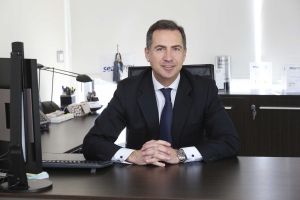
Seanergy Maritime Holdings Corp has entered into two definitive agreements with unaffiliated third parties in Japan for (i) the purchase of a Japanese-built Newcastlemax vessel and (ii) a bareboat charter with a purchase obligation for one Japanese-built Capesize vessel. The total acquisition cost is approximately $69.0 million.
Acquisition of a Japanese Newcastlemax Vessel
The Newcastlemax was built in 2013 at Imabari Shipbuilding Co., Ltd., Saijo Shipyard, a reputable Japanese shipyard, and has a cargo-carrying capacity of approximately 207,851 deadweight tons ("dwt"). The vessel will be renamed “Meiship” and is expected to be delivered within the first quarter of 2025, subject to customary closing conditions.
Acquisition of a Japanese Capesize Vessel through Bareboat Charter Agreement
The Capesize was built in 2011 at Mitsui SB and has a capacity of 178,459 dwt. Pursuant to the terms of the 6-month bareboat charter with an unaffiliated third party in Japan, Seanergy has advanced a down payment of $4.0 million and will pay an additional $4.0 million upon delivery of the vessel to the Company, as well as a daily bareboat rate of $9,750 over the charter period. The vessel will be renamed “Blueship” and is expected to be delivered within the first quarter of 2025. At the end of the 6-month bareboat period, Seanergy has an obligation to purchase the vessel for $22.5 million. The purchase price for the two vessels is expected to be funded with a combination of cash on hand and proceeds from credit facilities the Company will seek to enter into.
Stamatis Tsantanis, the Company’s Chairman & Chief Executive Officer, stated: “We are pleased to announce the addition of two high-quality Japanese vessels to Seanergy’s fleet, which will integrate perfectly with our existing pure-play Capesize fleet. These transactions mark a significant milestone in the Company’s strategic fleet expansion strategy, which is designed to strengthen our position within the industry. With a fully delivered fleet of 21 vessels and 3.8 million dwt, we are advancing our competitive edge through disciplined growth, in alignment with our focused capital allocation strategy. "We expect these acquisitions to further enhance our operational capabilities while reinforcing our commitment to delivering consistent shareholder returns. We believe that the deliveries of the two new vessels are well-timed, based on the higher level of the freight futures for the second half of 2025. "Despite the seasonal weakness, we remain confident in the long-term outlook of the Capesize sector, driven by favorable market fundamentals, a limited newbuilding orderbook, and what seems to be a sustained global demand for major raw materials.”
Seanergy Maritime Holdings Corp. is an international shipping company that provides marine dry bulk transportation services through the ownership and operation of dry bulk vessels. The Company's operating fleet consists of 19 Capesize vessels (1 Newcastlemax and 18 Capesize) with an average age of 13.8 years and aggregate cargo carrying capacity of approximately 3,417,608 dwt. Upon completion of the aforementioned transactions, the Company's operating fleet will consist of 21 vessels (2 Newcastlemax and 19 Capesize), with an aggregate cargo carrying capacity of 3,803,918 dwt.
image: Stamatis Tsantanis, Chairman & Chief Executive Officer of Seanergy Maritime Holdings Corp.
ELNAVI Newsletter
More Information: ELNAVI,
19, Aristidou str., Piraeus 185 31,
Tel.: +30 210 45.22.100, e-mail: This email address is being protected from spambots. You need JavaScript enabled to view it.
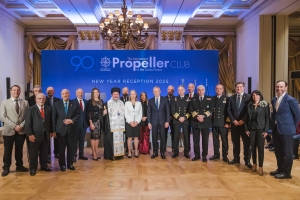
On Monday, January 27th, The Propeller Club Port of Piraeus held its traditional Pitta-cutting event, at the Grand Ballroom of the Hotel Grande Bretagne, where they had the pleasure of welcoming 400 Members and friends of the Club. The vasilopita was blessed by His Grace, Bishop of Salona, Mr. Ignatios.
The evening’s highlights included a heartfelt recognition of the nine past Presidents, in honour of their invaluable contributions, along with a special award of recognition presented to Daisy Andrianopoulou, Head of Protocol Office, in appreciation of her remarkable 39 years of service at the American Embassy and her long and exceptional cooperation with the Club.
The students of Pierce College added a wonderful energy to the evening with their vibrant performances of traditional Greek dances.
The event held special meaning to the Club, as this year marks the 90th anniversary of our continuous presence and impact to the shipping industry and Greek society.
ELNAVI Newsletter
More Information: ELNAVI,
19, Aristidou str., Piraeus 185 31,
Tel.: +30 210 45.22.100, e-mail: This email address is being protected from spambots. You need JavaScript enabled to view it.
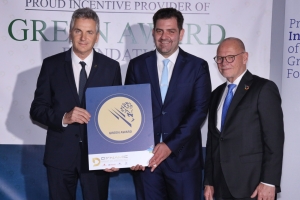
Dynamic Group of Companies, a pioneer in repair and maintenance services for maritime and heavy industries, has partnered with the Green Award Foundation as an official incentive provider. This strategic collaboration reflects Dynamic's continued commitment to supporting excellence and sustainability in the maritime industry.
Dynamic Group of Companies has a legacy spanning over 35 years, built on professionalism, superior quality of work, and transparency. Known for pioneering industry standards, Dynamic provides a comprehensive portfolio of services, including ship repairs, shipbuilding, industrial scaffolding, and turnkey solutions, earning the trust of clients worldwide.
As an incentive provider, Dynamic Group of Companies will offer significant discounts to Green Award certified vessels across various services, including:
- Dynamic General Ship Repairs & Shipbuilding (Greece) – 17% discount
- Dynamic General Ship Repairs & Shipbuilding (Europe) – 15% discount
- Dynamic UHPWJ and Painting Works (Greece & Europe) – 12% discount
- Dynamic Scaffolding Works (Greece & Europe) – 16% discount
- Dynamic Cleaning Works (Greece & Europe) – 17% discount
- Dynamic Turnkey Solutions for Ship Repairs (Greece & Europe) – 14% discount
Capt. Dimitrios Mattheou, Chairman of Green Award Foundation, shares “I am delighted to see the inclusion of Dynamic Group of Companies in the Green Award program. Our mission is to advance ESG and sustainable development practices within the industry and by partnering with organizations like Dynamic, we foster a stronger network of environmentally conscious and responsible shipping stakeholders.
“Joining the Green Award Foundation as an incentive provider demonstrates our unwavering commitment to sustainable practices and industry leadership” said Capt. Yannis Nikolitsis, Chief Executive Officer of Dynamic Group of Companies. “This partnership enables us to further support Green Award-certified vessels and contribute to the broader movement toward environmental responsibility and operational efficiency.”
Jan Fransen, Executive Director of Green Award Foundation also expresses that “proper maintenance of vessels is crucial to all aspect of operations. It positively affects environmental performance, increases reliability and enhances safe opera
tions resulting in more efficient throughput of cargoes in the logistic chain.”
About Dynamic Group of Companies
Dynamic Group of Companies is a trusted provider of marine and industrial services, with a proven track record of over 35 years in the maritime and heavy industries. Based in Greece, the company has established itself as a leader in ship repairs, shipbuilding, and industrial services, known for its high-quality workmanship, integrity, and commitment to customer satisfaction. With operations across Greece and Europe, Dynamic continues to set new industry standards while maintaining a focus on innovation and professionalism.
About Green Award Foundation
For over 30 years, Green Award Foundation has been dedicated to promoting sustainable and safe shipping. It works with seagoing ship operators, inland navigation operators, ports, governments, suppliers and service providers on a non-profit basis. Green Award's programme includes standard setting, audit/inspections, certification and rewards. Over 200 parties provide financial incentives / discounts to ships with a Green Award certificate. The Foundation started in 1994 for seagoing vessels and in 2011 opened to inland shipping. The organisation is governed by an independent board of respected industry professionals. Its operations align with 13 United Nations' Sustainable Development Goals (UN SDGs) and support Environmental, Societal and Governance (ESG) policies on around 60 shipping related topics globally.
ELNAVI Newsletter
More Information: ELNAVI,
19, Aristidou str., Piraeus 185 31,
Tel.: +30 210 45.22.100, e-mail: This email address is being protected from spambots. You need JavaScript enabled to view it.
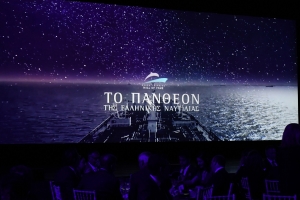
This year’s Induction Ceremony for the The Greek Shipping Hall of Fame will take place on the evening of Monday 12 May 2025 at Megaron, The Athens Concert Hall.
Greek shipping’s most prestigious annual dinner event is again expected to attract a capacity audience of more than 550 guests. Leading personalities of the Greek shipping world and their international partners can look forward to an exceptional evening celebrating the industry’s leadership, history, and culture.
Caroline Lowry, Director of Phoebe Media & Events Ltd, the exclusive event organiser, comments: “This year’s Induction Ceremony & Dinner reaches a special milestone as it will be the Greek Shipping Hall of Fame’s 10th consecutive annual induction ceremony in Athens! We look forward to welcoming event sponsors and their guests on this very special occasion to honour many of Greek shipping’s most historic personalities and to unveil the latest Inductees to the Hall of Fame – the 2024 Inductees.”
A donation from the event proceeds will again be made to Greek children’s charities.
The Greek Shipping Hall of Fame thanks event sponsors confirmed so far:
ABS, IRI/The Marshall Islands Registry and Shanghai Waigaoqiao Shipbuilding Co. as Co-Lead Sponsors of the Induction Ceremony & Dinner 2025.
Christopher J. Wiernicki, ABS Chairman and CEO comments: “The characteristics of the Greek shipping industry – resilience, innovation and entrepreneurial genius – are the very same characteristics exhibited by the members of the Hall of Fame. And so, this celebration of their achievements is a celebration of the entire industry and its remarkable story of success in the face of adversity. As a long-standing partner to Greek shipping, ABS is proud to honour these visionaries and by extension the entire industry.”
Theo Xenakoudis, Director Worldwide Business Operations and Managing Director Greece, International Registries Inc. comments: “International Registries, Inc. (IRI) and the Marshall Islands Registry are proud to continue our support of the Greek Shipping Hall of Fame for an eighth year. We look forward to recognising the profound impact this year’s honourees have left on the world-leading Greek fleet.”
Wang Qi, Chairman of Shanghai Waigaoqiao Shipbuilding, comments: “SWS takes immense pride in its deep-rooted and enduring partnership with the Greek shipping industry. 2024 marked a significant milestone for SWS, as we achieved 100 million dwt of vessels delivered in the past 25 years. Our vessels, built for Greek shipowners, have contributed to the global maritime community, enhancing the fleet’s diversity and integration. As we continue our journey, we are honoured to extend our support to the Greek Shipping Hall of Fame as a Co Lead Sponsor once again. We draw continuous inspiration from the ambition and drive demonstrated by the Inductees, and we eagerly anticipate joining our Hellenic friends in May to celebrate this truly unique event.”
Premium Sponsors confirmed to date are Ascenz Marorka, Cayman Islands Shipping Registry, Citi Private Bank, Moore Greece, OceanScore, Optima Shipping Services and PPG.
Standard sponsors so far include, China Classification Society, Columbia Shipmanagement, EDIT Automation, Franman, Isle of Man Ship Registry, KPMG, Kyvernitis Travel, Lloyd’s Register, Marichem Marigases Worldwide, Marine Support, Monjasa, Polygreen and SiriusPoint.
Sponsorship enquiries: This email address is being protected from spambots. You need JavaScript enabled to view it.
General enquiries: This email address is being protected from spambots. You need JavaScript enabled to view it.
The Greek Shipping Hall of Fame resides at www.greekshippinghalloffame.org
ELNAVI Newsletter
More Information: ELNAVI,
19, Aristidou str., Piraeus 185 31,
Tel.: +30 210 45.22.100, e-mail: This email address is being protected from spambots. You need JavaScript enabled to view it.
The President of Panama states that his government respects Panama’s Canal permanent neutrality
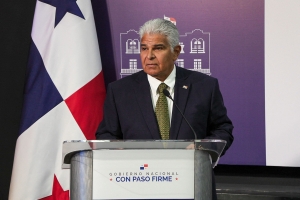
The President of the Republic of Panama José Raúl Mulino made the below statement stating the official position of the Republic of Panama regarding the recent remarks concerning the Panama Canal.
“On behalf of the Republic of Panama and its people, I must categorically reject the remarks made by President Donald Trump regarding Panama and its Canal during his inaugural address. I reiterate what I expressed in my address to the nation on December 22: the Canal is and will continue to be Panama’s, and its administration will remain under Panamanian control, respecting its permanent neutrality. There is no presence of a foreign nation that interferes with our administration.
The Canal was not a concession from anyone. It is the result of generational struggles that culminated in 1999 through the Torrijos-Carter Treaty. For the past 25 uninterrupted years, we have administered and expanded it responsibly to serve the world and its commerce, including the United States.
We will exercise our rights underpinned by the legal foundation of the Treaty, the dignity that sets us apart, and the strength granted to us by International Law as the ideal framework for managing relations between nations—especially allied and friendly nations, as demonstrated by history and our interactions with the United States. Dialogue is always the path to clarify the aforementioned points without undermining our rights, our total sovereignty, and ownership of our Canal”.
ELNAVI Newsletter
More Information: ELNAVI,
19, Aristidou str., Piraeus 185 31,
Tel.: +30 210 45.22.100, e-mail: This email address is being protected from spambots. You need JavaScript enabled to view it.