


-
Home

-
Maritime Training
- elnavi

elnavi
THEA EAST MED IN THE SPOTLIGHT AT PSTF
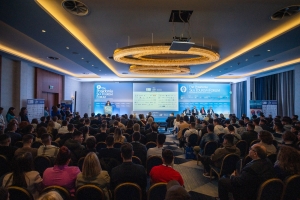
Challenges and Opportunities for Further Cruise Growth in the Region
As the 8th Posidonia Sea Tourism Forum (PSTF) opens its doors in Heraklion this May, the spotlight is firmly on the Eastern Mediterranean, where the cruise industry faces multiple challenges potentially slowing its growth.
These range from concerns about overcrowding and its strain on local environments and resources to port infrastructure deficiencies and geopolitical uncertainties.
Under the theme “The Med: A Compelling Need for New Marquee Ports & Destinations,” this year’s forum will bring together key industry stakeholders, industry leaders and policy makers to explore these pressing issues and find solutions. Discussions will focus on solutions and strategies to overcome these challenges while unlocking new opportunities for sustainable and consistent growth.
“The wider Eastern Mediterranean faces complex dynamics,” said George Koumpenas, President, Hellenic Cruise Ship Owners and Associated Members’ Union (EEKFN), “The ongoing Gaza conflict and escalating security risks in the Red Sea have significantly contracted the cruise footprint across the region, echoing patterns last seen after the Arab Spring. Key markets such as Israel, Egypt, Cyprus, and parts of Southern Turkey are experiencing a notable downturn.”
Despite these pressures, Greece has demonstrated resilience, with strong recovery figures post-pandemic and promising forecasts.
According to data from the Hellenic Ports' Association (E.LIM.E.), Greece recorded 5,490 cruise ship calls in 2024, representing a total of 7,927,709 passenger visits - an increase of 260 calls and 924,559 passenger movements compared to the previous year. Homeporting activity continues its upward trend, with Piraeus leading the charge with 635 cruise turnarounds and over 1.1 million passengers, followed by Corfu, Heraklion, Lavrion, and Thessaloniki.
But challenges to further growth remain. Although the region recovered quickly after the pandemic crisis, Turkey has yet to reach its erstwhile heights as a dominant cruise magnet. With a potential reopening of cruising in the Black Sea not in sight, coupled with Turkey’s slower recovery, the performance of Greek ports in the Northern and Eastern Aegean Sea has also been impacted to a degree.
These fast-changing dynamics and the disparity in the growth pattern between destinations in the same region, make itinerary and vessel deployment planning even more complex. The trend of cruise lines also deploying larger vessels in the Eastern Mediterranean to meet growing demand is going to feature high in the list of PSTF topics. While these ships offer economies of scale and increased passenger capacity, they strain the region’s port and tourism infrastructure, especially when there are multiple ships in port.
Marquee destinations are now imposing daily passenger caps or passenger taxes, as is the case with Santorini and its 8,000-person per day limit, while other ports are contemplating similar restrictions.
Without coordinated action, infrastructure limitations could hinder further growth. “A more holistic and forward-thinking development strategy is now essential,” said Athanasios Liagos, Chairman, E.LIM.E.
“Investments must be directed at both expanding and modernising Greek ports, and also those at smaller emerging destinations, and at the same time safeguarding the cultural and environmental heritage that makes these destinations attractive in the first place.”
Cruise stakeholders will call for enhanced collaboration between governments and the cruise industry to earmark specific destinations for sustainable expansion. Larger vessels are expected to remain the industry standard, making it crucial to identify ports with the capacity - and the means and ambition - to upgrade facilities without compromising authenticity.
“As operators, we see enormous potential in the East Med beyond the traditional hotspots,” commented Manolis Alevropoulos, Vice President, Marine Operations, Celebrity Cruises – Royal Caribbean Group.
“With the right infrastructure and destination management, several underutilized ports could emerge as marquee destinations in their own right, unlocking tremendous value for travellers and local economies alike.”
There are several mainland and island destinations across the whole region with great potential for an infrastructure upgrade that could support larger vessels and provide valuable travel experiences, but remain dormant and unexploited. Any future growth strategy will have to take this destination potential into account.
Sponsors for the 2025 PSTF include: Diamond sponsor Heraklion Port Authority, Gold sponsors Region of Crete and Hellenic Organisation of Cultural Resources Development (ODAP), Silver Sponsors Greek National Tourism Organization and Piraeus Port Authority, Bronze sponsors Celestyal and Kyvernitis Travel Group, Sponsors Thessaloniki Port Authority and Minoan Lines, Supporters Heraklion International Airport and Creta Interclinic, Official Airline SKY express, and is organized under the auspices of the Ministry of Maritime Affairs & Insular Policy, the Ministry of Tourism, and the Municipality of Heraklion and is supported by the Hellenic Chamber of Shipping, the Cruise Lines International Association (CLIA), the Association of Mediterranean Cruise Ports (MedCruise), the Union of Cruise Ship Owners & Associated Members of Greece, and the Panhellenic Ship Suppliers and Supporters Association.
ELNAVI Newsletter
More Information: ELNAVI,
19, Aristidou str., Piraeus 185 31,
Tel.: +30 210 45.22.100, e-mail: This email address is being protected from spambots. You need JavaScript enabled to view it.
Lloyd's Register approves design of ammonia dual-fuel system on Trafigura's newbuild medium gas carriers
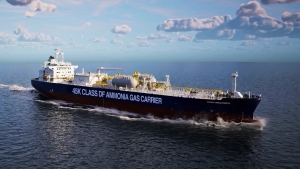
Lloyd's Register (LR) has confirmed the completion of a joint development project (JDP) designing ammonia dual-fuel systems on Trafigura's newbuild medium gas carriers (MGCs).
LR completed an extensive design evaluation and safety assessment to approve the designs in line with its rules and international regulations.
Implementing ammonia dual-fuel systems on these vessels marks a significant step towards expanding the use of low-carbon fuels beyond specialised vessels to more diverse ship types. Trafigura is one of the first operators to use this technology on MGCs commercially.
The Singapore-based commodity trading company signed a contract with HD Hyundai Mipo (HMD) in 2024 to build four 45,000 cubic metre MGCs, powered by WinGD ammonia dual-fuel engines and Alfa Laval's Ammonia Release Mitigation System. They are designed to transport both liquefied petroleum gas (LPG) and ammonia.
The vessels will be built at HMD's shipyard in Ulsan, South Korea, with deliveries expected to be completed during 2028.
Panos Mitrou, LR’s Global Gas Segment Director, said: “We are proud to have played a pivotal role in this collaborative project. It demonstrates our commitment to supporting the maritime industry’s energy transition efforts by offering exceptional technical expertise, rigorous safety evaluations, and regulatory leadership.
“As a trusted maritime services partner, we continue to pioneer the pathway enabling the adoption of alternative fuels and innovative technologies that shape the future of decarbonised shipping.”
Vessels powered by low carbon ammonia have the potential to significantly reduce carbon emissions, compared to a conventional marine fuel burning vessel. The ammonia carried by the newbuild vessels can also support decarbonisation of a wide range of heavy industries.
The order for the newbuild dual-fuel vessels makes Trafigura one of the first movers in the low-emission tanker market and sends an important demand signal to the market to generate zero‑carbon fuel production and infrastructure. It also supports Trafigura’s commitment to reduce the carbon intensity of its own shipping fleet and align with the Group’s commitments and participation to the WEF’s First Mover’s Coalition and Global Maritime Forum’s Getting to Zero Coalition.
“EU regulations have been crucial in allowing us to execute this order,” said Andrea Olivi, Global Head of Shipping for Trafigura. “If we are to decarbonise freight and increase the demand for zero-carbon fuels across the world, we need the IMO to implement regulations including EU ETS and Fuel EU maritime on a global scale. The IMO needs to introduce a simple and transparent policy framework including, in our view, a global fuel standard combined with a straightforward levy applied equally across the board.”
About Lloyd’s Register
Trusted maritime advisors, partnering with clients to drive performance across the ocean economy.
Lloyd’s Register (LR) is a global professional services group specialising in marine engineering, technology and digital solutions. We were created more than 260 years ago as the world’s first marine classification society to improve and set standards for the safety of ships.
Today we are a leading provider of classification and compliance services to the marine and offshore industries, helping our clients design, construct and operate their assets to accepted levels of safety and environmental compliance. We also provide advisory services and digital solutions, supporting fleet and voyage performance and optimisation.
Our digital solutions are relied upon by more than 30,000 vessels, following the acquisition of OneOcean in 2022 and Ocean Technologies Group in 2024. In the race to zero emissions, our research, advisory and technical expertise and industry-firsts are supporting a safe, sustainable maritime energy transition.
Lloyd’s Register Group is wholly owned by the Lloyd’s Register Foundation, a politically and financially independent global charity that promotes safety and education.
About Trafigura
Trafigura is a leading commodities group, owned by its employees and founded over 30 years ago. At the heart of global supply, Trafigura connects vital resources to power and build the world. We deploy infrastructure, market expertise and our worldwide logistics network to move oil and petroleum products, metals and minerals, gas and power from where they are produced to where they are needed, forming strong relationships that make supply chains more efficient, secure and sustainable. We invest in renewable energy projects and technologies to facilitate the transition to a low-carbon economy, including through MorGen Energy and joint venture Nala Renewables.
The Trafigura Group also comprises industrial assets and operating businesses including multi-metals producer Nyrstar, fuel storage and distribution company Puma Energy, the Impala Terminals joint venture and Greenergy, supplier and distributor of transportation fuels and biofuels. The Group employs over 13,000 people, of which over 1,400 are shareholders and is active in over 150 countries.
ELNAVI Newsletter
More Information: ELNAVI,
19, Aristidou str., Piraeus 185 31,
Tel.: +30 210 45.22.100, e-mail: This email address is being protected from spambots. You need JavaScript enabled to view it.
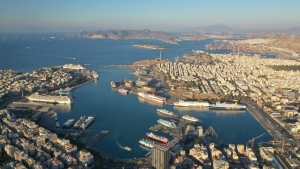
Piraeus Port Authority S.A. (PPA) reported financial results for the fiscal year 2024, posting record-high net profit and dividend distribution, along with strong performance across its core business segments.
Total revenue reached €230.9 million, up 5.0% or €11.1 million compared to 2023. Pre-tax profits rose to €112,9 million, an increase of 17.4%, while profits after taxes reached €87,4 million, marking a 30.8% increase.
These reflect the continued strengthening of the company’s financial robustness and operational efficiency. Cash reserves amounted to €204.5 million as of December 31, 2024.
The proposed dividend per share surged by 43.7% to €1.92, compared to €1.336 in 2023. This marks the fourth consecutive year of improved financial performance and represents the highest net profit and dividend distribution in the company’s history, underscoring PPA’s continued upward trajectory.
In individual business sectors, cruise operations delivered another record year, with all-time highs in vessel calls, passenger volumes, and a 15.5% increase in revenues. Strategic planning and targeted collaborations further strengthened Piraeus’ position as a leading cruise hub in the Eastern Mediterranean.
The car terminal posted a 28.2% revenue increase, primarily driven by higher storage revenues and a pickup in domestic activity. This growth offset a decline in overall unit volume, underscoring the sector’s ability to generate higher value through operational efficiency.
At the Pier I Container Terminal, managed directly by PPA, revenues rose 10.1%, supported by improved operational performance and increased cargo volumes in the second half of the year. Piers II and III saw a 6.5% drop in revenue, attributed to a challenging first half.
Overall, the container terminal business showed impressive resilience by retaining the total revenues from Piers I, II and III at the same level, despite global supply chain disruptions linked to the Red Sea crisis.
In Coastal Shipping, revenue rose by 6.5% driven by increased passenger and vehicle traffic, confirming Piraeus’ key role in connecting the mainland with the islands.
The Ship Repair Zone remained active, with total revenue from ship repair activities increasing by 0.6%.
Su Xudong, CEO of PPA S.A. stated “We are proud to report another year of strong financial and operational performance. Despite a challenging global environment, our ability to deliver record results while investing in the future of the port demonstrates the strength of our strategy and the dedication of our people. The proposed dividend reflects our commitment to creating value for shareholders and supporting the long-term development of the port and the Greek economy”.
ELNAVI Newsletter
More Information: ELNAVI,
19, Aristidou str., Piraeus 185 31,
Tel.: +30 210 45.22.100, e-mail: This email address is being protected from spambots. You need JavaScript enabled to view it.
21 Consecutive Years of QUALSHIP 21 Recognition for the Republic of the Marshall Islands
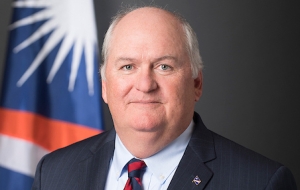
The Republic of the Marshall Islands (RMI) Registry’s long-term and consistent commitment to high quality shipping continues to be recognized by the international community.
At INTERTANKO’s North America panel meeting held in Stamford, Connecticut, the United States Coast Guard (USCG) presented QUALSHIP 21 qualifying jurisdictions for this year. For the 21st consecutive year the RMI remains a qualifying jurisdiction. The RMI is the only of the world’s three largest registries to achieve QUALSHIP 21 for this year, and the only registry in the world to achieve 21 consecutive years.
“Our focus on compliance goes beyond statistics and requirements,” commented Bill Gallagher, President of International Registries, Inc. and its affiliates (IRI), which provide administrative and technical support to the RMI Registry. “Our collaborative approach with owners and operators of RMI-flagged vessels and global port State control (PSC) authorities supports safe vessel operation for today, while our focus on continual internal improvement aims to ensure consistent and steadfast support for the years ahead.”
To maintain the consistent support that has driven the RMI Registry’s outstanding PSC record IRI continues to invest in resources and tools needed for the future. Resources spread across IRI’s global offices, such as specialized teams in the fields of alternative fuels and decarbonization technologies and experts in safety and security, help owners and operators of RMI-flagged vessels meet the challenges ahead.
“Consistently achieving a strong PSC record is not only a testament to our owners and operators, but also a reflection of the extensive resources the Registry provides including regular, open, and transparent dialogue with PSC authorities and stakeholders worldwide,” said Thomas Bremer, Vice President, Fleet Quality and Compliance. “As the regulatory environment and onboard equipment and technology have changed so has the support from the Registry.”
Streamlining processes and procedures through technology, the RMI Registry continues to evolve to meet the needs of an increasingly digital and technologically advanced maritime industry.
“We have made a significant investment in technology and human resources to enhance collaboration across our departments, teams, and offices,” noted Theo Xenakoudis, Chief Commercial Officer and Managing Director – Piraeus. “Digital tools for scheduling inspections, data analysis of PSC trends, and electronic access to our teams enhance client services. We aim to create a seamless client experience across our 28 worldwide offices that strengthen our ability to share information, identify trends, and address potential areas of concern to build a stronger, high-quality fleet.”
In addition to 21 consecutive years on the USCG’s QUALSHIP 21 roster, the RMI remains whitelisted with the Paris and Tokyo Memorandums of Understanding and has a favorable rating with the Australian Maritime Safety Authority. The RMI Registry included 5,773 vessels as of 31 March 2025. As of 11 March 2025, 26.1% of all vessels enrolled in QUALSHIP 21 are RMI-flagged, with 36.7% of vessels enrolled in QUALSHIP 21 achieving E-ZERO status are RMI-flagged vessels.
ELNAVI Newsletter
More Information: ELNAVI,
19, Aristidou str., Piraeus 185 31,
Tel.: +30 210 45.22.100, e-mail: This email address is being protected from spambots. You need JavaScript enabled to view it.
TEN becomes one of the largest independent Shuttle tanker operators ordering 9 shuttle tankers in S. Korea
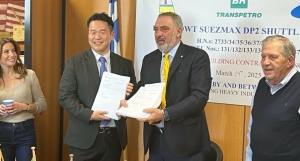
Targeting milestone opportunities to build modern vessels TEN proceeded to the construction of of nine DP2 Suezmax Shuttle Tankers with 15-year employment contracts for Petrobras Transporte S.A. (“Transpetro”), Brazil’s largest oil and gas transportation company. The deliveries are scheduled for 2027 and 2028 and TEN intends to build the vessels at Samsung Heavy Industries Co. Ltd. in South Korea, the yard that the Company is currently using for the construction of three DP2 Shuttle Tankers, all on long-term contracts to major oil companies, with deliveries in 2025 and 2026.
The charter will be in the form of a bareboat and the charterer will assume all operating and technical costs associated with the running of the vessels during the assigned employment period. With a proforma fleet of 16 DP2 Suezmax Shuttle tankers, TEN is now one of the world’s largest Shuttle tanker owners. Gross revenues from this project are expected to be around $2.0 billion.
“Over the years, we have targeted milestone opportunities to build modern vessels that added an edge, making TEN one of the largest, diversified and versatile energy transporters in the world. In 2007, the acquisition and construction of nine ice-strengthened vessels from Western Petroleum established TEN as one of the major ice-class tanker owners globally. In 2014, Equinor contracted us to build nine Aframax vessels for long-term employment, solidifying TEN as one of its prime vessel providers. In early 2024, TEN acquired a five-vessel modern fleet from Norway’s Viken Crude making TEN one of the biggest operators of Dual-Fuel LNG vessels in the water. The nine DP2 Suezmax Shuttle tankers announced today, on top of the three under construction at present and four already in the water and, make us one of the largest operators of Suezmax DP2 Shuttle tankers globally,” said George Saroglou, President & COO of TEN.
“As we progress with the construction of the nine vessels, we look forward to taking delivery of the three Shuttle tankers currently being built in South Korea while positioning TEN as the company of choice for the long-term needs of the world’s major oil concerns. The Company’s industrial approach when it comes to fleet employment has served us well over the years as it provides cash flow stability, visibility, flexibility and the firepower to move on opportunities fast while maintaining our ability to reward shareholders with healthy dividends irrespective of market conditions. On behalf of our management and myself, I would like to thank all involved in making this milestone transaction happen,” Mr. Saroglou concluded.
TEN, founded in 1993 and celebrating this year 32-years as a public company, is one of the first and most established public shipping companies in the world. TEN’s diversified energy fleet currently consists of 83 vessels, including twelve DP2 shuttle tankers, two scrubber-fitted suezmax vessels, two scrubber-fitted MR product tankers and five scrubber-fitted LR1 tankers under construction, consisting of a mix of crude tankers, product tankers and LNG carriers, totaling 10.2 million dwt.
ELNAVI Newsletter
More Information: ELNAVI,
19, Aristidou str., Piraeus 185 31,
Tel.: +30 210 45.22.100, e-mail: This email address is being protected from spambots. You need JavaScript enabled to view it.
Maritime Industry Leaders join new MIT Maritime Consortium with a mission to drive forward research and development
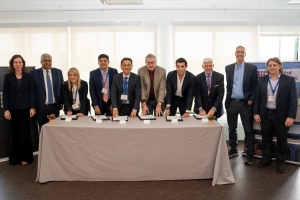
Maritime Consortium’s Founding Members include the American Bureau of Shipping (ABS), Capital Clean Energy Carriers Corp. and HD Korea Shipbuilding & Offshore Engineering, Innovation Members include Foresight-Group, Navios Maritime Partners, L.P., Singapore Maritime Institute, and Dorian LPG.
The American Bureau of Shipping (ABS), Capital Clean Energy Carriers Corp. and HD Korea Shipbuilding & Offshore Engineering have joined the MIT Maritime Consortium, a pioneering collaboration between academia and leading industry stakeholders dedicated to developing cutting-edge solutions that enhance industry competitiveness while reducing environmental impact.
This new international consortium brings together academic and maritime industry leaders, developing new technologies for nuclear propulsion and alternative fuels, data-powered strategies for efficient operation and decision making, autonomy and cybersecurity, as well as on-board manufacturing of spare parts. By addressing climate-harming emissions in the maritime shipping industry - which currently transports 90% of world cargoes, while contributing 2% of global energy-related CO2 emissions - this initiative supports compliant, environmentally-friendly operations aligned with the decarbonization goals set by the International Maritime Organization.
Together the members aim to explore new designs that meet the economic, technological and environmental requirements of commercial shipping, assess the feasibility of alternative fuels, develop data-driven algorithms, and enhance autonomous platforms focused on climate, sustainability, AI and AR for manufacturing.
The MIT Maritime Consortium’s Founding Members include the American Bureau of Shipping (ABS), Capital Clean Energy Carriers Corp., and HD Korea Shipbuilding & Offshore Engineering. Innovation Members include Foresight-Group, Navios Maritime Partners L.P., Singapore Maritime Institute, and Dorian LPG.
Prof. Themis Sapsis, Director of the Center for Ocean Engineering at MIT stated, “This consortium envisions to develop novel engineering solutions towards ship decarbonization, such as nuclear propulsion, advanced data analytics and autonomy, sophisticated cybersecurity frameworks, novel hydrodynamic advancements, and 3d printing technologies, that will create competitive advantage for companies and organizations.
“It is an effort that will bring the latest and greatest from MIT, catalyzing synergies between participating companies and almost every department in the School of Engineering, and in close collaboration with the Schwarzman College of Computing, while elevating our programs in technology and policy, which is an essential ingredient for this type of effort,” Sapsis said.
“This consortium brings a powerful collection of significant companies that, together, has the potential to be a global shipping shaper in itself,” said Christopher J. Wiernicki, ABS Chairman and CEO. “The members are all world-class organizations and real difference makers. The ability to harness their experience and know-how, along with MIT’s technology reach creates real jet fuel to drive progress. As well as researching key barriers, bottlenecks and knowledge gaps in the emissions challenge, the consortium looks to enable development of the novel technology and policy innovation that will be key. Long term, the consortium hopes to provide the gravity we will need to bend the curve to reach emissions objectives.”
As a Founding Member of the Consortium, Capital Clean Energy Carriers Corp., hopes to play a pivotal role in providing operational expertise and real-world insights from its diverse fleet, which includes various vessel types and technologies. This collaboration aims to drive innovation, establish robust standards, and shape forward-looking policies. By leveraging these insights, along with consortium members, CCEC, will look to contribute to the development of enhanced AI-driven models and technological solutions aimed at optimizing ship efficiency, improving predictive maintenance, and advancing autonomous decision-making.
“At Capital Clean Energy Carriers Corp., we are spearheading the advancement of cutting-edge technologies in the global maritime industry for a more energy-efficient, safer, and sustainable shipping industry. We firmly believe that the newly-founded Maritime Consortium will drive transformative change, fostering innovation in maritime practices, strengthening resilience against challenges, and paving the way for a more sustainable future”, Jerry Kalogiratos, Chief Executive Officer of CCEC commented.
CCEC’s participation in the Maritime Consortium, is a milestone that underscores the company’s unwavering commitment to cleaner energy solutions shaping a greener future for the industry.
“We are pleased to jointly demonstrate HiNAS [Hyundai intelligent Navigation Assistant System] with Capital as part of our efforts to advance AI-based autonomous navigation. We will initiate integrated verification of various solutions developed in collaboration with Avikus. Through our involvement in this consortium, we aim to set global technology standards and spearhead the development of next-generation eco-friendly ships that are both cost-efficient and dependable,” said Mr. Chang Kwangpil, CTO of HD Korea Shipbuilding & Offshore Engineering.
Learn more about the Maritime Consortium at MIT Maritime Consortium – Maritime Research at MIT: maritime.mit.edu
Image: Representatives from across the MIT Maritime Consortium attended a signing ceremony at MIT. Left to right: Fotini Christia (MIT), Anantha Chandrakasan (MIT), Chara Papaefthymiou (Navios), Amulya Mohapatra (Foresight Group Services), Kwangpil Chang (HD KSOE), Chris Wiernicki (ABS), Miltiadis Marinakis (Capital), John Lycouris (Dorian LPG), Daniel Huttenlocher (MIT), and Themis Sapsis (MIT).
Credits: Photo: Conor McArdle/School of Engineering
ELNAVI Newsletter
More Information: ELNAVI,
19, Aristidou str., Piraeus 185 31,
Tel.: +30 210 45.22.100, e-mail: This email address is being protected from spambots. You need JavaScript enabled to view it.
Dynacom launched its first panamax tanker in China
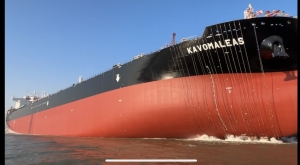
Dynacom’s first 75K DWT Oil Tanker (YZJ2023-1576) was launched on 21st March 2025, at New Yangzi Shipyard.
This milestone marks a significant step forward in its construction project. The company expressed its appreciation to all team members who have contributed their expertise and dedication to reach this important stage.
Their hard work and commitment as well as the continued collaboration with American Bureau of Shipping (ABS) have been instrumental in making this achievement possible.
Dynacom has an extensive newbuilding program for 50 tankers with a focus on larger sizes.
Of these 50 vessels, 16 are aframax/LR2 tankers, 14 are suezmaxes, 12 are panamax/LR1 and eight are VLCCs.
Notably 46 ships are under construction in China while four suezmaxes are being constructed in S. Korea.
In total the group of companies led by George Prokopiou has a newbuilding program for 88 vessels.
Dynacom has as already under construction 50 tankers, Sea Traders 30 bulk carriers and Dynagas eight LNG carriers.
Prokopiou’s existing fleet consists of 67 operational tankers under the management of Dynacom, five bulk carriers under Sea Traders and 21 LNG carriers under Dynagas including six vessels managed by US Listed Dynagas LNG Partners.
ELNAVI Newsletter
More Information: ELNAVI,
19, Aristidou str., Piraeus 185 31,
Tel.: +30 210 45.22.100, e-mail: This email address is being protected from spambots. You need JavaScript enabled to view it.
For the first time a Cypriot has been elected as Vice – Chair of the IMO Legal Committee
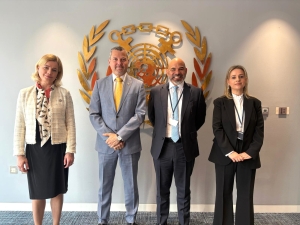
Mrs. Lydia Markari - Kyriacou, Head of the Legal Affairs Unit of the Shipping Deputy Ministry was elected in the position of Vice-Chair of the Legal Committee of the International Maritime Organization (IMO). Lydia has been unanimously elected by the IMO Member States at the Legal Committee’s 112th session, which is currently taking place in London.
This prestigious election of the Shipping Deputy Ministry’s Head of Legal Affairs Unit, is a testament to Cyprus' contribution to the work of the International Maritime Organization. It is also a significant commitment towards the future work of the IMO Legal Committee, one of the IMO’s main bodies, in advancing legal discussions on pressing maritime issues and shaping international maritime law.
Lydia, a qualified lawyer, has served the Cyprus Maritime Administration as a legal officer for more than twenty years and has extensive experience in maritime law and the law of the sea and in drafting and implementing maritime legislation including International Conventions under the purview of the Legal Committee. She has represented the Republic of Cyprus at numerous IMO Legal Committee meetings over the years.
ELNAVI Newsletter
More Information: ELNAVI,
19, Aristidou str., Piraeus 185 31,
Tel.: +30 210 45.22.100, e-mail: This email address is being protected from spambots. You need JavaScript enabled to view it.
GNV Tests RINA’s Machine Learning and Predictive Models to Optimize Energy Use on New Vessel
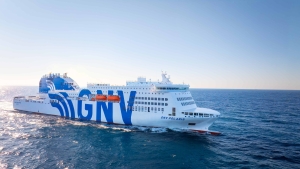
GNV has chosen RINA’s SERTICA Performance for the latest addition to its fleet, the GNV Polaris, starting right away by testing the ship during its inaugural voyage from China to Italy. The tool for monitoring operational data on ships allows efficient energy consumption management and the optimization of performance. Thanks to the system, GNV has identified two optimal operating scenarios allowing for the lowest Specific Fuel Consumption, and a predictive model that serves as both a benchmark and a simulator for future operations.
This advanced system functions as a real-time data collector recording, through a network of sensors installed on board, key parameters such as fuel consumption and the power of diesel generators and engines. While its primary focus is on monitoring energy expenditure, the collected data allows for the calculation of the ship’s actual efficiency, providing a comprehensive view of its operational performance to the crew onboard and the onshore management.
During the GNV Polaris’ voyage, various operational scenarios were simulated at different speeds and configurations, such as alternating the use of diesel generators and shaft generators, to identify the most efficient solutions in terms of fuel consumption. Subsequently, the operational setup for the Genoa-Palermo route was tested, verifying the consistency between the sea trial results and the forecasts. The analysis confirmed the system’s accuracy, allowing for the definition of the optimal configuration to reduce fuel consumption.
The project also includes the development of predictive models using machine learning techniques. A physical model of the ship, trained with the collected data, achieved remarkable accuracy. Performance models have proven to be reliable tools for accurately estimating ship efficiency and can serve as benchmarks to assess performance degradation over time or as scenario simulators if the ship is deployed on a different route or schedule. This analysis may also indicate the need for retrofit actions, such as hull and propeller cleaning or engine maintenance.
Ivana Melillo, Energy Efficiency Director at GNV said “GNV is making significant strides in sustainable shipping with their latest initiatives. One of the most notable developments is the introduction of the GNV Polaris, the first of four new ships designed to enhance sustainability in maritime transport. The GNV Polaris boasts high environmental standards and can achieve over 30% fuel savings, resulting in a significant reduction in CO₂ emissions compared to the vessels currently in the fleet.
GNV plans to continue modernizing its fleet with more eco-friendly ships. This includes the introduction of new vessels that meet higher environmental standards, reducing emissions and improving fuel efficiency. GNV is exploring the use of alternative fuels such as liquefied natural gas (LNG) and biofuels. These fuels produce fewer emissions compared to traditional marine fuels.
We are investing in energy management systems that leverage digital technologies to optimize energy use on board its vessels. This helps in reducing emissions and improving overall sustainability.
These digitalization efforts are part of GNV’s broader strategy to enhance operational efficiency, reduce environmental impact, and contribute to a more sustainable future in maritime transport.”
Lars Riisberg, Marine Digital Solutions Executive Director at RINA, said “The added value of SERTICA Performance lies in its ability to provide unparalleled data monitoring and analysis. By collecting data every five minutes and transmitting aggregates to shore, it enables detailed historical analysis. Its real-time dashboards, accessible remotely, support continuous monitoring and advanced analytics for internal assessments and fuel budget planning. A key advantage is its capability to set alerts for real-time sensor status monitoring, ensuring prompt anomaly detection. Additionally, SERTICA Performance tracks hull degradation and energy efficiency, comparing real- time performance against optimal conditions to drive informed decision-making”.
Currently installed on over 800 ships, SERTICA Performance continues to expand with new implementations on vessels under construction.
Founded in 1992 and part of the MSC Group, GNV is one of the leading shipping companies operating in the cabotage and passenger transport sector worldwide. With a fleet of 25 ships, the company operates 31 routes across 7 countries, connecting Sardinia, Sicily, Spain, France, Albania, Tunisia, Morocco, and Malta.
RINA, leading certification and engineering company, provides a wide range of services across the Energy, Marine, Infrastructure & Mobility, Certification, Industry and Real Estate sectors. In December 2023, alongside the majority shareholder Registro Italiano Navale, Fondo Italiano d’ Investimento SGR entered the shareholding structure guiding a pool of co-investors. With revenues in 2023 of 797 million euros, 5,800 employees and 200 offices in 70 countries worldwide, RINA is a member of key international organizations and an important contributor to the development of new legislative standards.
ELNAVI Newsletter
More Information: ELNAVI,
19, Aristidou str., Piraeus 185 31,
Tel.: +30 210 45.22.100, e-mail: This email address is being protected from spambots. You need JavaScript enabled to view it.
New shipowners join Bluepool Panamax pool
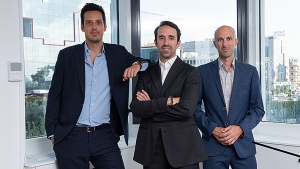
Castor Maritime and Sea Tribute Shipmanagement are the latest companies to enter vessels into the Bluepool Panamax dry bulk shipping pool.
Castor Maritime, a NASDAQ listed diversified global shipping and energy company, has entered MV Magic P (2004 built, 76,453 dwt). Sea Tribute Shipmanagement, a specialist Greek dry bulk management company, has added MV Sea Dawn (2014 built, 80,915 dwt).
“From Asian interests to privately held Greek companies and listed corporations, we serve a diverse range of companies and continue to attract top-tier owners. Now in our fourth year of operation, we have a strong track-record and are confident that we will keep delivering market beating returns to our pool participants. Our fleet is very diverse in terms of designs and specifications, which allows us to employ each vessel in its best aligned trades, maximizing returns for all participants,” said Aris Bachos, Bluepool’s head of chartering.
The pool, whose fleet will grow from 16 to 19 vessels within the next months thanks to new commitments, offers an open-door policy to its participants with flexible entry and exit clauses and allows owners to either earn spot returns or to switch to a fixed period rate whenever they choose. Monthly reports on each vessel’s commercial performance ensure full transparency and oversight for owners.
Image: The Bluepool head of chartering Aris Bachos with the other founding Bluepool managers Kimon Angelopoulos and Nikolas Garviilidis
ELNAVI Newsletter
More Information: ELNAVI,
19, Aristidou str., Piraeus 185 31,
Tel.: +30 210 45.22.100, e-mail: This email address is being protected from spambots. You need JavaScript enabled to view it.