


-
Home

-
Maritime Training
- elnavi

elnavi
Panama strengthens its global leadership in maritime safety and regulation during the IMO Assembly
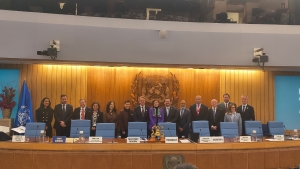
Panama is participating this week, from November 24 to 28, in the 34th session of the Assembly of the International Maritime Organization (IMO), the most significant forum within the global maritime system and the specialized governing body of the United Nations. This setting defines the policies, standards, and priorities that will shape the international maritime agenda in the years ahead.
The Panamanian delegation is composed of Ambassador and Permanent Representative to the IMO, Ginette Testa; Director General of Merchant Marine, Ramón Franco; Secretary General of the Panama Maritime Authority, Volney Guinard; and members of Panama’s Permanent Mission to the organization.
During the opening day, the delegation held an official meeting with IMO Secretary- General Arsenio Domínguez, where they discussed strategic matters for the country and reaffirmed Panama’s commitment to strengthening technical and regulatory cooperation with the organization.
The Assembly brings together 176 Member States to examine issues of global relevance, including maritime safety, marine environmental protection, the decarbonization of maritime transport, the modernization of technical standards, and capacity-building programs for developing States.
One of the most important items on this year’s agenda is the election of the IMO Council, where Panama is seeking to renew its seat in Category A, the organization’s most influential group. Panama’s candidacy is supported by its pivotal role in global maritime trade, its position as the world’s largest ship registry, and its consistent record of compliance with international conventions.
Throughout the first day of sessions, the delegation also met with key industry stakeholders, including the International Chamber of Shipping, to strengthen strategic alliances and reinforce Panama’s presence in the sector’s most prominent global dialogue platforms.
The Panamanian representation emphasized that the country’s active participation in high-level forums such as the IMO Assembly reaffirms its commitment to a safe, efficient, and internationally aligned maritime sector, as well as to the continued leadership that distinguishes Panama in global maritime governance.
ELNAVI Newsletter
More Information: ELNAVI,
19, Aristidou str., Piraeus 185 31,
Tel.: +30 210 45.22.100, e-mail: This email address is being protected from spambots. You need JavaScript enabled to view it.
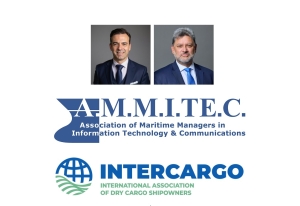
AMMITEC – the Association of Maritime Managers in Information Technology and Communications – is proud to announce its official acceptance as an Associate (Reciprocal) Member of INTERCARGO, the International Association of Dry Cargo Shipowners.
AMMITEC President Dr. Matthew Maheras stated: “Joining INTERCARGO marks an important milestone for AMMITEC and for the broader maritime technology community. As digital transformation accelerates, collaboration between operational, technical, and digital leaders becomes essential. We look forward to contributing our expertise, sharing knowledge, and working collectively to enhance safety, resilience, and
innovation across dry bulk shipping.”
A Strategic Step for the Maritime IT & Digital Transformation Community INTERCARGO represents some of the most significant stakeholders in the global dry bulk shipping sector, promoting safety, quality, operational efficiency, and environmental protection across the industry. AMMITEC’s entry into the Association highlights the growing importance of Information Technology, Cybersecurity, Digital Communications, and AI- driven innovation in the maritime domain.
Strengthening Collaboration Across Operational & Digital Domains
Through this membership, AMMITEC members will gain access to INTERCARGO’s:
- • Technical, operational, and safety initiatives
- • Global working groups and consultations
- • Industry insights, research, and best-practice frameworks
- • Stakeholder forums on fleet performance, safety, and decarbonisation
- • Dialogue on cyber readiness, digital governance, and emerging technologies
Dimitris Monioudis, Chairman of INTERCARGO’s Technical Committee added: “INTERCARGO strives to engage and collaborate with all industry stakeholders for the sake of a genuinely sustainable and forward-thinking dry bulk sector. AMMITEC’s joining the INTERCARGO wider membership will provide us with expert knowledge and experience in relation to IT, Digital, Cybersecurity, and Communications developments both today and in the future, always focusing on safe and pragmatic roadmaps available to our members.”
About INTERCARGO
The International Association of Dry Cargo Shipowners (INTERCARGO) unites and promotes quality dry bulk shipping, bringing together more than 400 forward thinking companies from 37 countries. The dry bulk sector is the largest shipping sector in terms of number of ships and deadweight. Dry bulk carriers account for 43% of the world fleet (in tonnage) and carry an estimated 55% of the global transport work. INTERCARGO convened for the first time in 1980 in London and has been participating with consultative status at the International Maritime Organization (IMO) since 1993. INTERCARGO provides the forum where dry bulk shipowners, managers and operators are informed about, discuss, and share concerns on key topics and regulatory challenges, especially in relation to safety, security, the environment, and operational excellence. The Association promotes its members’ positions at the IMO, EU as well as other shipping and international industry fora, always maintaining free and fair competition as a focal principle.
About AMMITEC
AMMITEC – the Association of Maritime Managers in Information Technology and Communications – is Greece’s leading professional community representing IT, Digital, Cybersecurity, and Communications leaders across the maritime sector. Through knowledge exchange, best-practice sharing, industry forums, and strategic partnerships, AMMITEC drives technological excellence, digital transformation, and cyber resilience in shipping.
ELNAVI Newsletter
More Information: ELNAVI,
19, Aristidou str., Piraeus 185 31,
Tel.: +30 210 45.22.100, e-mail: This email address is being protected from spambots. You need JavaScript enabled to view it.
Propeller Club Port of Piraeus’ reception in honor of the U.S. Ambassador to Greece Kimberly Guilfoyle
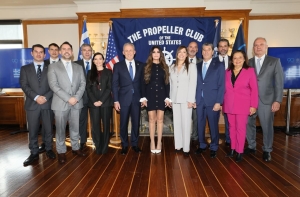
On Thursday, November 20th, at the historic Yacht Club of Greece, our Club hosted a reception in honor of the U.S. Ambassador to Greece, Kimberly Guilfoyle, with the presence of distinguished representatives of the Greek shipping community, as well as senior members of the political and military leadership.
During the ceremony, Ambassador Guilfoyle was officially welcomed as the Club’s new Honorary President -a role traditionally held by every U.S. Ambassador to Greece since 1935- receiving the Club’s Certificate and pin.
Throughout the formal addresses, emphasis was placed on the excellent relations between Greece and the United States, the recent major agreements in the energy sector, and the new prospects for further synergies within the maritime industry.
The event concluded with a warm and lively cocktail reception.
ELNAVI Newsletter
More Information: ELNAVI,
19, Aristidou str., Piraeus 185 31,
Tel.: +30 210 45.22.100, e-mail: This email address is being protected from spambots. You need JavaScript enabled to view it.
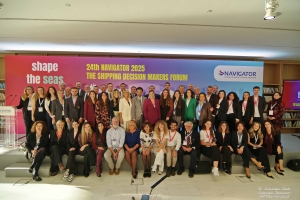
Shape the Seas: Green, Digital, Human-Centered
The 24th NAVIGATOR 2025 – The Shipping Decision Makers Forum concluded with remarkable success, bringing together 670 leading shipping executives from 361 companies, alongside representatives from 20 embassies and 41 shipping organizations, academic institutions, and ports. The Forum once again confirmed its position as the strategic compass for the global maritime industry.
The event opened with remarks from Stefanos Gikas, Deputy Minister of Maritime Affairs and Insular Policy, George Alexandratos, President of the Hellenic Chamber of Shipping, and H.E. Fang Qiu, Ambassador of the People’s Republic of China.
H.E. Matthew Lodge, British Ambassador to Greece, joined one of the panels, while Dr. Kyriacos Sabatakakis, Country Managing Director at Accenture, shared groundbreaking research on the application of Artificial Intelligence in shipping.
In the end, Lars Rasmussen, co-creator of Google Maps, addressed the Forum, highlighting the transformative power of digital mapping, AI, and connectivity in navigating maritime and global trade networks.
Throughout the Forum, the leading voices of Greek and international shipping engaged in high-level discussions on decarbonization, smart shipping, ESG integration, human sustainability, and geopolitics. Danae Bezantakou, CEO of Navigator Shipping Consultants, celebrated the enduring spirit of Greek shipping, emphasizing innovation, sustainability, and global collaboration. She highlighted the YES to Schools initiative, which brings maritime education directly to students across Greece, inspiring a new generation to pursue careers at sea and ensuring the legacy of the industry continues to thrive.
Olga Bezantakou, Chief Legal Counsel & COO of NAVIGATOR stated that “Navigator Shipping Consultants proudly represents some of the world’s most reputable towing companies and shipping agencies, operating in over 1,400 commercial ports worldwide with a combined fleet of more than 1,000 tugboats, ensuring top-tier service, operational safety, and competitive rates for Greek shipowners.”
Greece remains a global maritime power and is leading the transition towards a sustainable, safe and competitive shipping, where innovation coexists with people. Investing in green ships, ports and educational structures strengthens both the sector and the cohesion and development of our island societies”, underlined the Minister of Maritime & Insular Policy, Vasileios Kikilias. Deputy Minister of Shipping, Stefanos Gikas, pointed out that the green transition must be realistic and fair, ensuring the competitiveness of shipping while at the same time supporting smaller businesses and encouraging balanced development throughout the country.
The Ambassador of China underscored the strategic significance of China-Greece cooperation in shipping, pointing to sustainable green technologies, digitalization, and smart ports as key drivers for the future. He also noted China’s recent milestones, including the first green methanol bunkering in Shanghai and the launch of the world’s first autonomous research vessel. Dr. Kyriakos Sabatakakis, , emphasized: “Greece has historically been a global leader in shipping — a sector that forms both the foundation of our economy and a core part of our identity. Today, we have the opportunity to lead once again, this time in the new era of artificial intelligence. Connecting the deep expertise of Greek shipping with the capabilities of AI can become a benchmark for the digital reinvention of the industry worldwide.”
The Forum opened with the panel “From Oil to Green: Tradition or Transition?”, which examined the complex realities of maritime decarbonization, where environmental ambition intersects with geopolitical, regulatory, and commercial challenges. Fuel choices are increasingly shaped by national energy policies, taxation frameworks, and evolving IMO and EU regulations, while the slow adaptation of port infrastructure continues to hinder progress. Panelists emphasized that shipping has historically shown a remarkable ability to adapt, innovate, and self-regulate, and that a unified industry voice is essential in engaging policymakers to ensure a sustainable maritime future.
The session “Disruption on Deck: Who Controls the Future of Smart Shipping” explored how connectivity, data, and AI are reshaping operations, from real-time performance monitoring and routing optimization to predictive maintenance and cybersecurity. As vessels become more digital and move toward autonomy, managing cyber-piracy and system vulnerabilities has become as critical as traditional security measures. The panel highlighted that digital adoption is moving from experimentation to tangible operational impact.
In the “ESG as a Strategic Imperative” discussion , experts stressed that ESG has evolved from obligation to strategic opportunity. Environmental, social, and governance principles are now central to corporate identity and competitiveness. Artificial Intelligence enables real-time ESG tracking, while panelists underscored that sustainability begins with leadership and company culture.
The session on “The Human Element Onboard and Ashore: Challenges to Tackle, Solutions to Unlock” reinforced that shipping’s future depends on its people. Issues such as mental health, connectivity at sea, workforce renewal, and generational inclusion were addressed. Panelists stressed the importance of mentorship, clear career pathways, and a culture that values both experience and innovation to retain talent and ensure the sustainability of Greek seafarers.
Finally, the “Sea Power & Global Politics: Who Rules the Shipping Routes?” discussion highlighted that control of the seas is no longer solely a measure of military might but is increasingly defined by resilience and cooperation. Experts warned of hybrid threats, from cyberattacks to the weaponization of trade routes, emphasizing the need for a strategic mindset that combines geopolitical awareness with collaboration between states and the private sector. During the discussion it was noted that, “The era of sea control is giving way to the era of sea resilience,” signaling a profound transformation in the global maritime landscape.
The Forum concluded with a shared vision, by George Tsavliris, Principal – TSAVLIRIS SALVAGE GROUP, Emmanuel Vordonis, Former Chairman – THENAMARIS (SHIPS MANAGEMENT) Inc & Angelos Pantouvakis, Dean. School of Maritime and Industrial Studies – UNIVERSITY of PIRAEUS, that the future of shipping will be green, digital, secure, and human-centered.
Transition is no longer optional—it is an opportunity, and Greece, as a global maritime leader, is uniquely positioned to guide this transformation.
ELNAVI Newsletter
More Information: ELNAVI,
19, Aristidou str., Piraeus 185 31,
Tel.: +30 210 45.22.100, e-mail: This email address is being protected from spambots. You need JavaScript enabled to view it.
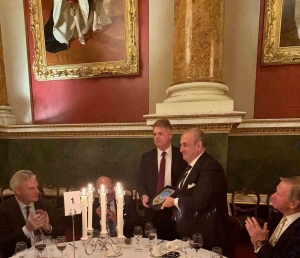
On the occasion of the 90th anniversary of the London, Greek Shipping Co-operation Committee, a well- attended reception at Goldsmith’s Hall was organized.
Guests included Lords, Ambassadors, many senior representatives of GSCC member offices, esteemed Greek shipowners, senior representatives of the IMO, P&I Clubs, War Risk Insurance Clubs, Classification societies, IACS, The Baltic Exchange, Intercargo and Maritime London, among others.
In addition, the representative of the Greek Minister of Shipping and the Commandant of the Hellenic Coast Guard Capt. (H.C.G.) Antonios Doumanis attended the reception, delivered a speech and offered a coat of arms of the Commandant of the H.C.G. to GSCC Chairman, Mr. Haralambos J. Fafalios.
The Chairman, Mr. Haralambos J. Fafalios delivered the following speech: “In fact, the Committee's original name was the "Greek Shipping Stabilisation Committee," which was formed in 1935, in order to bring some stability to the precarious post-Depression shipping freight markets. Under the leadership of Pericles Dracoulis, ably assisted by Angelos Lusis, the G.S.C.C. held its first meeting in the offices of G. Hadjilias. Following on from there, the G.S.C.C. became the main conduit between the Greek Government and the Ministry of War Transport in 1941. It co-ordinated all matters relating to the Greek Merchant Fleet and its crucial role in the Wartime Convoy System, which kept the U.K. and other allied countries supplied with all the essential commodities. During the immediate Post-War years, when Greece was suffering the effects of a catastrophic civil war, it was the G.S.C.C. that prominently dealt with most major maritime issues.
One of its most illustrious members, Manuel Kulukundis, based in New York at the time, proposed and was instrumental in negotiating and concluding the famous 100 Liberty Ship purchase programme, which kick-started the re-birth of the Greek Merchant Fleet after the ravaging it took in the Second World War. Moving onwards, the formation in 1957 of the Inter-Governmental Maritime Consultative Organization (IMCO), now (since 1982) the International Maritime Organization (IMO), the creation of the Hellenic War Risk Association in 1960, the commencement of the Posidonia Shipping Exhibitions in 1969 were some of the many events in which the G.S.C.C. participated and actively and enthusiastically supported.
One must say that over the last nine decades the G.S.C.C. has worked very closely and in parallel with the Union of Greek Shipowners in Greece and the two associations have worked together harmoniously to face all the major maritime, environmental and economic issues facing the Greek Shipping industry. The G.S.C.C's position in London, one of the world's leading maritime centres, has meant that it has been able to foster very close relationships with all the organisations that are based here, including The Baltic Exchange, Lloyd’s of London, Lloyd’s Register, the P & I Clubs, the International Chamber of Shipping, Intercargo, Intertanko, I.M.O. never forgetting the major Shipbrokers, Lawyers, Bankers and Accounting Firms. The fact that our council members have included an emeritus I.M.O. Secretary General, a former I.C.S. Chairman, several P&I Club Chairmen and Directors, Baltic Directors, ex International Salvage Union Chairman, Classification Society Committee Chairmen, attests to the dedication we have for every sector of our industry and the high esteem in which the G.S.C.C. and its members are held by all the major maritime institutions in the City of London and beyond.
The G.S.C.C. is also a firm supporter of the Greek Flag, Greek Crew, the Hellenic Coast Guard and a training environment in Greece that will continue to educate new generations of Greeks who will serve both at sea and ashore. For without Greek Seafarers, the miracle that is Greek Shipping would not be what it is today. The challenges we face going forward, be they national or international will always be met by the dedication of our organisation, working with the U.G.S. closely in order to find a practical solution to each problem.
Whilst world Shipping must react and be proactive to global events, we think that there should be one authority only, the I.M.O., which should be the primary regulator of our industry on a worldwide basis and should be responsible for the formulation of all international maritime legislation. With reference to the most important issue of today, the decarbonization problem, the solutions are not yet there and we must create workable ideas going forward with actual green fuels as opposed to half baked, half way options that do not work and simply sap our conscience. In the light of the Ballast Water Treatment System disappointment, the I.M.O. should work more closely with the industry in order to create coherent and sustainable regulations.
The Net Zero Framework is just another such example requiring the input of the shipping industry and not determined by the politicians alone. Crucially, the MEPC directorate and delegates of the IMO must yet again regain their Maritime expertise in order to better understand shipping and to create more effective and practical regulations. I would like to thank all our member companies, past and present, for their unstinting support for the G.S.C.C. over the past nine decades. Very importantly, I thank all of our friends and colleagues in London who have worked with us over many years and have helped us to represent the Greek shipping industry on all national and international issues. I also want to express my gratitude to our council members, past and present, who have worked tirelessly and selflessly in order to achieve our goals. Finally, I would like to thank our excellent secretariat, past and present, which, with limited resources, has administered the affairs of the G.S.C.C. so capably and smoothly over the decades and who have always shown such dedication”.
ELNAVI Newsletter
More Information: ELNAVI,
19, Aristidou str., Piraeus 185 31,
Tel.: +30 210 45.22.100, e-mail: This email address is being protected from spambots. You need JavaScript enabled to view it.
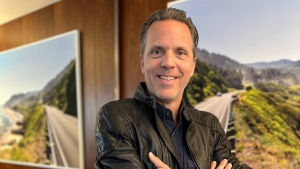
Top Ships has completed its previous sale and leaseback (SLB) financing agreements for four of its tanker vessels. The gross proceeds from the refinancing, after the repayment of previous debt, amounted to about $27.2 million.
The agreements, closed with a major Chinese financier, cover the refinancing of two 300,000 DWT VLCC tankers, the Julius Caesar and Legio X Equestris; one 157,000 DWT Suezmax tanker, the Eco Oceano; and one 50,000 DWT MR product tanker, the Eco Marina Del Ray.
Evangelos J. Pistiolis, the President and CEO of the company, stated that the cash released, "approximates our current market capitalisation." He added that following the refinancings, the leverage of the fleet remains at a, "very conservative level of about 52 per cent."
Under the SLB terms, the vessels will be bareboat chartered back to Top Ships for ten years, with the exception of the Eco Marina Del Ray which is chartered for seven. The financing bears an interest rate of three-month term SOFR plus a 1.95 per cent margin, and the company has the option to buy back the vessels following the end of the first year.
Concurrently with entry into these SLBs, Top Ships also provided a guarantee for the obligations of Rubico under similar SLBs entered into with the same financier, in an aggregate amount of $84 million.
ELNAVI Newsletter
More Information: ELNAVI,
19, Aristidou str., Piraeus 185 31,
Tel.: +30 210 45.22.100, e-mail: This email address is being protected from spambots. You need JavaScript enabled to view it.
The Hellenic-American Chamber of Commerce honored Dr John Coustas at its 73rd Person of the Year award ceremony
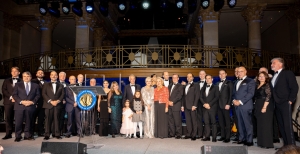
The Hellenic-American Chamber of Commerce has celebrated Dr John Coustas at its 73rd Person of the Year award ceremony, honoring his outstanding leadership and significant contributions to the Greek-American business sector.
Taking place on Friday, November 14, 2025, at Cipriani Wall Street, the evening commenced with a cocktail hour as guests entered the event space. Then John. C. Stratakis, the Hellenic-American Chamber of Commerce board member and past president, took to the stage to address members and guests and provide an overview of the evening’s proceedings.
The National anthem was then performed by Juilliard School graduate, Sophia Pelekasis, and was then followed by an invocation by His Eminence Archbishop Elpidophoros of America.
In his address, he congratulated Eftihia Pylarinou-Piper, the newly-elected HACC president, on her new role.
“Congratulations Eftihia,” he said. The Chamber is a most necessary organization to the ‘omogenia’, for it succeeds in connecting Greek-Americans with all manner of enterprise in the motherland, our ‘patrida’, and connects them to one another here at home.”
The HACC president, Eftihia Pylarinou-Piper, then addressed the crowd, highlighting the vital work that the Chamber does.
“Tonight we gather as one community, leaders in shipping and finance, entrepreneurs, prominent people from academics, public officials, leaders and members of the Greek-American associations, and friends from near and far, to celebrate excellence, integrity, and the lasting bonds that unite Greece and the United States,” she said.
“Your presence affirms the strength of our shared values and the importance of our work together. It is a distinct honor this evening to recognize Dr John Coustas, the president and CEO of Danaos Corporation, as our 73rd Person of the Year.”
She then declared: “Through his vision and commitment to innovation, Dr Coustas has helped shape the modern maritime landscape, while exemplifying responsibility, resilience, and generosity. His achievements inspire the next generation of leaders who look upon him as an example.”
HACC Chairman Nick Katsanos additionally congratulated Coustas, describing him as “one of the nicest people you will ever meet”, and that he is “so important and provides so much to the Chamber that we can’t thank him enough.”
Simon Rose, the CEO of Rose & Company, and Alexandra Palli Giannakopoulos, the Regional Vice Governor for Entrepreneurship and European Planning for the Region of Attica, then introduced the honoree.
Giannakopoulos revealed in her speech that Coustas was a friend, who so many respect, and someone who meant a great deal to her and her family.
“Finding the right words to speak about someone who is a dear friend, but also a force in business, was not very simple,” Giannakopoulos shared. From the moment you meet John, you sense something steady about him – he speaks very softly, but everyone listens.”
“There is a quiet strength in him,” he continued, “a blend of clarity and drive that makes people pay attention. He’s not only accomplished, he’s curious, he’s patient, he’s deeply educated, and genuinely cultured. He plays the piano, and he navigates his yacht with exactly the same discipline and depth that define his work’ precise, thoughtful, and profoundly expressive.”
Rose added that Coustas is “one of the most accomplished people that anyone could know.”
Giannakopoulos and Katsanos then presented Coustas with his award, then he made a formal address.
“I want to thank the Hellenic American Chamber of Commerce for this honor and for continuing a tradition of recognizing people who work to strengthen the bond between Greece and the U.S – it means a great deal to be part of that story,” Coustas recited.
Many of you here, whether you’re first, second, or third generation Greeks, know what it means to build a life far from the place your family once called home. America opened its doors to you, offering opportunities that Greece at certain times could not. Through dedication, perseverance, and a strong sense of identity, the Greek-American community has not only thrived, but has brought honor to Greece.”
“I also want to thank Alexandra and Simon for their generous words. Having friends who support you, who walk with you on this journey, is a blessing, and I’m grateful to share this evening with all of you.
Coustas continued: “Your success stories have strengthened our country’s presence, our reputation, and our relationship with the United States. For those of us who came here later in life, like myself, the United States has also been a welcoming home, especially within the capital markets. This environment allowed us to grow, to innovate, and to secure a leading role in the global shipping world. And in doing so, we have helped deepen the ties between our two nations.”
Coustas additionally made a comment to The National Herald, highlighting what this recognition meant to him: “It means exactly that the Greek community over here is very active and is enhancing the creativity and leadership, which, in the end, all these links will help Greece, through the influence that the Greeks can exert here in the U.S.” he told TNH.
ELNAVI Newsletter
More Information: ELNAVI,
19, Aristidou str., Piraeus 185 31,
Tel.: +30 210 45.22.100, e-mail: This email address is being protected from spambots. You need JavaScript enabled to view it.
Presentation of Theano Kalapotharakou's Book “Women in the Route of Shipping – Advocates of Society”
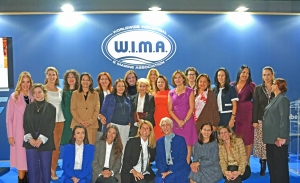
Within the framework of WIMA’s exhibition on sustainability and new technologies, held on 12–13 November at the stone warehouse of the Piraeus Port Authority (OLP), ELNAVI magazine—also an exhibitor at the event—presented the seventh book by co-publisher Theano Kalapotharakou, titled “Women in the Route of Shipping – Advocates of Society.”
The event was graced by the presence of many distinguished women who have been featured over the years in the author’s well-known column.
Esteemed speakers Ms. Eleni Koronaki, Ms. Akrivi Brikou, and Dr. Mary Papaschoinopoulou addressed the audience, highlighting the author’s long-standing contribution to the maritime sector and underscoring the refined quality and depth of her latest publication.
The presentation was moderated by Ms. Irini Notia, who guided the discussion with professionalism and insight.
ELNAVI Newsletter
More Information: ELNAVI,
19, Aristidou str., Piraeus 185 31,
Tel.: +30 210 45.22.100, e-mail: This email address is being protected from spambots. You need JavaScript enabled to view it.
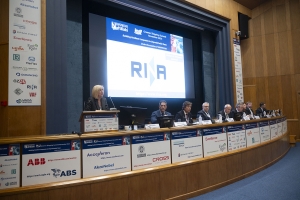
The 19th Greener Shipping Summit, organized by Newsfront/Naftiliaki under the auspices of Martecma, was held on November 11 at the Eugenides Foundation and recorded unprecedented participation with more than 700 people—representatives of the maritime community and students. The main theme of this year’s conference was building the resilience of shipping companies amid a climate of widespread uncertainty, environmental and regulatory pressures, geopolitical challenges, and emerging technological solutions for the optimization of maritime operations.
The improvement of existing technologies along with the development of new ones, as well as the IMO’s renewed focus on safety, were the key points in the opening speech by Panos Kourkountis, Technical Director of Sea Traders and President of Martecma.
Kourkountis said that he does not see winners or losers in the IMO’s decision to delay the Zero Emissions Framework, as there would have been a lack of consensus and “the IMO would risk becoming involved in geopolitical issues, while until now the IMO has supported the shipping industry with excellent regulations on safety and the environment.”
The environment is also a winner, Kourkountis stated, as “oddly enough, there had been no environmental impact assessment of the regulations.”
“What we do know is that the regulation supported alternative fuels, synthetic fuels, and the fuels promoted by the IMO were not available. In fact, only 1% of the amount of fuel required for shipping is available at this time, and producing them is not something we could do ‘the very next day,’” he emphasized, adding that the energy required to produce ammonia and methanol would be greater than the energy they generate.
Kourkountis posed the question: how do we move forward? He pointed out that we need some other action, other regulations to support something different from alternative fuels.
“We do not have energy from batteries, while nuclear energy is not ready to be applied, even though it would certainly solve the global energy problem, but environmentally the problem remains, since nuclear waste exists,” he said.
Thus, the president of Martecma suggested that “unless we have new technologies, we must move forward with what we have now. And this is called improvement, and there is great room for improvement with what we already have before us. We can all do it together and we will see results for the environment.” He added that “with the technology we have now, we can reduce emissions by 50%.” He stressed that “shipping is not only about the environment, and I believe that the IMO will refocus on safety,” while at the same time saying, “do not be surprised if in the next decade you control your ship from your mobile phone, just like the apps we have in our daily lives—ships will have automation, they will have remote controls, and we need to start looking at such scenarios.”
He concluded that “this is the way forward, and we believe that most parts of the industry are moving in the direction of new regulations to accelerate developments in shipping, and I think it will benefit everyone.”
The first session of the 19th Green Shipping Summit “Decarbonisation – Can IMO bring it all together?” was moderated by Christos Hadjigeorgiou, Managing Director, Almi Marine Management.
Lefteris Koukoulopoulos, Regional Decarbonisation Specialist, DNV, presented a decarbonization outlook with developments and pathways forward, saying the majority of newbuilding containerships (75%) have dual fuel capacity. He said onboard carbon capture is a promising technology but there is still a lack of maturity, regulatory framework and infrastructure, while biofuels are a popular short- and mid-term solution with a reasonable price premium, but challenge is availability of sustainable biomass.
Nikolaos Michas, Marine South East Europe Tanker Key Account Manager, RINA, reported on dual fuel status and the future of fuels used today and new technology fuels after MEPC 83. He said the results of MEPC prolog the uncertainty in the market; for long time shipowners are not sure what is the most logical solution for their newbuilding vessels as is not sure about the taxes that they will have to pay in the future for CO2 emissions, and the selection of the fuel is also a quiz for them.
Jakob Gjørtsvang Knudsen, Principal Promotion Manager, Two-stroke Promotion, Everllence, spoke about dual fuel status saying how Everllence is well-positioned to lead the maritime sector’s energy transition as its dual-fuel engine portfolio, backed by robust R&D and market adoption, supports shipowners in meeting decarbonization targets while maintaining operational reliability.
Sofia Liedholm, Operations Manager, Everllence and Yada, referred to the critical role of Fuel Gas Supply System (FGSS) design and integration in the fuels transition as the IMO and EU have introduced important initiatives to accelerate the maritime fuel transition, and global investments in greener fuels, especially LNG, are on the rise, saying navigating the complexity of future fuels requires collaboration.
Michael Fan, Chief Technology & Innovation Officer, Tsakos Energy Navigation (TEN), spoke about decarbonisation from a shipping company’s perspective, asking “Can we put the meat on the bone the next 12 months?”. He presented TEN’s Energy efficient measures and R&D program and warned that “while shipping has been on a race towards zero emissions, regulators must ensure that this does not mean zero margins!”
Angelos Minakis, Business Development Manager, ABS, presented the key points of contention in IMO, saying IMO has made a strategic mistake by condemning LNG while theoretically other fuels don’t exist, while looking forward he said IMO should shift focus on re-engagement and consensus-building among member states.
Vasileios Tsarsitalidis, Energy Saving Technologies, ERMA FIRST, referred to a realistic approach to decabonisation and compliance in times of uncertainty, presenting his company’s technological advancements that help shipping companies to implement their decarbonisation strategy, including reducing energy requirements, reducing friction, improved operation, electrification, air lubrication and carbon capture.
The second session, moderated by Haris Giantzikis, Technical Manager, Arcadia Shipmanagement Co Ltd, was devoted to ‘Technology Innovations for Sustainability’. Stavros Hatzigrigoris, Advanced Engineering Services, Zodiac Maritime, made a thorough presentation on different types of fuels and engines. He commented that “LNG, under all these regulations, will be more expensive than biofuels” and urged that “Engine designers and classification societies should not be competing on who will get the lion’s share for alternative fuel engines” but strive for cooperation in building efficient engines.
Simon Ma, Product Manager Medium and Low Speed Division, Accelleron, presented a development update on axial turbochargers as considering the many uncertainties to reach sustainability targets, the pursuit of more efficiency and flexibility becomes increasingly important.
Trevor Solomon, Business Development Manager Sustainability and Fouling Control, AkzoNobel / International Marine Coatings, spoke about performance and sustainability in fouling control and looked ahead to future trends in fouling control technologies and product attributes, while emphasizing the continued importance of proven, high-performance solutions.
Nikolaos Liapis, Managing Partner of ActaNonVerba, President HIMT, Consultant, FuelRight, SILVER PaLM reported on marine fuel hygiene as a holistic approach and how specific products are designed to eliminate contamination, corrosion, sludge, and water throughout the fuel system.
Jasper van de Kant, Sales Director, MarFlex, dealt with efficient cargo operations in tankers and his presentation covered key topics, including Design Optimization, Shipyard Advantages through lower installation costs and increased cargo space, and the always important Charter Party Perspective.
Deniz Kaynar, Global Product Manager Ship Side Shore Connection, ABB Marine & Ports, spoke about innovative midship shore connection solutions for tankers and the implementation of ABB’s breakthrough Shore Connection Deckhouse used to solve unique and complex challenges.
Albrecht Wandel, Business Development Manager Marine, LEWA GmbH, presented the need for high quality pumps for alternative marine fuels and LEWA’s critical role in this by providing robust, efficient, and hermetically tight process diaphragm pumps for Fuel Gas Supply Systems.
The third session was devoted to the next generation integrated ship management solutions and moderated by the managing director of Columbia Shipmanagement Greece, Gregory Spourdalakis.
Martijn Schols, commercial director of VAF, referred to how digitalization enables shipping companies to improve propulsion performance and reduce GHG emissions. VAF’s remote diagnostics capabilities enable software updates, calibrations, and sensor health monitoring, supporting both operational efficiency and regulatory compliance through “decarbonization by digitalization”.
John Kokarakis, technical director of Bureau Veritas, stated that AI-driven automation is the key that leverages vessel operations. According to his presentation, AI detects corrosion patterns weeks before they escalate; the crew becomes thus proactive. The presentation concludes with a forward-looking vision: the “Future Fleet” where AI, automation, and human operators cooperate seamlessly.
Antonis Tsouras, fleet manager of Bernhard Schulte Shipmanagement (Hellas), presented how performance compliance monitoring enables ship operators to maintain transparency across all stakeholders. Effective performance compliance monitoring not only ensures adherence to international standards but also drives continuous operational improvement.
Frantzeskos Kontos, managing director of Alpha Gas SA, presented how the emergence of autonomous and remotely-operated ships transform crew requirements. He emphasized that humans are better in handling uncertainty, and supported that the ultimate goal is to create a maritime industry where human expertise and technological advancements work together to ensure a safer, more efficient, and sustainable future.
Nikos Kakalis, Lloyd’s Register’s global bulk carrier segment director, supported that timely and effective vessel maintenance is vital to safe and efficient maritime operations. Condition-based maintenance (CBM) enhances efficiency by using real-time data to schedule tasks based on actual equipment condition, rather than fixed intervals. This data-driven approach optimises resources, minimises disruption, and boosts operational performance. The shipping industry’s market voice was once again clear and loud at this summit’s last session, moderated by the co-founder of Xclusiv Shipbrokers and president of the Hellenic Shipbrokers Association, John Cotzias.
John Platsidakis, honorary chairman of Intercargo, evaluated Greek and Cypriot shipowners’ voices at the international fora. Even though shipping has no important political weight as an industry, “it’s good that Greek owners have a voice, but there is a limit to that”, he supported.
Miltadis Varvitsiotis, vice president and CEO of Skaramangas Shipyards, supported that US opposition to IMO’s Net-Zero Framework poses a unique opportunity for the Greek shipbuilding industry, especially for Skaramangas, as the shipyards will be certified next year to serve LNG carriers and such vessels are expected to travel the Eastern Mediterranean region to export US LNG.
Panos Zachariadis, technical director of Atlantic Bulk Carriers, described EU’s equivocal actions; “The EU has hijacked the IMO. FuelEU gives credit to LNG. Yet, the EU goes to the IMO and says no to the LNG”, he said. Later, Zachariadis explained that green fuels for shipping- ammonia and methanol- will result in a pointless waste of renewable electricity and their production will negatively affect the environment.
Panagiotis Zafet, managing director of Balthellas Group, offering a shipowners’ perspective, supported that in nowadays’ uncertainty, big-size owners should invest in newbuilding vessels, while small- and medium-size owners should “find the proper financing tools, be creative, and think outside of the box”, regarding their investment strategies.
This year’s Greener Shipping Summit concluded with record participation, marked by the strong presence of key figures from the Greek and international maritime industry and a large turnout from the younger generation, who showed great interest in current shipping issues and actively participated in the discussions through their questions.
ELNAVI Newsletter
More Information: ELNAVI,
19, Aristidou str., Piraeus 185 31,
Tel.: +30 210 45.22.100, e-mail: This email address is being protected from spambots. You need JavaScript enabled to view it.
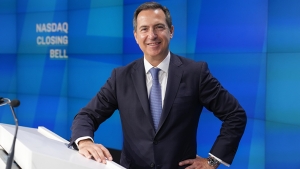
Ordering its first-ever newbuilding vessel, Seanergy Maritime marks a key milestone in the company’s fleet renewal and modernization strategy.
As well as for the third quarter of 2025 the Nasdaq listed company presented quarterly cash dividend of $0.13 per common share—marking the 16th consecutive quarterly dividend under its capital return policy and generated Net Revenues of $47.0 million, compared to $44.4 million in the third quarter of 2024. Adjusted EBITDA for the quarter was $26.6 million, compared to $26.8 million in the same period of 2024. Net Income and Adjusted Net Income for the quarter were $12.8 million and $14.0 million, respectively, compared to Net Income of $12.5 million and Adjusted Net Income of $14.1 million in the third quarter of 2024. The Company’s fleet achieved a daily Time Charter Equivalent (“TCE”) of $23,476 for the third quarter of 2025.
Stamatis Tsantanis, the Company’s Chairman & Chief Executive Officer, stated: “In Q3, Seanergy capitalized on the recovery of the Capesize market, driving higher profitability and setting a strong foundation for the rest of 2025 and 2026. Consistent with our rewards policy, we declared a $0.13 per share dividend, our 16th consecutive payout, bringing total distributions to $2.44 per share. The expiration of all outstanding warrants further streamlines our capital structure, removing legacy dilution risk and enhancing shareholder value. With a 20-vessel fleet consisting purely of high-quality Capesizes and Newcastlemaxes and a conservative capital structure, we remain well positioned to capture the upside of a robust Capesize market. “During the quarter, we advanced our fleet renewal strategy by selling one of our vintage vessels at a good value, ahead of her third special survey and drydocking and placing our first-ever newbuilding Capesize order at a top-tier Chinese shipyard. The new scrubber-fitted Capesize, priced at $75 million and scheduled for delivery in the first half of 2027, represents a major step toward long-term value creation and modernization of our fleet. Going forward, we will continue to pursue disciplined fleet renewal opportunities, aligned with maintaining balance sheet flexibility and rewarding our shareholders. “On the commercial front, we renewed three time-charters with existing counterparties and concluded a new charter with a leading global commodities trader. Our entire fleet remains on index-linked charters, ensuring full market exposure while managing volatility through selective FFA hedging. For Q4, after hedging approximately 55% of our available days at a gross rate of $24,900, we estimate a TCE of around $23,900 given prevailing spot rates and current FFA curve. “Capesize charter rates averaged nearly $25,000 in Q3, supported by record iron ore exports from Brazil and strong bauxite and coal demand. With the Capesize orderbook below 10% of the global fleet and trade volumes expected to rise in 2026, we anticipate a sustained period of strong rates. Seanergy’s pure-play Capesize platform is ideally positioned to benefit. “Our focus remains on consistent shareholder value creation through operational excellence, disciplined capital allocation, and regular dividends supported by a strong balance sheet.”
The Company’s operating fleet consists of 20 vessels (2 Newcastlemax and 18 Capesize) with an average age of approximately 14.4 years and an aggregate cargo carrying capacity of approximately 3,633,861 dwt. The Company is incorporated in the Republic of the Marshall Islands and has executive offices in Glyfada, Greece. The Company's common shares trade on the Nasdaq Capital Market under the symbol “SHIP”.
ELNAVI Newsletter
More Information: ELNAVI,
19, Aristidou str., Piraeus 185 31,
Tel.: +30 210 45.22.100, e-mail: This email address is being protected from spambots. You need JavaScript enabled to view it.