



elnavi
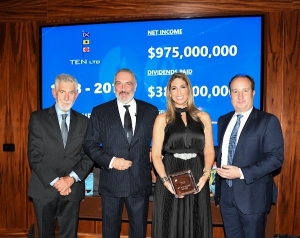
On October 10, 2023, TEN Ltd. celebrated its 30-year journey from a small fleet of four tankers to one of the world's largest independent energy transporters in the world owning a versatile fleet of 68 modern crude and product tankers, shuttle tankers and liquefied natural gas.
To mark this unique milestone TEN held an event in New York City, featured notable guests, including Mrs. Nicole Petalides from Schwab Network, who delivered introductory remarks in the presence of Mr. Chris Taylor, Vice President and Global Head of Listings & Services at NYSE, Mr. Stefan Jekel, Head of International Listings at NYSE, and other distinguished guests from the international shipping industry, banking and investment communities to mark this monumental occasion.
TEN Ltd. has a strong track record, having generated over $2.5 billion in net income during its 20-year presence on NYSE and consistently paid dividends exceeding $750 million. The company's commitment to fleet modernization and environmental sustainability is exemplified by a $6.0 billion newbuilding program.
In September 2023, TEN Ltd. welcomed its first LNG-powered Aframax tanker, Njord DF, as part of its green growth program. This marks the beginning of TEN's fleet expansion, with nine more eco-designed vessels planned for introduction in the next ten quarters.
As of today, the company has secured a fleet revenue backlog of over $2.5 billion.
Dr. Nikos Tsakos, Founder and CEO of the Company commented: "This exceptional moment represents a significant milestone in our history as a publicly traded company that not only celebrates its achievements but more importantly, it propels us to look ahead into our next chapter and continue to push forward to better our business and our practices. We are grateful and appreciative to all our associates for their efforts so far and remain enthusiastic as we embark on the next phase of the Company’s development for the benefit of our shareholders.
ELNAVI Newsletter
More Information: ELNAVI,
19, Aristidou str., Piraeus 185 31,
Tel.: +30 210 45.22.100, e-mail: This email address is being protected from spambots. You need JavaScript enabled to view it.
As the International Association of Dry Cargo Shipowners (INTERCARGO) publishes its Annual Review taking in the highs and lows of the past 12 months, it is celebrating its membership reaching the highest point in its 43-year history.
The Association now represents about a third of the global dry bulk fleet in deadweight terms, after reaching a new historic high at the end of August this year.
Highlighting the historic milestone in the newly published Annual Review, which covers the reporting period from September 2022 to August 2023, INTERCARGO Secretary General Dr Kostas Gkonis explained that the Association now boasts 250 members from across 30 countries. These are made up of full members, comprising nearly 160 companies and registering 3,300 bulk carriers, together with associate member companies.
INTERCARGO provides a forum where dry bulk shipowners, managers and operators are kept informed about and can discuss topics such as safety and quality in ship operations, with a focus on operational efficiency and the protection of the marine environment, while the Association also represents its members’ views at the International Maritime Organization as well other industry fora.
“INTERCARGO will continue to act in the interest of all its members by addressing the key issues faced by the dry bulk sector,” said Gkonis.
INTERCARGO will be next holding its regular deliberations during its Annual General Meeting and semi-annual Committees’ meetings in Athens next week (October 23-24).
To access the Annual Review click here: https://www.intercargo.org/annual-review-2022-2023/
ELNAVI Newsletter
More Information: ELNAVI,
19, Aristidou str., Piraeus 185 31,
Tel.: +30 210 45.22.100, e-mail: This email address is being protected from spambots. You need JavaScript enabled to view it.
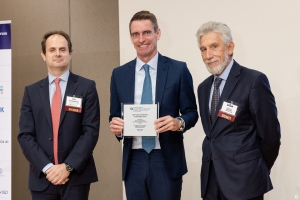
Capital Link organized the “13th Annual Operational Excellence in Shipping Forum - Best Industry Practices - Building Long Term Value Through Sustainability”, on Tuesday, October 3, 2023 at the Divani Caravel Hotel in Athens, Greece, with great success and participation, attracting a wide audience from the Greek and international shipping industry.
This year's forum once more featured industry leaders sharing their insight on critical industry issues.
Mr. Nicolas Bornozis, President - Capital Link, welcomed and thanked all participants for joining the event and stated: “Today’s Forum features a great agenda, focused primarily on sustainability and ESG considerations. In thanking all sponsors for their contribution to the realization of the conference, and all of the Organizations and Media Partners for their participation and support, Mr. Bornozis emphasized that the conference provides a unique opportunity for discussion, of the most critical issues concerning both the Greek and global shipping, and also to explore Best Industry Practices across all major areas such as fleet management, technological innovation, crewing, energy efficiency and the environment, safety & security.
We are thrilled to have top-level speakers with us, including charterers, ship owners, and regulators. It is an honor to start with Mr. Papadimitriou, a pioneer in adopting best operating practices and the lead sponsor of this forum.”
Mr. Antonis S. Papadimitriou, President – Onassis Foundation ; Member of the Board - Global Maritime Forum, stated: “It is an honor and a pleasure to be here. Today’s forum focuses on sustainability and climate change and rightly so. We all agree that shipping needs do its part in addressing these challenges. Shipping remains the best way to transport cargo around the globe, and it will be shipping that transports the fuels that the rest of the economy will predominantly use.
Christine Lagarde recently said that in the process of transitioning, we need to avoid procrastination, understand challenges, and share the burden fairly. We cannot smooth the cost of the transition by pushing our transition goals further. On the other hand, frontloading green investments will have a high short-term cost and will increase the price of commodities. There’s no such thing as a free lunch.
To that, I will add that investors should be able to convince shareholders of the ROI potential of such investments. We must provide the right incentives, under clear regulations. Transitioning to new fuels will of course be difficult, and even more so for developing countries that are currently augmenting their energy consumption.
For shipping, new technology needs to be developed and proven. None of the different lobbies offer a realistic solution today. The Onassis Foundation has taken the net zero pledge for 2050 but we have not yet determined specifically the fuels that our ships will be using. I call Greek shipowners to unite – none of us will invent the wheel alone.”
THE IMPORTANCE OF TRANSPARENT EMISSIONS REPORTING – BENEFITS TO SHIPOWNERS
Shipowners need to provide regularly emissions data to various stakeholders such as bankers, insurers, charterers and regulators. The discussion will focus on the differences among emissions reporting systems, the need for standardization and the benefits this can generate for the industry.
Moderator: Mr. Dimitris Anassis FCIArb, Partner - Hill Dickinson and Panelists: Mr. Stamatis Fradelos, Vice President, Regulatory Affairs – ABS, Mr. Vassilios Maroulis, Managing Director, Global Industry Head, Shipping, Logistics & Offshore – Citi, Ms. Charis Plakantonakis, Chief Strategy Officer - Star Bulk Carriers Corp., Mr. Angelos Vatikalos, Director of Strategic Business Development and Planning – Signal Maritime.
Mr. Dimitris Anassis FCIArb, Partner - Hill Dickinson, stated: “Ι’m privileged to be joined by distinguished panelists that include owners, financiers, and technology providers, to discuss the important issue of transparency in emissions. We do know that shipowners have a responsibility towards a number of stakeholders, such as investors, charterers, and regulators. At the same time, new measures have been imposed in terms of emission reporting, that owners and the shipping industry need to comply with.”
Mr. Stamatis Fradelos, Vice President, Regulatory Affairs - ABS, stated: “Transparency is about measuring and reporting, but also making data available to other parties. The data need to be available in detail, for us to be able to
provide the right answers. High levels of granularity also help create a more efficient framework, and there is more work to be done on that front. Of course, on the one hand we need to have something simple that can be based on verifiable data rather than complicated metrics and ensure a level playing field for smaller companies. However, on the other hand, we realize now that some of the metrics we’re using penalize some types of ships more than others. We have sent an open invitation for anyone to provide feedback that will lead to improvements.”
Mr. Vassilios Maroulis, Managing Director, Global Industry Head, Shipping, Logistics & Offshore – Citi, stated: “There’s more regulatory scrutiny for every portfolio than ever before, and as financiers we take that information into account. There is a consensus, thanks to the Poseidon principles, both in terms of the trajectory ahead and how we measure emissions. For us, honesty and transparency are of the outmost importance. We in turn are fully transparent in how ewe use the data which belong to the owners. We are in this journey together.
We are seeing charterers on the container side willing to pay significant premium for cargo to be carried on vessels with the latest available technology. That’s important to note, as it would help reduce emissions on the entire supply chain.”
Ms. Charis Plakantonakis, Chief Strategy Officer - Star Bulk Carriers Corp., stated: “Since 2019, we have been reporting fuel consumption as provider for under the carbon intensity indicator. There are operational and also technical indicators than can be used. We participate voluntarily in initiatives like the Poseidon principles driven by our counterparties. Then there’s things a company can do to go beyond compliance – the carbon disclosure project we’ve participated in since 2021 has helped us assess our performance and identify areas of improvement.
Accurate reporting is an integral part of our decarbonization strategy. We view it as a competitive advantage, not a necessary evil, as it has pushed our organization to improve continuously. Transparency leads to trust, which then leads to commitment.”
Mr. Angelos Vatikalos, Director of Strategic Business Development and Planning – Signal Maritime, stated: “Transparency is the basis for any emissions reduction scheme. From a tech provider’s perspective, access to reliable data is the most important thing. Comparing your company with the others best performers out there is good. In the airline industry this has happened years ago with great results. All the components are there, information is out there, therefore every company has the opportunity to analyze, extract value, and find insights.”
ALTERNATIVE FUELS – PRESENTATION
Dr. M. Abdul Rahim, Corporate Officer, Managing Director for Europe and Africa – ClassNK, stated: “In 2023, EEXI and CII regulations have kicked in. Also, the net-zero GHC emission strategy of the IMO has been revised. 2040 is only seventeen years away, and will be critical. Different countries, such as Japan, China, and the EU have proposed different measures and approaches. The main purpose of economic measures is to reduce the price gap between conventional and alternative fuels. A basket of measures should be developed and finalized, comprised of both the technical and economic element. Today, alternative fuel vessels represent only 1% of the fleet, but 23% of the orderbook, with ships that predominantly use LNG, LPG, and methanol – each of which have their own pros and cons. Carbon capture is feasible, but do not expect it to conquer the market tomorrow.
In order to realize net-zero by 2050 in shipping, all stakeholders will need to take immediate action in harmony.”
THE FLEET RENEWAL LANDSCAPE – SHIPS & FUELS OF TODAY & TOMORROW
While the jury is still out in terms of which is the ultimate “winning green fuel”, shipowners need to continue with fleet renewal in order to maintain competitiveness and achieve compliance with environmental regulations and market expectations. This panel will focus on fleet renewal strategies implemented by major shipowners sharing their insight as to their strategy and approach.
Moderator: Ms. Elina Papageorgiou, Vice President, Greece – Lloyd’s Register and Panelists: Mr. Stelios Troulis, Director, Green Ship, Energy Transition & Sustainability – Angelicoussis Group, Mr. Aristides J. Pittas - Chairman & CEO – EuroDry (EDRY) & Euroseas (ESEA), Mr. Thomas Lister, CCO & Head of ESG – Global Ship Lease (GSL), Mr. Constantinos Capetanakis, Bunker Director - Star Bulk Carriers Corp. (SBLK).
Ms. Elina Papageorgiou, Vice President, Greece – Lloyd’s Register, stated: “It’s a pleasure to host a session on such a big topic with interlinking considerations. Over the past decade, the maritime industry has made significant strides in its decarbonization journey. Newly delivered ships showcase increased efficiency, but more can be done if an alignment is achieved between companies and governing bodies. The process will likely look different for each shipping sector. With so much uncertainty and required criteria making it difficult to secure one’s investment, the panel will help us unpack the different risks and opportunities that arise.”
Mr. Stelios Troulis, Director, Green Ship, Energy Transition & Sustainability – Angelicoussis Group, stated: “Transitions need to be gradual and not be reminiscent of shock therapy, as a massive increase in the cost of shipping wouldn’t be good for anybody. 2027 will provide incentives and show the path forward for our industry. I believe it is important that we start realizing that we need one global system. That’s what legislators and regulators need to strive for.
All our recent orders feature dual fuel systems. We’re agnostic to fuels as long as it’s a safe choice for our ships and seafarers.”
Mr. Aristides J. Pittas - Chairman & CEO – EuroDry (EDRY) & Euroseas (ESEA), stated: “There’s obviously not a lot of ordering happening in the dry bulk sector. People still don’t know what type of ship to build. So far, when we placed an order, we expected the ship to last around 20 years. Today, due to uncertainty, this feels like a very long period of time. Lots of things will change in shipping in the upcoming years, so it is natural to be reluctant to place orders. It is like a bet that not many people are willing to make.
We are all in favor of decarbonization, but the economic aspect not obvious yet. Theoretically, banks want to achieve a green footprint, but they do not offer sufficient triggers to encourage the buying of greener ships.”
Mr. Thomas Lister, CCO & Head of ESG – Global Ship Lease (GSL), stated: “Global Ship Lease owns a fleet of container ships. The answers and the relevant risks vary depending on where one seats in the value chain. It’s a very big bet to have to place, in terms of new fuels. Only once we have a clear tangible view about what the standard fuels of the future will be, we will then start investing. For the time being, the best approach is to enhance the efficiency of existing ships. We do so based on four pillars: energy-saving retrofits, data that makes ships more efficient, use of biofuels, and onboard carbon capture.”
Mr. Constantinos Capetanakis, Bunker Director - Star Bulk Carriers Corp. (SBLK), stated: “We still face a vast canvas of uncertainties in the global scheme of things, whether they concern the enforcement of regulations or the use of alternative fuels. I believe that as owners, we have done all we can and much more, in this hazy environment that is making owners hesitant, especially in the dry bulk sector where no one wants to get it wrong. Alternative fuels need to be available, inexpensive, and transportable; none of these parameters are clear yet. We need incentives for decarbonization and are waiting for market-based regulations and how they’ll shape the future of our economy.
In the meantime, we are focused on significantly improving efficiency, from both an operational and technical perspective. Thanks to energy-saving devices, monitoring, slow steaming, and participating in R&D projects, we are trying to reduce our carbon footprint as much as possible.”
GRIN MARIN: Global First Announcement of a Marine Biofuel Requires no Engine Modification and Burns like VLSFO
Mr. John Agiomirgiannakis, CEO - Tailors Group, stated: “Tailors Group is a modern Greek based organization that operates in the Southern European market of green fuels, founded in 2007 as a personal company. We are trusted by multinational companies and international partners. GRIN MARIN is a biofuel developed exclusively from Tailors Group, in response to the need for reducing CO2 emissions in all human activity. It can be blended with regular heavy and/or light fossil marine fuels. It is a way to address the new IMO measures for reducing shipping’s carbon footprint. It costs less that regular biodiesel and is biodegradable. In comparison with other fuels, in terms of distribution, storage, and raw material availability, GRIN MARIN takes the lead. Production is expected to kick off in June 2024.”
SAFE SHIPS IN CLEAN SEAS
Human element, environmental consciousness and safety as cornerstones of Sustainability and Quality Shipping
Ms. Semiramis Paliou, CEO - Diana Shipping (DSX); Chairperson – HELMEPA; Chairperson - INTERMEPA, stated: “The shipping industry finds itself needing to significantly upscale and train 800k seafarers: it is the monumental task ahead of us. As the chairperson of HELMEPA, I’m dedicated to promoting environmental awareness and strict safety standards in shipping. Shipping is the very pulse that sustains global trade, transporting 90% of goods globally. We are the arteries and veins of globalization, connecting nations, markets, and people. It is therefore imperative to attract young talent. Seafarers are often working in demanding conditions in remote places. Ensuring their well-being, physical and mental, is our responsibility and crucial for the industry. We must provide opportunities to inspire the next generation, while embracing inclusivity and diversity, which foster innovation and resiliency.
Safety needs to be placed at the core of our industry. The same applies to preserving our oceans and environment. The introduction of new fuels and technologies present unique challenges. Reducing our carbon footprint is becoming a necessity to mitigate the effects of climate change, and ESG criteria will play a pivotal role.
If you can keep one thing from this presentation, let it be this: decarbonizing shipping by 2050 demands collective efforts, due to the scale of the endeavor. Ensuring that our industry continues to thrive while protecting our environment for future generations will be key. Let’s make safe ships our legacy.”
Keynote remarks were given by the Minister of Maritime Affairs & Insular Policy Hellenic Republic H.E. Christos Stylianides and was introduced to the distinguished speakers by Mr. Antonis S. Papadimitriou, President – Onassis Foundation ; Member of the Board - Global Maritime Forum, stated: “Honorable minister, it is worthwhile to remind the audience of some of your achievements: You are an academic and of course a politician, having served in the European Commission, the European Parliament, and now in Greece. The Prime minister’s choice to approach you was wise. Between 2021-2023 you were the Minister responsible for civil protection, and you now serve as Minister of Maritime Affairs & Insular Policy. I know your personal interest in climate change, so it will be interesting to hear your views.”
The Minister of Maritime Affairs & Insular Policy, Hellenic Republic, H.E. Christos Stylianides, in his speech he stated: “In recent years we have had several crises, such as Covid, the Russian invasion in Ukraine, and an energy crisis, which have shown how sensitive and important the transport sector is.
Greece’s history and modern economy are fully linked with the sea. Shipping is the most vibrant sector of our economy and represents 7% of our GDP. We are the largest ship owning nation with a fleet of over 5500 vessels, representing 70% of the EU fleet. This makes the Greek fleet essential for the efficient and reliable transport of goods worldwide.
In an era of increasing energy security concerns, shipping has a crucial role in securing Europe’s energy needs. I believe we should focus on four key things: decarbonization, governance, finance, and geopolitical developments.
Shipping’s transition to a carbon-free era is a great challenge. Greece welcomes the 2023 IMO agreement on the reduction of greenhouse emissions. We support realistic and pragmatic measures to achieve carbon neutrality in shipping. Greece remains committed to the framework shaped by UNCLOS and the IMO.
Shipping cannot exist without skilled professionals. Our seafarers are a source of knowledge and should be protected. Shipping shall continue to create meaningful careers for our young people.
Lastly, with respect to the Ukrainian crisis, Greece has always been in favor of sanctions aimed at reducing Russia’s capacity to fund the war. We aim to ensure full implementation without harming our industry.”
Mr. Rasmus Bach Nielsen Global Head of Fuel Decarbonization Trafigura Group was presented with the “2023 CAPITAL LINK MARITIME SUSTAINABILITY AWARD”.
In his introductory remarks: Mr. Jerry Kalogiratos, CEO - Capital Product Partners (CPLP), stated: “As evidenced by recent floods and wildfires, climate change is here and is urging us to act swiftly and decisively. While shipping represents less than 3% of global emissions, we firmly believe in doing everything we can to reduce our carbon footprint. At Capital, we are moving towards the goal of carbon neutrality. We have identified LNG as the pivotal transition fuel. We also have taken crucial first steps, paving the way for alternative fuels. We launched a large ship building initiative of 63 vessels, investing 7 billion dollars. These orders demonstrate the maritime industry’s role in decarbonization, also impacting other sectors of the economy, trying to achieve a greener and safer planet.
We are here today to honor a pioneer: A strong voice within our industry and an effective individual. I first met Rasmus in Singapore 15 years ago, and his enthusiasm for shipping continuous to be as strong as it was back then. He’s been a fervent advocate for the use of alternative fuels. I wholeheartedly congratulate him for his career and today’s award.”
Mr. Rasmus Bach Nielsen, Global Head of Fuel Decarbonization, Trafigura Group, stated: “I’m humbled and very proud to be standing here, in a country with such a great history in shipping. In 2019, I talked for the first time with PHD professors about the transport fuels of thefuture. The challenge is that one company cannot decarbonize if the entire industry does not do the same. In the beginning, I experienced a lot of skepticism and criticism.
But since then, I also saw a change in mindset, including within the IMO, and as time went on, people started to believe decarbonization is possible. We’ve been looking into green ammonia and continue to be one of the biggest investors in hydrogen.
However, the big questions remain: Where and when will green fuels become widely available? Who will pay the inevitable transition bill? It can be done, but only with carbon pricing and the right framework. We need to push the IMO on these issues as hard as we can. We will need infrastructure, such as hydrogen pipelines. Ultimately, we are holding the keys to this transition, and it is important for everyone to realize that. The longer we wait, the more expensive this process will become. Thank you all for this prestigious award.”
THE GLOBAL SUPPLY CHAIN, SUSTAINABILITY & THE ROLE OF CHARTERERS
The panel will provide charterer insight on three main topics – how market conditions develop in the face of current geopolitical and economic challenges; strategies in pursuit of green shipping; how charterers advance sustainability issues throughout the supply chain through their own policies and guidelines/requirements they ask their trading partners to adhere to.
Moderator: Mr. Stamatis Tsantanis, Chairman & CEO – Seanergy Maritime Holdings Corp. (SHIP); Founder, Chairman & CEO – United Maritime Corporation (USEA) and Panelists: Mr. George Wells, Commercial Head for Structured Deals and Decarbonization – Cargill, Mr. Matt Caddock, Senior Commercial Manager - Chevron Shipping, Ms. Heidi Aakre, Vice President of Shipping – Equinor, Mr. Bud Darr, EVP, Maritime Policy and Government Affairs – MSC, Mr. Scott Bergeron, Managing Director, Global Engagement & Sustainability - Oldendorff Carriers, Mr. Andrea Olivi, Global Head of Wet Freight - Trafigura Group.
Mr. Stamatis Tsantanis, Chairman & CEO – Seanergy Maritime Holdings Corp. (SHIP); Founder, Chairman & CEO – United Maritime Corporation (USEA), stated: “It’s a great honor to present this interesting panel featuring leading personalities from around the world. They are a group of charterers that move hundreds of millions of cargos per year, including oil, grains, and other products. Their combined revenues sit in the trillions of dollars, and they represent a fundamental demand driver for the industry. Our discussion will be centered around 3 key elements: geopolitics and how they’ve affected global trading routes, sustainability in terms of the future of propulsion and new engines and a third element, the human factor, given the fact that we need crews that can adapt to the changes that are coming.”
Mr. George Wells, Commercial Head for Structured Deals and Decarbonization - Cargill, stated: “It is important for all sides to accept that there is a risk associated with new technologies. China is very important for the dry bulk sector. We saw a decrease in the volumes entering the country in 2022, but this year we’re back to higher numbers. The efficiency of supply chains is super important, and it has been improved thanks to less port congestion.
Furthermore, the decarbonization journey will pass through different stages. We want to test new fuels, making sure that things work in real conditions. We’re really big proponents of wind and are trying to scale up our relevant program.”
Mr. Matt Caddock, Senior Commercial Manager - Chevron Shipping, stated: “Prior to the Russian invasion we expected to only have to deal with the post-Covid recovery and environmental regulations. Instead, we are now very concerned about this trend where vessels are joining the dark fleet. As far as sanctions are concerned, reluctancy is to be expected. In the longer term, we expect new supply to come in from Latin America, as well as refinery growth in India. These products will need to be moved to the West. We have been very active in supporting new fuel programs in recent years, and have done that for strategic reasons.”
Ms. Heidi Aakre, Vice President of Shipping - Equinor, stated: “Since the invasion in Ukraine and the resulting energy security problem we had to revisit our actions. It’s been about increasing our efforts in terms of logistics and educating ourselves: figuring out what do sanctions mean, how to be compliant, how to optimize return for our shareholders, but also how to maintain our company’s reputation.
Things won’t return to how they used to be before the war. Refineries have started to adjust to the new reality, increasing optionality and flexibility to make the market work appropriately. Our industry has a short memory and many think that supply and demand can fix everything, but this time it’s unlikely that we’ll be moving backwards.”
Mr. Bud Darr, EVP, Maritime Policy and Government Affairs – MSC, stated: “When it comes to liner shipping, whatever the client decides, we have to adapt our networks accordingly to satisfy their needs. About reshaping trade lines, we don’t really see anything happening too quickly. And even if it does happen, China will remain an extremely important market. Growth may slow down but that’s starting off from a base that’s enormous. Supply chains may migrate towards South-East Asia, India, or Africa. We need to make investments to be able to keep global trade moving, as we did during the pandemic to answer the call when the world was falling apart. We shouldn’t let people forget that anytime soon.
Slowing down can reduce emissions, but the slower things move, the more tonnage is required. In a time-sensitive business, affected heavily by delivery frequency, implementation can be tough.”
Mr. Scott Bergeron, Managing Director, Global Engagement & Sustainability - Oldendorff Carriers, stated: “Trade in India is growing, while simultaneously China is moving away from heavy infrastructure and into technology. India’s and Africa’s time is coming. We are seeing more bauxite, iron, and coal, move in and out of India.
Building new ships can be wasteful and we can lose sight of the carbon emissions produced with that process. The technology isn’t where it needs to be: new fuels aren’t ready, engines aren’t ready, and that includes methanol. We have to invest in our existing fleet. There has to be a sensible return on investment; there’s no commercial sense to some of the ideas and expensive devices that are being promoted.”
Mr. Andrea Olivi, Global Head of Wet Freight - Trafigura Group, stated: “A lot of inefficiencies have arisen since the war started. There are sanctions to deal with, as well as an international fleet that is shrinking. Ships were sold to middle Eastern and Chinese entities, to become part of the so-called dark fleet. We see a shift in the owners’ landscape. China is now close to overcoming Greece and becoming the largest ship-owning nation.
Trafigura’s role is to make the market more efficient. Over the last 12 to 18 months, the cooperation between charterers, owners, and legal departments has become more important than ever before.”
SAFETY & THE HUMAN ELEMENT
The recruitment, training, retention and welfare of seafarers and onshore personnel remain a critical issue for the shipping industry exacerbated by the geopolitical challenges of today. The panel will address the evolving landscape in this area and will also focus on the role of the Human Factor in Ship Safety.
Moderator: Mr. Michalis Pantazopoulos, General Manager - Liberian Registry (LISCR Hellas) and Panelists: Mr. Alex Hadjipateras, Managing Director & SEVP – Dorian LPG, Ms. Venetia Kallipolitou, Cross Department HR & Training Manager – Tsakos Group; Commander - Hellenic Coast Guard (Retired), Mr. Helio Vicente, Director of Employment Affairs – ICS, Mr. Petros Achtypis, Founder & CEO – Prevention at Sea, Ms. Elpi Petraki, President – WISTA International.
Mr. Michalis Pantazopoulos, General Manager - Liberian Registry (LISCR Hellas), stated: “We will talk about daily critical operations, safety, and the human element. While the world was still recovering in the post-covid era, the Russia/Ukraine conflict came and impacted us all. Urgent matters like climate change and decarbonization have made our life challenging. Fairer new technologies and AI are bound to have a transformational impact on the shipping industry and its manpower. We must continuously improve our safety culture to manage and reduce risk. The human element includes emotional responses, personal competence for handling crises, and the problems arising from unsafe supervision.”
Mr. Alex Hadjipateras, Managing Director & SEVP – Dorian LPG, stated: “LPG vessels are some of the more sophisticated vessels to have ever operated in the water. We are fortunate to have a core group of officers that worked for us for years. In the future, we aspire to integrate the experience of our seafarers into the design, taking their feedback into account. We choose to have a mix of representatives of the younger generation, who are usually extremely adept in the use digital tools, and more experienced seafarers.
We managed to stay close to our people during covid, trying to support displaced people and using social media to stay in contact with them.”
Ms. Venetia Kallipolitou, Cross Department HR & Training Manager – Tsakos Group; Commander - Hellenic Coast Guard (Retired), stated: “The Tsakos group believes maritime training to be of paramount importance. Educating our seafarers all along their professional lives needs to be the goal. Our founder paved the way with a huge investment in maritime knowledge, for a safe and secure environment while also preserving our traditions. In 2018, the first not-profit nautical school, in an effort to create an educational center to prepare future officers, became a reality. Having a safety culture offers a competitive advantage, which we aim to pass on to our youngest through workshops that are open for all. During training, they learn the proper use and maintenance of mooring equipment and techniques, and best practices are being shared.”
Mr. Helio Vicente, Director of Employment Affairs – ICS, stated: “We’re very proud of the work we’ve done with our seafarers, especially since the pandemic. At the height of Covid, seafarers were unable to disembark and reunite with their loved ones. We’ve been thinking a lot about relationship between ship owners and seafarers – there’s a need for a new social contract, setting minimum global standards in many aspects, at the ILO level. It can’t be about owners making unilateral decisions, but rather about a social dialogue driven with our people in mind, to achieve meaningful results. Ammonia and hydrogen, which shipping already carries as cargo, will require additional training if we choose to use them as fuel.”
Mr. Petros Achtypis, Founder & CEO – Prevention at Sea, stated: “We all know that every year 5 million drills are carried out aboard ships. Add to that the hundreds of inspections led by classification societies, P&I clubs, and shipping companies. ISO certifications are being awarded everywhere, and still accidents happen. According to studies and reports based on visits on board, people need more assistance and on-the-job training, not just in theory. Also, not to blame anybody, but we see unsafe instructions being given often. If we try to go deeper and see what the human element actually means, we’ll arrive at the conclusion that it concerns the way we communicate and collaborate with another.”
Ms. Elpi Petraki, President – WISTA International, stated: “WISTA is a participant of the just transition task force. We have to make sure not to forget women and all people underrepresented aboard our vessels. There’s much more to be done if we want to create a safer environment, such as fighting against psychologically cruel and harassing attitudes, as well as training everyone to accept people from different backgrounds.
We have started paying attention to soft skills more, but we need to go deeper. Greek shipping traditionally was a family trade, and we try to care for seafarers as family and protect them in the best way possible.”
ALL ABOUT CARBON – CARBON OFFSETS, CARBON CAPTURE, CARBON CREDITS, EU ETS, SLOW STEAMING
Do all available options and strategies lead to reduction of carbon emissions? What is best to use and how? The discussion will provide insight on how alternative strategies help achieve carbon reduction especially in light of the recent IMO and EU regulations and market expectations.
Moderator: Mr. Jason Stefanatos, Global Decarbonization Director – DNV and Panelists: Mr. Jacopo Visetti, Co-Founder – Aither Group, Mr. Simon Bennett, Deputy Secretary General – ICS, Mr. Stavros Niotis, Chief Sustainability Officer – Prime Marine, Mr. Frederic Bouthillier, Head of Shipping – Vertis Environmental Finance, Mr. Theo Baltazis, Managing Director – Technomar.
Mr. Jason Stefanatos, Global Decarbonization Director - DNV, stated: “We can already see that the energy transition is coming, and will take place in the next years or decades. It is the first time that a CO2 tax is applied in larger scale with more to come, including from the IMO. This will bring about new conditions for managers, and new terms are already becoming part of our language. Our panelists will certainly be able to shed some more light on the changes that we’re about to see.”
Mr. Jacopo Visetti, Co-Founder – Aither Group, stated: “ETS is not something that’s new for other industries, but it is new for shipping. We should study what happened in aviation and take away some lessons. ETS is not really a tax, but rather a commodity you will have to pay for. It can be traded and optimized, which will make the difference between your company being competitive in the business or not. Being able to proactively manage exposure is paramount. In the short-term, critics will say it is a tool for polluters to keep polluting. This is not the case. The objective actually is to push polluters out of the market if they don’t comply. Early adopters will gain a competitive advantage, and if they learn how the market works it can become an opportunity. Better to start now, since the price is bound to slowly but surely increase.”
Mr. Simon Bennett, Deputy Secretary General – ICS, stated: “ICS is the global trade association for ship owners, representing the industry at the IMO, including during the negotiations for CO2 levels. The GHG reduction targets set at the IMO are incredibly ambitious. ICS is fully invested in helping achieve the net zero target by 2050. However, it will only become possible if there’s a rapid acceleration production of new green fuels. A lot will depend on growth and availability of sustainable biofuel blends. It is really important to find mechanisms to incentivize first movers; governments need to help us de-risk investments and narrow the price gap between conventional and greener fuels.”
Mr. Stavros Niotis, Chief Sustainability Officer – Prime Marine, stated: “We are in communication with traders and brokers because ETS is a commodity and right now the market is volatile. Following discussions we had with other industries, it’s clear that this is a market that’s controlled by hedge funds, therefore there is no shortage of risks. It’s a good thing to have a common understanding on the right approach, to then fix a strategy for commercial management policies.”
Mr. Frederic Bouthillier, Head of Shipping – Vertis Environmental Finance, stated: “We are a regulated company that’s been trading in the US since the inception of ETS. In this context, it’s important to have extremely practical people looking for concrete answers, mastering a holistic compliance strategy. In this market, we need to highlight the importance of understanding what are the drivers, for example how a cold winter could increase consumption and so forth. The EU mechanism aiming to augment energy efficiency is not going to result in linear progress. Volatility is here to stay, but that can also be translated into opportunities.”
Mr. Theo Baltazis, Managing Director – Technomar, stated: “IMO regulations could be considered as something that is here to penalize our industry. The truth of the matter is that we need to scale up the production of new fuels and implement R&D that will lead us to greener solutions rather soon. Supply chains need to be re-developed, starting from zero. The new regulations must bring all stakeholders of our industry closer together, and cooperation needs to be improved dramatically. In conclusion, the road ahead is rough, but ship owners have proven that they can find a way even in the most difficult situations.”
TECHNOLOGY – TAKING SHIPPING TO THE NEXT STAGE
Technology has a transformational impact across all areas of shipping optimizing technical and operational performance – reducing costs, improving efficiency and communications, enhancing safety & security, meeting decarbonization targets and more. The advent of Artificial Intelligence is about to accelerate technology’s impact on the industry. This panel will discuss how leading shipowners and solutions providers are using technology to optimize their operations and the priority areas to which they allocate capital.
Moderator: Mr. Spyridon Zolotas, Marine Southern Europe & Africa Area, Senior Director - RINA and Panelists: Mr. Pankaj Sharma, Group Director Digital Performance Optimisation - Columbia Shipmanagement, Mr. Dimitris Vastarouchas, Deputy COO – Danaos Corporation, Mr. Michalis Malliaros, General Manager – Euronav, Mr. Yarden Gross, Co-Founder & CEO - Orca AI.
Mr. Spyridon Zolotas, Marine Southern Europe & Africa Area, Senior Director - RINA, stated: “We will explore the next steps of shipping, trying to give you more than just general ideas or theories, but instead real-case examples that could influence how you manage your company. Amidst this tsunami of regulations, we have no other choice but to move on.
If we continue to move at the same pace, we will probably not be ready by 2030. All of it must be done safely, let’s not forget, since we’re talking about transferring 90% of the world’s products through an often harsh and unpredictable environment.”
Mr. Pankaj Sharma, Group Director Digital Performance Optimisation - Columbia Shipmanagement, stated: “At Columbia we’re looking at digital transformation as a means to get prepared for the future. Covid pushed many companies to adopt new technologies faster. Also, with regulatory frameworks changing, we need to share more data in real time, which will lead to more transparency. We’re looking at finding the right partners and following the 3P strategy: people - process - platform. ‘Is this transformation relevant to our people’ is the first question we ask. We try to take inspiration from what’s been happening around us in aviation and other industries.”
Mr. Dimitris Vastarouchas, Deputy COO – Danaos Corporation, stated: “We need the right tools to adapt, grow, and optimize how we communicate. This may be a challenging era, but Danaos has a digital DNA. We decided to follow the self-development path. Back in 2011, we established an R&D department, which was new at the time for a Greek shipping company. When the regulations came, data collection from our ships was not enough, we realized that all communication needed to be digitalized. This changed our company’s structure. However, handling and interpreting all the data is still not optimized – that’s where, given the sheer volume, artificial intelligence comes in. Digitalization of course is not a panacea. We are entering an era in which cooperation and transparency will become a necessity.”
Mr. Michalis Malliaros, General Manager - Euronav, stated: “For us it is crucial to move on with the digital transformation. Data is a treasure; for the first time in shipping’s history, current tools can create a common understanding between all stakeholders. At Euronav, we took the bold decision to invest in an in-house platform, and today we are harnessing the benefits of that labor. We can make decisions based on the data we collect. We are able today to optimize the full voyage cycle by monitoring all machinery, even parts that we thought couldn’t present a benefit, like adjusting the use of the autopilot future.”
Mr. Yarden Gross, Co-Founder & CEO - Orca AI, stated: “Orca AI is a start-up, a fast-growing tech company, founded in Tel Aviv and now operating on a global scale; some of our clients are even here in the room. If we zoom out for a second, we can observe the following: operational challenges, safety challenges, and increase in fuel cost. On the other hand, connectivity can reduce the cost of installing new tech on board. We are providing a platform which is hardware, software, AI, and a system of on-board cameras that increases efficiency and safety. Throughout the voyage, we are collecting data to offer ship managers real-time visibility, giving the office an overview of what is happening in the entire fleet.”
NAVIGATING THROUGH INDUSTRY TRANSFORMATION – SHIPOWNERS’ ROUNDTABLE
The panel will provide the shipowners perspective on the current challenges and opportunities across shipping segments today, taking into consideration regulatory, geopolitical, technological, financial and market developments.
Moderator: Mrs. Paillette Palaiologou, Vice President M&O Division, South East Europe, Black Sea & Adriatic Zone – Bureau Veritas & Panelists: Mr. Jerry Kalogiratos, CEO – Capital Product Partners (CPLP), Mr. George Margaronis, CEO – Latsco Shipping Ltd., Mr. Stamatis Tsantanis, Chairman & CEO - Seanergy Maritime Holdings Corp. (SHIP); Founder, Chairman & CEO, United Maritime Corporation (USEA), Mr. George Saroglou, President – Tsakos Energy Navigation (TNP).
Mrs. Paillette Palaiologou, Vice President M&O Division, South East Europe, Black Sea & Adriatic Zone – Bureau Veritas, stated: “We’re here to discuss the transformation within the shipping industry, which isn’t new anymore. We’re living through it and have discussed it many times in forums such as this one. The need to protect the planet has brought an increased number of regulations, which, when combined with the evolution of technology, is creating a massive challenge. Geopolitical developments in Ukraine or the Panama Canal have also increased complexity, but shipping is used to that.”
Mr. Jerry Kalogiratos, CEO – Capital Product Partners (CPLP), stated: “We publish a sustainability report every year in line with UN goals. It has been an educational experience. Social responsibility and governance are important for all stakeholders, employees, clients, and so forth. ESG reporting despite its weaknesses when it comes to definitions, is useful to better understand what companies are doing.
Typically, companies that have measured their carbon footprint are conscious of where they are and where they want to go. After all, decarbonization will be one of the key drivers in the next decades, as well as an aspect that will differentiate some companies when compared to others.”
Mr. George Margaronis, CEO – Latsco Shipping Ltd., stated: “In this country, family-ran companies are the backbone of shipping but with such complex regulations affecting the operating frameworks, they are becoming harder to maintain. Regulations create a need for investigation in order to achieve compliance, leading to hiring additional staff, and founding new departments.
Alternative fuel technology is still in the very early stages of development. Most new buildings are LNG carriers, which are fine, but only for the interim. It is becoming increasingly challenging to see how smaller ships will be able to adapt, as it is very difficult to see how the necessary infrastructure will ever be put in place. Let’s give up on this one size fits all approach, and figure things out on a case-by-case basis.”
Mr. Stamatis Tsantanis, Chairman & CEO - Seanergy Maritime Holdings Corp. (SHIP); Founder, Chairman & CEO United Maritime Corporation (USEA), stated: “The process for us started back in 2015. It was never a tick-the-box exercise, but rather a very important part of operations and our DNA. ESG targets add value to the whole chain of transportation that we are offering to the world.
We’ve been hearing figures in the billions or even trillions of dollars to replace the current fleet, so it’s safe to say that calculating the decarbonization cost remains a wild guess. We don’t know what the solution will be. We need to invest in improving the existing fleet, while convincing all interested parties to share in carrying the weight.”
Mr. George Saroglou, President – Tsakos Energy Navigation (TNP), stated: “Shipping is not afraid of any regulations, and has adopted many of them. Implementing and verifying compliance is another story and is necessary for ensuring a level playing field. We believe that the IMO should be the only regulatory body in the shipping industry. It is a very diverse and international community, including governmental and non-governmental organizations. If we let different countries and regions regulate shipping differently, this creates a two-tier market, confusion, and an additional cost that will burden the end user.”
ELNAVI Newsletter
More Information: ELNAVI,
19, Aristidou str., Piraeus 185 31,
Tel.: +30 210 45.22.100, e-mail: This email address is being protected from spambots. You need JavaScript enabled to view it.
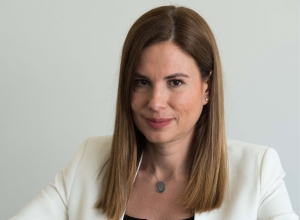
METIS Cyberspace Technology has added new functionality to its cloud-based Total Emissions Management solution that allows ship owners and operators to make best use of the EU Emissions Trading Scheme (ETS).
As well as supporting IMO’s Data Collection System metrics for a ship’s Average Efficiency Ratio and Carbon Intensity Indicator, and EU monitoring reporting and verification, the new capability means that METIS can help owners manage the complexities of carbon allowances.
Expanding to include maritime transport from next year, the EU-ETS will apply 100% for EU-EU voyages and 50% for EU-Non EU voyages. It aims to cut greenhouse gasses using a combination of emissions trading and emissions allowances for ships. Cargo and passenger ships of 5000 GT and above must account for emissions from January 1, 2024, in order to ‘surrender’ (or use) their first trading allowances by 30 September 2025. The ETS will also cover offshore ships from 2027.
To comply, shipping companies need to monitor emissions under a revised plan that has been assessed by a verified organisation and approved by the administering authority. Once per year, companies submit an emissions report for each ship and aggregated data into the ETS. The progressively more stringent scheme requires ships to surrender emissions allowances, starting at 40% of emissions in 2024, rising to 70% in 2026, and reaching 100% thereafter.
Capturing CO2 emissions data and reporting with the accuracy per voyage and cumulatively on which the ETS relies, METIS also allows users to establish the monetary value of equivalent allowances based on current EU carbon market rates. In addition to determining the number of allowances required, METIS will help to assign costs to the charterer or the manager based on the ‘polluter pays’ principle.
”Accurate data capture is crucial for ETS reporting, but METIS Total Emissions Management is also a comprehensive digital tool for emissions management that provides the framework for the predictive insights to help owners take evidence-based, effective decisions," said Eleni Polychronopoulou, CEO, METIS Cyberspace Technology. “The solution allows owners to bring emissions management into the day-to-day decision-making for optimising vessel performance.”
As a cloud-based solution, the METIS platform is also highly adaptable to changing market and regulatory needs of shipping, added Polychronopoulou. “Functionality can be continuously developed to add value for the end customer. Our expectation is that, as the ETS unfolds, customer feedback will stimulate further enhancements in functionality to reflect the realities of the scheme.”
About METIS Cyberspace Technology S.A.
METIS Cyberspace Technology specializes in High Frequency Data Acquisition, and Advanced Performance Evaluation Analytics for the maritime Industry. METIS combines innovative thinking, maritime business know-how and expertise in high-end technologies such as Machine Learning and Artificial Intelligence to empower shipping’s digital transformation. Established in 2016 in Athens, METIS is majority-owned by the maritime-focused environmental engineering group ERMA FIRST.
image: Eleni Polychronopoulou, CEO, METIS Cyberspace Technology
ELNAVI Newsletter
More Information: ELNAVI,
19, Aristidou str., Piraeus 185 31,
Tel.: +30 210 45.22.100, e-mail: This email address is being protected from spambots. You need JavaScript enabled to view it.
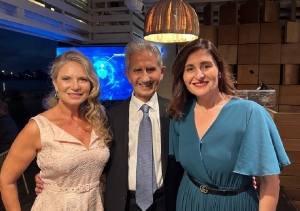
The Cyprus Marine Club (CMC) marked its participation in the Maritime Cyprus 2023 Conference by hosting a Cocktail Reception with a speech from its guest of honour, Eric Montanios, Montanios & Montanios LLC, on 7 October.
Eric (Eleftherios) Montanios was born in Famagusta in Cyprus. He qualified as a Barrister-at-Law at the Middle Temple, London. He joined his father’s, Michael Montanios, practice as a trainee advocate in November 1966. In 1969, with his father and founder of the Firm, they formed a partnership under the name Montanios & Montanios. In 1971 he assumed all the work of the firm. He was soon joined by his brother Acis and a few years later by his brother Adam.
At the start of his career he dealt, on behalf of overseas clients, with the incorporation of shipping companies and the registration of ships under the Cyprus flag. He also acted on behalf of multiple international banks in connection with the Cypriot aspects of ship financing transactions.
In more recent years, Eric Montanios has dealt with maritime litigation, mainly cases involving enforcement of mortgages on ships, as well as disputes in which he represented P & I Clubs, some of which the Firm represents as their listed legal correspondent in Cyprus.
Apart from shipping, since 1981, he has dealt extensively with legal aspects of the sale, leasing, financing, registration and deregistration of aircraft.
He is the author of the Cyprus chapters in the international publications "Aircraft Finance – Registration, Security and Enforcement" (1989) and ''Aircraft Liens and Detention Rights'' (1998) (both now published by Sweet & Maxwell, London), which he regularly updates.
In 1991, the Oriental Republic of Uruguay appointed Eric Montanios as its Honorary Consul in Cyprus, an appointment he continues to hold. In recognition of his consular services, he was awarded the Medal of the Ministry of Foreign Relations of Uruguay in 2012.
The reception was attended by 150 guests including the Deputy Minister of Shipping, Marina Hadjimanoli, and took place at the Gazebo Mare in Limassol Marina, the home of Cyprus Marine Club. The President of Cyprus Marine Club, Captain Eberhard Koch, in his opening statement, before giving the floor to the special guest, shared his contentment about the high number of guests. Capt. Koch has welcomed 2 new Corporate Members and 2 Individual Members of the Club which now counts 167 members in total.
Capt. Koch thanked guests for their trust in the Club’s daily mission to embrace and encourage a plethora of maritime industry stakeholders for friendly membership.
He furthermore praised the Island as the Shipping Star of the Mediterranean and he added: “But even a Shipping Star needs an administration in order to be allowed to fly our beautiful White Flag and to show the Cypriote Home port at the stern of a ship. (..)
Today we are enjoying a remarkable, competent, daily 24/7/365 assistance from the entire ministry's team.
The target to streamline, the island’s maritime administration services into a modern single one-stop-shop is supported by all of us being in this special industry, which you can only love.”
Eirc Montanios spoke about the establishment and function of the Cyprus Register of Ships between 1964 and 1974 when it operated in Famagusta, with that port as the port of registration, drawing from his personal experiences while acting, since the end of 1966, on instructions from shipowners who wished to register ships in the Cyprus Register of Ships, and from banking institutions which needed to register mortgages on Cyprus ships.
He referred to the legislation which established the Cyprus Register of Ships, the reason why Famagusta was determined as the port of registration, the advantages offered to shipowners by the legislation, the problems that appeared and the steps taken to address them. He then referred to the impressive number of ships which were registered, some by the few Cypriot shipowners of the time and, mostly, by Greek shipowners, followed in subsequent years by German shipowners.
He concluded by saying that, even though the Turkish invasion and occupation of Famagusta forced the government to change the port of registration to that of Limassol, the Cyprus Register of Ships remained alive and those ten years when it operated from Famagusta laid the firm foundations upon which today’s impressive Cyprus shipping cluster was built.
To mark the special occasion, upon conclusion of the speech, Capt. E. Koch on behalf of the Cyprus Union of Shipowners offered to Montanios a copy of the book entitled: FAMAGUSTA -The Rise and Fall of a Ships’Registry|1964 - 1974
The enchanting speech of Montanios brought on further fascinating conversations among an enthusiastic audience, who explored interesting topics with the speaker and continued sharing their thoughts during the cocktail reception.
The Cyprus Marine Club is a non-profit organisation that embraces and encourages a plethora of maritime industry stakeholders for friendly membership. Ship Owners, Ship Managers, Crew Managers, Service Providers & Suppliers, Agents, Terminal Operators, Legal and Financial and more, come together with a focused effort to promote and celebrate the Cyprus maritime industry and share experiences.
ELNAVI Newsletter
More Information: ELNAVI,
19, Aristidou str., Piraeus 185 31,
Tel.: +30 210 45.22.100, e-mail: This email address is being protected from spambots. You need JavaScript enabled to view it.
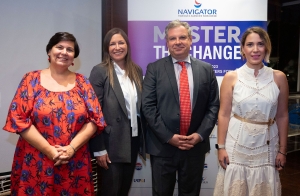
The third closed discussion held by NAVIGATOR SHIPPING CONSULTANTS, in the framework of the 22nd NAVIGATOR 2023 - THE SHIPPING DECISION MAKERS FORUM, «Master the Change» was successfully organized on the 3rd of October 2023, at the Piraeus Marine Club, with the participation of the three Greek Think Tanks. Directors of the think tanks DIANEOSIS, ELIAMEP & IOBE added a valuable opportunity for the exchange of knowledge and ideas on issues that concern the global affairs and by extension are inextricably linked to shipping, such as the green transition, geopolitical events, the evolution of the views and value system of Greeks after multiple crises. A total of 100 participants, including Presidents or representatives of Shipping Organizations, along with executives from the maritime community and event sponsors attended this event.
Danae Bezantakou, CEO of Navigator Shipping Consultants, welcomed the participants stressing that “the whole world is in many dilemmas and so is shipping. So, for the first time the presence of the three big Think Tanks of Greece and the exchange of views was very important and interesting”.
Dr. Fay Makantasi, Research Director, of DIANEOSIS, initiated the discussion and mentioned the different studies that DIANEOSIS covers, among other things, the major challenges of the Greek economy, climate change, the blue economy, and tourist ports, and directed the need of a holistic view of the world in an age of interdisciplinarity.
More explicitly, she described the economic challenges and the necessary reforms that need to be made to modernize the country. She pointed out that two important challenges are climate change and demographics and explained in simple terms what climate change means for our country and how it affects key sectors of the Greek economy and society. She also stressed that Greece's population in the future is decreasing according to all demographic projections and is ageing, affecting not only its labor and education policies, social welfare, social security but also its geopolitical strategy and security. An interesting aspect of what she mentioned is that demography is wrongly considered a problem of the last few decades in that no generation has been replaced since 1940, since we are below the 2.1 children per woman of childbearing age, which is the generational replacement threshold. Lastly, she referred to studies carried out by transNEOSIS on the blue economy.
Maria Gavouneli, Director General, ELIAMEP & Professor of International Law, Faculty of Law, National & Kapodistrian University of Athens talked about Greek shipping, as a primary matter of security and the need to have the sea routes, which are dominated by Greek shipping, clearly defined.
Mrs. Gavouneli acknowledged the three major challenges facing shipping today, the implementation of the IMO resolution on shipping emissions; the EU Due Diligence Directive within the wider context of ESG considerations; and the wider discussions on a shipping lane in the Indo-Pacific to counterbalance the Chinese Belt & Road initiative. As she specifically said, these are all questions pertaining to security, and are understood in the widest possible sense, which highlight the essential role shipping has played and will continue to play in the international scene.
Nikos Vettas, the General Director of the Foundation for Economic and Industrial Research - IOBE explicitly elaborated how Greek shipping can help in three practical ways the world economy. One is the export of services globally, the second is the integration of technology and the third is the creation of jobs in the country. He mentioned how the world is going through a period of rapid change, and how a specialized knowledge and a direction on how the sectors are interconnected and what the priorities are, is important.
More specifically, Mr. Vettas spoke about the trends in the global economy and the challenges that are expected, as well as how the role of shipping may be affected by them, in particular the slowdown in the growth of European economies, the geopolitical challenges and the effects of the integration of new technologies. He also referred to the domestic economy and the role of shipping in it, based on previous and current special studies by IOBE. Finally, he discussed the dynamics of the Greek economy as it has been shaped by the developments of the last few years, as well as the opportunities that exist in the coming years and the conditions to put it on a path of strong growth in the medium term.
Following the vigorous panel, an energetic discussion was flourished between the participants and the panelists, and issues regarding environmental sustainability, geopolitical and demographic challenges, technological integration, and global economic trends were raised.
The results and final conclusions of these discussions will be presented at the 22nd NAVIGATOR 2023 - THE SHIPPING DECISION MAKERS FORUM, themed “Navigate the Change” on Thursday 9th of November 2023 at the Stavros Niarchos Foundation Cultural Center!
https://navigatorltd.gr/forums/22nd-navigator-forum-2023/
ELNAVI Newsletter
More Information: ELNAVI,
19, Aristidou str., Piraeus 185 31,
Tel.: +30 210 45.22.100, e-mail: This email address is being protected from spambots. You need JavaScript enabled to view it.
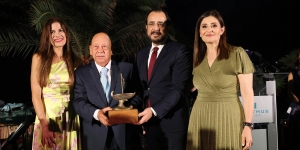
An acclaimed shipping personality that has contributed the most in the growth of the Cyprus Shipping Registry was honored with Cyprus Shipping Award in the opening reception of Maritime Cyprus Conference at Limassol.
The award was granted to George Prokopiou founder and managing director of Dynacom Tankers & Dynagas and was delivered by Nikos Christodoulides, president of Cyprus Republic who said that the shipping industry is very important for Cyprus that is a fully pledged and dynamic shipping center. Cyprus provides the appropriate framework for a sustainable growth
Knowledge journey continues
In his speech George Prokopiou dedicated this award to Glyfada the place the he was born and grown up. George Prokopiou has followed an exciting career of 52 years and thanked his wife Alexandra and daughters Elisa Ioanna Marina Elena.
The deputy minister of shipping Marina Chatzimanolis in her introductory remarks said that the Cyprus Shipping Award is granted to leading personalities of Shipping and pointed out that this year Cyprus celebrates 60 years of Cyprus Shipping register since it was launched in Famagusta currently occupied by Turks.
It must be noted that George Prokopiou is an innovative shipowner who has crossed the northern sea route and lately contributed to the fleet of Cyprus Register five state of the art LNG carriers.
George Prokopiou is the first shipowner from Greece that receives the Cyprus Shipping Award since it was first launched in 2004.
ELNAVI Newsletter
More Information: ELNAVI,
19, Aristidou str., Piraeus 185 31,
Tel.: +30 210 45.22.100, e-mail: This email address is being protected from spambots. You need JavaScript enabled to view it.
MARITIME CYPRUS 2023
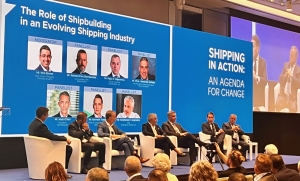
MARITIME CYPRUS CONFERENCE 2023 - DAY 1
Sustainable shipping towards 2050: a mission (Im)Possible
Stefanos Papandreou & Theano Kalapotharakou Elnavi’s Co publishers, exclusively report from Limassol Cyprus
The discussion was moderated by Themis Papadopoulos President CSC & CEO of Interorient Navigation.
Mr. Emanuele Grimaldi ICS President and MD of Grimaldi expressed his concerns about ETS EU that will cause a very confusing maritime environment and other countries around may follow the same paradigm creating a mix of trading systems.
Mr. Philippos Phillis ECSA President & CEO of Lemissoler marked that we are heavily regulated however we don’t have enough tools to encounter with the difficulties.
Mrs Blenheim president of German Shipowners Association said that we need an international framework and a clear path to go ahead with the requirements.
Nikolaus H. Schuss President of BIMCO referred to the targets of decarbonization mentioning that are too tough but there are various steps such as raising money from a levy on marine fuel and multiple technologies for alternative fuels.
All speakers agreed that EU has to reconsider the ETS and alternative fuels are at the moment impossible to be adopted by the shipping industry and the only way to achieve the targets is to align our policies and adopt a more realistic approach.
What we have to avoid is prejudice and fundamentals. We cannot have zero emissions in one day, it will take much time for sure more than a couple of decade and moreover EU has to address the issue inside the IMO framework.
Mr. George Mouskas vice President of CUS moderated a panel with distinguished shipowners and discussed the perspective on the future of EU shipping.
Mr. Andreas Hadjiyiannis President of CUS pointed out that ETS should address the cargo owner and the charterers otherwise these measures and regulations harm the competitiveness of the shipping industry. Shipowners operate their ships with most efficient way and economically approach.
Mr. George Prokopiou chairman of Dynacom, Tankers Management expressed his concern about the ongoing process of decarbonization adopted by IMO. Europe is shooting its foot with these unrealistic measures as we should have in mind that China has everything shipyards ships banks crews.
Suzanna Laskaridis director of Laskaridis shipping was asked if EU shipping will grow in the next years. We have to be more self-sufficient in maintaining our fleet as Europe and reminded the Covid -19 period that it took much time to persuade politicians to recognize seafarers as essential workers and the closure of the suez canal that caused a huge disruption in the world trade.
Mr. Thanassis Martinos Managing Director of Eastern Mediterranean noted that Europe is not so much important for tramp owners. All these measures are influencing container ships and ferry ships on the contrary the organized shipowners will be benefited from this window of opportunity.
“All these innovative ideas will not contribute to clean the environment and why we penalize the ships since we have a common interest to reduce consumption of fuels. Shipowners are the biggest environmentalists we love sea” said Mr. Prokopiou.
Mr. Martinos referred to the taxation system and he said that does not worry because it is based on tonnage tax however he is very concerned about the sanctions. The majority of the Greek owned fleet is under Panama Marshall and Liberia is not under European therefore sanctions are not working for the benefit of European shipping.
All speakers agreed that Europe must realize that shipping is a valuable asset with huge geopolitical importance.
MARITIME CYPRUS CONFERENCE 2023 - DAY 2
Energy Transition in shipping
The topics of energy transition, transformation of Shipping and the role of shipbuilding in an evolving shipping industry were discussed by prominent and distinguished personalities.
The first panel included the following speakers: Semiramis Paliou CEO of Diana Shipping, Jan Dieleman president of Cargill Ocean, Sebastian Landerretche head Freight platform Dreyfus and Roel Hoenders head of Climate Action & Clear Air of IMO.
The discussion was moderated by Manuela Tomassini head of sustainability and technical assistance of EMSA.
Anne Katrine Bjerregaard head of strategy sustainability and ESG Marsk McKinney Moller Center for zero carbon Shipping warned that it is time to act now as the shipping industry radically transforming towards 2050.
The next panel was moderated by Nick Brown chairman of IACS. The panel included the following speakers: Konastantinos Stampedakis co-founder & MD of Erma first, Polys Hajioannou CEO & Chairman of Sage Bulkers Inc, Chris Alexander Korfiatis Vice President of Marine operations of Royal Caribbean, Mark O’ Neil president of Intermanager, Kenneth Tveter head of green transition of Clarksons, and Stephanos Angelakos CEO of Angelakos Hellas.
Speakers agreed that although the yards’ capacity is declining new shipyards established to invest in more energy efficient ships.
The need for newbuilding ships and more innovative projects will create strong partnerships in the shipbuilding sector that will enable to develop non carbon projects.
Polys Hajioannou announced that Safe Bulkers ordered two dual fuel ships, green methanol ready that will be delivered in 2026 although. Polys Hajioannou marked that although we risk $6mil in excess the only reason we did it is that we want to lead the market in this decarbonization path of shipping.
The speakers also mentioned that shipping far more than the ports to operate environmental friendly for two reasons. The first has to with the cold ironing infrastructure and the second with the offloading of carbon capture residues.
At moment we navigate an unknown future in the shipbuilding sector because we are not ready for the changes especially regarding the alternative fuels.
However all stakeholders in Shipping would like to help and invest on the development of the utmost sustainable and efficient technologies to create a better environment for our children.
MARITIME CYPRUS 2023 - DAY 3
Exploring Ship Finance
In the last day of the conference the discussion directed to the future trends of the sectors of ship financing and maritime technology.
Ben Nolan managing director of Stifel referred to the future trends and emerging markets for a dynamic and resilient shipping industry followed by a panel discussion that included Christos Tsakonas global head of shipping DNB Bank, Erik Helberg CEO Clarksons securities, Nicole Mylona CEO Transmed Shipping, Harry Vafias CEO and founder STEALTHGAS inc, Mark Friedman Senior managing director Evercore, Atef Abou Merhi Managing Director Pelagic Partners. The speakers discussed the topic navigating the seas of Capital and exploring ship finance.
They agreed Shipping othe most efficient mean of transporting commodities and financing will have a great effect on how much the market will go ahead in the years ahead.
Christos Tsakonas referred to the various sources of Capital such as bank lending private equity and stock exchange and pointed out that a bank evaluates track record cash flow and the viability of the project in regards to the new environmental regulations.
All speakers agreed that currently capital is available but it is too expensive.Mark Friedman marked that we also have in mind that shipping is cyclical market so the timing is very important.
Nicole Mylona agreed that there is available capital for good projects and added that the a crucial factor for granting financing is sustainability which means reducing the consumption of air emissions and maintaining energy efficiency strategy.
The last years alternative sources of financing have replaced the traditional lending.
Harry Vafias mentioned that StelthGas and the other companies of Vafias Group have eliminated bank financing and has taken advantage other means capital to expand and grow its fleet.
Abou Merhi remarked that private equity focuses on long terms projects and do not invest on risky assets.
It must be noticed that at the moment all shipping sectors experience an exceptional market Drycargo Tankers Containerships Car carriers LNG etc giving phenomenal returns to the investors.
Nicole Mylona remarked that ongoing environmental regulations will cause a significant increase in the operation expenses of ships however competition is a good driver to maintain cost effective and survive through the market difficulties.
However it is very hard for small companies to afford the energy transition compared with the bigger companies with 50-100 vessels can operate more easily an ammonia powered fleet.
Harry Vafias agreed that there is a reduction of the number of the shipping companies but the most important is the balance sheet and not the number of ships. You can survive everything if you can control the operational costs.
Regarding startup companies it is quite difficult to get finance especially in projects that has to do with premature or risky project last such as nuclear propulsion.
An important question was raised by Haralampos Mylonas founder of Transmed Shipping in which sector of the shipping industry it’s more profitable to invest in the next few years. Speakers said that tankers will be an attractive sector to invest and every good project in any market that is conducted by an excellent management team.
The key technological changes and the digitizal transformation in shipping
The speakers of the technology session Peter Broadhurst Inmarsat, Erwin Derlagen Enesel and Piotr Intership Navigation referred to the most significant technological advances of the last decade.
The speakers said that we can take advantage of the technology to improve two main areas: the skills of the crews and the predictive maintenance of the vessels.
However we have to educate people how to use technology onboard and empower the knowledge of seafarers by dialogue and communication.
Commercialization of technology is another important aspect with the to improve safety data collection.
Another important remark is that the technology is an aid to navigate the vessel and you can rely totally on the digital tools and ship’s equipment.
The speakers also mentioned that technology also create new risks and challenges and the complexity and regulators respond too slowly to the implementation of technology.
ELNAVI Newsletter
More Information: ELNAVI,
19, Aristidou str., Piraeus 185 31,
Tel.: +30 210 45.22.100, e-mail: This email address is being protected from spambots. You need JavaScript enabled to view it.
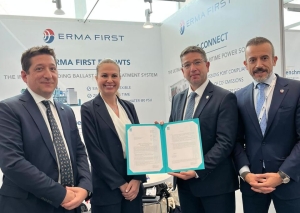
Post combustion CCS system absorbs CO2 from a vessel’s exhaust gas that is heated to capture CO2 and then liquefied and stored cryogenically onboard.
Lloyd’s Register (LR) has awarded Approval in Principle (AiP) to ERMA FIRST for its amine absorption-based Carbon Capture & Storage (CCS) system.
ERMA FIRST’s CCS system uses absorption technology to mix CO2 (carbon dioxide) flue gases with a proprietary amine solvent, which is then heated to produce a chemical reaction which reverses the absorption and separates the CO2 from the solvent. The CO2 from this process is then liquified and stored under cryogenic conditions onboard with the solvent ready to use in the same process again, creating a regenerative loop for CCS.
With the ability to capture a significant amount of CO2 from exhaust emissions, ship owners and operators will be able to meet and exceed the IMO’s strengthened emission reduction targets, whilst increasing their vessels’ lifecycle.
LR's AiP, as part of the Risk-Based Certification process, has enabled the technology to achieve this important milestone and allows ERMA FIRST to proceed with onboard pilot testing of the application, whilst LR continues to support its industry partners in de-risking their maritime assets.
The AiP builds upon the commercial success of ERMA FIRST’s ballast water treatment system, the ERMA FIRST FIT BWTS, which received type approval from LR back in November 2018.
Nick Brown, CEO, Lloyd’s Register, said: “LR is pleased to have awarded ERMA FIRST with Approval in Principle for its post combustion Carbon Capture & Storage system. CCS technology presents a real and credible route for the maritime industry to reduce its greenhouse gas emissions in the short to medium term and this AiP is evidence of LR’s tangible actions to support the global energy transition.
“Acting as trusted advisers and using our technical expertise throughout the certification process, LR continues to proactively identify a broad range of technologies that can de-risk operations for maritime stakeholders.”
Konstantinos Stampedakis, Co-Founder & Managing Director, ERMA FIRST, said: “We are delighted to have received Approval in Principle from Lloyd’s Register for the ERMA FIRST CCS system. ERMA FIRST is committed to developing solutions that support the maritime industry’s green transition and achievement of the IMO’s decarbonisation ambitions. This AiP represents a significant milestone for our CCS project, and we look forward to continuing to work with Lloyd’s Register as we move into the next phase of this important project.”
Image: (from left to right) Panos Mitrou - LR Global Gas Segment Director, Eleni Polychronopoulou - ERMA FIRST President, Nick Brown - LR CEO, Konstantinos Stampedakis, Co-Founder & Managing Director - ERMA FIRST
ELNAVI Newsletter
More Information: ELNAVI,
19, Aristidou str., Piraeus 185 31,
Tel.: +30 210 45.22.100, e-mail: This email address is being protected from spambots. You need JavaScript enabled to view it.
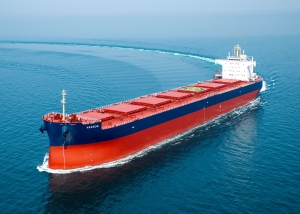
Following an ambitious ESG strategy Safe Bulkers has entered into contracts for the acquisition of two dual-fueled, 81,200 dwt, Kamsarmax class dry-bulk vessels, at attractive prices with scheduled delivery dates in the fourth quarter of 2026 for the first vessel, and in the first quarter of 2027 for the second vessel.
The newbuild vessels are designed to meet the requirements of Energy Efficiency Design Index related to Green House Gas, GHG emissions, ‘EEDI, Phase 3’ and to comply with the NOx emissions regulation, NOx-Tier III.
The newbuild vessels are capable of operating with methanol and fuel. When powered by green methanol the vessels can produce close to zero GHG emissions based on the life cycle assessment (LCA) methodology well-to-propeller (WTP).
The Company has already taken delivery of five IMO GHG Phase 3 – NOx Tier III vessels and is expected to take delivery 9 additional newbuilds, two of which dual-fueled, with scheduled deliveries two in 2023, three in 2024, two in 2025, one in 2026 and one in the first quarter of 2027.
Dr. Loukas Barmparis, President of the Company commented: “Following our fleet renewal strategy developed after 2019 with 12 newbuilds, we have extensively assessed the use of technologies leading to net-zero GHG emissions. The two new contracts, with relatively prompt deliveries, signed today, reflect our ambition to be in the forefront of environmental developments.”
About Safe Bulkers, Inc.: The Company is an international provider of marine drybulk transportation services, transporting bulk cargoes, particularly coal, grain and iron ore, along worldwide shipping routes for some of the world’s largest users of marine drybulk transportation services. The Company has a fleet of 45 vessels, consisting of 11 Panamax, 8 Kamsarmax, 18 Post-Panamax and 8 Capesize vessels, with an aggregate carrying capacity of 4.6 million dwt and an average age of 10.6 years. Twelve vessels in our fleet are eco-ships built after 2014, and five are IMO GHG Phase 3 – NOx Tier III vessels built 2022 onwards. The Company’s common stock, series C preferred stock and series D preferred stock are listed on the NYSE, and trade under the symbols “SB”, “SB.PR.C”, and “SB.PR.D”, respectively.
Image: Dr. Loukas Barmparis, President of Safe Bulkers Inc.
ELNAVI Newsletter
More Information: ELNAVI,
19, Aristidou str., Piraeus 185 31,
Tel.: +30 210 45.22.100, e-mail: This email address is being protected from spambots. You need JavaScript enabled to view it.