



elnavi
Celestyal Cruises acquires a new 1260 passenger cruise ship to be renamed "Celestyal Journey"
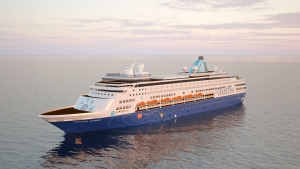
Celestyal, the award-winning, number one choice for travelers to the Greek Islands and the Eastern Mediterranean, is delighted to confirm the acquisition of a new vessel.
Originally built as the Ryndam for Holland America Line and more recently operating for P&O Australia, the 1,260-guest Celestyal Journey will undergo an extensive, €20 million, refurbishment and technical maintenance overhaul before entering service.
“While the global events of the past few years have placed our growth plans on pause, the positive industry outlook along with strong bookings for the coming season, provides Celestyal with the opportunity to recommence the process of renewing our fleet with new vessels,” said Chris Theophilides, CEO. “In addition to her expansive open decks, numerous bar & dining options as well as spacious public areas and staterooms, the Celestyal Journey provides our guests with a significant increase in premium and balcony staterooms, which continue to be in high demand on all of our voyages. We look forward to welcoming her to the Celestyal fleet!’’
The Celestyal Journey will undergo its capital expenditure program in the wider Piraeus ship repair zone area. Details regarding the onboard experience and itineraries will be forthcoming.
ELNAVI Newsletter
More Information: ELNAVI,
19, Aristidou str., Piraeus 185 31,
Tel.: +30 210 45.22.100, e-mail: This email address is being protected from spambots. You need JavaScript enabled to view it.
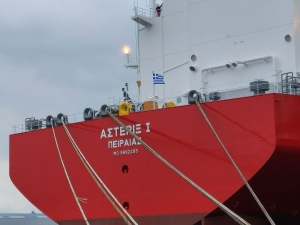
The ship was christened by CapitalGas’ technical director Alexandra Xystra
South Korean shipbuilding major Hyundai Heavy Industries (HHI) has delivered the 7th LNG carrier to Greece-based shipowner Capital Product Partners (CPLP).
The 174,000 cbm LNG carrier Asterix I has already secured a long-term time charter with Hartree Partners for a firm period of five years.
The dual-fuel vessel was named and delivered at a ceremony held at the yard on 16 February 2023.
The godmother of the vessel was Alexandra Xystra, Technical Director of Capital Gas Ship Management Corp.
In his message the CEO of the Capital Product Partners, Jerry Kalogiratos said: “an exceptional job in supervising this vessel incorporating the latest technological advances in energy efficiency and greenhouse gases emissions abatement.”
The LNG carrier is classed by ABS. It features two Hyundai-WinGD 5X72DF dual-fuel main engines enabling it to sail on marine diesel and gas. The ship comes equipped with HHI’s self-developed Hi-ALS air lubrication system, which can cut fuel consumption by up to eight percent. The LNG carrier is fitted with energy-saving fin and rudder, also developed by Hyundai. It has been outfitted with GTT’s Mark III Flex tank containment systems which offer a guaranteed boil-off rate of 0.07% V/day, according to GTT.
The vessel is 299 meters long overall, has a breadth of 46.4 meters, and a depth of 26.5 meters.
The company’s previous six LNG carriers of the same size, Aristos I, Aristidis I, Aristarchos, Attalos, Adamastos,and Asklipios were delivered in 2020 and 2021. All six LNG carriers have been chartered out to energy majors such as BP, Hartree, Cheniere, and Engie.
Overall, the CPLP fleet currently consists of 20 vessels, which also include ten Neo-Panamax container vessels, three Panamax container vessels, and one Capesize bulk carrier vessel.
ELNAVI Newsletter
More Information: ELNAVI
19, Aristidou str., Piraeus 185 31,
Tel.: +30 210 45.22.100, e-mail: This email address is being protected from spambots. You need JavaScript enabled to view it.
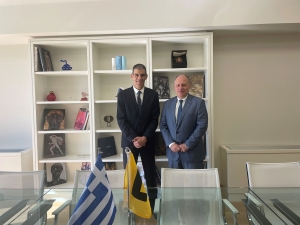
Latsco Marine Management Inc received the Preventative Maintenance Program for Condition Based Maintenance (PMP-CBM) notation from ABS for a pioneering project that adopts predictive maintenance principles for equipment onboard vessels.
Latsco’s LPG carrier “Hellas Sparta” will constitute a pilot vessel for the gradual transition of the fleet’s maintenance schedules to a new era of condition-based programs.
The key element in the project is a Preventative Maintenance Program (PMP) based on a Condition Based Maintenance (CBM) approach. Equipment maintenance under CBM is conducted on a more frequent or real-time based measurement of operational parameters rather than on rigid time intervals in traditional Planned Maintenance programs.
ABS reviewed and awarded the PMP-CBM notation for selected critical equipment on the “Hellas Sparta” including vibration analysis components and high-end infrared thermographic cameras. These systems complement monitoring techniques already onboard the Hellas Sparta including direct current (DC) insulation resistance measurements for polarization index calculations, air circuit breaker (ACB) tripping protection device inspections and health status/internal resistance measurements for selected critical batteries.
“We are excited and welcome the LPG “Hellas Sparta” into this new era of optimum maintenance that increases safety, reliability and efficiency. We look forward to working with ABS along the way in our journey. Eventually, with the big data generated by these pieces of equipment, Latsco will be able to further improve operations with the use of artificial intelligence, especially with main engine and cargo plant systems. We are taking this journey one step at a time,” said Antonios Georgantzis, Latsco Chief Operating Officer.
“The PMP-CBM notation offers vessel owners an avenue to potentially reduce unexpected maintenance-related costs and downtime, optimizing operations in the process,” said Patrick Ryan, ABS Senior Vice President, Global Engineering and Technology. “Like Latsco, we are committed to more efficient, safer and sustainable operations, and we are excited to support their entrance into this new chapter.”
Image: Antonios Georgantzis, Latsco Chief Operating Officer & Elias Kariambas ABS Director, Regional Business Development
ELNAVI Newsletter
More Information: ELNAVI
19, Aristidou str., Piraeus 185 31,
Tel.: +30 210 45.22.100, e-mail: This email address is being protected from spambots. You need JavaScript enabled to view it.
Imperial Petroleum the smallest company of Vafias Group reports excellent financial results
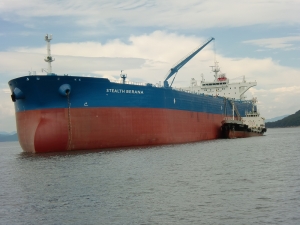
With a fleet operational utilization of 79.4% in Q4 ’22 and Revenues of $37.9million in Q4 ’22 – up $33.9million or 847.5% from Q4 ’21 Imperial Petroleum, the smallest company of Vafias Group has reported excellent profits for Q4 ’22 and a successful expansion program.
CEO Harry Vafias Commented: “The year 2022 can be simply be characterized by one word success; As market conditions were favorable particularly during the second half of year, we managed to increase our net income by about 1,020% increase our EBITDA by 2,145 %, grow our 1 year old company to 10 vessels and generate an annual net income of $30 million. Going forward our main focus will continue to be growth and profitability; We positioned the company well with an enviable capital structure $257million in asset market values, $120 million in cash and only $70 million of debt. The market outlook for tankers looks promising for 2023 and we are set to capture the continuing favorable charter market environment as well as acquisition opportunities in the tanker and dry bulk sectors”.
Imperial Petroleum Inc. owns a total of ten vessels; five M.R. product tankers, one Aframax oil tanker, two Suezmax tankers and two Handysize dry bulk carriers with a capacity of approximately 737,000 deadweight tons (dwt). Imperial Petroleum Inc.’s shares of common stock and 8.75% Series A Cumulative Redeemable Perpetual Preferred Stock are listed on the Nasdaq Capital Market and trade under the symbols “IMPP” and “IMPPP”, respectively.
ELNAVI Newsletter
More Information: ELNAVI
19, Aristidou str., Piraeus 185 31,
Tel.: +30 210 45.22.100, e-mail: This email address is being protected from spambots. You need JavaScript enabled to view it.
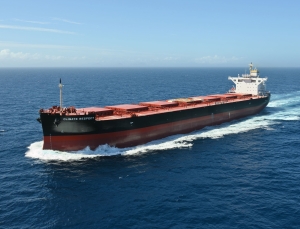
Following a policy of continuous expansion in the dry bulk sector with eco-ships the NYSE listed company Safe Bulkers, Inc. acquired a Japanese, 81,800 dwt, dry-bulk, Kamsarmax class vessel at an attractive price with a scheduled delivery date within the second quarter of 2025.
The newbuild vessel is designed to meet the Phase 3 requirements of Energy Efficiency Design Index related to the reduction of greenhouse gas emissions (”GHG -EEDI Phase 3”) as adopted by the International Maritime Organization, (“IMO”) and also comply with the latest NOx emissions regulation, NOx-Tier III (IMO, MARPOL Annex VI, reg. 13) (”NOx-Tier III”). This newbuild vessel is a sister vessel to a number of newbuilds in our orderbook with advanced energy efficiency characteristics and lower fuel consumption.
Including this agreement and following the delivery of MV Climate Ethics, our third newbuild in January 2023, the Company has an outstanding orderbook of nine newbuild vessels, with scheduled deliveries four in 2023, three in 2024 and two in 2025, of which one is Post-Panamax class and eight are Kamsarmax class vessels.
Safe Bulkers, Inc. has 44 vessels, 12 of which are eco-ships and three are IMO GHG Phase 3 – NOx Tier III vessels, and has an outstanding orderbook of nine IMO GHG Phase 3 – NOx Tier III newbuild vessels.
Image: MV “Climate Respect”, 87.000dwt, CO2 EMISSIONS: EEDI Phase 3, NOX EMISSIONS: TIER III
ELNAVI Newsletter
More Information: ELNAVI
19, Aristidou str., Piraeus 185 31,
Tel.: +30 210 45.22.100, e-mail: This email address is being protected from spambots. You need JavaScript enabled to view it.
Seanergy Maritime presents its ambitious growth plans through Capital Link webinars session
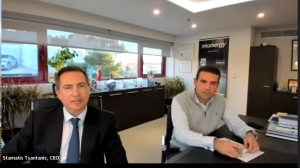
Stamatis Tsantanis, Chairman & CEO and Stavros Gyftakis CFO of Nasdaq listed Seanergy Maritime Holdings Corp. (the “Company” or “Seanergy”) (NASDAQ: SHIP) participated at a recent webinar session and presented the Company’s excellent prospects for maintaining sustainable growth and fleet expansion.
Seanergy is the only U.S. listed shipping company with a pure-play Capesize fleet. It has been listed on the Nasdaq Capital Market since 2008 under the ticker “SHIP” and is managed by a highly experienced top management.
The Company adheres solid corporate governance principles with fundamental focus on the Environmental, Social, and Governance (ESG) matters. Seanergy has been a pioneer in promoting ESG practices enhancing further its ESG commitment.
Seanergy has strong and long-standing commercial relationships with 1st class charterers i.e. Cargill, Glencore, NYK, Uniper, Trafigura, Anglo American, Vale and other trading houses and all fleet is employed in period contracts.
Seanergy is an independent company with no sponsored ownership or affiliation with private equity or hedge funds and maintains a very transparent structure.
The fleet has been increased by 65% during the last two years investing $259m in acquiring modern vessels at the low point of the market.
Seanergy has a very homogeneous and quality fleet of 18 vessels built in Japan and S.Korea with carrying cargo capacity 3.2m dwt and an average age 12.4 years.
Seanergy’s total shareholder rewards equaled nearly $55 million in 2022 consisting of stock dividends totaling $28.1 million and buybacks amounting to $26.7 million.
Stavros Gyftakis referred to the Company’s financing and noted that over the last two years Seanergy has completed ambitious refinancing programs including facilities of $270m in total, with the aim to reduce the applicable interest rate across all financings and improve the overall terms in order to support its investment program.
Seanergy managed to reduce the average spread of its loan facilities from 5.1% in 2020 to 2.9% at the end of 2022. It has also expanded its financing relationships with Chinese leasing groups and strengthened its relationships with the prominent shipping lenders in Europe.
The total debt stands at $250m at the end of 2022 including convertible debt and vessels’ secured debt.
The total debt is below 50% based on the September 2022 valuation.
Stamatis Tsantanis believes that this time is a turning point for the capesize sector as China is reopening and supports the ailing Housing Market and the new Asian coal power plant of 270GW to be delivered by 2050.
In addition to this, carbon emission targets for steel makers in China postponed to 2030. Total iron ore and coal ton-mile expected to rise by 0.4% and 4% in 2023 as well as fleet growth is at the lowest point in the last 20 years.
The demand will also stay at very sustainable levels because of the EEXI regulations which came into effect on January 1, 2023, and in combination with the upcoming CII regulation is expected to have a continuous speed reduction effect which will have a progressive impact on the global fleet.
Stamatis Tsantanis also commented on the idea behind the establishment of the spin-off company United Maritime which is to create a highly speculative gain and distributing vehicle with effect for the shareholders buying, selling ships more quickly compared with Seanergy.
In conclusion, Seanergy will maintain a very balanced approach rewarding its shareholders and looking at attractive vessel acquisitions to entertain creative growth and fleet renewal without sacrificing the Company’s loan repayment and dividend distribution schedule.
Image: Stamatis Tsantanis, Chairman & CEO and Stavros Gyftakis CFO of Nasdaq listed Seanergy Maritime Holdings
ELNAVI Newsletter
More Information: ELNAVI
19, Aristidou str., Piraeus 185 31,
Tel.: +30 210 45.22.100, e-mail: This email address is being protected from spambots. You need JavaScript enabled to view it.
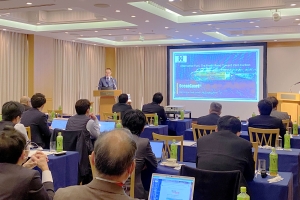
On 17th February, the Japan Branch of Headway Technology Group, a newly established subsidiary of Headway Technology Group, hosted a seminar themed “Low Carbon Future” at the Okura Hotel in Kobe, Japan. Several well-known Japanese shipowners, builders, investors, classification societies, and manufacturers were invited to attend. The seminar focused on the shipping industry of East Asia, the outlook of low-carbon shipping, and Headway’s low-carbon product family. The seminar gained a promising result with many partners willing to further the cooperation with Headway in the field of marine decarbonization.
The establishment of Headway’s Japan Branch was a milestone in Headway’s action in further development of the Asian market. The subsidiary will be the pioneer post on the layout of low-carbon shipping and further promote their service in the Asian market and benefit Japanese partners with Headway’s state-of-the-art productions and solutions.
During the first seminar, a delegate from the China Classification Society kicked the start with a presentation on the latest regulation updates. Following that Headway’s Japan Branch and partner shared the opportunity & challenge analytics on the shipbuilding industry in China & Japan. Headway’s R&D team also introduced the recent upgrades of the OceanGuard® Fuel Gas Supply System and Low Flash-point Fuel Supply System. Headway emphasized that the company will keep providing the innovational solution for maritime decarbonization, and provide measures to meet the requirements of authorities such as IMO and EU.
Headway has established a comprehensive decarbonize solution including OceanGuard FGSS, LFSS, Exhaust Gas Cleaning System, Carbon Capture, Storage and Utilization System, etc. The company also laid out a comprehensive upgrade on the global service network to provide a level of design/technical support service that meets the expectation of customers. Headway also applied the latest technology and materials into the products to enhance energy efficiency and eco-friendly with lower risk and OPEX.
“We share a vision with our partners that decarbonization is not only a responsibility but also an opportunity, to open a new era of greener shipping”, said the Headway R&D team leader in the presentation. It is reported that Headway has established cooperation with the majority of Chinese, Japanese, and Korean shipowners and shipyards. With the deep operation of Headway’s Japan Branch, the company will facilitate cooperation between different parties to further the comprehensive, timely, and localized solution and technical service on low carbon shipping for Asian customers.
ELNAVI Newsletter
More Information: ELNAVI
19, Aristidou str., Piraeus 185 31,
Tel.: +30 210 45.22.100, e-mail: This email address is being protected from spambots. You need JavaScript enabled to view it.
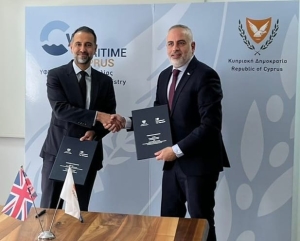
The Cyprus Shipping Deputy Ministry (SDM) and the Department for Transport of the United Kingdom of Great Britain and Northern Ireland have signed a Memorandum of Understanding (MoU) to further strengthen shipping relations between the two states.
The agreement includes a range of commitments designed to address current challenges faced by the sector. Drafted to align with the needs and objectives of each country, the MoU aims to stimulate economic development on a mutually advantageous basis, with a specific focus on driving progress in shipping’s response to climate change issues. Joint scientific and technical workshops, conferences, training programmes, seminars, and courses, amongst other initiatives, will be implemented to drive shipping towards its sustainability goals.
Core focuses of the agreement also include maritime safety and security, and pollution from ships. The two states are also committing to jointly address issues around piracy, fraudulent ship registrations, seafarer welfare and training, and the implementation of transport-related sanctions that impact the sector. Both parties pledge to promote cooperation in shipping within the framework of international and regional councils such as the International Maritime Organization and the Commonwealth.
“Collaboration has always been a cornerstone of Cyprus’ vision,” said Cyprus Shipping Deputy Minister, Vassilios Demetriades. “This MoU aligns with the extrovert pillar of the SDM’s strategy, which champions a joint approach to driving positive progress in the greater shipping sector while always safeguarding competitiveness.
“Cyprus looks forward to working closely with the UK, exchanging information on best practice when it comes to maritime governance, knowledge, research, and innovation. Furthermore, it is our hope that this partnership will accelerate the digitalization of ship operations, and, importantly, improve the resilience of the sector in terms of cyber security.”
The MoU was signed on Tuesday, 21st February 2023, at the premises of the Shipping Deputy Ministry in Limassol by the Cyprus Shipping Deputy Minister, Mr. Vassilios Demetriades, and the British High Commissioner, Mr. Irfan Siddiq, representing Maritime Minister of the United Kingdom, Baroness Charlotte Vere of Norbiton.
Prior to the MoU’s signing, Mr Demetriades had a constructive virtual meeting with Baroness Vere.
Following the signing ceremony, High Commissioner Siddiq said: “This agreement marks a new chapter in relations between Cyprus and the UK, both of which have long and rich seafaring histories. We look forward to partnering with Cypriot authorities to support maritime safety and security. We believe that closer cooperation will benefit our local, regional and international shipping communities.”
About the Cyprus Shipping Deputy Ministry (SDM)
The Cyprus Shipping Deputy Ministry is a well-established and quality Registry, committed to safety, security and excellence. Ranking amongst the top international fleets, it boasts a young fleet that averages seven years of age, encompassing over 1,000 oceangoing vessels with a total gross tonnage exceeding 24 million (as of 31/08/21). Cyprus has maritime offices in Piraeus, London, Hamburg, Rotterdam, New York City and Brussels.
ELNAVI Newsletter
More information: ELNAVI,
19, Aristidou str., Piraeus 185 31,
Tel.: +30 210 45.22.100, e-mail: This email address is being protected from spambots. You need JavaScript enabled to view it.
“13th Annual Capital Link Greek Shipping Forum” An unofficial summit of global shipping took place in Athens

The most prominent shipping personalities were gathered in Athens earlier in February 2023 to discuss significant topics and pressing issues including the current lack of seafarers, decarbonization, and digitalization.
This major shipping achievement was organised by Nicolas and Olga Bornozi who have established Capital Link’s Annual Greek Shipping Forum to discuss the industry’s main trends and challenges, as well as the opportunities that lie ahead and strategies to compete in an increasingly complex and demanding world. This year’s forum’s distinguished speakers discussed and debated the most pressing issues in shipping, such as geopolitics, energy security, increasing regulation, deglobalization, a slowing world economy, higher interest rates, and the easing covid restrictions in China.
The prominent figures include Mr. Kitack Lim, Secretary General - International Maritime Organization (IMO), H.E. Ioannis Plakiotakis, Minister of Insular Policy & Shipping - Hellenic Republic, H.E. Konstantinos Skrekas, Minister of Environment & Energy - Hellenic Republic, Dr. Harry Conway, Chairman - Marine Environment Protection Committee (MEPC) – IMO, Dr. Martin Stopford, Mrs. Sabrina Chao, President & Chairperson of the Board – BIMCO; Wah Kwong Maritime Holdings Limited, Mr. Emanuele Grimaldi, Chairman – INTERNATIONAL CHAMBER OF SHIPPING; President & MD - Grimaldi Euromed SpA; Managing Director – Grimaldi Group, Mr. Paolo d’Amico, Chairman – INTERTANKO; Chairman & CEO - d'Amico International Shipping SA, Mr. Dimitris Fafalios, Chairman – INTERCARGO; President/Director - Fafalios Shipping S.A., Mrs. Melina Travlos, President of the Union of Greek Shipowners (UGS); Chair of the Board of Neptune Lines, and Mr. Philippos Philis, President - European Community Shipowners Association (ECSA); Chairman & CEO – Lemissoler Navigation Co Ltd.
GREEK SHIPPING LEADERSHIP AWARD
In the context of the forum, Mr. Themistocles Vokos, Founder Member, Honorary Chairman of Posidonia; Founder of Seatrade, received the “Capital Link Greek Shipping Leadership Award”. We recognize Mr. Themistocles Vokos for his long-standing achievements and contribution to the Greek and Global Shipping Industry.
Mr. Nicolas Bornozis, President – Capital Link, introduced Mr. Themistocles Vokos, Founder Member, Honorary Chairman of Posidonia; Founder of Seatrade.
Professor Costas Th. Grammenos, CBE, DSc, Chairman C. Grammenos Centre of Shipping Trade & Finance - Bayes Business School, City, University of London, and Mr. Gregory Hadjiefelfteriadis, Co-Founder - Eletson Corporation, honored the forum with their presence and delivered Introductory Remarks at the Official Award Luncheon.
Mr. Themistocles Vokos, Founder Member, Honorary Chairman of Posidonia; Founder of Seatrade, stated: “The people I met in the sector have inspired me to look at the world as a place where everything was possible. I have a deep respect and love for the sea, as it joins people of different countries and cultures rather than separating us.
I share this award with my collaborators. This has been a rewarding career and if there was a price to pay, I escaped it, as I have also been blessed with a loving wife and lovely children.”
Professor Costas Th. Grammenos, CBE, DSc, Chairman C. Grammenos Centre of Shipping Trade & Finance - Bayes Business School, City, University of London, stated: “Themis Vokos established the Seatrade magazine, which always featured interesting articles, and other publications destined towards the Chinese market. Themis Vokos, "the bridge maker". Furthermore, being present at the biannual Posidonia conference is of course a must for all stakeholders of the shipping industry.
Mr. Vokos is special man, with clear vision and unlimited creativity. Congratulations to him.”
Mr. Gregory Hadjiefelfteriadis, Co-Founder - Eletson Corporation, stated: “Going through the career of my dear friend Themistocles makes the encyclopedia Britannica fail in comparison. Everybody associates him with Posidonia, dating back to 1969. Poseidon, the god of the seas, is rumored to have many children. If that's the case, then Themistocles is definitely one of his best. He is worthy of this award, and I congratulate the organizers for honoring him.”
Previous honorees were: 2013 - Captain Panagiotis N.Tsakos, Founder & President - Tsakos Group, 2014 - Mr. Pericles Panagopoulos, 2015 - Mr. Lambros Varnavides, Vice Chairman of the Baltic Exchange, Trustee of the Lloyds Register Foundation and Managing Director and Global Head of Shipping RBS 1998, 2016 - Mr. Nicolas, George and Andreas Tsavliris of the Tsavliris Salvage Group, 2017 - Professor Costas Th. Grammenos CBE DSc, Chairman C. Grammenos Centre of Shipping Trade & Finance, Bayes Business School, City, University of London, 2018 - Mr. Panos Laskaridis, President of European Community Shipowners Associations; CEO, Lavinia Corporation/Laskaridis Shipping Company Ltd. and Mr. Athanasios Laskaridis, Chairman and CEO of Lavinia Corporation, Lavinia Enterprises Limited and Laskaridis Shipping Company Ltd., 2019 - Captain Paris Dragnis, Chairman & Founder - Goldenport Group, 2020 - Mr. George Procopiou, Founder, Dynacom Tankers Management, Sea Traders – Dynagas, 2022 - Mr. Simeon Palios, Founder and Chairman, Diana Shipping.
LIFETIME ACHIEVEMENT AWARD PRESENTATION
Mr. D. John Stavropoulos, Chairman Emeritus - Tsakos Energy Navigation Ltd. (TNP), received the Lifetime Achievement Award in honor of his life-long dedication and incredible contribution to shipping in Greece and on a global scale. Mr. Nicolas Bornozis, President - Capital Link, and Dr. Nikolas P. Tsakos, Founder, Chairman & CEO - TEN Ltd.; Chairman - INTERTANKO (2014-2018) offered introductory remarks for the award presentation.
Mr. D. John Stavropoulos, Chairman Emeritus - Tsakos Energy Navigation Ltd. (TNP), stated: “I first came to Greece in the 1970s, when I was working for the national bank of Chicago. Then came London, and Latin America after that. Once back in Chicago I was appointed head of the real estate department. I went on to manage the commercial banking department. It goes without saying that I’ve thoroughly enjoyed working with the Tsakos group and I am happy to be a former associate of the company. Thank you all very much for this honour.”
Mr. Nicolas Bornozis, President - Capital Link, stated: “Mr. Stavropoulos was born in the deep south, in Mississippi. He spent thirty years working for the Chicago national bank. He was appointed by President George H.W. Bush to serve for life on the financial advisory committee. An excellent financial analyst, he served as chairman of Tsakos Energy Navigation. He brought high standard ethics, immaculate corporate governance, and unique expertise to the banking sector.”
Dr. Nikolas P. Tsakos, Founder, Chairman & CEO - TEN Ltd.; Chairman - INTERTANKO (2014-2018), stated: “John Stavropoulos has been a business mentor for me and my family. Other than my immediate family, he has had a biggest influence on me than any other person. He truly has been an inspiration. We started the company when I was a lot younger, and he was able to set us off on the right track to become who we are today. Mr. Stavropoulos, on behalf of my father as well, who is here in spirit, we’d like to thank you for your guidance and friendship throughout the years.”
SHIPPING MARKETS UPDATE & OUTLOOK
Mr. Martin Kjendlie, Managing Director - ViaMar (VesselsValue) in his speech presented the trends of the global market.
“The shipping community should be proud to be leading the way; other industries are looking to imitate us, which maybe wasn’t the case a decade ago. ViaMar launched in 2011 and now has 9 offices worldwide. Today, global markets are under pressure, as we’re going through a soft recession in Europe and the US, with GDP growth of basically zero per cent.
The under-investment in fossil fuel production in recent year has not been sufficiently covered with green energy investments yet. Therefore, shipowners are using energy saving devices trying to make engines more efficient. Environmental regulations are creating both negative implications and new opportunities.”
ADDRESSING THE COMPLEXITIES AROUND CII & SEEMP III
Dr. John Kokarakis, Technology and Business Development Director, Southeast Europe, Black Sea & Adriatic (SEEBA) Zone- Bureau Veritas, moderated the panel of speakers.
Mr. Panos Zachariadis, Technical Director - Atlantic Bulk Carriers Management, Ltd.; Vice Chairman, BIMCO Marine Environment Committee; Member, BIMCO Carbon Clauses Drafting Subcommittee, stated: “In my eyes, EEOI is nothing more than a random number generator, making it impossible to predict the ranking of the ships. Charterers need to assume their own responsibilities. If that were to happen, then it would be fair for them to demand better-rated ships. As of now, does a good CII score necessarily mean an efficient ship? As a matter of fact, no, it just shows if the way the ship was operated during a specific period was compliant to what is currently being asked.”
Mr. Andreas Hadjipetrou, Managing Director - Columbia Shipmanagement, stated: “The industry is trying to meet the IMO’s 2030 and 2050 targets. Shipowners have changed their mindset and are focusing on renewing their fleets. In this environment, depending on the profile company, people select different methods. On the container side, we discuss jointly and try to choose and approach to tackle fleet optimization. It is a case of charterers and owners working together towards the same goal.”
Mr. Philippos Philis, President - European Community Shipowners Association (ECSA); Chairman & CEO – Lemissoler Navigation Co Ltd, stated: “We’ve been internally monitoring a fleet of very efficient ships, using AI and the latest available technology. Indeed, ships equipped with all energy saving devices are very highly efficient, also thanks to the fact that the hull has been maintained in great condition. The only additional thing more we could do is change fuels and move towards biofuels, to achieve even lower emissions.”
Mr. Kenneth Aasland, Environmental Services Lead and Managing Director of Maritime Carbon Solutions - IFCHOR GALBRAITHS (IG), stated: “It is never easy for any legislator to bring forth new regulations. From my point of view, the critical thing is I don’t see how CII caters for the commodity market. Geopolitical events and market fundamentals are affecting things significantly, and the commodity that is being transported affects the chosen route too. Moreover, in the crude market the owners don’t usually know exactly where they’re going from the beginning, as they’ve been given a large geographical region as the destination. This makes achieving voyage optimization more difficult, the exact destination being defined late in the game, and of course it affects the CII score.”
Dr. Harry Conway, Chairman - Marine Environment Protection Committee (MEPC) - IMO, stated: “Thank you for inviting me to discuss this interesting issue. I believe our industry needs data to rely upon for shaping regulations. At the IMO we are currently receiving proposals with ways to face the concerns that have been raised. You, the members of the industry, should provide us with the necessary data. That way, regulations will not be based on conjectures or speculations. Debating different topics is the way to reach better solutions, and we remain flexible for modifications if the data so indicates.”
Mr. Andrea Olivi, Head of Wet Freight Shipping – Trafigura, stated: “For me, the main issue with the current format of CII, is that is has the potential to promote bad behavior instead of contributing to its elimination. Regarding ballast, the current system definitely needs to change. EEOI as an index works much better, although it is not perfect either. If we tweak CII accordingly, maybe we’d achieve results. Lastly, CII should not be seen as the holy grail that will help us decarbonize shipping, but rather as one of the tools offered to both shipowners and charterers.”
ALTERNATIVE PATHWAYS TO DECARBONIZATION
Mr. Michalis Pantazopoulos, General Manager Greece - Liberian Registry (LISCR Hellas) moderated the panel of speakers and remarked: “It’s good to be back at this highly regarded conference. We are still in the recovery process from Covid-19 and the Russia-Ukraine war. Shipping has shown adaptability to the challenges. Our industry is well on her way in terms of implementing new technologies and moving towards new fuels. What shipowners need in order to be able to do so, are practical and attainable solutions.”
Mr. Georgios Plevrakis, Vice President, Global Sustainability – ABS, stated: “When talking alternative fuels, each path has unique challenges and opportunities. However, the discussion quickly reaches the need for standardization, which is not there yet. Of course, there are solutions that are more mature; LNG has been here for a while, while methanol has seen an uprise recently. We are a segregated industry – one size does not fit all. For us to flourish in the future, we need production to scale up, using renewable power, which then leads to the need to build the equivalent infrastructure.”
Mr. Konstantinos Stampedakis, Co-Founder & CEO - Erma First, stated: “Human activity has visibly affected the climate, as we’re seeing more and more extreme weather phenomena. Shipping is not contributing that much to C02 emissions, only 2-3%, but we do have our share of responsibility. As a company, we believe that patterns are unique and there is no single path for everyone. In the long-term, we strongly believe that green fuels and hybrid solutions, including electric propulsion, is the way to go. However, fossil fuels will still be a main source of energy at least until 2035 to 2040.”
Mr. Gregory Nakos, EY Greece Partner, Consulting Services – EY, stated: “We need to be able to make quick and educated decisions. New IMO rules require indexes to be measured and reported upon. Hence, owners and operators need to be in a position to make informed calls for the short and long term. What are the available options? Apart from using fuels with lower emissions, technical adjustments can optimize flow water around the hull, although they can be relatively expensive. An alternative approach would be to change the way vessels operate and match specific ships with routes and ports. Data can be a significant ally in the need for improved performance, especially if considering the weather conditions or the depth of water. These things lead to a better global understanding.”
Mrs. Claire Wright, General Manager Commercial Shipping & Strategy – Shell International Trading and Shipping Company, stated: “The endgame is to come up with the zero carbon fuels that we need in shipping. One pathway to that goal, the synthetic one, is to keep investing in R&D for carbon capture. The other pathway passes through the utilization of hydrogen or ammonia; the challenge there is the safety of crew on board the vessel. Understanding the end goal, and what exactly it entails is important.”
SHIP FINANCE
Mr. Jasel Chauhan, Partner, Head of International Finance - Hill Dickinson, moderated the panel of speakers.
Mrs. Anastassia Tcherneva, Global Head of Shipping - ABN AMRO, stated: “As a bank that is active in the industry, we’re seeing ESG getting more interesting given the geopolitical tension and increased awareness. ESG will function as a lens for capital allocations, stakeholders and our societies at large demand it.
There are various options for alternative financing, available also in Asia, with advantages and disadvantages. Europe has historically supported the sector; as a result, institutions have a shipping ecosystem, are familiar with trends, and have an already built in-house know-how. The climate transition is a disruption, but it also represents new opportunities.”
Mr. Vasilios Maroulis, Managing Director, Global Industry Head, Shipping, Logistics & Offshore – Citi, stated: “Shipping portfolios performed strongly across all sectors last year. Banks have to deal with some black swan events though, so one needs to be prepared for everything. I remain cautiously optimistic for this year. We do have a war in Europe - that remains the big question mark. Will it be contained, will it continue as is, or, in the worst-case scenario, will it escalate.”
Mr. Evan Cohen, Managing Director & Group Head of Maritime Finance – CIT, stated: “I’ve always been impressed with the adaptability shipowners have shown, especially in Greece. Hopefully bankers and financiers manage to do the same. Bulk carriers had their moment in the sun, now it’s the tanker owners’ turn.
Some traditional banks are pulling out but there’s no lack of capital, as it’s been flowing from different spaces. There are platforms that are making access easier for smaller owners. All the incremental changes of the past years are making a big difference: becoming more efficient is also the smart thing to do economically, as it ends up taking you much further on the same tank of gas.”
Mr. Christos Tsakonas, Head of Global Shipping – DNB, stated: “If we wanted a quiet life we would not be in shipping. We are used to cycles and extreme events, and in these adverse circumstances we manage to thrive. The order book has been kept low due to the energy transition. The two axes we should focus on is keeping the supply and demand balance in check, and observing how lower emission requirements will affect the business model in the coming years. Right now, western banks provide an abundance of cheap capital for shipping companies, but cost will likely go up soon.”
Mrs. Melina Travlos, President - Union of Greek Shipowners (UGS), Chair of the Board - Neptune Lines, stated: “Historically, no matter what the challenges shipping faces are, its people manage to deal with them successfully in each era and protect the functioning of our global ecosystem. Greek shipping is synonymous with accountability and expertise, including during the current energy transition. Our commitment to decarbonization, for example, is a fact. However, two prerequisites need to be taken into account: firstly, energy producers, suppliers, and shipyards have to create sustainable fit for purpose solutions, which will be globally available. And secondly, safety must be a top priority, so that our seafarers and the environment are never put at risk or jeopardized under any circumstances.
Climate change requires global solutions, and the IMO is the only body with the authority to set the standards. Shipping must indeed stay calm and sail on, for the very prosperity of our planet.”
Mr. Ioannis Chiotopoulos SVP, Regional Manager SE Europe, Middle East and Africa - DNV, moderated the key-shipping personalities’ panel.
Mr. Kitack Lim, Secretary General - International Maritime Organization (IMO), stated: “We suffered through the pandemic for three years now, which has affected the shipping industry as a whole. We’ve worked in close cooperation to face this challenge, as well as the military situation that began in February of last year in Ukraine.
Our green initiatives have been supported by the United Nations, and the IMO has been providing technical advice and support. These are policies that propel us to the future, whose benefits concern our children’s generation. Keep sailing on is essential, but not enough: One should sail with the proper speed and in the proper direction, which is part of why events such as this are very important. I believe the industry’s strategy must be adapted to achieve decarbonization.
I would like to express my deepest thanks to the member states and the industry for working actively to support the IMOs efforts when it comes to decarbonization and participating in discussions focused on the implementation of ensuing measures. The shipping community truly does deserve the highest praise.”
H.E. Ioannis Plakiotakis, Minister of Maritime Affairs & Insular Policy - Hellenic Republic, stated: “We live in challenging times, there is no doubt about that. The pandemic and more recently the Russian invasion have rescheduled our priorities due to intense uncertainties. The first thing we need to preserve in this path towards recovery is sustainable development. The main challenges for that include decarbonization, digitalization, cyber security issues, and, lastly, the greatest challenge of all in my opinion: the shortage of qualified personnel. We politicians need to cooperate at the level of the IMO and at the multilateral level. International activities need international rules and regulations, while ensuring the protection of the sector’s competitiveness.
Greece is an advocate for adaptation. We fully support the implementation of the IMO’s strategy to reduce greenhouse emissions. I’ve stated many times that to fulfill our goals, we must ensure global availability of alternative fuels, and there’s a lot more work to be done on that front. It will be crucial to make things more predictable, to facilitate investing in the future.
The progress we’ve witnessed on shipping safety is considerable. The number of vessel casualties has declined while the global fleet has grown. Now, the challenge lies in incorporating new technologies without overlooking the primordial importance of safety.”
LEADING THE INDUSTRY THROUGH TRANSFORMATION & INNOVATION
Mrs. Alexia Hatzimichalis, Partner, Athens Office Head - WFW, stated: “This panel shares the same title as the entire conference. That, as well as the fact that all panelists represent global institutions, should make for a great discussion. I believe the leadership of the people next to me will be crucial in successfully transforming the shipping industry.”
Mrs. Sabrina Chao, President & Chairperson of the Board – BIMCO; Wah Kwong Maritime Holdings Limited, stated: “Our priority is to use our knowledge of the regulations to deliver practical tools for our members, thus enabling them to do business in this ever-changing context. Also, it’s about raising awareness for key issues on the outside of our industry, to people who have direct or indirect impact. Currently, we do lot of work in relation to decarbonization regulations, while also working on projects about ship recycling and port efficiency. Our focus is also to deliver training courses and webinars to inform people of the different complexities at play.”
Mr. Dimitrios Fafalios, Chairman – INTERCARGO; President/Director - Fafalios Shipping S.A. , stated: “Our organization aims to achieve our members’ wishes and represent them appropriately in various international fora. Through collaborative action we try to make everyday business better for everyone involved. The safety of vessel and crew rank high amongst out greatest priorities. Seafarer health, safety and availability is brought to us often as the major issues companies face. Concerns are being raised about piracy and crew members being trapped due to unilateral actions from regional authorities.”
Mr. Paolo d’Amico, Chairman – INTERTANKO; Chairman & CEO - d'Amico International Shipping SA, stated: “On top of the general problems the industry faces, we have additional operational issues, due to our highly sophisticated operations. Regulations is one of them, and visas also are a problem. Seafarers should be considered key workers worldwide, to have their movements facilitated and their vaccination prioritized for example. The pandemic was something totally unexpected that forced us to change our outlook and increase our preparedness should any new crises emerge.”
Mr. Emanuele Grimaldi, Chairman – INTERNATIONAL CHAMBER OF SHIPPING; President & MD - Grimaldi Euromed SpA; Managing Director – Grimaldi Group, stated: “Seafarers suffered the most during the pandemic; they were neglected and not treated well. Today, there is a big shortage in personnel, calculated to 100k even before the Russia-Ukraine war, a war between two countries which represent a big percentage of the workforce. We’ve seen shortages in most countries, including Greece and Italy.
Decarbonization on the other hand, should be viewed as a long journey in uncharted territories. Different types of fuel are emerging, and we should keep all options open and available, while understanding that whilst shipowners have been responsible and pragmatic on this issue, we need to work more with regulators, ship builders, and refineries. Lastly, I’m concerned about an emerging new protectionism. Politicians should go back and read Adam Smith on the basic rules of a liberal economy.”
Mr. Hendrick Ketchemen, Director, Structured Solutions - Leonteq Securities, referred to the energy crisis and the inflation of the global economy.
“Leonteq has a key connection to the shipping community and Greece specifically. We are a leading fintech bank from Switzerland, with a global distribution network, and the recipient of more than 70 industry awards since our inception. We can offer tailor-made solutions and easy trading access, thanks to our market expertise.
2023 will be a year of high uncertainty, due to the commodities and energy crisis and its harmful effects on European and developing countries, worsened by the outbreak of the war in Ukraine. When supply chains will be going back to normal remains to be seen. The focus of policy makers has shifted towards restoring balance in the labor market and doing what’s necessary to bring inflation down.
Like in shipping itself, learning to navigate will be key this year for financial markets.”
SHIPPING IN THE ERA OF CHANGE
Dr. Martin Stopford, gave an outlook of the shipping markets. “There are several dimensions of the transition to zero carbon. We have to be very thoughtful of the timeline, assessing the potential for green maritime fuels, finding other ways to phase out carbon emissions, investing in alternatives. Zero carbon is a distant goal that cannot be planned. Technology, like ocean currents, will develop in many different directions at different speeds.
Nuclear propulsion is promising but probably won’t be commercially available until the early 2030s. On the other hand, carbon capture is feasible but quite costly.”
INVESTING IN SHIPPING
Mr. Robert E. Lustrin, Counsel, Transportation Industry Group- Reed Smith, was the co-ordinator of the panel.
Mrs. Christa Volpicelli, Managing Director & Head of Maritime Investment Banking – Citi, stated: “Equities markets saw losses in value across most sectors. However, the dynamics and underlying fundamentals are quite positive in certain sectors. It helps that many companies are making profits and rewarding shareholders. The private capital market and the infrastructure market are growing, while hedge funds and a lot of different credit funds have emerged. That being said, many companies don’t need to raise capital at the moment, since they already make enough money.”
Mr. James Cirenza, Managing Director - DNB Markets, stated: “The institutional funds raised more cash in September and October than in the last twenty years. We are coming off a year where everything touching energy has worked great. What’s more, it feels like the beginning of a really long cycle.
The ESG crowd in the US has been hit pretty hard. Wind-related projects have been struggling. Europe is a different story, as assets here have held much better. We did a lot in LNG last year, once again the sentiment for everything related to energy is very good.”
Mr. Ghigo Ravano, Executive Chairman - IFCHOR GALBRAITHS (IG), stated: “We find ourselves in an extremely interesting crossroads despite the frantic volatility of the last two years. The outlook for investors for the next 2 to 5 years is looking great. We see a lot of buying interest and not that much concern. Not often do you come across such a framework where all the different segments of shipping offer various investment opportunities.
I believe the investors will come, meaning exciting times are ahead, including the offshore wind sector.”
Mr. Christian Rychly, Managing Director, Maritime - MPC Capital, stated: “We are a large investor in container ships, which makes our situation easier in the sense that we are closer to the consumer. We have the ability of mitigating the risk of investing in new technologies.
As far as the energy transition is concerned, we need to think long term. Let’s not forget the staggering amount of energy that will be needed. We can start by the most out of the ships already at sea today.”
Mr. Paulo Almeida, Chief Investment Officer – Tufton Investment Management, stated: “All our funds pursue a diversified strategy. We had a portfolio with 50% container ships a couple of years ago, but we’ve rotated out of them since. Reallocating funds quickly is important and depends on a matter of factors. In terms of decarbonization, we are currently contemplating building a position in alternatively fueled vessels or start a new large fund with other investors that will focus exclusively in that sector. All in all, it’s a great time to be an investor in shipping.”
ASSET BASED & PROJECT FINANCE OPTIONS
Mrs. Dora Mace-Kokota, Partner - Stephenson Harwood, co-ordinated this panel.
Mr. Timothy Soe, Managing Director - Ascension Finance, stated: “We structure our loans to resemble banking loans but with more flexibility. Typically, our clients are small and medium size shipowners. We’ve invested 225 million dollars during the last 18 months. People are willing to pay a little more if they’ve no longer have access to banks, or their assets are considered old, maybe due to ESG policies. If you’re looking to emphasize on speed, then the chances of us working together are higher.”
Mr. George Fikaris, Managing Director – Entrust Global, stated: “We started 7 years ago, taking advantage of banks pulling back their capital. We employ fifteen maritime-focused investors and have invested 4 billion dollars across seventy transactions. Our bread and butter is finding opportunities, whether those concern credit or equities, and move aggressively from there. We are not restricted in terms of preconditions, just looking for good business.
When you work with bad managers, you’re going to lose money. We expect the same investment from our business counterparts as we’ve placed in our own company. Support and trust need to be a two-way street.”
Mr. Harris Antoniou, Founder & Managing Director – Neptune Maritime Leasing Ltd, stated: “We provide leasing services for shipping companies, financing assets and owners. We are flexible as far as the leverage is concerned, which depends on many factors. Very seasoned teams are always ready to assist you in Greece, Switzerland, and the Netherlands.
The conditions of setting up a new company has become more difficult due to regulations. The majority of the capital is chasing the established players, which represent a smaller percentage of owners. This is where we come in, aiming for the younger and more aspirational generation.”
Mr. Paulo Almeida, Chief Investment Officer – Tufton Investment Management, stated: “We often work with smaller owners. Although our activity in project finance is limited, the strength we do have is that we understand the sector very well. One of our advantages is that most of our capital comes from large funds, giving us the ability, from time to time, to write big checks very quickly when the right deal comes along.”
THE NEW ENERGY LANDSCAPE & SHIPPING
H.E. Konstantinos Skrekas, Minister of Environment & Energy - Hellenic Republic, in his speech referred to the country’s energy plans.
“In the last three and a half years, the Kyriakos Mitsotakis administration has navigated safely through troubled waters. Shipping is key in enabling the country’s energy security. To that end, LNG carriers have been arriving at the Revythousa terminal allowing us to reduce dependance on Russian gas. Shipping is in fact expected to transport 50% of the necessary fuels for the green transition. This transition is our only available option to mitigate destabilizing geopolitics and the climate crisis. Enhancing our diversification guarantees our autonomy. We are looking to redefine our energy mix and gradually phase out coal plants by 2o28, while simultaneously tripling our renewable capacity by 2030.
Natural gas has an important transitional role to play. We are initiating ambitious projects for green hydrogen, multiplying our electricity interconnections with neighboring countries, and finally investing almost 1 billion euros for the energy upgrading of our buildings.
I am proud to say that Greece has ranked 2nd in attractiveness for renewables in the world and is recognized as one of the more resilient countries in the way it has handled the energy crisis overall.”
Mr. Panagiotis Mitrou, Global Gas Segment Director - Lloyds Register, was the moderator of the panel.
Mr. Sveinung Stoehle, Deputy CEO - Angelicoussis Shipping Group, stated: “The effect of the ban imposed on Russian refined oil products is predictable: they will go to Asia, making rates go up.
As a group we have a wide range of ships in terms of age and technologies, so our perspective needs to be wide. At the moment, we are seeing a huge container boom and large LNG orders, which mean prices will be getting higher for new buildings. The war in Ukraine has also had a significant effect for the existing vessels. Of course, since our business works in cycles, so we need to have capital available and spend it wisely when the time is right.”
Mr. Christian M. Ingerslev, CEO - Maersk Tankers, stated: “This is an interesting period for containers who are making a comeback from Covid. Geopolitical challenges are added to the mix, and we’ve already witnessed disruptions in the supply chain. The new sanctions will lead to distances getting longer and supply getting even tighter.
For tankers, it might be different in other segments, but we just don’t know what propulsion to use. Some banks in the room tell us that investing in a fossil fuel carrier is already considered a hard investment case.”
Dr. Nikolas P. Tsakos, Founder, CEO & President, TEN Ltd.; Chairman – INTERTANKO 2014-2018, stated: “This decade has been full of surprises, showing how volatile our industry can be. We’re all still trying to come down from the changes that have occurred. We are providing a service that happens to be appreciated more than usual. Of course, I’d rather have a slower market in a peaceful environment.
We should avoid ordering ships in times of speculation. Ships are meant to be built for 20 or 25 years, we are therefore still taking advantage of the quality of that previous generation of vessels.”
Mr. Bruce Paulsen, Partner - Seward & Kissel LLP, stated: “Economics have always been a foreign policy tool, from the time of ancient Athens and Pericles. Our clients are concerned about the sanctions against Russia, following the invasion of Ukraine. These sanctions follow a long tradition in other countries, like North Korea, Cuba, or Iran. Sanctions against banks, oil import bans, and many more prohibitions including SDN designations against oligarchs for example. Other parties have gone out of the market voluntarily. Therefore, compliance of shipping actors is of paramount importance.”
Mr. Erik Grossman, Senior Compliance Officer, Office of Foreign Assets Control (OFAC) - U.S. Department of the Treasury, stated: “We have a very detailed guidance list of the products that are impacted from the price cap that has been imposed on petroleum products. I would encourage everyone here to read it, and not hesitate to reach out to us if there’s any questions. Additionally, anybody who’s providing a service related to maritime transport is also affected in as much as the underlying product is capped.”
ELNAVI Newsletter
More information: ELNAVI,
19, Aristidou str., Piraeus 185 31,
Tel.: +30 210 45.22.100, e-mail: This email address is being protected from spambots. You need JavaScript enabled to view it.
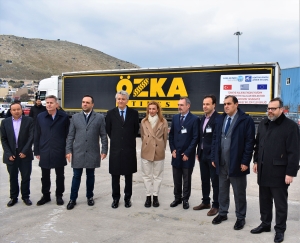
The ship, M/V Neptune Okeanis, offered for free by the company Neptune Lines Shipping & Managing Enterprises, owned by Melina Travlou will transport four trucks filled with basic necessities such as blankets, bedding, heaters, personal hygiene items and medicines which were requested, as a priority, by the Turkish authorities.
“Neptune Okeanis” which sailed for Turkey from the car terminal of the port of Piraeus.
In particular, a new shipment of humanitarian aid from Greece for the regions that are being tested after the earthquake in Turkey left the port of Piraeus at noon on Wednesday (15/2), bound for the port of Iskenderun (Alexandretta).
The cargo comprises four truckloads of humanitarian aid collected by the municpalities union KEDE for the earthquake victims of Turkey and sent to Turkey under the coordination of Deputy Foreign Minister Andreas Katsaniotis. The support of the Greek government and the Greek navy for the plight the neighboring country is experiencing is important.
The Deputy Minister of Shipping Kostas Katsafados, the president of KEDE Dimitris Papastergiou, the Turkish ambassador in Athens and Mrs. Travlos were present during the ship’s departure,.
The ship is transporting humanitarian aid from the Region of Attica in collaboration with the Ministry of Foreign Affairs, the Ministry of Civil Protection and the Ministry of Shipping and Island Policy.
It is noted that the transport is carried out gratis by a ship of the Neptune lines shipping company of Mrs. Melina Travlos.
ELNAVI Newsletter
More information: ELNAVI,
19, Aristidou str., Piraeus 185 31,
Tel.: +30 210 45.22.100, e-mail: This email address is being protected from spambots. You need JavaScript enabled to view it.