



-
Home

-
About Elnavi
- elnavi

elnavi
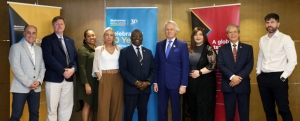
A large number delegates attended the recent Bahamas Maritime Authority (BMA) Technical Seminar in Athens, Greece, where they were given vital updates on environmental regulatory and general technical matters. The event took place during the Authority’s 30th Anniversary year and included participants from shipowning, ship managing, class societies, media, BMA Inspectors and other Greek industry stakeholders.
Recognising the importance and invaluable benefit of industry engagement, collaboration has long been a key strategic objective of The BMA and this was emphasised by Managing Director and CEO, Capt. Dwain Hutchinson, in his opening remarks.
The BMA’s Greek team was supported by BMA Deputy Director of Maritime Affairs, Capt. Ghulam Hussain and Technical Compliance Officer, Inspection & Surveys, Arie Durbazevs, who provided key information through presentations entitled “IMO Environment Regulatory Update” and ‘Alternative Fuels & Energy Efficiency Overview‘ respectively. The likely outcomes of the IMO strategy on Greenhouse Gases (GHG) and maintaining a balance between protecting the marine environment whilst ensuring shipboard operations remain effective and financially viable were key areas of focus for all participants.
Commenting on the delivery of a successful event, BMA Regional Director, Dimitri Tsiftsis, said, “For 30 years The BMA has been steadfastly committed to providing a quality registration service, and that continues to be a cornerstone in the service that we offer to Greek owned and managed Bahamas-flagged ships. We truly appreciate the trust our owners and managers have placed in The Bahamas.”
ELNAVI Newsletter
More Information: ELNAVI,
19, Aristidou str., Piraeus 185 31,
Tel.: +30 210 45.22.100, e-mail: This email address is being protected from spambots. You need JavaScript enabled to view it.
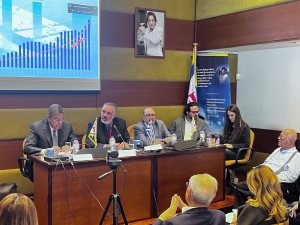
Following pioneering practices that balance the ship market fluctuations and tackle with the geopolitical disruptions and regulatory requirements TEN is in the forefront of the tanker industry maintaining a leading position as an international seaborne trade transporter of energy.
During the recent Annual General Meeting of TEN that was held in Tsakos group premises in Athens, Dr. Nikolas Tsakos reaffirmed the excellent course of the company which has outperformed all of its peers.
The last newbuilding suezmax tanker “Dr Irene Tsakos” that was added in TEN’s fleet was a milestone delivery as it has a particular importance for the family.
The late Dr. Irene Tsakos, the mother of Nikolas was a remarkable woman with solid values and principles.
Dr. Nikolas Tsakos said during his speech at the company’s AGM: “TEN has been able all these years, from 1993 until today, to navigate from growth to growth through different stages of expansion and development, TEN went through several challenging periods and market disruptions such as Russia – Ukraine war, Covid-19 pandemic and has managed to maintain its profitability and expand its fleet.
Today, TEN has a diversified tanker fleet of 85 tankers of various types as well as two LNG carriers with a fleet carrying capacity of 10,2 million dwt.
The newbuilding program has 19 vessels under construction.
The company has secured 180 years of time-charters, cooperating with 1st class charterers and has remarkably reduced its debt.
Dr. Tsakos also mentioned that we have faced the market volatility in a cyclical business which is influenced by several geopolitical events and protectionism strategies and we have been the largest ice-class operator and one of the biggest shuttle tankers operators in the world”.
A dividend of 0.60$ per common share to be paid in July 2025.
TEN has never stopped to give dividends to our investors and shareholders. TEN has always paid a dividend irrespective of the market cyclicality.
Capt. Panagiotis Tsakos who also addressed the AGM expressed his pride and happiness that in the last delivery of the ship “Dr. Irene Tsakos” the company was represented by three generations of Tsakos family and he extended his congratulations to everyone that worked for this outstanding result.
Finally, Panos N. Tsakos referred to the company’s activities in the Philippines, where the company operates two training academies to recruit its ships with skilled seafarers and he also focused on TEN’s Singapore office providing vetting and chartering services to the company’s fleet.
ELNAVI Newsletter
More Information: ELNAVI,
19, Aristidou str., Piraeus 185 31,
Tel.: +30 210 45.22.100, e-mail: This email address is being protected from spambots. You need JavaScript enabled to view it.
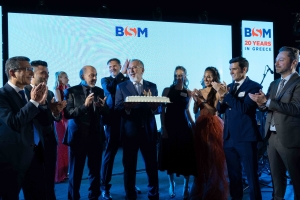
BSM Hellas, Bernhard Schulte Shipmanagement’s Ship Management Centre (SMC) in Greece, marked its 20th anniversary this year. As part of the anniversary celebrations, BSM Hellas hosted a commemorative event in Athens on 11 June 2025, bringing together over 500 clients, partners, and employees to reflect on the past and look forward to a dynamic future in shipping.
“Celebrating 20 years in Greece is a testament to our dedicated team, our partners, and our shared commitment to maritime excellence. We look forward to continuing this journey with innovation, sustainability, and safety at the core of everything we do,” commented Managing Director Theophanis Theophanous on this special occasion. Theophanous was already involved in the establishment and launch of the regional SMC, which was founded in May 2005 when BSM decided to expand into the Greek shipping market.
Since its establishment in 2005, BSM Hellas has played a vital role in supporting Greece’s maritime sector, one of the largest and strongest maritime markets, offering high-quality, safe, and efficient vessel management. Over the past two decades, the company has grown its local presence, cultivated strong relationships within the Greek as well as global shipping community, and contributed to the industry’s continued advancement.
“Despite being one of the company’s youngest Ship Management Centres, BSM Hellas has become stronger and stronger over the years, securing oil major time charter approvals and expanding the fleet under management to include LNG, LPG, ethylene carriers, oil and product tankers, bulk carriers and containers ships,” shared Theophanous on the company’s history.
“Today, BSM Hellas is trusted by clients from Greece, France, Malta, Turkey, the Netherlands, Dubai, the USA, Singapore, Hong Kong, China and Central Africa”.
Proud to connect continents through ships and service, the BSM Hellas Ship Management Centre will be managing over 80 vessels by the end of 2025 and also has a confirmed expansion in the imminent few years ahead, where the fleet will sail pass the 100 mark. In the future, its focus will firmly remain on supporting clients by ensuring consistently high service quality and providing adaptive solutions where required.
ELNAVI Newsletter
More Information: ELNAVI,
19, Aristidou str., Piraeus 185 31,
Tel.: +30 210 45.22.100, e-mail: This email address is being protected from spambots. You need JavaScript enabled to view it.
RINA Acquires Finland-based Foreship, Strengthening Global Position in Marine Consulting
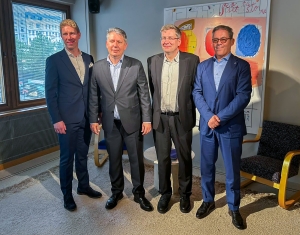
RINA, the multinational engineering consultancy, inspection and certification group, has acquired the entire share capital of Foreship, a renowned Finnish company specialising in naval architecture and marine engineering, from Vaaka Partners and company’s managers. The acquisition marks a further expansion of RINA’s marine engineering consulting offering worldwide, while strengthening its presence in Northern Europe.
Foreship, with 2024 revenues of €15.2 million is headquartered in Helsinki and employs over 90 professionals across eight offices globally, including the USA, UK and Estonia. The company is best known for its high-profile work in cruise ship design, energy-efficient vessel innovations, and sustainable marine technologies. Its unique and distinctive experience in naval architecture offers high synergies within RINA Consulting and opportunities to increase market share in the maritime consultancy sector, particularly in complex retrofits, new fuel integrations, and digital transformation.
“Foreship offers unique competence which is highly appreciated by its clients,” said Ugo Salerno, Executive Chairman of RINA. “It brings an exceptional track record and a depth of expertise in naval architecture that complements our own consulting engineering capabilities. Together, on a shared path of growth, we will deliver even greater value to the global shipping industry, advancing sustainability, digital innovation and ship lifecycle services”.
“We are proud to welcome into our group a company that shares our core values of independence, innovation, and engineering excellence” said Carlo Luzzatto, CEO of RINA.
“This acquisition aligns with our strategic plan to become an increasingly essential reference point for our clients, supporting them with our broad-based knowledge. Foreship’s solid reputation and global customer base, including major cruise lines and shipping companies, make it a natural fit for our fast-growing marine consulting business. Foreship reputation as a trusted independent advisor is seen as a core asset that RINA aims to preserve and enhance.”
Lauri Haavisto, CEO of Foreship, commented, “Foreship’s vision is to lead in sustainable passenger ship conversions, new builds, and consultancy. Joining forces with a global partner like RINA will accelerate our growth, expand our knowledge, and strengthen our client relationships, while continuing to foster the close collaboration we value.”
In line with RINA’s governance and organizational mode, Foreship operations will be part of RINA Consulting.
Lazard assisted RINA as financial advisor. RINA was also supported by Bain, which assisted RINA in the commercial due diligence, and by PwC, which assisted in the financial and tax due diligence. Borenius Attorneys acted as legal counsel to RINA in connection with the transaction.
ELNAVI Newsletter
More Information: ELNAVI,
19, Aristidou str., Piraeus 185 31,
Tel.: +30 210 45.22.100, e-mail: This email address is being protected from spambots. You need JavaScript enabled to view it.
WEST Hellas Summer Drink event at Marina Zeas
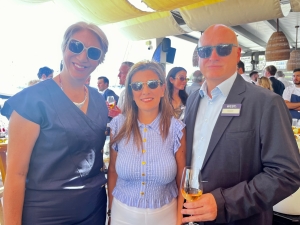
With the aim to enjoy an afternoon of connecting with industry peers and catching up with old friends WEST Hellas held its Summer Drink Event at Hams & Clams restaurant.
The host of the event Ian Clarke, CEO of WEST Hellas, welcomed the clients and partners of the Club and exchanged views for the current shipping developments and further business co-operation.
It must be noted that for the third consecutive year, Member retention was over 99.5% and the Club is encouraged to report continued support from existing Members, with strong organic growth at renewal, and throughout the 2024/25 Policy Year.
Several new Members were also welcomed to West on 20th February 2025, as continues selective approach to new business across all regions and sectors of the market. The result of this means the total mutual tonnage of the Club will increase again to approximately 110 million GT, up from 100 million GT 12 months ago.
The Fixed and Charterers books have also developed positively in the last 12 months, with high retention in both classes reflecting the Club’s ongoing commitment to service across all departments.
The broader reach West now enjoys is already benefitting the Club’s membership. Controlled growth both from existing Members and non-entered fleets in Hull, Loss of Hire, and Delay classes, with each product contributing positively to the overall technical performance of the Club. Additionally, the acquisition of Nordic, announced in January 2025, marks further progress towards the diversification strategy of the business.
ELNAVI Newsletter
More Information: ELNAVI,
19, Aristidou str., Piraeus 185 31,
Tel.: +30 210 45.22.100, e-mail: This email address is being protected from spambots. You need JavaScript enabled to view it.
2nd Hellenic-American Shipping Gala
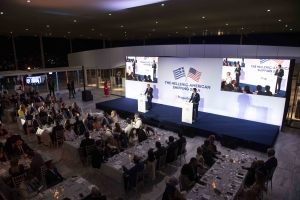
A major international event dedicated to the friendship and maritime cooperation between Greece and the United States will be organized by the Propeller Club of Piraeus, in collaboration with the U.S. Embassy in Athens.
On July 8, at the Lighthouse of the Stavros Niarchos Foundation Cultural Center, the 2nd Hellenic-American Shipping Gala will take place — an institution established in 2023 and held every two years. It is a special evening honoring the companies and organizations shaping Greek-American relations in the maritime sector.
This year’s event coincides with the 90th anniversary of the founding of the Propeller Club of Piraeus, an organization that has consistently served the purpose of strengthening Greek-American ties in the maritime sector.
At the heart of this year’s gala are institutions and stakeholders with a strong and longstanding contribution to supporting bilateral relations.
“On July 8, we are given the opportunity to celebrate the friendship between our two nations, as well as to highlight our cooperation in the maritime sector — a relationship that is long-standing, strong, and meaningful. As the Propeller Club of Piraeus, we have supported it systematically and with dedication since 1935. It is a relationship of particular importance to our country, and this year more than ever, it is especially crucial not only to preserve it but to further strengthen it,” noted the President of the Propeller Club of Piraeus, Costis Frangoulis, adding:
“The Trump administration’s efforts to strengthen the U.S. maritime industry will create new opportunities and can further enhance the already close cooperation between Greece and the United States in the sector. I invite the members of the Propeller Club, as well as those of the broader maritime community, to once again embrace this important institution,” he added.
The first Gala took place in 2023, with the attendance of more than 450 representatives from the Greek and international shipping community.
ELNAVI Newsletter
More Information: ELNAVI,
19, Aristidou str., Piraeus 185 31,
Tel.: +30 210 45.22.100, e-mail: This email address is being protected from spambots. You need JavaScript enabled to view it.
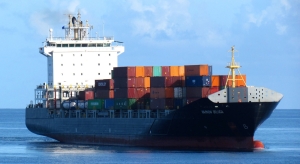
Marlow Navigation, a leading name in global ship and crew management, has strengthened its fleet-wide data security by implementing Dualog Drive, a solution designed to automate and safeguard data transfer between vessels and shore-based operations.
Headquartered in Limassol and managing over 1,000 vessels worldwide, Marlow Navigation operates at a scale where fast, seamless and secure communication between ship and shore is required on a daily basis.
With increasing demands for digitalisation across the maritime sector, the company placed a strong focus on finding a solution to optimise file transfer processes without compromising on cybersecurity.
“Cybersecurity is a core component of our fleet IT infrastructure,” said Manos Manoli, Chief Information Security Officer at Marlow Navigation. “When evaluating data exchange solutions, one of our key requirements was having files scanned before reaching the endpoint. This provides an extra layer of protection for both vessel and shore-based environments.”
Dualog Drive enables automatic file transfers across Marlow’s global fleet, eliminating manual processes and reducing the risk of human error. A key feature of the platform is its built-in cloud-based malware scanning, which inspects all files before delivery to detect potential threats.
“Marlow’s fleet handles thousands of file transfers each month,” said Kyriakos Papapolydorou, Regional Manager at Dualog. “Ensuring these exchanges are not only seamless but also secure is vital. With Dualog Drive, Marlow benefits from end-to-end automation and a robust scanning layer that protects every endpoint on board and on shore.”
As cybersecurity becomes a growing concern in maritime operations, Marlow Navigation’s integration of Dualog Drive reflects a proactive approach to digital resilience, ensuring business continuity and operational security across one of the world’s most extensive managed fleets.
ELNAVI Newsletter
More Information: ELNAVI,
19, Aristidou str., Piraeus 185 31,
Tel.: +30 210 45.22.100, e-mail: This email address is being protected from spambots. You need JavaScript enabled to view it.

The Jotun Hellas Golf Tournament, which recently took place with great success at the Glyfada Golf Club, brought together prominent executives and professionals from the shipping industry.
This all-day event combined sport and networking in an exceptional setting. Participants enjoyed a friendly yet competitive tournament. Golfers, both amateurs and professionals, represented leading shipping companies and showcased their skills on the course.
The day concluded with an elegant awards ceremony, where the winners in each category were recognized. This was followed by a formal dinner, which offered a unique opportunity for networking and the exchange of ideas in a relaxed and sophisticated atmosphere.
ELNAVI Newsletter
More Information: ELNAVI,
19, Aristidou str., Piraeus 185 31,
Tel.: +30 210 45.22.100, e-mail: This email address is being protected from spambots. You need JavaScript enabled to view it.

Aiming at the collective action and better cooperation in the shipping sector the International Chamber of Shipping and the Union of Greek Shipowners held a great meeting in Athens to exchange ideas and outline the shipping’s crucial contribution to the prosperity and development of the world.
David Shukman, Visiting Professor in Practice, London School of Economics, UK opened the event marking that tariffs disruptions and geopolitical tensions can be dealt by dialogue and common sense.
The Hon. Kyriakos Mitsotakis, Prime Minister, Hellenic Republic of Greece gave a welcome message by video noting that we must save the open trade, follow the decarbonization plan on the basis of IMO rules and invest on human factor’s skills and capabilities.
He finally expressed his intention to remain committed to a sustainable safe global trade environment.
On behalf of the International Maritime Community - Emanuele Grimaldi, Chairman, International Chamber of Shipping expressed his determination to the contribution of a sustainable development and promoting realistic solutions and achievable targets.
Melina Travlos, President, Union of Greek Shipowners welcomed the guests on behalf of the Greek Maritime Community and elaborated on the irreplaceable role of shipping to all difficult periods of humanity like the Covid pandemic geopolitical tensions and catastrophic climate crises.
She underlined that fundraising must support the decarbonisation of the sector and a global regulatory framework is needed implementing pragmatic solutions to every challenge of shipping.
She also mentioned that policies and regulations must not undermine the strategic importance of shipping.
The Greek Ministry of Maritime Affairs and Insular Policy - The Hon. Vassilis Kikilias, Minister of Maritime Affairs and Insular Policy, Hellenic Republic of Greece in his speech focused on the necessity to work together for facing the challenges ahead like digitalisation and decarbonisation.
Moderator: Bud Darr, President & CEO, CLIA, USA conducted a discussion and dialogue session between
Apostolos Tzitzikostas, European Commissioner for Sustainable Transport and Tourism, European Commission and
Fu Xuyin, Vice-Minister, Minister of Transport, People’s Republic of China.
Mr Tzitzikostas said that we need a proactive action to drive energy transition and secure Europe’s energy security navigating global mega trends. He also touched upon the issue of international tariffs and shipping competitiveness by adopting practical and effective solutions.
ELNAVI Newsletter
More Information: ELNAVI,
19, Aristidou str., Piraeus 185 31,
Tel.: +30 210 45.22.100, e-mail: This email address is being protected from spambots. You need JavaScript enabled to view it.

Continuing the implementation of its ambitious fleet renewal program with 21 tankers under construction, TEN (Tsakos Energy Navigation), the Greek shipping company listed on the NYSE, recently took delivery of two Suezmax crude oil carriers DR IRENE TSAKOS and proceeded to the Naming Ceremony SILIA T on June 5th, 2025, in Korea.
Built at HD Hyundai Heavy Industries Co., Ltd., these vessels incorporate state-of-the-art design and advanced technical specifications. DR IRENE TSAKOS proudly flies the Greek flag and is classed with Lloyd’s Register.
The two ships are Suezmax type. “Dr Irene Tsakos” which immediately began its voyages and “Silia T” which will start next fall. Their value is estimated at around $85 million each and they have a carrying capacity of 156,800 dwt.
The ships are already on long-term time charters from the shipping giant TOTAL, for at least five years with options based on which it can exceed 10-12 years.
The godmothers for “Dr Irene Tsakos” were the doctor’s granddaughters, Irene and Elizabeth, while the sponsor of “Silia T” was Silia Kritharioti.
The presence of Captain P. Tsakos, who traveled to the Far East to attend an event of special significance and symbolism for the entire family, was special.
These two additions mark the newest entries in the expanding TEN fleet and form part of a broader strategic newbuilding program, which currently includes 19 vessels under construction. This program underscores the ongoing commitment to delivering next-generation, technologically advanced tankers that address the evolving needs of global energy transportation and complex logistics, in close partnership with leading energy clients worldwide.
ELNAVI Newsletter
More Information: ELNAVI,
19, Aristidou str., Piraeus 185 31,
Tel.: +30 210 45.22.100, e-mail: This email address is being protected from spambots. You need JavaScript enabled to view it.