



-
Home

-
About Elnavi
- elnavi

elnavi
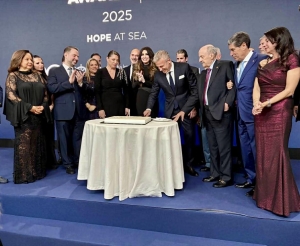
In an iconic event held in an atmosphere of national pride and solidarity, the Propeller Club of Piraeus celebrated 90 years of continuous contribution to Greek shipping and the strengthening of ties between Greece and the United States. This year’s AMVER Awards 2025, under the symbolic motto “Hope at Sea,” highlighted the courage and exceptional seamanship of Greek and other nations” seafarers.
The event was honored by the presence of the new U.S. Ambassador, Kimberly Ann Guilfoyle, who recognized Greek shipping as a leading strategic partner for the implementation of energy projects in the Eastern Mediterranean and beyond. In his speech, the President of the Propeller Club, Mr. Costis Frangoulis, emphasized that for a century, the organization has served as a powerful link promoting maritime safety and supporting the U.S. Coast Guard's AMVER rescue system.
The participation of the Greek shipping community this year was impressive, with 193 companies and 1,836 vessels taking part, successfully saving 97 human lives through 12 special rescue operations.
In appreciation to her determination and contribution to deepening bilateral cooperation, the Propeller Club has named Ambassador Kimberly Ann Guilfoyle an Honorary President. For her part, the Ambassador praised the AMVER voluntary program for its 70 years of successful operation, underlining that Greek shipping companies remain its most dedicated and significant partners worldwide. The evening concluded with the presentation of the Fidelity and Special Rescue Awards, while the Ambassador blew out the ceremonial candle for the Club’s 90th anniversary, a gesture that sealed the close cooperation between the two nations. Part of the proceeds were donated to support the charitable work of HOPE Genesis.
AMVER System
Top 10 Participating Companies
Angelicoussis Group of Companies: 130 Ships
TMS Group of Companies: 109 Ships
Capital Ship Management Corporation: 89 Ships
Technomar Shipping Incrorporated: 81 Ships
Starbulk S.A.: 75 Ships
Laskaridis Shipping Company Limited: 70 Ships
Danaos Shipping Company Limited: 64 Ship
V. Ships Greece Limited: 63 Ships
Tsakos Group: 62 Ships
Anglo-Eastern Ship Management (Hellas) Limited: 49 Ships
Special Rescue Awards 2025
M/V "Dublin Eagle" - Starbulk S.A.
For the search and rescue operation of 2 persons near position 03o 17.8’ N, 100o 15.8’ E on 03 February 2025
M/V “Shanghai Eagle” – Starbulk S.A.
For the search and rescue operation of the sailing vessel Aqua Libra near position 29o 28.90’ S, 151o 37.10’ W on 21 February 2025
M/V “Kennadi” – Starbulk S.A.
For the search and rescue operation at position 41o 20’ N/ 009o 56’W on 12 June 2025
M/V “Mercurial Virgo” – Starbulk S.A.
For the search and rescue operation at position 20o 57.47’ S / 149o 43.63’ E on 19 November 2025
M/V “Marimyr A” – Mykonos Shipping
For the search and rescue operation of 2 persons in the Madagascar Channel on 11 March 2025
M/V “Luebeck” – Navilands Container Management Ltd.
For the search and rescue operation of 38 persons at position 34o 31.4’ N / 024o 00.6’ E on 01 May 2025
M/V “Yantian” - Navilands Container Management Ltd.
For the search and rescue operation of 2 persons at position 13o 00.3’ N / 098o 37.8’ W on 18 June 2025
M/V “Cosco Hellas” – V. Ships Greece Limited
For the search and rescue operation of 22 persons in the Pacific Ocean on 04 June 2025
M/V “Androusa” - V. Ships Limited
For the search and rescue operation of 20 persons at position 07o 11.8’ N / 107o 30.3’ E South China Sea on 08 August 2025
M/V “GLBS Hero” – Globus Shipmanagement Corp.
For the search and rescue operation of 2 persons near Cristobal Panama on 17 June 2025
M/V “Theseus” – Costamare Shipping CO S.A.
For the search and rescue operation of 7 persons in the South Atlantic Ocean on 22 June 2025
M/V “Mama Strength” – MPP Carriers S.A.
For the search and rescue operation of 2 persons 100 miles north of Bermuda on 12 November 2025
AMVER System Fidelity Awards 2016-2025
In continuous enrolment among Ship Management Companies based in Greece
Angelicoussis Group of Companies
Ranked First: 1027 Ships
TMS Group of Companies
Ranked Second: 655 Ships
Tsakos Group
Ranked Third: 624 Ships
ELNAVI Newsletter
More Information: ELNAVI,
19, Aristidou str., Piraeus 185 31,
Tel.: +30 210 45.22.100, e-mail: This email address is being protected from spambots. You need JavaScript enabled to view it.
The 19th Annual Conference of Marine Technology of the Hellenic Institute of Marine Technology (H.I.M.T.)
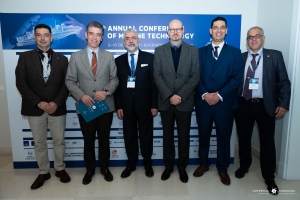
Reaffirming its role as the country’s leading technical and scientific body in the maritime sector
Τhe 19th Annual Conference of Marine Technology, organized by the Hellenic Institute of Marine Technology (H.I.M.T.), was completed on December 9–10, 2025 at the Eugenides Foundation. The Conference attracted more than 1,000 registrations, a milestone for the institution, as well as a record level of participation from scientific contributors, senior executives of the maritime industry, academics, researchers, students and young engineers. For the first time, parallel conference sessions were introduced, highlighting the breadth, maturity and scientific depth of the marine technology community. The Conference was officially commenced by the President of H.I.M.T., Dr. Nikolaos Liapis, who emphasized that this year’s event aim is not only to present the latest technological developments, but also to strengthen meaningful cooperation between shipping, industry, universities and research institutions. He also underlined that marine technology is evolving at a rapid pace and that H.I.M.T. must remain at the forefront as a reliable and technically competent interlocutor at both national and international level. During the opening ceremony, official addresses were delivered by the General Secretary for Research and Innovation, Dr. Tasos Gaitanis, the President of the Hellenic Chamber of Shipping, Mr. George Alexandratos, the Rear Admiral Stavros Karlatiras (HN), the President of the Piraeus Chamber of Commerce and Industry, Mr. Vassilis Korkidis, the Maritime Affairs Advisor of the Hellenic Shortsea Shipowners Association, Rear Admiral (r.t.) Alexandros Lagouros, the Rector of the University of the Aegean, Professor Dimitrios Papageorgiou, as well as representatives of maritime and academic institutions.Over the course of the two-day Conference, numerous technical and scientific reports were presented and discussed, covering the full spectrum of marine technology, including decarbonization and alternative fuels, digitalization and artificial intelligence, cybersecurity, propulsion systems, energy efficiency, ship and equipment safety, as well as contemporary challenges in fleet management and operations.
A highlight of the programme was the roundtable discussion on Efficient Ship Management, featuring senior executives from major shipping companies. Particular emphasis was also placed on the panel discussions, which examined issues such as the future of the shipbuilding industry within the framework of European defense cooperation, smart solutions for operational excellence, and the efficient management of ships in an increasingly complex regulatory and geopolitical environment. A particularly notable aspect of the Conference was the strong participation of students and young engineers, reaffirming the role of H.I.M.T. as a dynamic hub for knowledge, education and professional development for the next generation of marine technology professionals. The two-day event came to a closure with the Annual Gala Dinner of H.I.M.T., held at the Piraeus Marine Club and dedicated to the sponsors and supporters of the event. In his address, Dr. Nikolaos Liapis presented a comprehensive review of the year’s activities, highlighting the Institute’s dynamic progress, outward-looking approach, strategic partnerships and vision for the future. Special reference was made to the historical course of H.I.M.T. from its foundation in 1972 to the present day, as well as to the importance of collective effort and continuity. The 19th Annual Conference of Marine Technology once again confirmed that H.I.M.T. is an established institution with a role of great significance in shaping the future of Greek and international shipping, laying the foundations for even more ambitious initiatives in the years ahead.
ELNAVI Newsletter
More Information: ELNAVI,
19, Aristidou str., Piraeus 185 31,
Tel.: +30 210 45.22.100, e-mail: This email address is being protected from spambots. You need JavaScript enabled to view it.
Mikki Koskinen takes the helm as ES|ECSA President, with Nikolas Veniamis elected Vice-President
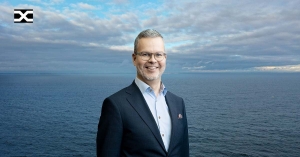
Mikki Koskinen from Finland has been elected the next European Shipowners | ECSA President, starting on 1 January 2026 for a two-year term, with Nikolas Veniamis from Greece, joining as the new Vice-President. Mikki succeeds Karin Orsel, who has held the position since January 2024.
Commenting on his election, Mikki Koskinen, incoming ES|ECSA President, said: “Over the past six decades, European Shipowners | ECSA has evolved into an indispensable strategic partner to the European institutions, consistently championing policies that strengthen the competitiveness of European shipping while driving sustainability, innovation, and the industry’s energy transition. Today’s global challenges have made the strategic role of European shipping more important than ever. European shipping is a cornerstone of Europe’s food, energy and supply chain security".
"Shipping is a success story for our continent making Europe a global leader in the international supply chains. As we look ahead, the maritime sector faces its most profound transformation yet. The energy transition of shipping, geopolitical uncertainties, and rising protectionism demand bold leadership and collective action. I am confident that through our upcoming work, ES|ECSA will be defined by the same vision and determination. We must always aim for a unified and strong voice. We need all hands on deck. Because we shouldn’t forget that we cannot have a secure Europe without a competitive shipping”, Mikki Koskinen added.
Nikolas Veniamis, newly elected Vice-President of ES|ECSA, highlighted: “European Shipowners | ECSA represents a sector which is critical to Europe’s prosperity. With 76% of the EU’s external trade being carried by sea, European shipping is a strategic asset for Europe’s security and prosperity. Shipping is a global industry. It is now more important than ever to ensure European shipping remains globally competitive. To achieve this, it is essential to continue the constructive dialogue and cooperation with EU policymakers and stakeholders. In my new position as Vice-President, I look forward to working with Mikki Koskinen, ES|ECSA members and the team as we strive to leverage the potential of European shipping for Europe”.
ELNAVI Newsletter
More Information: ELNAVI,
19, Aristidou str., Piraeus 185 31,
Tel.: +30 210 45.22.100, e-mail: This email address is being protected from spambots. You need JavaScript enabled to view it.
Lloyd’s Register Hellenic Technical Committee welcomes new leadership from Capital Ship Management Corp CTO
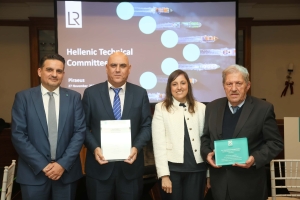
Lloyd’s Register (LR) convened the latest meeting of its Hellenic Technical Committee (HTC) in Athens on 27 November, bringing together around 60 senior technical leaders and stakeholders from across the Greek shipping sector. The HTC continues to serve as an important forum dedicated to open technical dialogue and industry collaboration.
The meeting also marked a significant change in leadership. After 22 years of distinguished service as Chair, Vassileios Papageorgiou, Vice Chairman of the Tsakos Group, handed over the role to Nikolaos Vaporis, Chief Technical Officer of Capital Ship Management Corp. Papageorgiou’s leadership has been central to the Committee’s influence and its role in shaping LR’s engagement with Greek shipowners.
The HTC will continue to provide an essential platform for clients to exchange views on safety, innovation, digitalisation and compliance, and to contribute directly to the development of LR’s Rules and wider industry standards.
Elina Papageorgiou, Vice President Greece and Cyprus, Lloyd’s Register, said: “The HTC is a valuable forum for clients and stakeholders who value regular engagement and collaborative discussion on the technical challenges shaping their fleets and future investment decisions.
“We are deeply grateful to Vassileios Papageorgiou for his exceptional leadership and dedication over more than two decades, which have been instrumental in advancing the Committee’s impact. We also warmly welcome Nikolaos Vaporis as the new Chair and look forward to working with him as HTC continues to provide a trusted forum for technical insight, innovation, and collaboration that shapes future developments.”
Nikolaos Vaporis said: “Lloyds Register’s HTC has always played an important part in maintaining a constructive exchange between LR and the Greek maritime community. As the industry moves through a period of major change, this dialogue is essential. I look forward to supporting the Committee as it enters its next chapter.”
The event concluded with a reception that allowed further discussion between LR’s technical specialists and representatives from leading Greek shipping companies.
(l-r) Sotirios Skoupas, Lead Client Relationship Manager, Greece, Lloyd's Register; Nikolaos Vaporis, Chief Technical Officer of Capital Ship Management Corp; Elina Papageorgiou, Vice President Greece and Cyprus, Lloyd’s Register; and Vassileios Papageorgiou, Vice Chairman of the Tsakos Group.
ELNAVI Newsletter
More Information: ELNAVI,
19, Aristidou str., Piraeus 185 31,
Tel.: +30 210 45.22.100, e-mail: This email address is being protected from spambots. You need JavaScript enabled to view it.
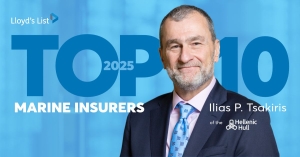
Ilias Tsakiris, CEO of Hellenic Hull and General Manager of the American Club Europe, has been named among the Top 10 in Marine Insurance 2025 by Lloyd’s List, the globally respected provider of shipping intelligence since 1734. Mr. Tsakiris also serves as current Chair of the Ocean Hull Committee of the International Union of Marine insurance.
This distinction marks the second time Mr. Tsakiris has been included in Lloyd’s List’s annual ranking, following his first recognition in 2020. Being named again five years later highlights a period of steady leadership and continued contribution during years of significant change for the marine insurance sector.
Over this period, Mr. Tsakiris has strengthened Hellenic Hull’s international underwriting presence, built on technical depth, disciplined underwriting and close, long-standing relationships with Greek and Cypriot shipowners. Under his leadership, the company has consistently delivered results above those of the wider hull market, supported by a strong risk culture and hands-on understanding of shipping operations.
With a background at sea, Mr. Tsakiris brings a practical perspective to marine insurance, placing equal emphasis on technical accuracy, responsibility and trust. These principles have shaped both his leadership style and the way Hellenic Hull works with clients, brokers and partners across the industry.
Alongside his executive role, Mr. Tsakiris has been actively involved in industry dialogue at an international level. As Chair of the IUMI’s Ocean Hull Committee, he has contributed to discussions on market cycles, reinsurance pressures, sanctions, compliance and the growing need for technical capacity. He has also played a key role in expanding IUMI’s educational initiatives, including the development of the IUMI Hull Masterclass, aimed at supporting the next generation of marine insurance professionals.
Mr. Tsakiris is also recognised for his early and consistent support of ESG principles in the marine insurance sector, promoting transparency, data-driven decision-making and climate-aligned frameworks as the industry responds to the challenges of the energy transition.
“I’m honoured to be named once again by Lloyd’s List among the Top 10 in Marine Insurance for 2025. When I was first included in 2020, I saw it as recognition, but also as a responsibility. Being named again five years later carries a deeper meaning, especially in an industry that has faced constant change, pressure, and uncertainty during this period”, said Mr. Tsakiris.
ELNAVI Newsletter
More Information: ELNAVI,
19, Aristidou str., Piraeus 185 31,
Tel.: +30 210 45.22.100, e-mail: This email address is being protected from spambots. You need JavaScript enabled to view it.
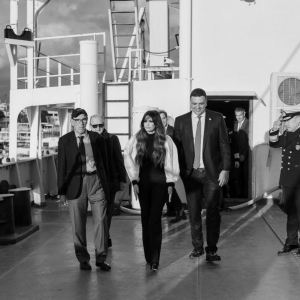
On December 9th, 2025, the U.S. Ambassador to Greece Kimberly Guilfoyle made a visit aboard the historic museum ship Hellas Liberty at the Port of Piraeus.
The Hellas Liberty stands as a living monument to maritime history and the enduring ties between Greece and the United States. Currently, the ship remains closed to the public due to ongoing works for the creation of the Underwater Antiquities Museum.
A brief historical note: In 1943, the American shipbuilding industry produced one Liberty Ship every two days to meet wartime needs. These vessels played a decisive role in defeating Nazism and, after the war, many were sold at preferential prices to Greek shipowners. This marked the beginning of the Greek-owned fleet, which grew to dominate global shipping and remains a world leader today.
During a recent meeting between the Friends of Liberty Association and the Minister of Shipping, Mr. Vassilis Kikilias, a commitment was made to enable the temporary relocation of Hellas Liberty so it can once again be accessible to the public— a significant step toward preserving and sharing this unique piece of history.
ELNAVI Newsletter
More Information: ELNAVI,
19, Aristidou str., Piraeus 185 31,
Tel.: +30 210 45.22.100, e-mail: This email address is being protected from spambots. You need JavaScript enabled to view it.
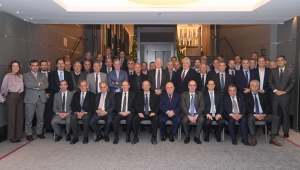
Bureau Veritas Marine & Offshore (BV) convened the 39th Hellenic Marine Technical Committee meeting in Athens on December 3, bringing together leading stakeholders of the Greek maritime community to discuss evolving regulations, technological advances, and strategic considerations for the fleet of tomorrow.
The meeting opened with a welcome address and the election of new members by George Sarris, Chairman of the Committee and President of Enterprises Shipping & Trading S.A., who emphasized the importance of continuous collaboration and knowledge-sharing as the industry navigates regulatory complexity. George Andreadis, Marine Chief Executive for Greece at BV, welcomed participants and reaffirmed BV’s commitment to supporting the Greek shipping community through technical expertise and forward-looking guidance.
The technical program commenced with Julien Boulland, Sustainability Strategy Leader at BV, presenting key regulatory updates following the MEPC 2nd Extraordinary Session and ISWG-20 GHG review. His analysis provided clarity on near- and mid-term priorities for shipowners responding to new decarbonization requirements. Vassilios Dimoulas, Technology & Innovation Director for EMA, followed with an overview of on-board carbon capture technologies, reviewing regulatory considerations, technological maturity, and pathways for the treatment of captured CO₂. The session concluded with Bill Stamatopoulos, Global Business Development Director at Verifuel, who delivered insights on bio-blended fuel stability and performance as well as fuel sampling and mass flow meters in ARA region.
The meeting also focused on innovation and future-proof ship technologies. Olivier Cartier, Vice President Technical at BV, outlined recent developments in BV innovation and advanced research, showcasing emerging solutions supporting vessel efficiency and environmental performance. Dr. John Kokarakis, Technical Director for the SEEBA Zone at BV, presented “The Shaft Generator Story,” describing its role in enabling eco-friendliness and operational ultra-efficiency. The session concluded with an open discussion moderated by Vassilios Dimoulas on future-proofing newbuilding investments in a rapidly evolving regulatory environment, addressing how shipowners can evaluate and select the most appropriate technical solutions when placing orders today.
George Andreadis, Marine Chief Executive for Greece at Bureau Veritas Marine & Offshore, said: “The 39th Hellenic Marine Technical Committee once again highlighted the strength, resilience, and forward-looking mindset of the Greek maritime community. As the industry moves toward 2030 and beyond, clear regulatory direction and innovative technical solutions are essential. Bureau Veritas remains committed to supporting our partners with deep expertise, practical insight, and global capabilities.”
ELNAVI Newsletter
More Information: ELNAVI,
19, Aristidou str., Piraeus 185 31,
Tel.: +30 210 45.22.100, e-mail: This email address is being protected from spambots. You need JavaScript enabled to view it.
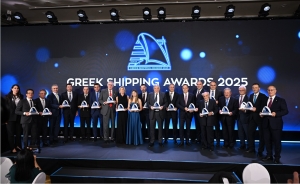
The 22nd GREEK SHIPPING LLOYD’S LIST AWARDS was a resounding success, honouring the achievements and future potential of the Hellenic maritime community. Hosted by the dynamic duo of Andriana Paraskevopoulou and Nigel Lowry, the ceremony was attended by a prominent audience eager to acknowledge the industry’s leaders.
Greek Minister of Shipping & Island Policy Vasilis Kikilias underscored the deep roots of Greek shipping heritage and praised the new generation for successfully expanding the industry's influence on the global maritime scene. The event sponsor was Neptune maritime leasing, and the welcome drinks sponsor was Allegiant Shipping.
The evening saw several major companies and individuals recognized. NEPTUNE LINES secured the Dry Cargo Company award sponsored by Marichem-Marigases, with Melina Travlos dedicating the win to her late father Nikolaos Travlos.
SEAVEN TANKER MANAGEMENT received the Tanker Company title sponsored by Bureau Veritas. The fleet of Seaven is comprised of medium sized Greek flag modern oil / chemical tankers, double-hulled and equipped with upmost technologically advanced equipment.
MINOAN LINES was awarded as the top Passenger Line. In finance, CREDIA BANK was recognized as the leading Ship Financier.
Shipbroker of the year was INTERMODAL SHIPBROKERS. The award was received by Kyriakos Dermatis who outlined the excellent 41-year course in the sector of shipbroking.
Innovation was highlighted with the Technical Achievement award (sponsored by DNV) going to ARISTON NAVIGATION for an innovative bow duct device called Pertoduct.
The prestigious Ship of the year award was given to the CO2 Carrier “ACTIVE” OF CAPITAL GAS, a vessel hailed as a state-of-the-art pioneer in CO2 transportation. The award was sponsored by ABS.
Lloyd’s List intelligence Big Data sponsored by Zygos Maritime was given to NEREUS DIGITAL BUNKERS.
The Piraeus International Centre sponsored by Class NK won the HELLENIC SHORTSEA SHIPOWNERS ASSOCIATION. The award received by Haralambos Simantonis
The Safety Award sponsored by Seajets went to MEGA TUGS. Paul Xiradakis received the award who referred to the salvage of the tanker vessel “Sounion” that Mega tugs was involved in 2024 at the Red Sea region.
On the people front, Capt. DIONYSIOS ARKALIS from Costamare was named Seafarer of the year for a heroic salvage operation (sponsored by SAFE BULKERS INC.), while MARIELENA PROKOPIOU OF DELOS NAVIGATION & AKROTIRI TANKERS received the Next Generation Shipping Award, sponsored by Marshall Islands Registry.
The Achievement in Education sponsored by Shipping Deputy Ministry of Cyprus was received by NAUTICAL ACADEMY OF ASPROPYRGOS which celebrates 70 years of maritime service developing captains and ships engineers.
The sustainability award sponsored by Lloyd’s Register took ATLANTIC BULKCARRIERS for the company’s efforts to minimize the environmental impact and improve vessels efficiency. The award was received by Michalis Charalambous.
The Deal of the year sponsored by Timagenis Law Firm was delivered by TSAKOS ENERGY NAVIGATION for ordering nine shuttle tanker vessels creating one of largest and younger fleet in the world. The award was received by George Saroglou & Panos N. Tsakos who thanked all people involved in this spectacular project and especially the crew and the company’s technical team.
Greek Shipping Newsmaker sponsored by LPC was SEMIRAMIS PALIOU. The award received by Marina Christina Tsemani.
The major individual honours were claimed by MARIA ANGELICOUSSIS as Greek Shipping Personality, sponsored by Eurobank and CHRISTOPHER J. WIERNICKI as International Personality of the year, sponsored by Capital Clean Energy Carriers. The evening concluded with a tribute to the long and distinguished career of ANTHONY COMNINOS, who was presented with the Propeller Club Lifetime Achievement Award, sponsored by Franman.
The annual awards recognise achievement and meritorious activity in the Greek shipping industry and promote Greece as a maritime centre. Winners are chosen by an independent panel of judges representing a broad cross-section of the Greek shipping industry and this year were the following distinguished shipping personalities:
George Alexandratos, President of the Hellenic Chamber of Shipping
Haralambos Fafalios, Chairman of the Greek Shipping Co-operation Committee
Dorothea Ioannou, CEO of the American P&I Club
Dimitris Koukas, President of the Greek Shipping-Shipbroking Companies Association
Panos Kourkountis, President of Martecma
Dr Nikolaos Liapis, President of ELINT
Nigel Lowry, Athens Correspondent, Lloyd’s List
Capt Eleni Papadopoulou, General Secretary of the Masters & Mates Union
Elpi Petraki, President of WISTA International
George Xiradakis, President of the Association of Banking & Shipping Finance Executives of Hellenic Shipping
ELNAVI Newsletter
More Information: ELNAVI,
19, Aristidou str., Piraeus 185 31,
Tel.: +30 210 45.22.100, e-mail: This email address is being protected from spambots. You need JavaScript enabled to view it.
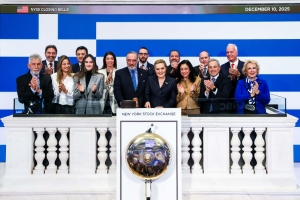
For 21st consecutive year, the New York Stock Exchange in cooperation with Capital Link organized a special ceremony, titled «GREEK AMERICAN ISSUER DAY» at the New York Stock Exchange - NYSE", honoring Greece and Celebrating the Close Ties between the US, the Greek American and the Greek Business Communities, during which Greek & Greek American companies listed on the New York Stock Exchange, together with Greek Government representatives participating in the 27th Annual Capital Link Invest In Greece Forum, rang the “Closing Bell” at the New York Stock Exchange.
The «GREEK AMERICAN ISSUER DAY» was organized within the context of the 27th Annual Capital Link Invest in Greece Forum titled "Building on Success: Unlocking Greece’s Investment Potential " that took place the previous day. The Forum was held with great success, on Monday, December 8, 2025 in New York, in cooperation with the New York Stock Exchange, the Athens Exchange Group (ATHEX Group), and major Global Investment Banks & Organizations. It attracted over 1,000 delegates.
The New York Stock Exchange (NYSE) flew the Greek flag on Wall Street along side the US flag, which was a moment of pride for the Greek Government Delegation and high-level executives representing shipping and other companies listed on the New York Stock Exchange, as well as representatives of companies that participated in the Invest in Greece Forum the previous day, on December 8.
The active support and participation of NYSE, the world's largest stock exchange, enhances the prestige and the visibility of Greece to a wider international investment audience. It also shows the stable support of NYSE to Greece, the Greek companies, the Greek shipping industry and the Greek American Diaspora. The US Capital Markets are a major source of capital for a growing number of companies of Greek interest and the New York Stock Exchange is playing a leading role in this.
Mr. Chris Taylor, Chief Development Officer at NYSE, welcomed the Greek Delegation and the NYSE listed companies. She highlighted the long-standing relationship between the New York Stock Exchange and the Greek and Greek American business communities, and also pointed out that NYSE’s commitment to the Greek American diaspora, the Greek shipping and business community and the listed companies, remains strong.
H.E. Aghi Balta, Ambassador, Permanent Representative of Greece to the UN, and Dr. Nikolas P. Tsakos, Founder, President & CEO, TEN Ltd. (NYSE: TEN), delivered brief remarks in honor of the day.
They referred to the increasing attractiveness of Greece as a business and investment destination, the internationalization of Greek businesses, the close relations between the United States and Greece across the board and also thanked the New York Stock Exchange for the long-standing cooperation and support and for hosting today’s event.
Dr. Tsakos highlighted the 23+-year journey of TEN as a NYSE listed company and emphasized the critical role of Greek shipping in global commerce and trade and the global supply chain, and especially at the present stage when Greece is becoming a strategic energy gateway for Europe and the southeastern Mediterranean.
Prior to the closing bell ceremony, an exchange of commemorative gifts took place between Mr. Chris Taylor, Chief Development Officer - NYSE, H.E. Aghi Balta, Ambassador, Permanent Representative of Greece to the UN, and Dr. Nikolas P. Tsakos, Founder, President & CEO, TEN Ltd. (NYSE: TEN).
CAPITAL LINK COMMEMORATIVE PLAQUE TO NYSE WITH THE OCCASION OF THE 21st GREEK-AMERICAN ISSUER DAY AT NYSE
Mr. Nicolas Bornozis, President of Capital Link presented to Mr. Chris Taylor a special commemorative plaque in appreciation and recognition of NYSE’s more than two decades of support to Greece, Greek Entrepreneurs, the Greek Maritime Community and the Greek-American Diaspora, fostering growth, collaboration and friendship.
This special ceremony, “GREEK AMERICAN ISSUER DAY” AT NYSE has been taking place for 21 years in a row.
Ringing the Closing Bell
H.E. Aghi Balta, Ambassador, Permanent Representative of Greece to the UN, and Dr. Nikolas P. Tsakos, Founder & CEO of TEN Ltd. (NYSE:TEN), rang the “Closing Bell”, closing the trading session on Wednesday, December 10th, 2025, of the NYSE-New York Stock Exchange, accompanied by: Mr. Chris Taylor, Chief Development Officer - NYSE, representatives of the Greek Government, Mrs. Iphigenia Kanara, ConsulGeneral of Greece In New York and representatives of the following NYSE listed companies: Mr. Panayiotis Peter Contis, Vice President Ameresco Inc. (NYSE: AMRC), Mr. Dimitri Moshovitis, Co-Founder of CAVA Group, Inc. (NYSE: CAVA), Mrs. Katerina Eleftheriou, Member of the Board of Costamare Bulkers Holdings Ltd., Mr. Peter Hadjipateras, Chief Information, Security and Sustainability Officer- Dorian LPG (NYSE: LPG), Mr. Fred Gordon, SVP, Corporate Affairs of NAVIOS MARITIME PARTNERS (NYSE: NMM), Mr. Harrys Kosmatos, Co-Chief Financial Officer, and Mr. Dimitrios Bertolis, CIO of TEN (NYSE: TEN), Ms. Elisavet Tsakos, Ms. Daphne Mitsotakis, as well as the organizers of the Capital Link Invest in Greece Forum, Ms. Olga Bornozi, Managing Director – Capital Link, and Mr. Nicolas Bornozis, President - Capital Link.
The event was broadcasted live on major news stations in the United States and abroad to an estimated audience of 150 million viewers worldwide.
ELNAVI Newsletter
More Information: ELNAVI,
19, Aristidou str., Piraeus 185 31,
Tel.: +30 210 45.22.100, e-mail: This email address is being protected from spambots. You need JavaScript enabled to view it.
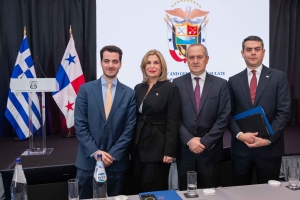
Held by the Embassy and General Consulate of Panama in Greece, the first Athens International Conference focused on the theme “Panama: A Strategic Hub to the World of Maritime Services.” This international event served to officially promote Panama’s International Ship Registry and its inherent advantages. Furthermore, the conference underscored the nation's critical role as a global strategic center for the maritime industry, detailing its integrated logistics platform and outlining lucrative investment opportunities.
The conference which took place in Grand Hyatt Athens, was presided by H.E. Mrs. Julie Lymberopulos Karnakis, Ambassador and General Consul of the Republic of Panama to the Hellenic Republic and with the participation of shipowners and members of the maritime industry from Greece, Italy and Cyprus.
The symposium featured valuable insights from distinguished representatives, including Mr. Salvatore Bacile, Vice President of Corporate Affairs, and Mr. Evangelos Siannis, Manager of the Integrated Operations Control Center at the Panama Canal Authority. Additional contributions came from Mr. Javier Suárez Pinzón, Administrator of the Panama Pacifico Agency, and Mr. Ramón Franco, Director General of the Merchant Marine at the Panama Maritime Authority.
This successful event clearly reflected the presence of Panama’s International Ship Registry within the Greek maritime industry, the importance of promoting foreign investment, and the valuable cooperation between the nations of Panama and Greece.
In a special address Ambassador Lymberopulos Karnakis noted: “'I genuinely hope this conference not only offers valuable perspectives but also brings our nations even closer together. With my Greek heritage, it is especially meaningful to witness the strengthening relationship between Greek and Panamanian industries. I am confident that today’s exchange will open the door to even greater cooperation and mutual growth in the years ahead.”
During their speeches, Mr. Bacile and Mr. Siannis, shared the future of the Panama Canal, mentioning the plans for the development of a gas pipeline – energy corridor, the development of port terminals and for the route to extends their functions as a specialized interoceanic dry canal, promoting Panama as a logistic platform.
Mr. Javier Suárez Pinzón, Administrator of the Panama Pacifico Agency highlighted Panama as a multimodal and industrially integrated hub that provides a competitive legal framework and nurtures emerging talent, fostering collaboration and synergy among companies to promote innovation and growth within its economic clusters.
Lastly, Mr. Ramón Franco, General Director of Merchant Marine, highlighted the recent initiatives undertaken by the Panama Ship Registry, noting the Registry’s renewed emphasis on quality over quantity. He shared that these measures have already contributed to a significant reduction in accident rates, strengthening Panama’s commitment to safety and operational excellence. He also underscored the importance of Panama’s successful completion of the IMSAS (IMO Member State Audit Scheme), a milestone that reflects the country’s strong regulatory performance and adherence to international maritime standards. These advancements, he noted, further enhance Panama’s position as a trusted and forward-looking partner for the global maritime community, including Greece.
Following the official program, guests were invited to a luncheon, that encouraged dialogue, networking, and the strengthening of professional and cultural ties between countries.
The Embassy and General Consulate of Panama expressed great pride in welcoming esteemed representatives from the industry and speakers from the Panama Canal Authority, the Panama Maritime Authority, and the Panama Pacifico Agency. Their expertise, vision, and commitment offered valuable perspectives on how Panama continues to shape the future of global maritime logistics, trade, and technological innovation.
ELNAVI Newsletter
More Information: ELNAVI,
19, Aristidou str., Piraeus 185 31,
Tel.: +30 210 45.22.100, e-mail: This email address is being protected from spambots. You need JavaScript enabled to view it.