



-
Home

-
About Elnavi
- elnavi

elnavi
On 8 June 2022, the European Union (EU) decided to impose a ban on seaborne imports of Russian crude oil and oil products. The ban on crude oil will take effect on 5 December and by then the EU must have found new suppliers and Russia must find new buyers.
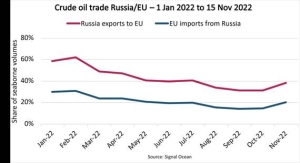
At the start of this year, Russia exported 11 million tonnes crude oil by ship to the EU each month. It equalled 60% of all Russian seaborne crude oil exports and 30% of the EU’s seaborne crude oil imports.
In the first half of November, Russian seaborne crude oil exports to the EU amount to 3.7 million tonnes, equal to 38% of all Russian seaborne exports and 20% of EU seaborne crude oil imports. The figures are slightly higher compared to September and October when Russia to EU seaborne crude oil volumes made up 31% of total Russian seaborne exports and 14% of EU’s seaborne crude oil imports.
“With less than two weeks to go before the EU’s ban on Russian crude oil import takes effect, imports from Russia still make up 15-20% of the EU’s seaborne crude oil imports. So far, buyers in the EU have found new suppliers for about half of its previous Russian crude oil imports but still need to find new suppliers for about 5.5 million tonnes of crude oil per month,” says Niels Rasmussen, Chief Shipping Analyst at BIMCO.
So far, the shift in buyers of Russian crude oil has benefitted Suezmax ships. In the beginning of the year, they exported approximately 25% of all Russian seaborne crude oil exports but now handle approximately 40% of all exports. Aframax ships have lost share, due to the reduction in crude oil export to the EU.
VLCC and Suezmax ships have increased their share of EU crude oil imports. After peaking at 20% in August, VLCCs now carry about 10% of all crude oil into the EU, double of what they did in the beginning of the year. Suezmaxes have increased their share from 30% to 45% whereas Aframaxes have lost share due to the lower imports from Russia.
“Russia has found new buyers in India and China and each now imports about 25% of Russian seaborne crude oil exports, up from respectively 0% and 15% in the beginning of the year. The EU has found new supply in many locations with the Persian Gulf, West Africa, and East Coast South America standing out. All in all, average haul for crude tankers is increasing and will increase further once the ban takes effect,” says Rasmussen.
Despite the coming ban, Russia has exported 10% more via sea in 2022 than in 2021. However, the volumes have remained 7% lower than in 2019. Looking forward, both the US Energy Information Administration (EIA) and the International Energy Agency (IEA) forecast that Russian oil production will reduce by nearly 2 mbpd in 2023 compared to pre-war production, nearly a 20% reduction. The assumption is that Russia will not be able to find new buyers for all the remaining crude oil and oil products previously destined for the EU. In addition, the final structure of the oil price cap currently being discussed amongst EU, USA, and their allies could end up restricting exports as well as availability of shipping capacity.
The exports lost could instead move out of North and South America where oil production is expected to increase and make up for the lost Russian production.
ELNAVI Newsletter
More information: ELNAVI,
19, Aristidou str., Piraeus 185 31,
Tel.: +30 210 45.22.100, e-mail: This email address is being protected from spambots. You need JavaScript enabled to view it.
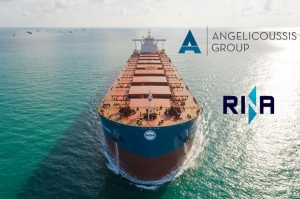
Maran Dry Management Inc., the prominent dry bulk shipping unit of the Angelicoussis Group, has signed a Joint Development Project (JDP) agreement with Class Society RINA and Chinese designer SDARI for a new bulk carrier which will meet IMO 2050 using an innovative fuel solution of LNG and hydrogen produced on demand on board.
RINA announces the signing of a JDP with Maran Dry Management Inc. and SDARI for an LNG and hydrogen powered 210,000DWT bulk carrier. The project will be based on a propulsion arrangement which reduces the running machinery at sea and combines the ship’s fuel (LNG) with steam to produce hydrogen and CO2. The project sees the design, which was launched earlier this year for an MR tanker, in its first application for a bulk carrier.
“Maran Dry Management is committed to embracing the energy transition and working towards net zero shipping solutions”, comments Captain Babis Kouvakas, Managing Director at Maran Dry Management (MDM) Inc. “Working with RINA and SDARI, this JDP agreement will give us a highly competitive bulk carrier design that will exceed IMO’s current 2050 targets and ultimately get to near-zero emissions. The project demonstrates our strong commitment and active role in the decarbonisation goals set by IMO, providing a pioneering concept, unique to the bulk carriers segment (newcastlemax) and the shipping industry as a whole, setting a leading example to exceed the current and projected emissions reduction targets, while demonstrating an innovative sustainable path for the future of shipping. The design will allow us to run the vessel on increasing percentages of hydrogen, lowering emissions over time, to meet the increasingly stringent rating thresholds towards 2050.”
Paolo Moretti, CEO at RINA Services, says, “The concept was conceived to be used on a wide range of vessel sizes. We have already approved its feasibility on a MR tanker, this joint development project will show how a Newcastlemax bulk carrier design can benefit from the LNG and hydrogen solution. We are privileged and very happy to be working with Maran Dry Management and SDARI, supporting their pioneering point of view on decarbonisation.”
Mr. Wang GangYi, Chief Engineer at SDARI, adds, “This is an exciting design that enables shipowners to work towards IMO 2050 with confidence, as it does not rely on the availability of new fuels or additional technological developments to maintain the ship’s A rating going forward. We too are delighted to be working with a company such as Maran Dry Management and RINA and hope this will be the start of a long and mutually beneficial relationship.”
The design is based on a pre-combustion carbon capture principle: the CO2 is captured from splitting the LNG molecules before the combustion in the engine takes place, rather than from exhaust gas emissions. This involves lower mass flows, therefore a reduced space required, and scalable installation to progressively keep up with the pace of the emissions reduction requirements up to 2050. The vessel can be built as an ordinary dual fuel ship, and the extra equipment installed once regulations incentivize the investment.
The solution addresses existing LNG bunkering facilities and requires no onshore hydrogen infrastructure and no need for supply and storage of hydrogen on board. It will also aim to reduce the resistance of the ship to increase overall operational efficiency.
As the Class Society, RINA will review calculation and design drawings submitted by SDARI to ensure they meet the latest statutory and RINA Classification Rules and Regulations, using the experience already gained on this innovative fuel solution.
“This is a practical solution and a practical application. It is great that a pioneering company such as Maran Dry Management is taking on this project, which we hope will be the first of many vessels that adopt this technology to meet decarbonisation targets,” concludes Moretti. “We are very proud to be working with Maran Dry Management on this ground-breaking design.”
ELNAVI Newsletter
More information: ELNAVI,
9, Aristidou str., Piraeus 185 31,
Tel.: +30 210 45.22.100, e-mail: This email address is being protected from spambots. You need JavaScript enabled to view it.
Safe Bulkers orders additional retrofits of Alfa Laval PureSOx exhaust gas cleaning systems
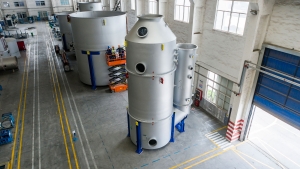
In recent years, Greek shipowner Safe Bulkers has retrofitted Alfa Laval PureSOx exhaust gas cleaning systems on 20 of its bulk carriers. The company has just installed its 21st PureSOx scrubber, and four more retrofits are scheduled through the first half of 2023. Once again, the systems will be protected with a comprehensive Alfa Laval Service Agreement.
Leveraging the fuel price difference
Safe Bulkers is expanding the retrofit programme for exhaust gas cleaning within its fleet. Having now retrofitted an open-loop PureSOx system on the MV Pelopidas, the company will retrofit equivalent systems on four Capesize bulk carriers: MV Aghia Sofia, MV Lake Despina, MV Maria and MV Michalis H. Alfa Laval’s deliveries for the vessels, which are each roughly 180,000 DWT in capacity, will extend from November 2022 to April 2023.
“When we first made the choice to retrofit Alfa Laval PureSOx systems in 2018, we were convinced that it was a good investment,” says Dr Loukas Barmparis, President of Safe Bulkers. “Today’s increased price difference between low-sulphur and high-sulphur fuel shows that we were correct. We are protecting our margins in a time of uncertainty while simultaneously protecting the environment. Through comprehensive sampling of effluent wash water from open-loop scrubber systems, independent laboratories using EPA or ISO methods have shown that there is little or no impact from the wash water concentrations.”
Partnership a key reason for returning
For Safe Bulkers, turning to Alfa Laval for additional scrubber systems was the natural choice. The previous PureSOx retrofit projects have all gone smoothly, and the systems themselves have lived up to the promised high performance.
“Retrofitting large equipment like a scrubber will always involve challenges,” says Barmparis. “What makes the difference is the supplier’s commitment to finding a solution. Having already done 21 retrofits with Alfa Laval, we can say with confidence that the cooperation works – just like the PureSOx technology. Both the support and the results are consistently excellent.”
To take full advantage of the partnership, Safe Bulkers has an Alfa Laval Service Agreement in place for its PureSOx systems. Comprising spare parts packages, sensor exchanges, connectivity and more, the agreement will now be expanded to cover the additional vessels.
“We take no chances with our compliance at Safe Bulkers,” Barmparis concludes. “Service is an important safeguard, and we know that we can rely on Alfa Laval’s expertise. The support we receive means that we can always be certain of fulfilling our obligations.”
Image caption: Dr. Loukas Barmparis, President of Safe Bulkers
Image caption: Alfa Laval PureSOx being assembled in Alfa Laval’s factory
ELNAVI Newsletter
More information: ELNAVI,
19, Aristidou str., Piraeus 185 31,
Tel.: +30 210 45.22.100, e-mail: This email address is being protected from spambots. You need JavaScript enabled to view it.
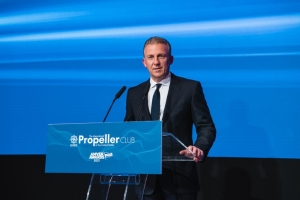
Almost the entire Greek shipping community will be represented at this year’s AMVER Awards Gala Dinner, one of the most important annual events of the industry, which will take place on 16 December 2022 at the Athenaeum Intercontinental Hotel to honor all the ships that participate in the US Coast Guard’s AMVER Program and the ships that voluntarily run to the rescue of vessels and crews in distress across the seven seas.
This year marks the 30 th anniversary of the Greek edition of the annual awards event which is organized by the International Propeller Club of the United States, Port of Piraeus, in collaboration with the U.S. Embassy in Greece and the United States Coast Guard.
The AMVER System (Automated Mutual Assistance Vessel Rescue) monitors ships, identifies possible problems and informs ships in the vicinity to approach and provide assistance. It officially came to life on 15 April 1958 through the efforts of the United States Coast Guard and a number of commercial shipping representatives.
Costis Frangoulis, President of the International Propeller Club, of the United States, Port of Piraeus and Vice President of the International Propeller Club of the United States, said: “Almost 7,000 lives have been saved by AMVER-participating ships since 2000 and many of them owe their lives to the selfless and altruistic efforts of Greek seamen and vessels.
“This year the AMVER awards marks its 30th anniversary in Greece, a significant milestone which deserves to be honored accordingly. The extremely favorable response from the merchant shipping industry around the world to the idea of the awards has ensured the continuance of the program which during its inaugural edition in 1992 presented the AMVER award to 45 Greek companies.
“Today, we are truly humbled to be in the privileged position to honor 247 Greek shipping companies and their ships who volunteer to the program year in year out. The fact that Greek companies received more than 2,000 AMVER Awards last year alone, is a demonstration of Greece’s leading position in the global maritime community,” he added.
Over 11,000 international ships participate in AMVER and an average of 6,300 ships are added on the AMVER plot each day. The AMVER Center computer receives over 40,000 AMVER messages a day.
About the International Propeller Club of the United States, Port of Piraeus
The idea for the Propeller Club was conceived in New York in 1922 by a group of professionals engaged in the merchant marine industry. They would meet regularly to discuss issues of mutual interest and concern. These meetings led to the foundation of the Propeller Club of the United States, with the aim of promoting the US merchant marine industry and international shipping to create a better world through sea commerce. The name “Propeller” is symbolic of propulsion, the driving force required to achieve the Club’s objectives. The Propeller Club’s world headquarters is located in Fairfax, Virginia, and today there are Clubs in 72 ports worldwide.
The International Propeller Club of the United States, Port of Piraeus is a non-profit association and is one of the oldest maritime institutions in Greece. Founded in 1935, it is the largest and most powerful Propeller Club among a network of 72 counterparts worldwide. Its main purposes are the promotion, advancement and support of global merchant shipping and Greek-American relations at a social, cultural and business level, while it also carries out a significant social service towards the Greek society with donations and the provision of scholarships to distinguished students in Greek and American universities.
About the AMVER Program
The need for the AMVER System became apparent during the Titanic disaster in 1912. As the distress flares from the Titanic brightened the sky, passing ships considered them part of the onboard celebrations. Little did they know that the ship had just hit an iceberg. This highlighted the need to monitor ships, identify possible problems and to call on ships in the vicinity to assist. But this was an idea which only became a reality with the help of computer technology. The AMVER System (Automated Mutual Assistance Vessel Rescue) monitors ships, identifies possible problems and informs ships in the vicinity to approach and provide assistance. It officially came to life on 15 April 1958 through the efforts of the United States Coast Guard and a number of commercial shipping representatives.
Originally known as the (AMVER) System, it became operational on 18 July 1958.
ELNAVI Newsletter
More information: ELNAVI,
19, Aristidou str., Piraeus 185 31,
Tel.: +30 210 45.22.100, e-mail: This email address is being protected from spambots. You need JavaScript enabled to view it.
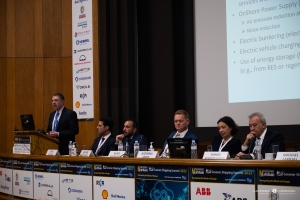
While we all welcome ‘climate change’ the maritime industry is to blame for it becoming the focus of world regulators rather than other much heavy polluters. Shipping is a peripheral business entity so it was an easy target as it does not have strong political clout and the regulators had a more or less free go at it although their understanding of how ocean going shipping functions is very shallow.
With this comment the Greener Shipping Summit 2022 was launched by keynote speaker, John Platsidakis. The honorary chairman of Intercargo told the 500 strong audience from 230 companies and 16 countries gathered at the Eugenides Foundation, November 15, that a communication mistake was made by the shipping community from the off.
We do care about the environment, said Platsidakis, saying “do not forget generations of ship owners grew up and spent most part of their lives on board ships with only the sea and the sky in their sight for endless time, we were willing to support the initiative of reducing air pollution by ocean going ships. So, a strong and clear statement was made: “We will comply”. I believe that statement was catastrophic!”
Platsidakis said: “That statement was explained by third parties as an admission of guilt! So, a well-intended statement, made with the best of desire to assist, was misunderstood!”
He explained. Had we said “yes, we will do our best to comply as far as we can and subject to the participation of all other active players like the shipyards, engine manufacturers, charterers, bunker producers etc., we would have sent a very clear message and given the opportunity to unaware regulators and the public to understand how ocean going shipping functions and invite the other participants to come along.”
Another opportunity was missed some 10 years ago he said when we should have placed on the debate the imposition of the straightforward levy on shipping bunkers as the classic economic theory says that price dictates demand and vice versa. In other words, more expensive bunkers would oblige the users of the ships (mostly the charterers) to use the ships in a more efficient way without though stopping shipping to perform.
Nevertheless, although it is late, Platsadakis strongly believes the industry must “tell the public shipping companies do not produce technology”.
“Shipping companies use what is available in the market and they do so because they do not have another option as they operate in a highly competitive environment.
“The focus should be on the ones who have to deliver solutions. Otherwise, the effort is deemed to fail. Governments impose on the car manufacturers emission limits in order to be allowed to sell their cars and not on the individuals who buy a car. Why, in shipping, is it the other way round?” he concluded.
Organised for the 13th time by Newsfront / Naftiliaki in conjunction with, and under the auspices of, Greek shipping’s powerful Marine Technical Managers Association, Martecma, it became clear during the 2022 Greener Shipping Summit that battling climate change is a massive challenge as some 33 speakers, panelists and delegates discussed navigating the winds of change.
Indeed, during the final session, while addressing the issue of future investments – newbuilding and existing ships – it was declared that “2030 targets will not be met and a multi-tier market is developing”.
Stavros Hatzigrigoris, a former longtime president of Martecma, followed up his comment about the multi-tier market by warning the challenges posed by regulators and fuel levies etc will see the end of some Greek ship owning companies as the principals invest in other sectors.
John Cotzias, president of the Hellenic Shipbrokers Association and moderator of the final session said the industry “needs people who think outside the box”.
Chemical tanker operator, Stratos Tsalamanios, co-ceo of Seaven Tanker & Dry Management, said the regulations make it necessary to renew fleets but with the regulations as they are a company is unsure whether to go for a newbuilding or a secondhand ship, with the secondhand ship in favour because of the lack of supply of vessels while oil majors are now willing to look at vessels over 15 years old.
Further, Tsalamanios noted financial institutions and banks are keen to invest in green vessels and give a very big leverage and this has to go into the charter parties. He said some charterers are willing to pay but the whole system is very complex and in order to meet the 2030 deadline there may have to be a phase-out systems as was the case with single hull tankers.
George Papagiannopoulos, principal of shipping company Common Progress Compania Naviera said new ships have to be built but “we have to be clear about the available fuels and their cost”. “New technologies do not work on paper,” he said.
It was clear that investing in ships today is a challenge. George Souravlas, ceo of Load Line Marine, an operator of handy size bulk carriers told the summit of the challenges faced when investing in new vessels as there is still no clear answer regarding future fuels and a ship’s power.
Hatzigrigoris said it is up to IMO, the shipbuilders and the engine builders to come up with one solution regarding fuels. “Today we are talking about seven or eight solutions. I have asked MAN if they can build a multi-fuel engine and the reply was ‘no’.” He said if you start with ammonia you have to live with it though you may convert your vessels at a later stage, “but then you double your investment in new technology”.
During the daylong summit a great deal was said and presented about new technology.
Nuclear powered ships is “no longer in the hard to do box” Matthew Palmer, of Lloyd’s Register, said. He said existing or previous classification rules for nuclear power have been developed.
Conventional biofuels are compatible with modern marine engines and can be used safely onboard ships, Bureau Veritas VeriFuel’s Bill Stamatopoulos told delegates. However questions remain about the full supply chain sustainability of biofuels and the wide-scale availability of advanced biofuels (second- and third generation) for the shipping industry. Stamatopoulos said, “biofuels are one of the stepping stones to decarbonisation”.
Discussing environmental regulations, Nikolaos Daremas of RINA Hellas noted that from next year, commercial ships must report their actual annual CII [carbon intensity indicator], which will have to be verified against the required annual CII; the latter will become progressively stricter with time – a significant challenge for the entire maritime sector.
By the end of the day, most present at the Summit were in agreement with ABS’ senior engineer, regulatory affairs, Stela Spiraj one of the summit’s early speakers, who said: “While the shipping industry has already made considerable progress toward tackling climate change, breaking the deadlock to meet the IMO 2050 ambition requires informed decisions, driving action, building on existing industry initiatives, and acknowledging the positive impact of sustainable shipping.”
ELNAVI Newsletter
More information: ELNAVI,
19, Aristidou str., Piraeus 185 31,
Tel.: +30 210 45.22.100, e-mail: This email address is being protected from spambots. You need JavaScript enabled to view it.
Air France–KLM and Aspida Travel sign Sustainable Aviation Fuel (SAF) agreement in Greece
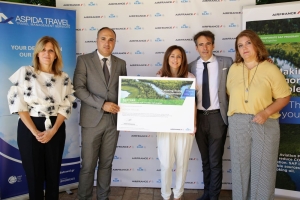
Aspida Travel has become the first travel agency in Greece to join the Corporate Program of Air France–KLM for Sustainable Aviation Fuel (SAF), increasing the number of the airline group’s contracts worldwide.
The Corporate Program of Air France-KLM for SAF aims for the creation of a sustainable aviation fuel industry that guarantees the future of increasingly eco-responsible air transport.
Under the agreement, signed in Athens on Thursday, Aspida Travel will play an active role in reducing CO₂ emissions by supporting the efforts and actions of the Air France-KLM Group and contributing to the ecological transition of air transport globally.
Following the signing of the agreement, Air France-KLM Regional Manager Yiannis Pantazopoulos highlighted that both Air France and KLM have been working for many years to reduce their environmental impact. Their first actions were to work together with all stakeholders and policymakers to achieve the climate objective to reach zero CO2 emissions by 2050.
“One of our most important initiatives, however, is the effort to raise awareness within our industry, by stimulating airlines, travel agencies and corporate companies alike, that control a large percentage of air travel worldwide,” Pantazopoulos said.
Launched in 2021, Air France-KLM’s innovative SAF corporate program enables corporate clients to play an active role after an estimate of the CO₂ emissions associated with their travel, and determine an annual contribution they wish to devote to the program. All contributions are then invested in the sourcing and consuming of SAF.
“We are very excited to have the support of Aspida Travel, an important partner and pioneer in this effort, coming from the travel agencies industry and based in Greece. I hope that this collaboration will inspire even more travel agencies in our country to participate, tracing a more sustainable journey for the sector,” he added.
On his part, Aspida Travel Managing Director Dimitris Matthaios underlined the importance of sustainable fuel production in the airline industry.
“The efforts of Air France–KLM Group prove that if the airline and travel industries work together, we will manage to make our activities more sustainable for the environment and much sooner,” Matthaios said.
He went on to add that Aspida Travel is constantly in a development phase and have developed its activities in ESG (Environmental, Social, and Governance) the recent years.
“We try to contribute to the protection of the environment and we believe that this important agreement we signed with such a strategic partner as the Air France-KLM group will significantly enhance this effort,” Mattheos added.
Image: Chara Papalambrou, Key Account Manager Air France-KLM; Dimitris Matthaios, Managing Director Aspida Travel; Milli Zafeiratou, Marketing Manager Aspida Travel; Yiannis Pantazopoulos, Regional Manager Air France-KLM; and Maria Mavrikaki, Marketing Manager Greece & Cyprus.
ELNAVI Newsletter
More information: ELNAVI,
19, Aristidou str., Piraeus 185 31,
Tel.: +30 210 45.22.100, e-mail: This email address is being protected from spambots. You need JavaScript enabled to view it.
Environmental Defense Fund, LR and Ricardo launch report examining ecological impact of ammonia
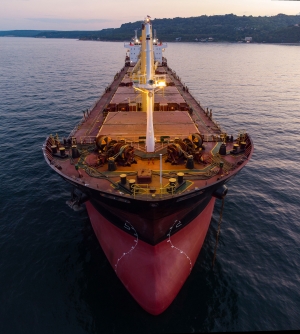
Study finds that spills of ammonia as a shipping fuel could negatively impact certain habitats and species more than others, and that the likelihood and gravity of such spills are highly dependent on ship type, hole size, temperature or even time of the day.
A joint study released by Environmental Defense Fund (EDF), Lloyd’s Register (LR) and Ricardo PLC, examines the potential marine environmental impacts of ammonia spills during its use as a shipping fuel.
Ammonia generated from renewable energy is considered a sustainable alternative to fossil fuels as the shipping industry decarbonises. The study, which used extensive modelling due to the scarcity of real-world data, focuses specifically on the impacts of large ammonia fuel spill scenarios on marine habitats.
Potential effects on aquatic environments and associated ecological receptors were assessed in scenarios if a spill were to occur during bunkering, or in the case of a ship’s collision and sinking. In addition, possible mitigation measures and specific spill management practices for these scenarios were modelled and studied.
“The shipping industry must make a rapid energy transition to address the climate emergency. But it is also clear that we must proceed with caution. We owe it to future generations to ensure we are championing true climate solutions that will not negatively impact our rivers, our oceans or our health,” said Marie Hubatova, Director of Global Shipping for EDF's Global Transport team.
The study examined potential ammonia fuel spills during bunkering and collision scenarios, under a variety of conditions, including time of day, temperature, humidity and solar radiation. The outputs were tested across eight habitats (rivers, estuaries, wetlands, coastal waters, coral reefs, mangroves, polar regions and the deep sea) using multiple ecological receptors (bacteria, plankton, macrophytes, invertebrates, fish, birds, reptiles, and marine mammals).
The study found that estuaries, mangroves and wetlands are particularly sensitive to potential ammonia fuel spills compared to the polar regions and the deep sea. Within these habitats, it is typically fish which are most sensitive to an ammonia spill, with birds and mammals to a lesser degree.
Lauren Dawson, Senior Consultant, Water and Environment Practice, Ricardo, said: “Examining the impact of ammonia is a challenge because of the vast conditions a ship might face while at sea or even when bunkered. Critical factors to consider include the various ship and storage types, the underlying principles which determine the fate of ammonia in the environment, and the diversity of aquatic habitats and species that could be affected. Ultimately, what we found is that ammonia is more threatening to fish species, and particularly to ecosystems with less saline water and higher temperatures. It is therefore important to study the impact of ammonia carefully for particular regions where these habitats intersect with major shipping channels and ports, such as the Strait of Malacca. The findings of the report provide an excellent step forward to delivering a baseline upon which future assessments can be refined.”
The results were then compared to previously studied habitat and species sensitivity to conventional oil-based fuels. Overall, an ammonia spill has a relatively smaller dispersion distance and lower persistence within the environment when compared to heavy fuel oil (HFO) and marine gas oil (MGO).
Existing reports show that oil-based fuels have higher impacts on invertebrates and birds, compared with ammonia. Ammonia has a medium impact on all other ecological receptors, except bacteria, whereas oil-based fuels have medium impacts on plankton, fish, macrophytes, reptiles and marine mammals (see the Table summarizing the environmental impact level in page 5 of our summary report).
While the maritime industry has prior experience with ammonia transported in gas carriers and used as refrigerant, the introduction of ammonia as a shipping fuel creates new challenges related to safe bunkering, storage, supply and consumption for different ship types. The potential toxicity of ammonia cannot be ignored; without mitigation measures and solid spill management practices, an ammonia fuel spill could have negative impacts on aquatic environments. Therefore, a robust regulatory framework must be developed for ammonia to be a viable, low carbon alternative for shipping.
“There are many questions around the use of ammonia as a shipping fuel. Studies like this support the industry’s understanding of the environmental impacts as well as the operational and safety challenges. Greater clarity about the risks posed to marine ecosystems will allow industry stakeholders to make better informed decisions on the multiple transition pathways under consideration,” said Andy Franks, Senior Risk Specialist, LR Maritime Decarbonisation Hub.
This study presents a first look at ammonia's potential ecological impacts as a fuel. Further research is needed to evaluate the full range of ecological and health implications (especially to a ship’s crew) of ammonia, including the increased nitrogen deposition from chronic ammonia leakage and combustion by-products to determine its safety.
“All future fuels come with specific challenges. We have been using oil to power ships for almost a century now and we had to learn how to do so in a safe way. We can't go through the same process with ammonia,” said Ricardo’s Hubatova. “We have to make sure we get it right from the very beginning. A robust regulatory framework and good management practices are essential for the safe use of ammonia.”
Depending upon its safety, ammonia produced with renewable energy is already projected as one of the possible main future fuels of shipping. It is estimated that maritime shipping emits approximately 1,056 million tons of carbon dioxide (CO2) per annum and is responsible for nearly 3% of global greenhouse gas emissions.
ELNAVI Newsletter
More information: ELNAVI,
19, Aristidou str., Piraeus 185 31,
Tel.: +30 210 45.22.100, e-mail: This email address is being protected from spambots. You need JavaScript enabled to view it.
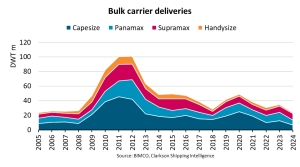
According to BIMCO estimates from the upcoming Dry Bulk Shipping Market Overview and Outlook report, deliveries of bulk carriers should drop to 23.8 million DWT in 2024. The sector’s orderbook currently adds up to 66.7 million DWT, a mere 6.9% of the bulker fleet, the lowest ratio since at least 1996.
Contracting of bulk carriers spiked in 2021 and reached 48.4 million DWT, driven by a positive congestion driven cycle which brought an opportunity for investment. However, in the first ten months of 2022 only 11.7 million DWT were contracted as concerns about economic growth and alternative fuels dominated the sector.
“In terms of size, upcoming bulk carrier deliveries are increasingly skewed towards panamax and supramax ships. Capesizes will account for around 27.8% of deliveries in 2024, significantly lower than their 40.9% ten-year average. Weaker and volatile rates and a 0.6 ratio between prices for newbuildings and 5-year-old ships are hindering contracting in the segment,” says Filipe Gouveia, Shipping Analyst at BIMCO.
The sector’s response to fuel transition and emissions reduction has thus far been slow, as demonstrated by the orderbook. Measured in deadweight, only 13.3% and 6.0% of deliveries until the end of 2024 are LNG and ammonia ready, respectively, while only two panamax ships are LNG ready.
“The continued economic downturn will likely affect investment decisions and keep the orderbook small. However, the average bulk carrier age has risen by six months each year since 2018 and the average bulker is now eleven years and six months old. Amid stricter environmental regulations and an aging fleet, renewal of the fleet will be required, and we can expect contracting to pick up across all segments towards the end of 2023,” says Gouveia.
Alternative fuel adoption among bulk carriers will likely continue to lag behind other sectors. However, by the next contracting cycle, a clearer roadmap for the adoption of alternative fuels will hopefully have emerged.
ELNAVI Newsletter
More information: ELNAVI,
19, Aristidou str., Piraeus 185 31,
Tel.: +30 210 45.22.100, e-mail: This email address is being protected from spambots. You need JavaScript enabled to view it.
Melina Travlou and Dorothea Ioannou were honored at the 33rd Seatrade Maritime Awards in London
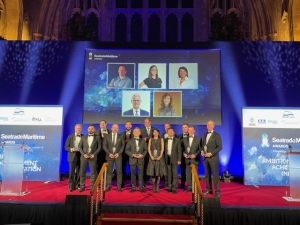
The president of the Hellenic Shipowners Association, Melina Travlou, was honored with the "Global Personality Award" for 2022, from the international Seatrade Maritime Awards, as part of the 33rd award held in London. Dorothea Ioannou, Managing Director – American Club, was also awarded the Diversity & Inclusion Award.
"I am honored to receive this award which reflects faith and vision, especially in this period of great geopolitical, economic and technological challenges that are contained in one word: UNITY. Uniting strengths, expertise and faith, we can move forward. Our responsibility as leading members of our industry is to stand together to lead shipping into a new era. And that must happen, without any compromise on safety. For our people, our ships and the environment. Together, we can overcome the challenges. United, we can lead this new game-changing era," said Melina Travlou in her message to the audience.
Welcoming the guests, Seatrade Maritime chairman Chris Hayman said: "It's hard to believe that more than three years have passed since we were last able to gather here for the final Seatrade Awards dinner. Tonight we will have the opportunity to see and hear how much the industry, working practices have changed since 1989 when the Seatrade Award was established".
During the evening, 15 winners were announced, winning one of the most important awards in shipping.
Dorothea Ioannou, managing director of the P&I American Club, was honored with the Seatrade Maritime Diversity and Inclusion Award, as the first woman to assume this important management position in the history of Marine Insurance Organizations, worldwide. "I want to thank the Seartrade Maritime Awards Committee for honoring me and the American P&I Club for everything we have achieved to date. The real value of the club is that it always shows sensitivity and responsibility to Individuality-Diversity" she said while receiving her award.
ELNAVI Newsletter
More information: ELNAVI,
19, Aristidou str., Piraeus 185 31,
Tel.: +30 210 45.22.100, e-mail: This email address is being protected from spambots. You need JavaScript enabled to view it.
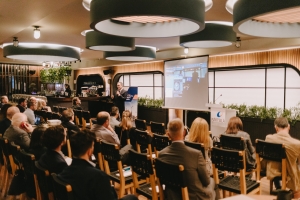
The shipping industry has entered an era of digital transformation and sustainable operations. To weather the above challenges Wartsila has merged its Marine Voyage and Marine Power Divisions to head up the future of fleet operations.
In view of these developments Wartsila Greece organised a seminar with the title “Sustainability Strategies: The future of fleet operations” to inform its clients of the new environmental and digital challenges in shipping.
Mrs. Helena Athoussaki, head of ESG Motor Oil Group, emphasized the pressure from regulators, investors and clients concerning decarbonization along with the challenges and the available solutions. She highlighted that decarbonisation is a part of a wider sustainability strategy whereby a company must develop a short-medium and long-term plan with specific targets, goals and performance analysis. As she said there are several ways to measure the performance and the reduction of emissions in ships in the effort to follow an efficient environmental strategy.She also presented the ESG criteria, the importance of the ESG risk evaluation and ESG reporting that has to be auditable and transparent. Last, Mrs. Athoussaki, underlined that digitalization plays a significant role to decarbonization but it requires commitment and change management.
Next speaker was Mr. Grant Hunter, Director for Standards, Innovation and Research, BIMCO who presented the issue “Accelerated digital transformation is the pathway to decarbonisation”.
He outlined that some of the potential speed reductions solutions are Hull Coating, Waste Heat Recovery, LNG/LPG as fuel, CCS, etc. Digital technologies have also significant impact on decarbonization.
In conclusion digitalization and decarbonisation will be the most important powers of change in shipping and shipping companies must not wait from IMO or a similar body such as EU in order to proceed with the adoption of smart solutions for a sustainable development.
Mr. Pankaj Khanna, CEO, Heidmar referred to “Environmental Regulations – Threat or Opportunity? Untangling the Mess”.
He spoke about the commercial impact of the EEXI /CII regulations on the tanker industry. The use of EPL to meet the EEXI regulations may hinder some older ships from meeting charter party speeds, however, overall the reduction of speed will be good for tanker demand as the market will need more ships. The CII regulations, in particular, will make non eco vessels less attractive commercially from 2024 onwards and also lead to some unusual trading patterns. He highlighted the potential problems with the CII regulations with regards to time spent in port and on short-haul voyages. He also referred to the inclusion of shipping in the EU Trading system and its financial impact. In conclusion he pointed out that the coming decarbonization regulations are a threat if one is not proactive particularly for owners of non-eco ships.
Christos Matsikoudis, Area Sales Manager Eastmed, Wärtsilä Voyage presented Wartsila’s Fleet decarbonization Strategies and introduced the concept of Smart Marine Eco system which is all about smart vessels, smart ports, green fuels, ship modelling, digitalization, autonomous shipping and Just in time arrivals at ports.
Mr. Matsikoudis pointed out that if we do not act immediately the 80% of the fleet in 2030 will be non CII compliant.
Then he presented how Wartsila’s Fleet Optimisation Solution platform embodies the smart marine ecosystem and constitutes a great inventory and visualization tool supporting Wartsila’s individual ship modelling and retrofit options for CII compliance. Wartsila is not a mere manufacturer of marine engines but has been transformed to an end to end provider with integration form “propeller to bridge.”
The digitalization in maritime will happen only if all stakeholders collaborate. Having data doesn’t mean being digital, concluded Mr. Matsikoudis.
ELNAVI Newsletter
More information: ELNAVI,
19, Aristidou str., Piraeus 185 31,
Tel.: +30 210 45.22.100, e-mail: This email address is being protected from spambots. You need JavaScript enabled to view it.