



-
Home

-
About Elnavi
- elnavi

elnavi
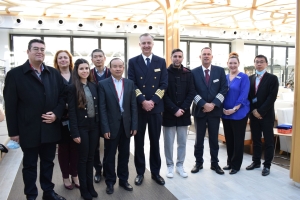
The management team of PPA S.A. welcomed Viking Sky, the first cruise ship to arrive at the port of Piraeus in the new year through a special ceremony for the exchange of plaques and Christmas treats for all passengers during their arrival at the Cruise terminal.
According to Viking Sky’s annual schedule, 12 more additional arrivals (homeport) are expected in 2023 with the passenger occupancy rate to exceed 85%, despite the fact that it just launched in January. Overall, the liners’ cruise ships perform homeport arrivals at the Piraeus port throughout the whole year; in 2023, according to bookings’ data, 35 additional arrivals of the liners cruise ships are expected at the port of Piraeus, indicating a significant growth rate of 13%.
Overall, based on the pre-bookings data, the cruise industry at the port of Piraeus sees a momentum this year, since 786 arrivals with a growth of 16% from previous year are expected. In 2022, the arrivals growth rate has already exceeded the pre-pandemic performance indicators. Moreover, an increase of approximately 5% from last year is also expected in homeport arrivals, while it is worth noting that in 2022 the homeport arrivals saw an increase of more than 30% compared to 2019.
PPA’s Deputy CEO, Capt. Jin Beiyuan, welcomes the dynamic path of the cruise business at the Port of Piraeus, by highlighting the fact that this result is a combination of the consistent and focused work, the significant investments and all the modernization and upgrade works, alongside Greece’s and the port of Piraeus’ undeniable strategic location. Continuing the dynamic path of the cruise industry is a vital component of PPA’s strategy, since it constitutes a win-win activity for all stakeholders, but mainly for the local community, the neighboring municipalities, the Attica region and the country overall.
ELNAVI Newsletter
More information: ELNAVI,
19, Aristidou str., Piraeus 185 31,
Tel.: +30 210 45.22.100, e-mail: This email address is being protected from spambots. You need JavaScript enabled to view it.
Swedish Club Rings in the New Year with a Welcome for New Managing Director Thomas Nordberg
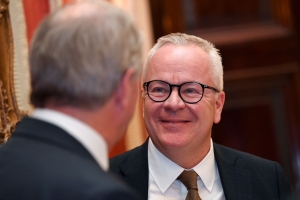
The Swedish Club welcomed in the New Year its incoming Managing Director, Thomas Nordberg, on the first day in his new role.
Thomas has spent the last four months behind the scenes with the Club, and is now more than ready to hit the ground running: “I am delighted to have been given the opportunity to take the helm at this unique organisation,” he said, as he addressed Club employees. “The drive for quality that I have seen from both our team and our members is outstanding, and I look forward to working with you all to support that commitment.
“We are operating in uncertain times, but The Swedish Club has seen many changes in its 150-year history. We will benefit from this strong platform when moving forward together and facing the challenges and opportunities that the next few years will bring,” he said.
Thomas Nordberg joins the Club with a solid pedigree in the marine insurance industry, having spent, as he says, a 30-year educational journey just to prepare for the role.
“I feel in many ways that heading up The Swedish Club has been tailormade, because the kind of roles that I have held in the past have been preparing me for this moment. I now hope to be able to transfer some of the experiences and insights that I gained during my career to help move the Club forward,” he added.
ELNAVI Newsletter
More information: ELNAVI,
19, Aristidou str., Piraeus 185 31,
Tel.: +30 210 45.22.100, e-mail: This email address is being protected from spambots. You need JavaScript enabled to view it.
One Global Broking - Former Deputy Minister of Transport in Greece visit to OneGlobal London Offices
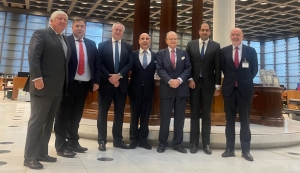
On the occasion of a presentation by The Hellenic Association of Insurance Companies that One Global senior management attended on Tuesday Dec 6th, 2022 in London with the theme, Greek Economy and Insurance Market Outlook, Challenges & Prospects – we had the honor of being joined by our guest Mr John Kefallogiannis, Former Deputy Minister of Infrastructure & Transport in Greece and Member of Parliament with the current Greek administration.
The presentation was hosted by Lloyds in the Old Library and given the opportunity, Mr Kefallogiannis was given a tour of the Lloyds Building as well as the One Global offices located at 30 St Mary Axe, and met with company executives, Jonathan Palmer-Brown, Group Chairman, Mike Reynolds, Group CEO, George A. Tsavliris, Non-Executive Chairman Greece & Cyprus, Manos Sofronis, CEO Greece & Cyprus. Mr Kefallogiannis was also introduced to Iain Henstridge - Chair Joint Hull Committee & Head of Apollo Syndicate Management Limited and Andrew Moulton – Chairman of Joint War Committee & Class Underwriter of Ascot Underwriting Limited.
Image: Jonathan Palmer-Brown – Group Chairman Oneglobal, Iain Henstridge - Chair Joint Hull Committee & Head of Apollo Syndicate Management Limited, Andrew Moulton – Chairman of Joint War Committee & Class Underwriter of Ascot Underwriting Limited, Manos Sofronis, CEO Oneglobal Greece & Cyprus, George Tsavliris – Non -Executive Chairman Oneglobal Greece & Cyprus, John Kefallogiannis – Former Deputy Minister of Infrastructure & Transport in Greece & Mike Reynolds - Group CEO Oneglobal
Signal Ocean looks at the outlook for dry bulk freight fundamentals Demand – Freight Rates – Vessels Speeds – Supply
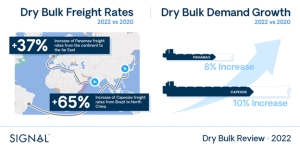
The year ended with critical changes in grain flows due to geopolitical tensions between Russia and Ukraine. In parallel, the Chinese real estate crisis seriously impacted Capesize vessels, while the energy crisis drove up coal flows and Panamax freight rates.
Amid the macroeconomic and geopolitical challenges, it is interesting to see that the volume of bulk cargo flows has remained stable over the past two years. Cargo flow volumes were helped by the Black Sea Grain Corridor Initiative in the third quarter, but freight rates in the Supramax and Handysize segments remained weaker.
A serious concern for bulk demand growth in the coming year is Chinese economic growth, as 2022 ended with GDP growth of at least 4.4%, but well above economists' expectations. Economists had generally expected growth to fall to a rate between 2.7% and 3.3% in 2022. The Chinese government had maintained a much higher annual growth target of around 5.5%.
In our annual review using Signal Ocean data, we examine freight market trends on reference routes and current patterns of bulk flows compared to the previous two years. 2021 surprised many with exceptionally high levels for Capesize and Panamax vessels, while 2022 saw a downward cycle for smaller vessel sizes.
For the first quarter of 2023, it is becoming apparent that the explosion of Chinese Covid cases will pose a new threat to the global economy and seaborne iron ore demand, while the current trend in seagoing ballast speed for dry bulkers has already fallen to its lowest level since 2020.
The following sections present the evolution of trends in dry bulk flows, demand, freight rates, vessel speeds, and supply.
Dry Bulk Flows – China
The volume of dry bulk flows from all countries to all destinations was stable similar to last year, with the exception of January and February, while December ended with a slightly higher volume than November. Image 1 shows that the overall trend for this year and last year for bulk shipments supports the recovery in freight rates despite ongoing macroeconomic challenges. Total volume over the past two years is estimated at about 9.8 billion tonnes, with China accounting for 40% of flows (image 2) and Australia as the origin country accounting for 29%.
Image 2 shows the breakdown of the volume of bulk cargo flows over the past two years by origin and destination countries, ship size category, and cargo types. Iron ore fines and thermal coal accounted for 27% and 21%, respectively, while Capesize and Supramax vessels had the largest volume shares, accounting for 30% and 21%, respectively as measured in metric tons.
Focus on China
Looking at China as the main destination for bulk flows and demand growth, image 3 shows that the volume of flows has increased, especially in the fourth quarter of this year. In the last two years, the total volume of commodity flows was 3.9 billion tonnes, with iron ore accounting for 60% of the volume and Australia remaining the top source country for Chinese bulk imports with a 42% share (image 4).
Image 5 shows the total volume of iron ore and coal flows to China over the past two years, as well as the top three source countries. It is interesting to note that the fourth quarter of 2022 saw an exceptional increase in coal flows to China compared to the previous two quarters, with Indonesia leading the origin countries with a 57% share. For iron ore, December saw a higher import pace than November, matching the volume of December 2021. Overall, the year ended with a promising outlook for Chinese iron ore and coal demand, although slower momentum was feared given the outbreak of Covid cases.
Demand Growth - Tonne Charts
The higher volume of iron ore and coal dry bulk flows to China is reflected in the growth of dry bulk demand tonne-days, where the fourth quarter of the year ended with increasing momentum in the Capesize and Panamax segments. Overall, the tonne-days trend for the larger vessel categories was higher than in 2021 and 2020, and December suggests similar strength for the first days of 2023, (image 6).
Looking at the smaller ship segments (image 7), growth in tonne-days was also higher in the Supramax segment than in the previous two years, while slower momentum was observed in the Handysize size in the fourth quarter. The slowdown in Handysize demand growth in tonne-days at a lower level than in previous years in the fourth quarter leads to a downward revision of freight rates for the first months of the New Year, as geopolitical tensions are still causing difficulties in grain exports from Ukraine to the main Asian markets.
III. Freight Market - $/tonne
Overall, 2022 was a year of strong growth in freight rates for the larger vessel categories, although rates for Capesize vessels grew at a slower pace after the exceptionally high levels of 2021 (image 8). Although the freight market for the larger vessel categories was above 2020 levels, rates for the Supramax and Handysize vessel classes were very weak, while the Panamax segment appears to be the winner in 2022. In the last days of the year ending, Panamax freight rates showed a strong performance and Asian coal demand paved the way for stronger demand and higher freight rates in the upcoming first quarter of the New Year.
Vessel Speeds
The geopolitical crisis prompted shipowners to reduce the ballast speed of ships at sea, and 2022 ended with a record low ballast speed for bulk carriers. It is estimated that last year's levels are the lowest compared to 2021 and 2020 (image 9), as the larger vessel categories continue to have lower ballast speeds at sea (image 10). The fourth quarter suggests a similar slowdown in ballast speeds as freight rates enter a downward cycle at the start of the new year.
Vessel Supply - Ballasters’ View
Finally, looking at the weekly trends of ballast vessels in the main vessel categories (image 11), we see that the number of vessels in ballast increases in the New Year in the Capesize and Panamax segments, but remains below the average trend. In the Handysize segment, the number of ballasted vessels remains above the average trend, and there is also an increase in the Supramax segment.
Overall, the weekly trends for ballast vessels show an upward trend, suggesting a continuation of the weakening trend in freight rates for the first few days of the new year. It remains to be seen how the January days will play out for vessel employment given the economic uncertainty in China and the challenges to the smooth flow of grain shipments.
Overall outlook - Looking ahead
The New Year brings uncertainty for bulk freight rates as China has a significant impact on Capesize freight rate trends. However, the energy crisis appears to be continuing to boost coal flows significantly and improve sentiment for Panamax rates between the Continent and the Far East. It is questionable, however, whether the growth in Asian coal demand will be sufficient for the increase in bulk carrier employment rates and an upward cycle in freight rates. It remains to be seen whether the Chinese economy will be able to overcome the rinderpest outbreak and successfully manage the looming threat of a new round of economic downturn with negative effects on the global economy.
You can follow our Dry Market Monitor for weekly trends in freight rates, supply, demand and Chinese port congestion.
* Image 1 - Data Source: The Signal Ocean Platform, Dry Bulk Flows 2021-2022, from All to All Destinations
* Image 2 - Data Source: The Signal Ocean Platform, Dry Bulk Flows 2021-2022, Breakdown (Origin - Destination Countries, Vessel Classes, Cargo Grades)
* Image 3 - Data Source: The Signal Ocean Platform, Dry Bulk Flows 2021-2022, from All to China
* Image 4 - Data Source: The Signal Ocean Platform, Dry Bulk Flows 2021-2022 to China, Breakdown (Origin Countries, Vessel Classes, Cargo Grades)
* Image 5- Data Source: The Signal Ocean Platform, Dry Bulk Flows 2021-2022 to China, Iron Ore & Coal
* Image 6 - Data Source: The Signal Ocean Platform, Demand, Capesize – Panamax
* Image 7 - Data Source: The Signal Ocean Platform, Demand, Supramax – Handysize
* Image 8 - Data Source: The Signal Ocean Platform, Market Prices, 2020-2022
* Image 9 - Data Source: The Signal Ocean Platform, Vessel Speeds, Ballast, Dry Bulk Vessel, All sizes
* Image 10 - Data Source: The Signal Ocean Platform, Vessel Speeds, Ballast, Dry Bulk Vessels
(Capesize Vs Panamax)
* Image 11 - Data Source: The Signal Ocean Platform, Weekly Supply Trend, Ballasters’ View
ELNAVI Newsletter
More information: ELNAVI,
19, Aristidou str., Piraeus 185 31,
Tel.: +30 210 45.22.100, e-mail: This email address is being protected from spambots. You need JavaScript enabled to view it.
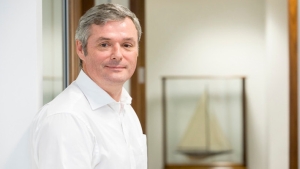
The derivatives market for clean and dirty tankers saw increased traded volumes in 2022, according to data released by the Baltic Exchange.
Tanker Forward Freight Agreement (FFA) volumes hit 734,972 lots, up 33% on 2021.
Dry Forward Freight Agreement (FFA) volumes reached 2,218,249 lots, down 12% on 2021.
Handysize volumes continued to grow following changes implemented to the Baltic Exchange’s Handysize Index in 2020. Options trading volumes in the dry market were 395,163.
Commenting on the figures, Baltic Exchange Chief Executive Mark Jackson said: "2022 was another year of growth for the tanker FFA market and a good performance for dry bulk. Underpinning these volumes are world-class clearing, volatility, trust in the Baltic Exchange’s settlement data and increased participation by owners, charterers and traders. The Baltic Exchange's status as a regulated benchmark provider has helped to create a mature and liquid market.”
He added: "Tanker market volatility has largely been caused by Russia's invasion of Ukraine and volumes jumped significantly after war broke out. This was seen across all sizes and sectors from VLCCs down.
"The most liquid dirty route was the VLCC route Middle East Gulf to China (TD3C), but TD20 (Suezmax) contributed volume too. There were good levels of activity on the clean routes with MR TC2, TC14 and the LR1 route TC5 all contributing significantly. We were also pleased to see continued volume growth in the handysize segment following the change in our vessel description to a 38,000-dwt type”.
Image: Baltic Exchange Chief Executive Mark Jackson
ELNAVI Newsletter
More information: ELNAVI,
19, Aristidou str., Piraeus 185 31,
Tel.: +30 210 45.22.100, e-mail: This email address is being protected from spambots. You need JavaScript enabled to view it.
“Maria Energy” of TEN delivered the first LNG cargo at Germany’s LNG terminal in Wilhelmshaven
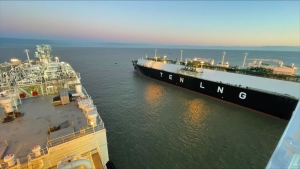
The first full cargo of liquefied natural gas (LNG) to the new LNG terminal, operated by Uniper, in Wilhelmshaven was carried by the LNG ship “Maria Energy”, owned by Tsakos Energy Navigation, a major energy mover. The cargo was loaded in Calcasieu Pass, USA, at the liquefaction facility of the LNG supplier Venture Global Calcasieu Pass, LLC, on December 19, 2022.
The Maria Energy is fully loaded with approx. 170,000 cubic meters LNG (97,147,000 cubic meters of natural gas) – enough to supply around 50,000 German households with energy for one year.
Niek den Hollander, Uniper CCO says: "The successful delivery of the first full LNG cargo to the Uniper terminal in Wilhelmshaven is a testament to the strong partnership between Uniper, Venture Global, and Tsakos Energy Navigation. The use of LNG as a reliable energy source is crucial for the Security of Supply for Germany and Europe. We are committed to contribute our part by bringing more LNG to the European market and especially Germany via the Wilhelmshaven and Brunsbüttel Regas Terminals."
"Venture Global is very proud to supply the first full cargo of LNG ever delivered to Germany, and we congratulate Uniper and the German government for their swift action to build the infrastructure needed to make this historic day possible," says Venture Global CEO Mike Sabel. "As strategic partners, we look forward to providing long-term security of energy supply to our allies through the continued delivery of clean and reliable US LNG."
The LNG cargo delivered on board of the Maria Energy forms part of the commissioning process at the Wilhelmshaven terminal. Commercial operations of the Wilhelmshaven terminal are expected to start in mid-January 2023.
The Uniper LNG terminal in Wilhelmshaven was opened on December 17, 2022. Via the Floating Storage and Regasification Unit (FSRU) Höegh Esperanza, about five billion cubic meters of natural gas can be landed in Germany per year.
About Tsakos Energy Navigation
TEN, founded in 1993 and celebrating this year 29 years as a public company, is one of the first and most established public shipping companies in the world. TEN's diversified energy fleet currently consists of 73 double-hull vessels including four dual-fuel LNG powered aframax vessels and two option one shuttle tankers under construction, constituting a mix of crude tankers, product tankers and LNG carriers, totaling 8.5 million dwt.
About Venture Global
Venture Global is a long-term, low-cost provider of U.S. LNG sourced from resource rich North American natural gas basins. Venture Global's first facility, Calcasieu Pass, commenced producing LNG in January 2022. The company is also constructing or developing an additional 60 MTPA of production capacity in Louisiana to provide clean, affordable energy to the world. The company is developing Carbon Capture and Sequestration (CCS) projects at each of its LNG facilities.
About Uniper
Düsseldorf-based Uniper is an international energy company with activities in more than 40 countries. With around 7,000 employees, it makes an important contribution to security of supply in Europe. Uniper's core businesses are power generation in Europe, global energy trading, and a broad gas portfolio. Uniper procures gas – including liquefied natural gas (LNG) – and other energy sources on global markets. The company owns and operates gas storage facilities with a capacity of more than 7 billion cubic meters. Uniper plans for its 22.5 GW of installed power-generating capacity in Europe to be carbon-neutral by 2035. The company already ranks among Europe's largest operators of hydroelectric plants and intends to further expand solar and wind energy, which are essential for a more sustainable and autonomous future.
Image: LNG carrier Maria Energy carried Germany's first LNG cargo to the Uniper LNG terminal in Wilhelmshaven (source: Uniper)
ELNAVI Newsletter
More information: ELNAVI,
19, Aristidou str., Piraeus 185 31,
Tel.: +30 210 45.22.100, e-mail: This email address is being protected from spambots. You need JavaScript enabled to view it.
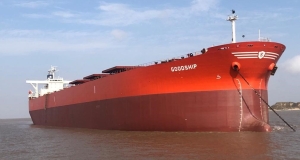
Taking advantage of the market upheaval the Nasdaq listed company United Maritime Corporation (NASDAQ: USEA), has successfully completed the delivery of the 2008-built LR2 product tanker, M/T Minoansea, to her new owners. In addition, the Company has entered into definitive agreements to acquire two Capesize vessels from Seanergy Maritime Holdings Corp., a related party of the Company, for an aggregate purchase price of US$36.25 million. The aggregate purchase price of the vessels was based on the average of three independent broker valuations.
The first Capesize bulk carrier is the M/V Tradership, with a cargo-carrying capacity of 176,925 dwt built in 2006 by Namura Shipbuilding in Japan. The vessel is chartered by a major European charterer for a period until minimum June 2023 up to maximum October 2023, at an index-linked rate.
The second Capesize bulk carrier is the M/V Goodship, with a cargo-carrying capacity of 177,536 dwt built in 2005 by Mitsui Engineering & Shipbuilding in Japan. The vessel is chartered by an international charterer for a period until minimum June 2023 up to maximum December 2023, at an index-linked rate. The Company expects to take delivery of the vessels in the first quarter of 2023, subject to the satisfaction of certain customary closing conditions.
Stamatis Tsantanis, the Company’s Chairman & Chief Executive Officer, stated: “We are pleased to announce the acquisition of the two Capesize bulkers by United Maritime. The attractive purchase price places United in a position to generate high returns on investment without diluting our shareholders or increasing our corporate leverage. In addition, the acquisition of the vessels from Seanergy provides for an efficient transfer of ownership, without disrupting the vessel’s commercial operations or the existing time-charter agreements and most importantly, without United incurring customary expenses associated with sale and purchase transactions in shipping. “We believe that the sale price achieved for the M/T Minoansea was substantially accretive to shareholder value, especially in view of the vessel’s age and the investment required for its upcoming special-survey and ballast-water treatment system installation. This vessel will be replaced with two high-quality Japanese Capesize vessels, fitted with ballast water treatment systems and maintained at what we believe to be above-industry standards. “We deem that the recent correction in the prices of the larger dry bulk vessels, in combination with the sector’s best supply fundamentals of the last 20 years, makes this segment an attractive investment opportunity. Therefore, these acquisitions are fully consistent with our strategy to pursue counter-cyclical investments with a view to capitalise on the upside and generate enhanced returns for our shareholders.”
The Company operates a fleet of one tanker vessel and one dry bulk vessel. Upon completion of the acquisition of the M/V Tradership and the M/V Goodship, the Company's fleet will consist of four vessels, one LR2 tanker vessel and three Capesize dry bulk vessels, with an aggregate cargo carrying capacity of 635,422 dwt. The Company is incorporated under the laws of the Republic of the Marshall Islands and has executive offices in Glyfada, Greece.
Image: Stamatis Tsantanis, Chairman & Chief Executive Officer of United Maritime Corporation
ELNAVI Newsletter
More information: ELNAVI,
19, Aristidou str., Piraeus 185 31,
Tel.: +30 210 45.22.100, e-mail: This email address is being protected from spambots. You need JavaScript enabled to view it.
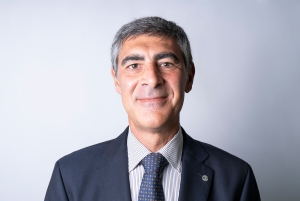
RINA has approved in Principle (AiP) of the first very large crude carrier (VLCC) vessel using an innovative propulsion arrangement that reduces the ship’s resistance by 5-10%. This result is achieved by splitting the thrust of a single large propeller into two smaller ones, thus reducing the required ballast draft for the full propeller immersion, which in turn allows the reduction of the volume of the ballast tanks and, ultimately, of the overall ship dimensions and the required power for propulsion without impacting the cargo carrying capacity.
At the same time the vessel will meet the IMO targets for 2050 through the use of the ship’s fuel (LNG) combined with hydrogen produced onboard. The LNG/hydrogen-fuelled vessel general arrangement developed by Shanghai Waigaoqiao Shipbuilding (SWS) is based on the result of a joint project with Marin, the Liberia Administration, Wärtsilä, ABB and Helbio (a subsidiary of Metacon AB) and RINA.
Giosuè Vezzuto, Executive Vice President at RINA, said, “Following the AiP of an MR tanker, earlier this year, using the same solution to produce hydrogen on board, this vessel features a new approach to the design of VLCCs. It also demonstrates that the gas reforming concept can work equally well on smaller or bigger vessels, as this first AiP for a VLCC proves its application in the largest vessels.”
The new propulsion concept is important because it offers ship owners a way to exceed IMO 2050 carbon reduction targets using practical fuel and technology that is readily available today.
Mr. Gao Aihua, Deputy Director of SWS R&D Department at SWS, said, “We are proud to obtain the first AiP for a VLCC to meet IMO 2050. Also, the reduction of ship’s resistance is a paramount step for ships of this size, towards the primary target of reducing the energy consumption on board, and this makes it even easier to reduce GHG emissions. This is a huge step forward in decarbonisation for the global industry and for shipbuilding in China. This is a huge step forward in decarbonisation for the global industry and for shipbuilding in China.”
The propulsion design is based on combining LNG with steam in a Helbio gas reformer to split LNG molecules into hydrogen and CO2. Hydrogen is then directly used to fuel the internal combustion engines and fuel cells. The capture of carbon atom directly from the LNG molecules, serves as a pre-combustion technique, and the cryogenic separation of CO2 from a stream of reformed gases rather than from exhaust emissions results in much smaller installation on bard which eliminates the use of chemicals and the penalty in energy consumption.
The AiP to SWS, following the MR AiP design in Europe, shows the wider acceptance of the concept by global shipyards.
“One of the challenges for shipowners in meeting IMO carbon emission targets is knowing what the future holds,” continued Vezzuto. “The industry is considering many options using different technologies and new fuels, aiming to minimize the energy consumption and the resulting CO2 emissions on board. Shipowners need to be confident that onshore bunkering facilities and other supporting infrastructure will be available before investing in new vessels. This LNG/hydrogen fuelled design for VLCCs is modular and scalable and provides a practical solution that can adapt over time to meet increasingly stringent emission reduction targets and ensure their investment is optimized throughout the natural lifespan of the vessel. The design only requires LNG bunkering, which is widely available today.”
RINA provides a wide range of services across the Energy&Mobility, Marine, Certification, Infrastructure & Real Estate and Industry sectors. With net revenues in 2021 of 533 million Euros, over 4,400 employees and 200 offices in 70 countries worldwide, RINA is a member of key international organizations and an important contributor to the development of new legislative standards. www.rina.org
Image: Giosuè Vezzuto, Executive Vice President at RINA
ELNAVI Newsletter
More information: ELNAVI,
19, Aristidou str., Piraeus 185 31,
Tel.: +30 210 45.22.100, e-mail: This email address is being protected from spambots. You need JavaScript enabled to view it.
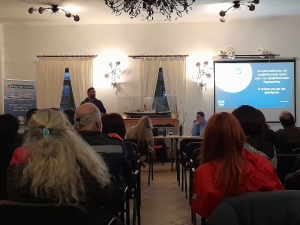
In the context of the Attica Group Corporate Responsibility programme “Sailing Together” which focuses on sustainable development and raises climate change awareness in local communities, BLUE STAR FERRIES organized a conference on “Climate Change & Today’s Challenges” which took place on 3rd December 2022 in Amorgos island. The event was implemented in collaboration with the environmental organization AEGEAN REBREATH and the support of the Municipality of Amorgos and was held in the Cultural Center Agios Georgios, in Katapola.
The conference was addressed to the island community, with an open invitation to those willing to take part. The general framework of emerging environmental challenges and the impact of marine pollution on health, society and the economy, as well as the new lifestyle we have to adopt individually within the context of our responsibility towards the environment were among the topics discussed. Further, the need for a new approach to environmental protection was highlighted, with the introduction of the term Environmental Democracy, in an effort to describe the need for citizens to become actively involved in decision making when it comes to environmental issues. At the end of the conference, an open discussion with the locals took place, focusing on specific environmental issues of Amorgos and solutions to be adopted. Thirty-eight residents of Amorgos attended the conference, the Mayor of Amorgos, E. Karaiskos included.
Aegean Rebreath is an internationally recognised environmental organisation, active in the protection of the marine environment, with research and educational activity, implementing coastal and marine clean-up actions, and innovative environmental projects. The organisation has developed the first network of ‘Blue Cities’ in Greece and in Europe, as well as the first network of marine litter collection stations in Greece.
Attica Group is engaged in passenger shipping through SUPERFAST FERRIES, BLUE STAR FERRIES, HELLENIC SEAWAYS and AFRICA MOROCCO LINK, operating 35 vessels providing modern, high-quality transportation services in Greece and abroad. Attica’s vessels serve 60 unique destinations in 4 countries, connecting 74 ports and transporting more than 7 million passengers, 1 million passenger vehicles and 400,000 trucks every year.
ELNAVI Newsletter
More information: ELNAVI,
19, Aristidou str., Piraeus 185 31,
Tel.: +30 210 45.22.100, e-mail: This email address is being protected from spambots. You need JavaScript enabled to view it.
Swedish Club Managing Director Lars Rhodin bows out
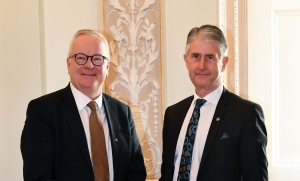
Lars Rhodin, Managing Director of The Swedish Club, has completed a programme of visits to shipping clusters around the world as he bid farewell to members and business partners prior to his retirement as head of The Swedish Club.
He visited local offices in London and Piraeus and met Swedish shipowners in Gothenburg and Donsö before attending staff events at the Club’s head office in Gothenburg.
Lars first joined The Swedish Club in 1986 and has spent 15 years at the helm. During that time, he spearheaded a period of considerable growth for the Club, successfully steering it through challenges and overseeing the opening of three new offices in Oslo, London and, the latest, in Singapore.
Speaking at the board meeting held in London on 8 December, Lennart Simonsson, Chairman of the Club, extended his warmest wishes to Lars and thanked him for his commitment and leadership.
In response Lars thanked his team, Club members and the shipping community for making his time at The Swedish Club very special. “Since I joined the Club in 1986, I have been part of a family,” he said. “The shipping industry is unique and It’s an exciting business, but also very much a people business - so, when you ask me what I am going to miss, of course it will be the people.”
Thomas Nordberg, who will be taking the reins from Lars on January 1st said: “I am thrilled at having the opportunity to step into Lars’ shoes and will do my outmost to contribute further to what has been successfully built during his strong leadership.”
Lars Rhodin said: “We are a part of an exciting industry where knowledge and experience are vital. Thomas Nordberg has the right background to fit the role. I am convinced the Club will continue to prosper under his leadership.”
image:Past and present: (left to right) Thomas Nordberg and Lars Rhodin.
ELNAVI Newsletter
More information: ELNAVI,
19, Aristidou str., Piraeus 185 31,
Tel.: +30 210 45.22.100, e-mail: This email address is being protected from spambots. You need JavaScript enabled to view it.