


-
Home

-
About Elnavi
- elnavi

elnavi
Investors in middle aged dry bulk tonnage may be cheered by the impact of sustained higher recycled steel values, according to research commissioned by the Baltic Exchange.
Analysis of the dry bulk carrier values undertaken by consultancy Zuoz Industrial looks at the potential impact of longer-term higher ship recycling values on five year old tonnage. With recycled steel an increasingly popular choice, thanks to its lower carbon footprint when compared with virgin steel, the paper discusses whether higher steel recycle values are a longer-term trend. Although down 20% since its April 2022 high, the price of lightweight steel is ~$520/ldt and more than double the historic average since 2009.
“Should the current multi-year higher cycle value turn out to be a fundamental risk trend supported by some of the evolving demand factors, the fundamental risk of investing middle aged dry bulk tonnage, particularly in softer freight markets, will have decreased,” says report author Urs Dür.
The Baltic Exchange publishes a set of investor indices for the major dry bulk sectors which includes the Baltic Residual Risk Index, a ratio of the residual value of the vessel against its recycling value, and the Baltic Residual Value Index, which calculates the value by taking the written down cost of a five year old vessel by fixing the earnings on the basis of a five year timecharter and adding back the operating costs.
The Baltic Exchange Investor Indices (BII) are an easy to use online analytical dashboard displaying data relevant to vessel investment decisions, residual value, health of earnings, spot and five-year timecharter earnings, purchase & recycling values, and running costs.
They offer a high level of clarity and transparency for investors in capesize, panamax, supramax and handysize vessel types.
Tanker and gas carrier assets will also be added to the service at a later date.
Subscribers to the Baltic Exchange Investor Indices are offered a health of earnings index which compares spot income with daily running costs; a residual value index which provides an implied write-down value of the vessel over five years; and an implied residual risk assessment which gives the recycling steel value of the vessel as a ratio of its residual value.
Click here to download a full copy of the report.
About Baltic Exchange:
The Baltic Exchange is the world’s only independent source of maritime market information for the trading and settlement of physical and derivative contracts. Its international community of over 600 members encompasses the majority of world shipping interests and commits to a code of business conduct overseen by the Baltic.
Baltic Exchange members are responsible for a large proportion of all dry cargo and tanker fixtures as well as the sale and purchase of merchant vessels.
In November 2016, the Baltic Exchange was acquired by Singapore Exchange (“SGX”), bringing together complementary strengths of Singapore and London, two of the world’s most important maritime centres.
ELNAVI Newsletter
More information: ELNAVI,
19, Aristidou str., Piraeus 185 31,
Tel.: +30 210 45.22.100, e-mail: This email address is being protected from spambots. You need JavaScript enabled to view it.
The first Dual Fuel VLCC “Antonis I. Angelicoussis” added to Maran Tankers Management fleet
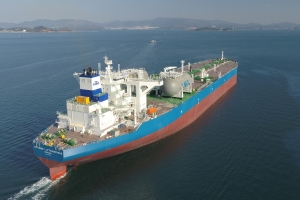
Maran Tankers Management recently welcomed its first Dual Fuel VLCC, Antonis I. Angelicoussis, to its fleet.
The vessel was delivered on 3 January 2023 by Samsung Heavy Industries (SHI) and was named in honour of the founder of our Group, Antonis I. Angelicoussis (1918-1989).
She has a cargo capacity of 320,500 DWT and was designed to be both highly efficient and environmentally friendly - in fact she will be the most environmentally friendly low-emission VLCC on the water today!
We wish her fair winds and following seas and thank the entire MTM team onboard and ashore for the successful design, construction and delivery of this vessel!
ELNAVI Newsletter
More information: ELNAVI,
19, Aristidou str., Piraeus 185 31,
Tel.: +30 210 45.22.100, e-mail: This email address is being protected from spambots. You need JavaScript enabled to view it.
MARTECMA focuses on CII and EEXI compliance
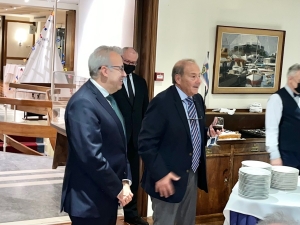
The latest regulatory, environmental and technical developments were discussed recently at the meeting of MARTECMA. The meeting was held in the Yacht Club of Greece and it was followed by the New Year’s pitta cutting and annual dinner.
The president of MARTECMA Mr. Panos Kourkountis opened the agenda of the meeting and referred to the changes of the association’s articles. The upgrade of MARTECMA website was presented by Takis Koutris of Ronaxa Shipping and ex-president of MARTECMA.
Mr. Fotis Belexis from Starbulk Shipmanagement referred to EEXI compliance and Stavros Hatzigrigoris from Zodiac presented the communication between MARTECMA and IACS.
A panel of prominent shipping senior executives, George Saroglou from Tsakos Columbia Shipmanagement, Bill Stamatopoulos from Verifuel and Angeliki Kalini from Richards Hogg Lindley discussed the issue of poor quality bunkers and engines damage.
Regarding the various bunker claims it was mentioned the importance of sampling and testing. It was also pointed out that the shipowners must act proactively including the appropriate clauses in the charter party and Hull & Machinery contract as well as the proper notifications and communication with the charterers.
In the final session Mr. Kostis Antonopoulos from Rightship presented the new Rightship GHG (Greenhouse Gas) rating. He informed the members of the changes in light of EEXI and CII requirements comparing similar ships and providing an industry benchmark.
Finally, during the dinner the Board of MARTECMA honored Mr. Dean Tseretopoulos who was one of the founders of MARTECMA.
ELNAVI Newsletter
More information: ELNAVI,
19, Aristidou str., Piraeus 185 31,
Tel.: +30 210 45.22.100, e-mail: This email address is being protected from spambots. You need JavaScript enabled to view it.
Leading global communication service provider, Tototheo Maritime ™, has added Starlink’s new low latency high speed connectivity to its portfolio of services.
The agreement between Tototheo and Starlink was finalized in December 2022 and the well-known maritime technology solutions integrator, will commence deployment of the Starlink Kits within January 2023.
The addition of the Starlink LEO service to its portfolio, makes Tototheo one of the few maritime technology providers, offering a full range of competitive and reliable connectivity options as well as multiple integrated solutions to maritime, offshore and enterprise (land) clients.
Tototheo customers will have the maximum flexibility of selecting the configuration that best suits their needs by integrating the Starlink Service (LEO) with Inmarsat GX (Ka-Band & L-Band), TM Flex (Ku-Band), Iridium (L-Band), LTE (3G/4G) and terrestrial connectivity solutions.
SpaceX, has launched a huge constellation of low earth orbit (LEO) satellites to provide high-speed, low-latency connectivity with speeds of up to 350Mbps.
“This marks a new era for maritime connectivity”, said Tototheo co-CEO, Despina Panayiotou Theodosiou. “With a fast-expanding coverage area, the speeds Starlink offers will enable a leap forward in the integration of more effective and sustainable technologies in maritime”, she added.
“We have always looked ahead and believed that the future of maritime technology lies in synergies and integrated solutions. We look to the addition of Starlink to our range of services as a further step towards enhancing the reliability and flexibility of choice when it comes to onboard connectivity”, said Ms. Panayiotou Theodosiou.
Socrates Theodosiou, co-CEO of Tototheo Maritime added that “Tototheo, is uniquely positioned to help its customers meet their efficiency, regulatory and operational needs. Tototheo allows the integration and optimization of a hybrid solution and data handling offered by utilizing the SD-WAN and SD-LAN solutions, combined with TM SOC (Security Operation Center) keeping customers’ infrastructure and operations secure 24/7.”
This is a game changer and a complete solution for all customers who value reliability, speed, low latency, and security of their data links onboard their vessels or shore infrastructures.
ELNAVI Newsletter
More information: ELNAVI,
19, Aristidou str., Piraeus 185 31,
Tel.: +30 210 45.22.100, e-mail: This email address is being protected from spambots. You need JavaScript enabled to view it.

Reporting relevant ESG data to stakeholders is a time-consuming and challenging task for many shipping companies these days.
DNV expert Carl Erik Høy-Petersen provides insights on how an ESG process looks for a maritime company, talks about typical ESG risks and opportunities and how to make sure that you report the relevant KPIs to stakeholders. He also touches on how to avoid overburdening crew and shore personnel when collecting and reporting all the necessary data.
Carl Erik Høy-Petersen is a business development leader and responsible for the ESG and sustainability service line in DNV Maritime. Since he joined DNV in 2006, he has worked with advanced decision support, project management and quantitative and qualitative risk management for clients in the maritime, finance, energy, oil and gas, and public sectors. He has worked across the value chain perspective combining technology, operation, business and finance. He is applying this perspective in his responsibilities for ESG and sustainable finance services in DNV Maritime.
Why should ship operators bring ESG to life in their companies?
ESG is not only about compliance. It is very much about creating trust in your stakeholders. As shipping companies, we are an important part of the value chain for our stakeholders. Particularly for cargo owners and charters. They need our help to reach their ESG targets, and they need us to control and report on our ESG performance. In addition, regulators, banks, insurers and investors are focusing more and more on managing ESG risks, forcing the maritime industry to show that we have control of our ESG risk exposure.
What are the biggest ESG risks and are there also opportunities?
Understanding how your company will be impacted by stakeholder expectations and future regulation is essential to manage ESG risks. The increasingly stricter environmental regulations constitute a major risk for shipping stakeholders. Building a robust and trustworthy energy efficiency and decarbonization pathway is essential to reduce risk related to CO2 tax and rising fuel costs. Other environmental aspects like underwater noise may lead to regional operational restrictions in the future. Increasing technical complexity, new regulation and new fuels all increase operational risk. Operational resilience is closely linked to crew competence and well-being. Increases in crew training, and health and safety are essential in managing this risk. The important role of the crew is also highlighted in the DNV report on behalf of the UN Global Compact – ‘Insights into seafarer training and skills needed to support a decarbonized shipping industry’. Stakeholders are increasing their scrutiny on the shipping value chain, e.g. with respect to ethical business practice. This exposes the company to new risks. Supplier and value-chain due diligence is key to managing this risk. All ESG risks can be turned into opportunities. In some regions, there is a surge in climate litigation, targeting companies accused of greenwashing or not mitigating their climate impact. Having a robust ESG strategy and executing it is essential.
What would a typical ESG process look like for a maritime company?
The key is to take ownership of the ESG process and understand your company’s ESG risk exposure. There is currently no global standard for ESG reporting. However, some standards are established as the basis for ESG reporting in shipping. SASB (Sustainability Accounting Standards Board), for example, highlights material topics specifically for shipping. However, we have seen that SASB does not fully meet the expectations from shipping stakeholders. Dialogues with stakeholders and an ESG materiality assessment help to fully develop that understanding. The focus questions to be elaborated are: What is important for your company and why? Once you know this, you can identify what is already managed in your existing processes and corporate culture and what adjustments or additional measures you need to establish. Then existing processes need to be mapped into the ESG context and determine what KPIs are relevant to show to the important ESG stakeholders.
When starting with ESG, does it need to be from scratch or do standards already exist that vessels need to comply with and can refer to?
Shipping is a heavily regulated industry. We have DCS and MRV reporting, we have SEEMP III plans, we have BWMC, MLC, safety management procedures and many more. This is an advantage when it comes to managing ESG risks. We are already working on or have implemented processes and KPIs within several ESG-related aspects. The challenge is to link existing processes, performance and KPIs into an ESG context that shows how the processes help to manage identified ESG risk exposures. In many cases, this may require some adjustments to existing processes and procedures, but you do not need to start from scratch. DNV can support to make the adjustments as efficient as possible. IMO compliance regulations like BWMC, DCS/MRV, SEEMP III and CII contribute to the E, but also think of what actions already contribute to the social aspect (S) and how to best monitor them (G).
Where do I get my data from and who can support? Do I need to have all the data in place for the first ESG reporting?
Through our dialogue with shipowners, we learned that data collection stands out as a common pain point. The necessary data is typically collected through one or many manual steps, creating an additional burden for crew and shore personnel. This also increases the risk of data errors. DNV supports customers to find efficient solutions and already delivered ESG dashboard solutions for large fleets of vessels, automating the process of gathering and visualizing ESG performance indicators. If you identify an area where no data is available, you can map out how you plan to improve and gradually implement this. I believe that standardization of data is an essential ingredient in ESG reporting. Standardization increases efficiency and accuracy within the entire data value chain, e.g. through ISO 19847/48 and operational vessel data.
What role does data trust play in ESG reporting and how can I prove trusted data?
ESG performance data is becoming part of the financial and commercial processes in shipping. This puts additional requirements on the accuracy and trust in the data. Going forward, errors in the reported data can have negative financial and commercial implications. Data trust is important and verification of the most important ESG KPIs is becoming increasingly important. We see that more cargo owners and charterers require third-party verification, e.g. of voyage emissions for their cargo as this goes into their greenhouse gas reporting on Scope 3 emissions.
Can I also use the data for other reporting?
To avoid overburdening crew and shore personnel, data should be collected once and used multiple times for various stakeholders. The most obvious example is greenhouse gas emissions from vessels. Collecting and verifying vessel emission data on a daily basis creates the foundation for multiple stakeholder reporting including: Cargo owners: Sea Cargo Charter; contract performance (ref new BIMCO ETS and CII clause) - IMO DCS/CII performance - EU ETS and MRV plus other MRV reporting schemes (e.g. UK MRV) - Poseidon for insurance and bank stakeholders. However, in the coming years, sustainability reporting regulations like the EU’s Corporate Sustainability Reporting Directive (CSRD) will require more structured sustainability reporting. The upcoming SEEMP III requirements also show how you are managing decarbonization risks. By putting a little extra effort into elaborating the energy efficiency management plan, preferably also looking beyond the required three years ahead, you will build trust in stakeholders such as cargo owners, shareholders, investors and banks. They want to understand how the company is prepared for the future. This can be a competitive advantage going forward.
How can a continuous and smooth ESG process be implemented within a company?
Through the materiality assessment, you will identify what is most important for you as a company. Your pathway then starts by addressing the most important findings first and gradually improving your reporting. If you don’t take ownership of your ESG reporting, you may find yourself forced to spend a lot of time and money on collecting and correcting data that turns out to be irrelevant for shipping. Working with experienced partners to gradually implement, improve and streamline the data collection process saves time and, ultimately, also money. In this process, digitalization will be an essential source of support. ESG is about people, operational processes and technology. You can have very good assets, but if they are not operated properly, they may still perform badly. In shipping, DNV has worked with safety and safety culture for many years, which forms a key part for the social element but also includes the environment and governance perspective. We are working closely with many shipping stakeholders, vessel owners, operators, cargo owners, banks and insurers on ESG-related topics to help shipping companies and their stakeholders bring ESG to life.
ELNAVI Newsletter
More information: ELNAVI,
19, Aristidou str., Piraeus 185 31,
Tel.: +30 210 45.22.100, e-mail: This email address is being protected from spambots. You need JavaScript enabled to view it.
In line with The Bahamas Maritime Authority’s (BMA) commitment to consistently high standards and exceptional service has developed a comprehensive online reporting portal for use by managers and owners which has now been launched.
The BMA’s online reporting portal is the first of its type to be employed in the maritime sector and has been developed to simplify the process for its clients, acting as a one-stop shop. Replacing the nine forms that might currently be used to report anything from a serious marine casualty to a birth at sea, the portal meets all the reporting requirements of the Merchant Shipping Act and other national and international requirements. The main benefit of the new system is efficiency, with all relevant information being captured at the same time, reducing duplication of effort completing multiple forms. Equally important will be that the collected data can be more effectively analysed for trends within The Bahamas fleet.
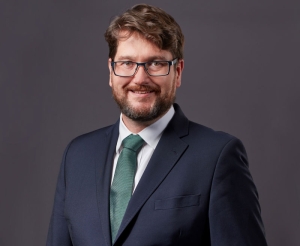
Nick Dowden, Assistant Director and Marine Investigator in The BMA’s Investigations Department, explained how clients will benefit from the new system: “Currently it can be quite a laborious exercise to report an incident, perhaps requiring the completion of three or four different forms. By digitalising the process the system itself will handle any duplications of information needed and will also lead the user through the stages of reporting - asking only for relevant details and flagging any supporting material that is needed.
“In terms of data collection and analysis, it will make it much easier for us to identify trends across our fleet so that clients can benefit from each other’s experiences. This will be particularly helpful to managers and owners who have only one or two vessels operating and so wouldn’t have the benefit of seeing the wider trends in the industry.”
The new portal, which initially will run concurrently with the paper system, has been specifically designed to work even in the event of the ship’s connectivity being lost. Any report that is submitted whilst offline – even if that loss occurs midway through the reporting process - will be stored in the client’s computer cache and will synchronise with The BMA server once the connection to the internet is restored.
The new reporting tool is just one of a number of initiatives that The BMA has been introducing recently to enhance its online services and digital offering to its customers.
Image: Nick Dowden, Assistant Director and Marine Investigator in The BMA’s Investigations Department
ELNAVI Newsletter
More information: ELNAVI,
19, Aristidou str., Piraeus 185 31,
Tel.: +30 210 45.22.100, e-mail: This email address is being protected from spambots. You need JavaScript enabled to view it.
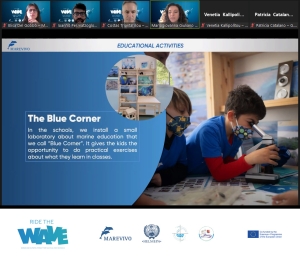
In November 2022, experts from Greece and Italy, as well as other EU countries and Canada, joined a webinar series to share inspiring environmental education initiatives from the Mediterranean region, North America and the Arctic as part of the “Ride the Wave” Erasmus+ project.
Case studies in ocean literacy and environmental education were presented and practical knowledge was exchanged between experts on the global communication of ocean science and its role in promoting ocean literacy, links between marine science and Blue Economy sectors, such as tourism, the value of Marine Protected Areas on the preservation of biodiversity as well as the role of NGOs and other organizations in promoting environmental education among the general public.
The webinars were organized by the Hellenic Marine Environment Protection Association (HELMEPA), MAREVIVO, and two Nautical High Schools, "G. Da Verrazzano” in Porto Santo Stefano, Italy and the 1st Vocational High School of Konistres in Evia, Greece and hosted more than 100 participants attending as well as expert organizations such as Acquario Mediterraneo dell’ Argentario, Cooperativa Ziguele, G.Eco, Hellenic Center for Marine Research (HCMR), Hydrographic Institute of the Italian Navy, International Ocean Institute (IOI) – Canada, MIO-ECSDE/MEdIES, and the Tsakos Enhanced Education Nautical School (T.E.E.N.S).
Participants and other stakeholders active in the protection of the sea and environmental education will continue to cooperate through the development of a “Local Sea Network” of organizations, which are directly or indirectly supporting the blue Economy Sector. The aim of the network is the exchange of good educational practices that could be adapted locally in different geographical and cultural contexts, and the development of common initiatives and integrated actions towards protection and conservation of our seas. The first step will be the development of a tailor-made educational program for Nautical High Schools, which will be tested as a pilot in Spring 2023 in both Italy and Greece, accompanied by a replicability toolkit to support non-expert educators.
Note to editors: “RIDE THE WAVE” – Ocean and Climate Literacy for Nautical High Schools project is funded by the European Erasmus+ Program 2021-2027- KA210-SCH-000049369. For more information, please visit the official website and Facebook page of the project.
ELNAVI Newsletter
More information: ELNAVI,
19, Aristidou str., Piraeus 185 31,
Tel.: +30 210 45.22.100, e-mail: This email address is being protected from spambots. You need JavaScript enabled to view it.
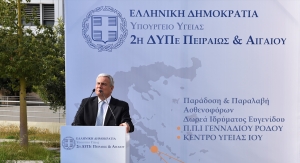
The Eugenides Foundation donated two small ambulances to Ios and Rhodes and the Minister of Health Thanos Pleuris and the Deputy Minister of Health Mina Gaga attended the delivery ceremony to the 2nd DYPE.
This is a donation of two small ambulances in the amount of 117,120 euros to strengthen the Health Center of Ios and the Health Center in Genadi of Rhodes.
The event was attended by the President of the Foundation, Leonidas Dimitriadis Eugenides and the Governor of the Foundation, former Rector of the National Technical University of Athens, Ioannis Goliasthe commander of the 2nd DIPE Christos Roilos the deputies of Cyclades Philip Fortomas and Yannis Vroutsis and the mayors of Ios Gikas Gikas and the mayor of Rhodes Antonis Kambourakis.
The President of the Foundation, Leonidas Dimitriadis Evgenidis, speaking at the event, said that “we feel that our donation is an obligation we have towards Greek society. The Eugenides Foundation, while its main purpose of operation and action is technical, scientific and professional education, has always been present when there were serious difficulties and crises in our homeland.
Such as the silent and large contribution of Evgenios Eugenides to the earthquakes of Zakynthos, or the donation of 3,000,000 dollars by Nikolaos Vernikos – Eugenides to the earthquakes of 1999. With the outbreak of the pandemic, we have directly and indirectly donated more than 1.5 million euros to actions.
But we didn’t stop there. We considered it our duty to offer to Public Health as well, with a program of targeted donations to Sotiria, Attikon and Children’s hospitals and beyond. We estimated that especially at these times our islands should be strengthened and insularity should be supported.
I am an islander, I am Cycladic and I know very well the problems our islands face. The donation of an ambulance to Ios is the result of our excellent cooperation with the Health Center of Ios, an island where during the summer months its population doubles. At the same time, the decisive contribution of the commander of the 2nd DYPE of Piraeus and Aegean, Mr. Christos Roilos, where he pointed out the huge shortage of ambulances in Southern Rhodes, makes us feel that this donation has a great impact. We are sure that these actions will take place, in a holistic way”.
For his part, the Minister of Health Thanos Pleuris said: “This offer is important for our islands and we thank you for the donation of the two ambulances.
With initiatives that we voted in the previous period, we give incentives mainly in the summer months to have more staff in order to cover the needs.
There is also the particularity of medical technological equipment where we have committed resources from the Recovery Fund and from other financial tools such as the NSRF.
I want to thank Mr. Eugenides because the money given from donations is money that goes back to society.
They are donations that we have complete dependence on the patient’s transport. We are working on a broader framework to have a proper air transportation system from our islands with more helicopters and stations that we will present soon.”
The Deputy Minister of Health Mina Gaga pointed out: “The Eugenidou Foundation offered and continues to offer health services, without even being asked. In Health, in the pandemic, in “Salvation” Leonidas Eugenidis offered himself during the corona virus period and made very large donations, just like in Attiko and many hospitals.
Now about the islands: Greece has this great gift of God, the islands and the issue is how we make sure we have good health services and health personnel.
At the Ministry, we have taken important initiatives these years.
We take care, cooperating with everyone, with the Municipalities and with the hoteliers, for the accommodation of the health workers, whenever they need to move.
We enable doctors, nurses and technologists, by doubling their salary, to go to the islands in the summer to provide health services. And we can do the same with ambulances, giving more flexibility to the National Health System, to cover the population both in winter and in summer when we have more needs.
We consider the safe handling of both chronic and Emergencies as well as safe transports to each place, so that every citizen has the health services they need, as capital issues.
ELNAVI Newsletter
More information: ELNAVI,
19, Aristidou str., Piraeus 185 31,
Tel.: +30 210 45.22.100, e-mail: This email address is being protected from spambots. You need JavaScript enabled to view it.
Dorian LPG Ltd. agreed with the Maersk Mc-Kinney Moller Center for Zero Carbon Shipping
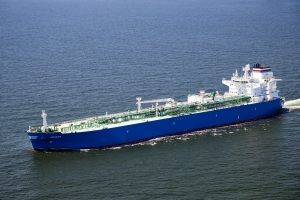
The NYSE listed company Dorian LPG Ltd. one of the world's largest owners and operators of modern and ECO very large gas carriers ("VLGCs"), has signed a Partner Agreement with the Mærsk Mc-Kinney Møller Center for Zero Carbon Shipping (the "Center"), formalizing Dorian LPG as a Mission Ambassador to the independent not-for-profit research and development center. As one of the leading VLGC owners and operators with in-house technical and commercial management, Dorian LPG will share with the Center its experience and capabilities that are relevant to decarbonization projects.
John Hadjipateras, Chairman and CEO of Dorian LPG said: "To meet and exceed the industry' decarbonization targets there is an essential need for research and development collaboration amongst shipping and logistics organizations. We believe that the Center is performing a very important service to the industry and are happy to contribute Dorian expertise from Copenhagen, Athens, and the U.S. to help facilitate some of their important work.
ELNAVI Newsletter
More information: ELNAVI,
19, Aristidou str., Piraeus 185 31,
Tel.: +30 210 45.22.100, e-mail: This email address is being protected from spambots. You need JavaScript enabled to view it.
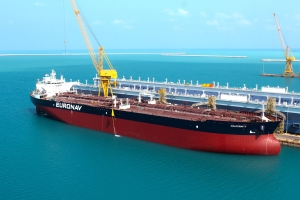
The NYSE listed shipping company Euronav NV and Frontline plc has unilaterally decided to terminate the combination agreement between the two companies signed 10 July 2022 and confirm to have received a letter pursuing such termination.
Euronav will examine such letter and reserves all rights and actions in this respect. Regardless of the combination taking place, the supportive and sustainable fundamental factors of the tanker markets have started to deliver (during Q3 and Q4 2022) what Euronav and most sector commentators believe will be a prolonged upcycle. Such favourable conditions coupled to Euronav’s strong balance sheet, best-in-class operating system with the most developed sustainability platform in the sector positions our company well for the future.
ELNAVI Newsletter
More information: ELNAVI,
19, Aristidou str., Piraeus 185 31,
Tel.: +30 210 45.22.100, e-mail: This email address is being protected from spambots. You need JavaScript enabled to view it.