



-
Home

-
Special Reports 2023
- elnavi

elnavi
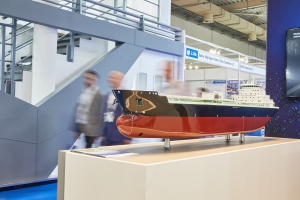
Over 85 shipyards from 26 countries already confirmed to showcase vessel design and production innovations from June 3-7
Greece’s revitalised shipbuilding industry will be prominently represented during Posidonia 2024, signalling a strong recovery following decades of decline and disrepair. The sector’s Greek renaissance is on the cards after the completion of the consolidation of the country’s shipbuilding units in Syros and in Elefsina, and also due to the restart of Skaramangas shipyard and the increased activity in Halkida.
Neorion Shipyard in Syros and Elefsis Shipyard have repaired over 500 ships, foreign and Greek-owned, since the New York-based ONEX Shipyards and Technologies group took over their operations in 2019. Combined with further domestic output from other ship repair and shipbuilding operations, Greece is now seen as an important contributor to European shipyards’ annual production value of around €43 billion, which comprises a collective civil and naval orderbook value that surpasses that of their Asian counterparts.
"Greece is resurfacing as a credible shipbuilding cluster for vessel repair, conversion and potentially for the construction of newbuildings for Greek and international shipowners and naval forces. This revival follows decades of underperformance and underinvestment, marked by the absence of a strategic vision," said Theodore Vokos, Managing Director, Posidonia Exhibitions S.A., the organiser of the world’s most prestigious shipping exhibition.
Through a slate of strategic partnerships and multimillion investments, Greek shipyard operators and the Greek government are making a statement of their long-term commitment to a sector estimated to currently account for 1% of the nation’s GDP. The sector’s revival will further strengthen both the country’s economy and security. Partnerships will amongst others include naval projects, as the Greek government discusses with the US the joint design and co-production of the new generation of Constellation frigates, while increased activity in the shipyards will empower and support Greek maritime equipment manufacturers, further enhancing Greece’s contribution to Europe’s 50% market share and global dominance in marine equipment manufacture and supply.
Ahead of Skaramangas Shipyards’ comeback to the Posidonia Exhibition, recently appointed Chairman Miltiadis Varvitsiotis has stated his lofty ambitions to transform the facility into a multi-million contract-winning operation capable of capturing a share of the action. He said: “Since 2010, the shipyard was exclusively involved in the repair, maintenance, and upgrade of the Hellenic Navy’s fleet. Now, with new ownership and management, we are ready to present our world-class infrastructure and state-of-the-art equipment for heavy and specialised repairs. We are going to promote our future plans and explore the possibilities of undertaking important and sophisticated new building projects.”
The company intends to make full use of the existing infrastructure comprising some of the largest drydocks in the Mediterranean, capable of drydocking VLCC, LNG carriers and aircraft carriers. Skaramangas has been investing in the gradual upgrading of facilities, strengthening fire safety and firefighting systems, and re-operating a large tank that has been inactive for about 20 years.
In general, Greek shipyards are investing in areas designed to improve their competitiveness and attractiveness, mainly to Greek shipowners who currently contribute 80% of Greek ship repair and new build activity. The ONEX group's business plan includes investments worth $550m for the shipyards with the goal of boosting repair operations to 300 vessels per year. Panos Xenokostas, President & CEO, ONEX, said: “Our goal is to transform the historic shipyards into a modern maritime hub for the greater Mediterranean region. We aspire for both Elefsis and Syros Shipyards to become the first choice of those seeking quality, speed, and personalised service, while adhering to relevant security protocols and always taking into consideration the transition to a sustainable maritime model.”
ONEX aims to transform its shipyards into a hub supporting commercial shipping horizontally, energy transition, defense platforms, and industrial solutions, leading the entire industrial ecosystem of the region and strengthening both the economy and the geopolitical position of Greece.
At the same time, Chalkis Shipyard is investing in the installation of photovoltaic systems to power shipyard needs and those of vessels either berthed or docked at its facilities and is proceeding with infrastructure works for newbuilding capabilities of specialised vessels up to 100m in length. Its goal is to expand operational capabilities to about 240 vessels annually, serve ships of larger capacity, and build small ships with new technology. “In addition, we have trained our personnel and keep investing in a skilled workforce who can install green energy systems like scrubbers and new technology propulsion systems on vessels. In the last years we have completed the installation of scrubbers in a number of vessels,” said Ashraf Bayoumi, CEO, Chalkis Shipyards, which is preparing for its eight Posidonia Exhibition participation.
Furthermore, private and institutional investors are seeing the opportunity presented by Greece’s geographic location, maritime heritage, commitment of the Greek ship owning community, and political will to fund the sector. The recent acquisition of Skaramangas’ by shipowner George Prokopiou and the US International Development Finance Corporation’s $125m loan to Elefsis Shipyards and Industries (ONEX) demonstrate strong investor interest in the Greek shipbuilding sector.
As advancements in maritime technologies gather pace, Greek shipyards have an opportunity to adopt and seamlessly integrate new Artificial Intelligence, Green Energy and Automation Innovations across their operational capabilities to introduce efficiencies, further improve productivity, enhance appeal, and strengthen their orderbooks.
Chalkis Shipyards is already applying new technologies and using digitalisation in programmes related to design for repairs, new constructions, and Customer Relations Management (CRM) platforms. It is implementing 3D model programmes with the relevant equipment in which it is investing, while seeking new ways to introduce AI across the business to optimise operations and automate tasks.
Skaramangas is involved in emission-reducing technologies and scrubber installation, while exploring potential synergies for the development of new ship designs incorporating the new generation of green fuels.
“A strong shipbuilding sector creates the conditions for upgrading national defence, contributes decisively to the national economy and the green transition and strengthens Greece's position in the regional geopolitical arena through the implementation of major projects with international significance,” said Xenokostas.
Over 85 shipyards from 26 countries have already confirmed their participation in Posidonia 2024, which will take place from June 3-7 at the Athens Metropolitan Expo.
Posidonia 2024 is organised under the auspices of the Ministry of Maritime Affairs & Insular Policy, the Hellenic Chamber of Shipping, and the Union of Greek Shipowners, and with the support of the Municipality of Piraeus and the Greek Shipping Co-operation Committee.
ELNAVI Newsletter
More Information: ELNAVI,
19, Aristidou str., Piraeus 185 31,
Tel.: +30 210 45.22.100, e-mail: This email address is being protected from spambots. You need JavaScript enabled to view it.
Vafias Group’s three listed companies recorded excellent profits for 2023 and the group expands to dry cargo sector
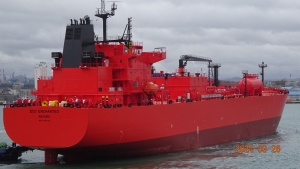
With total Revenues $360m, total assets $1.2bn και total profits $135m the three listed companies of Vafias Group, StealthGas, Imperial Petroleum & 3Cis recorded a dynamic activity during 2023.
Also, the group unstoppable continues with the purchases of dry cargo vessels and announces 2 more supramaxes purchased last month, the “AULAC VANGUARD” and the “AMIRA MIRO”, both of Japanese construction built in 2012.
In the last year, the group has bought 17 dry cargo ships and in particular eight capes, two kamsarmax, three handies and four supramax.
The most impressive fact is that all vessels are Japanese-built as the group has left China since 2010 when it built four aframaxes at New Times and one capesize at SWS.
Also, it must be reminded that of the five shipping companies in the group, four are without bank loans, while StealthGas has only 15% debt.
The group still has two newbuildings 11,000cbm VCM carriers each to take delivery from Japan in 2025 and 2026. While it has just taken delivery of the last of five 40,000cbm Ammonia carriers from Hyundai in Korea named “ECO ENCHANTED”.
Also, Vafias group supports the effort to revive the Greek shipbuilding industry and announces that it has already done more than twenty ship dockings in Chalkida and another three at ONEX in Syros.
After the last purchases the total tonnage of the group approaches 6m dwt.
ELNAVI Newsletter
More Information: ELNAVI,
19, Aristidou str., Piraeus 185 31,
Tel.: +30 210 45.22.100, e-mail: This email address is being protected from spambots. You need JavaScript enabled to view it.
50 Years of TRANSMED SHIPPING The shipping company that sailed Cyprus flag all over the world
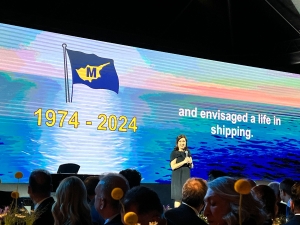
Following the traditional values and principles of Greek shipping, Cypriot shipowner Charalambos Mylonas, with the undivided support of his wife Chariklia, marked a creative and respectable 50-year course in the field of shipping which is today continued successfully by the next generation of Mylonas family.
This important anniversary was recently celebrated at the offices of the Transmed Shipping company in Ekali in the Northern Suburbs of Athens.
The hosts of the touching event Katerina and Nicole Mylonas, daughters of the founder, welcomed with great pride the distinguished guests who had the opportunity to watch an impressive video with the story of the charismatic and dynamic personality of Charalambos Mylonas and his wife who started from scratch building a remarkable shipping group.
The guests, friends and associates also received a luxurious album with the 50-year journey of Transmed, the founder and his wife.
It should be noted that the album was published by ELNAVI under the diligence of co-publisher Theano Kalapotharakou and the collaboration of the graphic designer Maria Kardamenis.
The event was honored by the Bishop Nikolaos of Mesogaia, Father Alexios, the Deputy Minister of Shipping of Cyprus Mrs. Marina Hadjimanolis, the ship owners George Prokopiou and Thanasis Martinos, Panos Laskaridis,
Andreas Hatzigiannis, Dimitris Prokopiou, Nikolaos Vafias, Evangelos Angelakos, Haralambos Fafalios, representatives of registries, class societies, friends, associates, company employees, well known shipowners and shipping personalities.
As Katerina & Nicole Mylonas mentioned in their speeches: “Our parents started their careers as lawyers in the city of Famagusta in 1970 representing the interests of Greek shipping companies and mainly the Martinos family shipping operations. In 1974, after the Turkish invasion of Cyprus, they moved as refugees to Greece, where with the help of many friends from the shipping industry started their own maritime adventure building a credible and well established shipping group that is involved mainly in the field of dry cargo and oil transport.
Excited Charalambos Mylonas in his message to the friends of the company emphasized that: "The road of shipping is not easy. We fought it with courage and determination. I declare that with any means I will not retire being present in the next 50 years of Transmed".
He thanked his wife Hariklia, his daughters Katerina and Nicole, his son-in-law Ilias Angelakos who all have successfully taken over the reins of the business.
He also thanked all the friends and associates who welcomed them in Greece working hard for 50 years with understanding and mutual benefit.
Extensive reference was made to the contribution of Charalambos Mylonas as president of the Cypriot Shipowners' Union where in 1981 a collective agreement was signed with ITF implemented on Cypriot-flagged ships.
Other emblematic milestones of Transmed were the company’s certification with the ISM Code, the first orders of newbuilding vessels in 1996 and the social contribution of Mylonas family which includes the establishment of the Palliative Care Centre "GALILEE" in the area of responsibility of the Holy Metropolis of Mesogaia and Lavreotiki for terminally III cancer and ALS patients, and the construction and restoration of churches in Kastellorizo, Agathonisi and Jerusalem in the Holy Sepulcher.
Looking forward, Transmed will continue to make its way through calm and choppy seas, always guided by its legacy of perseverance, innovation and strive for excellence.
ELNAVI Newsletter
More Information: ELNAVI,
19, Aristidou str., Piraeus 185 31,
Tel.: +30 210 45.22.100, e-mail: This email address is being protected from spambots. You need JavaScript enabled to view it.
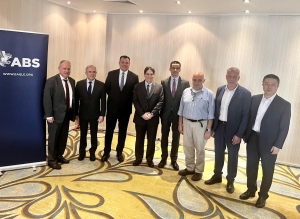
Following the continuous changing shipping landscape the dry bulk sector strives to address the challenges and opportunities that have been created by the new environmental regulations, emerging technologies and the adoption of alternative fuels.
With the aim to help Greek shipping companies in their decarbonization journey and inform them for the latest developments in bulk carrier designs and operation, ABS held its Bulk Carrier Forum in Kavouri of Athens bringing together leaders and experts from the maritime value chain who discussed the energy transition and decarbonization goals that will shape the low-carbon future of bulk carriers and drive market grow.
Elias Kariambas, Vice President of Business Development in Greece of ABS welcomed the guests and presented the agenda of the forum.
Vasileios Gkikas, Director, Business Development, Global Lead on Bulk Carriers, ABS referred to the key factors of the Bulk Carrier segment such as the carbon neutral/ zero alternative fuels, standardized and streamlined designs, operational reliability availability and flexibility, crew awareness, multitude solutions approach, global uniformity vs regional regulations, access to financing, dry bulk owners spread, commodity sensitivity and China’s and India’s economic growth.
Stamatis Fradelos, Vice President of Regulatory Affairs of ABS presented the latest regulatory developments such as the IMO GHG Reduction Strategy. He observed they the shipping industry has become more efficient in terms of energy consumption however the air emissions are increasing because of the favorable market conditions.Mr Fradelos also examined the issues of mid- term measures, lifecycle guidelines of marine fuels, amendments to SEEMP, ECA standards, EU-ETS, FUEL-EU.
The Development of SDARI Bulk Carrier Design 2024 were discussed by Zhang Zhuo, Deputy Director, SDARI.
Bulk Carriers Challenges and Survey Trends were elaborated by Leonidas Noulas, Lead Surveyor of ABS.
A Panel Discussion with Key Stakeholders was conducted by Vasileios Gkikas regarding the Perspective and a Pragmatic Approach.
Panelists included Panos Zachariadis, Technical Director, Atlantic Bulk Carriers, Dimitrios Fafalios, Director, Fafalios Shipping, Nicholas Logan, Asset Deal Originator, Cargill Ocean Transportation and Basil Sakellis, Managing Director, Alassia Newships Management Inc.
Dimitrios Fafalios told that the sector must preserve its operating model and treated as Containerships and LNG Carriers and not fighting each other. He also expressed his concern if a ship that will be built in 2026 will continue to be operating in 15 years from now.
Basil Sakellis pointed out that energy transition is the biggest challenge of shipping as we are called to change the way we operate and maintain our vessels therefore we have to work more closely all together involved in the shipping industry addressing the issue of zero emissions.
Moreover he agreed that Greeks will thrive in the future provided that Europe stops shooting itself and penalizing European shipping.
Panos Zachariadis expressed his optimism about the effectiveness of the vessels’ designs and outlined what fuel looks green today may not look green tomorrow.
Nicholas Logan stated that charterers as Cargill are determined to lead the energy transition by incentivizing shipowners and sharing new ideas with them such as the adoption of renewable energy from wind and solar sources.
ELNAVI Newsletter
More Information: ELNAVI,
19, Aristidou str., Piraeus 185 31,
Tel.: +30 210 45.22.100, e-mail: This email address is being protected from spambots. You need JavaScript enabled to view it.
Green4Sea Athens Decarbonization Forum
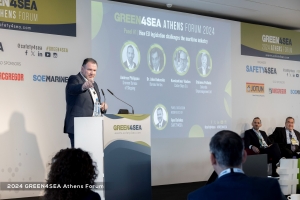
We are experiencing very interesting times in the fields of technological developments and energy transition in shipping therefore it is essential to ensure collaboration to find the appropriate strategies optimal solutions and achieve operational sustainability.
As we enter in a decarbonization era we need to prepare ourselves how to handle new technologies and new fuels. The above messages were sent by the speakers and the managing director of SAFETY4SEA Mr Apostolos Belokas at GREEN4SEA Athens Forum.
The 1st panel of the forum examined the following topics: How EU legislation challenges the maritime industry, The EU ETS scheme: Understanding the regulatory framework
EU MRV: Application & timeline and its relation to the EU ETS, Key requirements of FuelEU and other emissions regulations, Why accurate and transparent reporting matters.
The panel included the following speakers: Andreas Philippou, CEO, Dromon Bureau of Shipping, Dr. John Kokarakis, Technical Director, SEEBA Zone, Bureau Veritas, Konstantinos Vlachos, Chief Technical Operations Officer, Castor Ships S.A., Stylianos Psillakis, Technical Director, Columbia Shipmanagement Ltd.
The 2nd panel addressed the uncertainties in the decarbonization journey, Emerging technologies & innovation, Industry’s needs to facilitate the transition to low-carbon shipping, Long-term goals for decarbonizing the shipping industry.
Panel’s speakers as follows: Nikos Kakalis, Global Bulk Carriers Segment Director, Lloyd’s Register Dr. Harilaos Psaraftis, Professor Emeritus, Technical University of Denmark Dimitris Tsoulos, BLUE CONNECT Sales Director, ERMA FIRST Capt. Konstantinos G. Karavasilis, Regional Director, Loss Prevention, UK P&I Club.
The 3rd panel addressed the issues of safety challenges, Bunkering & latest revision of ISO 8217 standard, assessing availability & readiness, Incentives and regulatory mechanisms for the uptake of alternative fuels. The issues were discussed by Bill Stamatopoulos, Global Business Development Director, VeriFuel, Panos Zachariadis, Technical Director, Atlantic Bulk Carriers Management Ltd, Alexander Prokopakis, Executive Director, IBIA.
Panel #4 examined Best practices for Ship Performance, How to enhance vessel performance, Environmentally friendly sustainable solutions, Focus on modern propulsion schemes, Flexibility and capability towards IMO 2030/2050.
The following speakers commented on the above topics: Tom Evensen, Regional Category Manager Hull Performance, Jotun, Philippos Sfiris, Head of Go-to-Market Strategy and Vessel Performance, GIT Coatings, Philippos Giannakos, Senior Sales Manager, Shipping Solutions, South Europe, Middle East and Africa, NAPA, Mats Nyfors, General Manager, Decarbonization & Cooperation, Wärtsilä.
The 5th panel discussed the Circular economy for sustainable shipping, how to ensure a profitable circular economy within ports, ship recycling challenges and regularoty update, how to modernize waste management in shipping and key consideration for industry’s transition to a circular economy.
Panel speakers were Vincent Favier, CEO, ECOSLOPS S.A., Dr. Konstantinos Galanis, Chairman, International Ship Recycling Association & Georgios Plevrakis, Group CEO, HEC Group.
A focus presentation followed with the theme of the Decarbonization Footpath – We need to be realistic made by John N. Cotzias, Projects & Finance, Xclusiv Shipbrokers.
The Panel #6, The Green Transition from Ship Managers’ perspective was moderated by Apostolos Belokas, Managing Editor, SAFETY4SEA.
The following topics was included: How collaboration supports industry’s green transition, Achieving a just and equitable transition towards net zero, Addressing the human factors: New skills & training methods, Green shipping initiatives for a sustainable future.
Panel speakers were Takis Koutris, Managing Director, Roxana Shipping S.A., George Souravlas, Founder & CEO, Load Line Marine S.A, Basil Sakellis, CEO, Alassia NewShips Management Inc., Dimitris Patrikios, Advisor to the Managing Director, V.Ships Greece Ltd. and John N. Cotzias, Projects & Finance, Xclusiv Shipbrokers.
The speakers noted that we have to be prepared for the unknown. Therefore new ships must be ready to accept retrofit projects. If shipowners wait for the last moment they must be prepared to pay a huge conversion cost.
In particular Mr. Sakellis said that he is proud for his participation in the decarbonization journey.
Imagine that in 30 years we will say to our grandchildren about all these black dirty things the ships used to burn.
Mr. Patrikios also mentioned: “I didn’t see a shipping company to be bankrupt by the regulations. Therefore, I am not afraid of the great cost that the regulations will bring to the operation of our ships”.
Concluding, the speakers agreed that the teamwork and the involvement of all shipping stake holders is essential to find the ways to adapt to the energy transition.
ELNAVI Newsletter
More Information: ELNAVI,
19, Aristidou str., Piraeus 185 31,
Tel.: +30 210 45.22.100, e-mail: This email address is being protected from spambots. You need JavaScript enabled to view it.
Perama Ship Repair Zone Undergoes Upgrade with Acquisition of Additional State-of-the-Art Shipbuilding Cranes
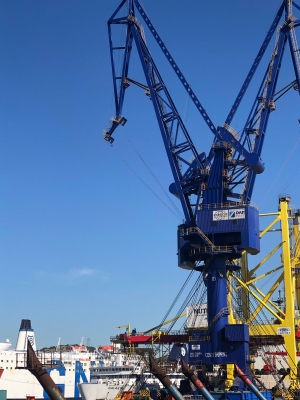
On Friday, April 5th, two cutting-edge double level luffing jib shipbuilding cranes arrived at the Port of Piraeus. They are soon to be unloaded and installed at positions 1 and 2 within the Perama Ship Repair Zone.
Equipped with a lifting capacity of 40 tons each, these state-of-the-art cranes are reshaping service offerings within the ship repair zone. With the capability to accommodate vessels up to 55 meters in height, they mark a new era, ending decades of reliance on mobile cranes in the Perama zone, which previously lacked quayside cranes.
It is noted that the procurement of these specific cranes, with a total value of approximately 8 million euros, is part of the investments that PPA S.A. is implementing for the upgrade and renovation of the Ship Repair Zone equipment, in accordance with the concession agreement with the Greek State.
Following the arrival of the cranes, PPA Chairman Yu Zenggang expressed his satisfaction, highlighting the significant upgrade they represent for the Perama Ship Repair Zone. He emphasized their capacity to accommodate a wider range of vessels, underscoring the strategic importance of PPA S.A.'s ongoing investment efforts. This commitment, he emphasized, solidifies Piraeus as a leading and competitive port in the Mediterranean and Europe, offering comprehensive port services.
Crane unloading, which is implemented according to detailed plans and standards, is scheduled for the coming days, following the completion of all requisite preparatory tasks.
ELNAVI Newsletter
More Information: ELNAVI,
19, Aristidou str., Piraeus 185 31,
Tel.: +30 210 45.22.100, e-mail: This email address is being protected from spambots. You need JavaScript enabled to view it.
ATPI Marine Travel, a leader in the global marine travel sector, has launched a new suite of solutions designed to redefine all aspects of the crew change cycle, across the pre-trip, on-trip and post-trip phases. Called Crew Change Logistics, this unique new initiative is designed to optimise planning and operations with a focus on data and market intelligence, targeted communication functionality and expert-led consultancy services. The aim is to enhance interactions between stakeholders and reduce the impact of pain points while unlocking new crew rotation operational and cost efficiencies.
The Crew Change Logistics portfolio is a testament to ATPI Marine Travel’s commitment to delivering comprehensive and tailored solutions to customers worldwide. “With the launch of this new portfolio, we are taking a significant step forward in transforming crew travel management,” said Nikos Gazelidis, Chief Commercial Officer at ATPI Marine Travel. “Our goal is to expand the value added services we provide and function as an extension of our clients’ crewing teams. This allows us to make crew changes more efficient and cost-effective while supporting the well-being of crew members and promoting environmental sustainability”.
Crew Change Logistics leverages ATPI Marine Travel’s experience as the largest provider of marine travel services globally to address changing operational and economic challenges. Delivering new levels of visibility, grip and control, the new portfolio consists of five key hybrid offerings enabled by digital, data-centric applications and expert human consultants; each designed to optimise specific aspects of crew travel.
ATPI CrewView: Enhancing efficiency and reducing costs ATPI CrewView allows users to dive deep into hidden savings, receive proactive recommendations, and gain ultimate control from pre-trip to post-trip. It brings clarity and insight into the coordination of crew changes and offers unparalleled transparency, helping to optimise crew travel operations and savings by making booking decisions based on data analytics, including peer benchmarking.
ATPI CrewD2D (Door to Deck) A unique solution that streamlines management, notification and communication for both air travel and land-based arrangements at the crew change location. It simplifies all aspects of crew travel billing, with the ability to consolidate invoices from multiple providers to just one invoice per trip and enhances visibility of total crew change cost.
ATPI CrewCare: Prioritising crew well-being
ATPI CrewCare is a holistic solution designed to enhance all aspects of a crew members journey to and from their ship. In association with ISWAN, it takes ATPI Marine Travel’s initiatives beyond logistics to providing comfort and support for seafarers at every step. From route optimization to personalised assistance, ATPI CrewCare unlocks safe, connected, and stress-free travel for all crew members.
ATPI CrewPoint: Streamlining the crew change process
ATPI CrewPoint is an all-in-one solution with a single point of contact for streamlined crew change communication and management. It combines real-time monitoring 24/7, effective communication and targeted notifications to optimise crew changes and reduce admin. It allows all stakeholders to keep track of what is happening and act effectively in the face of changing ETA or ETD information.
ATPI CrewCarbon: A step towards sustainable travel
In response to the increasing need for environmental stewardship in shipping, ATPI CrewCarbon offers data-driven solutions to minimise the carbon footprint of crew traveling to and from their ships. Using the intelligence and expertise of ATPI HALO and established sustainability partners, the service provides essential tools to measure, reduce, and compensate for scope 3 carbon emissions.
“We have a wealth of practical, intelligence-based solutions that individually improve diverse aspects of crew travel management, from apps to track the cost of air travel and the environmental impact when rotating crew at different ports, to communications infrastructure for notifications and alerting during dynamic travel situations. Crew Change Logistics harmonises our capabilities with new data- centric solutions in a simple portfolio that can be easily tailored to any needs,” adds Gazelidis.
ATPI Marine Travel is the international leader in specialist travel solutions to the shipping industry. With deep-rooted expertise in crew rotation supported by 24/7 service and innovative technology, the company positions cost, operational efficiency, safety, and wellbeing at the forefront of its clients’ travel strategies. ATPI Marine Travel was responsible for ¾ million seafarer transactions in 2023 and with a network of offices in all global maritime centres, there is always an expert ready to help clients and crew.
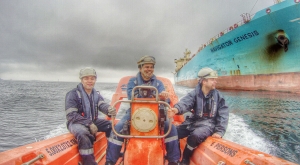
Image: Getting to and from work is not the same as jumping on the train when you are a seafarer. This photo was taken by crew member Ryan Paez, on one of his ‘commutes’, and entered into a competition run by ISWAN. Credit Ryan Paez/ISWAN
ELNAVI Newsletter
More Information: ELNAVI,
19, Aristidou str., Piraeus 185 31,
Tel.: +30 210 45.22.100, e-mail: This email address is being protected from spambots. You need JavaScript enabled to view it.
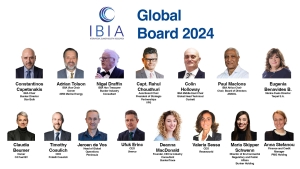
The International Bunker Industry Association presented the newly elected leadership team to drive the Association’s strategic initiatives and represent the interests of its members globally.
IBIA has welcomed Constantinos Capetanakis, Adrian Tolson and Nigel Draffin to their officers’ roles.
The new Chairman Constantinos Capetanakis joined Star Bulk, serving as General Manager of a number of private vessels and subsequently as Executive Vice President – Control Director of the group’s procurement arm, Ship Procurement Services SA. Since 2019 Constantinos is serving as Star Bulk’s Bunker Director, responsible for bunkering procurement / strategy and Star Bulk’s cooperation with bunker industry stakeholders.
Vice Chairman Adrian Tolson is the owner of 2050 Marine Energy and is widely recognised as one of the shipping industry’s leading marine energy experts. With more than 35 years of experience, he has both detailed knowledge and unique insight into the bunker supply chain and its many related infrastructure developments.
Hon Treasurer: Nigel Draffin, Consultant with a career starting at sea as an engineer for Shell in 1966 and transitioning ashore in 1979, has contributed extensively to the maritime and bunker industry. He’s a technical consultant with over 25 years of experience, a founder and former chairman (2012) and Treasurer (2022) of IBIA and was re-elected to the Board in 2023. Draffin has authored 13 books on Bunkering and Shipping and is an esteemed speaker at industry conferences.
Newly elected Board Members: Ufuk Erinc, CEO, Unerco Petrol Urunleri Denizcilik ve Ticaret A.S, Deanna MacDonald, CEO, BunkerTrace Ltd (UK), Maria Skipper Schwenn, Director of Regulatory and Public Affairs, Bunker Holding Group
Continuing Board Members: Eugenia Benavides Buitrago, Marine Fuels Director, Terpel S.A., Claudia Beumer, Owner, C4 fuel BV, Rahul Choudhuri, President of Strategic Partnerships, Veritas Petroleum Services (Asia) Pte Ltd, Timothy Cosulich, CEO, Fratelli Cosulich, Jeroen de Vos, Head of Quality, Peninsula, Colin Holloway, Global Head Technical, Cockett Marine Oil, Paul Maclons, Chair, AMSOL Board of Directors, African Marine Solutions Group (Pty) Ltd, Valeria Sessa, CEO, ReSeaWorld s.r.l, Anna Stefanou, Finance and Credit Manager, PMG Holding.
Constantinos Capetanakis states: “I am greatly honoured to be IBIA’s Chair and excited for the times ahead, being determined to lead the Association to further global growth and visibility throughout the entire shipping community”.
This group of individuals bring a wealth of knowledge, experience, and dedication to their roles, and IBIA is confident that under their leadership, the Association will continue to flourish and advance the interests of the bunker industry worldwide.
About IBIA: IBIA - The International Bunker Industry Association is the leading voice of the global bunker industry, ensuring all stakeholders are represented in discussions and decisions that impact the sector.
ELNAVI Newsletter
More Information: ELNAVI,
19, Aristidou str., Piraeus 185 31,
Tel.: +30 210 45.22.100, e-mail: This email address is being protected from spambots. You need JavaScript enabled to view it.
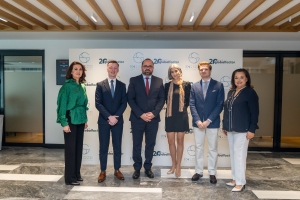
The ESG Shipping Awards held the event: "ETS in Action: Bridging the Gap Between Traders & Engineers," at the Grand Hyatt Athens on March 29, 2024. This workshop, dedicated to promoting sustainable practices within the maritime industry, focused on the pivotal role of the Emissions Trading System (ETS) in aligning the efforts of traders and engineers towards achieving compliance and fostering cost-effective strategies.
Featuring engaging discussions led by prominent figures and industry experts in the ETS landscape, the workshop offered participants a comprehensive understanding of emissions trading dynamics, invaluable insights, practical knowledge, and best practices essential for navigating the complexities and opportunities presented by emissions trading. From regulatory frameworks to practical implementation strategies, attendees gained relevant understanding aimed at enhancing their proficiency in emissions management.
The success of "ETS in Action: Bridging the Gap Between Traders & Engineers" underscores the importance of collaborative initiatives in addressing environmental challenges within the maritime sector. As the industry continues to evolve, the ESG Shipping Awards remains steadfast in its commitment to championing sustainability and fostering responsible practices.
Key points
Mr. Manolis Koutoulakis, Secretary General of the Ministry of Maritime Affairs and Insular Policy, emphasized the significance of the ESG Shipping Awards initiative in promoting knowledge and awareness of sustainable development among shipping companies and he mentioned the ministry's efforts to support sustainable initiatives in the maritime sector.
Dr. George Pateras, President of the Hellenic Chamber of Shipping, highlighted a potential risk associated with the Emissions Trading System (ETS) for shipowners, indicating that they may need to purchase additional EUAs (European Union Allowances) to safeguard their companies.
Maruxa Heras, Head of Shipping at Global Factor, pointed out a key challenge in implementing the EU ETS within the maritime industry: the allocation of responsibility and cost, highlighting the complexities involved in determining which entities within the maritime sector should bear the financial burden of emission reduction measures and how these costs should be distributed fairly and efficiently.
Miller Wells, a Carbon Market Specialist at Global Factor, stressed the dynamic nature of EU ETS prices, noting their tendency to fluctuate and be influenced by abrupt events which underscores the volatility inherent in carbon markets and emphasizes the importance of monitoring and responding to changes in market conditions.
Antoniadis Konstantinos, Managing Partner at Emicert, emphasized the significant scale of the EU ETS, describing it as the largest emissions trading system globally. He highlighted its role in incentivizing the transition from high-carbon fuels to more sustainable alternatives. Konstantinos noted the demand for emission allowances under the ETS has not reached its peak, indicating ongoing opportunities for market participation and he suggested that starting from 2027, the EU ETS will increasingly compel companies to adapt and actively seek technological solutions to minimize their carbon footprint and adhere to stringent emissions regulations.
George Zisis-Tegos, Head of the Department for Market Mechanisms and GHG Emission Registry at the Directorate of Climate Change and Air Quality, Ministry of Environment and Energy, provided insights into the implementation of the EU ETS within the shipping industry. He outlined the phased implementation of this obligation, and he noted that in Greece, 735 shipping companies are required to open a MOHΑ account for emissions trading. He explained the process of transferring funds between trading accounts and the MOHA account, as well as the reporting requirements at the end of each voyage to mitigate risks. He also underscored the importance of timely compliance with ETS obligations to avoid penalties.
Christos Kontorouchas, Head of Unit for Shipping Policy at the Hellenic Coast Guard, highlighted Greece's unique pursuit of provisions regarding the transfer of liability within the EU ETS framework. Unlike other European countries, Greece advocated for this provision to grant shipowners more rights and facilitate compensation through substantive legal measures. This distinct initiative reflects Greece's commitment to supporting its shipping industry and ensuring fair treatment under emissions trading regulations. He noted that the inclusion of this provision in joint ministerial decisions will involve Greek courts, indicating a concerted effort to address legal complexities and clarify the boundaries between shipping and investment activities. This underscores the importance of clear and comprehensive regulatory frameworks to navigate the challenges posed by emissions trading in the maritime sector.
Costas Constantinou, from Moore's Global Leadership, compared the ETS to a financial instrument, similar to stocks, emphasizing its significance as a strategic asset. He advocated for its management by the Chief Financial Officer (CFO) of each company, citing their familiarity with the organization's financial landscape and the requisite strategy. Mr Constantinou underscored that the ETS holds specific valuation methods and is susceptible to both profit and loss dynamics, implying its potential impact on the company's financial performance. He also flagged institutional loopholes related to the taxation of ETS profits, stressing the need to address regulatory ambiguities swiftly. Mr Constantinou positioned the ETS as an integral component of shipping costs, characterizing it as an expense on the company's balance sheet, further emphasizing the importance of prudent financial management and regulatory compliance in navigating the complexities of emissions trading.
Nikolaos Gouvalas, Carbon Market Specialist and Country Manager for Greece & Cyprus, emphasized the role of demand in shaping the price dynamics of the ETS. He attributed fluctuations in ETS prices to various factors, including industrial activity in Europe, correlations within the EU Emissions Allowance (EU A) commodity, and climate change considerations. Gouvalas highlighted the shipping industry's hesitance to fully embrace the ETS and engage in trading, despite its global relevance. He underscored the significance of ETS best practices, particularly in terms of proactive monitoring and establishing trust within the market.
Ioannis Gemelos, Superintendent Engineer at Diana Shipping Services S.A., initially viewed the ETS as a continuation of the EU MRV framework, primarily as a technical aspect. However, he later recognized that the ETS holds significant commercial implications beyond its technical components. He recognized that some companies may choose to actively participate in carbon trading to capitalize on potential financial opportunities, while others may opt for a more conservative stance focused solely on meeting regulatory requirements.
Leonidas Margetis, Environmental & Sustainability Manager at Tsakos Shipping & Trading S.A., anticipated a transitional phase during the initial year of ETS implementation, noted the multifaceted nature of ETS compliance and the importance of holistic approaches to address the challenges and opportunities associated with environmental regulations. He underscored the necessity for companies to establish well-defined processes and proactive strategies to mitigate both market and legal risks associated with ETS compliance. He also emphasized the importance of verified per-voyage data for discussions with charterers, highlighting the significance of accurate information in negotiating terms and conditions.
Christos G. Timagenis, Attorney-at-law at Timagenis Law firm highlighted significant legal risks associated with the implementation of the ETS. He underscored the substantial resource requirements necessary for compliance, noting that many companies may struggle to meet these demands. His perspective underscored the importance of legal expertise and comprehensive risk management strategies to navigate the legal complexities and operational challenges inherent in emissions trading.
Sponsored by Global Factor & Moderated by Helena Athoussaki, Principal Organizer of the ESG Shipping Awards the workshop served as a crucial platform for fostering collaboration in the journey towards a more sustainable maritime industry.
ELNAVI Newsletter
More Information: ELNAVI,
19, Aristidou str., Piraeus 185 31,
Tel.: +30 210 45.22.100, e-mail: This email address is being protected from spambots. You need JavaScript enabled to view it.
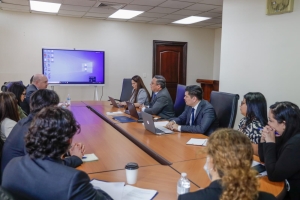
In a few days ago, representatives of the United States’ Government and the US Embassy in Panama as well held a work´s meeting with representatives of the Panama Maritime Authority (AMP), regarding the continued commitment of both countries in maritime affairs.
During the meeting, AMP staff explained the role of the institution, the Panama Ship Registry and the Control and Monitoring Section Department of Navigation and Maritime Safety in due diligence terms and continuous surveillance of vessels registered in the Panamanian merchant navy.
For its part, Mr. Abram Paley, Deputy Special Envoy for Iran matters of the government of the United States of America, expressed the importance of maintaining cooperation between the two countries in the unstable behavior context of the Islamic Republic of Iran. He also stated that both nations have a common goal, which is why it is healthy to exchange ideas and continue together with the joint work of the last few years.
Among the topics discussed was the possibility of Panamanian flagged vessels being used to transport Iranian oil, however, confirming that to date there are no vessels of Iranian nationality owners in the Panamanian Registry, as far as we are aware. In this sense, Mr. Miad Maleki, Senior Advisor to the Office of Foreign Assets Control, indicated that the Panamanian flag reputation is very important for the United States of America, as well as its trade and that there is full confidence in the Republic of Panama.
In the meeting it was also discussed about the formality and protocol that the government of the United States of America and the Panamanian government developed in 2020 to deal with these issues, but today there has not been any formal communication of requests for cancellations of vessels from the Panama Ship Registry.
It is appropriate to mention that vessel cancellations must be framed within the Panamanian legal framework, specifically by Law N°57 of 6 August 2008, as this is the regulation that governs due process.
Moreover, the AMP´s staff presented the statistics of the 863 vessels cancelled from 2019 to today, of which 706 have been cancelled ex officio, while the other 157 have been cancelled by annulment and judicial sales. Also, the statistics of the Panamanian flag vessels listed by the Office of Assets Control (OFAC) and the consequent cancellation process of the Registry.
Additionally, it was pointed out and demonstrated evidences that out of the 41 ships listed in OFAC, 24 have already been cancelled from the Register, and the information on its web page has been requested to be updated by means of formal notes in the months of April and June 2023. A further 6 have also been cancelled, and the remaining 11 ships are in the process of cancellation. Once these actions are completed, the total of 41 ships listed in OFAC will have been cancelled, as formally communicated.
Another point discussed was the importance of Panama being notified in advance of the information on the vessels to be listed or sanctioned, just as other registries are informed, which would help to avoid a change of registry during the formalization of the listing and sanctioning process.
During the visit, the US delegation had the opportunity to visit the Panamanian Fleet Control and Monitoring Centre and observe its functionality for themselves.
At the end of the meeting, it was agreed that the established protocol for the exchange of information and requests between governments will continue, as well as the possibility of signing a bilateral cooperation agreement, which will continue to institutionalize these efforts in the future administrations of both countries.
To the Panama Maritime Authority (AMP) it was gratifying that Mr. Paley concluded the meeting expressing his certainty that the Panamanian State is focused on its responsibilities as a responsible Register of Ships and an important strategic partner in international maritime trade. The representatives of both governments have pledged to continue working hand by hand for a responsible maritime industry.
ELNAVI Newsletter
More Information: ELNAVI,
19, Aristidou str., Piraeus 185 31,
Tel.: +30 210 45.22.100, e-mail: This email address is being protected from spambots. You need JavaScript enabled to view it.