



-
Home

-
Shippings News
- elnavi

elnavi
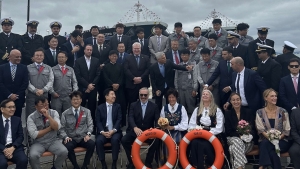
Four state-of-the-art tankers which they use as fuel liquefied natural gas-LNG was delivered at Hyundai shipyards in Korea by the NYSE listed Tsakos Energy Navigation led by Dr. Nikos Tsakos. All four vessels raised the Greek flag and are the first of this technology to be included in the Greek registry.
The Aframax type tankers has a capacity of 116,000 dwt each and are already time chartered for 10 years, with the possibility of extending the duration of the contract, to the Norwegian energy company Equinor with which TEN has had a stable and constructive cooperation for 15 years.
Dr. Nikos Tsakos from Korea with his son Panagiotis Tsakos commented: “All four newly built aframax tankers fly the Greek flag and are ready to use liquefied natural gas-LNG.
We continue the effort to create a 100% “green fleet” until 2030 with ships of new state-of-the-art technology.
It is the first time we take delivery of ships after the death of my co-founder and beloved mother, Dr. Irene Tsakou, who loved Korea.
“I want to thank everyone for the great job you did. This is the second time in a year that we are here to deliver high-tech ships. We are big supporters of the Korean shipbuilding industry and Korea”.
ELNAVI Newsletter
More Information: ELNAVI,
19, Aristidou str., Piraeus 185 31,
Tel.: +30 210 45.22.100, e-mail: This email address is being protected from spambots. You need JavaScript enabled to view it.
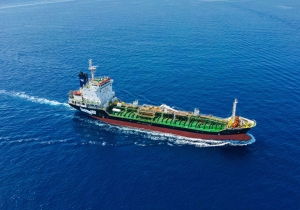
Following a policy of continuous fleet growth, Seaven Tanker & Dry Management has added to its fleet the 5.695dwt chemical tanker built in 2005.
The ship raised the Greek flag and is equipped with the latest safety and navigational systems.
Seaven is the new company name of Evia Petrol Group, which was established in 2003. Seaven features the company’s scope and speaks to its vessels’ potential of traveling across the Seven Seas, all over the globe. The fleet of Seaven is comprised of medium sized Greek flag modern oil/ chemical tankers, double-hulled and equipped with upmost technologically advanced equipment. The fleet of Seaven is trading between Mediterranean, Black Sea and North Europe ports and is chartered by demanding and well respected companies in the market, with oil majors and known oil traders being among them. Seaven has under its management self-discharging cement carrier vessels, which are mainly trading within Mediterranean ports and chartered by first class cement major companies and cement traders. Seaven maintains a Safety, Security, Quality and Environmental Management system under the standards and certification of ISM and ISPS Codes, by the Classification Societies of Bureau Veritas for Hellenic Flag vessels and RINA for Panama Flag Vessels, and under the standards and certification of ISO 9001, ISO 14001, ISO 26000, ISO/ IEC 27001 and ISO 45001. Seaven is certified by ISO 9001, ISO 14001, ISO 26000, ISO 27000 and ISO 45001. Seaven is a Member of Intertanko, Bimco, Helmepa and EENMA (Hellenic Shortsea Shipowners Association) In November 2018, Seaven became the first company in the world, with vessels under 10,000 DWT, to be certified by Green Award Foundation. Seaven aims to continue its expansion and growth in the years to come, offering the best quality service possible to operate safely and efficiently in a demanding trade.
ELNAVI Newsletter
More Information: ELNAVI,
19, Aristidou str., Piraeus 185 31,
Tel.: +30 210 45.22.100, e-mail: This email address is being protected from spambots. You need JavaScript enabled to view it.
Jotun Hellas pioneers vessel maintenance and safety with novel Aerial Drone Inspection Service
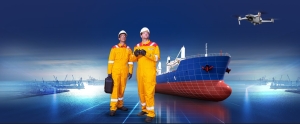
Jotun Hellas introduced its groundbreaking Aerial Drone Inspection Service. This cutting-edge service involves certified and experienced Jotun Coating Advisors utilizing state-of-the-art aerial drones to conduct comprehensive outdoor and indoor inspections of vessels. With the capability to access even the most challenging areas, including decks, accommodation, funnels, lifeboats, cranes, cargo holds, hatch covers, and the external hull above the waterline, this service ensures the most thorough assessment possible.
The Aerial Drone Inspection Service empowers ship operators with accurate and detailed information about the state of their vessels. The service analyses the vessel's paints and coatings condition, documented with high-resolution photos and videos, enabling data-driven decisions for maintenance and repair works. The inspection material, including a complete Drone Inspection Paint Condition Report, is prepared by Jotun Coating Advisors having assessed each inspected area, ensuring that every aspect is considered, and every detail reported.
The advantages are numerous. Ship operators may now benefit from enhanced accuracy in budgeting and efficient scheduling of maintenance and repair works, resulting in cost efficiency and timely maintenance. By identifying and addressing corrosion at an early stage, drone inspections support the prevention of deterioration and enable data-driven decision-making for safety on board. With access to reliable inspection information, ship operators can proceed with confidence in their improvement initiatives.
Jotun Hellas remains committed to delivering innovative solutions that optimize vessel performance and safety. The Aerial Drone Inspection Service represents a significant step forward in the maritime industry, offering ship operators unparalleled insight and control over their vessels' maintenance and safety.
About Jotun Hellas
Jotun Hellas - a branch of Jotun Group in Greece - has been a leading marine coatings solutions provider in the Greek maritime industry for 50 years. With its solid commitment to innovation, sustainability, and customer satisfaction, Jotun Hellas continues to redefine industry standards and support its partners' success worldwide.
ELNAVI Newsletter
More Information: ELNAVI,
19, Aristidou str., Piraeus 185 31,
Tel.: +30 210 45.22.100, e-mail: This email address is being protected from spambots. You need JavaScript enabled to view it.
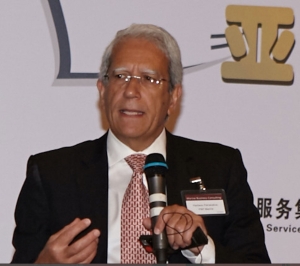
By Mr Harilaos Petrakakos, Director - Senior Surveyor of P&P Marine Consultants Inc., Member of Marasco Marine Ltd, Advisors’ Board
Ships play a crucial role in global trade, transportation, and exploration. However, their operations are inherently exposed to various risks, ranging from maritime accidents to piracy, war and environmental hazards. Implementing effective risk prevention strategies is essential to ensure the safety of hull & machinery, crew, cargo, and the marine environment. This essay will discuss key risk prevention strategies that can be employed on ships to minimize potential hazards and ensure safe and smooth sailing.
- Competency and Crew Training.
The foundation of any risk prevention strategy begins with a well-trained and competent crew. Proper training ensures that seafarers possess the necessary knowledge and skills to handle emergencies effectively. Regular drills, exercises, and simulations help them respond promptly to potential risks, such as fires, collisions, machinery and cargo handling equipment damages, or man-overboard situations. Continuous education and certification updates also keep the crew up-to-date with the latest safety regulations and best practices.
- International Regulations and Compliance:
Adherence to international maritime regulations, such as the International Maritime Organization's (IMO) conventions and guidelines, is vital for risk prevention. Compliance ensures that ships are equipped with necessary safety equipment, maintain proper operational standards, and follow safety protocols. Compliance also extends to environmental regulations to minimize the impact of ship operations on marine ecosystems.
- Risk Assessment and Management:
Conducting thorough risk assessments is essential to identify potential hazards and vulnerabilities on ships. This involves analyzing the ship's design, her hull & machinery condition, operational procedures, cargo handling, and navigational routes. With this information, ship operators can develop comprehensive risk management plans that include preventive measures, contingency plans, and response protocols for various scenarios.
- Use of Advanced Navigational Aids:
Equipping ships with modern navigational aids enhances their ability to navigate safely through challenging waters. Global Positioning Systems (GPS), radar systems, Electronic Chart Display and Information Systems (ECDIS), and Automatic Identification System (AIS) improve situational awareness, thereby reducing the risk of collisions and groundings.
- Safety Equipment and Maintenance:
Regular maintenance and inspection of safety equipment, including lifeboats, fire-fighting systems, and communication devices, are imperative for their optimal functionality during emergencies. Ensuring that safety equipment is properly maintained can make a significant difference in handling critical situations effectively.
- How about Cybersecurity:
With the increasing digitization and automation on ships, cybersecurity becomes a crucial aspect of risk prevention. Protecting onboard systems from cyber threats is essential to prevent unauthorized access or interference that could lead to accidents or operational disruptions.
- Security Measures against Piracy and Terrorism:
Ships traveling through high-risk areas must implement security measures to deter piracy and protect vessel, crew and cargo. Hiring onboard security personnel, adopting Best Management Practices (BMP), and adhering to the International Ship and Port Facility Security (ISPS) Code are essential components of a comprehensive security strategy.
In conclusion, risk prevention strategies on ships are paramount to ensure safe and efficient maritime operations. A well-trained crew, compliance with international regulations, risk assessments, advanced navigational aids, proper maintenance of Hull & Machinery and safety equipment, cybersecurity, and security measures against piracy are all integral components of an effective risk prevention plan which is always well appreciated and evaluated by Marine insurance Underwriters, prior to undertaking a new Marine risk and premium calculation. By implementing these strategies, ship operators can mitigate potential hazards, protect hull & machinery, crew and cargo, and preserve the marine environment for sustainable shipping practices in the future.
ELNAVI Newsletter
More Information: ELNAVI,
19, Aristidou str., Piraeus 185 31,
Tel.: +30 210 45.22.100, e-mail: This email address is being protected from spambots. You need JavaScript enabled to view it.

As the global shipping industry celebrates World Maritime Day with its central theme of “MARPOL at 50”, the International Association of Dry Cargo Shipowners (INTERCARGO) has stressed its commitment to the full implementation of MARPOL regulations onboard dry bulk carriers.
Introduced in 1973, The International Convention for the Prevention of Pollution from Ships (MARPOL) is the main international convention covering prevention of pollution of the marine environment by ships from operational or accidental causes.
INTERCARGO is committed to international efforts to protect our marine environments. The dry bulk sector is arguably the most efficient cargo carriage mode on earth. INTERCARGO members are expected to fully comply with global environmental and anti-pollution regulations and go beyond them by adopting best practices and demonstrating operational excellence in setting the standards for industry-wide environmental protection.
Actively participating at the International Maritime Organization, where it has held NGO status since the early 1990s, INTERCARGO is at the heart of global efforts to create a safe, efficient, high quality and environmentally friendly shipping industry.
For an overview of INTERCARGO’s work in relation to the UN Sustainable Development Goals (UN SDGs), please watch our Association’s videos on “Dry Bulk Shipping: Sustainably serving the world’s essential needs’ Click here to view.
ELNAVI Newsletter
More Information: ELNAVI,
19, Aristidou str., Piraeus 185 31,
Tel.: +30 210 45.22.100, e-mail: This email address is being protected from spambots. You need JavaScript enabled to view it.

The Swedish Club celebrated its move into new, larger premises in Athens, offering the Greek shipping community a warm welcome at its Inauguration and Open House. Owners, brokers and the Club’s business partners toasted the new offices and enjoyed the Club’s hospitality.
Conveniently located in Paleo Faliro, the Club’s new Greek offices are larger than its previous home. Ludvig Nyhlén, Area Manager for Team Greece explained: “This has been a very positive step for Team Greece and we are delighted to see that the move has been so warmly received. Our team in Greece is expanding and we had grown out of our old offices. The majority of our members are based across Athens, and this new location gives us the best of both worlds, enabling us to be closer to our members in the greater area, and yet at the same time remain near our friends in Piraeus.”
Around 400 guests attended the celebration, taking advantage of its balconies and communal areas to enjoy the fine weather. “The numbers attending exceeded our expectations, proving just how accessible our new offices are,” remarked Nyhlén.
Earlier in the day, Thomas Nordberg, Managing Director of The Swedish Club, visited the new offices and congratulated the team on a successful and seamless transition. “I have always been clear as to the importance we place on the Club’s regional offices, and the important work that they do” he said. “Establishing an office in Greece in 1980 was one of the Club’s early steps towards true internationalisation, and the success of that move has helped make the Club what it is today. This new step in that journey looks to be very successful and I am delighted that the feedback I have heard from our members has been so positive.”
In keeping with Greek tradition, the new offices were blessed by a priest. Father Dimitrios Balkanas gave the blessing – or ‘agiasmos’ – which not only covered the premises but also all who work or live there including the Club’s friends and associates.
The Swedish Club’s new offices are located at 3rd Floor, Building 4, Complex II, 4 Moraitini & Eth. Makariou Street, Paleo Faliro 175 61, Athens, Greece, and all contact numbers remain the same.
ELNAVI Newsletter
More Information: ELNAVI,
19, Aristidou str., Piraeus 185 31,
Tel.: +30 210 45.22.100, e-mail: This email address is being protected from spambots. You need JavaScript enabled to view it.
UGS meets the Minister of Greek economy aiming at the active participation to the Thessaly crisis

Τhe President, Melina Travlos and the Vice President, Andonis Lemos, met today with the Minister of Economy and Finance, Mr. Kostis Hatzidakis. The meeting was also attended by the Deputy Minister of National Economy and Finance, responsible for Tax Policy, Mr. Harry Theoharis, the General Secretariat of Tax Policy, Ms. Maria Psylla and the General Secretariat of Economic Policy & Strategy, Mr. George - Theodoros Christopoulos. The historical contribution of Greek shipping to the Greek economy and society were discussed as well as the active participation of the Greek Shipping community to the Thessaly crisis.
ELNAVI Newsletter
More Information: ELNAVI,
19, Aristidou str., Piraeus 185 31,
Tel.: +30 210 45.22.100, e-mail: This email address is being protected from spambots. You need JavaScript enabled to view it.
The challenges of Cyprus shipping industry discussed at the General Assembly of Cyprus Union of Shipowners

On the occasion of the General Assembly of the Cyprus Shipowners’ Union Mr. Andreas Hadjiyiannis President of the Union announced the financial aid amounting to €50 million for the victims of floods and fires in Greece.
The Shipowners’ union president has recently met the President of Greece, Katerina Sakellaropoulou at a dinner where they discussed among others, the advancements required in the maritime industry as well as the challenges the industry in Cyprus is facing.
President, Nikos Christodoulides also attended the event.
There is an alarming trend of adverse deviations in the genetic makeup of modern shipping, Hadjiyiannis noted at the dinner hosted by the Cyprus Shipowners’ Union on Friday in Kifisia, Athens.
He highlighted the European shipping model, with Greek shipping at its core is facing significant challenges.
“The European fleet is shrinking. Out of the 10 ships sold, only 3 are bought by Europeans. Major Western banks, already sensing the decline in European shipping’s competitiveness, are withdrawing their funding. Start-up shipping companies in Europe are on the brink of extinction. The national shipping industry, with its 1000 companies, has already dwindled to less than 600 and has lost its top position, held since the 1950s,” Hadjiyiannis remarked.
He pointed out unfriendly approaches and EU policies regarding the unfavourable taxation of shipping, primarily based on negligible emissions trading related to greenhouse gases.
According to EU and UN studies, he said, “the environmental impact of shipping could be fully compensated if every individual replaced animal-based protein with plant-based protein just once every three months.”
He added that the EU imposes an elimination method, with an estimated cost to the shipping industry ranging from 2.5 to, as he reiterated, 3.5 trillion dollars over approximately twenty-five years.
During the General Assembly, the challenges facing Cypriot shipping were discussed, with the participation of Greek shipowners and Deputy Minister of Shipping Marina Hadjimanolis.
Andreas Hadjiyiannis and Vice President Polys Hajioannou discussed the practical difficulties arising from European decisions and environmental regulations imposed by the ETS, as well as the tax burden on ship ownership due to the decision to horizontally tax emissions in shipping.
For her part, Marina Hadjimanolis elaborated on the strategic actions planned to strengthen the Cypriot registry, which had been weakened due to the Russia-Ukraine war and sanctions. She assured strong commitment from the Christodoulides government to further sustainable development of Cypriot Shipping.
Finally, Andreas Hadjiyiannis expressed the deep sorrow of the maritime community for the human losses and damage caused by the devastating floods, in a written statement by the Cyprus Shipowners’ Union.
He added that the financial assistance is aimed at alleviating the suffering of the affected individuals.
ELNAVI Newsletter
More Information: ELNAVI,
19, Aristidou str., Piraeus 185 31,
Tel.: +30 210 45.22.100, e-mail: This email address is being protected from spambots. You need JavaScript enabled to view it.
General Assembly and Elections 2023 International Propeller Club of the United States, Port of Piraeus

On Tuesday, September 12, 2023, the General Assembly and the election of a new Board of Governors of the Propeller Club, Port of Piraeus took place.
The 2023 General Assembly and Elections of the International Propeller Club, Port of Piraeus, were held at the impressive Faros Hall of the Stavros Niarchos Foundation Cultural Centre on 12 September 2023.
This was a resounding success with 586 participating members, representing 65% of the membership body. 311 attended in person with the rest participating remotely.
Members of the Election Committee were Yannis Varvitsiotis and Theodora Leka, with Eleftherios Archontis as Chairman.
43 candidates contested 16 seats on the Board of Governors.
3 candidates stood for the 3 positions on the Audit Committee.
10 members of the previous Board were re-elected.
The election results are as follows:
GOVERNORS
- Costis Frangoulis 431 votes
- Danae Bezantakou 233 votes
- Christos Timagenis 188 votes
- Maria Hajioannou 163 votes
- George Margaronis 155 votes
- Dorothea Ioannou 155 votes
- John Cotzias 146 votes
- Sifis Vardinoyannis 146 votes
- Theofilos Xenakoudis 139 votes
- Katerina Stathopoulou 135 votes
- Valentios Valentis 134 votes
- John Belousis 132 votes
- Michalis Dalacouras 114 votes
- Chrysanthi Stefanou 109 votes
- George Kallianis 104 votes
- Panagiotis Zafet 102 votes
DEPUTY GOVERNORS
- Kosmas Makrygeorgos 97 votes
- Irene Notias 87 votes
- Akis Tsirigakis 83 votes
AUDIT COMMITTEE
- Nadia Inglezi 299 votes
- Anacreon Matarangas 246 votes
- Dimitrios Sousoudis 207 votes
The General Assembly was presided over by the President of the Board of Governors, Costis Frangoulis. Christos Timagenis was appointed Secretary of the Assembly. Dimitri Vassilacos, Treasurer, presented the financial results and some projections moving forward.
The financial report for the past two years, the budget for the following term, and partial amendment of articles of the club's statutes were all unanimously approved during the General Assembly and the President's reading of the activity report.
Costis Frangoulis presented Dimitri Vassilacos with a special award recognizing his long service to the Club, having served for five consecutive terms. Mr. Frangoulis thanked Mr. Vassilacos for his important contribution, noting that he has left high expectations for his successor.|
The proceedings included a full account of the impressive achievements of the past two years.
One of the most significant achievements has been the financial strengthening of the Club, coupled with an unprecedented growth in membership.
During his address, Mr. Frangoulis also spoke about the increased social work of the Club, the acquisition of the Club’s new offices in Piraeus, the establishment of the Student Port and the launch of the Hellenic-American Shipping Gala as a second major annual event, along with the AMVER Awards.
During the elections, and while waiting for the results, members enjoyed a light cocktail.
It was a great opportunity for everyone to come together and exchange thoughts and experiences, setting the tone for a new, creative and challenging year.
The first Board Meeting of the new term was held on Thursday 14 September, at the club's offices in Piraeus, where the new Executive Committee was unanimously elected, with Costis Frangoulis serving as President for a third consecutive term.
The new Executive Committee is as follows:
President: Costis Frangoulis
1st Vice-President: Danae Bezantakou
2nd Vice-President: George Margaronis
General Secretary: Christos Timagenis
Treasurer: Maria Hajioannou
The remaining 11 Governors of the new Board of Governors are in alphabetical order: John Belousis, John Cotzias, Michalis Dalacouras, Dorothea Ioannou, George Kallianis, Κaterina Stathopoulou, Chrysanthi Stefanou, Valentios Valentis, Sifis Vardinoyannis, Theofilos Xenakoudis, Panagiotis Zafet.
"It is a great honor to continue for a third term as President of the Propeller Club, Port of Piraeus," Costis Frangoulis stated.
"I’m touched by the members’ vote of confidence in me, expressed in such a high percentage of votes, and I am determined that this new, exceptional Board of Governors will advance the Club even further in order to continue its work with enthusiasm and vision."
ELNAVI Newsletter
More Information: ELNAVI,
19, Aristidou str., Piraeus 185 31,
Tel.: +30 210 45.22.100, e-mail: This email address is being protected from spambots. You need JavaScript enabled to view it.

Global ocean hull premiums rose in 2022 by 5.7% to reach USD8.4 billion. This was largely due to a combination of growing activity, increased vessel values and reduced market capacity. Claims for the same period remained moderate although early 2023 has witnessed a modest increase. Taken together, this has had a positive impact on overall loss ratios that have enjoyed a downward trend for the past three years with 2022 ratios starting out at the lowest point since 2015.
Despite this relatively good news, inflation is likely to have a significant affect going forward. Ilias Tsakiris, Chair of IUMI’s Ocean Hull Committee explains: “During the post-Covid period, there was a scarcity of materials such as steel coupled with an increase in their demand following the re-activation of global shipping. This was exacerbated by rising inflationary pressure, which has driven up the costs of materials, shipyards, and labour. From an underwriting perspective, inflation has not only been applicable to vessel repairs and claims but also to general office overheads. In the main, the underwriting community has not applied inflationary increases to the premium base and this may lead to a reduction in overall profitability over the coming year or two.”
Aside from inflation, three other key issues are currently demanding attention from hull insurers:
Alternative fuels
Looming 2050 targets for greenhouse gas (GHG) emissions; newbuilding projects focusing on dual-fuel systems; evolving IMO guidelines; and international sustainability initiatives, are the key drivers for the industry’s search for viable alternative fuel technology solutions. In the interim, hybrid technologies such as hydrogen/fossil fuel or ammonia/fossil fuel are likely to be employed until a fully clean and workable solution is developed.
Ilias Tsakiris explains the implications for hull underwriters: “Emission reduction technologies are inevitably more sophisticated than the current methods of ship propulsion. This will increase the value of the global fleet and, consequently, the level of risk to be covered. The rapid implementation of these technologies aligned with decarbonization and GHG emissions, particularly where new fuel blends may be used with current engines, will give rise to new risks. Adequate regulations will need to be in place to ensure the safety of those who operate the new ships as well as the vessels themselves. Of course, this also means that we need to train the global seafaring work force accordingly.”
He continued: “We must also remember that shipping doesn’t exist in isolation. Vessels call at ports across the globe and adequate infrastructure must be in place to support these new technologies – and that is much easier said than done. The world is not equal and some regions will struggle.”
“Getting to net-zero will require a joined-up effort, not just from the shipping community but also from the many related land-based sectors, including refineries and oil companies. The world must work together if a workable solution is to be achieved.”
Lithium-ion (Li-ion) batteries / electric vehicles (EVs)
Fires on containerships and car carriers are becoming more common and many of these vessels are now carrying li-ion batteries or transporting EVs.
“A notable recent incident in July 2023 was a fire on a Panamanian-registered car carrier the Fremantle Highway off the Dutch coast. Although the cause of the blaze remains unknown, it took days to finally control the fire. Out of the more than 3,700 cars on that ship, nearly 500 of them were electric vehicles”, said Ilias Tsakiris.
A major concern relating to Li-ion batteries is the potential for 'thermal runaway’, a chemical reaction which causes rapid heating, fire and sometimes an explosion. However, fires from EVs are no more common than those from conventional internal combustion engine vehicles. Traditional fuels such as petrol and diesel also carry substantial potential dangers but the maritime industry has acquired sufficient experience to manage those risks effectively and it must do the same for this new technology.
Ilias Tsakiris continued: “Earlier this month, IUMI released a position paper on “Best practice & recommendations for the safe carriage of electric vehicles (EVs)” emphasizing the importance of early fire detection; the installation of drencher and CO2 extinguishing systems; and the establishment of well-defined cargo acceptance protocols. An issue requiring particular consideration is the charging of EVs on ropax vessels, contingent on comprehensive risk assessments and the implementation of appropriate safety measures."
The “dark fleet”
The so-called “dark fleet” is a growing threat for insurers, especially since the invasion of Ukraine and the sanctions regime. The global maritime industry faces significant challenges due to the proliferation of aging vessels, identity-shifting ships owned by dubious entities, and questionable classification societies. These trends also raise concerns about potential criminal activities and money laundering. Issues of accountability and traceability in accidents involving the dark fleet and responsibility for wreck removal, pollution response, ship-to-ship transfers of oil, and compensation for victims all remain unclear. Many report that Russia is managing to bypass insurance regulations, with approximately 20% of the global tanker fleet avoiding sanctions. It is worth mentioning that the sanctions and the invasion of Ukraine have driven certification providers, engine-makers, and insurers away from sanctioned oil carriers, at the cost of further reducing oversight.
“There were eight incidents involving sanctioned oil tankers reported in 2022, including the destructive explosion of the aframax tanker Pablo which caught fire in Malaysian waters in May and left three crew members missing”, said Ilias Tsakiris. “Because this ship was part of the 600-strong “dark fleet”, salvors were not able to board. Fortunately, there was no other vessel involved but had this been a collision, or a ship-to-ship transfer, it would have been a completely different story. As it stands, the burnt-out wreck remains at anchor and the owners are impossible to contact, leaving the authorities with a significant headache.”
At the IMO, the Legal Committee noted that a global fleet of between 300 and 600 tankers, primarily comprised of older ships, including some not inspected recently, operating with AIS transponders turned off, having substandard maintenance, unclear ownership and a severe lack of insurance, is currently operating as a “dark fleet” or “shadow fleet” to circumvent sanctions, increasing the risk of oil spills and collisions.
ELNAVI Newsletter
More Information: ELNAVI,
19, Aristidou str., Piraeus 185 31,
Tel.: +30 210 45.22.100, e-mail: This email address is being protected from spambots. You need JavaScript enabled to view it.