


“Safety, competence and crew protection in focus”
Shipping is facing multiple pressures at the same time, from growing operational and regulatory complexity to geopolitical conflict and increasing risks for seafarers. These challenges do not exist in isolation; they increasingly converge onboard, directly affecting crews’ ability to operate safely, maritime experts noted during SAFETY4SEA’s landmark annual event in Athens.
The 17th SAFETY4SEA Athens Forum took place on Thursday, 8 October 2026, at the Lighthouse of the Stavros Niarchos Foundation Cultural Center in Athens, bringing together maritime professionals to discuss three closely connected priorities for safer shipping: strengthening operational controls, preparing maritime professionals for changing competence requirements and protecting crews amid increasingly complex operational and geopolitical risks.
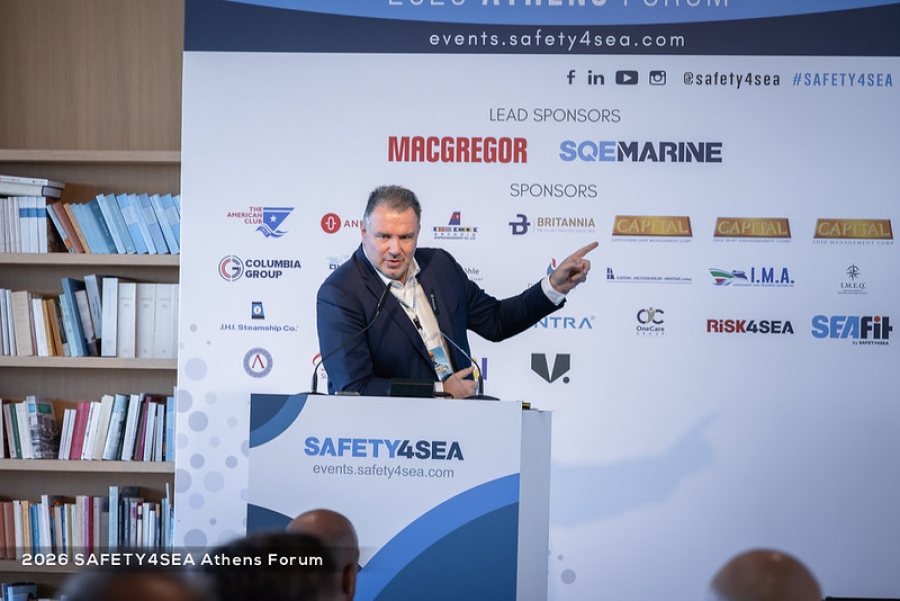
Welcoming delegates, Apo Belokas, Founder & Managing Editor, SAFETY4SEA, said: “Shipping today is managing multiple challenges at the same time. Regulation is becoming more complex, technology is advancing rapidly, geopolitical risks are placing new pressures on ships and crews, while human performance remains at the heart of safe operations. Through this Forum, our aim is not simply to identify these challenges, but to bring the industry together to discuss what can practically be done to make shipping safer.”
The event featured three expert panel discussions, interactive dialogue with delegates, audience questions and live polling, alongside presentations from the panelists.
Panel #1: Operational Safety, Loss Prevention & Safety Culture
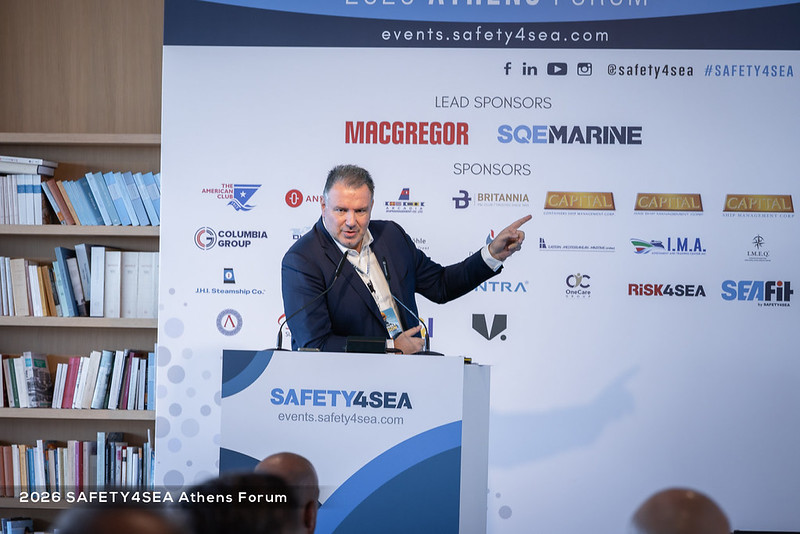
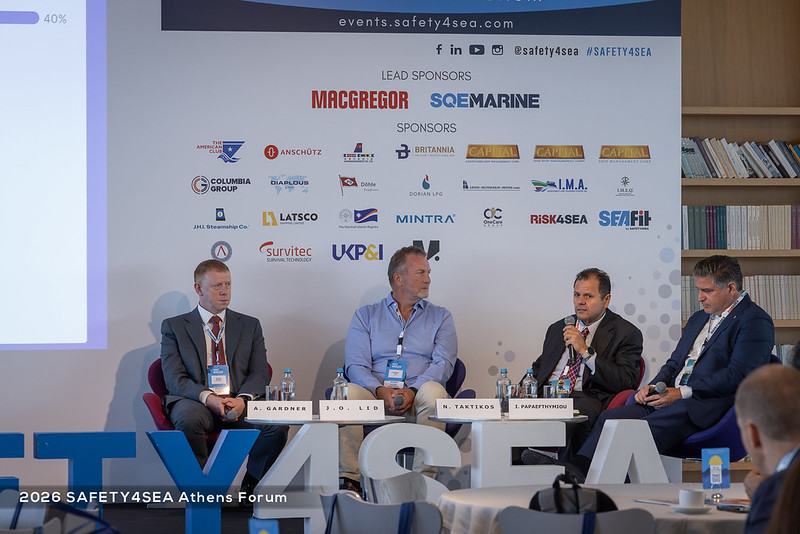
Anthony Gardner, Loss Prevention Manager, Britannia P&I Club, discussed the adopted amendment to the Load Lines Protocol, outlining the key changes compared with the current version and noting that the new requirements will not apply to existing ships. As vessels operating under the currently permitted conditions will remain in service for many years, he also highlighted that a number of other regulations do not apply retrospectively to older ships, raising the question of whether some requirements should nevertheless be considered voluntarily where appropriate.
Drawing on insights from a recent Survitec white paper, Jan-Oskar Lid, Technical Sales and Support Manager at Survitec, examined the growing safety and commercial risks associated with an ageing global fleet. He highlighted how seemingly minor deficiencies can escalate into significant operational, financial and potentially human consequences, while outlining practical ways for shipowners and operators to mitigate exposure. His key recommendations included proactive leadership, preventive maintenance and close cooperation with qualified safety service providers to strengthen reliability and reduce avoidable risk.
Capt. Nikos Taktikos, Consultant, The American P&I Club, explored how the everyday actions and behaviours of Masters and Officers can shape a strong and lasting safety culture onboard. Using real-life examples, he addressed the importance of leading by example, supporting stop-work decisions and near-miss reporting, conducting effective toolbox talks and recognising the impact of fatigue and wellbeing. His presentation underlined the need to move beyond training and awareness alone and turn good safety practices into consistent behaviours and habits onboard.
In his presentation, Ioannis Papaefthymiou, Managing Director, Anschuetz Panama, highlighted the role of a COLREG-compliant collision and grounding avoidance system in enhancing navigational safety while reducing operational and economic exposure. Drawing on a company example, he explained how such technology can support crews by reducing fatigue and providing continuous situational awareness through optical and infrared cameras. At the same time, he noted its potential to deliver longer-term value by helping operators identify and mitigate navigational and operational risks.
Building on these presentations, the discussion examined how operational safety is increasingly influenced by geopolitical exposure, competence gaps, rapid technological development and persistent human-factor challenges. Anthony Gardner pointed to the risks facing seafarers and merchant ships operating amid geopolitical conflict, while Jan-Oskar Lid raised concerns over the quality and consistency of safety-equipment inspections and the need for competent service providers and stronger standards. Capt. Nikos Taktikos focused on the challenge of keeping human competence aligned with increasingly advanced systems, arguing that training must strengthen understanding, judgement and practical decision-making rather than simply encourage compliance with procedures.
Ioannis Papaefthymiou noted that shipping is at a transition point where regulatory complexity and emerging technologies are placing greater demands on both ship managers and seafarers. He called for smarter solutions to be adopted more proactively, not to replace people but to reduce complexity and support better decision-making onboard. Moderator Apo Belokas challenged the industry to move beyond repeatedly identifying the same problems and towards practical action, noting that issues such as fatigue have been discussed for years without being adequately addressed.
Panel #2: Human Factors, Training & Future Competence
Sakis Bourlios, Sales Manager, Mintra, explored how maritime learning can evolve beyond compliance and course completion towards a more competence-focused and data-informed approach. He discussed how targeted development, AI and predictive learning can help identify competency patterns, anticipate emerging requirements and create more personalised learning pathways. By enabling organisations to make more informed development decisions and address skills needs proactively, he argued, these tools can help build more capable and better-prepared crews across the maritime workforce.
Capt. Ioakeim Diplas, Learning Solutions Manager & Subject Matter Expert, OneLearn Global, stressed that regulations, procedures and compliance frameworks such as STCW, MLC and SIRE 2.0 provide essential foundations, but safe operations ultimately depend on people. Factors including fatigue, workload, communication and workplace conditions influence how tasks are performed in real-world situations. He therefore advocated moving beyond a narrow focus on compliance and inspection readiness towards competence, continuous development and observable performance as stronger indicators of genuine operational preparedness.
Danna Ocado, Management Information Systems Manager, I.M.A. ASSESSMENT AND TRAINING CENTER, INC, examined how artificial intelligence can strengthen maritime training, assessment and continuous professional development. She explained how AI can identify individual competency gaps, tailor learning to specific needs, support scenario-based assessment, improve access to operational knowledge and enhance simulator training. At the same time, she stressed that technology should support rather than replace qualified instructors, assessors and seafarers, with human judgement, leadership and accountability remaining essential to effective learning and safe operations.
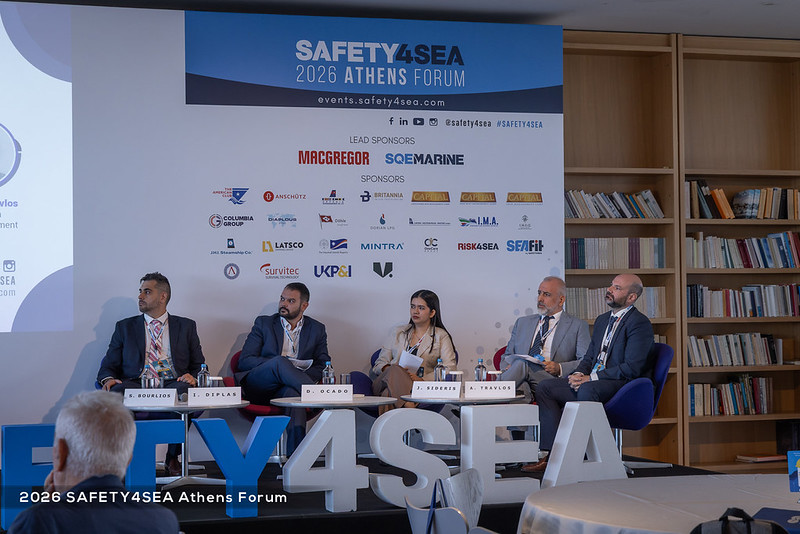
In the discussion following the presentations, two additional experts joined the panel: Capt. John Sideris, Deputy Fleet Operations Manager, Piraeus Office, IRI/The Marshall Islands Registry and Andreas Travlos, Technical Fleet Manager, Columbia Shipmanagement.
The discussion examined how the industry can move from training and certification towards demonstrable competence in real operating conditions. Capt. John Sideris stressed the importance of continuous assessment and the use of operational evidence – from Port State Control, flag inspections and SIRE 2.0 to near misses and onboard evaluations – to identify training needs and monitor performance over time. Andreas Travlos argued that competence has improved, but training now needs to become more individualised, particularly for junior ranks, with constructive feedback used to identify specific gaps rather than relying on a one-size-fits-all approach. Sakis Bourlios similarly emphasised that competence must ultimately be demonstrated through performance onboard and under real operational pressure, while Capt. Ioakeim Diplas called for training to be more closely connected to actual shipboard risks, duties and the needs of individual seafarers.
The conversation also turned to the conditions needed to develop and retain the future maritime workforce. Danna Ocado highlighted psychological safety and soft skills, stressing that new technologies should be seen as tools that support seafarers rather than simply adding to their workload, while Andreas Travlos pointed to contract predictability, welfare and trusted relationships with shore management as important retention factors. On AI, the panel broadly agreed that it can accelerate data analysis, identify development needs and make learning more targeted, but should remain subject to human oversight and appropriate safeguards. Moderator Apo Belokas described AI as an “accelerator” rather than inherently good or bad, while challenging the industry to look beyond minimum compliance and consider wider issues such as mentorship, stable career pathways and the conditions required to attract, retain and continuously develop competent seafarers.
Panel #3: Crew Welfare, Protection & Risk Preparedness
In her presentation, Penelope Robotis, Chief Psychologist & Head Psychometrician, IMEQ Center, examined the human factor beyond recruitment through practical maritime examples involving changes in behaviour, communication, coping, fatigue, leadership and team dynamics. She considered what companies may overlook during pre-employment screening, which warning signs deserve attention when concerns emerge onboard and how responses should reflect both the circumstances and level of risk. She also discussed how psychometric assessment and AI-supported tools can provide additional insight while keeping human observation and professional judgement at the centre.
Capt. Konstantinos G. Karavasilis, Regional Director, Loss Prevention, UK P&I Club, addressed how fatigue, stress, isolation and reluctance to speak up can undermine safe performance, and how practical leadership can help identify concerns before they escalate into incidents. He also examined the additional pressures created by geopolitical conflict, highlighting the importance of current intelligence, vessel-specific risk assessment and realistic emergency preparedness. His message called for an integrated approach that protects seafarers, supports sound judgement and ensures crews are ready to respond effectively as operating conditions change.
Focusing on operations in high-risk areas such as the Strait of Hormuz, Angelo Lazaridis, Chief Commercial Officer, DIAPLOUS Group, explained that effective emergency response and salvage extractions require far more than physical protection alone. He highlighted the role of predictive intelligence, real-time 24/7 overwatch, specialised EOD clearance and multi-stakeholder de-confliction across naval coalitions and coastal states. By combining advanced digital monitoring with on-scene expertise, he noted, maritime operators can better assess exposure, protect crews and critical assets, and reduce the risk of wider environmental consequences.
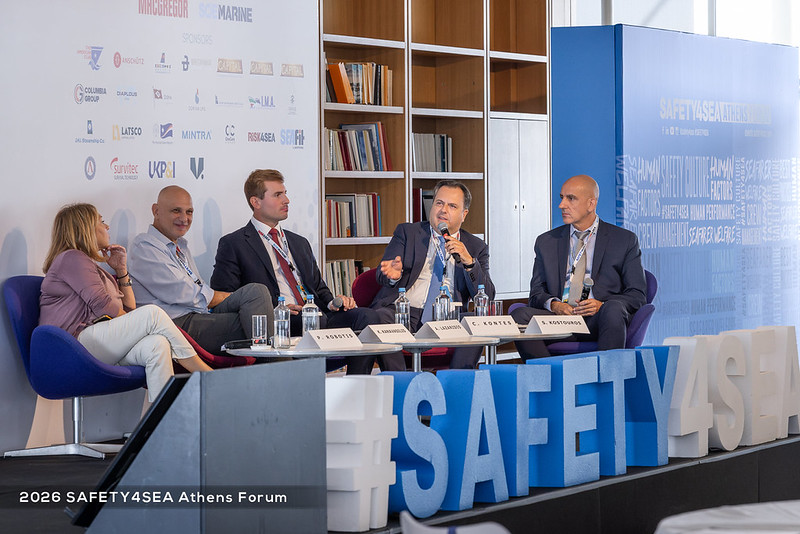
In the discussion following the presentations, two additional experts joined the panel: Costas Th. Kontes, Chief Commercial Officer, Navilands Management Holdings S.A and Sotiris Kostouros, Crew Manager, J.H.I. STEAMSHIP CO.
The subsequent discussion examined how companies can identify welfare concerns before they escalate into serious incidents. Penelope Robotis stressed that changes in behaviour, isolation, sleep patterns and communication can provide important early warning signs, but companies also need clear escalation pathways and greater mental-health awareness across ranks. Capt. Konstantinos G. Karavasilis noted that such signs can easily go unnoticed as social interaction onboard declines and workload and commercial pressures increase, making it even more important to understand conditions on individual vessels rather than relying solely on fleet-wide policies. Costas Th. Kontes highlighted the value of confidential access to professional support when seafarers may be reluctant to speak openly, while Sotiris Kostouros emphasised the need to train senior officers to recognise behavioural changes and maintain open communication with the company.
The conversation also reinforced the direct link between crew welfare, human performance and loss prevention. Angelo Lazaridis explained that in high-risk areas, uncertainty itself can create significant psychological pressure, arguing that education, timely information and realistic risk assessment can help crews better understand and manage the threats they face. Discussing transits through highly volatile areas such as the Strait of Hormuz, he stressed that where risk cannot be reduced to an acceptable level, avoiding the transit should be considered the safest course of action. Costas Th. Kontes and Sotiris Kostouros also linked stronger welfare to continuity, trust, adequate rest and familiar working relationships onboard. Moderator Apo Belokas challenged the industry to adapt its support mechanisms to changing social behaviours among younger seafarers, while stressing the need to move beyond broad welfare policies towards practical measures that strengthen both crew wellbeing and operational performance.
Focus Presentations
Dimitris Psarros, Business Development Manager, RiSK4SEA, examined the factors behind PSC underperformance and how vulnerabilities can be identified early to strengthen preparedness and operational safety. His focus presentation challenged common assumptions that can contribute to poor Port State Control (PSC) performance and increased detention exposure, including the belief that only substandard ships are detained, that ports within the same MoU behave similarly, that PSC inspection priority alone reflects actual risk and that a generic static checklist is sufficient for effective preparation.
A central message was that the specific ship–port combination can play a decisive role in determining detention exposure, as illustrated through the SPOT and PRL risk models. Dimitris concluded that stronger PSC management depends on dynamic and port-specific preparation, relevant benchmarking and the effective use of data, rather than relying primarily on broad assumptions, generic approaches or a vessel’s past performance.
Apo Belokas, Founder & Managing Editor, SAFETY4SEA, examined the evolution of crew welfare over the past two decades and its growing relevance not only as a people issue, but also as an operational and risk-management consideration. He reviewed changing stakeholder and insurer perspectives on crew wellbeing and presented the IUMI Crew Wellbeing Checklist, which brings factors including fatigue, workload, safety culture, living conditions, retention, employment conditions, mental health and psychological safety into the assessment of hull risk.
He also introduced the SAFETY4SEA Crew Welfare Maturity Index 2026, a framework assessing industry progress across seven welfare domains and six maturity stages: Recognise, Understand, Act, Measure, Improve and Manage. Apostolos highlighted the gap between acknowledging welfare challenges and embedding measurable, sustainable responses into everyday operations. Challenging expectations of the “superhero seafarer”, he stressed that crew welfare should move beyond isolated initiatives and become a more systematic part of safe and sustainable shipping.
ELNAVI Newsletter
More Information: ELNAVI,
19, Aristidou str., Piraeus 185 31,
Tel.: +30 210 45.22.100, e-mail: This email address is being protected from spambots. You need JavaScript enabled to view it.