


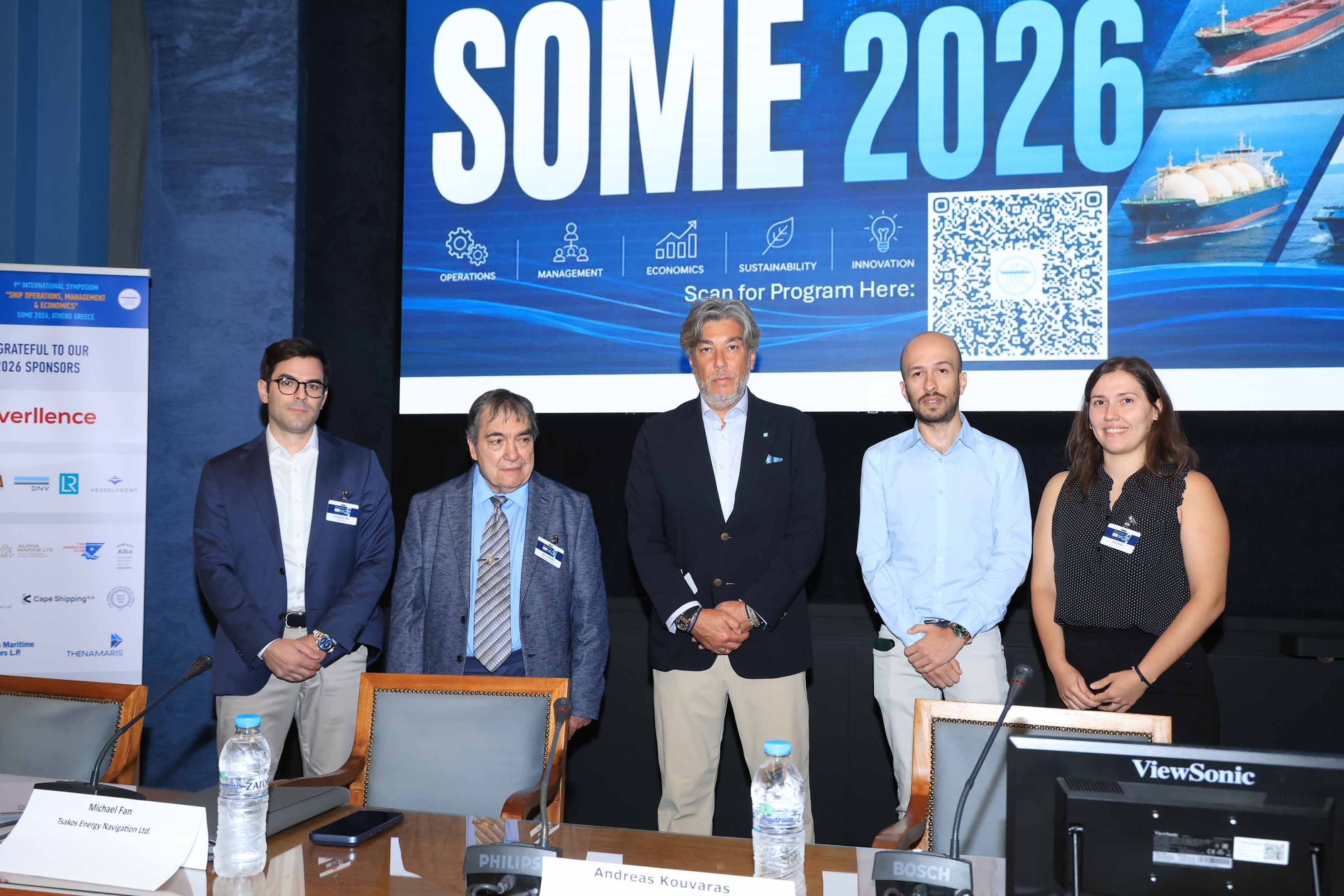
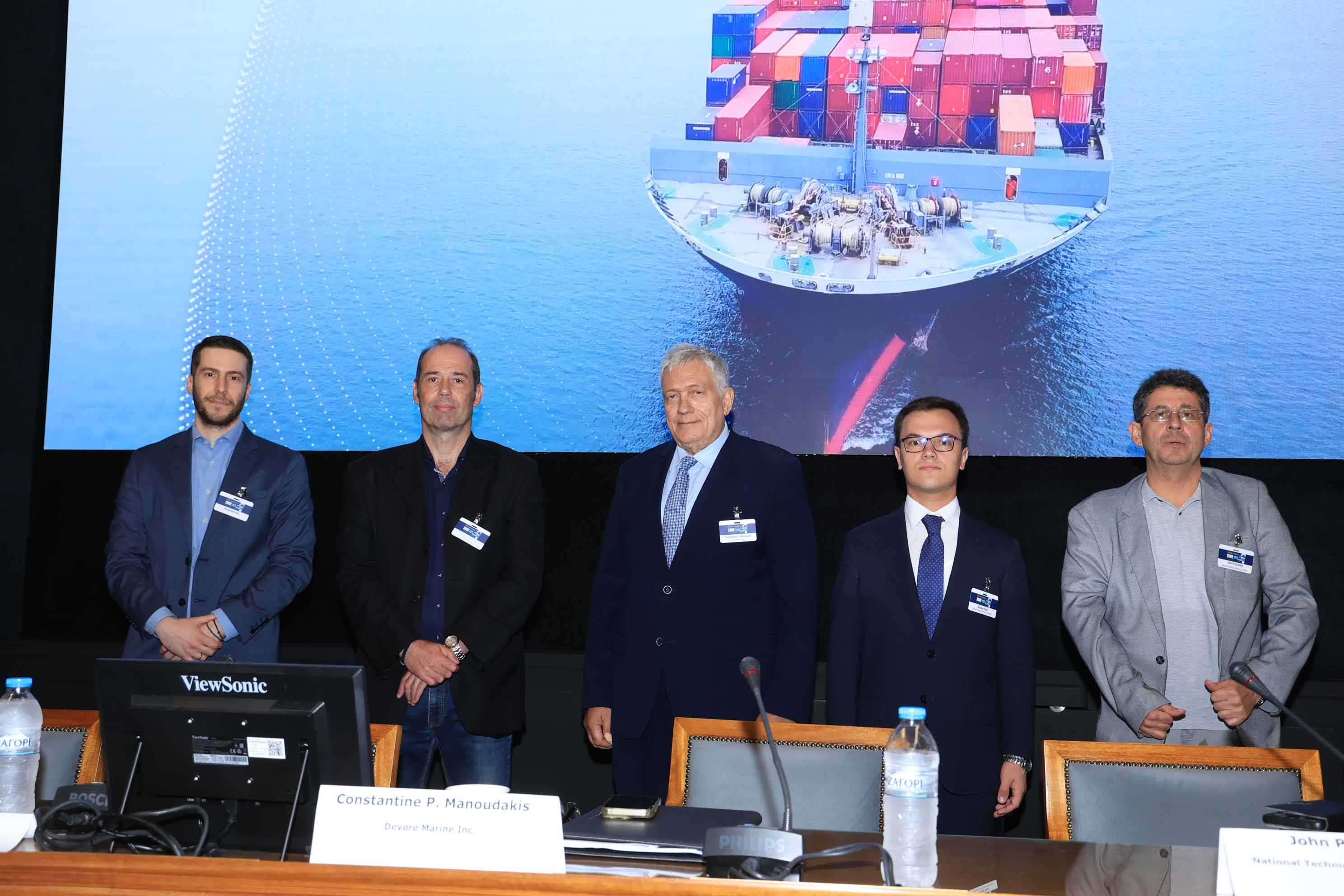
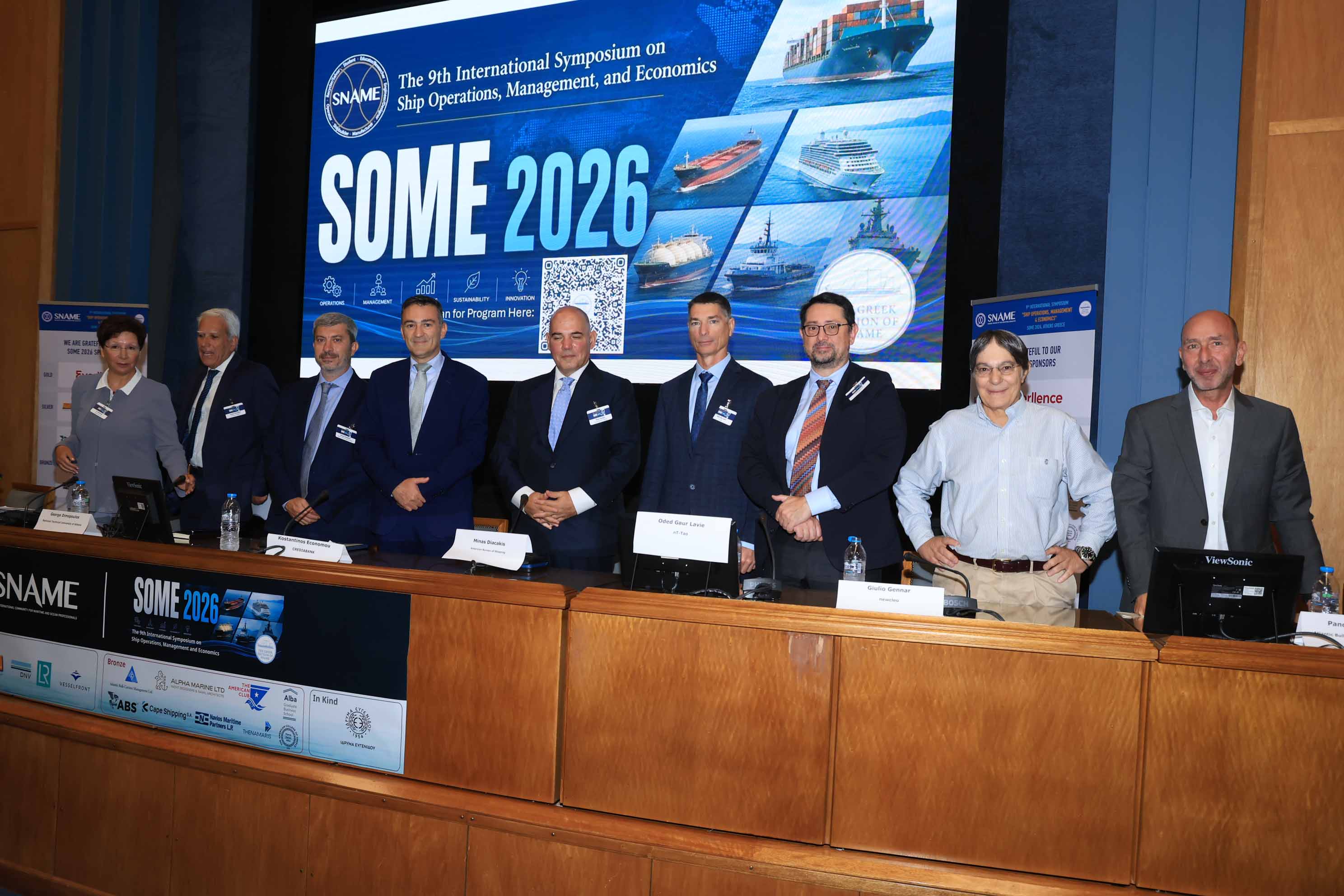
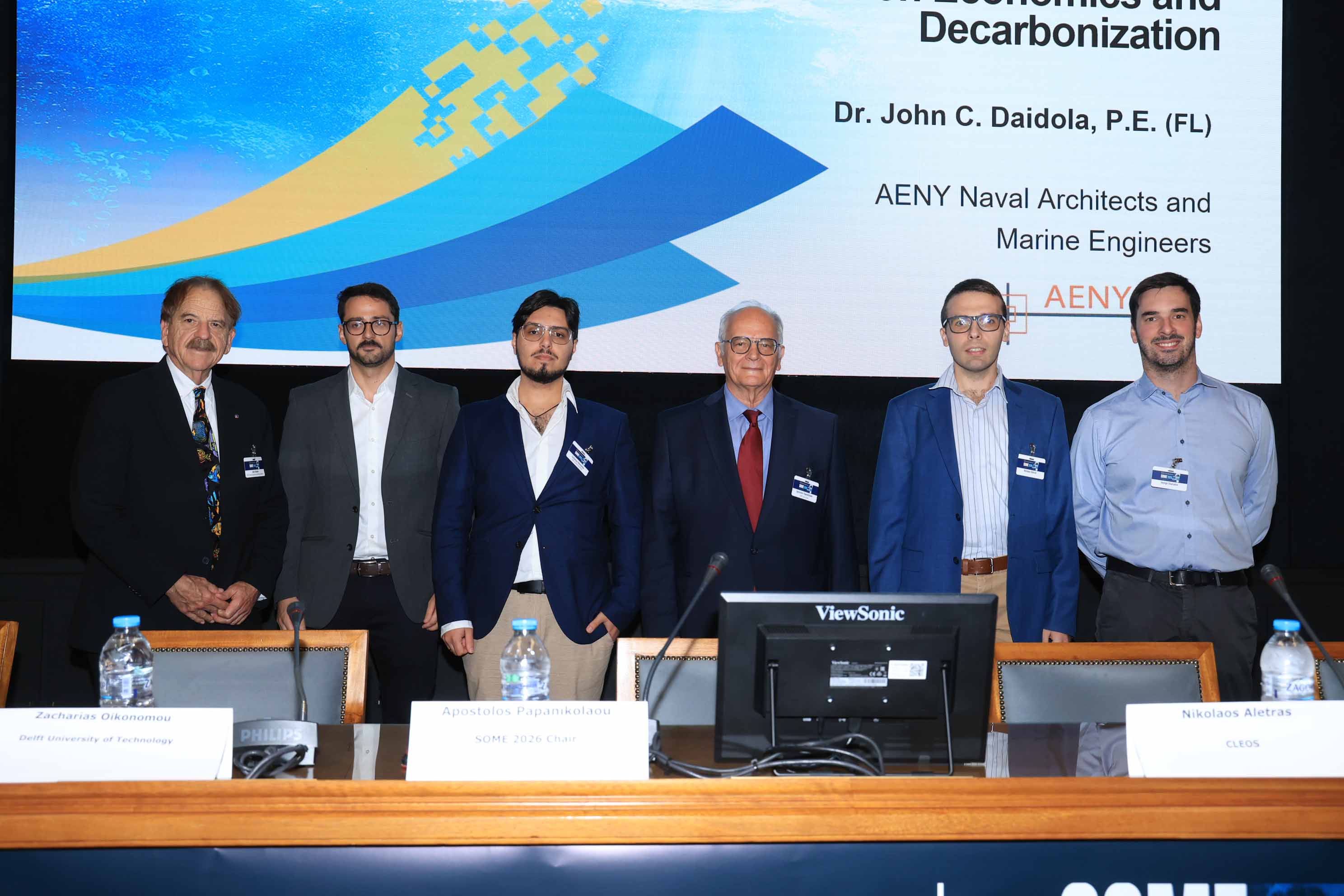
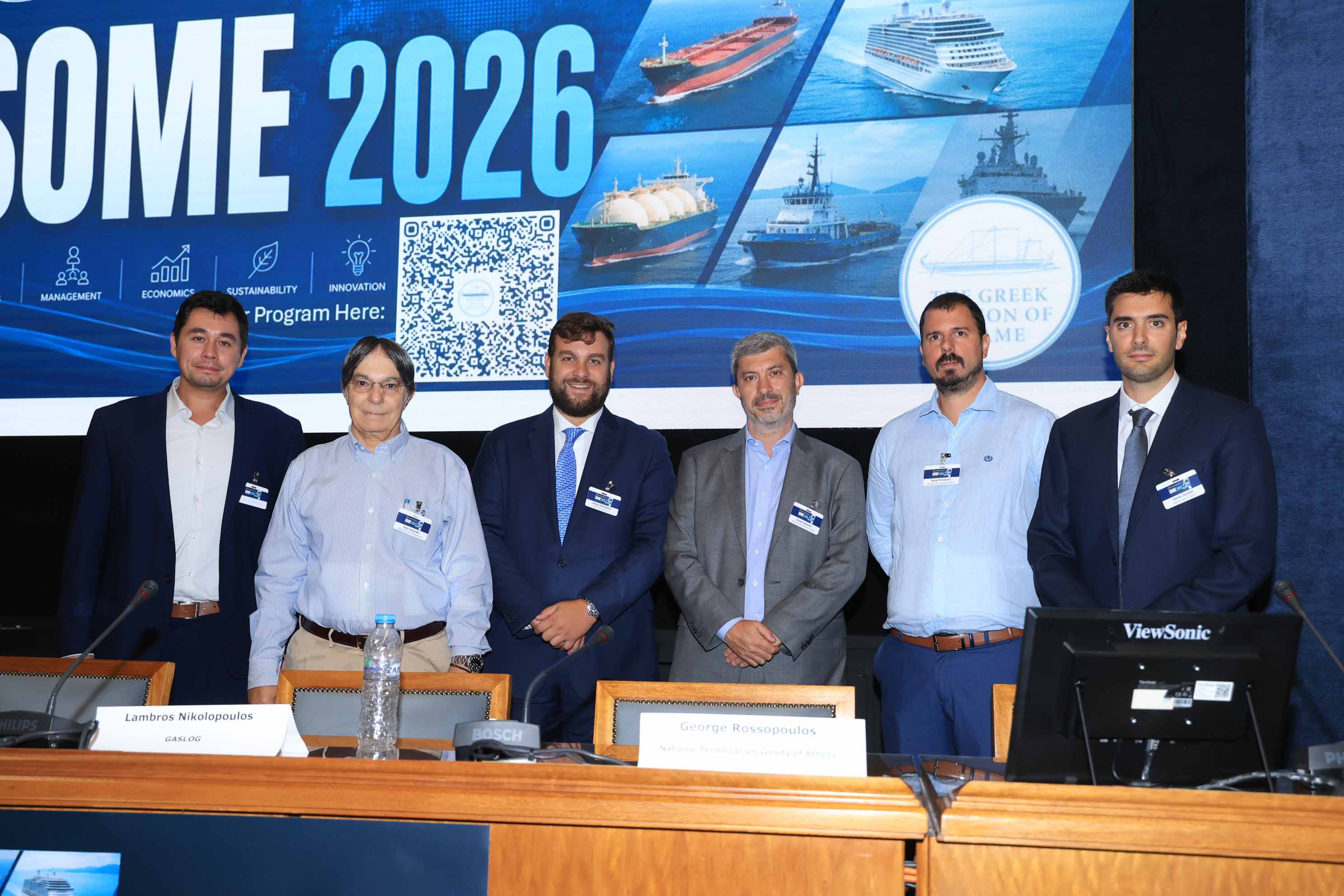
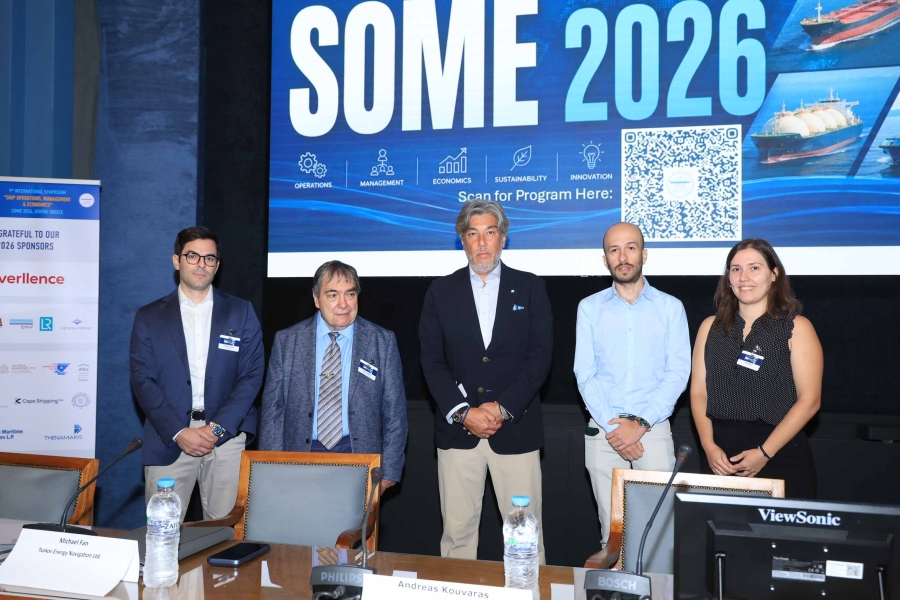
The 9th International Symposium on Ship Operations, Management and Economics (SOME 2026), organized by the Greek Section of the Society of Naval Architects and Marine Engineers (SNAME), was successfully held on 15–16 September 2026 at the Eugenides Foundation Conference Center in Athens.
Bringing together more than 200 registered participants, SOME 2026 provided a dynamic international forum for the exchange of scientific knowledge, engineering experience and forward-looking ideas addressing some of the most pressing challenges facing shipping today.
At the heart of the Symposium was an extensive technical program comprising 41 peer-reviewed papers, co-authored by 145 experts from 14 countries: Greece, Denmark, the Netherlands, China, the United Kingdom, the United States, Ukraine, Norway, Finland, Malaysia, Sweden, Malta, Ghana and Singapore.
The breadth and international character of the program reflected one of the fundamental objectives of SNAME and the SOME Symposium: to bring together academia, industry, classification societies, shipowners and operators, technology providers and young researchers in an environment where established thinking can be challenged, emerging technologies critically examined and practical solutions explored through rigorous scientific and engineering dialogue.
Thanks to the generous support of the Symposium's sponsors, participation in SOME 2026 was offered free of charge to registered delegates, together with access to the proceedings of the papers presented at the Symposium.
A Broad Technical Program Focused on Shipping's Transformation
The technical program was structured around seven major thematic areas:
Decarbonization & Alternative Fuels; Decarbonization Measures and Wind-Assisted Propulsion Systems; Decarbonization Measures and Regulatory Impact; Autonomous Shipping; AI Maritime Applications; Fuel Consumption Optimization; and Ship Design and Operations – Holistic Approaches to the Shipbuilding Industry.
Complementing the 41 technical presentations were two high-level panel discussions addressing Carbon Capture Technologies and Nuclear Energy in Shipping, together with two keynote presentations examining the Prospects of the IMO Net-Zero Framework and the Electrification of Shipping. The discussions demonstrated both the scale of the maritime industry's technological transformation and the considerable uncertainty that still surrounds the pathway toward deep decarbonization.
Decarbonization: A Pathway Still Taking Shape
The future of the IMO Net-Zero Framework featured prominently in the Symposium discussions. Participants examined the challenges surrounding international regulatory convergence, including the relationship between global IMO measures and regional approaches, particularly those being developed and implemented within the European Union. The discussions highlighted that achieving shipping's decarbonization objectives will require not only ambitious targets, but also technically feasible measures, realistic implementation pathways and greater regulatory and international alignment. Particular attention was given to the continuing growth of the world fleet and the resulting challenge of achieving substantial absolute reductions in greenhouse-gas emissions even as individual ships become progressively more energy efficient.
Beyond a Single-Fuel Solution
A recurring conclusion throughout SOME 2026 was that the maritime energy transition is unlikely to depend upon a single fuel or technology. The availability, scalability, cost and full life-cycle environmental performance of alternative fuels remain major considerations. Discussions therefore extended beyond green fuels to a wider portfolio of solutions, including carbon capture, wind-assisted propulsion, electrification and nuclear energy. The environmental performance of transitional fuels such as LNG was also examined from a life-cycle perspective, including the importance of methane emissions and the distinction between tank-to-wake and well-to-wake performance. The message emerging from the Symposium was clear: shipping's transition must be evaluated on the basis of complete energy and emissions pathways rather than fuel labels alone.
Nuclear Energy Returns to the Maritime Debate
One of the Symposium's most forward-looking discussions concerned the renewed interest in nuclear propulsion for merchant shipping. Modern Small Modular Reactor (SMR) technologies and their potential application to large, energy-intensive vessels—including containerships, tankers and bulk carriers—were examined as a possible long-term pathway toward very substantial reductions in operational greenhouse-gas emissions. The discussion extended well beyond reactor technology itself. Regulatory approval, classification, flag-state oversight, port acceptance, insurance, financing, liability, nuclear-material management and public acceptance were identified as essential elements of any future commercial implementation. Particular emphasis was placed on the need for an appropriate international regulatory framework under IMO, supported by established risk-based methodologies such as Formal Safety Assessment and goal-based standards. The Symposium discussions also underlined the importance of continued scientific research and transparent communication with society if nuclear-powered commercial shipping is to move from technological possibility toward practical application.
Electrification as Part of a Wider Energy System
Electrification was addressed not simply as a shipboard technology, but as part of a much broader energy ecosystem. Sustainable maritime electrification will increasingly depend upon the development of shore-side electrical grids supported by renewable energy, port-based energy storage, shore power infrastructure and continuing advances in batteries and fuel cells. While full electrification remains particularly suited to coastal and short-sea applications, the Symposium highlighted the importance of viewing ships, ports and land-based energy infrastructure as interconnected elements of the future maritime energy system.
Artificial Intelligence and Autonomous Shipping
The rapid digital transformation of shipping formed another major pillar of SOME 2026. Technical papers explored artificial intelligence, autonomous vessels, digital twins, machine learning, maritime analytics and advanced decision-support systems, demonstrating how digital technologies are increasingly moving from research environments toward practical maritime applications. Topics included AI-based fuel-consumption prediction and optimization, autonomous port operations, automated waterborne freight systems for short-sea shipping, responsible-AI digital twins, remote drone inspection technologies and AI-assisted emergency ship maneuvering. At the same time, discussions emphasized that technological capability must develop alongside validation, transparency, human oversight, cybersecurity and appropriate regulatory frameworks.
Extending Decarbonization to Shipbuilding
SOME 2026 also broadened the sustainability discussion beyond ship operation to the environmental footprint of ship construction itself. A Horizon Europe-funded initiative presented a structured framework for applying greenhouse-gas reduction principles to shipbuilding activities. The methodology establishes organizational and operational boundaries and maps emissions and resource consumption across major construction processes, including steel preparation, cutting and forming, welding and assembly, surface preparation and coating, outfitting, testing and commissioning.
The proposed Shipyard Environmental Performance Index (SEPI) seeks to consolidate process-level resource consumption and emissions into standardized indicators and ultimately into a composite measure of shipyard environmental performance. Such methodologies could eventually support environmental certification schemes and the development of Green Passports for ships constructed at certified shipyards, extending life-cycle environmental thinking from vessel operation back to the very beginning of the ship's life.
An International Forum for Maritime Innovation
Across two intensive days of presentations, panel discussions and professional exchange, SOME 2026 demonstrated the value of bringing scientific research and operational maritime experience into the same forum. The Symposium reflected an industry undergoing profound transformation. Decarbonization, alternative fuels, nuclear energy, electrification, artificial intelligence, autonomous systems and environmentally responsible shipbuilding are no longer isolated research subjects; they are increasingly interconnected elements of the future maritime system.
While many questions remain unresolved, the discussions in Athens reinforced an equally important conclusion: the maritime industry's transition must be founded on sound science, rigorous engineering, open professional dialogue and solutions that are both environmentally responsible and operationally realistic. SOME 2026 was made possible through the generous support of its sponsors and partners:
Gold Sponsor: Everllence
Silver Sponsors: Capital Maritime Group, DNV, Lloyd's Register and VesselFront
Bronze Sponsors: ABS, Alpha Marine Ltd, The American Club, ALBA Graduate Business School - Deree – The American College of Greece, Atlantic Bulk Carriers Management Ltd, Cape Shipping S.A., Navios Maritime Partners L.P. and Thenamaris
In-Kind Support: Eugenides Foundation
Media & Supporting Organizations: ELNAVI, Naftika Chronika, Naftemporiki, NAFS, EfoplistesNews, Maritimes, Liberty Press, Piraeus365 and the Propeller Club.
ELNAVI Newsletter
More Information: ELNAVI,
19, Aristidou str., Piraeus 185 31,
Tel.: +30 210 45.22.100, e-mail: This email address is being protected from spambots. You need JavaScript enabled to view it.