


The energy transition and the digital transformation in shipping creates a new educational environment of the maritime education that comprises design, management and control of the educational process in an innovation environment with the help of management tools – entrepreneurial hubs, active interactions and talent management of the organization.
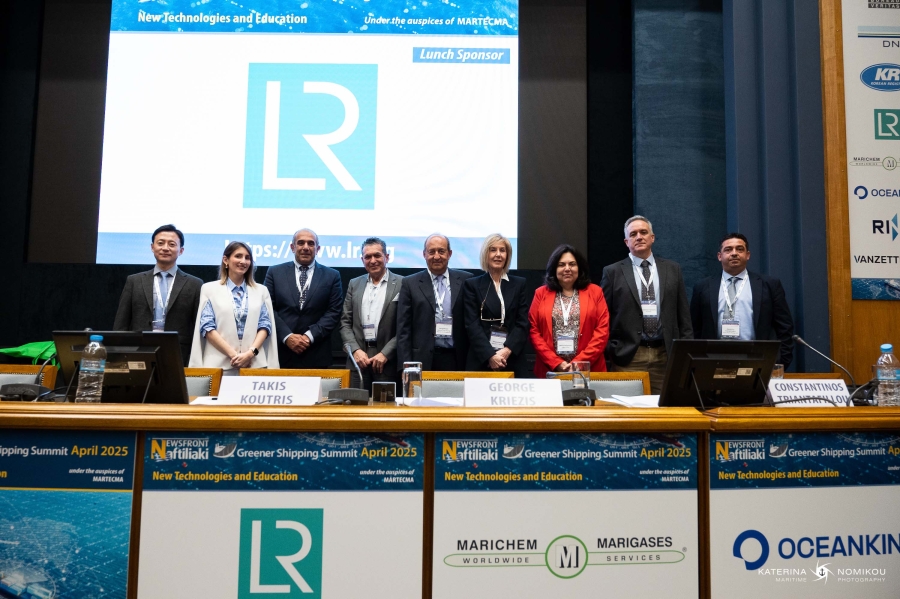
With the aim to explore the potential of new technologies in the marine training field Newsfront/Naftiliaki and Martecma organized the Greener Shipping Summit which took place at the Eugenides Foundation.
Conference Chairman was George Kriezis, Technical Director, Neptune Lines Shipping; Neptune Dry Management and Keynote speaker: Dimitris Fafalios, Secretary of the BoD, Union of Greek Shipowners; President / Director, Fafalios Shipping; Honorary Chairman, INTERCARGO.
The first topic was about Enhancing Maritime Education for Next Generation Seafarers.
Moderator: Takis Koutris, Managing Director, Roxana Shipping SA
The following Panelists discussed the topic:
- • Alexandros Arampatzoglou, Vetting Manager, Latsco Marine Management Inc
- • Dimitris Fokas, Training Manager, Angelicoussis Shipping Group; Chairman of Human Element Committee, INTERTANKO
- • Venetia Kallipolitou, Cross Departmental HR & Training Manager, Tsakos Group
- • Woosung KIL, Principal Surveyor, AI Convergence Center, R&D Division, KR (Korean Register)
- • Katerina Palla, Head of Global Marine Training, RINA
- • Constantinos Triantafillou, Head of Strategy & Development, HELMEPA
The speakers discussed the following topics:
- • e-learning engagements and simulators, an update on: e-learning platforms, virtual reality, simulators and cloud simulators, the role of artificial intelligence in service of learning engagements
- • How the above learning techniques will be applied to enhance education on future technologies, like low emissions technologies and equipment, alternative fuels, carbon capture
- • How soft competence will contribute to bridge the gap of inadequate hard competence (knowledge and experience)
- • Personnel assessment: The importance of accessing the effectiveness of learning process, Methods and tips for assessment, available tools and platforms
- • SIRE 2.0: Focusing on Human Element | Training needs that may arise through inspiration results.
The next session of the forum was about the Collaboration between academia and equipment makers-builders, class societies and operators.
Moderator was Fotis Belexis, Technical Director, Star Bulk Carriers Corp
Panelists:
- • Maria Bertzeletou, Market Analyst, The Signal Group
- • Stefanos Chatzinikolaou, Assistant Professor, Ship Technology, Department of Maritime Studies, University of Piraeus
- • Christos Hadjigeorgiou, Managing Director, Almi Marine Management SA
- • Jennifer Harrison, Vice President, Training Solutions, ABS
- • Stylianos Pappas, Professor, Head of Automation Control Systems, School of Engineering, Merchant Marine Academy of Aspropyrgos
- • Nicholas Tsouvalis, Professor, Director of Shipbuilding Technology Laboratory, School of Naval Architecture and Marine Engineering, NTUA.
The speakers discussed the following issues:
- • Discuss and define how the academia can help in the development and handling of new technology. What is the current experience?
- • Building bridges between theoretical education and practical experience
- • The role of apprenticeship and internship
- • Encouraging practical partnerships between research, innovations and education
- • The role of class societies and IACS in the newly emerging technology world.
The last topic of the forum was about the Reshaping the Training Needs.
Moderator was Stavros Hatzigrigoris, Advanced Engineering Services; Zodiac Maritime.
Panelists: • Andrea Capuani, Chief Commercial Officer, Vanzetti Engineering
- • John Kokarakis, Technical Director SEEBA Zone, Bureau Veritas
- • Natassa Kouvertari, Senior Lead – Human Competency, Lloyd's Register
- • Marina Papaioannou, Regional Maritime Academies Manager, Region South East Europe, DNV
- • Spyros Vlassopoulos, Managing Director, Ionic Group
The speakers discussed the following topics:
- • Describing the new technology in shipping, advanced automation and control, new fuels, new engines, reducing risks and enhancing safety
- • Redefining roles and responsibilities in a new technology driven maritime world and ensuring the operators and officers / seafarers onboard are properly prepared
- • The role of artificial intelligence in equipment design and integration, focusing on navigation, cargo handling, machinery operation and condition based maintenance
- • Defining smart ships, real-time monitoring and remote operation: An option or a future rule requirement?
- • Cyber security issues and developments. Relay on technological guard systems and educating stakeholders on maintaining secure data environments
- • Machine learning and digital twins.
ELNAVI Newsletter
More Information: ELNAVI,
19, Aristidou str., Piraeus 185 31,
Tel.: +30 210 45.22.100, e-mail: This email address is being protected from spambots. You need JavaScript enabled to view it.