


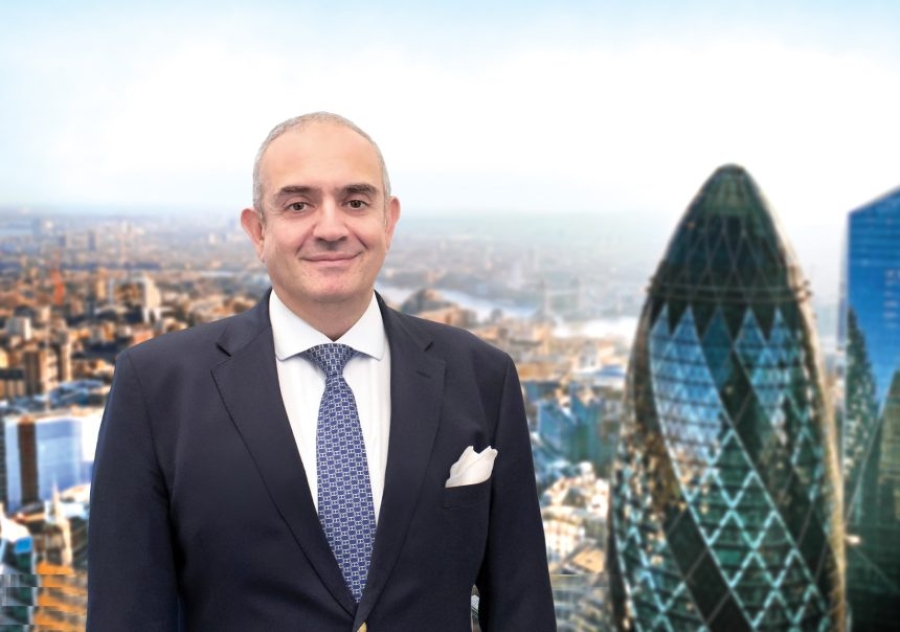
On the occasion of GSCC New Year’s vasilopita reception Mr. Haralambos J. Fafalios, president of the Greek Shipping Co-operation Committee referred to the latest shipping and geopolitical developments and underlined that 2025 marks the 90 years of the GSCC founding.
Mr. Fafalios said: “Fortunately, the two major conflicts that greatly concerned us since 2022 and 2023, i.e. Gaza and Ukraine, may be finally scaling down and thereby be of lesser danger to both seafarers and ships. However, it is too early to call them over.
We are very happy to hear that the crew of “Galaxy Leader” was released yesterday, after more than a year in captivity.
But there will still be risks in trading in the Red Sea and the Black Sea. The accompanying inefficiency has gone a long way in aiding the containership and tanker utilization rates.
The most important issue of the day was the recent inauguration of a new American President and how his administration’s strategy will affect world trade, and thus world shipping. It is too early to see if and when the threatened tariffs will be imposed and on whom. However, it seems most likely that any effects of such policies will primarily affect container and energy shipping and to a lesser extent the dry bulk trades.
We also have a significant number of elections in Europe and elsewhere, which in turn will determine trade and industrial policy. And of course, China itself is still the main receiver of global bulk commodities. Whilst many worry about China's actual growth rates, the fact remains that the imports that China needs are still colossal. Added to the above is the large fleet of underinsured, undermaintained vessels performing their job in the various sanctioned trades. Their presence is both unwelcome and dangerous to their crews and the environment.
Regardless of all these factors, the various shipping sectors have performed in different ways. The containership market has been very buoyant over the last 12 months, considering the huge orderbook that exists. The car carrier and RoRo sector has also provided very attractive returns. The tanker market was very positive but at the end of the year seemed to fall off significantly. Unfortunately, the dry bulk market had a lacklustre second half of year, apart from the capesize sector, and has ended the year at record low levels.
Gas carriers, especially the LNG carriers, have had a difficult year leading to some scrapping of turbine powered vessels. The LPG sector, whilst not at record highs, is still providing attractive returns.
It is against all this uncertainty that the world shipping fleet is growing significantly with very large numbers of container ships, car carriers, tankers, bulk carriers and gas carriers on order. Chinese, Korean and Japanese shipyards are all enjoying full orderbooks out to 2028 and beyond.
And a very significant number of these new ships are dual fuel, designed even though no one yet knows which is going to be the low carbon, high safety fuel of the future. I say high safety because all those who are ordering ammonia powered vessels have not yet quantified the huge safety risk to the crews and to third parties! The methanol solution may be safe but there is nowhere near enough supply to handle the world fleet needs. And finally, no one has decided whether LNG is or isn’t a green fuel, most people consider it to be a fossil fuel. So it is against this background that world shipping must take decisions which will affect them for the next 20-30 years.
It should be understood that simply selecting dual fuel bunkering arrangements will not in itself bring about a carbon free world because most of these alternative fuels still have many safety and availability risks and, most of all, are not that carbon free. This is especially the case for bulk/tramp vessels which make up the majority of the world fleet. The breakthroughs we really need are still not here and may not be so for many years.
Also, EU ETS, Fuel EU Maritime, CII and various taxes and levies, will not in themselves bring about a carbon free world. Any and all extra taxes will only hurt the consumers of commodities more than they will decarbonize shipping and not incentivize shipbuilders and engine builders to help shipping reach a carbon free world that we all wish for.
Another area which has become a bit overdone to say the least, is the area of vessel vetting.
Between adhering to class requirements, IMO regulations and Port State Controls, vessels themselves and their management have enough to deal with, and the result is generally a very safe fleet by all measures.
One must always remind oneself that the global shipping industry transports over 90 per cent of the world’s cargoes and with the lowest carbon footprint.
I am proud to say that for all these problems, Greek shipping organizations have ordered the largest number of newbuildings in all sectors, embracing efficient technologies and not just using the latest green fuel.
The Greek fleet, which represents the world’s largest fleet is also the biggest participant in the tramp trades. And thus, has to meet the requirements of all the world’s ports and cargoes.
On another level, I would like to remind everyone that this year London will host LISW 2025.
Whilst London has many of the world’s most prominent organizations, such as the IMO, ICS, INTERCARGO, INTERTANKO, IG of P&I Clubs, Baltic Exchange, with law firms and shipbroking companies having offices here, no shipping centre will prosper in the long term if shipping's actual decision makers live and work elsewhere.
Successive administrations have done very little to encourage London to retain its place as the home of entrepreneurs and shipping leaders. This omission will ultimately have long-term consequences for London.
The G.S.C.C. itself, has been based in London since 1935, starting off as the G.S.S.C. (Greek Shipping Stabilization Committee) but over the decades, has been the conduit between the Greek shipping community and London and the U.K.
Our closeness to all the London based shipping and maritime organizations has proved invaluable for both them and ourselves as we have been able to express the views and experiences of the world's most prominent shipping nation.
We still urge the Greek government to do more for maritime education and provide more spaces for students, better facilities and more lecturers.
Although we recognise the progress achieved, the Greek flag itself has to become less bureaucratic in order to tempt back owners into using it. We have been saying this for many years.
And as Europe's leading maritime force, we need more permanent representation at the I.M.O and the E.U.
The Hellenic Coast Guard, as always, should remain a very important element of the Greek maritime safety and marine pollution preventing system and should also be strengthened.
Most importantly, of all our gratitude goes to all our seafarers, who endure so many challenges every day and are rarely appreciated for their hard work. World trade would not function without their selfless efforts every day of the year keeping ships trading from one port to the other whilst encountering rough seas and challenging port environments.
Those working in shipping offices ashore must also not be forgotten for all their hard work in keeping this vital industry functioning smoothly.
Finally, I would like to thank my G.S.C.C. colleagues for their dedication and hard work, and in particular Kostas Amarantidis and his team for running this organization so smoothly. Thank you”.
ELNAVI Newsletter
More Information: ELNAVI,
19, Aristidou str., Piraeus 185 31,
Tel.: +30 210 45.22.100, e-mail: This email address is being protected from spambots. You need JavaScript enabled to view it.