


-
Home

-
Ports - Shipping
- elnavi

elnavi
DELPHI ECONOMIC FORUM UGS’s dynamic presence

In Delphi, where in the ancient times was the center of the earth, the UGS representatives talked about the various challenges the shipping sector faces at both European and global level, emphasizing the strategic importance of Greek shipping and the commitment of the shipping sector to its decarbonization.
The UGS representatives, inter, alia, stated that not more, but better regulation is needed and that there is no one size that fits all. EU’s environmental and political agenda should take into account the indispensable, strategic role of EU shipping, while it is vital that safety is paramount as the guiding principle in all environmental regulations. It was also underlined that Greek shipping is well-placed to respond and adapt to the ESG era, being a leader in investing in innovative, technological developments.
Ms. Melina Travlos, President of the Union of Greek Shipowners, institutionally representing Greek shipping as the leading sector of the national economy, stated at the Opening Session: "Greek shipping is Europe's superweapon. It is a national economic partner, providing billions of euros in maritime foreign exchange and hundreds of thousands of direct and indirect jobs, steadily investing in various sectors of our national economy. It is a national asset; it is our national pride. The national beneficence and social solidarity towards the motherland and the Greeks are consistent, silent, and broad. Our seamanship is our history. This new era has a new challenge, a new philosophy. The one where "business" and "well-being" coexist. The one where the human is in the epicenter. The one where the "I" recedes and the "we" retakes its place. Sustainable growth requires sustainable people. So, let's put the parameter of 'well-being' at the heart of development in this new era. The challenge, but also the solution, is to protect the human value and coexistence. Our future, the future of humanity, is the human himself. The future is us!"
Mr. A. Lemos, Vice President of the Union of Greek Shipowners, referred during the Fireside Chat, inter alia, to the following: “EU Horizontal policy and regulations often fails to take into consideration the unique features of the shipping industry and the socio-economic impacts of said regulations. There are shortcomings in the revised EU ETS which includes shipping. It is vital to try to shape the new regulations so that they can achieve their goals, without overly burdening EU citizens who are ultimately the end-consumer.
Greek shipping is well-placed to respond and adapt to the new era as it has done with all past regulatory developments. It will continue its deep-rooted commitment to the protection of the environment.
Shipping brings untold benefits to the world. The most important is its contribution to global trade and by extension globalisation, which is one of the great contributors to a more peaceful, fraternal world, one in which disparate societies can co-exist to each other’s mutual benefit. This is because global trade, 90% of which is transported by sea, connects people, countries and economies.
It is characteristic that shipping was the only industry which continued to perform, despite enormous challenges, throughout the COVID-19 pandemic, something which came at great cost, to the too often overlooked by, the international community, seafarers and their families.”
Mr. D. J. Fafalios, UGS Secretary, underlined at the session “Charting A Course To A Sustainable & Efficient Industry”, in which he participated: “The Greek shipping community is committed to shipping’s decarbonisation and has always supported global policies based on sustainable, viable and workable solutions adopted at the IMO. Global regulations are necessary to avoid distortion of competition. The shipping industry will fully embrace new technologies as they became mature but there must be also a balance between efficiency and decarbonization.
Most importantly, it is vital that safety is paramount as the guiding principle in all environmental regulations. Alternative fuels and technologies must be safe, cost-effective, fit-for-purpose and available worldwide in sufficient quantities. And these new tools must come from out of the shipping sector stakeholders, under whose remit their production and supply falls. In any case, there cannot be protection of the environment without protection of safety at sea, that is, safety of crews, safety of vessels, safety of fuels.”
Mr. J. Xylas, Treasurer of the UGS, during the “The Growing Pressure & Urgency For Change” session, said: “The commitment and coordination of all relevant stakeholders is vital for shipping’s decarbonization. Collaboration is necessary among all in order to come up with feasible and fit-for purpose solutions. We need better regulation, not more regulation. Proliferation of private initiatives risks seriously damaging the efficiency of a vital internationally regulated regime.
The shipping industry has a lot of specialized expertise about what can be workable for the needs and the modus operandi of each sector. Not one size fits all.
The human element is obviously crucial and seafarer safety is the first priority. Crews and shore-based personnel in shipping companies and ports will need to be retrained and follow the technological developments.”
Mr. J. C. Lyras, UGS Board Member, stated during his participation at the “Overlook And Franco-Hellenic Perspectives On The Maritime Industries” session: “The shipping industry, which is already by far the most energy efficient mode of transport, is fully committed to its decarbonization, notwithstanding that it is a fossil fuel captive and hard-to-abate sector. Its decarbonization, primarily requires the production in adequate quantities of alternative sustainable fuels and technologies which are, as yet, unavailable and the cooperation and commitment of a significant number of other stakeholders, like fuel producers and suppliers, shipyards and engine manufacturers. Bulk/tramp shipping, carrying 86% of the world’s seaborne trade in fuels, raw materials, cereals, and other agricultural products, faces extra challenges due to its global itinerant nature and its modus operandi, which includes the structural role of the commercial operator – charterer.
The strategic role of EU shipping, which guarantees the security of supply and the diversity of the sources of EU’s energy and other essential goods must be better acknowledged by the EU institutions and policy makers. They can do so by regulating shipping with a primarily Flag State perspective and with due regard to EU shipping’s need to remain sustainable and globally competitive.”
ELNAVI Newsletter
More Information: ELNAVI,
19, Aristidou str., Piraeus 185 31,
Tel.: +30 210 45.22.100, e-mail: This email address is being protected from spambots. You need JavaScript enabled to view it.
TMS Dry and CCS sign MOU for the construction of 10 newbuildings and carbon reduction solutions

On April 10, 2023 Mr. Sun Feng, President of China Classification Society (CCS), met with Mr. Demetrios Koukoulas, Managing Director of TMS DRY LTD, at the premises of CCS office in Shanghai for the purpose of entering into a Memorandum of Cooperation in relation to the classification by CCS of ten (10) newbuilding bulk carriers which are scheduled to be constructed in China.
The Memorandum of Cooperation was signed on the same day by Mr. Demetrios Koukoulas and the CCS Vice President Mr. Cai Yanxian in the presence of Mr. Sun Feng, a number of CCS executives and the TMS DRY Newbuilding Manager Mr. Ioannis Mavrommatakis.
Mr. Sun Feng extended a warm welcome to Mr. Demetrios Koukoulas and his delegation, highlighted the good cooperation between the two parties over the years and expressed his gratitude to TMS Group for its strong support to CCS.
Mr. Demetrios Koukoulas commented on the 24/7 high quality customer service provided by CCS and congratulated CCS on its impartiality policy, continuous growth and outstanding achievements in the Greek shipping market.
In the context of the existing and forthcoming environmental regulations the two parties shall continue to closely cooperate in relation to development of green smart technology and carbon reduction solutions.
ELNAVI Newsletter
More Information: ELNAVI,
19, Aristidou str., Piraeus 185 31,
Tel.: +30 210 45.22.100, e-mail: This email address is being protected from spambots. You need JavaScript enabled to view it.
Marshall Islands Registry seminar on a Port State Control Update from its Global Inspections Team

The Piraeus office of International Registries, Inc. (IRI), which provides administrative and technical support to the Republic of the Marshall Islands (RMI) Maritime and Corporate Registries, hosted a Port State Control (PSC) Seminar presented by the Registry’s global inspections team. More than 170 owners, operators, and industry stakeholders from around Europe and the Mediterranean attended the PSC Seminar.
Theo Xenakoudis, Chief Commercial Officer and Managing Director, Piraeus Office welcomed stakeholders to the seminar, highlighting the importance of information sharing and collaboration as the industry addresses the challenges of the future. Simon Bonnett, Chief Maritime Officer (London) provided an overview of the Registry’s Maritime Services Group and current initiatives. Brian Poskaitis, Senior Vice President, Fleet Operations (Baltimore/Annapolis) and Thomas Bremer, Vice President, Fleet Quality and Compliance (Baltimore/Annapolis) gave participants an overview of the Registry’s reach, highlighting the depth and breadth of the global inspections team. Regional overviews of PSC trends and data were provided by Captain Theodore Lalas, Fleet Operations Manager (Piraeus); Gerald Annuss, Deputy Fleet Operations Manager (Hamburg) and Chris van Tiel, Fleet Operations Manager (Roosendaal); Hans Krijger, General Manager (Roosendaal) on behalf of R.Vinod Kumar, Fleet Operations Manager (Mumbai), Captain Sascha Dyker, Fleet Operations Manager (Hong Kong); James Maupin, Fleet Operations Manager (Houston) and Davis Kong, Vice President, Fleet Operations (Fort Lauderdale). Following the presentations, attendees participated in discussion and knowledge sharing during question-and-answer sessions.
ELNAVI Newsletter
More Information: ELNAVI,
19, Aristidou str., Piraeus 185 31,
Tel.: +30 210 45.22.100, e-mail: This email address is being protected from spambots. You need JavaScript enabled to view it.
8th Maritime Endeavors Seminar 2023

T&T SALVAGE LLC organized an extraordinary week in #athens #greece co-hosting a #usa delegation lead by RADM Richard Timme and #neworleans CoPT Kelly K. Denning during the 8th Maritime Endeavors Shipping Co. (MESC) seminar.
T&T SALVAGE LLC clients, friends and associates who attended had the unique opportunity to meet Officers from the U.S. Coast Guard 8th District and the U.S. Customs and Border Protection Sector New Orleans, #mississippi river service providers and pilots, interact and share their inquiries and concerns.
T&T SALVAGE LLC is a global emergency response company and a Salvage and Marine Firefighting provider under the OPA90 regulations in the United States. In cooperation with the United States Coast Guard and several agencies and contractors T&T SALVAGE LLC successfully performed the largest wreck recovery in the history of the United States - the car carrier Golden Ray off the coast of Georgia USA.
ELNAVI Newsletter
More Information: ELNAVI,
19, Aristidou str., Piraeus 185 31,
Tel.: +30 210 45.22.100, e-mail: This email address is being protected from spambots. You need JavaScript enabled to view it.

In the context of the 10th East Med Expo Baseblue, the global marine energy solution provider, hosted a successful conference titled "The Future of Bunkering 2023 and Beyond". The conference featured expert panels and discussions on the role of bunkering in the transition towards a sustainable future, with a particular focus on alternative fuels.
The panel discussions delved into the challenges and opportunities of alternative fuels such as biofuels, hydrogen, LNG, and methanol. The discussions highlighted the importance of alternative fuels and vessel upgraded efficiencies in meeting the IMO’s regulatory requirements for 2030 and beyond. The speakers analysed the immediate pathway to meet these requirements. It was concluded that there is no silver bullet, and a combination of multiple options will be necessary to achieve the required emission reductions.
The conference opened with a welcome address by Mr. Ioannis Efstratiou, Director of the Safety & Environmental Directorate at the Shipping Deputy Ministry of the Republic of Cyprus, who highlighted the importance of collaboration and innovation in the industry's transition towards a sustainable future. Dr. Yiannos Charalambides, a lecturer and geopolitical analyst, provided an overview of the regional shipping and energy landscape.
Mr. Vassilios Demetriades, former Shipping Deputy Minister of the Republic of Cyprus, moderated a panel on regulations and operations in the shipping industry, where the challenges and opportunities of the industry's transition towards a more sustainable future were discussed. The panel included Captain Harpeet Singh, COO of Société de Navigation S.A, Dr. J Kokarakis, VP of Technology of Bureau Veritas, and Mr. Philipos Philis, President of ECSA.
Mr. Christian Stoch Jensen, Head of New Business Development at Global Risk Management, discussed the EUETS regulation and how to manage risk in the shipping industry. Mr Nicos Attas, Rina Cyprus Marine Manager, spoke about using hydrogen as a marine fuel and analysed its biggest challenges, highlighting the need for more research and investment in infrastructure and technology to overcome these challenges.
Bill Stamatopoulos, Business Development Director of Bureau Veritas, gave a presentation on the role of biofuels in the new regulations landscape. He mentioned that biofuels are an indispensable stepping-stone on the path to decarbonisation. They may be best viewed as only part of a portfolio of decarbonisation options.
The panel on transition and future fuels, moderated by Mr. Erwin Derlagen, COO of Enesel Dry S.A., explored the use of bio/LNG and methanol as future fuels. The panel included Mr Ed Glossop, Head of Sustainable Operations at Bunker Holding, Mr Stamatopoulos, and Ms Kelly Norways, Associate Editor at S&P Global Platts. They discussed the current development and adoption of these fuels and their challenges and opportunities.
"The conference was a great success, with insightful and thought-provoking discussions on the future of bunkering and alternative fuels," mentioned Nicholas Argyrou, Key Account Director of Baseblue. "We are committed to driving innovation and collaboration in the industry to achieve a more sustainable future."
The discussions at the conference highlighted the importance of developing and adopting alternative fuels to reduce the shipping industry's carbon footprint. Baseblue is committed to delivering holistic and integrated bunkering and lubricant solutions, alternative fuel options, risk management consulting, and a seamless, trusted, and responsible fueling experience.
Image1: Mr. Vassilios Demetriades, former Shipping Deputy Minister of the Republic of Cyprus, Captain Harpeet Singh, COO of Société de Navigation S.A, Dr. J Kokarakis, VP of Technology of Bureau Veritas, and Mr. Philipos Philis, President of ECSA
Image2: Mr Nicos Attas, Rina Cyprus Marine Manager
ELNAVI Newsletter
More Information: ELNAVI,
19, Aristidou str., Piraeus 185 31,
Tel.: +30 210 45.22.100, e-mail: This email address is being protected from spambots. You need JavaScript enabled to view it.
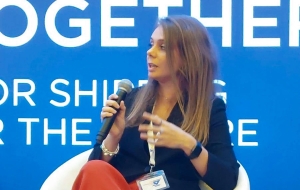
In response to the IMO’s implementation of the Carbon Intensity Indicator (CII), RINA has launched a Vessel Reporting System (VRS) aimed at boosting decarbonisation efforts through simple reporting.
Vessel reporting can be extremely time-consuming, and the new CII regulation will pressure ship owners and managers further. The new flexible reporting tool from RINA will collect data and allow the creation of dashboards to handle not only CII requirements but all reporting. The CII report provides an accurate and comprehensive picture of a ship’s carbon emissions and energy efficiency based on input data such as time at sea, time at port, average sailing speed, fuel consumption per fuel type and sailed distance.
Michela Schenone, Marine Digital Solutions Manager at RINA, said, “With the Vessel Reporting System, ship owners and managers may avoid potential reimbursements for negative CII ratings. They can easily track fuel consumption and emissions and, as the crew enters new data, the Vessel Reporting System automatically performs real-time quality checks to prevent input errors.”
The new Vessel Reporting System is a standalone solution requiring minimal system setup. For organisations already using SERTICA, the tool can be added as a module. The CII Calculator can also be combined with RINA’s CII Simulator. Ship owners and managers can measure the CII of actual voyages and estimate the CII of potential ones by analysing data, including recommended routes and speed to reach a specific CII rating, ultimately making the right operational decisions to minimise emissions.
Image: Michela Schenone, Marine Digital Solutions Manager at RINA
ELNAVI Newsletter
More Information: ELNAVI,
19, Aristidou str., Piraeus 185 31,
Tel.: +30 210 45.22.100, e-mail: This email address is being protected from spambots. You need JavaScript enabled to view it.
METIS, MTI and A*STAR in agreement on AI gains for Carbon Intensity Indicator transparency
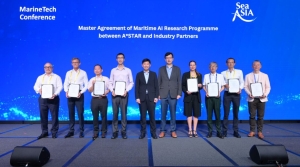
METIS Cyberspace Technology will be collaborating with MTI Co. Ltd. Singapore Branch and the Agency for Science, Technology and Research (A*STAR) in Singapore to advance the use of AI for the predictive modelling of ship emissions and carbon intensity indicator (CII) evaluation.
The undertaking is part of a master agreement framework for co-developing AI and other digital technologies announced during the MarineTech Conference as part of the Singapore Maritime Week, where A*STAR established a Centre for Maritime Digitalisation (C4MD). The C4MD is led by A*STAR’s Institute of High Performance Computing (IHPC). Signatories of the master agreement framework comprise: A*STAR, American Bureau of Shipping, Bureau Veritas Marine & Offshore, DNV, METIS Cyberspace Technology (Singapore) Pte Ltd, Nippon Kaiji Kyokai, MTI Co. Ltd., PSA Marine (Pte) Ltd and ShipsFocus Services Pte Ltd.
The METIS-MTI-A*STAR project will focus on the way AI-based solutions can help shipping adjust to the International Maritime Organization’s Carbon Intensity Indicator (CII). Entering into force from 1 January 2023, the CII rates ships on the basis of CO2 emissions by transport work from A to E, expecting them to achieve a C rating or better, or explain how they will do so. However, the relationship between the KPI and the factors determining ship behaviours has not been fully studied.
“The Centre for Maritime Digitalisation (C4MD) hosts and supports innovative maritime R&D initiatives in Singapore such as the flagship Maritime AI Research Programme. The translation and application of research capabilities across the value-chain will contribute to a safer, more efficient and more sustainable maritime industry, and strengthen Singapore’s competitiveness in the maritime sector,” said Dr Su Yi, Executive Director, A*STAR’s IHPC.
Eleni Polychronopoulou, President & CEO, METIS Cyberspace Technology, signed for METIS, with Singapore Managing Director Chinmoy Ghose as witness.
“We are delighted to work with A*STAR’s IHPC and MTI on one of the key projects announced as part of the launch of C4MD,” said Polychronopoulou. “Owners face multiple options on how they improve their CII performance, and making the wrong choice can be costly. This project’s first target is to make the relationship between fuel consumption/emissions and the CII rating more transparent by taking full account the ship profile. Subsequently, we aim to develop a simulation platform to model future voyages and evaluate the real-time CII compliance status of a ship.”
An owner establishing a CII rating, or how to improve it, can consider factors including adjusting a ship’s sailing time ratio, speed profile, voyage profile, hull and propeller condition, specific fuel oil consumption, electrical consumption, trim, draft, or an engine de-rating. Modelling based on AI offers the opportunity to consider ‘what-if’ scenarios and assess how new methodologies or technologies can be introduced to reduce emissions without compromising operational performance, said Polychronopoulou.
ELNAVI Newsletter
More Information: ELNAVI,
19, Aristidou str., Piraeus 185 31,
Tel.: +30 210 45.22.100, e-mail: This email address is being protected from spambots. You need JavaScript enabled to view it.
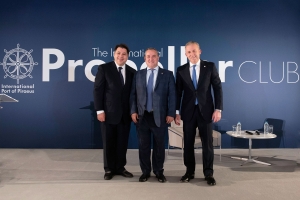
After the Easter break, the Propeller Club Port of Piraeus organized an event for the 150 new members who joined the Club last year.
Mr. Costis Frangoulis, President of the Propeller Club Port of Piraeus, in his speech recalled that the Piraeus’ Propeller Club was founded in 1935 with the aim of developing and strengthening Greek-American relations and supporting social actions in shipping. He also emphasized on the American Embassy’s cooperation with the Propeller Club through Amber Awards, Qualship scheme and he announced that the club plans to host a NYSE/Nasdaq Hellenic American Shipping Gala for listed companies.
The US Ambassador to Greece H.E. Mr. George Tsunis in his speech pointed out that the Propeller Club of Piraeus is the largest in the world and is a pole of attraction for Greek shipping people promoting innovation and Greek-American cooperation in many fields of shipping such as shipbuilding and repairs with the activity of ONEX and the shipyards of Elefsina, technology and safety at sea.
More generally, as Mr. Tsunis said: it is in the interest of the US to strengthen strategic cooperation with Greece because establishing a reliable and solid partnership.
Greeks share the similar values with American citizens, a fact that was also reflected by the speech of Mr. Prime Minister Kyriakos Mitsotakis to Congress in 2022.
In this context, the USA will constantly look for ways to help Greece in all areas, education, new technologies and of course shipping.
Exclusively for Members' Day, the CEO of Nasdaq-listed Safe Bulkers Inc. Mr. Polys Hajioannou gave a speech on the topic: "The resilience of listed shipping companies in the constantly changing and challenging global environment".
Mr. Polys V. Hajioannou joined Alassia in 1993 and moved from London with his family to Piraeus when OPA 90 and the ISM Code were the most important topics in shipping.
At that time his company was one of the first to order new ships from Samsung Japan after the crisis of 1980-86.
In 1999, the Alassia had 14 ships but was weathered the difficulties of the shipping market with persistence and hard work. With China's entry into the OAS in 2002, the market began to recover.
The company grew and renewed its fleet at a good timing. In 2008 he managed to carry out an IPO on the American Stock Exchange under a new company’s title Safe Bulkers around 3 months before the collapse of Lehman Brothers by liquidating 20% of the listed company.
In 2008 the IPO fortunately forced Safe Bulkers to charter most vessels on long term period employment. In 2009 when China invested in infrastructure there were no cancellations and most of the charterers' contracts were executed.
Mr. Hajioannou said that the benefits to the company's operation from its entry into the stock market were many, such as the fact that alternative financings are opened with particularly favorable interest rates for listed companies from governments and private equity.
In 2016, the market worsened to a 30-year low, but Safe Bulkers, having a liquidity of 120 million dollars, managed to agree with its creditors on the refinancing of its debt. Thus the stock improved and was included in the best and most durable companies of that year.
Mr. Hajioannou said that: "Our entry into the stock exchange gave us enormous possibilities for financing, even a bond with the Piraeus bank was issued on the Greek stock exchange in 2022".
Safe Bulkers also agreed with Erma First to install the ballast water treatment systems and with Alfa Laval the scrubbers on all ships.
"Today our goal in Cyprus and Greece is to attract young children in shipbuilding and mechanical engineering and other maritime professions to ensure continuation of the shipping companies in the future" underlined Mr. Hajioannou.
He also mentioned the possibility of a Turkish being elected secretary general of the IMO, which will be an embarrassing development for Cyprus as the Cypriot flag is blocked from Turkish ports.
In conclusion, Greece has great expertise not only in ship management including legal, technical and other services therefore we should maintain and preserve this entire infrastructure, pointed out Mr. Hajioannou.
Regarding the transfer of almost half of the company to Cyprus, Mr. Hajioannou said that due to capital controls in 2011 we opened our office in Limassol.
As Cypriots we have to help the island’s infrastructure in shipping and attract the young children of Cyprus to shipping.
Mr. Hajioannou invited Greek shipowners to register part of their fleet in the Cypriot flag as well and he expressed his optimism for the course of the shipping market due to environmental regulations in the long term despite the increase in the interest rates which will remain high in the coming years 1-2 years.
ELNAVI Newsletter
More Information: ELNAVI,
19, Aristidou str., Piraeus 185 31,
Tel.: +30 210 45.22.100, e-mail: This email address is being protected from spambots. You need JavaScript enabled to view it.
Posidonia Sea Tourism Forum Thessaloniki is changing and returns to the international cruise market
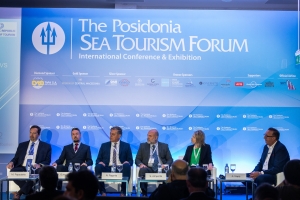
Posidonia Sea Tourism Forum Day 1
The rise of cruise with 5 additional cruise lines which have chosen Thessaloniki as a port of call, marked its return to the international cruise market. As the mayor of the town Mr Konstantinos Zervas said in his address during Posidonia Sea Tourism forum which took place in Thessaloniki “It is the best place to work, live, visit, create and have fun”.
Mr. Athanasios Liagkos, Executive Chairman of the BoD & Managing Director, ThPA SA – Port remarked that the port has achieved spectacular growth and has attracted a remarkable number of cruise ships during the last years. Mr. Piefrancesco Vago, Executive Chairman Cruise Division, MSC Group & Global Chairman Cruise Lines International Association (CLIA) was the key note speaker of the conference. He referred to the extraordinary cruise opportunities in the Eastern Mediterranean region.
He pointed out that the challenges for Greece is the improvement of the cruise infrastructure in the smaller cruise destinations mainly in the islands.
This can be also achieved with privatization projects and the jointly co-operation of cruise lines, port authorities and the government.
As we look to the future CLIA is very optimistic for the cruise industry prospects with newcomer passengers and new ships been built to increase the capacity of the sector.
The panel of speakers examined the STATE OF THE INDUSTRY and the Crucial Role of the Mediterranean in Post-Pandemic Cruising.
After the traumatic period of the pandemic many European destinations experienced very high arrival numbers in the second half of 2022 reaching 2019’s record levels.
Despite the long pause in cruise operations which instigated a wide range of damage in corporate operations and financial results the sector of cruise is starting to recover.
Other speakers included Figen Ayan, President, MedCruise, Marie-Caroline Laurent, Director General, Cruise Lines International Association (CLIA) Europe, Wybcke Meier, CEO, TUI Cruises GmbH, Chris Theophilides, CEO, Celestyal, Yu Zenggang, Chairman, Piraeus Port Authority SA and Moderator: Grant Holmes, Global Sector Head, Cruise & Superyacht Industry, Inchcape Shipping Services.
Mr. Chris Theophilides, CEO, Celestyal expressed his optimism for the cruise activities in 2023 which will surpass 2019 figures. As a company Celestyal is very active in the Eastern Mediterranean with 3 modern cruise ships adding more port of calls in Greek islands and other destinations in the Mediterranean to enrich the cruise experience of its passengers.
Mr. Yu Zenggang, Chairman, Piraeus Port Authority SA described the Piraeus port initiatives to strengthen the capacity of the cruise terminal. The home porting from Piraeus port is increasing and more economic benefits are granted to the city of Piraeus and the economy.
From the 800 cruise ships that are called every year at the port of Piraeus 600 ships are starting its round trip from Piraeus.
The port of Piraeus has 3 cruise terminals and aims at the construction of a new terminal which can accommodate giant cruise ships.
The project will be delivered in the next 2-3 years. Other initiatives are in process to accelerate immigration clearance and embarkation procedures and services.
The next panel of speakers discussed the Growth Challenges for Cruise Lines and Destinations.
The speakers said that as tourism begins to regain its pre-pandemic rhythm, sustainability and overcrowding challenges will also return to the forefront for many popular destinations. Sustainability will also have a major impact in future itinerary, design and guest satisfaction.
Cruise lines, central & local governments, private sectors and ports could cooperate to develop and promote enough destination alternatives to better disperse call traffic and mitigate the impact on marquee ports.
In his speech Capt. George Koumpenas, President, Hellenic Cruise Ship Owners & Associated Members’ Union & Chief Operating Officer, Celestyal told that you cannot blame the cruise industry in case of the poor island's infrastructure that cannot accommodate more cruise ships.
Despite the challenges such as berth allocation in Santorini and other small islands, Greece's cruise industry is growing at a steady pace.
Speakers of the panel were also Agnes Brochet, Director, Destination Research, Development & Planning, Silversea Cruises, Alessandro Carollo, Director, Government Relations, Royal Caribbean Group, George Koumpenas, President, Hellenic Cruise Ship Owners & Associated Members’ Union & Chief Operating Officer, Celestyal, Michael Pawlus, Head of Itinerary Planning, Azamara Cruises, Gianluca Suprani, SVP Port Development and Shoreside Activities, MSC Cruises SA and Moderator: Holly Payne, Editor Video Production & Deputy Editor, Seatrade Cruise.
Last but not least a CLIA Europe session with the title “Pathways to Net Zero” took place during the 1st day of the forum.
The speakers were Linden Coppell, Vice President, Sustainability & ESG, MSC Cruises, Calypso Diareme, Global Head, Cruise Logistics, ATPI, Ukko Metsola, Vice President, Government Relations, EMEA, Royal Caribbean Group, Dr. Ioannis Pappas, Director Mediterranean Region, Global Sustainable Tourism Council, Antony Vourdachas, Principal Engineer, Global Sustainability Center Athens, ABS and Moderator Sascha Gill, Vice President, Sustainability, Cruise Lines International Association (CLIA).
Smaller islands on the radar of the major luxury cruise companies as trend for unique experiences
Study presents positive financial impact of cruise for Thessaloniki
Posidonia Sea Tourism Forum Day 2
Luxury cruise companies are turning their attention to smaller, off-the-beaten-path destinations, according to discussions at the 7th Posidonia Sea Tourism Forum, held in Thessaloniki, Greece. While mainstream ports of call will always have their place, the trend for unique experiences in lesser-known destinations is taking hold.
However, the inclusion of more exotic locales on luxury cruise itineraries is not without its challenges. Infrastructure readiness at smaller destinations can be a concern, as well as quality venue availability and berthing policies, as noted by several industry professionals.
Not every island can fulfil all needs due to various challenges according to Michele Bosco, Manager, Shore Excursions and Operations Europe, Africa, Middle East, Princess Cruises.
“Poor venue maintenance post Pandemic has led to reduced capacity at certain venues in smaller destinations, which in turn leads to higher cost for guests, meaning that some of the challenges we are facing now have their roots at Covid. Certain venues have also closed down for business and others no longer want to collaborate with cruise companies as the global tourism rebound means that they are receiving stronger flows of independent tourists, reducing their reliance on groups coming from our ships,” he said.
The lack of venue availability is a concern also shared by Agnes Brochet, Director, Destination Research, Development & Planning, Silversea Cruises. “In small islands we will have lack of space for all our guests to secure a spot, when we are at full capacity, because we offer one free excursion at each of the destinations we are visiting, therefore demand for onshore excursion is strong, and that is one of our main land-side challenges.”
Berthing policy in Greece is also a cause for concern for the luxury cruise brands such as MSC’s Explora brand. Sacha Rougier, Head of Itinerary Planning and Destination Experiences, Explora Journeys said. “Relooking at the berthing policy in Greece would help us solve a major challenge we are facing, as in some cases we fail to secure a slot even when we have had initial confirmation. This causes all sorts of issues for the company which we’d rather had avoided. Lack of transportation guides also pauses problems in certain destinations,” she said.
Brochet said that research is key before deciding to add new, lesser known destinations. “Before we zero in on a new destination we conduct comprehensive research. We then need to put all this in an idea-generating machine which involves everyone in our company through a virtual ideas box open to everyone, including crew members who visit so many places around the world. Even when our people go on a holiday in lesser known coastal destinations, they are encouraged to share their opinions and ideas about the appeal of these destinations with our destination department team for their assessment.
“We then develop business cases and when they look viable, we do the scouting leveraging our team of 100 people in the destination department who are sent onsite to survey and assess the destination,” she said.
In terms of what luxury cruise guests seek out of the secret gem destinations, unique human and sustainable experiences top the preferences list. “Going to homes of local people or spend time with a local chef are just a couple of examples,” said Constantine Venetopoulos, Director, Communications & PR, Variety Cruises. “We have launched a product ‘Unexplored Greece’ visiting Ikaria and Amorgos and it is now our best seller. Our boats are for 50 guests, so we are niche and for us finding these places is basically finding what our guests want. It is also important to bear in mind the demographics of guests before tailoring certain experience-enhancing shore excursions.
It is important to be able to distinguish between what is popular and what is trendy added Bosco: “Smaller group tours are becoming more popular. Tours off-the-beaten-path such as food and drink walking tours in local non touristic venues, or culinary tours where the ship chef takes guests to the local market to select the fresh produce for their dinner or cooking together with them. Meet the family of the farm is also becoming trendy when it comes down to luxury cruising products.”
Luxury cruise guests are searching for the unique and the unexpected and few people would know that an actual desert exists in a Greek island, according to Olympia Anastasopoulou, General Secretary of Tourism Policy and Development, Ministry of Tourism, Hellenic Republic, who keynoted the second and final day of the Forum.
“Coastal and maritime tourism can be a powerful tool for the development of Greece’s national economy as it currently contributes 1.5% of the country’s GDP. Greece possesses the characteristics to make it one of the most attractive destinations for Europe in sea tourism, ranking ninth in the world in terms of coastline length. But we also have mountains, lakes, rivers and even a desert in the Greek island of Limnos. This is why our potential to become a leading cruise destination is significant.”
Her optimism about the continuous growing contribution of the cruise sector to the Greek economy is echoed in the findings of a recent preliminary study conducted by Thanos Pallis, Professor, Department of Maritime Studies, University of Piraeus, who shared some insights with the PSTF 2023 delegates.
Titled ‘Assessment of the Socio-Economic Impact of the Cruise for Thessaloniki’ the research started in November 2022 and is expected to be completed next October 2023 to investigate the economic impact of the cruise activity both in the city of Thessaloniki, but also in the wider metropolitan area of the city.
Based on actual figures so far gathered between November 2022 and April 2023, the projected estimates for the financial contribution of the cruise sector in Thessaloniki on an annualised basis, indicates that the direct positive effects range between a basic scenario of €5.23 million to a positive scenario of €6.49 million. There is also the indirect positive effects that range between €3.43 million for the base scenario and €4.33 million on the more optimistic projection. Combined, the positive effects are expected to range between €8.56 million for the base scenario and €10.82 million for the positive scenario.In terms of employment impacts, this year's cruise season, with a significant expected number of 68 cruise ship calls at the port of Thessaloniki, is estimated to result in sustaining 111 full-time jobs on an annual basis.Among the most important findings of the research, is the satisfaction of cruise passengers, as reflected in the fact that 90.1% of passengers state that after their visit they are extremely to quite likely to recommend Thessaloniki as a tourist destination.
ELNAVI Newsletter
More Information: ELNAVI,
19, Aristidou str., Piraeus 185 31,
Tel.: +30 210 45.22.100, e-mail: This email address is being protected from spambots. You need JavaScript enabled to view it.
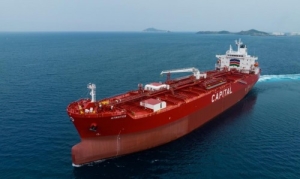
Two tankers with Wind-Assisted Ready and HVSC-Ready ABS notations, LNG Fuel Ready sister ships with eco-friendly design delivered to Capital Ship Management Corp. in the context of the company’s fleet expansion program.
The newbuilding vessels M/T ‘Atrotos’ and M/T ‘Anikitos’, two 50,000 dwt, eco-type Chemical/Product MR tankers, built by Hyundai Vietnam Shipyard Co Ltd out of six sister vessels delivered to Capital in 2023.
The HVSC-Ready notation is for vessels equipped with High Voltage Shore Connection systems to be installed in the future, and the Wind-Assist Ready notation refers to vessels equipped with wind-assist equipment to be installed on board. Both vessels have future proof design compliant with EEDI Phase 3 and are annotated with ABS SUSTAIN-1 (2020) that demonstrates adherence to the United Nations' (UN) Sustainable Development Goals (SDG).
Being Tier III compliant for reduced NOx emissions, assigned ABS ENVIRO notation, as well as ABS Wind-Assisted Ready, HVSC-Ready and LNG Fuel Ready notations, and equipped with IHM notation for safe recycling, M/T ‘Atrotos’ and M/T ‘Anikitos’ are two of the most environmentally friendly, technologically advanced and efficient vessels in the global MR fleet.
Capital Ship Management Corp. operates a fleet of 30 tankers (12 VLCCs, 10 Aframaxes, 7 MR/Handy product tankers and 1 small tanker) with a total dwt of 5.22 million tons approx. Capital has extensive experience in managing various vessel types and sizes including all tanker segments (VLCC, Suezmax, Aframax/LR2, Panamax/LR1, MR/Handy and small tankers), dry bulk segments (Cape, Panamax, Handymax and Handy), as well as OBOs and containers.
ELNAVI Newsletter
More Information: ELNAVI,
19, Aristidou str., Piraeus 185 31,
Tel.: +30 210 45.22.100, e-mail: This email address is being protected from spambots. You need JavaScript enabled to view it.