



-
Home

-
Ports - Shipping
- elnavi

elnavi
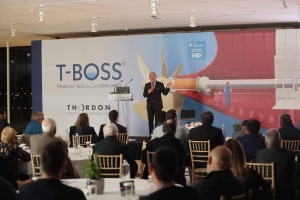
The Greek shipping community and top technical executives recently gathered for an insightful joint event organized by Thordon Bearings, ABS, and Technava. The seminar focused on the transformative "Sterntubeless" vessel design and its impact on the future of maritime engineering.
Dr. Chris Leontopoulos, Vice President of Technology (EMEA) at ABS, detailed the operational advantages of sterntubeless ships, noting that they eliminate the need for dry-docking, tailshaft withdrawals, and complex shaft line disassembly. He highlighted that these vessels allow for internal bearing inspections, seal replacements from within the hull, and utilize a simplified shaft-lifting mechanism equipped with bilge alarms and ventilation.
In his speech, Mr. Craig Carter, VP of Business Development at Thordon Bearings, introduced the T-BOSS (Thordon-Blue Ocean Stern Space). This revolutionary design replaces traditional oil-lubricated systems with seawater lubrication. By eliminating the sterntube entirely, T-BOSS removes environmental risks and slashes operational costs, offering a "green" solution that ensures 100% regulatory compliance without the need for costly biodegradable lubricants (EALs).
ELNAVI Newsletter
More Information: ELNAVI,
19, Aristidou str., Piraeus 185 31,
Tel.: +30 210 45.22.100, e-mail: This email address is being protected from spambots. You need JavaScript enabled to view it.
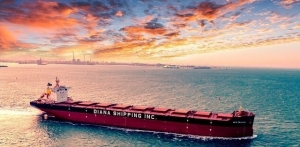
Star Bulk Carriers Corp. has agreed to acquire sixteen vessels from Diana Shipping Inc. subject to Diana successfully acquiring all issued and outstanding shares of Genco Shipping & Trading Ltd., not already owned by Diana. The aggregate purchase price for the sixteen-vessel acquisition is $470.5 million in cash (“Purchase Price”). The SPA is subject to (i) an agreement being entered between Diana and Genco and successfully being consummated and (ii) customary conditions to S&P transactions. The sixteen vessels that SBLK has agreed to acquire include one Newcastlemax, six Capesize vessels, seven Ultramax vessels and two Supramax vessels, with a total carrying capacity of 1.8 million dwt and an average age of 11.4 years. Assuming the successful consummation of this transaction, Star Bulk will have 157 ships on a fully delivered basis with a total carrying capacity of 15.9 million dwt and average age of 12.0 years.
The Company intends to fund the Purchase Price with a combination of existing cash resources, reserved from previous vessel sales, as well as new debt financing. The Company has received a number of offers from leading financing institutions in order to procure new senior secured debt facilities in relation to this transaction and is in the process of evaluating them. As of December 31, 2025, Star Bulk had a total cash balance of $501.9 mln while the Company currently has 27 unlevered ships with an aggregate market value of $628.0 mln and maintains access to its revolving credit facilities with total undrawn and available amount of $110.0 mln. We believe this transaction represents a disciplined and value-enhancing capital allocation consistent with Star Bulk’s long-term shareholder strategy. The sixteen vessels will generate immediate incremental TCE revenue, EBITDA and operating cash flow to support dividend growth and deleveraging. Mr. Petros Pappas CEO commented: “As a leading public company in the dry bulk space, we firmly believe consolidation in our sector creates value for all shareholders. We are pleased to support Diana on its proposed acquisition of Genco. We believe this en-bloc transaction allows Star Bulk to further increase its scale, earnings power and shareholder dividends, while preserving balance sheet strength and low leverage.”
About Star Bulk
Star Bulk is a global shipping company providing worldwide seaborne transportation solutions in the dry bulk sector. Star Bulk’s vessels transport major bulks, which include iron ore, minerals and grain, and minor bulks, which include bauxite, fertilizers and steel products. Star Bulk was incorporated in the Marshall Islands on December 13, 2006 and maintains executive offices in Athens, New York, Stamford and Singapore. Its common stock trades on the Nasdaq Global Select Market under the symbol “SBLK”. As of the date of this release on a fully delivered basis and as adjusted for the delivery of the eight firm Kamsarmax vessels currently under construction, we own a fleet of 141 vessels, with an aggregate capacity of 14.0 million dwt consisting of 17 Newcastlemax, 14 Capesize, 1 Mini Capesize, 7 Post Panamax, 44 Kamsarmax, 47 Ultramax and 11 Supramax vessels with carrying capacities between 55,569 dwt and 209,537 dwt. In addition, in November 2021, we took delivery of the Capesize vessel Star Shibumi, under a seven-year chartering arrangement and in 2024, we took delivery of the vessels Star Voyager, Star Explorer, Stargazer, Star Earendel, Star Illusion and Star Thetis, each subject to a seven-year charter-in arrangement.
ELNAVI Newsletter
More Information: ELNAVI,
19, Aristidou str., Piraeus 185 31,
Tel.: +30 210 45.22.100, e-mail: This email address is being protected from spambots. You need JavaScript enabled to view it.
Major Initiative to Strengthen Public Healthcare by the Stelios Philanthropic Foundation
€10 million donation to support the retention of 80 doctors on 47 small islands of Greece
The Stelios Philanthropic Foundation is launching a major initiative to support public healthcare on Greece’s small islands, committing €10 million over a seven-year period to help retain 80 doctors on 47 small islands of the country served by the smallest primary healthcare units. These 47 islands are served by Regional Clinics and Multi-purpose Regional Clinics, the smallest healthcare facilities within the Greek National Health System, and the programme does not apply to islands that host health centres or larger healthcare structures.
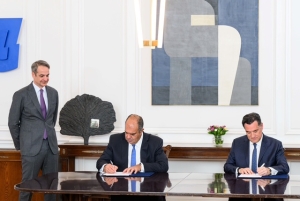
The donation agreement was signed during a special ceremony at the Office of the Greek Prime Minister, in the presence of the Prime Minister of Greece Kyriakos Mitsotakis, by the President of the Foundation Sir Stelios Haji-Ioannou and the Minister of Health Adonis Georgiadis.
The initiative was inspired by the strong and long-standing connection of the Foundation’s founder, Sir Stelios Haji-Ioannou, with the islands of Greece, as well as by the challenges faced by small island communities in accessing essential healthcare services.
The purpose of the donation is to create a meaningful and stable incentive, with a seven-year commitment, to attract and retain medical professionals in healthcare facilities on Greece’s small islands, ensuring uninterrupted access to healthcare services for their residents throughout the year.
Under the programme, 80 doctors and rural service doctors who are physically present at the healthcare facilities of these islands will receive €1,500 per month in net additional income, paid for 12 months each year. The amount will be paid by the Greek State following the donation from the Stelios Philanthropic Foundation. This is in addition to their existing salaries from the National Health System, effectively bringing their net monthly income close to €3,000. The donation aims to help offset the significantly higher cost of living and accommodation on small islands and to create a real incentive for doctors to serve in these remote locations.
This initiative forms part of the Foundation’s long-standing strategy to contribute, where there is a clear social need, with solutions built for long term impact and continuity. In a framework where the State must apply uniform policies across the entire country and private companies cannot intervene directly in the public healthcare system, the immediate action and discretion of a private donor can, for the first time, provide a targeted and practical response to this specific challenge, complementing the efforts of the State.
The implementation of the programme – including the announcement of positions, the selection of doctors for each island and the payment of the funds to beneficiaries – will be carried out by the Ministry of Health and the competent Regional Health Authorities, in accordance with the terms of the donation agreement. An online application process will be announced shortly.
About the Stelios Philanthropic Foundation
The Stelios Philanthropic Foundation is a non-profit, non-governmental organization that supports social and educational initiatives in countries where its founder, Sir Stelios Haji-Ioannou, has been active, including Greece, Cyprus, the United Kingdom, Ireland, France and Monaco. The Foundation contributes to society through the following initiatives:
- Through the “Food From the Heart” initiative, it supports a large number of people facing difficult economic conditions in Greece, Cyprus, the United Kingdom, Ireland and France. The program began in 2013 and provides snacks every working day to vulnerable groups, distributing an average of 300,000 snacks per month to approximately 150,000 visitors
- It organizes a total of seven entrepreneurship awards in Greece, Cyprus, the United Kingdom, Ireland, France and Monaco.
- It funds scholarships, helping young people attend school and university institutions such as Doukas School, BCA College and ΩMEGA Yachting Academy in Athens, the University of Cyprus in Cyprus, and the London School of Economics and Bayes Business School, City University of London in the United Kingdom.
- It offers the Stelios Foundation Conference Hall, with a capacity of up to 200 people, free of charge to non-profit organizations. The historic building that houses the hall at 22 Kidathineon Street in Plaka was fully renovated by the Foundation and inaugurated in autumn 2023.
ELNAVI Newsletter
More Information: ELNAVI,
19, Aristidou str., Piraeus 185 31,
Tel.: +30 210 45.22.100, e-mail: This email address is being protected from spambots. You need JavaScript enabled to view it.
Pelagic Partners launches Pelagic Credit Plc, following successful listing on Oslo Stock Exchange
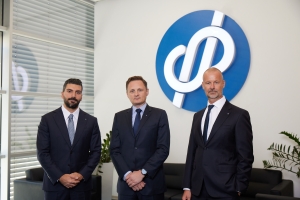
Cypriot shipowner and shipping fund manager, Pelagic Partners, has today announced the successful listing, and the first day of trading, of its new investment platform, Pelagic Credit, on the Oslo Stock Exchange.
Pelagic Credit represents a yield-orientated shipowning company focused on generating stable and predictable cash flows supported by long-term contracted employment of maritime assets, providing structured financing solutions to the maritime industry, supported by an initial capital raise of US$75M, anchored by Pelagic Partners.
Recent developments in the capital markets have reduced available options for parties looking to invest in a shipowning company that is backed by long-term employment contracts. Such companies protect investors from the broader volatility of shipping markets, whilst also generating consistent quarterly dividends.
Based on a strong deal flow pipeline, alongside the investment right of first refusal from affiliated companies, Pelagic Credit anticipates the successful deployment of the initial capital raise in the near term and expects to proceed with follow-on capital raises over the course of the year.
Pelagic Credit’s approach is founded on bareboat triple net leases, ensuring 100% revenue days, no operational cost exposure, and predictable cash flows, supported by an initial fleet of four vessels, all of which are chartered on five-year leases.
About Pelagic Partners
Pelagic Partners is an ownership-led maritime investment manager, combining shipowner insight with disciplined capital to deliver resilient performance for investors, charterers and partners across market cycles.
Founded by Dr. Niels Hartmann and Atef Abou Merhi, Pelagic Partners is registered and incorporated under the Laws of Cyprus with Registration Number HE 424510 and authorized by the Cyprus Securities & Exchange Commission (“CySEC”) to operate as an Alternative Investment Fund Manager with License Number AIFM43/56/2013. The founders are anchor investors and long-term shipowners who have access to and in-depth knowledge of the shipping markets, driven by their outreach, experience and network which have been developed over the past 30 years. This strategic positioning serves as the foundation for positioning Pelagic Partners as a frontrunner in maritime investment and shipowning space.
ELNAVI Newsletter
More Information: ELNAVI,
19, Aristidou str., Piraeus 185 31,
Tel.: +30 210 45.22.100, e-mail: This email address is being protected from spambots. You need JavaScript enabled to view it.
The 5th Panhellenic Yachting Congress Concludes with Dynamic Dialogue on the Sector’s Development
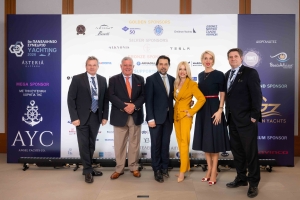
The 5th Panhellenic Yachting Congress concluded with a strong impact, record participation, and substantial contributions on issues of strategic importance. The event took place on the 26 th and 27 th of February 2026, at the iconic Domus at Asteria Glyfada. For two days, the heart of Greek yachting beat next to the waves, in a place where modern Greek maritime identity meets international business dynamics.
The congress, organized by Kalliopi Efstathiou - Trinity Events and Anastasios Konstantaros - BoatsAdvisor
Hub& Events confirmed its institutional character as the leading forum for dialogue on maritime tourism and professional yachting in Greece, bringing together representatives of the State, the shipping and tourism industries, international investors, shipowners, brokers, shipbuilders, marina managers, designers, digital transformation experts, and the new generation of professionals in the industry.
This year’s event clearly highlighted the country’s leading role on the global yachting map. Greece is not only an attractive destination with unique natural wealth and an extensive island network, but also a mature business hub that combines know-how, skilled human resources, and growing investment momentum. The strong presence of representatives of international shipbuilding groups, senior executives of financial institutions, experts in digital transformation and maritime technology, as well as shipowners, captains, brokers, designers, and professional crews demonstrated that the Greek yachting ecosystem is now fully interconnected with international developments.
The two-day congress provided a platform for the meaningful exchange of knowledge and experience, linking Greek practical experience with international innovation. The spotlight was on modern marinas and new models for managing port infrastructure, innovative financing tools for investments in vessels and infrastructure, training high-performance crews, and the need for continuous education. Particular emphasis was placed on the digital transition, the prevention of operational and regulatory risks, the strategic contribution of captains and the new generation of professionals in shaping the future of the industry, as well as the expansion of high value-added services, such as personalized concierge services and holistic health, wellness, and fitness services that now accompany the experience of a modern luxury yacht.
The prestige of the event was also reflected in the level of institutional involvement. The congress proceedings were welcomed, among others, by the European Commissioner for Sustainable Transport and Tourism Apostolos Tzitzikostas from Brussels via video, Deputy Minister of Shipping Stefanos Gikas, the President of the Hellenic Chamber of Shipping, George Alexandratos, and the President of the Greek National Tourism Organization, Angela Varela, who anounced the national strategy for tourism development. Their presence confirmed that yachting is now a priority not only for the private sector, but also for the broader planning of sustainable transport, tourism, and investment. The US Ambassador of Greece, Kimberly Gilfoil, also sent her greetings in a letter read on her behalf by Dimitris Angelakos, Marketing Manager of Angel Yachts and Mega Sponsor of the Conference.
The active support of the Hellenic Chamber of Shipping was essential to the congress from the very beginning. With its active presence in the discussions, it contributed significantly to highlighting and promoting critical issues that concern the maritime tourism community.
Deputy Minister of Shipping Stefanos Gikas presented an extensive program to strengthen port infrastructure, announcing the upgrade of 30 island ports with a total budget of €260 million. The funding, €180 million of which comes from the NSRF & Transport 2021-2027" and €80 million from the Recovery Fund, aims to improve the functionality, safety, and quality of services provided. This is a dual-purpose intervention: on the one hand, it substantially upgrades the operational environment for commercial recreational vessels, and on the other, it strengthens the local economy and sustainable development of island regions.
At the same time, the Deputy Minister highlighted plans to create a strong maritime tourism hub in the Ionian Islands and northwestern Greece, with strategic investments in key locations in the region. The marinas of Kefalonia and Lefkada, the investment in Astakos, the marina of Igoumenitsa, the Mega Yacht marina in Corfu, as well as the marinas of Imerolia, Spilia, and Benitses are part of a broader development plan that aims to transform the Ionian Islands into a model of regional development for yachting. As emphasized, these interventions are expected to radically change the image of the region, increase the mooring capacity for large vessels, and limit the leakage of maritime tourism to competing Mediterranean countries.
In terms of tourism strategy, Greek National Tourism Organization President Angela Varela presented plans for the systematic promotion of Greece as a premium yachting destination, not only in traditional markets in Europe and North America, but also in emerging markets with high purchasing power. Particular importance was placed on the ultra-wealthy market of India, with direct flights from Delhi and Mumbai creating new opportunities to attract affluent travelers seeking personalized, luxury experiences in the Mediterranean.
Another significant innovation is the creation of a unified digital platform by the Ministry of Tourism, which will bring together the country’s port infrastructure and allow visitors to make real-time reservations at marinas. This initiative is expected to enhance transparency, facilitate charter planning, and upgrade the overall user experience, bringing Greece into line with international standards of digital service.
At the same time, the approval of 28 investment projects for the creation of new marinas was announced, reflecting the momentum of investment interest and the State’s intention to expand and modernize the recreational boat accommodation infrastructure network.
In addition, a clarifying memorandum from the Hellenic Revenue Agency confirmed that VAT on the private use of recreational boats is set at 13%, providing a clearer and more foreseeable tax framework for boat owners and professionals in the sector. This development contributes to the stability of the business environment and enhances transparency in transactions.
Overall, the announcements demonstrate that yachting is now part of a coherent national plan that combines investment in infrastructure, digital transformation, international promotion, and tax clarification, creating the conditions for a more competitive and sustainable future for the industry.
Meanwhile, official data backs up the notion that Greece is leading the way. According to the European Commission for Professional Yachting (ECPY) and the European Commission for Maritime Tourism, Greece recorded a 24% increase in demand in 2025, accounting for 40% of total bookings in the Eastern Mediterranean, leaving Croatia behind with 22% and Turkey with 7%. It also ranked second worldwide in recreational boat traffic and third in the Mediterranean in terms of the number of superyachts over 24 meters. These figures not only confirm the country’s strong position but also demonstrate that Greece is evolving into a leading force in the Eastern Mediterranean, with prospects for further consolidating its international influence in the sector.
Despite the impressive performance of Greek yachting in recent years, the 5th Panhellenic Yachting Congress pointed out with clarity and realism that increased demand alone is not enough to ensure the country’s long-term dominance in maritime tourism. On the contrary, the current situation creates the need for a substantial “change of course” in strategic planning, so that Greece will be able to safeguard its position against intensifying competition from neighboring markets, fully exploit its geopolitical advantage of stability and security, and build a sustainable and resilient development model for the sector.
The delegates agreed that the future requires targeted and coordinated interventions in three critical areas. The first area is infrastructure. The upgrading and modernization of marinas and tourist facilities is considered necessary in order for the country to adequately serve both mega yachts and smaller commercial and private vessels, offering high-quality services. At the same time, the issue of rationalizing and upgrading the pricing policy for port fees was raised, with a view to transparency and international competitiveness. Particular emphasis was placed on the implementation of organized anchorages in sea parks and protected areas, so that environmental protection complements chartering and enhances the sustainable development of local communities, rather than acting as a deterrent.
The second axis is the institutional and tax framework. The acceleration and simplification of licensing
procedures was recognized as a critical prerequisite for attracting investment and facilitating business activity.
Industry representatives underlined the need for a stable, predictable, and internationally competitive tax environment that will strengthen the confidence of investors and shipowners. The full and effective operation of digital tools, such as E-Charter, E-Immobility, and E-Idle, in order to limit illegal chartering, enhance transparency, and substantially reduce bureaucracy. In addition, the need to provide for compensatory measures to support Greek businesses in the event of an extension of the charter days for foreign professional recreational vessels through e-Charter Permission was discussed to ensure fair competition.
The third axis is human resources and sustainable development. Strengthening and renewing human capital has emerged as a strategic priority. The creation of specialized yachting schools and modern training programs has been proposed, with the aim of attracting new professionals and ensuring a high level of service. Meanwhile, it was suggested to set up a parallel register for insuring foreign crews from third countries in NAT to solve staffing challenges on vessels. Significant importance was also attributed to equal recognition of previous service on private recreational vessels, so that the experience and expertise of professionals in the sector could be fully utilized.
Strengthening the Greek flag was one of the most important and strategically significant themes of the 5th
Panhellenic Yachting Congress, with the slogan “More Greek flags in Greek seas” encapsulating the common will of institutional and business bodies. In an environment of intense international competition, the choice of flag is not just a formal procedure, but a critical factor that affects competitiveness, operating costs, investment attractiveness, and the national added value of the industry.
The active participation of the new generation of yachting professionals also gave the conference a special
dynamic. The presence of designers, engineers, captains, lawyers, distinguished sailors, and students from the National Technical University of Athens and the BCA College maritime studies program demonstrated that the industry has a strong pool of talent with expertise, creativity, and international orientation. The young professionals did not simply participate as listeners, but as equal interlocutors, submitting proposals for innovation, technological development, sustainable growth, and the improvement of job prospects in the industry.
The speakers kept the audience engaged and offered new perspectives and solutions. For instance, Ioannis
Patiniotis, founder and president of the high-tech company PYLI NET, gave a speech on “SOFT SCREEN X-RAY (an application that quantifies horizontal skills by converting human resources into measurable business value) / MEASURING, QUANTIFYING & VERIFYING THE VALUE OF HUMAN CAPITAL IN YACHTING” provided new tools for evaluating human resources. Similarly, the speech by Dimitris Randou, founder and CEO of Tallyboat Platform, on the topic of “REVOLUTIONIZING THE YACHTING INDUSTRY / TALLYBOAT PLATFORM” provided a breath of fresh air for modernization, simplifying operations, digitizing traditional workflows, and providing a user-friendly experience in yachting. Among the many interesting speeches was that of Anna Koutsokosta; Marina Filippidi - AMK ARCHITECTURE & DESIGN, on the topic of “MAKING, NOT FAKING - A HOLISTIC APPROACH TO BOAT DESIGN” in which they shared with the audience their many years of experience in hospitality, cruise, and yacht design projects in Greece and abroad.
The exchange of views and constructive dialogue between the president of the Hellenic Chamber of Shipping, George Alexandratos, and Admiral Vassilis Politis, with influential businesspeople active in the Mega Yachts charter industry, led to a closed-door meeting with representatives of the Ministries of Shipping, Finance, and Labor.
The aim was to examine incentives that would encourage the re-registration of commercial vessels under the Greek flag and boost the country’s international competitiveness in maritime tourism.
Overall, the message of the conference was clear: today’s success should not lead to complacency. High demand is an opportunity, but also a challenge. Only through comprehensive strategic planning, with an emphasis on infrastructure, a modern institutional framework, and human resources, can Greek yachting maintain and strengthen its international leadership. Strengthening the Greek flag and upgrading the competitiveness of the sector cannot be achieved without the cooperation of the State, institutional bodies, and the business community, nor without the active participation of the younger generation. The 5th Panhellenic Yachting Congress confirmed that the foundations for this cooperation have already been set, forming a stable and ambitious framework for the future of Greek yachting.
The coordination of the event was handled excellently by journalist Vicky Hantzi, who contributed decisively to highlighting the critical issues and maintaining a substantial and productive high-level dialogue. The conference was held under the auspices of the Ministry of Shipping & Island Policy, the Ministry of Tourism, the Region of Attica, the Greek Tourism Organization (EOT), the Hellenic Chamber of Shipping, chaired by George Alexandratos and its Board of Directors, the Technical Chamber of Greece, the Piraeus Chamber of Commerce and Industry, the Association of Owners of Professional Tourist Boats without Crew (S.I.T.E.S.A.P.), the Panhellenic Association of Ship Suppliers & Exporters (P.S.E.P.E.), the Hellenic Committee for Professional Yachting (H.C.P.Y.) and the Worldwide Industrial & Marine Association (W.I.M.A.), whose institutional support enhanced the prestige and importance of the event.
The contribution of the sponsors was decisive. Angel Yachts, a leading Greek company in the field of luxury
recreational boats, known for its professionalism, reliability, and unwavering commitment to quality, participated as the Mega Sponsor of the 5th Panhellenic Yachting Congress. With a strong presence in the industry and a philosophy that invests in young people, Angel Yachts actively supports the development and future of Greek yachting.
The congress was also supported by the Diamond Sponsor Golden Yachts, a company synonymous with luxury and expertise, with an international presence and a leading position in the construction of mega yachts, confirming its leading position in global yachting.
Platinum Sponsors include Navinco, a pioneer in the field of maritime technology and solutions for commercial vessels, which consistently supports every initiative that promotes innovation in maritime tourism.
Golden Sponsors included Aggelis Premium Meatworks, Az Yachting Hellas Ae / The Official Dealer Of Azimut
Yachts; Benetti Office In Greece, General Shipping, Halkitis Shipyards, Omikron Yachts, and the Athens International Boat Show. Silver Sponsors were Alkyonis Kouremetis Bros, Apollon Elite Luxury Transportation Services, and Tesla. Bronze Sponsors were Argo Psarompas Maritime Services, Armadillo Yachting & Building Wrapping, and Margetis Maritime.
Supporting Sponsors were Archon Yachting, Athenian Yachts, Cava Halari, CBS Yachts, Dohle Assekuranzkontor, Electronaval, Hellenic Yacht Masters’ Club, IRS Group, Istion Yachting, Nature Pad, Pantenius Yacht Insurance, 1852 Private Luxury Day Cruises, Regatta Plus, Vatistas, and Vernicos Yachts. Special Sponsors were AMK Architecture & Design, Exadas Yachts, Latus Mare Marine Consultants, Pylinet, Tallyboat, and Vista Yachting Luxury Cruises.
The contribution of the media sponsors, who conveyed the messages of the conference in Greece and abroad, was also of great importance: Airnews.gr, Banking News, Beyond The Sea Living, Boating Greece, Boats & Yachting, Business Events Calendar, Crisis Monitor, Cyprus Sailing Tv, Cyprus Yachting, Debbies Travel.gr, Efoplistesnews.gr, Elnavi, GR Traveller, Greek Travel Pages, Happy Life Magazine, Institute Of Maritime & Economic Strategy, Maritime Economies, Maritimes.gr, Piraeus365.gr, Skiathoslife.gr, Ondeck Media, The Yachtbook, Tourism Today.gr, Istioploikos Kosmos, and Nautika Chronika.
The 5th Panhellenic Yachting Congress left a strong imprint: it highlighted prospects, recorded challenges and, above all, formed a common ground for understanding for the future. In an international environment of intense competition, Greece has proven that it has not only natural advantages, but also the strategic will, institutional maturity, and business momentum to consolidate its position as a leading global maritime tourism destination.
ELNAVI Newsletter
More Information: ELNAVI,
19, Aristidou str., Piraeus 185 31,
Tel.: +30 210 45.22.100, e-mail: This email address is being protected from spambots. You need JavaScript enabled to view it.
Smart Ship Hub and ORBYT Global Group partner to deliver integrated compliance and emissions reporting platform
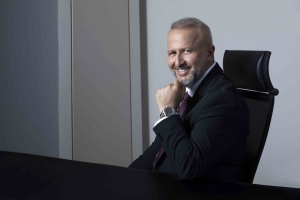
Smart Ship Hub (SSH), a leading vessel optimisation platform, has entered a strategic partnership with maritime technology communications specialist ORBYT Global Group to deliver a fully integrated, single-window digital solution for shipowners, operators and charterers.
The partnership combines SSH’s high-frequency onboard data platform with ORBYT Global’s managed hybrid LEO/MEO/GEO connectivity and digital services, creating a secure, enterprise-grade ecosystem that unifies vessel performance monitoring, fleet operations, emissions reporting, regulatory compliance and shore-based decision-making.
The maritime industry continues to operate with fragmented digital tools and siloed data sources - a structure that drives inefficiency, increases compliance risk and limits the value extracted from operational data. With regulatory and environmental pressures accelerating, the need for integrated, auditable systems has become critical.
SSH’s proprietary onboard technology captures high-frequency sensor data from both newbuild and existing vessels, independent of shipyard or vessel age. The data is securely combined with operational, historical and regulatory inputs to generate real-time performance insights and intelligent alerts.
ORBYT Global complements this capability with fully managed hybrid satellite connectivity, intelligent navigation, digital logbooks, emissions management and compliance tools, supported by 24/7 global service.
The integrated platform enhances fuel performance, voyage optimisation and asset utilisation through real-time analytics and AI-driven insights. It also enables automated reporting aligned with requirements from the International Maritime Organization, including EU ETS, CII and wider ESG frameworks, all from a single auditable data source.
Joy Basu, CEO of Smart Ship Hub, said: “This partnership moves maritime digitalisation from isolated tools to an integrated operational backbone. By aligning technology, connectivity and managed services, we enable shipping companies to reduce complexity, improve decision-making and future-proof their fleets for the decade ahead.”
Theodore Nikolopoulos, CEO of ORBYT Global Group, added: “By combining resilient global connectivity with advanced onboard data intelligence, we are delivering a unified digital environment that simplifies compliance and strengthens operational control. Together with Smart Ship Hub, we are enabling shipowners to operate more efficiently while meeting evolving regulatory and environmental obligations with confidence.”
ELNAVI Newsletter
More Information: ELNAVI,
19, Aristidou str., Piraeus 185 31,
Tel.: +30 210 45.22.100, e-mail: This email address is being protected from spambots. You need JavaScript enabled to view it.
Capital Tankers Corp. completes the largest ever public offering on the Oslo Stock Exchange
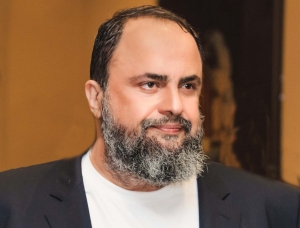
on February 27, 2026 an outstanding public offering with an oversubscription of the initial offer, making the transaction among the largest international shipping company capital raisings and the largest ever on the Oslo Stock Exchange.
Following the increased demand, the company’s board of directors decided:
– to increase the size of the basic offering from approximately 300 million dollars to 435 million dollars and
– to increase the additional shares that may be offered from approximately 45 million dollars to 65 million dollars, bringing the total size of the public offering to 500 million.
Shareholding structure and valuation
Upon completion of the transaction, 26% of the company’s share capital was allocated to the investment community, with an emphasis on quality, long-term institutional investors. The remaining 74% remains with the parent company Capital Maritime & Trading. The total valuation of Capital Tankers Corp. is set at 1.9 billion dollars.
Listing on Euronext Growth Oslo
The successful completion of the public offering paves the way for the listing of the company’s shares on the Oslo Stock Exchange, a market with a long tradition in shipping and a specialized investment community.
Trading on Euronext Growth Oslo is expected to commence on March 17, 2026.
At a later stage, the company plans to move to the main market of the Oslo Stock Exchange, while it will also consider a secondary listing in the United States, depending on market conditions.
The proceeds of the public offering will be used for:
– financing the investment program
– working capital
– covering transaction costs
– general corporate purposes
Capital Tankers Corp. was established through a spin-off from its parent company, Capital Maritime & Trading. It is focused on the crude tanker sector and operates a fleet of 30 tankers (VLCCs, Suezmax, Aframax/LR2), of which 8 are in operation, with an investment program underway for the construction of 22 newbuildings. The Company also holds options for up to 13 additional newbuildings until a specified date.
A significant portion of the fleet is LNG dual-fuel capable or LNG-ready, supporting improved energy efficiency and fuel flexibility under evolving regulatory requirements, including EU ETS, FuelEU Maritime, and IMO initiatives.
ELNAVI Newsletter
More Information: ELNAVI,
19, Aristidou str., Piraeus 185 31,
Tel.: +30 210 45.22.100, e-mail: This email address is being protected from spambots. You need JavaScript enabled to view it.
Greek maritime leaders address industry challenges at the Lloyd’s Register Hellenic Advisory Committee
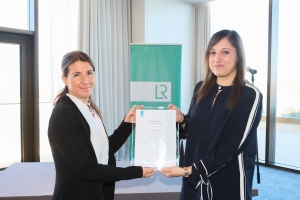
The discourse focused on fleet investment, future skills, newbuilds in Asia and the industry’s readiness for net zero.
Lloyd’s Register (LR) convened its 2026 Hellenic Advisory Committee in Athens on 19 February, bringing together more than 30 Greek shipowners and owner-appointed senior executives to exchange insight and strategic perspectives on the key priorities shaping the maritime industry.
Co-hosted by Nick Brown, LR’s Chief Executive Officer, and Elina Papageorgiou, Senior Vice President Greece & Cyprus, the meeting reinforced the role of the committee as a senior advisory forum connecting one of the world’s most influential maritime communities with LR’s global leadership.
The meeting marked the formal introduction of Ioanna Procopiou, Chief Executive Officer of Sea Traders S.A. & Prominence Maritime S.A., as the new Chairwoman of the Lloyd’s Register Hellenic Advisory Committee. Her appointment signals the next phase in the Committee’s development, strengthening its mandate to provide clear, experience-led guidance that informs LR’s global advisory, technical and regulatory engagement.
Throughout the day, members engaged in open and highly focused debate on newbuilding activity in Asia, the readiness of yards and owners to respond to emerging requirements, and the strategic implications for fleet investment. The agenda also addressed the future skills needed to operate increasingly complex maritime systems safely, alongside a candid assessment of net zero ambition and the industry’s preparedness to deliver it at scale.
Elina Papageorgiou, Senior Vice President Greece & Cyprus, said: “The Hellenic Advisory Committee reinforces LR’s position as a trusted partner to the Greek shipping community and as a thought leader committed to collaboration, transparency and long-term industry progress. The insights shared are critical in shaping our priorities and strengthening our ability to supporting clients through decarbonisation, regulatory change and long-term-fleet planning in a complex operating environment.”
Ioanna Procopiou, Chief Executive Officer of Prominence Maritime and new Chairwoman of the Hellenic Advisory Committee, said: “Lloyds Register’s Hellenic Advisory Committee has always played an important role in fostering a positive and productive relationship between LR and the Greek maritime community. As the industry undergoes a period of significant change, continued dialogue remains critical. I look forward to supporting the Committee as it enters its next chapter.”
ELNAVI Newsletter
More Information: ELNAVI,
19, Aristidou str., Piraeus 185 31,
Tel.: +30 210 45.22.100, e-mail: This email address is being protected from spambots. You need JavaScript enabled to view it.
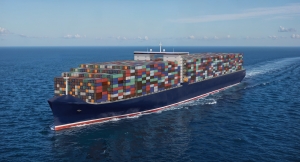
Is the atom the answer to the puzzle of alternative fuels for shipping?
Could the next great leap in maritime propulsion come not from alternative fuels, but from the atom? That question will move from the margins of industry debate to centre stage at Posidonia 2026, during a high-level Executive Briefing that will examine the role of advanced nuclear technologies in commercial shipping and near-shore power generation. Hosted by CORE POWER, a leading developer of civil maritime nuclear propulsion and shipyard-assembled floating nuclear power plants in the OECD, the gathering will convene leaders from shipping, ports, finance and energy to assess whether nuclear propulsion is transitioning from concept to commercial reality.
According to Charlotte Vere, Group Head of Market Development at CORE POWER, the conversation has already shifted. “This is no longer a theoretical discussion,” she notes. “We are seeing real engagement at government level among shipowners, banks, insurers and ports. What matters now is momentum, and that momentum is building. Recent government-to-government collaboration focused on maritime nuclear is a strong signal that serious work is underway to create the enabling conditions for deployment.”
The seminar will explore how advanced nuclear propulsion could enhance fleet competitiveness by offering long refueling intervals, between 5-7 years, insulation from fuel price volatility, and operational flexibility. It will also examine floating nuclear platforms capable of supplying reliable, high-density clean energy to ports and coastal industrial hubs.
Nuclear propulsion in commercial shipping is not new. The US-built Savannah and the Soviet icebreaker Lenin demonstrated nuclear capability as early as the late 1950s. According to Dr. George Pateras, Deputy Chairman of Contships Management, the next wave could arrive within 10–15 years, driven by fourth-generation molten salt reactors (MSRs) using thorium fuel. “The only true green solution is nuclear power,” he argues, dismissing many alternative fuels as impractical at scale. “It is not a question of being ready, but rather a question of necessity, the current alternative fuels paraded as solutions to the sustainability hype are neither practical, abundant nor safe,” he said.
Others adopt a more cautious tone. According to a spokesperson for South Korea’s Hanwha Ocean, several global shipowners—particularly major European container carriers and energy majors—have begun exploring the potential of nuclear-powered vessels. While this trend is noteworthy, it remains at the level of early-stage strategic assessment rather than a business decision. Nevertheless, Hanwha Ocean plans to participate in the “Carbon-Neutral Marine Molten Salt Reactor Technology Development Program,” scheduled to begin in 2027 under the joint supervision of the Ministry of Science and ICT and the Ministry of Oceans and Fisheries of South Korea. He said: “While some institutions present an optimistic outlook for early 2030 commercialisation, a more cautious and realistic assessment suggests that nuclear-powered vessels may not become feasible until the late 2030s at the earliest.”
Samsung Heavy Industries, which is studying MSR-powered container ships and LNG carriers, similarly points to mid-2030s as the earliest plausible timeframe for commercial deployment. Α spokesperson for Samsung said: “In the longer term, nuclear-powered vessels may represent one of the viable pathways towards achieving carbon neutrality in the maritime industry, alongside alternative solutions such as green ammonia and hydrogen fuels, fuel cell technologies, and battery-powered vessels.”
Dr. John Kokarakis, Chair of SNAME Greek Section and Technical Director at Bureau Veritas’ SEEBA Zone, describes the sector as “pre-commercial but no longer hypothetical.” He points to key milestones achieved in 2025, including the Approval in Principle (AiP) for a nuclear-powered LNG carrier concept using molten salt reactor technology, the establishment of the Nuclear Energy Maritime Organization (NEMO), and the IMO’s formal process to modernise the 1981 Code of Safety for Nuclear Merchant Ships.
“Early pilot vessels could appear in the mid-2030s,” he suggests, “but broad adoption depends on regulatory, insurance and port-state alignment.”
While reactor innovation is advancing—particularly in Small Modular Reactors (SMRs) and MSRs— the principal barriers may lie elsewhere.
Charlotte Vere highlights regulatory alignment, liability frameworks, port acceptance and insurance structures as critical workstreams. “Insurance is often highlighted early because the sector will need clarity on civil nuclear liability arrangements that function in a maritime context,” she explains.
Panos Kourkountis, Chairman of MARTECMA and Technical Director at Sea Traders S.A., stresses another enduring concern: radioactive waste. While nuclear propulsion produces no operational CO₂ emissions, waste management and long-term environmental stewardship remain politically sensitive and technically complex issues.
Public perception also looms large. As Dr. Pateras observes, “The word nuclear carries a heavy legacy,” despite decades of safe naval and land-based nuclear operations worldwide. “But as Greek shipowners have always been ahead of the curve when it comes to technological challenges and advancement, the solution of Nuclear Power has already started to be discussed at many maritime fora, always with positive reviews.”
Dr. Kokarakis underscores that commercial readiness depends not only on engineering maturity but on governance alignment: port-state acceptance, crew training pipelines, standardised reactor designs, and internationally harmonised liability conventions.
“A ship can be technically sound,” he notes, “but commercially dead if it cannot enter major ports.” Proponents argue that nuclear propulsion offers unmatched advantages such as Zero CO₂ emissions during operation, elimination of fuel tanks and large engine rooms, stable and predictable energy costs, and high suitability for LNG carriers, ultra-large container ships and deep-sea vessels.
Yet adoption hinges on economics. As Kourkountis observes, “No technology is adopted on a large commercial scale unless it is economically competitive.” But he concludes, that “When the relevant legislation is in place and nuclear propulsion becomes technologically mature and commercially viable, Greek shipowners are expected to be among the first to place orders for nuclear-powered newbuildings.”
The fact that Posidonia 2026 will host a dedicated executive seminar on civil maritime nuclear propulsion signals highlights how far the conversation has evolved, especially in a country which controls roughly 20% of global merchant tonnage. While no public nuclear newbuilding orders have been announced, discussions are reportedly underway in policy and industry circles. Greek institutions, classification societies and international organisations —including the IAEA— have engaged in structured dialogue on maritime nuclear fram eworks.
Whether nuclear-powered merchant fleets will materialise in the mid-2030s or remain confined to demonstration corridors depends on regulatory reform, financing innovation, public acceptance and global cooperation.
Posidonia 2026 will be held at the sold-out Metropolitan Expo from 1-5 June and is organised under the auspices of the Ministry of Maritime Affairs and Insular Policy, the Hellenic Chamber of Shipping and the Union of Greek Shipowners, with the support of the Municipality of Piraeus and the Greek Shipping Co- operation Committee.
ELNAVI Newsletter
More Information: ELNAVI,
19, Aristidou str., Piraeus 185 31,
Tel.: +30 210 45.22.100, e-mail: This email address is being protected from spambots. You need JavaScript enabled to view it.

Vsltec, an innovative startup that provides technological solutions for the maritime industry, presents a new flexible payment option for service providers who provide services to ships anywhere in the world through its platform.
The new feature allows service providers to choose between immediate payment upon completion and confirmation of the work, or payment within 30 days upon completion and confirmation, directly by Vsltec.
This revolutionary payment option ensures the necessary liquidity for service providers using the platform, while Vsltec takes full responsibility for managing and collecting payments from shipping companies, significantly reducing the administrative burden on its partners.
With more than 200 active ships on the platform and transactions exceeding €2.5 million, Vsltec further strengthens its operating model by adding a mechanism that improves the speed and predictability of payments in the shipping industry.
The addition of the new payment method is part of the company’s strategy to continuously optimize workflows of assigning, managing, and completing technical services to ships through the Vsltec digital platform.
About Vsltec
Vsltec is a startup providing technological solutions for the shipping industry, with the aim of simplifying the way shipping companies commission, manage, and implement technical services.
Its platform connects shipping companies with reliable service providers around the world, replacing complex and time-consuming processes based on phone calls, emails, and spreadsheets. Through this approach, it helps ship managers improve the planning and execution of technical work, while offering service providers access to projects related to their expertise on an international level.
ELNAVI Newsletter
More Information: ELNAVI,
19, Aristidou str., Piraeus 185 31,
Tel.: +30 210 45.22.100, e-mail: This email address is being protected from spambots. You need JavaScript enabled to view it.