


-
Home

-
Ports - Shipping
- elnavi

elnavi
For the first time a Cypriot has been elected as Vice – Chair of the IMO Legal Committee
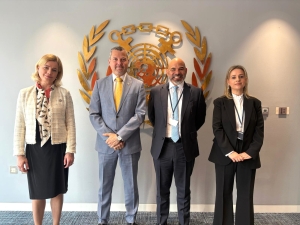
Mrs. Lydia Markari - Kyriacou, Head of the Legal Affairs Unit of the Shipping Deputy Ministry was elected in the position of Vice-Chair of the Legal Committee of the International Maritime Organization (IMO). Lydia has been unanimously elected by the IMO Member States at the Legal Committee’s 112th session, which is currently taking place in London.
This prestigious election of the Shipping Deputy Ministry’s Head of Legal Affairs Unit, is a testament to Cyprus' contribution to the work of the International Maritime Organization. It is also a significant commitment towards the future work of the IMO Legal Committee, one of the IMO’s main bodies, in advancing legal discussions on pressing maritime issues and shaping international maritime law.
Lydia, a qualified lawyer, has served the Cyprus Maritime Administration as a legal officer for more than twenty years and has extensive experience in maritime law and the law of the sea and in drafting and implementing maritime legislation including International Conventions under the purview of the Legal Committee. She has represented the Republic of Cyprus at numerous IMO Legal Committee meetings over the years.
ELNAVI Newsletter
More Information: ELNAVI,
19, Aristidou str., Piraeus 185 31,
Tel.: +30 210 45.22.100, e-mail: This email address is being protected from spambots. You need JavaScript enabled to view it.
GNV Tests RINA’s Machine Learning and Predictive Models to Optimize Energy Use on New Vessel
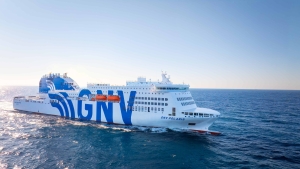
GNV has chosen RINA’s SERTICA Performance for the latest addition to its fleet, the GNV Polaris, starting right away by testing the ship during its inaugural voyage from China to Italy. The tool for monitoring operational data on ships allows efficient energy consumption management and the optimization of performance. Thanks to the system, GNV has identified two optimal operating scenarios allowing for the lowest Specific Fuel Consumption, and a predictive model that serves as both a benchmark and a simulator for future operations.
This advanced system functions as a real-time data collector recording, through a network of sensors installed on board, key parameters such as fuel consumption and the power of diesel generators and engines. While its primary focus is on monitoring energy expenditure, the collected data allows for the calculation of the ship’s actual efficiency, providing a comprehensive view of its operational performance to the crew onboard and the onshore management.
During the GNV Polaris’ voyage, various operational scenarios were simulated at different speeds and configurations, such as alternating the use of diesel generators and shaft generators, to identify the most efficient solutions in terms of fuel consumption. Subsequently, the operational setup for the Genoa-Palermo route was tested, verifying the consistency between the sea trial results and the forecasts. The analysis confirmed the system’s accuracy, allowing for the definition of the optimal configuration to reduce fuel consumption.
The project also includes the development of predictive models using machine learning techniques. A physical model of the ship, trained with the collected data, achieved remarkable accuracy. Performance models have proven to be reliable tools for accurately estimating ship efficiency and can serve as benchmarks to assess performance degradation over time or as scenario simulators if the ship is deployed on a different route or schedule. This analysis may also indicate the need for retrofit actions, such as hull and propeller cleaning or engine maintenance.
Ivana Melillo, Energy Efficiency Director at GNV said “GNV is making significant strides in sustainable shipping with their latest initiatives. One of the most notable developments is the introduction of the GNV Polaris, the first of four new ships designed to enhance sustainability in maritime transport. The GNV Polaris boasts high environmental standards and can achieve over 30% fuel savings, resulting in a significant reduction in CO₂ emissions compared to the vessels currently in the fleet.
GNV plans to continue modernizing its fleet with more eco-friendly ships. This includes the introduction of new vessels that meet higher environmental standards, reducing emissions and improving fuel efficiency. GNV is exploring the use of alternative fuels such as liquefied natural gas (LNG) and biofuels. These fuels produce fewer emissions compared to traditional marine fuels.
We are investing in energy management systems that leverage digital technologies to optimize energy use on board its vessels. This helps in reducing emissions and improving overall sustainability.
These digitalization efforts are part of GNV’s broader strategy to enhance operational efficiency, reduce environmental impact, and contribute to a more sustainable future in maritime transport.”
Lars Riisberg, Marine Digital Solutions Executive Director at RINA, said “The added value of SERTICA Performance lies in its ability to provide unparalleled data monitoring and analysis. By collecting data every five minutes and transmitting aggregates to shore, it enables detailed historical analysis. Its real-time dashboards, accessible remotely, support continuous monitoring and advanced analytics for internal assessments and fuel budget planning. A key advantage is its capability to set alerts for real-time sensor status monitoring, ensuring prompt anomaly detection. Additionally, SERTICA Performance tracks hull degradation and energy efficiency, comparing real- time performance against optimal conditions to drive informed decision-making”.
Currently installed on over 800 ships, SERTICA Performance continues to expand with new implementations on vessels under construction.
Founded in 1992 and part of the MSC Group, GNV is one of the leading shipping companies operating in the cabotage and passenger transport sector worldwide. With a fleet of 25 ships, the company operates 31 routes across 7 countries, connecting Sardinia, Sicily, Spain, France, Albania, Tunisia, Morocco, and Malta.
RINA, leading certification and engineering company, provides a wide range of services across the Energy, Marine, Infrastructure & Mobility, Certification, Industry and Real Estate sectors. In December 2023, alongside the majority shareholder Registro Italiano Navale, Fondo Italiano d’ Investimento SGR entered the shareholding structure guiding a pool of co-investors. With revenues in 2023 of 797 million euros, 5,800 employees and 200 offices in 70 countries worldwide, RINA is a member of key international organizations and an important contributor to the development of new legislative standards.
ELNAVI Newsletter
More Information: ELNAVI,
19, Aristidou str., Piraeus 185 31,
Tel.: +30 210 45.22.100, e-mail: This email address is being protected from spambots. You need JavaScript enabled to view it.
New shipowners join Bluepool Panamax pool
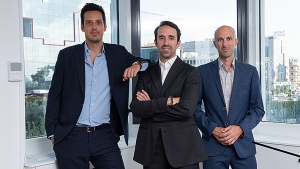
Castor Maritime and Sea Tribute Shipmanagement are the latest companies to enter vessels into the Bluepool Panamax dry bulk shipping pool.
Castor Maritime, a NASDAQ listed diversified global shipping and energy company, has entered MV Magic P (2004 built, 76,453 dwt). Sea Tribute Shipmanagement, a specialist Greek dry bulk management company, has added MV Sea Dawn (2014 built, 80,915 dwt).
“From Asian interests to privately held Greek companies and listed corporations, we serve a diverse range of companies and continue to attract top-tier owners. Now in our fourth year of operation, we have a strong track-record and are confident that we will keep delivering market beating returns to our pool participants. Our fleet is very diverse in terms of designs and specifications, which allows us to employ each vessel in its best aligned trades, maximizing returns for all participants,” said Aris Bachos, Bluepool’s head of chartering.
The pool, whose fleet will grow from 16 to 19 vessels within the next months thanks to new commitments, offers an open-door policy to its participants with flexible entry and exit clauses and allows owners to either earn spot returns or to switch to a fixed period rate whenever they choose. Monthly reports on each vessel’s commercial performance ensure full transparency and oversight for owners.
Image: The Bluepool head of chartering Aris Bachos with the other founding Bluepool managers Kimon Angelopoulos and Nikolas Garviilidis
ELNAVI Newsletter
More Information: ELNAVI,
19, Aristidou str., Piraeus 185 31,
Tel.: +30 210 45.22.100, e-mail: This email address is being protected from spambots. You need JavaScript enabled to view it.
A Quiet Revolution in Marine Risk Strategy
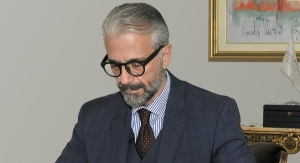
Marasco Marine Ltd’s Advisors' Board Continues to Empower Small and Medium Shipowners Since 2018
Since its inception in 2018, Marasco Marine Ltd’s Special Purposes Committee – the Advisors’ Board – has steadily grown into one of the most valuable and trusted resources for small and medium-sized shipowners navigating today’s complex maritime landscape.
At a time when many smaller fleets struggle to compete against larger, more capitalized operators, Marasco’s Advisors’ Board offers something rare: access to elite expertise, proactive risk prevention, and claims strategy—all under one roof.
Built to Serve, Proven to Deliver
Founded and championed by Mr. Anastasios Maraslis, the Advisors’ Board is made up of hand-picked experts across all key areas of maritime risk and operations:
- Naval Architects
- Marine Surveyors
- Claims Handlers
- Shipping Lawyers and Arbitrators
Together, they have supported dozens of shipping companies since 2018 in preventing claims, reducing premium costs, and navigating complex legal or technical challenges with confidence and speed.
An Extension of Marasco’s 33-Year Legacy
This Advisors’ Board is a natural evolution of Marasco Marine Ltd’s enduring mission—since 1991—to protect and uplift independent, family-run shipping firms, which have long been the engine room of Greek maritime power.
The committee operates at the heart of Marasco’s Risk Prevention Culture, helping shipowners:
- Identify technical vulnerabilities before they result in claims
- Advise on compliance and operational gaps
- Support documentation, legal handling, and faster settlements when claims do arise
- Secure premium savings through improved technical and claims profiles
What It Means for the Small & Medium Owner
By integrating the Board’s advisory services into its core offering, Marasco has empowered small fleet operators to:
- Lower insurance costs significantly
- Avoid costly disputes and delays
- Gain strategic leverage with underwriters
- Operate with confidence in a fiercely competitive global freight market
And all this comes with the assurance of ongoing support, swift response, and an unshakeable sense of partnership.
Mr. Maraslis' Vision in Action
For Mr. Anastasios Maraslis, the formation of the Advisors’ Board was not just strategic—it was deeply personal. He has always believed that “small shipowners are not small in impact.” And through this initiative, that belief has been turned into a structured, proven service.
Over the last six years, the Advisors’ Board has quietly, efficiently, and consistently delivered value—solidifying Marasco’s role as not just a broker, but a true ally and problem-solver.
Conclusion: An Asset That Pays for Itself
In an age where maritime risk is intensifying and freight markets fluctuate wildly, Marasco Marine Ltd’s Advisors’ Board continues to prove its value—day after day, claim after claim, client after client.
With more than three decades of trust and a deeply embedded Risk Prevention Culture, Marasco delivers not just protection—but perspective, partnership, and performance.
* Marasco Marine Ltd, was founded in 1991, by Mr Anastasios Maraslis. Marasco is specialising in Managing Marine Risks and Risk Prevention Planning, serving the last 33 years, Ship Owners, Ship Managers and Ship Operators, with his experienced marine/ claims insurance team and the company’s Board of Advisors, Internationally Acknowledged. More about Marasco Marine at: www.marasco-marine.com
ELNAVI Newsletter
More Information: ELNAVI,
19, Aristidou str., Piraeus 185 31,
Tel.: +30 210 45.22.100, e-mail: This email address is being protected from spambots. You need JavaScript enabled to view it.
European Shipping Summit 2025
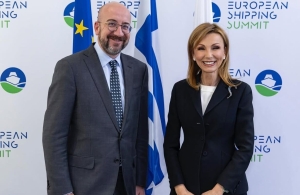
The Union of Greek Shipowners (UGS) successfully organized, as part of the ESS, the event titled Shipping anchors the EU’s Future on Wednesday, March 19 at the Royal Museum of Fine Arts in Brussels. The convention highlighted the vital role of shipping in safeguarding Europe’s security & prosperity with the participation of Ioannis Vrailas, Ambassador of the Permanent Representative of Greece to the EU, Melina Travlos, UGS President, Charles Michel, President Emeritus of the EC, former Prime Minister of Belgium, Minister of State, as well as of Faig Abbasov, Shipping Director at T&E, Dimitrios Fafalios, UGS Secretary, Polona Gregorin, Head of Unit for Mobility, DG CLIMA, EC.
UGS also held significant meetings with EU’s officials. The President and members of the BoD, Dimitris Fafalios, Marily Fragkista, Ioanna Procopiou & Vassilis Papagiannopoulos, met with Apostolos Tzitzikostas, EU Commissioner for Sustainable Transport & Tourism, & Oliver Röpke, President of the European Economic & Social Committee.
ELNAVI Newsletter
More Information: ELNAVI,
19, Aristidou str., Piraeus 185 31,
Tel.: +30 210 45.22.100, e-mail: This email address is being protected from spambots. You need JavaScript enabled to view it.
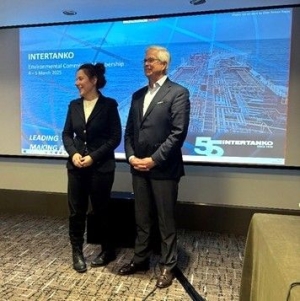
The CEO of Andriaki Shipping, Panagiota Chrysanthi, assumed the role of Chairman of the Intertanko Environmental Committee (EnvCom), succeeding the outgoing Chair, Mr. Ole Christian Schroder.
During the meeting Biosecurity, Waste Management, and Sustainability were at the forefront of the agenda.
Biosecurity: The Ballast Water Convention review is ongoing with a 2026 target. Key discussions focus on harmonizing BWMS outputs and training programs. Biofouling legislation is evolving with the 2023 Biofouling Guidelines and 2025 in-water cleaning guidelines.
Waste Management: The Committee reviewed both onboard and shore-managed waste systems, emphasizing the importance of the Integrated Bilge Treatment System (IBTS) Guidelines. The INTERTANKO PRF survey was highlighted, encouraging members to report port inadequacies to their flag authorities.
Sustainability: The EnvCom and InsCom are advancing ESG reporting focusing on EU’s Corporate Sustainability Reporting Directive (CSRD) and the Corporate Sustainability Due Diligence Directive (CSDDD). Key projects include underwater radiated noise, the Environmental Performance Monitoring Database, Biodiversity Beyond National Jurisdiction, and aligning with the Chemical Tanker Committee on the INTERTANKO Tank Washing Strategy.
The path to a more sustainable and environmentally responsible maritime industry is being paved, ensuring long-term resilience and compliance with global standards.
As the company stated: “At Andriaki Shipping, sustainability is at the core of our operations, driving innovation and guiding our growth. Our collaboration with organizations like INTERTANKO, who share our objectives, strengthens our commitments”.
ELNAVI Newsletter
More Information: ELNAVI,
19, Aristidou str., Piraeus 185 31,
Tel.: +30 210 45.22.100, e-mail: This email address is being protected from spambots. You need JavaScript enabled to view it.
LNG/C ‘Asklipios’ flies the Greek flag
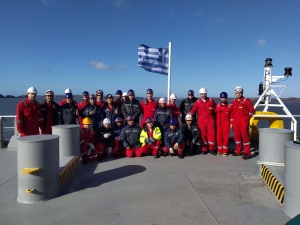
Capital Gas Ship Management Corp. has completed the registration process of the LNG/C 'Asklipios’ ('ΑΣΚΛΗΠΙΟΣ') to the Greek registry. LNG/C 'Asklipios' is now sailing around the world flying the Greek flag.
The LNG/C 'Asklipios' is a 81,451 dwt, eco-type LNG carrier, built in 2021 by Hyundai Heavy Industries, in S.Korea. With a cargo capacity of 174,000 m3, the vessel is highly efficient, propelled with XDF engines and equipped with the latest available technologies, including an air lubrication system and increased filling limits (excess 99%).
The change of flag on the 'Asklipios' took place at the port of Milford Haven (South Hook LNG Terminal), in the United Kingdom (UK), in the presence of the Maritime Attaché of London, Captain of the Hellenic Coast Guard, Ms. Aikaterini Stamou.
ELNAVI Newsletter
More Information: ELNAVI,
19, Aristidou str., Piraeus 185 31,
Tel.: +30 210 45.22.100, e-mail: This email address is being protected from spambots. You need JavaScript enabled to view it.
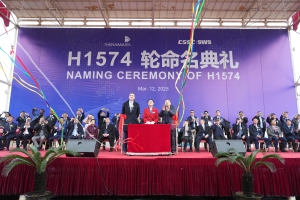
Thenamaris has named its fourth 114,000 dwt Aframax product tanker built by Chinese shipbuilder Shanghai Waigaoqiao Shipbuilding (SWS), part of China State Shipbuilding Corporation (CSSC).
The vessel named “Seadancer” is 249.95 meters long and 44 meters wide and scheduled for delivery in September 2025. As understood, Seadancer belongs to the latest generation of Aframax tankers independently developed and designed by SWS.
The vessel is also equipped with scrubbers and features technological improvements, such as energy-saving ducts, an optimized main engine, hydrodynamic performance optimization, and vortex fins, which are said to improve a ship’s fuel efficiency by minimizing resistance and optimizing water flow around the hull and propeller.
Owing to these energy efficiency measures, the newbuild is said to already meet the International Maritime Organization’s (IMO) Phase 3 requirements for 2025. The Chinese shipyard has already delivered two Aframax newbuildings to Thenamaris since the beginning of the year.
Namely, in January, SWS rolled the red carpet for the 114,000 dwt long-range 2 (LR2) tanker Seascout, the 250-meter-long ship which is also NOx III-compliant as well as in line with the third phase of EEDI.
Another newbuild product tanker, named Isabella, was unveiled on February 24, 2025. The Malta-flagged tanker measures 250 meters in length and features a beam of 44 meters. Its cargo tank capacity is estimated at 130,000 cbm.
ELNAVI Newsletter
More Information: ELNAVI,
19, Aristidou str., Piraeus 185 31,
Tel.: +30 210 45.22.100, e-mail: This email address is being protected from spambots. You need JavaScript enabled to view it.
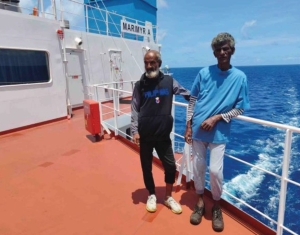
On 11 March 2025 M/V “Marimyr A” was sailing on the Madagascar channel. On about 12:14 local time and approximately on position lat. 22-09.4S & long. 040-48.2E the bridge look-out sighted and identified two persons drifting in the sea on a custom-made raft. Rescue operation was ordered immediately by the Master of M/V “Marimyr A”.
The rescue operation was successfully completed by the crew. The castaways are of Pakistani nationality and crew of Iranian flagged fishing boat “Solaeq” where she got caught in a typhoon in the Madagascar channel and alleged crew of 10 abandoned the boat on about 13th of February. For nearly a month drifting in the sea, the castaways were finally safe onboard Marimyr A. They were provided with first aid, food, water and care by the Master and his crew.
During the rescue operation the local authorities, rescue coordination centers and Gard P&I were informed by “Marimyr A” and Mykonos Shipping. The La Reunion MRCC spotted 3 fellow crewmembers of “Solaeq” casted on the island of Europa on the Madagascar channel who were identified by the castaways onboard “Marimyr A”. Resue operations by MRCC is in progress for the 5-crew missing. The fishermen are now sailing with “Marimyr A” and their repatriation process is in progress in coordination with Mykonos Shipping, Gard P&I and local authorities. We wish the best outcome is reached from the rescuing efforts of the MRCC to spot and save the rest crew of “Soaleq”.
ELNAVI Newsletter
More Information: ELNAVI,
19, Aristidou str., Piraeus 185 31,
Tel.: +30 210 45.22.100, e-mail: This email address is being protected from spambots. You need JavaScript enabled to view it.
2025 GREEN4SEA Athens Forum: Stakeholders and regulators turning the tide on green shipping
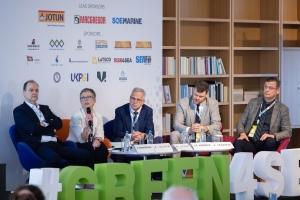
The 2025 GREEN4SEA Athens Forum took place on Wednesday 12th of March 2025 at the Lighthouse of Stavros Niarchos Foundation Cultural Center (SNFCC), Athens, where various experts from all parts of the maritime industry gathered to share their insights on green shipping, global developments and the shifting regulatory field around decarbonization.
The event was organized by SAFETY4SEA having as lead sponsors the following organizations: Jotun, MacGregor, and SQE MARINE. The event was also sponsored by: ARCADIA SHIPMANAGEMENT CO. LTD, Blue Planet Shipping Ltd, BUREAU VERITAS, Capital-Executive Ship Management Corp., Capital Gas Ship Management Corp., Capital Shipmanagement, DÖHLE SEAFRONT Crewing (Manila), Dorian LPG, Eastern Mediterranean Maritime Limited (EASTMED), Latsco Marine Management Inc., RISK4SEA, SEAFiT, Sun Enterprises Ltd, UK P&I Club, V. Group, and The World Liquid Gas Association (WLGA).
Supporters of the event included the following organizations: Clean Shipping Alliance 2020, International Bunker Industry Association (IBIA), International Ship Recycling Association (ISRA), International Windship Association (IWSA), INTERCARGO, Zero Emissions Ship Technology Association (ZESTAs) and Women’s International Shipping & Trading Association (WISTA) Hellas.
Agenda highlights
- Addressing uncertainties in the decarbonization journey
- Emerging technologies & innovation
- Industry’s needs to facilitate the transition to low-carbon shipping
- Long-term goals for decarbonizing the shipping industry
- Addressing safety challenges, availability & readiness of the alternative fuel
- Incentives and regulatory mechanisms for the uptake of alternative fuels
- How collaboration supports industry’s green transition
- Achieving a just and equitable transition towards net zero
- Addressing the human factors: New skills & training methods
- Green shipping initiatives for a sustainable future
Opening the forum, Apo Belokas, Managing Editor, SAFETY4SEA, warmly welcomed attendees and speakers while extending appreciation to the event’s sponsors and supporters. He addressed the maritime industry’s evolving approach to decarbonization, stressing that while progress is being made, there is still a long way to go. He highlighted the need for a balanced strategy that not only prioritizes regulatory compliance but also ensures the safety of the crew and financial feasibility for industry stakeholders.
Session #1: The path towards maritime decarbonization
Dr. John Kokarakis, Technical Director, SEEBA Zone, Bureau Veritas, delivered an insightful presentation on the challenges and strategies for maritime decarbonization, focusing on FuelEU Maritime compliance and the IMO’s mid-term measures. According to Kokarakis, all these measures loom over the maritime industry like “Damocle’s sword.”
“The multi-million-dollar question is what should be done if the computed carbon intensity exceeds the target,” Kokarakis pointed out, adding that MEPC 83 will be critical as the giants of EU and BRICS will cross their swords and fight for the future of shipping.
Additionally, he presented key compliance strategies, including the adoption of low-carbon fuels. Emphasizing the importance of a holistic approach, he outlined a gap analysis that identifies critical areas for transition,
Capt. Konstantinos G. Karavasilis, Regional Director, Loss Prevention, UK P&I Club, spoke on the critical steps needed for the maritime industry’s decarbonization journey. “The industry faces increasing pressure to decarbonize and, unfortunately, this will reach the end-users, the consumers,” said Karavasilis, pointing out that apart from environmentally sustainable, the transition should also be economically viable.
Moreover, he emphasized the necessity of clear, long-term policy frameworks and globally aligned regulations to provide stability and direction for industry stakeholders. Highlighting the role of innovation, he underscored the importance of investing in research, development, and expressed his view that nuclear propulsion is the future towards net-zero emissions.
Dimitris Mytilinis, Senior Performance Engineer, Latsco Marine Management Inc. delivered an insightful presentation on the evolving landscape of shipping decarbonization. He also tackled various regulatory frameworks, especially focusing on how measures such as pooling can assist in compliance under the FuelEU Maritime.
“Pooling is a better option than paying the penalties”, Mytilinis explained but expressed the opinion that using biofuel is more cost-effective than pooling. He also put emphasis on the importance of strategic planning and the adoption of sustainable technologies to ensure compliance while maintaining operational efficiency.
During the first panel discussion, Stergios Stergiou, Green Shipping & Sustainability Director, Capital Group, also explored various solutions for reducing shipping emissions such as the adoption of LNG and carbon capture. “At Capital we have adopted LNG as a fuel, we consider it as a transitional fuel with several benefits both on machinery and operational aspect”, said Stergiou.
Meanwhile, Dr. Anastasios Tsalavoutas, Energy Efficiency Manager, Argo Navis, shared his thoughts on maritime decarbonization saying that “the biggest challenge facing the industry is the uncertainty.” For instance, he expressed his concern about the uncertainties of carbon market measures and the lack of appropriate infrastructure to support the shift towards net zero.
Focus presentation: Human factors in the decarbonization era
Following the discussion, Apo Belokas, Managing Editor, SAFETY4SEA, delivered a focus presentation on the role of human factors in the decarbonization era. He pointed out industry uncertainty, the need to move beyond traditional thinking, and the challenge of upskilling costs. As he explained, “We ask seafarers to have numerous skills but at the end of the day we’re not providing any short of framework on how this will happen.” Additionally, he emphasized that seafarers should be seen as assets rather than expenses.
“In our industry no one speaks on the return of investment (ROI) on human capital”, Belokas noted, highlighting that the numbers show that investment on human capital is both feasible and imperative.
Focus presentation: Sea trials practicing in the decarbonization era
Andreas Zontanos, Managing Partner, Argo Navis, followed with another focus presentation on the insights gained from sea trials conducted on existing ships for EEXI (Energy Efficiency Existing Ship Index) calculations. His discussion evaluated the relevance of these trials within the context of the evolving decarbonization landscape in the maritime industry.
“We have more and more measures which practically mean taxation, so performance monitoring is getting more and more interesting for shipowners”, Zontanos explained. Moreover, he explored the applicability, procedures, risks, and benefits of these trials. He emphasized that sea trials, along with continuous performance monitoring, play a crucial role in assessing the impact of energy efficiency retrofits.
Session #2: Fuel for thought: Insights on the alternative options
Bill Stamatopoulos, Global Marine Fuels Business Development Director, VeriFuel, discussed the evolution of the maritime industry, particularly in relation to B100 biofuel. He delved into the introduction of new standards, manufacturer endorsements, and updated standards such as ISO 8217:2024. His presentation covered important insights into biofuels, including their technical specifications, while also addressing their role in ensuring compliance with emerging regulations: “For the next few years we’re only talking about LNG and biofuels,” Stamatopoulos highlighted.
Diane Gilpin, Founder & CEO, Smart Green Shipping Alliance, focused on the journey of wind-assisted propulsion from concept to reality. “We’ve seen wind move ships for thousands of years but how do we introduce it into the 21st century?”, Gilpin said, explaining that the modern adoption of wind-assisted propulsion requires a multi-faceted approach that is based on research.
Overall, her presentation emphasized the potential of wind as a renewable energy source to complement otherl propulsion methods, offering an innovative solution to help the industry meet its environmental goals.
Nikos Xydas, Technical Director, World Liquid Gas Association (WLGA), presented on the prospects of using LPG (liquefied petroleum gas) as a marine fuel, focusing on its benefits and growing adoption within the industry. “LPG as it is now, without its renewable alternatives, can be compliant with FuelEU for the next 15 years”, Xydas noted.
He also discussed the potential of renewable LPG and renewable DME (dimethyl ether), emphasizing their synergy as a future-proof solution for maritime decarbonization. Additionally, he pointed out the expected rise in LPG fleet capacity and its appeal to shipowners due to its cost-effectiveness in meeting new low-carbon emission regulations.
Jean-Philippe Arseneau, Special Adviser, ZESTAs, presented on the importance of viable Absolute Zero Emissions solutions such as hydrogen fuel cells and wind power. As he noted: “Hydrogen has not been deployed at a large scale yet and that is the next step that ZESTAs is focusing on.” However, he also acknowledged the progress already made, with numerous hydrogen-powered vessels and onshore infrastructures either operational or under construction, demonstrating that the technology is ready for deployment. Furthermore, he called for greater collaboration within the industry to accelerate adoption.
Antonis Trakakis, Chairman, CIMAC Greece, delivered a presentation focused on solutions to reduce emissions other than relying on non-fossil fuels. He pointed out there are other, more viable options such as carbon capture. “It has come to a point to ask ourselves to not only solve a problem but also which problem to solve”, he said, adding that it makes more sense to use the example of other, heavier polluting industries rather than rely on alternative fuels which come with a significant set of challenges. Furthermore, he explored different types of engines and mechanical solutions and their effectiveness.
Focus presentation: 2025, 2020-2050, So many uncertainties and now a strong “wildcard”
John N. Cotzias, Co-Founder, Xclusiv Shipbrokers, delivered a focus presentation on the decarbonization of shipping and the implications it poses financially. He explained that there are certain loopholes that create uncertainties. “Being energy efficient and being leaner and cleaner has to make economic sense”, Cotzias explained.
He advocated that energy efficiency measures are the way to go for maritime decarbonization, as they offer significant carbon emission reduction without major costs or the need for excessive training. Furthermore, Cotzias delved into the implications of TrumpEconomics and how the US President’s tariffs will change the landscape.
Session #3: Stepping towards the green transition: Ship Managers’ perspective
During the last panel discussion Takis Koutris, Managing Director, Roxana Shipping S.A.; Panos A. Kourkountis Technical Director, Sea Traders S.A; Costas Th. Kontes, Chief Commercial Officer, Navilands Management Holdings S.A; George Souravlas, Founder & CEO, Load Line Marine S.A; and John N. Cotzias, Co-Founder, Xclusiv Shipbrokers Inc, discussed the challenges and opportunities ship managers face in implementing green technologies, managing fuel transitions, and meeting regulatory uncertainties.
The speakers also discussed ‘Trumponomics’, and how the US President’s plans to boost national ship building impact the industry.
“The biggest problem with reviving US shipbuilding is labor cost because it’s a labor-intensive process”, John N. Cotzias Kotzias said on the matter, with George Souravas adding that “You cannot become a ship-building nation overtime, it’s a culture” and that it takes time to build the labor force. Furthermore, Souvaras made the point that if shipbuilding is disrupted it will also stall greener ships being built and 2050 targets being met.
The panel also discussed green fuels on the path to transition. According to Takis Koutris, alternative fuels pose many questions as “There is not fuel availability quantity wise or network-wise.” “We are regulating with wishful thinking”
“Stakeholders are starting to experiment with alternative fuels without considering the dangers such as having unskilled people operating these ships”, Costas Th. Kontes noted.
Beyond the challenges of green fuel adoption, panelists also examined the broader economic impact of shifting policies. Addressing the rise of protectionism in the US and Europe, Panos A. Kourkountis remarked, “At the end, consumers will buy fewer products. The market will suffer with taxations, and I expect that transportation will be reduced.”
ELNAVI Newsletter
More Information: ELNAVI,
19, Aristidou str., Piraeus 185 31,
Tel.: +30 210 45.22.100, e-mail: This email address is being protected from spambots. You need JavaScript enabled to view it.