


-
Home

-
Environment & Culture
- elnavi

elnavi
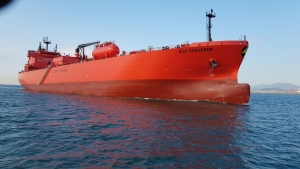
Brave Maritime Corp. has taken delivery of four new state of the art 40,000 cbm ammonia carries from Hyundai Shipyard in South Korea! The vessels “Eco Merlin, “Eco Wizard”, “Eco Oracle”, “Eco Sorcerer”, represent the new generation of gas carriers with super-efficient engines and comprise all the latest environmental features! According to VesselsValue, these ships were ordered for $46mill apiece and now are worth in excess of $70mill each, a very astute move from Nicholas Vafias!!!
In addition the group has on order 3 more new generation gas carriers, one more 40k cbm sistership in HMD for q1 2024 and two more 11k cbm vessels under construction in Japan one to be delivered in 2025 and one in 2026!
Over the last 18 months Brave Maritime has acquired an astonishing 32 ships comprising of 7 LPG nb’s, 10 tankers (4 suezmax, 1 aframax and 5 product tankers) and 15 bulkers (8 capes, 1 supramax, 2 kamsarmax and 3 handies)!!! Unreported were the two kamsarmaxes the “Eco Czar” and “Eco Sikousis” built both in Oshima Japan 2009 and 2008 respectively! According to brokers reports these were bought for region $31m enbloc!! After the recent acquisitions and vessel deliveries the group comprises of 91 vessels, 40 gas carriers, 25 bulkers and 26 tankers both crude and clean!
ELNAVI Newsletter
More Information: ELNAVI,
19, Aristidou str., Piraeus 185 31,
Tel.: +30 210 45.22.100, e-mail: This email address is being protected from spambots. You need JavaScript enabled to view it.
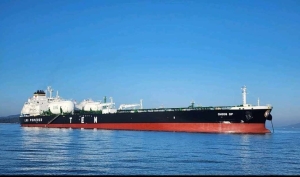
The newbuilding aframax tanker "Chios DF", 115.000dwt flied the Greek flag at the port of Chios.
This is the 3rd of four aframax type tankers from an outstanding shipbuilding program in S. Korea.
The fourth tanker is 'Ithaki DF' which will be delivered in January. The company has already delivered the ships 'Njord DF' and 'Ran DF'.
The four aframax type tankers have a dual fuel LNG engine. All four fly the Greek flag and are the first of this technology to be included in the Greek registry.
They have a capacity of 115.000dwt each and are already time chartered for 10 years, with the possibility of extending the contract, to the Norwegian energy company Equinor with whom TEN has had a stable and constructive cooperation for 15 years.
ELNAVI Newsletter
More Information: ELNAVI,
19, Aristidou str., Piraeus 185 31,
Tel.: +30 210 45.22.100, e-mail: This email address is being protected from spambots. You need JavaScript enabled to view it.
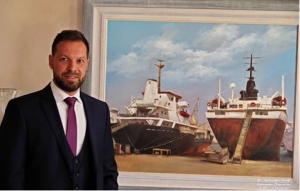
By Costas Galanakis, CEO of Elvictor Group
The maritime sector is taking proactive measures to leverage seafarers' feedback and improve operations, job satisfaction, and retention. The SBI, COIN, GROW, and CEDAR models offer structured management approaches that facilitate a systematic method of addressing feedback. The debriefing tool is also vital in managing seafarers' pool cohesiveness and retention.
By engaging with seafarers' feedback, the maritime industry can create a culture of continuous improvement and empower seafarers to contribute to the organization's growth and success. The digitalization of the SBI, COIN, GROW, and CEDAR models, along with the seafarers' happiness index determinants, briefing notes, and psychometric results, has the potential to revolutionize feedback and debriefing processes in the maritime industry. This comprehensive approach can elevate pool retention, pool cohesion, and focused training, ultimately creating a secure career and life onboard environment for seafarers.
Extensive Summary
The maritime industry has recently begun to appreciate the significant value of seafarers' feedback and has proactively taken measures to leverage it effectively. Structured management approaches, including the SBI (Situation-Behavior-Impact), COIN (Context-Options-Information-Need), GROW (Goal-Reality-Options-Wrap-up), and CEDAR (Concerns-Expectations-Feedback-Agreement-Review) models, have been developed to extract the maximum benefit from seafarers' feedback. These models offer a systematic and organized method of receiving, analyzing, and addressing feedback, which can enhance operations, job satisfaction, and retention.
Furthermore, the debriefing tool is an indispensable component of managing seafarers' pool cohesiveness and retention. It provides a structured and safe platform for open communication that enables seafarers to express their concerns and issues, fostering a sense of belonging and promoting a positive work environment. Briefing notes, psychometric assessments, and seafarers' happiness index determinants can be included in the debriefing tool, providing valuable insights into their experiences and expectations. These insights can subsequently be used to enhance the work environment and job satisfaction of seafarers.
Seafarers play a critical role in management, and their voices are essential for a successful voyage. Therefore, actively engaging with their feedback can create a culture of continuous improvement in the maritime industry. This approach empowers seafarers to contribute to the growth and success of the organization, where they are integral to the process.
To take this a step further, digitalization can revolutionize feedback and debriefing processes in the maritime industry. By integrating the SBI, COIN, GROW, and CEDAR models with the seafarers' happiness index determinants, briefing notes, and psychometric results, organizations can gain a deeper understanding of seafarers' experiences, identify areas for improvement, and develop targeted interventions to enhance seafarers' wellbeing and satisfaction. This comprehensive approach can elevate pool retention, pool cohesion, and focused training, ultimately creating a secure career and life onboard environment for seafarers.
In summary, the maritime industry has recognized the value of seafarers' feedback and has developed various models and tools to extract the maximum benefit from it. By engaging with seafarers' feedback and taking advantage of digitalization, the industry can create a culture of continuous improvement, benefitting both seafarers and organizations. Through the integration of various models and tools, organizations can gain valuable insights into seafarers' experiences and take targeted interventions to enhance their wellbeing and satisfaction. Ultimately, this can lead to elevated pool retention, pool cohesion, and focused training, creating a secure career and life onboard environment for seafarers.
Introduction
In the world of maritime industries, the seafarers play a remarkable role in maintaining the global trade and commerce. Their feedback is invaluable because they are the frontline stakeholders who understand the real circumstances in the seafaring environment. This article discusses the importance of feedback from seafarers, efficient management strategies, and effective models such as the SBI Model, the COIN Model, the GROW Model, and the CEDAR Model. The article delves into and also explores the pros, objectives, advantages, and opportunities for managing a cohesive and enduring seafarers' pool.
Feedback from Seafarers
The role of seafarers in the maritime industry is vital, and their wellbeing is paramount to the industry's success. They provide organizations with detailed feedback that sheds light on safety concerns, operational challenges, and areas that require improvement. This information is essential in identifying potential problems, mitigating risks, and promoting proactive problem-solving and risk management.
For example, seafarers may report specific equipment or processes that pose safety risks or operational challenges. Based on this feedback, organizations can take corrective measures to address the issue and prevent future incidents. Additionally, seafarers may provide feedback on areas that require improvement, such as training programs, communication protocols, or health and safety measures. This feedback can be instrumental in enhancing existing policies and procedures, creating a safer and more productive work environment.
Moreover, seafarers' feedback is crucial in ensuring their welfare and rights. When organizations consider their feedback, it promotes staff cohesiveness and retention. Seafarers who believe that their feedback is valued and heard are more likely to have higher job satisfaction and loyalty. Therefore, organizations should actively seek and incorporate seafarers' feedback to create a positive work environment, increase job satisfaction, and ultimately improve retention rates.
In conclusion, seafarers' feedback offers organizations invaluable insights into safety concerns, operational challenges, and areas that require improvement. It is crucial to actively seek and utilize their feedback to promote proactive problem-solving, risk management, and staff cohesiveness
Management Strategies and Tools
Several strategies and tools have been developed to manage timely feedback effectively. These tools primarily focus on understanding, analyzing, and resolving matters raised by seafarers. Among these tools, the SBI Model, the COIN Model, the GROW Model, and the CEDAR Model stand out for their efficacy in maritime settings.
The SBI Model
The SBI Model is a widely used feedback technique in the seafaring industry that emphasizes specific situations, behaviours, and their impacts. It is designed to promote open and constructive communication and provides a framework for addressing problems by focusing on incidents and behaviours that affect safety and efficiency. This approach is particularly important in the seafaring context, where safety is paramount, and even small issues can have a significant impact on the crew, vessel, and cargo.
By providing feedback in a structured and organized manner, the SBI Model helps organizations identify and address issues in a timely and effective manner. It also offers a framework for positive reinforcement, which can motivate crew members and reinforce safe and efficient practices. As a result, the SBI Model is an essential tool for promoting safety, efficiency, and continuous improvement in the seafaring industry.
With its structured approach to feedback, the SBI Model ensures that all crew members have a clear understanding of expectations and that issues are addressed fairly and productively. This enables crew members to receive feedback on their performance and work towards ongoing improvement. Overall, the SBI Model is a valuable feedback tool that helps to ensure that all crew members are working together towards the common Goal of safe and efficient seafaring.
The COIN Model
The COIN Model, also known as the Context-Options-Impact-Next Steps Model, is a comprehensive framework that provides effective feedback delivery, especially in challenging situations. This Model is particularly helpful to seafarers who often encounter complex scenarios that require feedback management. The COIN Model emphasizes four essential elements: connectivity, observation, impact, and next steps, which enable seafarers to navigate through difficult situations.
The connectivity element of the COIN Model encourages seafarers to understand the context of the situation, including the people involved, the environment, and any relevant factors that may impact the outcome. By adopting a holistic approach to understanding the situation, seafarers can develop an informed and effective feedback strategy.
The observation element of the COIN Model involves exploring available options and identifying potential solutions. This requires seafarers to consider all possible courses of action and evaluate each option based on its feasibility and potential impact.
The impact element of the COIN Model involves assessing the potential consequences of each option. This requires seafarers to consider how each option may affect different stakeholders, including themselves, their colleagues, and the organization as a whole.
Finally, the next step element of the COIN Model involves determining the best course of action based on the previous three elements. This requires seafarers to take a proactive approach to problem-solving and decision-making, which can empower them and enhance their problem-solving skills.
By utilizing the COIN Model, organizations can create a positive feedback culture that encourages collaboration, communication, and ownership. Seafarers can feel more confident in their ability to manage challenging situations, which can improve their job satisfaction and overall wellbeing. Ultimately, the COIN Model simplifies the feedback management process and leads to more effective outcomes within the seafaring community.
The GROW Model
The GROW Model is a renowned coaching framework that is frequently used in seafaring to facilitate decision-making and problem-solving. This Model is designed to break down the process into four distinct stages, which are as follows:
The first stage is the Goal, which involves setting clear and specific goals that align with seafarers' personal and professional aspirations. The second stage, Reality, involves an in-depth assessment of the current situation, including challenges and opportunities. This stage encourages seafarers to examine their strengths and weaknesses and identify areas for improvement.
The third stage, Options, involves exploring all available options and evaluating them based on their pros and cons. This stage plays a crucial role in facilitating informed decision-making and identifying the most appropriate course of action. Finally, the fourth stage, Way Forward, involves developing a plan of action that is designed to achieve the identified goals.
The GROW Model is highly effective in supporting seafarers' personal and professional development. Following this Model can help seafarers develop new skills, enhance their performance, and increase their job satisfaction. These can lead to better motivation, engagement, and overall job performance.
Organizations widely use the GROW Model in seafaring as it supports personnel development and helps achieve better outcomes. The Model is an invaluable tool for seafarers who wish to improve their decision-making and problem-solving skills and achieve their personal and professional goals.
In conclusion, the GROW Model is a practical and effective coaching framework that seafarers can use to enhance their performance, personal growth, and career development. It provides a structured approach to decision-making and problem-solving that leads to better outcomes.
The CEDAR Model
The CEDAR Model is an exceptional framework for providing feedback that offers a comprehensive approach to addressing issues and identifying solutions. The Model is composed of five essential stages that take participants through a structured process for feedback-gathering and problem-solving. These stages are Clarify, Explore, Develop, Agree, and Review.
During the "Clarify" stage, the focus is on identifying the issue and ensuring that everyone involved understands it. This stage is crucial as it lays the foundation for the subsequent steps.
The "Explore" stage is then dedicated to brainstorming possible solutions, where all viewpoints are considered, and different options are explored to arrive at the best possible solution.
The "Develop" stage is where a plan of action is created, outlining the necessary steps to address the issue. This plan is critical as it provides a roadmap for implementing the solution.
In the "Agree" stage, all parties involved agree on the proposed solution, ensuring that everyone is on the same page. This stage is particularly important as it ensures everyone is committed to the solution and understands their role in its implementation.
Finally, in the "Review" stage, progress is evaluated, and any necessary adjustments are made to ensure continuous improvement. This stage is critical as it helps to identify any areas where the solution can be improved, and adjustments can be made to ensure that the solution remains effective.
The CEDAR Model is an excellent fit for maritime management, as it enables continuous monitoring and enhancement of onboard operations based on feedback. By utilizing the CEDAR Model, organizations can cultivate a culture of learning, support seafarers' professional growth, and improve overall performance. The Model emphasizes building connections, exploring possibilities, developing skills, taking action, and reviewing progress. This holistic approach to feedback encourages continuous learning and development, which is critical in today's fast-paced and ever-changing world.
Debriefing Tool for Seafarers
In the context of feedback management, the debriefing tool for seafarers is instrumental in collecting, interpreting, and addressing feedback. Debriefing after voyages gives seafarers an avenue to express their concerns and experiences. Implementing these models within debriefing processes would yield valuable insights and promote a culture of open communication within the maritime industry.
Debriefing is a crucial tool for managing seafarers' pool cohesiveness and retention. It provides an opportunity for seafarers to reflect on their experiences, share their challenges, and suggest improvements. Debriefing sessions can be conducted individually or in groups, allowing seafarers to express their concerns and receive support. By actively engaging in debriefing sessions, organizations can address issues promptly, enhance communication, and foster a sense of belonging among seafarers.
There are advantages of utilizing a combination of various models and digitalization for the purpose of debriefing and providing feedback to seafarers. It should be highlighted the significance of mapping the SBI (Satisfaction with Life at Sea), COIN (Career Orientation and Identity), GROW (Goal, Reality, Options, Will), and CEDAR (Communication, Empathy, Decision Making, and Reflection) models to each other and aligning them with the determinants of seafarers' happiness index.
By doing so, seafarers can gain a deeper understanding of their needs, expectations, and challenges, which can be used to develop targeted training programs and initiatives that are aimed at enhancing their wellbeing and performance. Moreover, you have suggested that digitalizing the integration of these models with seafarers' happiness index items, briefing, and psychometrics can reveal the actual findings and areas for improvement, providing a more comprehensive overview of seafarers' experiences.
This, in turn, can lead to enhanced pool retention, pool cohesion, and targeted training that is necessary for developing a safe and secure onboard life environment. Your message also underscores the importance of feedback and debriefing reports as effective tools for revolutionizing seafarers' feedback. By providing timely and relevant feedback, seafarers can improve their performance and wellbeing, leading to a more successful career.
Overall, there are potential benefits to adopting a comprehensive approach to understanding and enhancing the wellbeing and performance of seafarers. By integrating various models and digitalization, seafarers can receive the support and training necessary to develop a fulfilling career at sea.
Pros, Objectives, Advantages, and Opportunities
The integration of various models with effective management strategies can yield several advantages for maritime companies. These approaches enhance transparency, encourage seafarer participation, and foster a supportive work culture with the primary objectives of improving operational efficiency, addressing safety concerns, and enhancing crew welfare. Maritime companies can retain competent staff and build a resilient seafarer pool by implementing these approaches, which ensure that issues are resolved promptly and seafarers' confidence and satisfaction are improved.
By actively seeking, managing, and addressing seafarer feedback, organizations can invest in their most significant asset - the seafarers. Seafarers' feedback enables organizations to identify and address potential risks, improve safety measures, and enhance overall operational efficiency. The primary objective of utilizing seafarers' feedback is to create a positive work environment, enhance job satisfaction, and improve retention rates. These approaches also aim to foster open communication, address concerns promptly, and support seafarers' professional growth.
Utilizing seafarers' feedback provides organizations with opportunities to gain a competitive edge, improve their reputation, and attract and retain talented seafarers. It also helps in building trust, increasing employee engagement, and reducing turnover rates. Seafarers' feedback enables organizations to implement targeted training programs, enhance safety protocols, and develop effective communication channels. It allows for the identification of potential areas for improvement and the implementation of necessary changes, leading to overall progress and prosperity.
The strategic integration of various models with effective management strategies can bring about numerous benefits for maritime companies. These approaches promote transparency, encourage seafarer participation, and foster a supportive work culture with the primary objectives of improving operational efficiency, addressing safety concerns, and enhancing crew welfare. By actively seeking, managing, and addressing seafarer feedback, organizations can invest in their most significant asset - the seafarers, to gain a competitive edge and attract and retain talented seafarers.
- Integration of Models and Digitalization
The SBI Model, COIN Model, GROW Model, and CEDAR Model are well-established frameworks used across various industries to aid personal and professional development. These frameworks offer a structured approach to coaching and mentoring, proving highly effective for individuals seeking to attain their goals.
Through digitalization, seafarers can now enjoy a more streamlined feedback and debriefing process by combining these models. Digital tools allow for seamless integration and mapping of these models, enabling a holistic analysis of seafarers' experiences and challenges. Personalized coaching and support can now be provided, allowing seafarers to gain a deeper understanding of their strengths and weaknesses.
Overall, the application of these models through digital means can significantly enhance seafarers' personal and professional development, leading to improved wellbeing. Technology can now provide the necessary support for seafarers to perform their duties safely and effectively and succeed in their careers.
- Seafarers' Happiness Index Determinants
The Seafarers' Happiness Index is a meticulously designed and comprehensive wellbeing that measures the wellbeing and satisfaction of seafarers. It combines various models, including the job demand-control-support model, the job demands-resources model, and the effort-reward imbalance model, to provide a holistic framework for assessing the factors that impact seafarers' happiness.
By aligning the determinants of the index with various modes of wellbeing, insights into the determinants of seafarers' happiness can be gained. This understanding allows for the identification of areas for improvement and the development of targeted interventions that address specific factors that impact seafarers' mental health and job satisfaction.
Overall, the Seafarers' Happiness Index is an essential tool that provides valuable insights into the determinants of seafarers' wellbeing. With these insights, targeted interventions can be developed to enhance the working conditions and overall wellbeing of seafarers, making a significant impact on their lives and the maritime industry as a whole.
- Briefing Notes and Psychometric Results
Incorporating briefing notes and psychometric results into digitalized models and the seafarers' happiness index is an effective approach to enhance feedback and debriefing processes. Briefing notes offer valuable contextual information, including background history and other pertinent details that can deepen our understanding of seafarers' experiences. Psychometric results provide a scientific assessment of seafarers' personality traits, strengths, weaknesses, and areas for wellbeing. By cross-referencing these inputs with digitalized models and the seafarers' happiness index, we can obtain a more comprehensive and accurate assessment experience. Digitalized models use a set of algorithms to provide an objective assessment of seafarers' experiences. In contrast, the seafarers' happiness index measures their overall wellbeing, including job satisfaction, stress levels, and quality of life.
Combining these inputs allows for an integrated view of seafarers' experiences, enabling the identification of potential issues and wellbeing improvement. This approach can also help in developing targeted interventions and support services aimed at improving seafarers' overall wellbeing and job satisfaction.
- Enhanced Outcome, Knowledge, and Information
The maritime industry is increasingly focused on understanding the challenges and strengths of seafarers to improve their overall wellbeing and job satisfaction. One effective approach is to digitize a combination of factors, including models, seafarers' happiness index determinants, briefing notes, and psychometric results.
This digitalization effort can yield more comprehensive insights into the challenges and strengths of seafarers, allowing maritime organizations to implement targeted interventions that address specific issues. For example, suppose seafarers' happiness index determinants indicate that they are struggling with isolation. In that case, organizations can introduce online communication tools or virtual social activities to help them stay connected with loved ones.
Moreover, digitalization can improve pool retention and cohesion by offering seafarers personalized training that addresses their areas for improvement. Psychometric results can provide insights into seafarers' learning styles, enabling organizations to design training programs that are tailored to their needs.
Overall, the digitalization of this process can provide valuable information that helps organizations make informed decisions and promote the wellbeing and job satisfaction of seafarers.
- Revolutionizing Feedback and Debriefing
Debriefing reports and feedback are critical tools for enhancing seafarers' performance and wellbeing. By integrating wellbeing with different models, such as the SBI, COIN, GROW, and CEDAR models, organizations can create revolutionary feedback methods for seafarers. The SBI model identifies specific situations, observable behaviours, and their impact on performance. The COIN model helps seafarers identify their strengths and weaknesses and determine the steps they need to take to achieve their goals. The GROW model assists seafarers in setting achievable goals aligned with their personal and professional aspirations. The CEDAR model emphasizes building relationships, exploring new ideas, developing skills, taking action, and reviewing progress.
When combined with the seafarers' happiness index, these models provide personalized feedback that addresses individual needs and preferences. Digitalization and integration of these models provide a comprehensive analysis of feedback reports, revealing patterns, trends, and areas for improvement. This leads to improved performance, job satisfaction, and overall wellbeing for seafarers. This approach holds great promise for the industry's future, making seafaring an exciting and promising profession.
Conclusion
The maritime sector is increasingly recognizing the immense value of seafarers' feedback and taking proactive measures to leverage it effectively. Structured management approaches such as the SBI, COIN, GROW, and CEDAR models enable organizations to extract the maximum benefit from this invaluable resource. These approaches facilitate a systematic and organized method of receiving, analyzing, and addressing feedback, which enhances operations, job satisfaction, and retention.
Furthermore, the debriefing tool is an essential component of managing seafarers' pool cohesiveness and retention. It provides
- a platform for open communication,
- enabling seafarers to express their concerns and issues,
- fostering a sense of belonging and
- promoting a positive work environment.
By providing a forum for honest and constructive feedback, organizations can enhance performance, improve retention, and ensure the wellbeing of their seafarers.
It is evident that seafarers play a critical role in management, and their voices are essential for a successful voyage. By actively engaging with their feedback, the maritime industry can create a culture of continuous improvement, where seafarers are integral to the process and empowered to contribute to the growth and success of the organization.
The digitalization of the amalgamation of the SBI Model, COIN Model, GROW Model, and CEDAR Model, along with the seafarers' happiness index determinants, briefing notes, and psychometric results, has the potential to revolutionize feedback and debriefing processes in the maritime industry. By integrating these elements, organizations can gain a deeper understanding of seafarers' experiences, identify areas for improvement, and develop targeted interventions to enhance seafarers' wellbeing and satisfaction. This comprehensive approach can elevate pool retention, pool cohesion, and focused training, ultimately creating a secure career and life onboard environment for seafarers.
ELNAVI Newsletter
More Information: ELNAVI,
19, Aristidou str., Piraeus 185 31,
Tel.: +30 210 45.22.100, e-mail: This email address is being protected from spambots. You need JavaScript enabled to view it.
Celestyal charts new course in the Persian Gulf regions and returns to year-round sailing
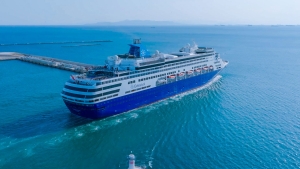
The new cruise ship “Celestyal Journey” will visit four new countries (Qatar, UAE, Bahrain and Oman) and six new ports of call (Doha, Bahrain, Dubai, Khasab, Sir Bani Yas and Abu Dhabi) in the Persian Gulf beginning in November 2024.
The new, seven-night “Desert Days” itinerary will set sail on November 9, from Doha, Qatar, and call for the first time in Bahrain, Dubai, Khasab (Oman), Sir Bani Yas Island and Abu Dhabi. The 1,260-passenger Celestyal Journey joined the line in September last year.
The new itinerary will run through January 18, 2025, and subsequently return as a permanent feature for the winter season.
Celestyal has also confirmed its two-ship fleet will once again operate year-round sailings, with seasonal offerings consisting of:
- A winter program,running November to April from Doha on “Celestyal Journey”, delivering the “Desert Days” itinerary with further three-, four-, five- and seven-night options. And the 1,266-passenger Celestyal Discovery - which joins the fleet this year - will deliver the “Three Continents” cruise from November 2025 to March 2026, covering Greece, Turkey, Cyprus, Israel, and Egypt.
- Celestyal’s “core” program, from April to October, with Celestyal Journey operating three itineraries: the “Heavenly Adriatic” from Greece to Montenegro, Croatia, and Italy, with maiden calls at Kefalonia, Dubrovnik, Kotor, Corfu, Bari and Katakolo. The “Summer Heavenly Adriatic” also features Montenegro, Croatia, Italy, and Greece with maiden calls at Venice, and the “Idyllic Aegean” voyages visiting the Greek Isles and Turkey from 2025. Celestyal Discovery will sail three and four-night “Iconic Aegean” cruises from March to November.
The line previously sailed from March to December. Itineraries for 2024 and 2025 are on sale now.
Savings of up to 70 percent During Celestyal’s Winter Savings Promotion
All destinations, including the new itineraries, form part of Celestyal’s current winter savings promotion, with prices for a seven-night ‘Three Continents’ cruise covering ports in Europe, Africa, and Asia, sailing from Athens, starting from €559pp, while a seven-night ‘Desert Days’ cruise from Doha to Bahrain, Dubai, Oman, Sir Bani Yas Island and Abu Dhabi leads in from €529pp.
Celestyal is also offering 50 precent off all Celestyal Plus+ Experience packages, along with reduced single supplements of 30 percent and low fares for families with children, with up to 70 percent off the third or fourth guest in a cabin.
Lee Haslett, Chief Commercial Officer at Celestyal said, "We come into 2024 with a completely refreshed fleet, seven new countries and 12 new global ports, on top of our much-loved Greece and Mediterranean cruise program. We do the Greek islands and beyond like no other, but we have heard from our customers that they want more destinations, more robust itineraries, and a chance to discover more with Celestyal. We are pleased to be charting a new course to seas beyond the Aegean and the Med to take our guests to new and exciting destinations as Celestyal grows into a global brand.”
“The Persian Gulf cruises deliver this, with a homeport in Doha, stops at marquee destinations such as Dubai, Bahrain, and Abu Dhabi, as well as more bespoke gems in Oman and the island of Sir Bani Yas. We are starting the year strong and intend to keep growing and delighting our customers across 2024,” he continued.
ELNAVI Newsletter
More Information: ELNAVI,
19, Aristidou str., Piraeus 185 31,
Tel.: +30 210 45.22.100, e-mail: This email address is being protected from spambots. You need JavaScript enabled to view it.
Columbia Group establishes a venture capital arm Galactic Beacon Ventures to help drive innovation
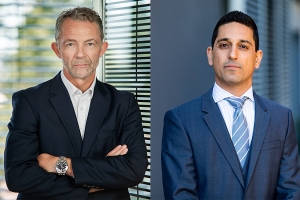
A new venture capital entity, acting as a melting pot for innovation, will help transform cutting-edge ideas into viable businesses across the maritime, logistics, energy and leisure sectors.
Galactic Beacon Ventures, powered by Columbia Group, plans to identify, nurture and transform innovative ideas into successful businesses that leave a lasting legacy and are true to the entity's sustainable credentials.
With the backing of the Columbia Group and its vast network of clients, partners and industry contacts, Galactic Beacon Ventures will enjoy unrivalled access and exposure to numerous sectors across the maritime, logistics, energy and leisure sphere.
Chief Investment Officer at Galactic Beacon Ventures, Kyriakos Vlachos said: “We are seeing a lot of innovative and interesting ideas coming to us from new start-ups and we wanted to launch a platform where we and our partners can get involved and support from the very beginning.”
“We thrive on challenging conventional wisdom, spotting potential early on, and backing visionary founders with conviction, long before the more cautious investors catch on. Our commitment goes beyond financial support; we become partners on your journey, working closely to navigate challenges and seize opportunities.”
Galactic Beacon Ventures prides itself on collaboration, innovation and excellence, and is passionate about being more than just an investor. It serves as a hub for nurturing innovation and inventive concepts, providing support for projects to evolve into prosperous and sustainable ventures.
Mr. Vlachos added: “Our commitment to excellence is evident in our streamlined investment process. We assess opportunities meticulously and create pathways for high growth and scalability. We pride ourselves on leaving a legacy of innovation, progress, and positive impact. With our global perspective, we connect diverse expertise, networks, and ideas to exploit synergies, accelerate growth and shape industries.”
Mark O'Neil, President and CEO at Columbia Group, said: "Galactic Beacon Ventures, powered by the Columbia Group, provides a guiding light and support for entrepreneurs worldwide.”
Image1: Mark O'Neil, President and CEO of the Columbia Group
Image2: Kyriakos Vlachos, Chief Investment Officer, Galactic Beacon Ventures
ELNAVI Newsletter
More Information: ELNAVI,
19, Aristidou str., Piraeus 185 31,
Tel.: +30 210 45.22.100, e-mail: This email address is being protected from spambots. You need JavaScript enabled to view it.
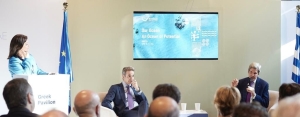
The Prime Minister of the Hellenic Republic and President of New Democracy Party, Mr. Kyriakos Mitsotakis appointed Dr. Dionysia-Theodora Avgerinopoulou, MP, as Special Envoy for the Ocean. Dr. Avgerinopoulou will be serving as coordinator of the 9th Our Ocean Conference, scheduled to take place in Athens, Greece, from April 15th to 17th, 2024.
“Our Ocean Conference”, which was first organized in 2014, is an initiative by the U.S. Department of State and the Secretary John Kerry. The 9th Our Ocean Conference (OOC-9) is expected to consider ways of addressing the impacts of climate change, over-fishing and pollution of the seas. Within the Conference six (6) Areas of Action will be addressed: Marine Protected Areas; Sustainable blue economy; Climate-ocean nexus; Maritime security; Sustainable fisheries; Marine pollution, while Greece will underscore four horizontal elements cutting across the six areas of action of the Conference: (i) sustainable tourism in coastal areas and islands, (ii) green shipping, (iii) reduction of marine plastic and microplastic pollution, (iv) the green transition in the Mediterranean.
Dr. Dionysia-Theodora Avgerinopoulou, Member of the Parliament, Chair of the Special Permanent Committee on Environmental Protection and the Subcommittee on the Water Resources, has also served as Chair of Water of the Energy and Environment Committee of the International Chamber of Commerce; Chair of the Circle of the Mediterranean Parliamentarians on Sustainable Development; Vice-Chair of the Steering Committee of the Global Water Partnership Organization; and Vice-Chair of the Mediterranean Commission of Sustainable Development of UNEP/MAP. She has also been presented with the “Green Star” Award by UNEP/OCHA. Dr. Avgerinopoulou holds a Doctorate Degree in International Environmental Law, focusing on the protection of the marine environment and climate change.
ELNAVI Newsletter
More Information: ELNAVI,
19, Aristidou str., Piraeus 185 31,
Tel.: +30 210 45.22.100, e-mail: This email address is being protected from spambots. You need JavaScript enabled to view it.
Energos buys two FSRUs from Dynagas
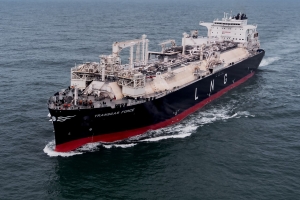
US-based Energos Infrastructure, a joint venture majority-controlled by asset manager Apollo and minority shareholder New Fortress Energy, has purchased two 2021-built floating storage and regasification units from affiliates of Greece’s Dynagas.
The 174,000-cbm closed-loop FSRUs, “Transgas Force” and “Transgas Power”, will be renamed “Energos Force” and “Energos Power”, according to a statement by Energos.
Earlier in 2023, both of the FSRUs started long-term charter contracts with the German Federal Ministry of Economic Affairs and Climate Change.
“Energos Force” is planned to operate in the port of Stade under direction of state-owned LNG terminal operator Deutsche Energy Terminals (DET), while Energos Power is planned to operate in the port of Mukran and has been subchartered to private player Deutsche ReGas.
DET is planning to commission its FSRU-based facility in Stade in the first quarter of 2024.
In December, “Transgas Force” left Germany’s Bremerhaven and now works as an LNG carrier until mid-February when it is expected to be deployed in Stade, while “Transgas Power” started its charter with Deutsche ReGas in October.
US LNG firm NFE and compatriot asset manager Apollo completed the formation of their joint venture Energos Infrastructure in August 2022.
Prior to this move, the JV, 80 percent owned by Apollo, had 11 vessels in its fleet, seven FSRUs, two floating storage units, and two LNG carriers.
The addition of these two FSRUs in Europe makes Energos “the largest owner and operator of LNG marine infrastructure vessels by wholly-owned FSRU capacity operating within the continent,” the JV said.
First Chinese-built FSRUs
China’s Hudong-Zhonghua delivered “Transgas Power” in July 2021, while “Transgas Force” joined the Dynagas fleet in November 2021.
These vessels are the first Chinese-built FSRUs, according to Hudong-Zhonghua.
The units feature three Wartsila regasification modules, and each regas unit has a capacity of 250 million standard cubic feet per day.
Also, the FSRUs have MAN dual-fuel diesel-electric propulsion and GTT’s NO96 containment system.
The latest order for a newbuild FSRU was booked by Excelerate Energy at South Korea’s Hyundai Heavy Industries in October 2022. This deal is worth about $332 million.
On the other hand, Italian energy firm Snam recently completed the previously announced purchase of BW LNG’s 2015-built FSRU BW Singapore for about $400 million.
Back in 2022, Snam also purchased Golar LNG’s 2015-built FSRU Golar Tundra for $350 million.
ELNAVI Newsletter
More Information: ELNAVI,
19, Aristidou str., Piraeus 185 31,
Tel.: +30 210 45.22.100, e-mail: This email address is being protected from spambots. You need JavaScript enabled to view it.
Signal Ocean DRY BULK ANNUAL REVIEW 2023 Commodities Changing Patterns and Freight Market
The year 2023 witnessed significant shifts in commodity patterns, exacerbated by a difficult economic environment in China and geopolitical tensions, especially between Russia and Ukraine, which led to significant shifts in commodity development.
The Chinese economic environment in 2023 posed a challenge, which had a particular impact on iron ore prices and demand for raw materials. The slowdown in Chinese economic growth and strict regulatory requirements impacted infrastructure and construction activity and dampened demand for iron ore. This downturn was exacerbated by environmental policy measures to reduce steel production capacity, which in turn impacted global iron ore prices and trade flows.
In December, it was reported that China channelled nearly USD 50 billion of low-cost funds into policy-oriented banks last month, suggesting that the central bank may be increasing funding for housing and infrastructure projects to support the economy.
The coal industry encountered challenges as major Asian economies, including China, Japan, and South Korea, initiated stricter environmental regulations. These nations are diversifying their energy portfolios, aiming to decrease their dependency on coal. Specifically, China committed to diminishing coal consumption between 2026 and 2030 as part of its national strategy to peak carbon emissions—a pledge solidified in the 2021 U.S.-China climate joint declaration.
Despite these trends, there was a surprising uptick in coal demand in mid-December, rising by 1.4% in 2023 and exceeding 8.5 billion metric tons for the first time, as per IEA estimates. The agency attributed this increase to an anticipated 8% growth in coal usage in India and a 5% rise in China.
Thus, global coal demand is not expected to fall earlier by 2026, while Chinese coal demand is expected to fall in 2024 and plateau through 2026. That said, the outlook for coal in China will be significantly affected in the coming years by the pace of clean energy deployment, weather conditions, and structural shifts in the Chinese economy.
In the grain segment, 2023 witnessed a significant shift in the dynamics of global exports, with Brazilian exports emerging as a dominant force poised to challenge the longstanding leadership of the United States. Historically, the United States has held a prominent position as the world's leading grain exporter, benefiting from its vast agricultural resources, advanced farming techniques, and robust transportation infrastructure. However, recent weather disruptions in Brazil have created opportunities for Argentina's corn industry in 2024.
These weather-related challenges, combined with reported delays in Brazilian planting, have paved the way for the United States to potentially enhance its export volumes, particularly in the first quarter of 2024.
Geopolitical tensions, particularly between Russia and Ukraine, coupled with China's growing influence on the global economy have had a profound impact on commodity production, price dynamics and the development of the freight market. In early December, China took measures to stimulate the economy, spreading optimism and setting the stage for a possible improvement in macroeconomic conditions in the first quarter of 2024. Based on Signal Ocean's data, this analysis provides an in-depth examination of trends in freight market prices, bulk flows and demand for key commodities, providing valuable insights into their evolving dynamics.
ELNAVI Newsletter
More Information: ELNAVI,
19, Aristidou str., Piraeus 185 31,
Tel.: +30 210 45.22.100, e-mail: This email address is being protected from spambots. You need JavaScript enabled to view it.
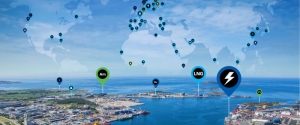
The latest stats from DNV’s Alternative Fuels Insight (AFI) platform found that a total of 298 ships with alternative fuel propulsion were ordered in 2023 – an 8% increase year on year. The year also saw methanol go mainstream, with a sharp increase in orders (138), putting it neck and neck with LNG (130). Additionally, 2023 marked a breakout year for ammonia, with 11 orders for vessels run on this fuel, and more in the pipeline.
Faced with increasing pressure to reduce greenhouse gas emissions, including stricter targets set by the International Maritime Organization (IMO) in July 2023, the maritime sector is considering a range of decarbonization options. Through its AFI platform DNV registers the industry’s efforts related to newbuild vessels and retrofitting with 298 orders for vessels able to run on alternative fuels logged in 2023, and a total of 1281 ships overall.
Knut Ørbeck-Nilssen, CEO Maritime at DNV, said: “As we navigate towards a greener maritime future, the growing demand for alternative-fueled vessels speaks volumes. These orders send pivotal signals to fuel providers and other important partners on shipping’s decarbonization journey. While it is clear that the maritime fuel technology transition is already underway, we now need to ensure the fuels powering these engines become available.
“It is however crucial to emphasise that focusing solely on fuels may divert our focus from achieving a significant impact in this decade. What is required are concrete measures that actively lower emissions. Energy efficiency initiatives can yield decarbonization outcomes both now and leading up to 2030.”
By a small margin, methanol proved the most popular alternative fuel choice in 2023 with 138 ships ordered (excluding methanol carriers), a steep increase compared to the 35 ordered to run on this fuel the year before. The dominating segment for this fuel was container ships (106), followed by bulk carriers (13) and car carriers (10).
The second alternative fuel of choice in 2023 was LNG with 130 vessels ordered, down from 222 in 2022. However, when looking at newbuilds alone LNG would be in the lead as a considerable proportion of methanol orders were for retrofits. Last year also saw LNG finally break the 1000 vessel barrier (excluding LNG carriers), showing the fuel's continued importance in the maritime energy transition. In 2023, the containers segment was the most active (48) for LNG, followed by car carriers (40), and tankers (30). The year also saw the first orders for vessels due to run on ammonia (11) come through, whereas with just five orders, hydrogen was a less popular choice compared to the previous year (18).
Martin Wold, Principal Consultant in DNV’s Maritime Advisory business, commented: “Investments in alternative-fueled vessels have been heavily driven by the container and car carrier newbuild boom over the last three years. It remains to be seen if this trend continues into 2024.”
ELNAVI Newsletter
More Information: ELNAVI,
19, Aristidou str., Piraeus 185 31,
Tel.: +30 210 45.22.100, e-mail: This email address is being protected from spambots. You need JavaScript enabled to view it.
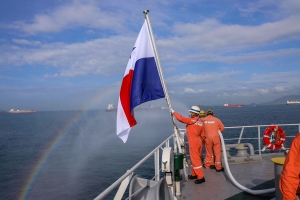
Panama Ship Registry has maintained its leading position globally with 8,540 vessels and 251.1 million gross tonnage (GT), according to the international platform IHS Markit. While in the latest World Fleet Monitor of the year by Clarksons Research Platform, the panamanian flag is on 16% of the ships that make up the world fleet.
During the last year, the Registry had a net increase of 83 ships representing 7.2 million GT and maintained a retention rate of 29%, as reported by the Panama Maritime Authority database. Overall, this Administration has maintained an average retention rate 28 % which is an improvement on the 10-year rolling average of 14 %.
With respect to the ships that entered the panamanian fleet in 2023, 56.7% of the ships are less than 15 years old and had an average 4 years age. From these, 339 are newbuildings, which add up to more than 8.3 million GRT, with which the General Directorate of Merchant Marine achieves 93.75% compliance with its objective of attracting vessels of this segment.
It is significant to mention that last year the Panama Ship Registry by responsible means cancelled officiously 161 vessels representing 1,287,604 GT and with an average age of around 17 years. Within this group are 78 vessels associated with unreported and unregulated fishing.
During this administration from July 2019 to date, the Panama Ship Registry has added 33 million GRT, according to Clarksons Research’s World Fleet Monitor report. Also, this report mentioned the flag´s growth at the end of 2023 is around the 2.9%.
The Panama Maritime Authority continues to be committed to the Panamanian Registry´s modernization and the industry decarbonization, which is why we are working to optimize the services we provide to shipowners worldwide through by our 53 Consular Offices and 22 international technical offices.
ELNAVI Newsletter
More Information: ELNAVI,
19, Aristidou str., Piraeus 185 31,
Tel.: +30 210 45.22.100, e-mail: This email address is being protected from spambots. You need JavaScript enabled to view it.