



-
Home

-
Environment & Culture
- elnavi

elnavi
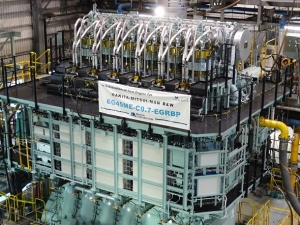
Accelleron has been chosen to supply turbochargers for Japanese engine builder Makita’s first small-bore two-stroke marine engine featuring exhaust gas recirculation (EGR). The step follows a successful matching test in which Accelleron’s A255-L turbocharger demonstrated high efficiency, supporting both low NOx emissions and overall fuel consumption on the Makita-built MAN B&W 6G45ME-C9.7-EGRBP engine.
The Makita engine, 6G45ME-C9.7-EGRBP, will be the first of its type worldwide to feature EGR bypass, which allows the engine to match EGR operation to engine load to deliver the required NOx emissions reduction. EGR bypass relies on good turbocharger efficiency and the A255-L enabled the engine to reach Tier III NOx emissions limits with a relatively low power demand, contributing to better fuel consumption and therefore lower greenhouse gas emissions.
An official from Makita said: “With the matching test of the new 6G45ME-C9.7EGRBP engine, we have confidence that Accelleron’s A255-L turbochargers have the performance and efficiency we need to deliver outstanding engines.”
The first Makita MAN-MITSUI-B&W 6G45ME-C9.7-EGRBP engine with Accelleron’s A255-L turbocharger will be deployed on a 40,000 DWT bulk carrier for Japanese shipyard.
The first A255-L was introduced in 2019 as an extension to the A200-L series, which now has more than 220 units delivered on two-stroke engines. The highly reliable unit features with a turbocharger efficiency of up to 75%.
Accelleron Head of Sales Medium and Low-Speed OEM Asia, Alexandros Karamitsos said: “The use of Accelleron turbochargers on this new engine is a great statement of faith from Makita and MAN Energy Solutions. We pride ourselves on delivering turbochargers with outstanding performance and there is no better testament to our success than being selected for innovative engines from high-quality customers.”
Accelleron is a global leader in turbocharging technologies and optimization solutions for 0.5 to 80+ MW engines, helping to provide sustainable, efficient and reliable power to the marine, energy, rail, and off-highway sectors. Through its innovative product offerings and research leadership, the company accelerates the decarbonization of the industries it operates in. Accelleron has an installed base of approximately 180,000 turbochargers and a network of more than 100 service stations across 50 countries worldwide (www.accelleron-industries.com).
Image: The Makita engine, 6G45ME-C9.7-EGRBP (picture left) was matched with Accelleron’s A255-L turbochargers
ELNAVI Newsletter
More Information: ELNAVI,
19, Aristidou str., Piraeus 185 31,
Tel.: +30 210 45.22.100, e-mail: This email address is being protected from spambots. You need JavaScript enabled to view it.
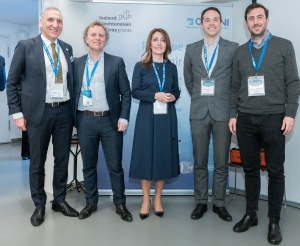
A few Norwegians in Athens are always good for the booming Greek tourism economy, but what happens when more than a dozen carefully selected Norwegian maritime technologists come to Athens to share insights, connect with the customers, and participate in some insightful panel discussions? That happened just a few days ago in a unique location for a maritime technology conference.
Oriani Hellas organized, curated, and hosted the event Navigating Excellence: The Norwegian – Greek Maritime Innovation Summit, held on March 13th & 14th at the Museum of Cycladic Art in Athens Greece. The event, supported by a grant from Iceland, Liechtenstein, and Norway through the EEA Grants Greece 2014-2021, in the frame of the Innovation, Business Development and SMEs program, brought together industry leaders, innovators, and stakeholders to explore digital and technological solutions that are and will transform the maritime landscape.
A dynamic mix of startups and global leading companies took center stage, showcasing the diversity and depth of Norway's maritime technology landscape. From promising startups with fresh perspectives, to established industry players, the presence of these innovative entities led to a fruitful exchange of ideas and expertise.
As Her Excellency Ms. Lajla Brandt Jakhelln, Ambassador of the Royal Norwegian Embassy in Athens, pointed out opening the event...
“The strong advantage for European economies has always been our ability to innovate and we must not forget this advantage in order to take the European shipping industry to the next level. Competition from Asia is fierce.
Finding the right technology is crucial. These technologies again need the support of digitization and big data...” Shipping is going through a period of MASSIVE change, at a much faster rate than ever before. Technology is being developed rapidly and while other industries are changing and adopting these tools, shipping is still traditional, and needs to catch up fast to ensure they remain competitive. We need technology, not only from a business perspective, where processes / people can become more efficient and more productive, but also to increase safety, to take better care of our crews, and to do everything we can to help save the planet.
Regarding the “unique location” which was the Museum of Cycladic Art in Athens, Philip Nielsen the Co-founder of ORIANI HELLAS, mentioned: “...This building (the museum) has the aroma of the sea, of the Aegean Sea where Greek shipping began thousands of years ago. The Cycladic civilization placed human beings at its center. This same heritage, these same principles and same values are carried by the successful Greek shipping of TODAY, where human is still at the center for everything, we do...”
Outcomes of the event
Day 1:
Session #1 focused on "Vessel Performance", moderated by George Teriakidis, Area Manager at DNV Maritime. Topics discussed:
- • Hull Maintenance and its Role in Performance Optimization – Age Hojmark | CEO of Shipshave highlighted the critical importance of hull maintenance strategies in enhancing vessel performance, advocating for proactive approaches to achieve operational flexibility, cost reduction, and emission mitigation.
- • Smarter Hull Management - a Proactive Approach - Manolis Levantis | Global Data Science Team Leader at Jotun, presented the benefits of proactive approach in hull management, fouling prediction algorithm and Jotun’s proactive solutions.
- • “Practical Approach to Digital performance management” - Darri Gunnarsson | General Manager at Ascenz Marorka presented the value of performance monitoring, including real-life case studies and an overview of Ascenz Marorka’s solution.
Session #2, "Fuel Optimization," moderated by Mike Konstantinidis, Managing Director at ZeroNorth A/S, continued the discourse on maximizing fuel efficiency and reducing environmental impact. Topics addressed:
- • “Hydrogen Fuel Cells - a feasible pathway to zero emission ship operations” - Cristian Skajem | Head of Communications, Teco 2030 presented the core technology of TECO 2030’s Hydrogen Fuel Cells and ongoing projects, plans and prospects of the company.
- • “Quantifying Environmental Impact” - Tonje Sellevoll Imafidon | Commercial Director at Ecoxy AS presented the necessity for shipping companies to address their environmental impact, offering a solution to provide reliable emissions measurements data crucial for emissions reduction efforts.
- • “FuelOpt Solution”- Richard Engelhart Bjercke | CCO at Manta Marine Technologies focused on FuelOpt, an on-board hardware solution to optimize fuel consumption based on vessel data from multiple sources, by fixing the speed and consumption settig and taking out continuous user changes.
The day concluded with Session #3 on "Big Data," moderated by Dr. Ioannis Lagoudis, Associate Professor at UNIPI, exploring the transformative potential of big data in maritime operations. Panel topics:
- • “Using Data to improve efficiency: Drydocking and beyond” - John Wills | VP - Product Management at Shipnet, presented the untapped value of data in improving efficiency for the maritime industry and as an example, showed the audience the value of data management in optimizing their Dry-Docking procedure.
- • “Simplify, Improve and Optimize your IT Solutions.” - Where Rolf Nøstdah | Sales Manager at The Ship AS, presented their solution for improved data registration and information access from various systems in a simpler and more streamlined way, with a focus on the difficult to track area of in-port operations.
- • “How to build a solid digital strategy by leveraging your fleet’s data.”- Where Dionysis Asimakopoulos | Growth Manager at Kongsberg Digital, presented the crucial role of data collection in establishing a digital strategy for a shipping company, enabling enhanced safety, flexibility, and long-term viability. One important element discussed during the event was that of collaboration, not only between vendors and clients but also among different vendors themselves. As John Vandoros, the General Manager of ORIANI, said regarding how digitalization with take-off in Greece; “The answer is through developing relations and getting people face to face to discuss the real issues of the end user...”. Meaning that, the most effective way to understand and resolve today’s complex maritime issues is by cultivating relationships and enabling a comprehensive understanding of the shipping companies’ requirements. As he also pointed out: “Frank discussions and realistic promises by the software companies (to their clients) will build trust and allow time for them to deliver the right solution”. In other words, by fostering a culture of transparency and realistic expectations, software companies can build strong relationships with shipping companies. This will allow them the necessary time and space to develop and deliver solutions that are truly tailored to today's market needs.
Day 2:
Session #4 on "Crew & Training" with moderator Katerina Skourtanioti, Managing Director at VENLYS, emphasizing the importance of human capital in maritime operations and its efficient training. Notable presentations included insights on:
- • “Next Generation Safety Culture Program” - Didrik Svendsen | CEO, Sayfr presented how SAYFR has developed a state-of-the-art platform to cultivate behaviors - all based in science. He discussed the importance of data-driven interventions and how Value Propositions for the Culture Change Processes have changed dramatically over the last few decades.
- • “Gamification Training for the Industry.” - Felix Gorbatsevich | CEO of PaleBlue explored the application of gaming engagement principles to workforce training and development, emphasizing the importance of enjoyable, interactive, and effective eLearning methods amongst a variety of digital training options, including Digital Interactive Training and Virtual Reality.
- • “Data in action: optimized decision making in crewing” - Agapitos Diakogiannis | CEO & Co-founder of Seafair presented his solution and the value of digital approach to crew management, emphasizing how systems should serve humans and not the opposite.
And closing, Session #5 "Crew Health & Safety" with moderator Constantinos Triantafyllou, the Head of Strategy & Development at HELMEPA, outlined the importance of our seafarers’ safety and healthcare in efficient maritime operations.
- • “Enhancing Maritime Safety with Dimeq Solutions” - Øystein Bondal | CEO of Dimeq presented his wearable sensor that connects to a smart platform with Man Overboard detection, location communication and a safety system that could lead to the transition to “smart vessels”.
- • “Digital Management of ships medicine chest”- Geir Østrem | CEO of ShipMed AS, addressed the challenge of ensuring vessels always maintain adequate and compliant medical supplies and equipment onboard, regardless of flag, voyage, or crew size. ShipMed’s solution can proactively manage and document compliance, keeping vessels ahead of existing regulatory requirements.
- • “Pioneering Maritime Healthcare with Data-Driven Innovation” - Laura Benzonana, PhD| CEO at Health4Crew, explained how shipping companies can take a proactive rather than a reactive approach to crew health and wellbeing, and how by choosing the right systems, you are able to access and analyze crew health data quickly in the event of a medical emergency.
As the experienced Capt. Dimitris Aslanoglou from Eletson Corporation wisely pointed out at the event’s closing remarks “...happier crews are safer crews...”.
To conclude, this gathering was not only about Norwegian companies showcasing maritime digital solutions. The summit provided Norwegian representatives the opportunity to gain firsthand knowledge of the intricacies of the Greek shipping industry. Likewise, Greek shipping executives had the chance to gain insights from Norwegian maritime solutions and operations through case studies and new technologies. An environment was created where both could engage in constructive dialogue and gain a deeper understanding of each other's operational dynamics.
ELNAVI Newsletter
More Information: ELNAVI,
19, Aristidou str., Piraeus 185 31,
Tel.: +30 210 45.22.100, e-mail: This email address is being protected from spambots. You need JavaScript enabled to view it.
Christos Stylianidis: "Greek shipping is a leading player in the competitiveness of the European economy"
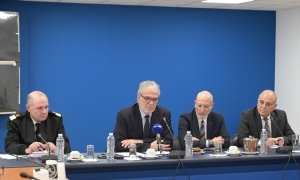
The Minister of Maritime Affairs & Insular Policy of Greece warned the European Committee that the European economy is based on a strong European shipping.
More specifically he said: "Greek shipping is a protagonist in the world and the first shipping power in Europe. That is why it would be a big mistake if we did not take full advantage of this fact, precisely to be able to promote the interests of Greek shipping and the interests of Greece in general.
In other words, we want Greece, as a protagonist in shipping, to play a decisive role in shaping the policies to come. And it is a difficult crossroads, which will have many dilemmas, especially regarding the issues of the "green" transition in shipping. Who will remain protagonists and who will be sidelined.
It is a historic moment especially in shipping and we must show great adaptive abilities and keep our vanguard. I have no doubt about the value of seagoing Greek shipping it has always had an excellent ability to adapt and that is why he maintains this role. However, in matters of coastal shipping, there should be a very large amount of help from the state.
Based on this I visited some of the European capitals, to present to my counterparts and others who have an important role in the European maritime events, some initiatives and behind-the-scenes consultations on the basis of three axes. The first axis is Greece, the great maritime power, as the bridge between the European Union and the IMO. You realize that the IMO is the International Organization that creates the frameworks of behavior in the big bets of shipping and I firmly believe - and I have experienced it up close these five months - that Greece can be the best bridge between the IMO and the European Union - European Commission.
It helps us a lot that, despite the great geopolitical difficulties, we managed to be first again in the voting that took place. This gives us negotiative advantages and we must take advantage of them.
And this introduces me to the second axis of initiatives, which we have already launched. It is an axis that seeks to promote within the European edifice and the European framework, the concept of the "blue" economy, sustainable "green" shipping, within the logic of a competitive Europe.
There are competitiveness problems of the European economies and at the same time the game of competitiveness has changed on many levels. To all this should be added the pandemic, geopolitics, the Ukrainian, what is happening in the Red Sea, what is happening in Gaza. We should therefore take them into account as geopolitical parameters and keep, at all costs, the competitiveness of the European economy very high.
The competitiveness of the European economy is based on a strong European shipping. And a strong European shipping is based on a strong Greek shipping. Things have this order, this hierarchy.
With this in mind, we have therefore started a discussion with my counterparts on exactly how to keep European shipping competitiveness, to the extent that it contributes to Europe's overall competitive position. It is a broad topic entitled "The Blue Economy in Europe". This is the second axis.
The third axis of the initiatives we had during this period was how we will use, as much as possible, European funding to strengthen and help the "green" transition, especially in coastal shipping. We have already started many efforts. We are in negotiation with Commissioners and with various DGs in the Commission. That is why on my last trip to Brussels, I had many meetings with Commissioners, precisely about how we will use European funding to help our coastal shipping, which is in difficulties. To make the "green" transition in the right way, in order to help upgrade our coastal shipping.
Because there is always room for improvement and at the same time to become as safe as possible, within the logic of the "green" transition, which is also a European goal.
We have of course said, repeatedly, using as a motto what the Prime Minister said at the Sharm el-Sheikh Climate Change Conference (COP 27) that, in this process, we must be radical, but at the same time we must also be realists. And I think this has already started and is happening in all European forums and in European capitals. It was a fixed Greek position from the beginning and we discussed this constantly, namely the interconnection of the IMO standards with the standards of the European Commission.
These are the three axes on which the initiatives were based and will continue, of course, because we are still at the beginning.
I have already visited Paris, where I had a meeting with the relevant Deputy Minister and we discussed all the issues. In Brussels, a trip that took place in the previous days, also included participation in the well-known Conference of the Belgian Presidency for the well-being of seafarers, the "Brussels Conference on the Wellbeing of Seafarers". I also visited Berlin, where I saw the Minister and we discussed all these matters. How we see the concept of the "blue" economy in Europe. How European money is used and how Europe will pass its positions in the IMO and not come to the point of hurting its own competitiveness."
ELNAVI Newsletter
More Information: ELNAVI,
19, Aristidou str., Piraeus 185 31,
Tel.: +30 210 45.22.100, e-mail: This email address is being protected from spambots. You need JavaScript enabled to view it.
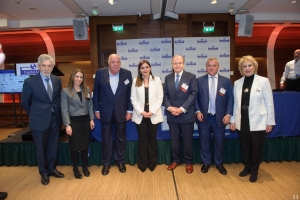
Under the Auspices of the Shipping Deputy Ministry of Cyprus and the Shipping Deputy Minister to the President and in cooperation with the Cyprus Union of Shipowners the Capital Link hosted the 7th Annual Cyprus Shipping Forum on Tuesday, February 27, 2024, at the Columbia Plaza – Limassol, Cyprus with great success.
The event was also supported by the Cyprus Shipping Chamber and other major stakeholders of the Cyprus maritime cluster.
The event featured an extremely interesting agenda including panel discussions composed of major stakeholders from Cypriot and global shipping. Having now been established as a meeting point of the global shipping industry, this year's Conference aimed to provide a comprehensive review of critical developments, challenges, and perspectives of the shipping industry worldwide.
The shipowners panel hosted major figures in the industry, in particular, Ms. Semiramis Paliou, CEO - Diana Shipping (DSX); Chairperson – HELMEPA; Chairperson – INTERMEPA, Mr. George Mouskas, CEO - Olympia Ocean Carriers / Zela Shipping, Mr. Polys Hajioannou, CEO - Safe Bulkers (SB), Mr. Petros Pappas, CEO - Star Bulk Carriers (Star Bulk).
Senior executives of four large charterers with leading positions in global shipping joined the panel “Charterers’ Perspective – Navigating Through Industry Transformation”. More specifically, representatives of Viterra Chartering B.V., Olam International, Mercuria, and EP Resources AG discussed the market conditions from the charterers’ perspective.
The global charterers concluded that they are optimistic about the future of shipping, especially dry bulk shipping. They pointed out that the effects of the disturbances in the Red Sea will be seen for months ahead. They also called for cooperation with shipowners on the road to the green transition, while referring to the EU’s environmental measures as regional ones. The panel was moderated by Mr. Polys Hajioannou, CEO of Safe Bulkers (SB), who mentioned that it is very important to share the insight of charterers, who are those paying for cargo transport.
For the seventh year in a row, the Conference Chairman of the Forum was Mr. George A. Tsavliris, Principal of Tsavliris Salvage Group, Past Chairman – INTERMEPA (International Marine Environment Protection Association), Chairman – CYMEPA (Cyprus Marine Environmental Protection Association), Member of the Board of Directors of the Cyprus Union of Shipowners, and Honorary Chairman – Tsavliris Cultural Foundation.
WELCOME REMARKS by Mr. Nicolas Bornozis, President – Capital Link, Inc. & Mr. George A. Tsavliris, Principal – Tsavliris Salvage Group, Conference Chairman.
Mr. Nicolas Bornozis, President – Capital Link, Inc., welcomed and thanked the participants, the forum’s sponsors as well as all the Supporting Organizations and Media Partners for their participation and support. Mr. Bornozis emphasized that the conference provides a unique opportunity for the discussion of the most critical issues concerning both the Cypriot and the international shipping industry. He also reiterated Capital Link’s commitment to enhance awareness of Cypriot Shipping and the Cyprus Maritime Cluster to a broader international audience.
CYPRUS SHIPPING FORGING AHEAD
Keynote Presentation by H.E. Marina Hadjimanolis, Shipping Deputy Minister to the President - Republic of Cyprus, Followed by 1x1 Discussion
Interviewed by: Ms. Elvina Montanios, Shipping Partner – Montanios & Montanios LLC
In her Keynote speech H.E. Marina Hadjimanolis, Shipping Deputy Minister to the President, Republic of Cyprus, stated:“It gives me great pleasure to be here today at the 7th Annual Capital Link Cyprus Shipping Forum, the first forum I attended after my appointment, almost one year ago. I extend my heartfelt gratitude to the organizers, especially Mr. Bornozis, for this distinguished invitation. It is indeed a privilege to address esteemed members of the Cyprus and international shipping community.
As shipping is a global industry it is more vulnerable to geopolitical developments and challenges. The previous year was no exception, as we witnessed a series of unprecedented and unpredictable events which has put global shipping under extreme pressure.
It is likely that some of these challenges may persist or evolve in 2024 and it appears that this year will be yet another turbulent year.
Starting in early 2022, the war in the Ukraine, impacted shipping and seaborne trade. In recent months, international shipping has been faced with new challenges as a result of attacks by Yemeni Houthi against ships crossing the Red Sea, which has led major shipping companies to change their ships’ itineraries and suspend cargo shipments. These attacks prompted the Shipping Deputy Ministry, to immediately adopt specific security measures for the protection of Cyprus ships and notify accordingly the shipping community. In addition, last week the Cyprus Government announced, its participation in “ASPIDES” together with other members of the EU, for the protection of free navigation.
The maritime sector is an integral part of Cyprus's identity, reflecting our historical ties and economic strength. With one of the largest fleets, Cyprus contributes significantly to the global shipping landscape, playing a pivotal role in world trade and economic prosperity. Through proactive engagement in crucial decision-making processes that directly shape maritime affairs, Cyprus not only solidifies its status as a modern, efficient and integrated maritime cluster but also demonstrates an unwavering commitment to global maritime governance.
We find ourselves at a crucial juncture, witnessing the onset of a transformative era in the shipping industry, marked by complex challenges.
Fuels and technology, digitalization and autonomous shipping combined with green financing are the main challenges of the industry that set the key trends for the future of shipping.
And all those challenges are interrelated: a fuel needs to be available, cost-effective, compatible with existing and future technology and compliant with current and future environmental requirements. Digital technologies and solutions are being used to increase competitiveness and enhance operational efficiency. At the same time, they offer major cost savings by improving fleet efficiency to help accelerate the decarbonization of shipping. All the above cannot be achieved without funding. Green and sustainable financing plays a critical role in facilitating this transition towards a more sustainable future.
Decarbonization emerges as the most significant challenge and opportunity for our sector. The urgent need to address climate change has placed a spotlight on the maritime industry's carbon footprint. Understanding the importance of the situation, we introduced a range of green incentives from the fiscal year 2021 which, this month, have been revised and approved by the Council of Ministers, to reward vessels that demonstrate effective emission reductions.
As a leading advocate for sustainable shipping, we believe that comprehensive and diverse measures are necessary at both global and regional levels to achieve emissions reduction targets and ensure a sustainable future for the industry. This entails the adoption of cleaner fuels, the establishment of relevant fuel infrastructure, the automation of ships, and the utilization of energy-efficient technologies. However, it is crucial to incentivize shipowners for their investments in sustainable practices to accelerate widespread adoption.
In an era where efficiency is the key to success and competition is on the rise, the importance of streamlined and effective fleet management cannot be overstated. This not only enhances operational efficiency but also contributes to cost reduction, a critical consideration in the face of sharp competition. Additionally, optimizing fleet performance contributes to increased energy efficiency, aligning our practices with sustainability goals while maintaining a competitive edge in the maritime industry.
Committed to progress, we are encouraging the adoption of cutting-edge technologies for automation and optimization, to elevate ship management practices. Optimizing fleet performance enhances operational efficiency, reduces environmental impact, and reinforces Cyprus's standing as a flag of excellence on the global maritime stage.
Charting the course to a sustainable future is not just a responsibility; it is our legacy to future generations. Preserving this legacy through collaboration, innovation, and adherence to international standards is of paramount importance.
In line with this year's theme as the “National Year of Youth”, we are committed to enhancing maritime education, launching initiatives to attract young talent and bolster the available workforce. This initiative emphasizes the importance of empowering the younger generation to contribute to the industry's growth, innovation, and sustainability.
The global shipping industry is on the verge of a transformative era, as it faces the urgent necessity to address environmental concerns. In the face of adversity, we must recognize that challenges also bring forth opportunities. We are committed to embracing these challenges and turning them into opportunities for sustainable growth.
Our maritime heritage runs deep, and the maritime sector is a cornerstone of our economy. Cyprus, with its strategic location and vibrant maritime community, is poised to be a key player in shaping the future of the industry. The responsibility falls on our shoulders to ensure that our maritime activities align with global sustainability goals.
Concluding: Do we want to Lead the Way? I certainly do.
But, it is not a one woman’s journey.It is OUR journey. With each and every one of you here today.
During these months I have listened to your concerns, and I have seen a passion that no other industry has.
Let’s make that passion stronger and let’s together navigate on this journey, by investing on the unique maritime cluster that only Cyprus has.
And let’s sent the strongest message, that when a Cyprus flag is raised Ladies and Gentlemen, around the world, with the expertise of a 60 year ship registry, and together with the magnitude of the strongest and biggest ship management center, along with the variety of all the service provider companies, no barriers and no hurdles can overcome us.
Because we are CYPRUS SHIPPING, and we are unique!”
REGULATORY UPDATE PRESENTATION
Mr. Theo Kourmpelis, Strategic Business Partner – Lloyd’s Register
PREPARING FOR NET ZERO
Moderator: Dr. John Kokarakis, Technical Director SEEBA Zone – Bureau Veritas and Panelists: Mr. Basil Sakellis, CEO - Alassia NewShips Management, Inc., Mr. Dimitris Vastarouchas, Chief Operating Officer & Vice President– Danaos Corporation, Dr. Loukas Barmparis, President – Safe Bulkers, Dr. Dinos Arcoumanis, Professor Emeritus – University of London; Corresponding Member of Academy of Athens.
Dr. John Kokarakis, Technical Director SEEBA Zone – Bureau Veritas, stated: “Setting Sail for Zero: Decarbonizing the Maritime Industry by 2050”. “The vast network of ships crisscrossing our oceans plays a vital role in global trade, but also contributes significantly to greenhouse gas emissions. Recognizing this, the International Maritime Organization (IMO) has set an ambitious goal: achieving net-zero emissions from international shipping by 2050. We will explore the challenges and potential solutions towards this crucial target. Transitioning to zero-emission fuels is paramount. Promising options include hydrogen, ammonia, and biofuels, though significant infrastructure development and cost reduction are needed.
Operational improvements also play a crucial role. Optimizing routes, increasing energy efficiency through hull design enhancements, and utilizing weather routing to avoid unfavorable conditions can all lead to substantial emission reductions. Investing in shore-side infrastructure is equally important. Providing electricity to ships docked in ports can significantly reduce emissions compared to running auxiliary engines for power generation. Prerequisite is that the electricity provided is generated by renewable sources of energy. Transitioning to a net-zero future requires more than just technological innovation. Collaboration across stakeholders is vital. Governments must provide incentives to encourage the adoption of clean technologies and operational changes. The shipping industry itself needs to invest in research and development and ensure a just transition for workers impacted by the shift from traditional fuels. Shipping companies must be committed to sustainable shipping practices. The journey to net-zero emissions for the shipping industry is undoubtedly complex. It necessitates coordinated efforts, technological advancements, and investment. However, the potential benefits are undeniable, contributing to a cleaner planet, healthier oceans, and a more sustainable future for all. The success of this endeavor will be a testament to our collective ability to navigate the challenges of our time and set sail towards a brighter tomorrow.”
OPTIMIZING SHIP MANAGEMENT & FLEET PERFORMANCE
Moderator: Ms. Chara Georgopoulou, Head Maritime R&D and Advisory Greece – DNV and Panelists Mr. Nikolas Vaporis, Chief Technical Officer – Capital Ship Management Corp., Mr. Mark O’Neil, President & CEO – Columbia Group; President – InterManager, Mr. Fabian Fussek, Co-Founder & CEO – Kaiko Systems, Mr. Prabhat Kumar Jha, Group Managing Director & CEO – MSC Shipmanagement Limited, Cyprus.
Ms. Chara Georgopoulou, Head Maritime R&D and Advisory Greece – DNV, stated: “Ship management optimization goes beyond the implementation of digital technologies and data analytics to improve operational performance monitoring and assessment. It is also about aligning people and systems within a broader company culture framework, where the human element is the driving force to enhance operations through the utilization of smart systems.”
SHIP FINANCE – ADAPTING TO NEW REGULATORY & COMMERCIAL LANDSCAPE
Moderator: Mr. George Zambartas, Head of Office (Limassol) – Hill Dickinson LLP and Panelists Mr. Nicholas Pavlidis, Head of Shipping – Bank of Cyprus, Mr. Constantinos Milios, Head of Shipping Finance – Eurobank Cyprus, Mr. Dimitris Tzavaras, Head of Shipping – Hellenic Bank, Mr. David Grant, Managing Director, Shipping Finance – ING Bank NV.
Mr. George Zambartas, Head of Office (Limassol) – Hill Dickinson LLP, stated: “The ship finance panelists, drawn from both the Cypriot and English banking sectors, provided valuable insight on how they dealt with the myriad of challenges in 2023 and how they envisage turbulent geopolitical events and regulatory demands will impact ship finance in the year ahead. It was clear that the banks on the panel will take a resilient approach and ship finance options will remain available to ship owners. The forum also showcased the continued development of the Cyprus maritime cluster, which maintains an upward trajectory – supported by an establishment of new key players in Cyprus from the shipping industry representing different maritime sectors including operations/management, ownership, insurance, and professional services. The value and importance of the Cypriot shipping industry was also reinforced with Hill Dickinson adding Cyprus to its network of international offices last month.”
Mr. David Grant, Managing Director, Shipping Finance – ING Bank NV, stated: “The outlook for shipping generally is challenging due to the combination of elevated volatility, geopolitics, sanctions, regulation, and decarbonisation. Despite the uncertain environment, it remains a very competitive ship finance market with strong levels of liquidity seeking new deals. ING aims to be a consistent capital provider to the shipping industry and focusing on building long term relationships with ship owners is key to this approach. We also believe that we have an important role to play in promoting sustainable development. Sustainability is a core element of our strategy, and we factor the energy efficiency of every ship we finance into our decision-making process, actively engaging and collaborating with our clients to discuss new initiatives in this area whilst recognising the challenges.”
ESG – CHARTING THE COURSE TO A SUSTAINABLE FUTURE
This panel focused on the necessity and tangible benefits of ESG from the viewpoint of various stakeholders – shipowners, bankers, insurers, charterers.
Opening Presentation by: Ms. Katerina Ronga, Partner, Risk Advisory, Sustainability & Climate Leader – Deloitte Greece
Moderator: Mr. Ezekiel Davis, Vice President, Europe Business Development – ABS and Panelists Ms. Katerina Ronga, Partner, Risk Advisory, Sustainability & Climate Leader – Deloitte Greece, Mr. Hugues Calmet, Head of DNB Athens Representative Office – DNB, Mr. Thanasis Antonakis, Deputy CFO & Chief Compliance Officer – Safe Bulkers, Mr. Jeff Wakker, COO – Viterra Chartering B.V..
Ms. Katerina Ronga, Partner, Risk Advisory, Sustainability & Climate Leader – Deloitte Greece, stated: “The evolving sustainability landscape is becoming a new reality that shipowners should consider in order to ensure proactive engagement.
The changes in regulation are rather agile, and it is expected that the European Union will continue to publish new regulations to ensure that a baseline is achieved.
Considering this, ESG practices have become a necessity for the maritime sector, while simultaneously presenting an opportunity to differentiate and attract investor interest.
The key point to consider is that ESG initiatives should adopt a holistic approach encompassing strategy, governance, targets, and reporting. These elements need to be integrated into the company’s strategy to ensure compliance with regulatory requirements.
Additionally, ESG initiatives bring numerous opportunities for the maritime sector to enhance itself, including the adoption of innovative technologies and AI, utilization of renewable fuels and alternative energy sources, implementation of anti-fraud frameworks and governance best practices, as well as the establishment of new standards for health and safety.
In this context, the new CSRD regulation should be seen as an opportunity to foster real cultural change and realize benefits in the maritime sector.”
INVESTING IN SHIPPING
Moderator: Mr. Andreas Mylonas, Advocate, Managing Partner – AMG Mylonas & Associates, LLC and Panelists Mr. Aristides Pittas, Chairman & CEO – Euroseas Ltd. & EuroDry Ltd., Mr. Ronis Kyperesis, Head of Finance – Pelagic Partners; CFO – Hartmann Holdings, Mr. Hans Oust Heiberg, Partner – Sole Shipping.
Mr. Andreas Mylonas, Advocate, Managing Partner – AMG Mylonas & Associates, LLC, stated: “During the 7th Annual Capital Link Cyprus Shipping Forum, we engaged in a comprehensive discussion on "Investing in Shipping” panel. We explored various segments presenting investment opportunities, delved into innovative investment structures, and examined the evolving landscape of financing options. Key topics included the impact of technological advancements and environmental regulations on investment strategies, the significance of risk management, and the influence of geopolitical tensions on the shipping sector. The insights shared by the panelists offered a deep dive into the complexities and opportunities within the shipping industry, reflecting on the cyclical nature of the market and the future outlook for bulk Mr. Aristides Pittas, Chairman & CEO – Euroseas Ltd. & EuroDry Ltd., touched on whether now is an advantageous period to invest, stating that he invests during all periods, as it is difficult to predict when the right moment to invest will come. In fact, he has made some of his best deals when the market conditions did not look favorable. He noted that the key to investing in all periods is to have a strong reserve that protects the company during low charter periods. Mr. Pittas also highlighted that bankers’ and economists’ financial estimations are mainly based on what has already happened, or on trends, but life is unpredictable. Any investment analysis must take uncertain, unpredictable factors into consideration in case things don’t go as planned, he stated. Regarding his outlook on shipping, he stressed that all markets are profitable now, and the most significant, and uncertain, factors to consider are the geopolitical developments impacting shipping. He stated that it is impossible to predict when these disruptions will end, and how long they will impact shipping markets. However, as the shipping industry as a whole is not struggling currently, he does not expect any dramatic changes in the market, barring any unforeseen events.
Mr. Ronis Kyperesis, Head of Finance – Pelagic Partners; CFO – Hartmann Holdings, stated: “In response to queries about the secret behind Pelagic Partners’ success, Ronis Kyperesis attributed it to a carefully crafted strategy. He outlined the importance of meticulous risk and portfolio management, underscoring how these elements contribute to the company’s resilience in the face of market fluctuations. By diligently assessing risks and managing portfolios with precision, Pelagic Partners has been able to thrive in a complex and ever-changing industry. Additionally, he emphasized the pivotal role of human capital within Pelagic Partners, equipped with the knowledge and expertise necessary to overcome the dynamic challenges prevalent in the maritime industry.
Another crucial factor in the company’s success lies in investing in markets of expertise. Pelagic Partners strategically channels its investments into sectors where the company has a profound understanding and a demonstrated track record. This focused approach enables Pelagic Partners to seize opportunities while mitigating potential risks, thereby playing a significant role in the sustained success of the organization.”
CHARTERERS’ PERSPECTIVE - NAVIGATING THROUGH INDUSTRY TRANSFORMATION
Moderator: Mr. Polys Hajioannou, CEO - Safe Bulkers (SB) and Panelists Mr. Alex Sass, Vice President Freight - EP Resources AG, Mr. Samuel Jaeggi, Freight Trader – Mercuria, Mr. Mark Thompson, Senior Freight Trader - Olam International, Mr. Patrick Legierse, Global Head of Chartering - Viterra Chartering B.V.
During their panel, representatives from prominent charterers delved into a number of the most pressing topics in the shipping industry, including disruptions such as the War in Ukraine, drought in the Panama Canal, and attacks in the Red Sea, as well as their outlook on shipping markets and the future of green shipping.
Regarding the attacks in the Red Sea, which have spurred many ships to take longer routes around the Cape of Good Hope to avoid danger, Mr. Samuel Jaeggi stated that while the attacks have not heavily impacted the industry yet, their true impact will be felt in the coming months—such as was the case regarding the drought in Panama. Mr. Jaeggi noted that, when water levels were severely reduced in the Panama Canal due to drought, drastically limiting the number of ships that could travel through the essential passageway, many expected immediate impacts on the industry. However, the true effect of the drought on shipping was only felt a few months later. He stated that the current situation in the Red Sea would likely be similar and that it could potentially rechart Asia-Europe trade routes for a longer period.
Echoing Mr. Jaeggi’s statement, Mr. Alex Sass emphasized that the situation in the Red Sea is not fleeting and would likely not resolve itself either easily or quickly. Rather, it will lead to a more complex shipping industry with altered trade routes. Due to its position, Cyprus will play an increasingly large role in global shipping, he stated, particularly in light of geopolitical tensions and upcoming environmental regulations. In terms of the war in Ukraine, which has had a ripple effect on all of shipping due to sanctions and altered trade routes, Mr. Mark Thompson highlighted that, despite the conflict, ports in Ukraine have actually exported larger quantities of goods, particularly grain, than before the war.
While many shipping markets are competitive currently, the charterers highlighted the dry bulk sector as one to follow. The market seems particularly competitive for Capesize dry bulk vessels, which represent the largest percentage in the value of the global dry bulk fleet, Mr. Jaeggi noted. Apart from geopolitical concerns, the transition to green shipping, as well as the impact of environmental regulations on the industry, were important points of discussion. For shipping to transition to a more efficient industry, charterers and ship owners will have to cooperate closely, Mr. Thompson stated. The two parties must invest and join forces on projects that can propel shipping forward into a green future, especially when it comes to vessel efficiency, he stressed. Mr. Patrick Legierse concurred, expressing that the cooperation between ship owners and charterers to invest in making ships more efficient is essential, especially considering that the future and application of alternative fuels remain incredibly uncertain. While green shipping and efficient vessels are significant and beneficial for all parties, Mr. Sass noted that incredible caution should be taken when investing in related projects, as they can be incredibly expensive and could lead to losses of funds if such investments turn out to be unusable. To avoid this, he stressed that global shipping legislation from the IMO, rather than regional regulations such as those imposed by the EU, should be applied, and the money collected from these regulations should be put toward projects aimed at advancing green shipping.
SHIPOWNERS’ ROUNDTABLE
Moderator: Mr. Stavros Violaris, Partner, Sustainability Leader - EY Cyprus and Panelists Ms. Semiramis Paliou, CEO - Diana Shipping (DSX); Chairperson – HELMEPA; Chairperson – INTERMEPA, Mr. George Mouskas, CEO - Olympia Ocean Carriers / Zela Shipping, Mr. Polys Hajioannou, CEO - Safe Bulkers (SB)
Mr. Petros Pappas, CEO - Star Bulk CarriersMr. Stavros Violaris, Partner, Sustainability Leader - EY Cyprus, stated: “Today, I had the privilege of attending the 7th Annual Capital Link Cyprus Shipping Forum, a pivotal gathering that underscored the maritime industry's resilience, innovation, and forward-thinking.”
The "Shipowners’ Roundtable", led by Stavros Violaris, Partner and Sustainability Leader at EY Cyprus, was particularly enlightening. Stavros brought up important topics such as sustainability, the EU regulatory environment, the current geopolitical pressures, the future of shipping, as well as the strategic importance of the EU and Cyprus flagged ships in shaping the industry's future.
Reflecting on the event, after the panelists have outlined their views, Stavros highlighted the optimistic outlook for the industry, the imminent need for action that is driven by the urgency to reduce emissions and embrace greener practices, but also the ongoing technological innovation which is occurring irrespective of the uncertainty surrounding which technological advancements will prevail. Finally, he highlighted the need for collaboration and collective action which are key to addressing the challenges ahead. By working together, we can chart a greener course towards a more resilient shipping industry.
Ms. Semiramis Paliou, CEO - Diana Shipping (DSX); Chairperson – HELMEPA; Chairperson – INTERMEPA, emphasized several key points regarding the shipping industry's green transformation, the implications of the EU ETS, geopolitical significance, HELMEPA's role, and future forecasts.
She highlighted the imperative for a green transformation within the industry, noting the need for substantial investments in new technologies and net-zero fuels to meet emission reduction targets for 2030 and 2050. The industry needs approximately $1 trillion by 2030 and $3.7 trillion by 2050. Conventional ships boast impressive fuel efficiencies, while future fuels remain uncertain, with biofuels, methanol, and LNG currently available options. Risk remains inherent in new building investments, but transitional solutions like dual fuel methanol vessels signal progress toward sustainability.
Ms. Paliou also discussed the implications of the EU Emissions Trading System (ETS), noting its success in reducing emissions in other industries through a cap-and-trade mechanism. Extending this system to shipping aligns with global efforts to reduce greenhouse gas emissions. By setting limits and trading allowances, the ETS encourages technological advancements and efficiency improvements.
Geopolitically, shipping plays a crucial role in national security, strategic autonomy, economic development, and job creation. European and Cypriot flag ships contribute significantly to security, economic growth, and independence by facilitating trade and providing employment opportunities.
Furthermore, Ms. Paliou emphasized the role of HELMEPA, an organization founded 40 years ago. HELMEPA focuses on raising awareness and educating the shipping sector about sea protection. In the face of environmental regulations, HELMEPA provides training and guidance to align with sustainable development goals, including projects like METAVASEA, which aims to educate stakeholders on digital transformation, new fuels, and climate crisis awareness.
Looking ahead, Ms. Paliou remarked that with IMO's revised GHG emission strategy aiming for net zero emissions by 2050 and midterm measures expected by 2027, global uniformity in measuring and pricing emissions is crucial. Ambitious measures are needed to satisfy EU requirements and deter potential regional regulation in the United States and Asia in order to maintain a uniform, global level playing field.
In conclusion, Ms. Paliou's remarks highlighted the shipping industry's commitment to a greener future, driven by regulatory frameworks, technological innovations, and collaborative initiatives like HELMEPA to ensure sustainability and environmental responsibility.
Mr. George Mouskas, CEO - Olympia Ocean Carriers / Zela Shipping, highlighted the importance of investing in more efficient vessels, as the industry has no choice but to continue to build better, more efficient, and more economical ships. In his specific case, he has received modern ships from Japan that have 25% lower fuel consumption compared to older ones.
Mr. Polys Hajioannou, CEO of Safe Bulkers, Inc. (NYSE: SB), noted that he is a bit more optimistic than others regarding the future of the dry bulk freight market, particularly in terms of rates. He continued by highlighting the seasonally high daily rates of $17,000 that the market experienced in February and predicted that daily rates could reach $25,000 in June and July, once exports from Latin America, including Argentina, begin. His optimistic outlook on the market extends into the second half of 2024 and 2025, as there are very few new building orders for dry bulk vessels going forward, which may lead to tight supply-demand fundamentals. While he is optimistic regarding the market’s development, he noted that the U.S. Presidential election may impact this outlook. In the case that Donald Trump is elected, there may be tensions with China which will impact global and European trade, therefore impacting the dry bulk sector as well.
Regarding the role of Europe in the global shipping sector, Mr. Hajioannou stressed that Europe must increase its competitive position in shipping. He continued that the European fleet should be managed from cities such as Athens and Limassol, which provide the best combination of professional and living conditions, as Europeans want to live in Europe, but Shipping business could run from other hubs further afield should this is needed.
Regarding the latest environmental regulations, and EU-ETS in particular, Mr. Hajioannou expressed that the regulations will lead to hikes in the cost of shipping goods to and from European ports because of the dues and taxes and these increased costs could put the European fleet at a disadvantage. He noted that the phrase “the polluter pays,” meaning the charterers, which is often stated when discussing environmental regulations, is not entirely true. In his experience, some charterers may pay only part of the cost letting the ship owners pay the rest. At the end of the day, however, consumers will ultimately bear the brunt of the fees, as they will be the ones paying higher prices for the same goods.
Regarding the environmental regulations, it is unclear where the money collected from these schemes will be implemented, and Mr. Hajioannou stressed that there should be clarity from the EU regarding the application of these funds. In terms of alternative fuels and vessel efficiency, uncertainty regarding the practicality of such investments and interest from charterers has led to hesitancy on the side of ship owners. Mr. Hajioannou noted that Safe Bulkers has invested in two methanol dual-fuel ships, yet he does not believe they will be an instant success, as he doesn’t see firm interest from charterers yet for these particular ships.
Mr. Petros Pappas, CEO - Star Bulk Carriers, commented on the green transition, noting that cutting-edge technology is on the horizon; however, efficient infrastructure is not yet in place, nor are alternative fuels widely available. Building infrastructure takes time and a lot of money, and alternative fuels will not be available in quantities large enough to supply the entire global merchant fleet, he stated. Apart from the question of supply, there will also be intense competition with other industries for these alternative fuels once they are available. When the production of alternative fuels begins, they will be given to the most polluting industries first - and shipping is not among them, since it is responsible for only 3% of greenhouse gas emissions.
Regarding technology aimed at improving vessel efficiency, Mr. Pappas highlighted Star Bulk’s efforts in improving its fleet, stating that it is important to develop a hull cleaning system correctly so that the ship is not damaged. The company is trying to develop a robotic system that will clean the ship's hull efficiently and safely. For two years now, Star Bulk has been doing research and experiments to build such technology.
Currently, shipping faces environmental regulations that are specific to each region, rather than global, which poses its own set of issues, Mr. Pappas stated. He does not believe that each region should introduce its legislation, as was done with the E.U. and EU-ETS. Rather, global bodies such as the IMO must legislate, to avoid the weakening of specific regions in the shipping industry due to discrepancies in regulations. As for the additional costs in maritime transport stemming from EU-ETS, he added that the additional cost of transporting products to and from European ports from the implementation of the EU-ETS will be borne by consumers. In his estimation, products will become even more expensive, while the volume of goods to and from Europe will decrease. He added that European environmental regulations put the region at a disadvantage compared to its competitors since transportation is becoming more expensive. He then noted that shipping transports 90% of the world's trade most cost-effectively and ecologically, leaving a small footprint compared to other industries.
However, Mr. Pappas stated that the regulations, in general, are good for both the environment and shipping markets. Regulations lead to ships slowing down their speed to reduce gas emissions, meaning that it takes more time to carry the same volume of cargo, older ships are sent to scrap, and ships will spend more time on dry docking - repairs/maintenance. This means that there is increased demand for sea transport, but ship supply is limited, so charter rates go up.
Mr. George A. Tsavliris, Principal – Tsavliris Salvage Group, Conference Chairman in his closing remarks stated: “It has been an honour to chair the Cyprus Capital Link Forum for the 7th year.
The Capital Link Forum is a globally recognized shipping platform, attracting ship operators from all over the world. Given the current volatile global environment, uncertain economic geopolitical conditions, the global climate crisis, the reduction in emissions/ decarbonization requirements, the wellbeing and mental health of our seafarers during this time of global crisis, the impact on global trade and the maritime sector is particularly concerning.
With the support and participation of leading shipping authorities, we analyzed the above issues plaguing our industry in an effort to set forth an effective course of action which can only be achieved through synergy. The most effective way to achieve a sustainable future is by working together, with communication and transparency for long term planning to mitigate the risks and find environmental solutions.
The unique structure of the Cyprus Capital Link Forum is such that it creates a wonderful atmosphere of inspiration for everyone present, allowing for a lively interaction with the audience - both leading figures of the maritime sector as well as the younger generation attending - which is thought provoking without being intrusive. All the important issues that we are dealing with are discussed in an honest, transparent and almost utopian manner – regardless of titles and hierarchies. I am truly proud and happy to be a part of the CYPRUS Capital Link Forum, for this rare opportunity it enables to have a valuable open discussion for all involved.
We hope that the crises in Gaza, Ukraine and the political tensions in the Red Sea and other parts of the world will be resolved very soon and the tragic impact on innocent civilians will cease.
A huge thank you to the Capital Link team, all speakers, and attendees for their continued support to the Cypriot [and Greek] maritime sector and this tremendous opportunity to raise the vital issues concerning us all and plan a viable and positive future for shipping.”
ELNAVI Newsletter
More Information: ELNAVI,
19, Aristidou str., Piraeus 185 31,
Tel.: +30 210 45.22.100, e-mail: This email address is being protected from spambots. You need JavaScript enabled to view it.
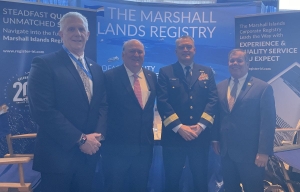
The Republic of the Marshall Islands (RMI) Registry’s active role in supporting its owners and operators has resulted in sustaining the highest quality fleet in the world. At the close of day one of CMA Shipping 2024, Rear Admiral Wayne Arguin informed RMI Registry personnel that the RMI has once again achieved the coveted United States Coast Guard’s (USCG’s) QUALSHIP 21 status, marking 20 consecutive years. The RMI is the only Registry in the world to do so. This recognition is the result of long-term and consistent focus on open communication with global port State control (PSC) authorities as well as a strong internal commitment to compliance, technical support, and customer service.
“Compliance is very important to us as a registry,” commented Bill Gallagher, President of International Registries, Inc. and its affiliates (IRI), which provide administrative and technical support to the RMI Registry. “In today’s environment, owners and operators benefit from having an active and engaged partner by their side supporting them from not only the technical, compliance, and inspections side, but also in having an active dialogue with global PSC,” he continued.
The RMI Registry has invested in building in-country resources across the world, facilitating local and regional relationships with PSC authorities worldwide to strengthen the flag and port State safety net through trust and transparency. In the first two months of 2024, Registry representatives have met with PSC authorities in Belgium, Australia, the Americas, and Greece. These in-person meetings allow for information sharing and open discussion of PSC and industry concerns, allowing all parties to be proactive in addressing compliance, safe vessel operation, seafarers’ wellness, and more.
“Our fleet operations and technical teams meet regularly with PSC authorities and representatives to learn, discuss, and work together,” said Brian Poskaitis, Senior Vice President, Fleet Operations who attended the INTERTANKO North American Panel meeting as well as a number of the PSC meetings. “The RMI values the QUALSHIP 21 program and has sustained the highest level of compliance of any flag year-over-year. Stakeholders that take this program seriously know that it drives compliance and improves fleet quality worldwide,” he continued.
“Our fleet operations teams meet with PSC authorities to share our inspections and audit processes, solicit feedback, and ensure two-way open communication. We share information from PSC with our owners and operators and develop resources to help them efficiently prepare for inspections, make informed decisions, and ultimately reduce the risk of disruption to their itinerary and keep the ships moving safely,” noted Chief Commercial Officer Theo Xenakoudis.
“Our long-term commitment and focus on high-quality and safe vessel operation is represented in our PSC record,” said Bill Gallagher. “We are very proud of our proactive and engaged approach that benefits our owners and operators. Our collaborative approach is one of the reasons why the RMI Registry continues to strengthen and grow,” he concluded.
In addition to 20 consecutive years on the USCG’s QUALSHIP 21 roster, the RMI Registry achieved another significant milestone. In January 2024, the Registry achieved 200 million gross tons and over 5,600 vessels. Of those vessels,1.341 are enrolled in the QUALSHIP 21 program, the largest contingent of any flag
Image: Republic of the Marshall Islands (RMI) Registry’s has once again achieved the coveted United States Coast Guard’s (USCG’s) QUALSHIP 21 status, marking 20 consecutive years on the roster
ELNAVI Newsletter
More Information: ELNAVI,
19, Aristidou str., Piraeus 185 31,
Tel.: +30 210 45.22.100, e-mail: This email address is being protected from spambots. You need JavaScript enabled to view it.
HD Hyundai Marine Solution partners with Accelleron to pioneer Ship Engine Optimization
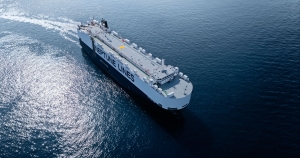
HD Hyundai Marine Solution has signed an agreement with Greek operator Neptune Lines Shipping and Managing Enterprises SA to provide Engine Part Load Optimization (EPLO) services for four car carriers.
HD Hyundai Marine Solution partnered with Accelleron to launch the EPLO service, receiving the first order for one ship in October last year.
Most marine engines are built to provide optimal fuel efficiency and performance for the speed and environment for which the ship is designed. However, more than 60 percent of the world's ships of 400 gross tons (GT) and above are required by the International Maritime Organization (IMO) to comply with the IMO's Energy Efficiency Existing Ship Index (EEXI) and Carbon Intensity Indicator (CII) regulations to reduce greenhouse gas emissions.
As a result, many shipping companies are considering engine power limitation, operating at reduced speeds with engine output reduced by up to 70%. EPLO is an eco-friendly solution that increases combustion efficiency by matching the turbocharger to the new load requirements, as well as adjusting factors including the amount and timing of fuel injection and fuel-air mixture ratio. These adaptions can improve fuel efficiency by as much as 6 grams per kWh, with an equivalent reduction in carbon emissions.
"With EPLO, Accelleron is assisting the maritime industry to not only boost the competitiveness of their vessels but also to achieve profitable navigation towards their mid-term decarbonization goals,” said Matthias Reichmann, Global Product Manager Upgrades at Accelleron.
An official from HD Hyundai Marine Solution said: "We will contribute to carbon reduction activities in both the shipbuilding and maritime sectors with various eco-friendly solutions that meet market needs."
Accelleron is a global leader in turbocharging technologies and optimization solutions for 0.5 to 80+ MW engines, helping to provide sustainable, efficient and reliable power to the marine, energy, rail, and off-highway sectors. Through its innovative product offerings and research leadership, the company accelerates the decarbonization of the industries it operates in. Accelleron has an installed base of approximately 180,000 turbochargers and a network of more than 100 service stations across 50 countries worldwide (www.accelleron- industries.com).
Image: HD Hyundai Marine Solution and Neptune have signed a contract for Engine Part-Load Optimization.
ELNAVI Newsletter
More Information: ELNAVI,
19, Aristidou str., Piraeus 185 31,
Tel.: +30 210 45.22.100, e-mail: This email address is being protected from spambots. You need JavaScript enabled to view it.
DeepSea Technologies' cutting-edge voyage optimization services have received ClassNK's Innovation Endorsement
DeepSea Technologies, the award-winning Al-led maritime technology company and energy efficiency experts, has received the Innovation Endorsement from ClassNK, the world-renowned classification society based in Japan, for its cutting-edge voyage optimization services that form the foundation of the company’s suite of software.
The Innovation Endorsement (IE) is a certification issued by ClassNK to encourage the proliferation and advancement of technologies. It also aims to collaborate with industry pioneers to establish suitable evaluation criteria for emerging technologies.
ClassNK verified DeepSea’s software using its rigorous testing processes. The endorsement recognizes Deepsea’s adherence to the highest standards of safety, efficiency, and environmental performance, and certifies the functionality of its services, which harness the latest in AI technology to make ships more efficient.
This milestone positions the company for further growth in the dynamic Asian region, continuing its trajectory following Japan-based automation multinational Nabtesco’s investment in DeepSea in 2023.
Dr. Konstantinos Kyriakopoulos, CEO at DeepSea Technologies, said: "We are delighted to receive ClassNK approval for our voyage optimization services, as it further validates the robustness and reliability of our technology. This milestone is particularly significant as we set our sights on expanding our footprint in the Asian market. DeepSea’s advanced solutions will contribute to the region's maritime growth by optimizing operations, reducing costs, and fostering a more sustainable shipping industry. We look forward to continuing to focus our industry-leading team of AI specialists on solving some of the biggest challenges in shipping."
Mr. Yukihiro Mizutani, President, Marine Control Systems Company, Executive Officer of Nabtesco, said: “DeepSea’s expertise and team of AI specialists are well-known in the shipping industry, and are driving a radical improvement to vessel efficiency for their customers. This endorsement paves the way for the company’s success in the Asian region, and we look forward to continuing our partnership to accelerate the pace of innovation in the industry”.
DeepSea Technologies is a maritime technology company specialising in vessel performance monitoring and optimisation. We combine many years of experience in the shipping industry with deep expertise in the fields of software, hardware, and Artificial Intelligence. We are passionate about creating products that help our clients make data-driven decisions to achieve their decarbonisation objectives and lead the industry forward. DeepSea has built a pioneering next-generation Performance Routing tool – Pythia – which offers shipowners an average of 8% savings in emissions and fuel consumption.
ELNAVI Newsletter
More Information: ELNAVI,
19, Aristidou str., Piraeus 185 31,
Tel.: +30 210 45.22.100, e-mail: This email address is being protected from spambots. You need JavaScript enabled to view it.
Posidonia 2024 Exhibitors anticipate paradigm shift in Maritime Industry as AI gains traction
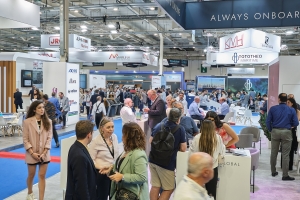
The maritime industry, often viewed as conservative and measured in its approach to technological integration, is on the cusp of a transformative era with Artificial Intelligence (AI) emerging as a prominent player. Insights from key exhibitors at the upcoming Posidonia Shipping Εxhibition reveal a new landscape, where industry leaders strategically align with the inexorable rise of AI and consider adopting it already.
According to Theodore Vokos, Managing Director, Posidonia Exhibitions S.A., demand for space from advanced technology and innovation companies providing services to the shipping industry has risen significantly for this summer’s edition of Posidonia, which will be held at the Athens’ Metropolitan Expo Centre from 3 to 7 June.
He said: “A comprehensive report on the future landscape of AI in the maritime sector, titled ‘Out of the box’ and produced by Lloyd’s Register and maritime innovation consultancy Thetius, indicates that the market for AI-driven systems and vessel autonomy is anticipated to achieve a collective value of $5 billion by 2028. According to the report, presently there are already 276 active companies identified in the maritime AI segment. The report underscores the significance of proactive investment by maritime organisations in enhancing their comprehension of AI across various levels. It recommends a strategic focus on workforce education and training initiatives to augment awareness of safety measures and regulations pertinent to advanced technologies within the maritime domain.”
EMMIS MARINE S.A., an industrial manufacturer of premium electrical supply and control solutions, signifies a broader industry sentiment. Andreas Miserlis, Owner & CEO, emphasises the industry's advanced technological standing, where AI is recognised as pivotal in addressing current challenges. Miserlis articulates a proactive stance, with plans to incorporate AI into research and development, aligning technology with industry needs. "AI stands at the forefront of meeting the technological demands of the maritime industry. Our commitment to incorporating AI into our R&D department and production lines reflects our proactive approach to staying ahead in the era of digital transformation,” he said.
The maritime manufacturing sector in general, also exemplified by Captain Nemo, foresees rapid AI adoption. The emphasis on data analysis and project development reflects a keen awareness of AI's potential to streamline processes and drive innovation. "With early AI projects already underway, we look forward to incorporating AI in data analysis, automating standards, and developing new projects within the maritime manufacturing sector," said Merkouris Panoutsopoulos, CEO of the company which is preparing for its third consecutive participation at Posidonia.
But the adoption of AI is not only limited to the manufacturing sector, but is also rapidly embraced in the services sectors.
According to Bureau Veritas, “AI is already being adopted by the shipping industry. AI investment rates leave little doubt AI is becoming a key enabler in the digitalisation of the shipping industry, offering benefits such as reduced costs, less risk, reduced emissions, improved forecasting, and faster deliveries through optimised routes. As a class society we are using AI to help make our work – and shipping – safer and more efficient.’ said Laurent Hentges, Vice-President, Digital Solutions and Transformation. As a classification society, BV is leveraging data and AI to optimise its operating modes and services to clients. More specifically, AI supports operations in going from fully physical surveys on board a vessel to partly remote and partly augmented surveys, by leveraging data to build over time optimised and predictive survey schemes, by combining data extraction techniques such as OCR with Robotics Process Automation to gain internal efficiency in their processes, and by enabling Generative AI (LLM Large Language Model), hence building chatbots, which help in responding to client technical queries and provide a quicker and better service.
Verifavia, a company specialising in marine surveying services and auditing, already navigates the challenges and promises of AI. The company believes that AI brings exciting possibilities to shipping, improving navigation, predictive maintenance and compliance. Notably, the company emphasises responsible AI usage, weaving sustainability into the narrative. "At Verifavia, we are using AI where it matters most, especially in voyage optimisation, data quality enhancements and carbon market transparency. We're all about responsible AI, ensuring our solutions contribute to a sustainable future," said Nicolas Duchene, President.
Governmental ship registry services, as embodied by San Marino Ship Register, foresee AI expediting administrative processes and envision that AI will help accelerate ship registration, a testament to the pragmatic applications of AI beyond operational realms. "AI will soon be applied to speed up the process of ship’ registration, bringing efficiency to administrative functions within the maritime sector," said Gianluca Tucci, General Director of the new Registry, which will leverage its participation at Posidonia 2024 to launch its merchant vessel offering.
AI also plays a role in the peripheral services sector of the marine industry, aiding marine travel management companies, like GMT Greece, in predicting travel movements for cost-saving benefits. Additionally, vessel cleaning companies, like Greensea IQ, utilise small robots equipped with AI to enhance the prediction of cleaning routines, enabling more efficient and faster hull cleaning services.
But every revolutionary change has to be approached with care, and companies like N. Bogdanos Marine Bureau Ltd bring a sober perspective to AI in shipping. Adamantios Papapetros, Vice President & CEO, highlights the industry's historical prudence, which will wait for AI technology to be further tested before fully embracing it and applying it on ships. “Shipping historically waits for proven results before adopting new technologies. Applications like unmanned navigation are still away from being applied, however, the lack of skilled seamen will accelerate the introduction of similar applications.” he said.
Drawing from these industry insights and considering broader trends in maritime technology, the future of AI in shipping appears dynamic and transformative. As the industry navigates towards digital maturity, AI is set to play an increasingly pivotal role in optimising operations, ensuring safety, and steering the sector towards a sustainable and technologically advanced future. The Posidonia Shipping Exhibition stands as a testament to the industry's collective recognition of AI's potential, marking the dawn of a new era in maritime innovation.
Posidonia 2024 is organised under the auspices of the Ministry of Maritime Affairs & Insular Policy, the Hellenic Chamber of Shipping and the Union of Greek Shipowners and with the support of the Municipality of Piraeus and the Greek Shipping Co-operation Committee.
ELNAVI Newsletter
More Information: ELNAVI,
19, Aristidou str., Piraeus 185 31,
Tel.: +30 210 45.22.100, e-mail: This email address is being protected from spambots. You need JavaScript enabled to view it.
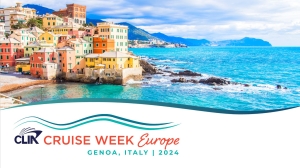
As global cruise leaders met in Genoa, Italy, the industry issued a call to governments to act to increase production of sustainable marine fuels. Cruise Lines International Association (CLIA), the leading voice of the global cruise industry, estimates that 44,000 tonnes of sustainable marine fuels will be needed in Europe by 2025 to be in line with the 2030 EU decarbonization goals.
At its European Summit in Genoa, CLIA revealed 55 cruise ships are on order representing an investment of €33.9 billion for the next five years. Cruise ships today, and those coming online, are among the most advanced and energy-efficient ships in history, as cruise lines continue to innovate to achieve a vision of net zero emissions by 2050.
While investments in ship technology continue, the availability of sustainable marine fuels at scale is the missing piece in the puzzle. CLIA is calling on governments to help accelerate the transition by setting more ambitious production targets, particularly for synthetic and biofuels.
Jason Liberty, global Chair, CLIA said, “The cruise industry is making enormous investments to lay the foundation for a future of low-to-zero carbon fuels. Collaboration with our industry’s global leaders and changemakers is critical to ensure that sustainable marine fuels are available, affordable, and scalable.
We look forward to strengthening our partnerships with ports, governments, and communities to fully realize the green transition of the maritime sector.”
CLIA is also calling for governments to reinvest the revenues received from maritime as part of the EU Emissions Trading Scheme to fund the necessary infrastructure and support deployment of renewable energy solutions at an accessible price.
CLIA is embarking on a research study to combine fuel infrastructure, technology, and sailing routes to identify the local investment needed for the industry to decarbonize by 2050.
In cooperation with fuel producers and engine manufacturers, the cruise industry is pursuing a variety of sustainable energy sources. These sources include internationally certified sustainable biofuels, and synthetic e-fuels such as e-methane and e-methanol. Other sources being explored as part of hybrid solutions include electric batteries, bio-LNG, e-LNG, methanol, or hydrogen fuel cells.
ELNAVI Newsletter
More Information: ELNAVI,
19, Aristidou str., Piraeus 185 31,
Tel.: +30 210 45.22.100, e-mail: This email address is being protected from spambots. You need JavaScript enabled to view it.

A new page opens for WISTA Hellas, that recently proceeded to the renewal of its board of directors, which is called to continue a 30-year successful course of the organization with dynamic and innovative actions.
In the framework of its 29th General Assembly of the Members on Wednesday of February 28th 2024, the new composition of the Board of Directors of WISTA Hellas is formed as follows:
President: Vivi Kolliopoulou, Insurance Manager at Angelicoussis Group
Vice-President: Akrivi Brikou, CFO at Efshipping Company S.A.
Secretary: Anna Giatra, Shipbroker at Renaissance Shipbroking S.A
Treasurer: Samantha Lourandou, Purchasing Manager - Member of the ESG Committee at Atlantic Bulk Carriers Management Ltd
Member: Maria Kyratsoudi, Business Development Manager at American Bureau of Shipping (ABS).
Ms. Efi Tsolaki, Ms. Katerina Mahera and Ms. Mara Manoudaki have been elected Substitute
Members of the BoD, while Ms. Elina Souli, Ms. Elina Kassotaki and Ms. Ioanna Topaloglou shall serve as members of the Auditing Committee.
The newly appointed President of WISTA Hellas, Ms. Vivi Kolliopoulou, has been an active member of the Association since 2001. She served as a member of the BoD for the first year of the 2004-2006 term before relocating to London due to work commitments. Her tenure continued with WISTA International from 2005 to 2009, when she took the roles of the member and later the Secretary-General of the Executive Committee (ExCo). Vivi has attended numerous conferences, events, and General Assemblies organized by both WISTA Hellas and WISTA International and she has also actively supported WISTA initiatives throughout her career.
She has worked in the field of marine insurance and claims for companies such as Richards Hogg Lindley and The Standard P&I Club, both in Piraeus and London, as well as in New York. In 2009, she joined Thenamaris (Ships Management) Inc. as the head of the Insurance and Claims department. From 2019 to date, she is the Insurance Manager of the Angelicoussis Group. Part of her role is also to attract and develop new talent, always aiming to encourage diversity and inclusion.
The Annual General Assembly was marked by an impressive turnout, with 105 members attending and 33 members represented by proxies. The members received a detailed update on the accomplishments of the Association and endorsed the balance sheet for 2023 and the budget for 2024.
The BoD of WISTA Hellas would like to express its most sincere gratitude to the past BoD members, Ms. Elpi Petraki, Ms. Elina Kassotaki and Ms. Elina Souli for their devotion and achievements the last many years.
The BoD of WISTA Hellas would like to thank the members of WISTA Hellas for their vote of confidence and especially for their loyalty and continuous support to the Association.
ELNAVI Newsletter
More Information: ELNAVI,
19, Aristidou str., Piraeus 185 31,
Tel.: +30 210 45.22.100, e-mail: This email address is being protected from spambots. You need JavaScript enabled to view it.