


-
Home

-
Advertisement
- elnavi

elnavi
Posidonia 2026 Closes on a High
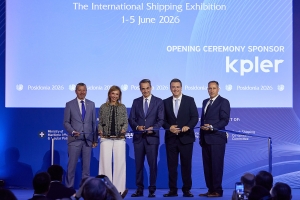
Over 35,000 Visitors and 2,200 Exhibitors Set New Exhibition Records
The 29th edition of the biennial Posidonia Exhibition closed at the Athens Metropolitan Expo, cementing its position as the world’s premier maritime business platform and the essential forum for setting the policy agenda of an industry that moves 87% of global trade.
Against a backdrop of unprecedented geopolitical and regulatory pressure - from the Red Sea and Strait of Hormuz disruptions, protectionist trade policies to the accelerating and controversial IMO 2030/2050 decarbonisation timeline – this year’s event proved that the global shipping community looks to Greek shipping not merely to conduct business, but to find its compass and achieve consensus.
The highly anticipated Press Conference of the Union of Greek Shipowners (UGS), held within the framework of Posidonia 2026, brought the proceedings of the global gathering of the shipping community in Greece to a close.
In a packed room, with strong attendance by representatives of Greek and international media, the President of the Union of Greek Shipowners, Melina Travlos, answered questions covering the full spectrum of the shipping industry at national, European and international level.
The transition to zero-emission shipping was prominent in the agenda across all five days, with the 2026 edition marking the first Posidonia held entirely within the European Union’s Emissions Trading System for shipping - a regulatory reality that has fundamentally altered the economics of vessel operation for European-flagged and European-calling fleets.
More than any previous edition, Posidonia 2026 convened against a geopolitical landscape that placed shipping squarely at the intersection of global commerce, security and sovereignty. With seafarer lives increasingly at harms way, supply chains strained, trade routes under threat and tariff regimes in flux, the exhibition floor became an arena not merely of commerce but of a strategic recalibration.
The might of the Greek shipowners and the potential of Greece’s ship building sector were showcased during Posidonia week with a flurry of new business deals. George Prokopiou’s Dynacom Tankers led the charge with a $1.47bn order for 12 VLCCs at China’s Hudong-Zhonghua Shipbuilding. Hengli Heavy Industries announced a $2.2bn package spanning 21 firm orders plus four options across six international shipowners, covering container ships, kamsarmax and capesize bulk carriers, LR2 product tankers and suezmax crude tankers - with Greek owners prominently represented across multiple vessel types, including Venergy Maritime’s suezmax newbuilds. Also, ONEX Shipyards signed a 4+4 design-and-construction contract with V Group’s Antipollution for eco-friendly vessels to be built entirely in Greece at Elefsina and Syros.
Theodore Vokos, Managing Director, Posidonia Exhibitions S.A., said: “As in every edition, Posidonia 2026 served as the preferred venue for the maritime industry’s most significant commercial announcements, with major transactions concluded across newbuilding orders, technology partnerships, classification agreements and fuel transition initiatives.”
The 2026 edition distinguished itself with an unprecedented concentration of senior government and intergovernmental participation, reflecting the growing recognition among global leaders that shipping policy is inseparable from foreign policy, energy transition and economic sovereignty.
Posidonia 2026 was organised under the auspices of the Ministry of Maritime Affairs and Insular Policy, the Hellenic Chamber of Shipping and the Union of Greek Shipowners, with the support of the Municipality of Piraeus and the Greek Shipping Co-operation Committee.
ELNAVI Newsletter
More Information: ELNAVI,
19, Aristidou str., Piraeus 185 31,
Tel.: +30 210 45.22.100, e-mail: This email address is being protected from spambots. You need JavaScript enabled to view it.
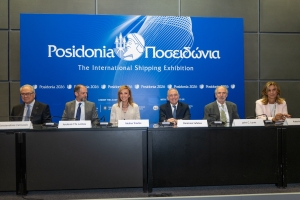
The highly anticipated Press Conference of the Union of Greek Shipowners (UGS), held within the framework of Posidonia 2026, brought the proceedings of the global gathering of the shipping community in Greece to a close.
In a packed room, with strong attendance by representatives of Greek and international media, the President of the Union of Greek Shipowners, Melina Travlos, answered questions covering the full spectrum of the shipping industry at national, European and international level.
Responding to a journalist’s reference to the largest orderbook of Greek shipping in 25 years, comprising 931 vessels, Ms Travlos stated that “we are leading fleet renewal and environmental performance.”
On decarbonisation, the President of the UGS argued that shipping had been “dragged” into unattainable targets set by the EU, which distorted the IMO’s 2050 objectives. With regard to the Net Zero framework, she described it as a “revenue-collection mechanism for the IMO”, with funds to be directed towards purposes unrelated to shipping. She also noted that Greece abstained from the October 2025 vote on the regulation in question. She further stressed that global, rather than regional, measures are essential.
On the shadow fleet, the President of the UGS highlighted, through specific arguments and data, the unfair targeting of Greek shipping. Sanctions without global reach “inevitably distort competition,” Ms Travlos said.
On freedom of navigation, she described the instrumentalisation of vessels in conflict zones as an existential threat and reiterated the critical importance of safeguarding it, as she had also done before at the Security Council of the United Nations.
Responding to a relevant question, the President of the Union of Greek Shipowners placed particular emphasis on the UGS’s social welfare contribution, noting that education and the new generation have consistently been at the core of its work. Announcing the most expanded scholarship programme in the country, which this year amounts to 365 scholarships — one scholarship every day — she sent a strong message of empowering the new generation, every day.
ELNAVI Newsletter
More Information: ELNAVI,
19, Aristidou str., Piraeus 185 31,
Tel.: +30 210 45.22.100, e-mail: This email address is being protected from spambots. You need JavaScript enabled to view it.
SAFE BULKERS INC.: The first shipping company to be listed on the Athens Stock Exchange - Euronext Athens
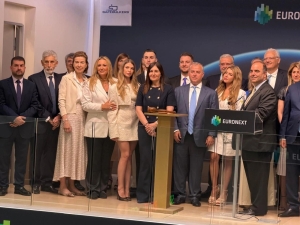
A historic day for Greek shipping and the capital market was marked by the commencement of trading of the shares of Safe Bulkers Inc., on the Athens Stock Exchange, becoming the first shipping company to be listed on the Greek market.
The company, which has been listed on the New York Stock Exchange (NYSE) since 2008, has a fleet of 45 dry bulk carriers and a program of 11 newly built environmentally advanced vessels, including methanol dual-fuel plants, initiated parallel trading of its shares on Euronext Athens.
The event was attended by representatives of the government, the shipping community and the capital market, including the Minister of National Economy and Finance, Mr. Kostis Hatzidakis, the CEO, CEO of Safe Bulkers, Mr. Polys V. Hadjioannou, Ms. Marina Hadjimanolis, Deputy Minister of Shipping of the Republic of Cyprus, the CEO of the Athens Exchange Group, Mr. Yiannos Kontopoulos, and the President of the Hellenic Capital Market Commission, Vasiliki Lazarakou.
Mr. Hatzidakis described the day as particularly important for both the Greek economy and shipping, stressing that the introduction of Safe Bulkers inaugurates a new era in shipping relations with the Athens Stock Exchange and expressing the belief that other shipping companies will follow the same step.
For his part, Mr. Hadjioannou, confirming the commitment of Safe Bulkers Inc. to the development, transparency and further strengthening of its presence in the Greek and international shipping market, stated: "This is an important milestone for Safe Bulkers, for the shipping community in general and for Athens, as it evolves into an increasingly important international financial and shipping center. Our company has the opportunity to gain access to a broad base of European institutional investors, contributing to the transformation of Athens into a leading international hub for shipping finance within the Euronext platform."
Warm congratulations to all those who contributed to this important development for shipping and the Greek capital market as this move strengthens Safe Bulkers Inc.'s access to European capital markets and both broadens its investor base, while at the same time it is a vote of confidence in the prospects of the Greek and European capital market.
ELNAVI Newsletter
More Information: ELNAVI,
19, Aristidou str., Piraeus 185 31,
Tel.: +30 210 45.22.100, e-mail: This email address is being protected from spambots. You need JavaScript enabled to view it.
A Landmark Year for TEN in 2025 with Record Profitability, 'Green' Strategy, and Rich Social Work
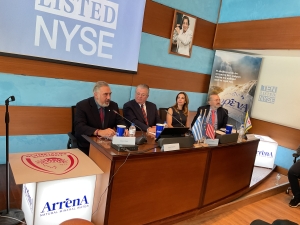
Tsakos Energy Navigation (TEN), Ltd. (NYSE: TEN) recently held its 33rd Annual General Meeting (AGM), celebrating an extraordinary fiscal year 2025 and outlining a crisis-resistant growth model that successfully navigates complex geopolitical landscapes. Led by CEO Dr. Nikolas Tsakos, the New York-listed maritime giant showcased record financial health, strategic fleet modernization, and a deep-seated commitment to global social responsibility.
A Record-Breaking Financial Year
According to TEN's full-year 2025 financial reports, the company capitalized heavily on historically high tanker rates driven by geopolitical shifts.
Gross Revenues approached $800 million for the twelve months of 2025.
Net Incomeb reached $161 million (or $4.45 per share), featuring a staggering 200% Quarter-on-Quarter (Q-o-Q) increase to $58 million in Q4 2025 alone.
Adjusted EBITDA climbed to $416 million, up from $400 million in 2024.
The Fleet Utilization increased to 96.6% (from 92.5% in 2024), maintaining a solid average Time Charter Equivalent (TCE) of $32,130 per vessel per day.
Cash positions stood robust at $298 million as of December 31, 2025, even after heavy capital expenditures. Total debt stood at $1.9 billion, backing aggressive fleet expansion.
TEN’s forward-looking operations continue into early 2026. In January and February 2026, the company took delivery of two newbuilding MR product tankers, Delos T and Dion, immediately chartering them to major European energy concerns at highly accretive rates. Furthermore, TEN signed a Memorandum of Agreement for the sale of the 2016-built VLCC Ulysses, generating roughly $82 million in free cash, alongside a new building contract with Hyundai Heavy Industries for two 174,000cbm LNG carriers propelled by eco-friendly WinGD engines, scheduled for 2028.
Rewarding its shareholders remains a top priority; following a $0.50 dividend paid in February 2026, management has announced an intentional total 2026 dividend distribution of $1.50 per share, with the next payment announcement slated for Q2 for a July 2026 payout.
Fleet Renewal and the Environmental "Green Ship" Transition
From a humble start of four vessels in 1993, TEN has engineered a diversified fleet of 90 vessels, including heavy investments in 16 shuttle tankers and 4 LNG carriers. The strategy leans into a "green ship" growth philosophy. Current expansions feature a massive $1.3 billion project with Petrobras for the construction of 9 DP2 tankers, alongside the recent deliveries of the Aframax DP2 tankers Paris 2024 and Athens 2024, and the Suezmaxes Dr. Irene Tsakos and Silia T.
It is reminded that TEN secured a massive milestone project with Petrobras Transporte S.A. (Transpetro), the shipping subsidiary of Brazil's state oil giant for the construction of nine (9) advanced technology Suezmax DP2 Class Dynamic Positioning shuttle tankers. The project is valued at over $1.3 billion (with total estimated gross revenues reaching up to $2.0 billion over the lifetime).
These eco-friendly, methanol-ready vessels are being built at Samsung Heavy Industries in South Korea. They are backed by 15-year bareboat charter contracts to Petrobras. Deliveries are strategically mapped for 2027 and 2028 (two in 2027, and seven in 2028), aimed at offloading oil from Brazil's ultra-deepwater oil fields.
Current Newbuilding & Fleet Renewal Program
TEN's active green-ship modernization initiative covers a multi-billion dollar investment portfolio focused on highly specialized, environmentally efficient vessels:
On top of the 9 Petrobras vessels, TEN has already integrated recent DP2 deliveries (such as Paris 2024 and Athens 2024 under TotalEnergies charter) and has further DP2 specialized units arriving through 2026 (including ExxonMobil charters), bringing their total specialized shuttle portfolio to 16 vessels.
Recent deliveries and ongoing completions include the eco-friendly Suezmaxes Dr. Irene Tsakos (delivered in mid-2025 from Hyundai) and Silia T. In early 2026, TEN took delivery of two brand new MR product tankers, Delos T and Dion, which immediately entered lucrative charters with European energy majors. In February 2026, TEN signed a contract with Hyundai Heavy Industries for the construction of up to two large 174,000cbm LNG carriers propelled by eco-efficient WinGD engines, scheduled for delivery in Q3 2028. The broader order book also includes five scrubber-fitted LR1 Panamax vessels slated for delivery through 2027.
Captain P. Tsakos founder of Tsakos Group reminded attendees that "shipping is about risks", the company's human power expertise led to zero fleet deficiencies, earning them the 2025 Lloyd’s List Shipping Award and a Golden ESG Award.
Philanthropy, Education, and Sports Partnerships
True to its holistic corporate identity, TEN highlighted its substantial educational and social contributions. The company continues to inspire younger generations through the TEENS school (founded 2018) and its newly established Marine Academy (2024)—visionary initiatives of Captain Tsakos. Globally, the company sustains the Maria Tsakos Foundation in Uruguay and the St. Nicholas School in Ghana. For his extensive, lifelong charitable contributions, Dr. Nikolas Tsakos was officially honored.
In a vibrant closing segment reflecting the company's Greek roots and global reach, TEN celebrated its community and sports sponsorships. The EuroLeague basketball trophy of Olympiacos BC was presented at the AGM, alongside the announcement of an exciting new cooperation with the NBA’s New York Knicks. Furthermore, TEN’s commitment to sustainability was highlighted by the Water Arena award, which sponsored the Olympiacos arena reconstruction at the SEF in Piraeus.
The Annual General Meeting was chaired by Nicholas Timmasino (Chairman of the Audit Committee), and was attended by Captain Panagiotis Tsakos, Michael Jolliffe (co-founder of TEN), Mr. Koumoutsakos (Ambassador of Greece to UNICEF), and from the Board of Directors, Kleio Chatzimichali and George Saroglou.
ELNAVI Newsletter
More Information: ELNAVI,
19, Aristidou str., Piraeus 185 31,
Tel.: +30 210 45.22.100, e-mail: This email address is being protected from spambots. You need JavaScript enabled to view it.
POSIDONIA 2026 CAPITAL LINK MARITIME LEADERS SUMMIT
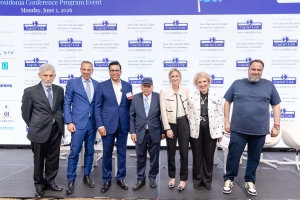
Navigating the Geopolitical Instability, Digital Frontiers, and Financial Evolution
The global maritime industry stands at a critical historical crossroads, buffeted by relentless geopolitical shifts, accelerating digital revolutions, and groundbreaking structural changes in the capital markets. Against the vibrant backdrop of Posidonia 2026, the Capital Link Maritime Leaders Summit gathered the world’s foremost shipowners, regulators, and industry executives in Athens to debate the future of global trade.
Opening remarks by Mr. George M. Teriakidis of DNV and Mr. Nicolas Bornozis of Capital Link, alongside a keynote address from Minister Vasilis Kikilias, the Hellenic Republic's Minister of Maritime Affairs and Insular Policy, set a tone of realistic optimism. The consensus throughout the day was clear: while "black swan" disruptions have effectively become the operational norm, shipping’s traditional resilience, paired with disciplined adaptation, remains unassailable.
Managing the Volatility in the Tanker Market
The tanker sector opened the summit's panel discussions with a deep dive into trade realignment and energy shifts. Moderated by Mr. Keith Billotti of Seward & Kissel LLP, the panel exposed a fascinating divergence in investment mentalities among leading operators.
Mr. Antonis Kanellakis, Executive Director of Alpha Bulkers, Pantheon Tankers, and Alpha Gas, positioned his company firmly as an aggressive buyer of newbuildings. He emphasized that investing in newbuilt vessels across Aframax and MR tankers, as well as LNG and LPG carriers, is the most direct path to integrating vanguard maritime technologies. Conversely, Mr. Yiannis Procopiou, CEO of Centrofin Management, expressed a more guarded strategy focused on fleet renewal, noting that corporate strategies must be driven by geopolitical realities. In the long term, Centrofin is hedging through time charters to prepare for an eventual market downturn, though Mr. Procopiou maintains a bullish outlook for the immediate two years ahead.
This cautious sentiment was echoed by Mr. Svein Moxnes Harfjeld, President and CEO of DHT Holdings, who advocated for a strict "wait and see" investment policy. In Harfjeld’s view, the extreme volatility of the current market renders newbuilding investments highly risky. Mr. Jerry Kalogiratos, CEO of Capital Tankers Corp., pointed out that while vessel supply remains highly manageable, the ultimate direction of the market hinges on whether global energy security priorities will continue to prevail over standard trading patterns. Summing up the defensive yet resilient nature of the sector, Mr. Pankaj Khanna, CEO of Heidmar Maritime Holdings, concluded that his corporate playbook is built entirely on planning for the worst-case scenario while remaining positioned to hope for the best.
Dry Bulk Corporate Strategies and Artificial Intelligence
The dry bulk panel, guided by Ms. Foteini Mega of EY Greece, shifted the focus to regulatory pressures, cargo demand, and the inevitable rise of technological integration.
Mr. Costas Delaportas, CEO of DryDel Shipping, emphasized that meticulous timing is the defining factor of modern shipping cycles. Driven by upcoming environmental regulations, DryDel is actively investing in newbuildings, confident that the market remains inherently cargo-driven. Delaportas noted that charterers are increasingly willing to pay a premium for eco-efficient ships, and that global raw material restocking will sustain profitable freight rates.
The discussion quickly turned to the broader macro-environment and technology. Mr. Polys Hajioannou, CEO of Safe Bulkers, warned that while a substantial wave of tonnage supply is set to hit the global market over the next two years, the dry cargo market should remain on an upward trajectory for the next at least six months. Hajioannou also made a strong geopolitical observation, noting that Europe is finally beginning to realize that shipping is absolutely vital for its own energy and supply chain autonomy. On technology, he urged caution, stating that artificial intelligence should be relegated to documentary and administrative work rather than critical executive decisions.
Ms. Semiramis Paliou, CEO of Diana Shipping and Chairperson of HELMEPA & INTERMEPA, countered with a broader view of technology, identifying artificial intelligence as the true "elephant in the room." Paliou urged the industry to initiate an immediate, transparent dialogue regarding how AI will reshape the future of shipping operations, while highlighting how recent weather disruptions like El Niño have structurally altered tonne-mile calculations.
Optimism regarding global infrastructure spending united the remaining panelists. Mr. Stamatis Tsantanis, Chairman and CEO of Seanergy Maritime and United Maritime Corporation, stated that global cargo volumes remain robust, driven in part by massive infrastructure investments like international data centers. Expecting a highly sustainable shipping market for the next two to three years, Tsantanis looks forward to significant, positive structural changes.
Mr. John Dragnis, CEO of Goldenport Group, firmly agreed, expressing confidence that the freight market will remain healthy and strong for the next few years on the back of this ongoing global infrastructure expansion.
The Euronext Athens Transformation
One of the most groundbreaking sessions of the summit centered on a 1x1 discussion between Mr. Mathieu Caron of Euronext and Mr. Yianos Kontopoulos, CEO of Euronext Athens. The duo detailed a massive structural evolution, the finalized November 2025 acquisition of the Athens Stock Exchange (ATHEX) by Euronext.
By securing 74.25% of ATHEX’s voting rights and migrating its trading operations to the state-of-the-art Optiq® platform, Euronext has effectively integrated Greece into a powerful federal European market model alongside Paris, Amsterdam, Milan, and Oslo. This provides Greek listed companies with direct, frictionless exposure to a massive pool of international European institutional capital, transforming Athens into the premier financial gateway for Southeastern Europe.
The definitive proof of this new financial ecosystem came to life with the announcement of Safe Bulkers’ historic dual listing. Led by Polys Hajioannou, the dry bulk giant established a dual listing on the Main Market of Euronext Athens alongside its long-term listing on the New York Stock Exchange, with trading commencing on June 2, 2026. This represents the first time a major NYSE-listed Greek shipowner has dual-listed its core common stock on the Athens bourse—a move heralded as an absolute game-changer for maritime finance.
Furthermore, the discussion highlighted that shipping corporate bonds on ATHEX have officially hit an aggregate $1 billion milestone. Heavily oversubscribed issuances by marquee players like Costamare, Safe Bulkers, and Capital Clean Energy Carriers (which raised €250 million in February 2026 alone) prove that local retail and institutional appetite is fiercely robust. As the Athens stock market tracks toward an official upgrade back to "developed market" status, this intersection of local capital and Euronext’s European distribution network is successfully building a legitimate, parallel maritime financial cluster right in Greece.
Supply Chain Security, Geopolitics, and Class Innovation
In a poignant keynote dialogue, Mr. Knut Ørbeck-Nilssen, Group President and CEO of DNV, sat down with Mr. Arsenio Dominguez, Secretary General of the International Maritime Organization (IMO). Their conversation tackled the complex realities of driving shipping’s decarbonization framework forward while dealing with immediate crises, including the threat of the environmentally hazardous "dark fleet" and the tragic reality of seafarers stranded in the Strait of Hormuz and other active conflict zones.
Earlier, Mr. John McDonald, Chairman and CEO of ABS, highlighted how class societies are stepping up, pointing to the newly established ABS innovation exchange center in Athens as a hub designed to help shipping companies practically manage geopolitical risk and turn new technologies into safety advantages.
The broader geopolitical reality was dissected in a panel moderated by Ms. Han Deng of Reed Smith LLP. Mr. Aristides J. Pittas, Chairman and CEO of Euroseas and EuroDry, stated that the most severe macroeconomic risk currently facing the industry is the threat of global recession striking while the economy is actively deglobalizing. Pointing to an aging global feeder container fleet, Pittas explained that Euroseas is actively ordering new vessels to replace older tonnage. He noted that while the closure of key maritime straits has forced the world to recognize shipping's foundational importance, global regulators must ensure that future environmental rules are realistic and implemented gradually.
Mr. George Youroukos, Executive Chairman of Global Ship Lease, provided a stark warning against excessive vessel ordering, asserting that over-ordering threatens to damage the delicate supply-demand balance, particularly since older ships are not exiting the market quickly enough. Youroukos explained that Global Ship Lease actively combats market abnormalities by focusing on highly specialized vessel types that liner companies cannot easily source elsewhere, ensuring their fleet maintains a competitive edge.
Addressing operational support, Mr. Andy McKeran, Chief Growth Officer of Lloyd’s Register, and Mr. René Kofod-Olsen, Group CEO of V.Group, both emphasized that technology must serve human capital. McKeran highlighted the looming shortage of skilled seafarers, explaining that Lloyd’s Register is investing heavily in predictive operations, AI-driven learning platforms, and goal-based risk assessments to help clients navigate regional regulatory complexities. Kofod-Olsen emphasized that corporate scale is mandatory to increase resilience, explaining how V.Group utilizes machine learning to develop operational efficiencies that directly support crew members and owners in coping with erratic global circumstances.
Green Shipping and the Pragmatic Path to Net Zero
The Green Shipping Debate, moderated by Mr. Paolo Moretti of RINA Services, brought regulatory ideals face-to-face with commercial reality. Ms. Dorothea Ioannou, CEO of the American P&I Club, shed light on the daunting legal and insurance challenges associated with underwriting risks for unproven alternative fuels like ammonia and nuclear power. Mr. Andreas Hadjipetrou, CEO of the Columbia Group, shifted the focus to human management, sharing how ship managers are currently utilizing AI to optimize seafarer training and actively assess crew mental health in high-stress environments.
The regulatory critique was led directly by shipowners. Mr. Polys Hajioannou argued candidly that recent geopolitical crises have naturally forced a postponement of pure environmental idealism. He insisted that the IMO and the European Union must become deeply pragmatic, demanding that carbon taxes levied on marine fuels be directly recycled into subsidies to fund the actual development of alternative energy infrastructure.
Optimism remained, however, as Mr. Alex Hadjipateras, COO of Dorian LPG, expressed confidence that the upcoming net-zero framework introduced by the IMO will ultimately prove to be both realistic and commercially effective. Ms. Ioanna Procopiou, Managing Director of Prominence Maritime and President Designate of BIMCO, closed the session with a call for data-driven regulation. Procopiou argued that the IMO must make highly educated decisions that prioritize scalable, safe, and holistic carbon-reduction methods that make undeniable economic sense for shipowners.
The Macro-Perspective
A major shipowner panel, moderated by Ms. Cristina Saenz de Santa Maria of DNV, offered sweeping macro-perspectives on the industry's ultimate trajectory. Captain Abdulkareem Al Masabi, CEO of ADNOC Logistics & Services, noted that shifting tonne-mile dynamics have fundamentally altered global trade routes, forcing companies to secure long-term fixed contracts to balance their geopolitical exposure—a structural shift that he views as ultimately positive for shipping profitability.
Dr. John Coustas, Chairman and CEO of Danaos Corporation, urged the industry to prepare for a permanent transition to a multipolar world. While he believes the conflict with Russia will eventually resolve and return pipeline infrastructure to operation, he expressed serious concern regarding the massive size of current container ship orderbooks and their long-term profitability. Coustas views AI as a powerful tool to increase shipbuilding productivity and logistics planning, but warned against an asset bubble if energy market disruptions artificially sustain current freight rates indefinitely.
Dr. Anil Sharma, Founder and CEO of GMS & Lila Global, stood up for environmental asset management, stressing the critical necessity of dismantling the dark fleet and aggressively recycling old tonnage through safe, green ship recycling yards.
Providing a highly cautious counter-perspective, Mr. Harry Vafias, Founder of StealthGas, Imperial Petroleum, and C3iS, noted that predicting the market is nearly impossible with active wars in Ukraine and the Middle East. Vafias warned that once global disruptions cease, charterers will aggressively try to claw back financial advantages. He expressed deep concern over the convoluted web of international sanctions, noting that it has become incredibly difficult for shipowners to verify if a business opportunity is completely clear and legal.
Closing the panel, Dr. Nikolas P. Tsakos, Founder and CEO of TEN Ltd., characterized the 2020s as a historic period of unmatched disruption, beginning with the pandemic roller coaster. He argued that these severe conditions keep the industry sharp. Commenting on the digital wave, Tsakos famously noted that while shipping represents the largest man-made structures on Earth, and though AI will massively optimize efficiency, it can never replace the core human element. This sentiment was strongly backed by prominent owner Mr. George Economou, Founder of TMS Group, who reiterated that despite shipping's rapid adoption of advanced systems, it remains fundamentally a relationship-driven, human-element business.
The Next Generation: Bridging Legacy and Transformation
The summit appropriately closed with a look toward the future, featuring a panel of young entrepreneurs entitled "Bridging Legacy, Leadership & Transformation." Moderated by Ms. Paillette Palaiologou of Bureau Veritas, the discussion proved that the next generation of Greek maritime leaders is fully prepared to handle the industry's shifting tides.
Ms. Marielena Procopiou, Founder and CEO of Delos Navigation and Akrotiri Tankers, opened by highlighting that while technology is fundamental for driving transparency and superior decision-making, AI systems must always be anchored by human oversight. Ms. Amalia Miliou-Theocharaki, Deputy Managing Director of TEO Shipping Corporation, focused on operational flexibility. She explained that embedding a modern corporate vision while eliminating micromanagement optimizes chartering models, allowing companies to adapt to regulatory complexities and structural volatility. Miliou-Theocharaki emphasized that future success lies in inheriting innovative digital tools and combining them with traditional shipping values and raw passion.
Mr. Diamantis Pateras, Deputy CFO of Contships Management Inc., detailed a highly disciplined financial approach to the family business. In a volatile market, Pateras explained that Contships prioritizes a risk-adverse approach focused on capital preservation rather than aggressive, speculative investment strategies—a philosophy he termed "disciplined flexibility." He also identified the shortage of competent seafarers as a premier hurdle, noting that younger generations have significantly higher professional expectations within what is an inherently demanding sector. For Pateras, the mandate for the next generation is to build institutional resilience and rapid organizational adaptation.
Finally, Ms. Eirini Pitta, Investor Relations Officer for Euroseas and EuroDry, shed light on the evolving relationship with corporate capital. Pitta explained that managing institutional investors requires aligning diverse perspectives and maintaining absolute transparency, which her companies view not as a burden, but as welcoming fund investors into an "extensive family." While acknowledging that digitalization across technical operations has increased exponentially, Pitta concluded that human interaction can never be replaced. Instead, she urged the industry to confront seafaring labor shortages by aggressively upskilling and reskilling the existing workforce to meet the technological demands of tomorrow.
Strategy, Scale, and the Public Debate
A fireside chat on "Strategy, Scale, and Shipping Cycles" brought together long-time friends and titanic industry figures Mr. Petros Pappas, CEO of Star Bulk Carriers, and Mr. George Economou. Moderated by Ms. Dora Mace-Kokota of Stephenson Harwood, the session touched upon the immense corporate advantages of operating a public shipping company, particularly the ability to raise significant capital to scale operations seamlessly.
The conversation inevitably touched upon the ongoing, highly publicized corporate tug-of-war between Diana Shipping and Genco Shipping & Trading, highlighting it as a prime example of the intense corporate governance, valuation, and consolidation battles currently defining the modern dry bulk sector. Reflecting on a partnership that dates back to 1986, Pappas and Economou noted that while they eventually split their corporate paths due to differing business mentalities, their shared history underscores the diversity of strategies that can achieve monumental success in shipping.
Turning to geopolitics, Pappas remarked that "black swans" have officially become the industry's daily norm, dividing the world into distinct trading clusters that force shipowners to make rapid, strategic choices. Economou agreed, closing the summit on a classic entrepreneurial note: in shipping, extreme macroeconomic disruptions and rapidly changing circumstances can almost always be turned into highly profitable opportunities for those with the courage and discipline to navigate them.
Shipping and the Global Energy Landscape
The summit concluded with a high-level panel on Shipping & The Global Energy Landscape, moderated by Mr. George Paleokrassas, Senior Partner at Watson Farley & Williams. The discussion featured some of the most influential leaders in global shipping, who debated regulatory friction, trade realignments, and the industry’s strategic role in global energy security.
Ms. Maria Angelicoussis, CEO of the Angelicoussis Group, opened by addressing how the ongoing Middle East conflict has triggered demand destruction and structurally altered trading patterns across the LNG carrier market. Turning to the global orderbook, she countered oversupply fears, noting that the current orderbook is balanced given that a massive percentage of the existing global fleet is rapidly becoming technologically obsolete.
Ms. Angelicoussis highlighted a critical industry defense, reiterating that shipping accounts for a mere 2-3% of global air emissions despite transporting 90% of the world's cargo. She expressed immense pride in flying the Greek flag across the majority of her fleet, praising the Greek government for maintaining a realistic, pragmatic maritime policy. Ultimately, she emphasized that human capital remains the industry’s true cornerstone: “For us, the key is our people—they provide the quality and reliability we depend on. The industry needs shipowners with traditional values who are deeply, long-term committed to this market."
Eng. Ahmed Ali Alsubaey, CEO & Board Member of the Bahri Group, extended his gratitude to Greek shipping partners for their unwavering support. He noted that Greek owners were instrumental in helping Middle Eastern maritime companies successfully navigate severe operational hazards arising from the US-Iran conflict during a highly tumultuous 90-day period.
Mr. Alsubaey pulled no punches regarding the "dark fleet," branding it an absolute disaster defined by unfair commercial practices and zero safety standards. He urged regulators to create strong financial incentives to drive those vessels toward the recycling yards. Reflecting on decarbonization, he noted that the industry's collective desire for a "blue planet" is already backed by tremendous capital investments in next-generation, eco-friendly tonnage.
Mr. Evangelos Marinakis, Founder & Chairman of Capital Maritime & Trading Corp., expressed strong solidarity regarding regional security, stating that operators trading in the Middle East feel incredibly proud that the Greek military’s missile defense assets protected vital Saudi Arabian oil infrastructure.
Mr. Marinakis identified a unique historical window for tankers, LNG, and LPG carriers to establish long-term, reliable strategic agreements that secure the industry's future. He also called for a total blockade of the dark fleet, citing its appalling safety records, and suggested forced vessel scrapping as the only viable solution.
Mr. Marinakis also delivered a sharp critique of international sanctions, arguing they are ultimately self-defeating because they heavily penalize European citizens, who are now forced to buy essential oil products at vastly inflated prices.
Mr. George Procopiou, Founder of Dynacom Tankers, Dynagas, and Sea Traders, closed the session by dissecting the hard lessons of the recent energy crisis. He noted that while the post-COVID era proved shipping is more vital than ever, the European Union has fundamentally failed to understand this reality, foolishly excluding shipping from its core energy security policies.
Mr. Procopiou also defended the human element on the frontlines of geopolitics, pointing out that "no one can simply impose tolls—it is our crews who physically navigate ships through the Strait of Hormuz, not the shipowners." He reminded the audience that affordable energy is directly synonymous with global living standards.
Commenting on the dark fleet, Mr. Procopiou conceded that the G7 oil price cap on Russian crude was a smart policy mechanism. He viewed the current influx of newbuildings as a natural, healthy strategy to replace aging tonnage with modern, eco-designed vessels. However, he launched a fierce attack on the financial architecture of the current net-zero regulatory frameworks, warning that impending carbon taxes will penalize shipowners up to three times the actual value of their assets:
"A standard Suezmax costs roughly $80 million to build, yet under these frameworks, it faces up to $240 million in penalties throughout its operational lifetime. It is completely outrageous."
The panel underscored a unifying truth: while technological advancement and fleet renewal are moving forward at full speed, heavy-handed regional regulations and unchecked shadow fleets threaten the economic stability of the legitimate ocean-going fleet.
ELNAVI Newsletter
More Information: ELNAVI,
19, Aristidou str., Piraeus 185 31,
Tel.: +30 210 45.22.100, e-mail: This email address is being protected from spambots. You need JavaScript enabled to view it.
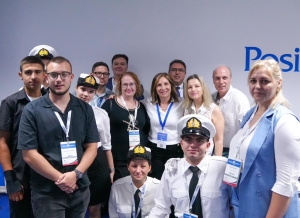
Following a vibrant participation at Posidonia 2026, Project Connect’s recent Members & Teachers Conference, held at the Metropolitan Expo on June 4th, highlighted the powerful impact of the Adopt a Ship TM maritime educational program for children in Greek School system across the nation and abroad.
There was a unique kind of energy in the air, at this year’s exhibition, one filled with genuine enthusiasm, deep emotion, and a real sense of hope for what’s ahead, as Project Connect showcased its most innovative and effective action, proudly pioneered in Greece by the organization back in 2018 and seeing fruits of its
labor with 50% choosing maritime careers and 300 plus Adopt a Ship graduates entering Academies. Adopt a Ship EPAL/1st year Marine Cadets expressed gratitude for the program. It helped them pass the exams with current knowledge from their adopted vessels.
Since its inception, this state-approved educational model has grown into a global movement of maritime awareness, building a real bridge between school classrooms and the sea with a proven track record: 30,000+ students inspired, 700+ teachers actively participating, 1,100+ classes engaged, 380+ vessels joined, and 4,500+ heartfelt letters of correspondence exchanged. Those who visited the organization’s pavilion (Stand 2.544, Hall 2) or actively participated in the conference witnessed a beautiful truth: the Greek maritime family is growing and reinforcing itself through a highly engaged audience of shipowners, institutional leaders, educators, and students, all united in their dedication to the next generation.
A Unique and Moving Opening
The conference kicked off with an incredible burst of youth energy, welcoming guests with Florina’s and Prespes’ Adopt a Ship Student’s Rap Songs, written and performed by the students themselves. Τhe opening session, “Voices from the Sea” completely cut through the formal atmosphere. The audience experienced a storytelling reading of an authentic letter exchange between a primary school pupil, Amalia and Captain Konstantinos D. Geomelos, bringing the deep human impact of the program right onto the stage. This heartwarming moment showed how captains act as real-life role models to teach children values like resilience, commitment, and responsibility.
Ms. Irene Notias, Founder & Director of Project Connect, welcomed the guests and shared the inspiring evolution of the organization, from its early days connecting university students with shipping via its pioneering CV Platform, to linking deep-sea vessels directly with young classrooms. The state and the maritime institutions strongly backed this vision. Mr. Athanasios Makris (Chief of Staff, Office of the Deputy Minister of Maritime Affairs & Insular Policy) and Mr. George Alexandratos (President of the Hellenic Chamber of Shipping) both addressed the audience, affirming their ongoing institutional support and praising the ESG social responsibility dimension of connecting local communities with the crews at sea.
Industry Leadership & Future Skills
The shipping community’s perspective was powerfully delivered by Mr. John Xylas (Chairman of INTERCARGO, Treasurer of the Union of Greek Shipowners, CEO Ariston Navigation, and Founder Member of Project Connect). In his address regarding the workforce of 2036, Mr. Xylas emphasized: “Investing in maritime education and exposure at an early age is a structural necessity to meet the challenges of modern international shipping. By fostering awareness and empathy for seafarers as essential key workers, we instill vital core values, teamwork, responsibility, and resilience, which are necessary for young adults to transition and work successfully within the maritime industry”.
To reinforce this, Dr. John Kalogerakis, Culture Architect and Motivational speaker, Honorary Founder Member of Project Connect, delivered a high-energy talk on how Project Connect’s “νιάτα ψηλά” (youth elevated) seminars train and build the vital confidence and hard skills needed for a rapidly evolving maritime sector.
The academic foundation of the program was highlighted by Dr. Adamantia Spanaka (Educator’s Consultant and Adopt a Ship Program Developer), who presented research-backed evidence and teacher assessments proving how Adopt a Ship TM transforms regular classrooms into thriving maritime learning ecosystems.
“The “Adopt a Ship” program is the first maritime educational tool and that educators chose over and over again to teach core subjects while they instill the life-changing experience that plants the seed of maritime culture in the hearts of the next generation”, she said.
Recognition Ceremony & Special Grants
The emotional peak of the conference was the Recognition Ceremony: The Heart of Adopt a Ship TM. Project Connect honored the educators driving the program, giving special symbolic awards to five indicative teachers for their outstanding dedication staying with the program consistently in its 8 years: Dr. Adamantia Spanaka, Mrs. Vasiliki Bakrozi, Mr. Chrysostomos Lefteratos, Mr Dimitris Gardiklis and Mrs. Katerina Psaltou.
Project Connect proudly launched tangible pathways for the next-generation workforce of 2036 by presenting Special Adopt a Ship EPAL Graduate Awards & Student Grants to Maritime Vocational graduates who were admitted to Marine Academies due to their full participation in the program.
- The “Future Captain” Scholarship (€1,000), sponsored by Mr. John Naslas, awarded in loving memory of Georgios Lygnos went to a graduate from 2nd EPAL ILION who was admitted to AEN Aspropyrgos
- The “Future CEO” Scholarship (€500), sponsored by SteelShips LLC, supporting the next generation of shipping executives, went to a graduate from EPAL RODOS who was admitted to AEN Macedonia.
- “Short-Sea Travel Experience”: Unique educational sea voyages sponsored by SEAVEN TANKER & DRY MANAGEMENT, Inc. were awarded to two students from 9th EPAL PIRAEUS
Looking back at the packed room and the journey of the program, Ms. Irene Notias noted: “By connecting students with the reality of life at sea today, the program prepares them tangibly with accurate information making them more ready to study maritime in universities and marine academies. This is how Project Connect is actively raising and building the maritime workforce of 2036.”
She continued: “The Shipping community talks about the Greek Shipping Miracle.
Adopt a Ship by Project Connect is the 2nd Greek Shipping Miracle because it has successfully managed to unite a strong collective force of shipowning, management and maritime service companies to one main cause that instills maritime education in the primary and secondary school system for the last 8 consecutive years – all school year long, influencing more initiatives like it. It has been long awaited for!”
Celebrating 11 years of continuous contribution, Project Connect continues to deliver concrete, measurable, and inspiring results, ensuring that the legacy of Greek shipping remains in capable and inspired hands, raising the next generation of professionals both on shore and at sea.
ELNAVI Newsletter
More Information: ELNAVI,
19, Aristidou str., Piraeus 185 31,
Tel.: +30 210 45.22.100, e-mail: This email address is being protected from spambots. You need JavaScript enabled to view it.
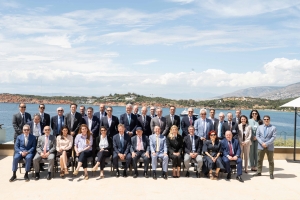
Bringing together leading figures from the maritime, energy and shipbuilding sectors to discuss the challenges and opportunities shaping the future of shipping, including the growing importance of American-Hellenic cooperation in energy and maritime affairs, Bureau Veritas Marine & Offshore’s Greece team hosted the 27th Hellenic & Black Sea Committee in Athens.
The annual Committee meeting provided a platform for strategic dialogue on energy transition, innovation, geopolitics and the evolving shipbuilding landscape.
The event opened with welcome remarks from Paillette Palaiologou, Senior Vice President, EMA, Bureau Veritas Marine & Offshore, followed by introductory comments from Committee Chairman George Procopiou.
During the first session, dedicated to “Challenges & Opportunities”, Bureau Veritas executives Matthieu de Tugny, Executive Vice President, Industrials and Commodities, and Alex Gregg-Smith, President, Marine & Offshore, shared insights into the Group’s priorities and the evolving maritime landscape. George Procopiou also delivered the shipowner’s perspective on current market dynamics and industry priorities.
One of the key highlights of the meeting was the intervention by Josh Volz, Special Envoy for Global Energy Integration at the U.S. Department of Energy, who addressed participants on “Geostrategic bridge: shipping, energy and American-Hellenic cooperation”, emphasizing the strategic importance of maritime transport, energy security and transatlantic collaboration in an evolving geopolitical environment.
Michal Kurtyka, former Polish Minister of Energy, Climate and Environment and President of COP24, explored “The Energy Transition: from Hormuz to Resilience”, highlighting the geopolitical and energy security dimensions of the global transition.
The second session focused on “Innovation & Shipbuilding”. Francois Cadiou, Managing Director of BRS Paris, shared his perspective on the business models required to ensure the long-term sustainability of the shipbuilding industry.
Bureau Veritas experts also explored the transformative role of artificial intelligence, the evolution of shipping and classification, and the future potential of nuclear energy in maritime decarbonization.
The programme concluded with a presentation on the geopolitical legacy of World War I and its continuing influence on today’s global environment, followed by a final discussion.
ELNAVI Newsletter
More Information: ELNAVI,
19, Aristidou str., Piraeus 185 31,
Tel.: +30 210 45.22.100, e-mail: This email address is being protected from spambots. You need JavaScript enabled to view it.
POSIDONIA 2026
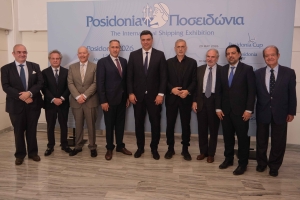
Greek Shipping Confronts Global Challenges
Highlighting the leading role of Greek shipping, the press conference for "Posidonia 2026" was successfully held at the POIATH facilities. Despite the Middle East crisis, Posidonia Managing Director Theodore Vokos announced record-breaking participation with 2,227 exhibitors from 83 countries, the presence of President of Panama: José Raúl Mulino (who took the helm on July 1, 2024), Secretary-General of the International Maritime Organization (IMO), Arsenio Dominguez (who took the lead on January 1, 2024).
Maritime Affairs Minister Vasilis Kikilias emphasized that Greece, though economically small, is a global shipping superpower. He highlighted the sector's link to energy autonomy and shipbuilding, noting that this year’s event is critical for decisions regarding decarbonization and geopolitical security.
In the same vein, the President of the Hellenic Chamber of Shipping, George Alexandratos, defended the industry's sustainability, stating that shipping carries 90% of global trade while contributing only 2.5% of global emissions.
Union of Greek Shipowners’ representative Yiannis Lyras attributed the endurance of Greek shipping to its family-oriented business model and human element. Meanwhile, Haralambos Fafalios (Chairman of the London Greek Shipping Co-operation Committee) expressed pride in the fleet's resilience against crises and the ongoing challenge of decarbonization.
The Mayor of Piraeus welcomed the event, focusing on municipal initiatives to boost the blue economy and the annual "Sea Days" festival. The event concluded with POIATH President Mr. Maragoudakis, who praised the success of the Posidonia Cup sailing regatta, which features 60 international entries.
ELNAVI Newsletter
More Information: ELNAVI,
19, Aristidou str., Piraeus 185 31,
Tel.: +30 210 45.22.100, e-mail: This email address is being protected from spambots. You need JavaScript enabled to view it.
Union of Greek Shipowners Annual Report 2025–2026
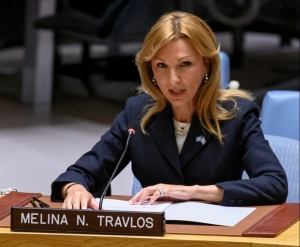
Greek Shipping continues to be a World-Leading Force
A comprehensive overview of the latest data on the Greek-owned fleet and its indispensable contribution to the global, European and national economy are presented in 2025–2026 Annual Report of the Union of Greek Shipowners.
The Report highlights the indispensable and strategic role of shipping as a fundamental pillar of international trade, energy and food security, as well as the stability of global supply chains.
In addition, it further outlines the UGS’s positions in relation to the key policy developments and emerging challenges shaping both the present and the future of the sector, with emphasis on decarbonisation, European maritime policy, the safety of navigation and the critical role of seafarers.
Greece remains the world’s leading shipping nation, with a fleet of nearly 5,800 vessels, accounting for over 19% of total global tonnage. Greek shipping represents 61% of the EU- controlled merchant fleet, constituting a strong strategic advantage for the continent’s autonomy and resilience.
Greek shipping leads the way to the sector’s decarbonisation, with increasing investments in new vessels incorporating the latest clean technologies.
At the same time, Greek shipping remains a national asset for Greece, directly and indirectly accounting for 7-8% of the country’s GDP and supporting approximately 200,000 jobs. The 2025–2026 Annual Report also highlights the strong social footprint of Greek shipping. More specifically, it presents the UGS Aid Programme for Thessaly, “Agios Nikolaos”, under which the restoration and reconstruction of 33 school facilities has been completed. It also reflects the Union’s commitment to the vision “SHIPPING + SOCIETY ALWAYS TOGETHER”, including through UGS’s expanded scholarship programme “SYN-ENOSIS for Education +100 Scholarships”, which will offer 365 scholarships for the 2026–2027 academic year, empowering the next generation every day.
In her address in the Report, the President of the UGS, Melina Travlos, states:
“In an era of growing uncertainty, shipping once again confirms its enduring role as a force of continuity, stability and connection.
In this demanding environment, Greek shipping maintained its leading position internationally, reaffirming its strategic importance, reliability and resilience.
Unity is our strength. With a common strategy, institutional consistency and collective responsibility, Greek shipping will continue to lead on the seas of the world and contribute meaningfully to shaping the future of global shipping.”
The 2025–2026 Annual Report of the Union of Greek Shipowners is available here:
https://ugs.gr/media/14186/ugs_annualreport_2526_eng.pdf
ELNAVI Newsletter
More Information: ELNAVI,
19, Aristidou str., Piraeus 185 31,
Tel.: +30 210 45.22.100, e-mail: This email address is being protected from spambots. You need JavaScript enabled to view it.
ABS Launches SeaTech Innovation Exchange
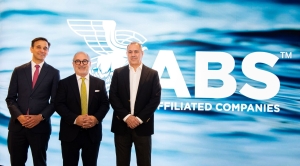
A New Era for Greek-U.S. Maritime Technology
In an industry-first move, ABS has officially launched the ABS SeaTech Innovation Exchange. Comprising two advanced technology centers—one located at the ABS Greece office in Athens and the other in Houston, Texas—this initiative establishes a powerful transatlantic bridge. The Exchange is designed to accelerate maritime innovation, drive applied research, and foster deep collaboration between leading academic institutions, technology startups, and global fleets.
The launch was celebrated at a special reception hosted at the Lighthouse inside the Stavros Niarchos Foundation Cultural Center in Athens. The event drew key industry and diplomatic figures, featuring addresses from Joshua Huck (Deputy Chief of Mission, U.S. Embassy in Greece) and John Xylas (Executive Board Member of the Union of Greek Shipowners), alongside a video address from MARAD U.S. Maritime Administrator Stephen Carmel.
Two Hubs, One Shared Vision
Rather than functioning as a traditional static research project, the Exchange is a "living" pipeline designed to swiftly move technology from initial concept to day-to-day fleet operations. It strategically pairs Houston’s cutting-edge research infrastructure with Athens’ unparalleled shipping operational excellence.
Advanced Research & Incubation
The Houston center serves as the primary engine for technological development. It focuses heavily on redefining future shipping capabilities by advancing:
- Artificial intelligence (AI) and digital engineering,
- Robotics and autonomous operations
- Simulation and next-generation approaches to certification
The hub will work directly with tier-one research universities, international government researchers, technology startups, and U.S. maritime academies.
Applied Training & Operationalization
Opened during an introductory event led by Elias Kariambas (ABS Vice President of Regional Business Development), the Athens center is where theory meets reality. Its primary mission is to reduce maritime risk and improve asset safety by testing and applying technologies directly to realistic ship and ship-management environments. Key operational areas include:
- Immersive Learning using advanced simulation, AI-enabled learning, Augmented Reality (AR), and Virtual Reality (VR) to prepare crews for service.
- Cutting-Edge Systems testing remote inspection tools, digital twins, and exploring future nuclear applications for shipping.
- Strategic Ecosystems collaborating with innovative entities like DMB Logistics to develop AI-driven robotics for a more resilient, high-performing commercial fleet.
Leadership Perspectives
In his message John McDonald, ABS Chairman and CEO stated: "The Exchange concentrates on swiftly moving technology from development into day-to-day operations, working in direct partnership with the Greek maritime community while building new collaboration with U.S. maritime institutions, technology startups, and government-funded research."
Patrick Ryan, ABS Chief Technology Officer, emphasized via video presentation that technology is a tool to empower the next generation of maritime professionals, ensuring safer and more competitive operations globally.
Representing the Greek shipping community, John Xylas president of Intercargo stressed that collaboration among all stakeholders is vital. He pointed out that linking Greece’s unparalleled operational experience with advanced academia creates a necessary bridge, adding that "technology is not the objective; it must aim for safety and sustainability."
Strengthening Transatlantic Ties
The initiative has garnered strong support from both governments. Joshua Huck highlighted Greece’s status as the world's premier maritime nation and noted that this cooperation opens immediate economic doors, aligning with an ambitious U.S. action plan for shipbuilding that could see Greek shipyards constructing U.S. vessels. Furthermore, both nations will use the Exchange to work closely together to address green frameworks and zero-emissions regulations.
U.S. Maritime Administrator Stephen Carmel concluded by noting that the initiative accurately reflects the strength, adaptability, and ultimate future of the modern maritime industry. By shortening development cycles and prioritizing workforce readiness, the ABS SeaTech Innovation Exchange sets a new global standard for maritime evolution.
ELNAVI Newsletter
More Information: ELNAVI,
19, Aristidou str., Piraeus 185 31,
Tel.: +30 210 45.22.100, e-mail: This email address is being protected from spambots. You need JavaScript enabled to view it.