


-
Home

-
About Elnavi
- elnavi

elnavi
130 SCHOLARSHIPS SPONSORSHIP BY SYN-ENOSIS An initiative of social responsibility with a multiplying effect
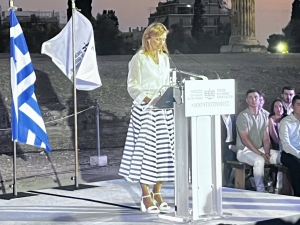
Investing in Excellence and Innovation, SYN-ENOSIS, the social contribution vehicle of the Union of Greek Shipowners, offered a record number of 130 scholarships for the 2025-6 academic period, continuing the program from 2023, plus 100 scholarships for postgraduate studies in Greece and abroad.
With the judging committee is constituted by John Xylas, Konstantinos Karoussis, Nikolaos Veniamis and Alexandros Papas, with the contribution of academic personalities.
SYN-ENOSIS offered 130 scholarships this year to young graduates who continue their studies in the field that have chosen to make a career, taking advantage of the Union of Greek Shipowners’ scholarship program.
Ms. Lina Mendoni, Minister of Culture, praised the initiative of social responsibility which has a multiplying effect, emphasizing that the program does not only concern maritime and economic studies but a very wide range such as culture, health, etc.
In her speech, Ms. Melina Travlos pointed out that SYNENOSIS has contributed 130 million euros to social responsibility actions over the last 10 years.
This year's scholarship program granted 130 scholarships with a total offering of 5 million euros sponsored by 67 donors, a fact that makes it the largest in Greece.
The scholars come from 21 regions of Greece and will study in Greece and 10 foreign countries, 6 Greek and 45 universities all over the world.
In her closing, Ms. Travlos called on the scholars to make positive changes in their lives and to open new paths for a better country by honoring the value of excellence and the ΑΙΕΝ ΑΡΙΣΤΕΥΕΙΝ.
It should be emphasized that the event took place at the Columns of Olympian Zeus at the landmark of ancient Athens in a climate of emotion and pride.
Good luck!
ELNAVI Newsletter
More Information: ELNAVI,
19, Aristidou str., Piraeus 185 31,
Tel.: +30 210 45.22.100, e-mail: This email address is being protected from spambots. You need JavaScript enabled to view it.
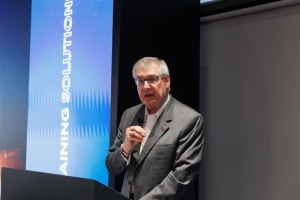
ABS opened the doors on its latest training center, the Hellenic Ship Safety Center in Athens, harnessing the power of new immersive training techniques, game-based learning and virtual reality environments for the Greek shipping community.
Greek shipping leaders joined ABS executives at the opening celebration for the new facility that features computer simulation stations, collaboration areas and a training room for virtual reality and game-based scenarios and interaction.
ABS Chairman and CEO Christopher J. Wiernicki said: “The ABS Hellenic Ship Safety Center is expressly designed to equip our people with the knowledge, tools, and confidence to operate safely in a rapidly evolving maritime landscape. This center will pioneer immersive learning techniques, using virtual and augmented reality to create powerful, hands-on training experiences. Through simulated environments, learners can walk through a ship, interact with systems, and practice procedures, all before ever stepping on board.”
Among the honored guests was Dimitrios Fafalios, President of Fafalios Shipping S.A., who said: “Shipping is the daily management of change, and shipping is facing many challenges with new technologies and alternative fuels. It falls to our seafarers to be trained to overcome these challenges and this is why the ABS Hellenic Ship Safety Centre (HSSC) is so important.”
The Athens location is the latest in a family of dedicated centers from ABS, others are in Doha and Singapore, that are designed to prepare seafarers to handle a multi-dimensional industry with alternative fuels and emerging technologies.
The training facilities also feature the new ABS MetaSHIP Fleet: the ABS Spirit, the ABS Eagle, and the ABS Integrity, are highly realistic virtual vessels, built to scale from actual ship drawings. They allow learners to conduct virtual field trips, select vessel types and ages, and perform inspections, surveys, and documentation—all in a safe, controlled environment.
“With MetaSHIP, a trainee can spend hours on the deck plate of a vessel—inspecting equipment, reviewing certificates, and documenting findings—before ever setting foot on a gangplank. This is the future of maritime training, and it’s happening right here in Athens,” said Wiernicki.
The Athens center, which has the support of the Hellenic Ministry of Maritime Affairs and the Union of Greek Shipowners, will address critical emerging safety issues such as handling dynamic fuels, risks generated by cyber-enabled systems, hybrid battery propulsion and other technological driven changes onboard.
ELNAVI Newsletter
More Information: ELNAVI,
19, Aristidou str., Piraeus 185 31,
Tel.: +30 210 45.22.100, e-mail: This email address is being protected from spambots. You need JavaScript enabled to view it.
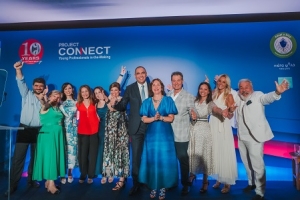
Key personalities from government, shipping, and education, gathered together at the Yacht Club of Greece to celebrate a decade of purpose and to honor a movement for youth empowerment and ‘brain gain’.
On June 25, 2025, Project Connect became the epicenter of maritime education and youth empowerment as it celebrated its 10-Years Anniversary, at the emblematic Yacht Club of Greece, highlighting a decade of initiatives that have built bridges between students and the shipping industry and have created an entire movement since its inception.
Over 250 guests, including many members of Project Connect were welcomed with a multimedia display showcasing Project Connect’s journey from youth employment placements, skills training to international expansion and partnering with 800 primary and secondary schools engaged with 418 captains of vessels at sea. The evening began symbolically with the sound of a ship horn, signaling the new voyage for the organization.
The program was opened by Dr. Yanna Darilis, Master of Ceremonies, and the special milestones video.
Ms. Darilis stated, “On May 27th, 2015, Project Connect was launched by a group of visionary professionals led by Irene Notias, with one bold and clear mission: to bridge the gap between the maritime industry and the next generation. What began as an inspired idea has grown into a national and international initiative, transforming youth engagement, redefining maritime education, and reshaping the future of Greek shipping. A Movement grounded in a commitment to social responsibility, industry sustainability and youth empowerment.”
She continued: “In just ten years, Project Connect has managed with little resources to become a pioneer in youth employability, serving as Greece’s first Human Resource hub for the Greek shipping industry, encouraging companies to open their doors to interns and entry-level professionals, building reciprocal trust, and nurturing new talent. From professional seminars and student placement support to building bridges between universities and maritime companies, the ripple effect has been powerful and continues growing strong.”
Dr. Darilis introduced the Founder & Director Irene Notias who shared her inspiring story—rooted in family values, a response to Greece’s ‘brain drain’, and a passion for creating opportunity. “We educate, we empower, we connect,” she said, reflecting on the organization’s mission.
His Excellency, Dr. Vassilis Kikilias, Minister of Maritime Affairs and Insular Policy, representing H.E. Prime Minister of Greece Mr. Kyriakos Mitsotakis congratulated Ms Notias on her passion and achievement and affirmed his interest to cooperate in the near future regarding youth orientation towards maritime vocations at sea and shore, creating a National Maritime Week for Schools, and more support for effective tools like Adopt a Ship.
Mr. Nicholas Tsalamanios, Chairman & Main Benefactor of Project Connect and Co-CEO of Seaven Tankers & Dry shared his pride in investing in Project Connect, for its efficient programs such as Adopt a Ship which up to now has educated 20,000 young people about maritime life from an early age and connects them with the industry through structured, professional processes.
Mr. John Xylas, CEO, Ariston Navigation, Treasurer and Representative of the Union of Greek Shipowners, Chairman of Intercargo and Project Connect’s first Founder Member, expressed his support for the initiative from the beginning as it bridged a big gap between educational institutions and the shipping companies. He emphasized the empowering benefits for crew who participate in the Adopt a Ship program, as they give back to the younger generation, who bridge the shipping industry to their families, gaining maritime awareness and the future vocational possibilities for their children’s future. Supporting Organization of the educational program Adopt a Ship is the Union of Greek Shipowners.
Presentation of the “Adopt a Ship” program
Dr. Adamantia Spanaka, Educational Consultant for the Adopt a Ship program at Project Connect, presented a slide show about the efficacy of the “Adopt a Ship” program and its benefits for the teachers, students and their families. Pointing out that half of the pupils surveyed aspire to join the industry due to their ‘all-school-year-long’ activities and letter exchanges with their adopted vessel’s captain.
The program featured pupils from Athens College (Olina Anagnostopoulou & Stefanos Delikostopoulos) reading a real letter exchange between a Davlia grade school class and the captain of their adopted vessel, M/T Maran Dione, of Maran Tanker Management.
There were touching remarks from Event Sponsors:
- Her Excellency Mrs. Julie Lymberopoulou Karnakis, Ambassador of Panama firmly supporting the educational component and a future cooperation.
- Mr. Theofanis Theofanous, Managing Director, Bernhard Schulte Shipmanagement (Hellas), a PROJECT CONNECT Member stated that they use the CV Platform to recruit young talent and are happily enrolling their vessels in the Adopt a Ship program, for a while now.
Encouragement from Government Auspices and Officials.
- Mr. George Alexandratos, President, Hellenic Chamber of Shipping focused on the importance of such initiatives and stressed they will expand their support.
- Ms. Katerina Monogiou, a Member of the Hellenic Parliament, chairing the Education committee, and representing the Cyclade Islands where the Adopt a Ship is thriving, pledged support for incorporating Adopt a Ship into The National Maritime Week, proposed in synergy with relative Ministries.
- Mr. Lou Raptakis, U.S. State Senator, a supporter from the very beginning of its inception and first to declare that initiatives like Project Connect are necessary for sustainability. Together with his wife, Dr Donna Raptakis recommended the program to Hellenic Charter Plato Academy schools, in Florida.
- Mr. Dimitris Avramopoulos, former European Commissioner, former Minister of Foreign Affairs and Defense, Member of Parliament sent salutation and stated that “Greek shipping, a pillar of our national economy with global reach, needs the new generation. And the new generation needs initiatives like Project Connect to be inspired and to chart its own course in this unique world.”
- Ms. Sofia Zacharaki, Minister of Education sent Salutation through written statement that “the fact that the program is integrated into the Skills Labs and supported by approved material from the Institute of Educational Policy (IEP) further enhances its educational value. I extend my warmest thanks to the educators who, with enthusiasm and dedication, implement the program and serve as the vital link between the classroom and the world of shipping. Their contribution is truly invaluable.”
Both Salutations were read by the Adopt a Ship Coordinator, Mrs. Effie Kotika.
Celebrating the Adopt a Ship Pioneers
The original “Lucky 7” vessels, and captains, came from six shipping companies. They and the teachers who participated in the Adopt a Ship Pilot during school semester, January to June 2019 were mentioned and the companies honored: ARISTON NAVIGATION, ASTRA SHIPMANAGEMENT, EUROBULK, MEDFERRY, PHOENIX, and STARBULK.
Special recognition was given to:
- Effie Kotika, Adopt a Ship coordinator, for voluntarily matching ships with schools for seven consecutive years.
- George Tsavliris, Honorary Chairman of Project Connect who was instrumental in advising Ms.Notias about bringing Adopt a Ship to Greece.
- Alex Josephides, Chairman, Cyprus Chamber of Shipping & Michael Ierides, Secretary General, CYMEPA for providing the Adopt a Ship materials and allowing Ms Notias free reign to develop the Adopt a Ship program, in Greece.
A special surprise by Dr. John Kalogerakis Honorary Project Connect Member performing a Cretan tradition of commemoration. He created and sang a Cretan song (mandinada) about the character and achievements of Ms. Notias.
The festive cocktail evening reinforced maritime camaraderie, graced by the soprano Ms. Anastasia Zannis’ live performance and added to the event’s success.
The Event was sponsored by the Chairman, Nicholas Tsalamanios and the following companies who are members and friends: Bernhard Schulte Shipmanagement, Columbia Shipmanagement Greece, Cormorant Maritime Projects LLC, Cross Roads Agencies S.A., Danaos Shipping Co. Ltd, Doric Shipbrokers S.A., Dynacom Tankers Management Ltd, Embassy and Consulate of Panama, Eurobulk Ltd., GANMAR Shipping, Island Oil Hellas Ltd., J. G. Roussos, John Naslas, Katradis Marine Ropes Industry, Konkar Shipping Agencies S.A., Lotus Shipping Company Limited, Marine Tours S.A., Pleiades Shipping Agents S.A., Sea Pioneer Shipping Corporation, Seaven Tankers & Dry Management, Inc., Star Bulk Management Inc., SteelShips LLC, Technomar Shipping Inc., The American P&I Club, Tsavliris Salvage Ltd, and V.Ships.
The Project Connect team dedicated this celebration event which fell on Seafarers Day to the captains and crew of the Adopt a Ship program.
A Decade of Achievements
PROJECT CONNECT’s key initiatives include:
- Adopt a Ship: Connecting grade and high schools with ship captains via e-mail letters engagement, the program has expanded from Greece to the United States.
- 11 UN SDG Contributions: addresses sustainability goals from quality education to mental well-being.
- “Youth Empowerment - Niata Psila” Seminars: Offering professional readiness and soft skills training, and personal empowerment.
- 3-D Virtual Tour of a modern Shipping company’s departments and positions
- CONNECT CV-HR Platform: A digital recruiting tool that connects young talent with shipping companies using a fun, psychometric skills tool, ‘owiwi’.
MEDIA SUPPORT: All About Shipping, Alpha News, Elnavi, ERT, Kathimerini, Lloyds, Maritime Economies, maritimes.gr, Nafsgreen Shipping News Portal, National Herald, Naftemporiki, New Greek TV, Portal Piraeus, Proto Thema, Ta Nea, The National Herald, The SeaNation, Tradewinds and Vima.
ELNAVI Newsletter
More Information: ELNAVI,
19, Aristidou str., Piraeus 185 31,
Tel.: +30 210 45.22.100, e-mail: This email address is being protected from spambots. You need JavaScript enabled to view it.
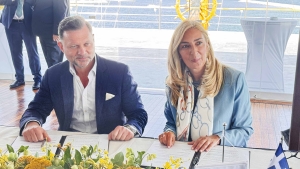
On June 23, 2025, the signing ceremony of the agreement between ONEX Elefsis Shipyards and the classification society Bureau Veritas Marine & Offshore (BV) took place at the historic Sailing Club of Greece in Piraeus, one of the most emblematic places in the Greek shipping sector. The event was attended by Deputy Minister of Shipping and Island Policy, Mr. Gikas, the Secretary General for Fisheries and Ports, the Secretary General for Research and Development, as well as prominent representatives of the Greek shipping community and the maritime press.
The agreement concerns the construction of 20 newbuilding tugboats of the RAstar 2800 Tugboat type at ONEX's shipyards in Elefsina, marking the official revival of newbuilding activity in Greece. The agreement was signed by Mr. Panos Xenokostas, President and CEO of ONEX Group and President of the Union of Greek
Shipyards, and Ms. Paillette Palaiologou, Senior Vice President of Bureau Veritas Marine & Offshore Division, East Europe, Mediterranean Sea, Middle East, Africa, and India (EMA).
Mr. Xenokostas stressed the importance of this historic step for the Greek shipbuilding industry: "Since 2018, even in the darkest times for the shipbuilding industry, we have dreamed, envisioned, planned, and implemented this project.
Today, we can see the shipyards in operation, providing thousands of direct and indirect jobs, and over 720 vessels have been repaired in Syros and Elefsina.”
Referring to the strategic decision to start with tugs for newbuildings, he pointed out: “We decided to start with tugs because they represent a controlled, manageable investment. This enabled us to achieve our goals for preparing the yard, partnering with major industries, and collaborating with leading companies such as Robert Allan Naval Architects, MAN Energy Solutions SE and SCHOTTEL GmbH to design a state-of-the-art tugboat."
The tugs will feature the latest generation of engines and will be adaptable to LNG and LPG environments. They will also be able to operate with versatility in a variety of roles, including firefighting and cleaning up oil spills.
Mr. Xenokostas also announced that “In the coming weeks, we will sign our first contract with a Greek company for 2 + 2 tugs. In 2026, we plan to further expand our production line with an additional 20 tugs. Our production line is secure, and the first steel will be cut in November 2025. We also offer companies in Greece and abroad complete solutions through financing packages such as the Performance Based Logistics model."
In closing his address, Mr. Xenokostas thanked all customers, Greek shipowners, employees, and executives for their trust, as well as the Greek government for their practical and continuous support since 2019. He stated: “The revival of the shipyards is not the work of one or two people. It is a game that, in order to win, we must play as a team. Our vision for a strong Greek shipbuilding industry is becoming a reality today."
Ms. Paillette Palaiologou, Senior Vice President of Eastern Europe, Mediterranean Sea, Middle East, India and Africa (EMA), Bureau Veritas Marine & Offshore, spoke about BV’s deep connection with the Greek shipping industry, a beacon for the whole world, stressing the historical importance of the agreement: “We have seen ships being built and sailing, becoming part of world history with the seal of safety and completeness from our organization. Our commitment to Greek shipping and local maritime activity goes beyond a business relationship. It is a deep emotional bond based on mutual trust and a shared vision for progress and development. We are here today to celebrate the reawakening of shipbuilding in our country.
Shipbuilding is integrally linked to our identity and has always nurtured our nation's love for the sea."
She highlighted the strategic importance of the project: “The construction of 20 newbuild RAstar 2800 tugboats is a very important project for the shipyards, BV, Greece, and the global tugboat industry,” she said, underlining that BV holds a 27% share of the global tugboat classification market.
Referring to the technical characteristics of the tugboats, she pointed out: 'This new fleet of tugs will be extremely versatile. It will be equipped with high-level propulsion systems, allowing it to operate as an escort tug. They will also have fire-fighting capabilities and equipment for oil recovery operations in the event of pollution.'
"Today's agreement also marks the beginning of a strong cooperation between our company and a shipyard group known for its commitment to quality, but also for its vision for a great Greek shipbuilding industry," said Ms Paleologou, underlining that "We support this vision with our full commitment, as we strongly believe in the dynamics and potential of the local shipbuilding industry."
Speaking on behalf of the Ministry of Shipping and Island Policy, Deputy Minister Mr. Gikas described the day as a historic one for the Greek shipbuilding industry. “Today, we are witnessing the rebirth of the Greek shipbuilding industry. This was an objective established by our Prime Minister, Kyriakos Mitsotakis, from the moment our government was elected in 2019." He emphasized the dual importance of tugs: " These tugboats will serve critical national and international ports, playing a vital role in our country’s maritime strategy."
In closing, the Deputy Minister, as a Naval Officer himself, said: “It is in our DNA to build ships; we are a country with a long naval tradition. I am very optimistic that, with the regeneration of our shipyards, we will soon see both our warships and those of the Coast Guard being built by Greek hands."
Finally, Mr. Tasos Gaitanis, Secretary General for Research and Innovation of the Ministry of Development, referred to the government's interest in the domestic shipbuilding industry, which offers significant economic potential and new jobs, explaining that: “At the Ministry of Development, our desire and priority is to strengthen the economy through applied research and innovative products and services, including the maritime sector and maritime technology, which are important areas linked to our rich maritime tradition."
Today's signature marks a significant milestone for the Greek shipping and shipbuilding industries and demonstrates the commitment of all stakeholders to reviving and developing domestic shipbuilding activity.
ELNAVI Newsletter
More Information: ELNAVI,
19, Aristidou str., Piraeus 185 31,
Tel.: +30 210 45.22.100, e-mail: This email address is being protected from spambots. You need JavaScript enabled to view it.
WinGD Expert Talk Greece 2025
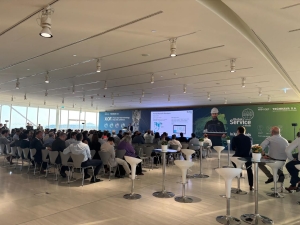
Focusing on the latest efficient and sustainable technologies and services WinGD and Technava (exclusive representative of WinGD in the Greek Shipping market) held at the Stavros Niarchos Foundation Cultural Center in Athens, an informative seminar which was conducted by the following highly expertise WinGD’s experts: Marcel Ott, George Lymperopoulos, Stefan Goranov, John Nilsson, Rene Baart and Rudolf Holtbecker.
A major milestone was presented: the delivery of the world's first dual-fuel ammonia engine, installed on Hull 8389 for EXMAR — marking a significant step toward zero-carbon marine propulsion and showcasing what’s next for alternative fuels from WinGD Ltd.
Breaking news were also shared with the announcement of Global Service by WinGD that now offers enhanced support to ship operators through original parts supply, in-service assistance and technical advisory across the entire vessel lifecycle.
Technava S.A. represents WinGD in the After-Sales Market for Greece and Cyprus, with a dedicated team of ten in-house experts based in our Athens office.
Over the past 8 years, Technava has hosted hundreds of training seminars on WinGD engines at Technava premises and has consistently provided flawless support in engine selection for newbuilding projects.
ELNAVI Newsletter
More Information: ELNAVI,
19, Aristidou str., Piraeus 185 31,
Tel.: +30 210 45.22.100, e-mail: This email address is being protected from spambots. You need JavaScript enabled to view it.
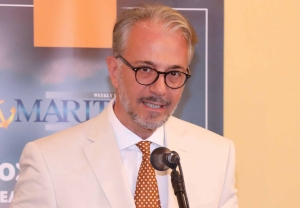
By Mr Anastasios Andreas Maraslis, Founder/President/Director of *Marasco Marine Ltd
As the maritime industry navigates through a vortex of geopolitical uncertainty, climate extremes, and supply chain bottlenecks, one reality becomes increasingly clear: traditional hull and machinery insurance and P&I cover is not enough.
In times of war, pandemic spillover, port strikes, and unforeseen shutdowns, shipowners and charterers alike face a glaring exposure — delays.
And yet, many still believe that any delay occurring at anchorage, while awaiting cargo or berth, is just part of the game — an uninsurable commercial risk. But what if it doesn’t have to be?
The Lay-Up Return Illusion
Clause 22 of the Institute Time Clauses (Hulls) 1/10/83 offers a return of premium for periods when a vessel is officially laid up in port for 30 consecutive days, i.e., not in full commission, not properly manned, and effectively withdrawn from commercial service.
However, anchored delays, even long ones — like being stuck outside congested ports or idling for a charter — do not qualify as lay-up. Why?
Because:
- The vessel remains classed, manned, and ready to trade.
- Underwriters are still on risk for full perils including war, piracy, fire, collision, etc.
- Delays are commercial, not physical or insured perils.
The result? No refund. No compensation. Full premium.
A Changing Landscape: When Delay Is Insurable
At Marasco Marine Ltd, we don’t just accept limits — we challenge them. Through our specialized access to Lloyd’s syndicates and A-rated underwriters, we can offer bespoke coverages that respond to:
- Port closures due to war, revolution, terrorism, or major accidents
- Delays caused by quarantine restrictions or disease outbreaks-
- Strikes, civil commotion, and labor disputes at destination
- Catastrophic events (earthquakes, hurricanes) damaging infrastructure
This is not your standard hull cover. This is Delay Risk Insurance, tailored to compensate shipowners for real-world, peril-driven disruptions.
Think of it as “Trade Disruption Insurance” for shipping, designed for today’s unpredictable global trade theater.
From Gaza to Odesa: Delay Is the New Risk
The outbreak of hostilities between Israel and Iran, the ongoing war between Russia and Ukraine, and the recurring closure of the Suez Canal, Red Sea Houthi threats, and blockades in the Black Sea all point to a dangerous truth:
Your vessels can be delayed for days, even weeks or months — and not a single clause in your current policy will respond. We are entering a maritime era where delays are not just commercial—they are consequential. And if Shipowners/Shipmanagers are not covered, they’re exposed.
Marasco Marine Ltd.’s Solution: Tailored, Transparent, Timely
Marasco Marine Ltd proactively offers:
- Delay Cover Packages – Named peril cover for defined delay scenarios.
- Flexible Triggers – Choose lump-sum payout or daily delay allowance.
- Client-Centric Structuring – Annual programs or voyage-based solutions.
- Transparent Terms – No fine print. No misleading subjectivities. Just protection.
Assessing Shipowners’/Shipmanagers’ routing patterns, historical exposure, and risk appetite, Marasco builds the solution backward from real threats, not off-the-shelf clauses.
Why It Matters Now
The next global shock is not a matter of if, but when.
And when it does, premiums will spike, underwriters will retreat, and capacity will shrink.
The time to secure smart, innovative coverage is before the crisis, not after.
If your vessel is delayed tomorrow due to a regional war flare-up, and your charter is lost, your operational costs spike, or your schedule derails — will your current policy protect you?
Final Word: Be Ahead of the Risk – Be Proactive
At Marasco Marine Ltd, we don’t just broker insurance — we engineer protection. Our mission is to equip shipowners, managers, and operators with the tools to thrive in disruption, not merely survive it.
* Marasco Marine Ltd, was founded in 1991, by Mr Anastasios Maraslis. Marasco is specializing in Managing Marine Risks and Risk Prevention Planning, serving the last 33 years, Ship Owners, Ship Managers and Ship Operators, with his experienced marine/ claims insurance team and the company’s Board of Advisors, Internationally Acknowledged. More about Marasco Marine at: www.marasco-marine.com
ELNAVI Newsletter
More Information: ELNAVI,
19, Aristidou str., Piraeus 185 31,
Tel.: +30 210 45.22.100, e-mail: This email address is being protected from spambots. You need JavaScript enabled to view it.
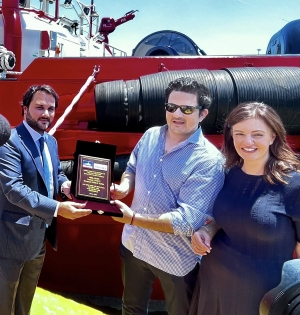
In a climate of enthusiasm and optimism, MEDTUGS consortium welcomed a newly built tug to its fleet, which signals a promising future for the towing industry in Greek ports.
This is the second tug, which N.E. SVS has received in just a few months, which was created with the participation of the companies VERNICOS, SPANOPOULOS and LYMBOUSSAKIS, three leading companies in the towing and salvage industry in our country.
The welcome and naming ceremony of the newly built tugboat was attended by friends and associates of the company and the Managing Director of ATTICA BANK, Mrs. Eleni Vrettou, was the sponsor of the ship “E.SVS II”.
Present were the Managing Director of VernicosScafi Dimitrios Vernicos and his brother Giorgos Vernicos, the Managing Director of Spanopoulos Group Michalis Spanopoulos, the Managing Director of Lymboussakis Salvage Kostas Lymbousakis, the Port Master of Piraeus Angelos Grammateas, the Managing Director of ATTICA BANK Eleni Vrettou, the Shipping Director of the bank Kostas Economou and other officials.
Costas Violidakis, General Manager of SVS, emphasized that the new tugboat enhances the ability to provide high-level services tailored to customer requirements and the increased needs of the port of Piraeus, which continues to develop, invest and steadily transform into an international hub port of the Eastern Mediterranean.
At the same time, Mr. Violidakis referred to the support of ATTICA BANK, which is a valuable ally in every new step, and thanked everyone who worked for the implementation of this investment, the technicians, the partners and of course the staff who are the soul of every success.
According to information, SVS has ordered two more similar tugs at the MEDMARINE shipyard and is about to acquire a salvage vessel equipped with DP2 system for offshore and open sea salvage operations.
May the new tug have safe journeys!
ELNAVI Newsletter
More Information: ELNAVI,
19, Aristidou str., Piraeus 185 31,
Tel.: +30 210 45.22.100, e-mail: This email address is being protected from spambots. You need JavaScript enabled to view it.
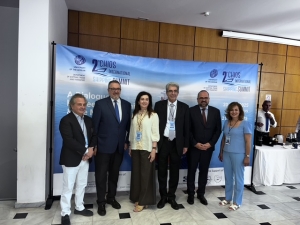
With the aim to create a framework for a stable dialogue between the academic community and the Greek shipping industry the 2nd Chios Shipping Summit took place at the Aegean University premises on June 20th-21st.
Prof. Dimitrios Papageorgiou, Rector, University of the Aegean opened the proceedings of the conference.
Stefanos Gkikas, Deputy Minister, Ministry of Maritime Affairs & Insular Policy, in his speech, expressed the support of the ministry to the island of Chios with a regular coastal ferry connection and the organization of yacht races. He referred to the actions of the ministry for the decarbonization of shipping and the efforts to protect the Greek owned fleet from military conflicts in several world’s sea passages such as the Black and Red Seas and the Straits of Hormuz.
Stavros Michailidis, Member of the Greek Parliament for Chios expressed his concerns and blamed the ministry of lacking a maritime policy as the number of ships registered in the Greek registry does not exceed 500.
Prof. Seraphim Kapros, Head of the Dept of Shipping, Trade & Transport, University of the Aegean, stated in his welcome address that the University of Chios has published 92 books and operates two postgraduate programs and is ranked 4th among 35 universities.
Key-note speaker was John Xylas, Chairman, Intercargo & Treasurer, Union of Greek Shipowners (UGS) Board of Directors, who described the geopolitical challenges and highlighted on the decarbonization process in shipping.
He said that the dry cargo shipping sector is particularly volatile due to its nature and complexity. He called on the European Union to adopt measures that increase competitiveness and enhance sustainability.
The European Union should learn from previous lessons in the shipbuilding industry and proceed with measures to support the European fleet in order to ensure its economic and energy sufficiency. In this context, the Union should adopt the IMO measures and not follow unrealistic policies in the field of decarbonization.
Mr. Xylas referred to the difficulties of producing alternative fuels for maritime use such as ammonia methanol and biofuels, stressing that in the medium term there will be no realistic solution to this issue.
Mr. Xylas told that the decarbonization goals are quite optimistic and do not take into account the complexity and nature of shipping.
He also referred to the carbon capture systems and other solutions such as nuclear energy. In this uncertain environment, shipping is taking steps to improve its energy efficiency and called on the IMO to invest in innovation through the net zero fund. In conclusion, he expressed his optimism for the collaboration between the academic community and shipping, which can lead to the transformation of challenges into opportunities.
A discussion between important personalities of the shipping industry on the topic of “Geo-economics and the Impact on Shipping” followed.
The discussion was moderated by Helen Thanopoulou, Professor, University of the Aegean and was attended by: H.E. Matthew Lodge - His Majesty’s Ambassador to the Hellenic Republic, British Embassy, Dr. Dimitrios Fafalios - Secretary, Union of Greek Shipowners (UGS) Board of Directors & Fafalios Shipping S.A., Johannes Kock - Director, Container Gr Inc.
The speakers attributed the cause of the crisis in the Persian Gulf to the terrorist actions against Israel with the support of Iran.
The next panel discussed the following topic: Leveraging Shared Experience to Advance Maritime Efficiency (tbc).
Prof. Chengi Kuo - Emeritus Professor, Naval Architecture, Ocean and Marine Engineering, University of Strathclyde and Antonis Faraklas - CEO, Chartworld Shipping Corporation raised the issue of AI.
Professor Kuo has taught many generations of naval architects to think out of the box and has influenced many graduates with his vision.
Mr. Antonis Faraklas CEO of Chartworld Shipping, who has graduated from the University on 1978, invited him to speak about AI and computer applications in shipping.
Prof Kuo stated that he is confident that the new generations of naval architects will take advantage of AI and computer technology to develop a better world and find innovative solutions for all issues that the shipping industry faces today.
The topic of the next panel was Energy efficiency and decarbonization challenges.
The discussion was moderated by the following speakers: Orestis Schinas, Associate Professor, University of the Aegean, Dr. Georgios Pateras - Deputy Chairman, Contships Management Inc., Jeroen Pruyn - Associate Professor, TU Delft, Antonis Faraklas - CEO, Chartworld Shipping Corporation, Stavros Hatzigrigoris - Advanced Engineering Services & ZODIAC Maritime, Spyridon Zolotas - Vice President, RINA, Vassilios Dimoulas Technology & Innovation Director – East Europe, Mediterranean Sea, Middle East, India & Africa, Bureau Veritas.
Dr. George Pateras told that the only way to reduce air emissions is to take operational measures and he stressed that the alternative fuels are not sustainable.
Faraklas said that IMO is driven by political ambitions however Greek shipping is thinking out of the box and always find innovative ways to survive.
Mr. Zolotas pointed out that the cost of decarbonization goals will be paid by the final consumer and LNG will prevail as a transitional fuel.
Mr. Dimoulas agreed that the energy efficiency is the greatest tool towards net zero carbon operations.
In the next panel of discussion Charalampos Simantonis - Chairman, Hellenic Shortsea Shipowners Association (EENMA) & President, European Shortsea Network pointed out that the European Union has emphasized on railways and ports downgrading short sea shipping, which facilitates 70% of the commercial volume at the European ports.
Stratos Tsalamanios - Seaven Tanker & Dry Management Inc, Vice-President BoD, Hellenic Shortsea Shipowners Association (EENMA) agreed that short sea shipping has many challenges to face without any help from the European Union, it is in a transitional stage but due to the uncertainty as shipowners find it difficult to invest without support in the next day of green shipping.
The European Union has unrealistic goals without taking in mind the cost of the energy transition. He thanked the ship's sailors who work in adverse conditions in ports that do not meet safety regulations.
Konstantinos Economou- Secretary General of the Association of Banking & Financial Executives of Hellenic Shipping and Head of Shipping Finance, Pancreta – Attica Bank emphasized that Greek banks have long supported Greek shipping by providing almost 60% of the total financing of approximately $34 billion per year.
He admitted that indeed in short sea shipping there is limited financing compared to ocean shipping and this is due to the lack of corporate governance.
Alexandros Lagouros - Maritime Affairs Advisor, Hellenic Shortsea Shipowners Association (EENMA) spoke about the decarbonization requirements while Thierry Vaneslander - Professor, University of Antwerp referred to the competitiveness of short sea shipping in relation to other modes of freight transport such as road interconnection.
The Power of Shipping section was coordinated by Dr. Ilias Bissias, University of the Aegean. The participants were the shipowners Symeon Palios - Founder and President of the BoD, Diana Shipping Inc. and Lucien Arkas - Chairman, Arkas Holding.
They spoke about the Greek shipping tradition and in particular about the period of transition from sail to steam. As Symeon Palios mentioned, his ancestor Antonis Palios was the first shipowner to list his shipping company on the Athens Stock Exchange in 1908 and later, together with Leonidas Empirikos founded the Greek Shipowners’ Association.
He referred to the old and new ways of financing and the need to decarbonize shipping. He supported the solution of micro-reactors which is cost effective and completely green.
Lucien Arkas said that his father started as a shipping agent while he decided to buy two container ships that served the trade between Greece and Turkey. Later on, he ordered 16 feeder ships from German shipyards. Today the company handles 1,500,000 teus and has a fleet of 50 ships. The company has also expanded into road transport, owning approximately 500 trucks in order to serve the needs of customers.
Mr. Palios stressed that companies must have a critical mass in order to respond to the demands and crises of the market. They advised young people to be patient and acquire new knowledge.
The University of the Aegean awarded Symeon Palios, Ioannis Xylas, Lucien Arkas and Dr. Chengi Kuo.
Last Round Table: Education and Wellbeing of Seafarers chaired by Capt. Georgios Georgoulis, University of the Aegean and commented by Victoria Athanassopoulou - Ass. Professor, University of the Aegean, Michalis Dimitriadis-Evgenidis - CEO, Aegean Sea Lines & Member of the Board, Association of Passenger Shipping Companies (ΣΕΕΝ), Dimitris Patrikios - Managing Director, V. Ships Greece Ltd., Anna Giatra - General Secretary, WISTA Hellas and Eleni Iakovaki - Ass. Professor, University of the Aegean.
The speakers referred to the shortage of competent seafarers and officers in the merchant marine sector and the necessity for training to be part of the company’s safety culture. It was also mentioned that women are underrepresented in the seafaring profession as account for only 1-2% of the total workforce.
Other issues that were addressed were over regulation burden, distress, abandonment and how technology could improve the crew capabilities and life onboard.
ELNAVI Newsletter
More Information: ELNAVI,
19, Aristidou str., Piraeus 185 31,
Tel.: +30 210 45.22.100, e-mail: This email address is being protected from spambots. You need JavaScript enabled to view it.
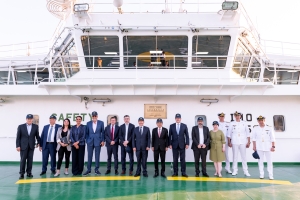
Marking a great future, the RoRo ship “Yuan Hai Kou,” one of the world’s largest and most advanced vehicle carriers, operated by COSCO SHIPPING Specialized Carriers arrived at the port of Piraeus.
The ship is 199.9 m long, has a capacity of 7,000 ceu and will be used on a regular line connecting China with the Mediterranean. The vessel is equipped with dual LNG and solar propulsion systems, underscores a growing shift in the maritime sector towards decarbonization and sustainable innovation.
Senior figures from the Greek government, Chinese diplomatic corps and international shipping community, alongside representatives of relevant organizations attended the event. Speakers highlighted the strategic role of the Port of Piraeus in the global supply chain and reaffirmed their commitment to a sustainable future in maritime transport. Αn exclusive tour was provided in the ship's interior for high-ranking government officials and representatives of the shipping community.
Greece’s Deputy Minister for Maritime Affairs and Insular Policy, Mr. Stefanos Gikas, highlighted the strategic importance of Piraeus in enhancing port competitiveness through a comprehensive ESG-led approach.
Chinese Ambassador to Greece, Mr. Fang Qiu, framed the event as a symbol of deepening bilateral ties. “Piraeus is more than a commercial port - it is a platform of friendship, mutual trust and shared vision. “Technological cooperation and environmental responsibility are the foundations of a strategic relationship that continues to evolve and grow stronger,” he noted.
Speaking on behalf of COSCO SHIPPING, Mr. Zhang Wei, Chairman of COSCO SHIPPING Specialized Carriers, emphasized the firm’s broader vision for emissions reduction and operational transformation.
Antonis Venieris, President of the International Maritime Union in Greece, closed the official proceedings by calling on Greek shipping to lead the industry’s green transformation.
In his statement, Mr. Su Xudong described the vessel’s maiden call as “a historic moment” for the port. “The arrival of the ‘Yuan Hai Kou’ at the Port of Piraeus clearly demonstrates that our port is constantly evolving, embracing sustainability, innovation, and forward-thinking”.
The arrival of the Yuan Hai Kou, one of the world’s most advanced green vehicle carriers, alongside the Piraeus Port 2025 Summer Reception, marks more than a ceremonial milestone - it signals the start of a bold new chapter for Greece’s largest port, defined by innovation, sustainability, and strategic global relevance.
Today’s event reflects not just momentum, but intent. With Greece and the Port of Piraeus increasingly recognized as critical nodes in the global supply chain, this moment sets the stage for expanded maritime innovation, ESG leadership, and sustained international collaboration.
ELNAVI Newsletter
More Information: ELNAVI,
19, Aristidou str., Piraeus 185 31,
Tel.: +30 210 45.22.100, e-mail: This email address is being protected from spambots. You need JavaScript enabled to view it.
DryDel’s Fleet Expansion Continues!
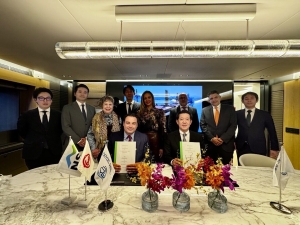
DryDel Shipping proceeded recently to the signing of a newbuilding contract for a 64,000-DWT Ultramax bulk carrier with Nihon Shipyard Co., Ltd. (Imabari Shipbuilding Co., Ltd.) - one of the most respected names in Japanese shipbuilding.
This marks the 10th vessel in DryDel’s ongoing newbuilding program, all placed with leading Japanese shipyards.
The vessel will feature a fuel-efficient hull design, a Tier III/Phase 3 compliant engine, and advanced energy-saving technologies including a Hybrid Fin & a Weather Assisting Duct (WAD) - all contributing to lower emissions and better fuel performance. Delivery in scheduled for 2028.
DryDel Shipping’s CEO, Costas Delaportas, adds: “Despite today’s challenging market environment, I am proud to welcome another high-quality newbuilding project from the esteemed Imabari Shipbuilding, reaffirming our long-standing commitment to Japanese shipbuilding.
I am a firm believer in the long-term potential of the dry bulk sector; this vessel underscores our forward-looking approach.
Each new vessel is a strategic investment in the future, a part of our fleet modernization program.
Our strategy is clear: continued investment in top-tier newbuildings that reflect performance, quality, and sustainability.”
ELNAVI Newsletter
More Information: ELNAVI,
19, Aristidou str., Piraeus 185 31,
Tel.: +30 210 45.22.100, e-mail: This email address is being protected from spambots. You need JavaScript enabled to view it.