


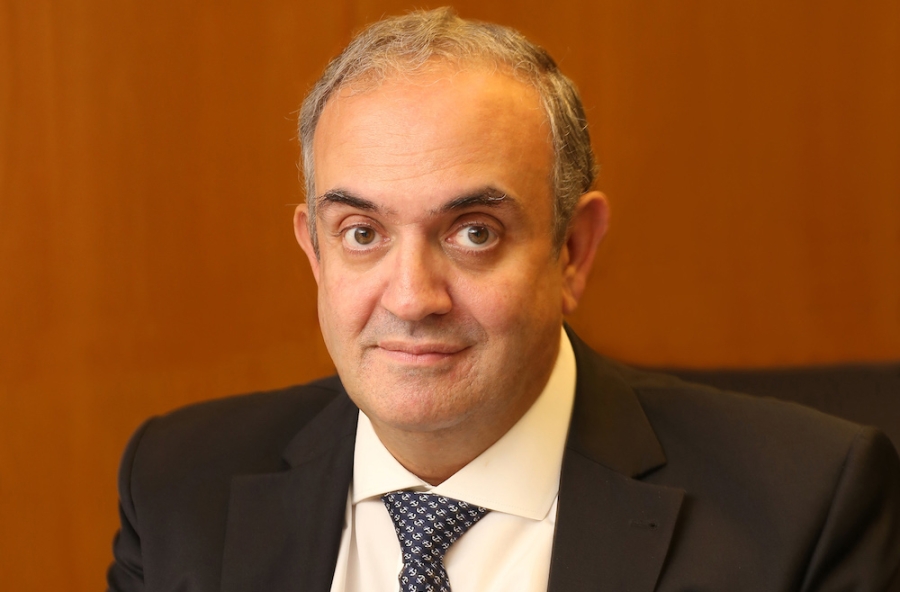
On the occasion of the 88th Annual Report of the Greek Shipping Co-operation Committee Mr. Fafalios referred to the global shipping market and geopolitical developments.
“Whilst the Ukrainian conflict has entered into its second year with no sign of any solution, there is also a great amount of turmoil in the world's financial and commodity markets as a result of differing global situations.
As America and other countries are trying to reduce their reliance on China and perhaps put more business into other economies as well as their own, China itself is feeling some uncertainty and is not as confident in its economic progress as it was a year ago.
The fact that interest rates are higher than they have been for many years has made investment decisions riskier, and certain long-term projects are now languishing due to the higher cost of finance.
With all the above, and the necessity to export more energy commodities such as L.N.G., the shipping markets have seen great volatility in every sector. Looking at individual sectors, the container market has lost the sparkle of the last two years but is still at levels that were better than three years ago. However, a very substantial order book will have some effect going forward.
Fortunately, the car carrier sector is still going strong, even with a substantial order book, but with strong demand for car transportation.
The dry bulk market is at present languishing at levels which are not very positive, and there is a great influence from the FFA market, which causes great volatility, as the movement of physical commodities is still quite substantial on a global basis.
The tanker market is not as strong as it was but still is in positive territory, even with a growing order book.
The gas carrier market, especially the VLPG sector, is doing very well, and the LNG sector has a large order book on the back of significant new projects going forward and a positive long-term charter market.
Meeting this demand for modern high-quality tonnage, the Greek merchant fleet continues to remain the world's largest (over 20 percent) and is investing significantly in sophisticated, environmentally conscious, energy-efficient new ships as well as picking up high-quality second-hand units.
By this process of constant renewal, the average fleet age is falling, and the GHG efficiency is rising.
By virtue of its predominant position in the tramp shipping market, the Greek merchant fleet is always the first to adapt to changing global requirements and takes heed of all new regulations, whether global or regional. It is very important to stress that the Greek fleet represent approximately 60% of the total EU tonnage and is that very strategically important to meet the EU’s needs.
With this in mind, we stress the importance to support the global regulator, i.e., the IMO, which has to take a practical and balanced attitude to all legislation, as opposed to some of the more political elements of some regional legislators which do not have the knowledge to see the bigger picture.
The G.S.C.C. itself is always at the forefront of keeping its members closely informed of all these developments and lobbying at the highest levels in order to bring about a coherent legislative program” stated Mr. Fafalios.
ELNAVI Newsletter
More Information: ELNAVI,
19, Aristidou str., Piraeus 185 31,
Tel.: +30 210 45.22.100, e-mail: This email address is being protected from spambots. You need JavaScript enabled to view it.